Exploring Innovative Investment Strategies at the Chief Investment Officer Summit
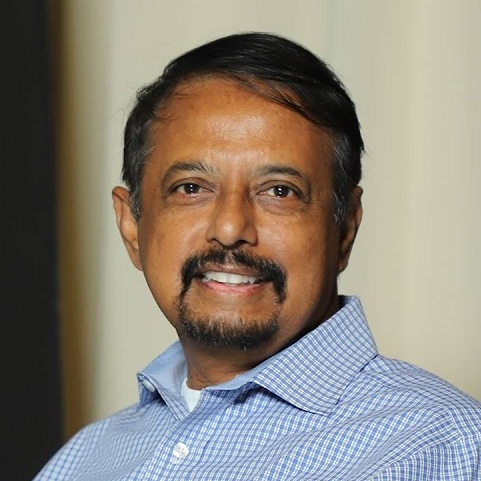
Prabhu Palani, the Chief Investment Officer of the San Jose Retirement System, joins theCUBE for an insightful discussion at the NYSE Wired: Chief Investment Officer Summit. The conversation reveals how innovative investment strategies shape the future of public pension systems and the pivotal role of events such as HF0 in the entrepreneurial landscape.
In this video, Prabhu Palani delves into the operations of the San Jose Retirement System and its strategic shift towards embracing venture programs. Hosted by Co-Founder and Co-Chief Executive Officer of SiliconANGLE Media Inc, the discussion highlights Palani's expertise in managing a $10 billion asset portfolio and navigating the complexities of early-stage investments. theCUBE Research analysts provide further insight into the evolving nature of entrepreneurship in today's fast-paced, technology-driven world.
Key takeaways include Palani's perspective on the HF0 model, a groundbreaking approach to entrepreneurship, which resembles intense sports training camps. Palani emphasizes the importance of identifying and accessing top-performing venture firms, understanding shifting market dynamics, and integrating academic partnerships to harness innovation. These strategies are crucial for achieving sustainable growth and maximizing returns in a landscape marked by low barriers to entry and increasing democratization.
Forgot Password
Almost there!
We just sent you a verification email. Please verify your account to gain access to
theCUBE + NYSE Wired: Capital Series. If you don’t think you received an email check your
spam folder.
In order to sign in, enter the email address you used to registered for the event. Once completed, you will receive an email with a verification link. Open the link to automatically sign into the site.
Register for HF0 Media Day
Please fill out the information below. You will receive an email with a verification link confirming your registration. Click the link to automatically sign into the site.
You’re almost there!
We just sent you a verification email. Please click the verification button in the email. Once your email address is verified, you will have full access to all event content for HF0 Media Day.
I want my badge and interests to be visible to all attendees.
Checking this box will display your presense on the attendees list, view your profile and allow other attendees to contact you via 1-1 chat. Read the Privacy Policy. At any time, you can choose to disable this preference.
Select your Interests!
add
Upload your photo
Uploading..
OR
Connect via Twitter
Connect via Linkedin
EDIT PASSWORD
Share
Forgot Password
Almost there!
We just sent you a verification email. Please verify your account to gain access to
theCUBE + NYSE Wired: Capital Series. If you don’t think you received an email check your
spam folder.
In order to sign in, enter the email address you used to registered for the event. Once completed, you will receive an email with a verification link. Open the link to automatically sign into the site.
Sign in to gain access to theCUBE + NYSE Wired: Capital Series
Please sign in with LinkedIn to continue to theCUBE + NYSE Wired: Capital Series. Signing in with LinkedIn ensures a professional environment.
Are you sure you want to remove access rights for this user?
Details
Manage Access
email address
Community Invitation
Prabhu Palani, San Jose Retirement System
Exploring Innovative Investment Strategies at the Chief Investment Officer Summit
Prabhu Palani, the Chief Investment Officer of the San Jose Retirement System, joins theCUBE for an insightful discussion at the NYSE Wired: Chief Investment Officer Summit. The conversation reveals how innovative investment strategies shape the future of public pension systems and the pivotal role of events such as HF0 in the entrepreneurial landscape.
In this video, Prabhu Palani delves into the operations of the San Jose Retirement System and its strategic shift towards embracing venture programs. Hosted by Co-Founder and Co-Chief Executive Officer of SiliconANGLE Media Inc, the discussion highlights Palani's expertise in managing a $10 billion asset portfolio and navigating the complexities of early-stage investments. theCUBE Research analysts provide further insight into the evolving nature of entrepreneurship in today's fast-paced, technology-driven world.
Key takeaways include Palani's perspective on the HF0 model, a groundbreaking approach to entrepreneurship, which resembles intense sports training camps. Palani emphasizes the importance of identifying and accessing top-performing venture firms, understanding shifting market dynamics, and integrating academic partnerships to harness innovation. These strategies are crucial for achieving sustainable growth and maximizing returns in a landscape marked by low barriers to entry and increasing democratization.
Founder & Chief Investment OfficerTresses Capital Management, LLC & Tresses Capital Partners, LLC
Straight from San Francisco, this theCUBE + NYSE Wired’s Capital Series conversation sees Prabhu Palani, CIO of the San Jose Retirement System, sitting down with theCUBE’s John Furrier at HF0 to talk about venture investing, risk and the very future of entrepreneurship. Palani shares why SJRS launched an early-stage venture program in the heart of Silicon Valley and why “access” is everything in venture capital. He breaks down the portfolio mix – 70–75% growth assets, 15% low beta, 10% inflation hedge – with a dedicated 5% slice for venture designed to drive ...Read more
exploreKeep Exploring
What is the significance and sustainability of the HF0 model in entrepreneurship?add
What approach is being taken regarding investment stages and the focus on founders and seed stage in the tech industry?add
What is the asset allocation model and risk management strategy being used, particularly in relation to the venture space and the impact on the pension fund?add
What partnerships are being considered in the venture program and how does the local academic talent contribute to this effort?add
>> Hello, welcome back to theCUBE here at the NYC Wired CUBE special coverage of Hf0 House in San Francisco. This is the place where founders gather and spend this small amount of time, a couple of weeks, and do about two years with of work building companies. It's a new way to build entrepreneurial ventures, of course, focus on founders who lock in and solve real big problems. Prabhu Palani's here, CIO, Chief Investment Officer of San Jose Retirement System. He's one of the guests here enjoying the evening festivities, where the founders and investors meet and talk. And they get to know each other and they share opportunities. And magic might come out of it like money and checks, but who knows? But that's not really what it's built for. Thanks for coming on theCUBE. Appreciate you coming on.
Prabhu Palani
>> Thanks, John. It's an honor.>> It's really an interesting time. I want to get your thoughts. I want to get into some of the investment things you're working on. But the HF0 to me represents a unique time in history where you have entrepreneurship with real opportunity to make change. And they're locked in. It's almost like sports. It's like camp. You lock in, eight weeks, build with a team, bring in resources for you. It's like the NFL. It's almost like watching pre-training camp. This is very intense. This is not like another incubator. And they come out with a company, and so it's really primed for investors. So first of all, what do you think about the HF0 model? What's your thoughts on that? And is it a moment in time or is it sustainable? What's your view on how they're doing it here, because it's a new form of entrepreneurship?
Prabhu Palani
>> Yeah. No, totally. Look, it's amazing what they're trying to achieve here. And let me step back and elaborate on that. So, I'm going to give you a little bit of history and background on the public pension system itself and where HF0 actually fits into this. And let me know if it's too much detail at any point in time. Look, I manage a California pension plan and we manage about 10 billion in assets. And most California public pension plans are about 70% funded. We are no different from the two big ones, they're CalPERS and CalSTRS. We've had a good year, so maybe we are up to 75%, but we are all underfunded. And that's very similar to pension funds all over the country. So, you have to find every bit of excess return that you can get. Whether it's public equity, whether it's private equity, venture capital, you have to be innovative. You cannot leave any stone unturned, and that's where HF0 comes. When we thought about our venture program, I've been at San Jose eight years, and we've had the venture program for eight years. And so when I came on board, I told my board as a precondition for my joining San Jose is to start a venture program. If you fly into San Jose, you'll see in the airport it says, "Capital of Silicon Valley." We are in the middle of this tremendous venture activity and ecosystem. All these great companies being formed all around me. And why are we not taking advantage of it? Our ecosystem, our policemen and firefighters are keeping this place safe, but we were not benefiting from venture. So, first decision was to get into venture. The second question is, how do you utilize this space? And clearly you know that it's an access game. It's not easy to get access to some of the best known names. And some of the best known names are going to be different going forward. So, we made a conscious decision. We did a lot of research and we said the value add is really in early stage, is in founders and in seed stage. And that's where HF0 is part of that puzzle, to help us. So, I think what they're doing is amazing. It fits into our overall puzzle. And up until the tech wreck of 2022, valuations were very frothy across the entire tech landscape, including startups. So again, we made a conscious decision to be at the seed stage.>> And if you look at the returns, I mean it takes the one home run, as they say, to kind of yield the fund. I mean, Figma just went public and obviously, Greylock and Index and Kleiner Perkins did well on that. If you get in early, you can hang in there and just kind of ride it.
Prabhu Palani
>> That's right.>> So, that's a game of access, like you mentioned, but also it's a game of getting the hits.
Prabhu Palani
>> Yes.>> And if you don't step up to the plate, you can't swing.
Prabhu Palani
>> That's right. That's right.>> Then you got to play on either the dilutive rounds, maybe these positions are smaller. How hard has that been? Can you just scope the magnitude of what had to happen? Because it's not obvious because most people would think, "Oh, the venture guys, they dominate the Sequoias of the world. They still get access." But that's changing. Talk about the market and the scope of how hard that was to change or not. Was it easy?
Prabhu Palani
>> Yeah, yeah. So as I told you before, it's an access game. And unlike other asset classes, there's a lot of return dispersion here. So if you have an average public equity manager, if you have an average fixed income manager, you're still going to do well because the standard deviation around the mean is very, very tight. That's not the case in venture. So if you look at projections, it has been the best performing asset class of the last three decades. It's still projected to be the best performing asset class going forward, but it's all coming from the top 10%. If you look at the median venture manager, you're actually going to be after fees, you're going to have negative returns. So, you really want to aim for that top 10%. That's not easy. You go to a firm like Benchmark, they have a backlog of years. They have a long line of people waiting to get into that firm. So it's not just identifying those firms, it's in how do you get that? And also another point to make is the guard is changing. The future winners are not going to look like the winners of the past three decades. And that's where a firm HF0 comes in.>> And I like HF0. And also, I want to get your thoughts on another trend that impacts you, because again, you're in Silicon Valley, the heart of it. It's all around you. Silicon Valley, all the chips right around, all those police and firefighters are out there protecting the chips for us too. The trend that I want to ask you on is a lot of entrepreneurs in the early stage are going to other founders. And I've heard from a lot of LPs that tell me, "Hey, we're backing the solo GP.", the solo general partner. Because the capital requirements that the seed of train from change from the traditional blue chip firm to the multi-time founder who's made some wealth and it's trusted. And now you're starting to see money back. On paper, that doesn't really look good on paper relative to a profile of what a venture . But they're not just scouts, they're actually implementing deploying their capital, personal capital, their own little family office, if you will. What's your thoughts on this? Because this has been a big dynamic over the past five or six years.
Prabhu Palani
>> Exactly. I think especially after COVID, you see a lot of this, right? And so, I think there's real value here. But in your due diligence, what you really need to know is their motivation. Is it just somebody who's had a very successful exit and who basically wants to sit on the beach? And who's going to be an angel investor and throw around a little bit of capital? Or are these hardworking people? And in fact, I was just talking to someone just before this interview. And you can actually have, there's two classes of those very successful people. Some have made it big and want to take it easy. And the others are the ones who continue to think like a VC. It's not enough. They're not going to rest on their laurels. They've had have their big exits. They want to continue to back other companies that are going to be unicorns.>> And they're mission-driven too, because they've been there. And they're leaning into your point about sitting on the beach clipping coupons and sailing their yachts around. They're actually into it.
Prabhu Palani
>> That's right. That's->> So, that's what you're saying. You're looking for that profile.
Prabhu Palani
>> That's exactly right. Yep.>> Yeah. And so, that's good because now they have trust. What about the trust factor? Because that's become a big thing too. You're starting to see founders saying, "I want to have help when I need it, but let me go do the... let me get that beachhead. I need to secure product-market fit. I don't need board meetings." That's kind of evolved. That's not around anymore. Now, it's more get a little bit of leash, run a little bit. Andy Grove used to say, "Let chaos reign and then reign in the chaos." That's what founders do. What's your thoughts on that kind of dynamics happening?
Prabhu Palani
>> Look, it's always a balance, right? I'm a fiduciary for very sacred pool of capital in my opinion, because I'm looking after pensions for retirees. So there's got to be a balance always, right? You want to give them the freedom, you want them to explore. You want them to go and do the next best thing. They're also responsible. They have to be, and they have to be accountable to someone.>> You mentioned some of the numbers earlier on some of the means in the venture class. Obviously, you have sacred pool cash. It's not like you're freewheeling just venture. You got a lot of the other things. You mentioned fixed income. What's your risk profile on how you balance that? Because venture is not for the faint of heart either. There's risk involved.
Prabhu Palani
>> That's right.>> How do you look at the risk equation? Is there an algorithm? Is there a formula?
Prabhu Palani
>> Yeah, yeah. I mean it's very much like an algorithm. So we have an asset allocation model, and we look at risk in totality, not just at the venture space. So, there's various kinds of risks that I'm looking at. I'm looking at drawdown risk. Because if I have a really a big negative year, then the city of San Jose is on the hook to actually make up the shortfall in pension. This happened to us in the great financial crisis in 2008, 2009. And when that happens, they had to lay off policemen and firefighters. So, it's a delicate balance that you're playing. On the one hand, you don't want steep drawdowns. At the same time, we are underfunded, so we have to take risk. So our profile, just to give you a direct answer on that, is right now it's about 70 to 75% in what I call growth assets. And venture is part of that. And then I have another 15% or so in what we call low beta assets, assets that are uncorrelated to the market. And then another 10% that's an inflation hedge mostly. And within the growth bucket, I have a dedicated 5% allocation to venture.>> That's where you're squeezing the returns out of the growth bucket.
Prabhu Palani
>> Absolutely.>> The rest is just kind of foundational, steady state. Balances any kind of cyclical, any kind of macro action going on the market.
Prabhu Palani
>> Exactly. And I also have to think about liquidity risk, because we are actually paying about 500 million every year in pensions. So, I need to have the cash to pay that out. So, I'm also balancing liquidity risk here. But look, I think the advantage of being a pension plan is like being a college endowment or being a religious institution. These have all been around for hundreds of years. So, the city of San Jose is going to be around a hundred years from now. The pension plan is going to be around a hundred years from now. That means we are patient capital, we are long-term capital.>> You have to play the long game.
Prabhu Palani
>> You have to play the long->> You get a lot of responsibility, and you get the sacred capital.
Prabhu Palani
>> And it's a luxury too, because I can really look out. And I'm not managing for the next year, 12 months or 24 months or 36 months.>> Yeah, you got good discipline. We'll get into the event tonight, but I want to ask you about research. The open AI research is going to be here. They're going to be talking about AI. Well, you're in the heart of Silicon Valley. There's a lot of research institutions here, big, small, medium, a lot of action, a lot of brains, a lot of action. What's your view on the Cals, the Stanford's, the community colleges, the schools, San Jose State? There's all these colleges with really smart people. Do you factor that into your due diligence, some of the research action? How do you look at that? How do you frame that into your equation?
Prabhu Palani
>> Yeah, a hundred percent. So when we started building out this venture program, one of the things that I was keen on is partnerships. One set of partnerships is with academia. Like you said, a lot of this talent is coming from this ecosystem. We are right next to San Jose State, a very underrated school with a top-notch computer science program. Everyone knows Stanford, everyone knows Cal, and then people don't know UC Santa Cruz is not that far from us. So, we are actually in this ecosystem. Prior to AI becoming so big, there was talk that the center of gravity is shifting away from Silicon Valley. And with AI it's just, once again, it's all->> It's just syndicated.
Prabhu Palani
>> Absolutely. Absolutely right.>> You San Jose State. I want to ask your thoughts on demographics because one of the things that's happening that I'm super psyched about is that the democratization wave is actually happening. Podcasts are hot, you're seeing access to capital, access to technology. If you're a domain expert, the ability to use AI and even blockchain infrastructure, which is changing financial institutions. We've just been covering that all last week in New York. That's changing. Everything's up in the air, it's going to come down. So it's not just Stanford, Cal, and the big schools, it's everyone's got computer science now. In fact, computer science is now a bot. So, people have auto coding and coding assistants. So, now we even more superpower for the intellect.
Prabhu Palani
>> Yeah. Low barrier to entry. That's what it is, right? Anyone can start a company now because they have all these tools in their toolkit now.>> Are you seeing a lot of action in entrepreneurship, relative to tech that's a little bit different? Has it changed? I sense it's changed a lot, I just can't put a percentage on it. It feels like a C change. How would you say that the tech entrepreneurship, and not technology, but all industries are going to be impacted by tech. So it's more of, what kind of level of entrepreneur entrepreneurship is delivering tech that you see? Can you give a percentage of what change has been? It used to be tech nerds do their thing, they get their venture going. But no, not anymore.
Prabhu Palani
>> Yeah. No, I think you're right. I think you had to be, a few years ago, you needed the deep technical expertise to go and start a company. Now, like you said, a lot of the coding is a bot now, right? So if you had a great idea, I don't know what the percentage is, but you have entrepreneurs not coming just from the computer science department, from the business school as well.>> Yeah. I was talking on our podcast about a debate we were having around how AI is displacing jobs. And I have my stance on it that the ATM is supposed to kill bank tellers. Now there's more bank tellers. And the conversation was, programming's going to be accessible for more people. But the alpha developers looked at the actual data that we did research on. They were going lower in the stack. So they work at NVIDIA, they're working on chips. So, chips are back. And I want to get your reaction to that because the entrepreneurship tech level of proficiency isn't really changing either. The hardcore engineering is still happening.
Prabhu Palani
>> Oh, absolutely.>> It's just going down closer to the hardware-
Prabhu Palani
>> That's right.>> ... because that's where it's hardest.
Prabhu Palani
>> Yep. Yeah, I mean, for a while there you could see that software was sexier than hardware. Not anymore, after what's happened to NVIDIA.>> Exactly. All right, so what's your goals here tonight? Great event. It's going to be very chill, relaxed, give some presentations. What's your objective here?
Prabhu Palani
>> It's all about learning, right? And like you mentioned before, it's a fast-changing landscape, right? Want to meet wonderful founders and want to learn about the fast-changing landscape. That's what it is.>> Well, thanks for coming on. Appreciate it and we'll see you out there.
Prabhu Palani
>> Of course. Great. Thank you.>> Thanks. All right. I'm John Furrier with theCUBE here at the HF0 House. Again, a new equation in entrepreneurship, which is booming in all aspects of our life as tech is infused and entrepreneurship equations really rising up across all sectors. More coverage coming after this break.