Exploring Tokenization in the Modern Finance Economy with Kendrick Nguyen
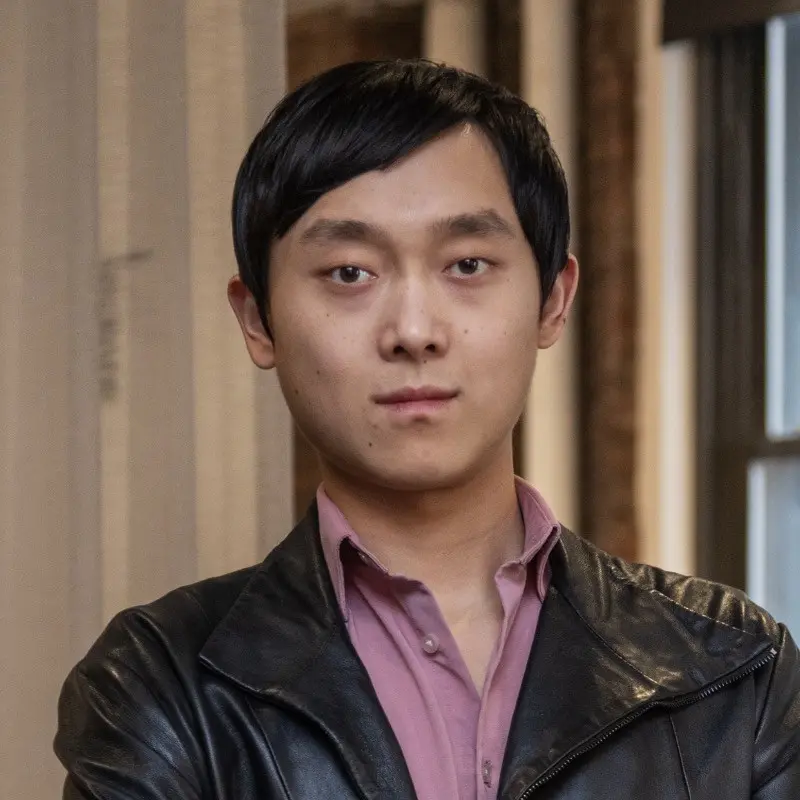
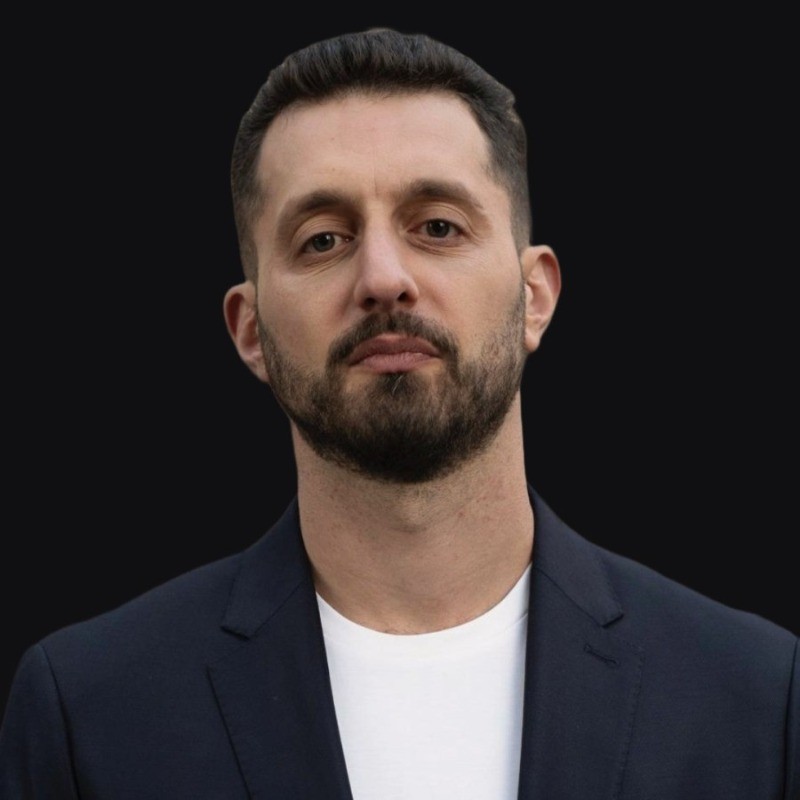
Kendrick Nguyen, founder and Co-Chief Executive Officer of Republic, joins David Weisburd on the "How I Invest Podcast" in collaboration with theCUBE and New York Stock Exchange Wired: Capital Series. Republic facilitates over $2.6 billion in transactions, and Nguyen shares insights on tokenization in private markets, setting the stage for a transformative discussion on the evolving landscape of finance.
In this episode, Nguyen brings their expertise as a pioneer in financial democratization, exploring tokenization as revolutionary infrastructure similar to how the internet transforms commerce. Hosts from theCUBE Research delve into key concepts such as fractionalization, automation and cross-border transactions, discussing how these elements aim to broaden access and improve efficiency in investing and trading.
Key takeaways include Nguyen's vision of capital markets evolution, emphasizing the reduction of technical and legal barriers to empower retail investors. They highlight that by 2025, the financial landscape will undergo significant growth. Nguyen highlights Republic's pioneering role in tokenizing private market assets, collaborating with partners such as Robinhood to implement innovative solutions for retail access to high-demand investments.
Forgot Password
Almost there!
We just sent you a verification email. Please verify your account to gain access to
theCUBE + NYSE Wired: Capital Series. If you don’t think you received an email check your
spam folder.
In order to sign in, enter the email address you used to registered for the event. Once completed, you will receive an email with a verification link. Open the link to automatically sign into the site.
Register for HF0 Media Day
Please fill out the information below. You will receive an email with a verification link confirming your registration. Click the link to automatically sign into the site.
You’re almost there!
We just sent you a verification email. Please click the verification button in the email. Once your email address is verified, you will have full access to all event content for HF0 Media Day.
I want my badge and interests to be visible to all attendees.
Checking this box will display your presense on the attendees list, view your profile and allow other attendees to contact you via 1-1 chat. Read the Privacy Policy. At any time, you can choose to disable this preference.
Select your Interests!
add
Upload your photo
Uploading..
OR
Connect via Twitter
Connect via Linkedin
EDIT PASSWORD
Share
Forgot Password
Almost there!
We just sent you a verification email. Please verify your account to gain access to
theCUBE + NYSE Wired: Capital Series. If you don’t think you received an email check your
spam folder.
In order to sign in, enter the email address you used to registered for the event. Once completed, you will receive an email with a verification link. Open the link to automatically sign into the site.
Sign in to gain access to theCUBE + NYSE Wired: Capital Series
Please sign in with LinkedIn to continue to theCUBE + NYSE Wired: Capital Series. Signing in with LinkedIn ensures a professional environment.
Are you sure you want to remove access rights for this user?
Details
Manage Access
email address
Community Invitation
How I Invest Podcast with Steven Wang
Exploring Tokenization in the Modern Finance Economy with Kendrick Nguyen
Kendrick Nguyen, founder and Co-Chief Executive Officer of Republic, joins David Weisburd on the "How I Invest Podcast" in collaboration with theCUBE and New York Stock Exchange Wired: Capital Series. Republic facilitates over $2.6 billion in transactions, and Nguyen shares insights on tokenization in private markets, setting the stage for a transformative discussion on the evolving landscape of finance.
In this episode, Nguyen brings their expertise as a pioneer in financial democratization, exploring tokenization as revolutionary infrastructure similar to how the internet transforms commerce. Hosts from theCUBE Research delve into key concepts such as fractionalization, automation and cross-border transactions, discussing how these elements aim to broaden access and improve efficiency in investing and trading.
Key takeaways include Nguyen's vision of capital markets evolution, emphasizing the reduction of technical and legal barriers to empower retail investors. They highlight that by 2025, the financial landscape will undergo significant growth. Nguyen highlights Republic's pioneering role in tokenizing private market assets, collaborating with partners such as Robinhood to implement innovative solutions for retail access to high-demand investments.
>> Thanks for coming by. So you dropped out of Harvard at 18 years old. You've since raised $47 million for Dub. What is Dub?
Steven Wang
>> Dub is the very first regulated copy trading platform. And very simply, instead of trading stocks in our app, we actually just copy what other people are doing. The whole thesis is that most retail investors will never get good at investing. Figures put at 70% to 90% of retail investors underperform. They love the action and sort of trading. How do we channel that into a better way for better financial outcomes? And there's no better thing than just following what proven experts are doing in the markets. If you take a big step back, it's actually nothing new what we're doing with copy trading. When you have money, you've got $50 million, you're not trading yourself, you're hiring a fancy wealth manager at Goldman Sachs, you're going to hedge fund like Citadel. You're trusting the experts, employer capital. We want to enable anyone with $100 to do that same experience.
David Weisburd
>> Preparing for this interview, I did some research. I was shocked, 20% to 25% of all trading in the market as retail, something non-intuitive. You think that it's small. What are the confluence of factors leading to such a large chunk of trading mean retail?
Steven Wang
>> Yeah, you're absolutely right. It's actually exploded over the past 10 to 15 years, probably doubled at least in sort of the retail trading volume. It's gone as high as 35% today in many estimates now, and it's only going to increase. And this is really the experience that I felt the revolution of the retail investor since really Robinhood ignited the wave with free investing. And over the past, I think if you look at it 10 years, there are traders like me that grew up as kids who were sitting by the bunch of screens. Now, we're able to invest for the very first time and streamline and open up brokerage account in 10 minutes. And that accessibility, the Cambrian explosion was one of the first parts right now. Many more people could get access to trading. But two was really retail investing becoming part of the cultural zeitgeist. Think about what happened in 2020, 2021.
In many estimates show 30 million new retail investors came online for the first time and it wasn't about behind sitting by screens anymore and looking at the fundamentals, it was about following people, ideas and narratives to invest. We saw this in meme stocks, we saw this to crypto. Elon is moving the Dogecoin markets every tweet, and superstar fund managers like Cathie Wood, Bill Ackman were raising tens, if not hundreds of billions of dollars in their funds. And I think that was just emblematic of really many ways, just social media, mobile era coming to investing. And that drove a lot of this ability to have these online communities with WallStreetBets, Reddit, X, and everything that we've seen about social and finance, the confluence of that.
David Weisburd
>> It's almost like this mimetic behavior. People were sitting around COVID with nothing to do and they started trading almost like playing Warcraft or playing Halo.
Steven Wang
>> Absolutely. And that was me, that was the original inspiration for Dub. I was 19 years old. I was sitting in my dorm at Harvard and we were part of the first COVID generation at school, so we're basically locked up in our dorms. You couldn't go to anyone else's room. So all I did was I was just trading and I'd grown up doing a lot of trading and started in second grade, but I got really serious during that COVID era where everyone was getting stimulus checks, everyone had $1,000 to deploy the market and no one wanted to miss out, the mimetic desire, FOMO, where every single last person, your dumbest friend was now making $100,000 in Dogecoin. Who's not going to give that a shot?
David Weisburd
>> Yeah, it's hard to lose when there's so much money printing.
Steven Wang
>> Yeah, absolutely. And also, I think what people don't see about that narrative was in 2022, when the markets mean reverted, it crashed. The markets came down and we had a couple of years of sort of choppiness. That's where a lot of people lost money. GameStop, 80% of people who invested in GameStop actually lost money in totality. But the only thing that people hear about is the run-up. So this is part of Dub's mission is how do we get people not to just invest but invest better.
David Weisburd
>> You mentioned you dropped out of Harvard at 18. Hopefully, your mother did not have a heart attack, but when did you know was the right time to drop out and what did you need to see in order to do that?
Steven Wang
>> Yeah, so it was actually pretty lucky where my first time leaving or dropping out of school was in high school. So I left high school when I was 16 to do my first company. It was a virtual reality ed tech company that absolutely failed. It was called Realism, but that was my school of hard knocks. I moved my two co-founders to Boston. We raised a little bit of venture capital. We lived in one bedroom and we all had three air beds. And then I think after that experience, we were lucky. We sold the company, we had some patents pending, we had some good IP, but the business didn't work. That gave me the fortitude in the know-how of at least how to get started. So when this time came around and I saw this opportunity, I'm a product guy myself and I was going to be the customer, because I was participating in this wave. I was like, "How do I get the ball rolling?"
And the first people I called were my previous investors from the company that I've sold in the past and they're like, "Blank check for you. No matter what, we're going to do whatever to invest."
David Weisburd
>> So they de-risked it?
Steven Wang
>> They really did. And that gave me the confidence to go to the next step. And then I actually didn't even tell my mom when I decided to leave school to start this company, because I had already raised money and I was able to pay myself. I guess I was financially free and I knew this is what I wanted to do. I think in many ways, also COVID school kind of sucked, so it was a natural path to go and build. And I sort of saw this consumer behavior wave that might come once in my lifetime with how retail investing was changing, and I wanted to seize the moment and go build something pretty incredible.
David Weisburd
>> It's so important because a lot of people think that these kind of quitting college like Mark Zuckerberg also quit after he had traction on Facebook, so a lot of people think he decided to quit and then he figured his way out. It's not necessarily binary. It's not like you have to quit and come up with an idea or never quit. It's about a risk-adjusted decision-making.
Steven Wang
>> Yeah, absolutely. And I think I was in a very fortunate place. Also, 2021 was definitely one of the top peaks of the venture market. It just happened that Robinhood IPO'd, Coinbase IPO'd, fintech was the hottest thing on the market. So I also saw that and then wanted to seize the opportunity to go build something where there's true enterprise value being created and customer demand. And I think that's exhilarating for me to go work on too, and you can see the impact of what you're doing.
David Weisburd
>> How long did it take you to talk about your story that you're this 18, 19-year-old? I'm sure there's some hesitation to come out of the closet of being young and being such a young entrepreneur.
Steven Wang
>> Yeah, no, absolutely. And I think there are moments where you definitely doubt yourself, but I think when you're in the room and you realize that I think the one thing that's unique about Silicon Valley is there are a couple of these stories now. So they really appreciate you more for your substance and your intellect and the logical outcomes of what you're doing rather than the age. And part of it too was I think I de-risk that, right? In many ways, I knew building this business was going to require a lot of skills that I just never was able to accumulate or may never go have just because I've been in the industry for that long. I don't know the first thing back then about compliance. I didn't know all the regulatory regimes, I didn't have any of the licenses. It might take me years to go get those things done. So I hired a phenomenal chief compliance officer that's double my age and now he covered that. A big part of building the business has been covering my weaknesses and really allowing myself to focus on the superpowers, and that applies to everyone.
David Weisburd
>> It's interesting, because there's certain things that need to happen in every business and every business kind of hits this roadblock and sometimes it's not obvious what the founder should be doing and what the founder should be hiring for. Or sometimes the founder figures something out enough to know what to hire for. Walk me through, as you scale, you scale now to millions of users. How do you solve those problems? How do you know when you should be doing something, when a current team member or whether you should hire someone?
Steven Wang
>> Yeah, it was a lot of fall on my face and screwing up. In the very beginning, I think one of the biggest lessons I learned was what got me here is not going to get me to where I want to go. And when I started the business and the way I grew up was very individualistic. We were poor. I had very tough Asian parents, are very disciplined. You got to do everything followed by the book, and that's what I did. And I grew up in a environment of fear, but I was motivated by fear to go succeed and I thought that was the right way to manage as well, because that's how my parents managed me. So when I first started the team, I was the worst micromanager. I was up in the weeds of every single person. I thought everyone had to stay late until 8:00, 9:00. This is the startup grind. We got to live like how everyone else is 996. I still do it. I do 997, whatever, but I'm in a different boat.
David Weisburd
>> So I'm curious, so I've had the same issue. I think everybody should be hardcore, as John puts it. If you're too flexible on that, you end up having a mediocre culture. How do you balance this need for an extremely great culture with not being a psychopath?
Steven Wang
>> I think it's very difficult and the one thing that I think has worked for me has been filtering and hiring for people that are innately that will do it without me asking. And I've realized the better way to lead and what's been working much better for me or at least has been working for our team as I've recovered from these mistakes has been motivating, leading not through fear, but inspiration, opportunity and driving outcomes in the success of what we're doing. When you can have the intrinsic motivation come out, that ... There you go. Very loud.
David Weisburd
>> Well, our Zoom background has made a lot of noise.
Steven Wang
>> That's kind of banger.
David Weisburd
>> Sometimes that happens at a New York Stock Exchange.
Steven Wang
>> Sometimes. Yeah.
David Weisburd
>> Wow.
Steven Wang
>> We're good? Good?
David Weisburd
>> We're good. So double click on that. So you're looking for people with kind of drive. Are many of your employees today 996, or more realistically working till 7:00 or 8:00, or working in the evening after they come home? And talk to me about the culture today at Dub.
Steven Wang
>> I think a combination of all of the above. And my policy now of the team is I don't inspect first, I expect greatness out of you. When you are sat down and you're expected and your boss tells you I'm expecting really great things, you're just nationally more motivated to go crush it. I don't actually care if you're in the office when you're working. I think when I hire you, I'm giving you an immense amount of trust and I trust that you know your best work style, your best work environment. So if you've got to go home for the rest of the day at 5:00 or 6:00 and you're just going to be better at home grinding for two or three more hours, I completely ... No questions asked.
David Weisburd
>> How do you determine whether you want somebody that's going to work their ass off, for lack of a better word? Or how do you determine whether you want someone that's going to work their ass off or somebody that has 20 years of experience doing this one thing and could literally check out at 5:00 and be five times more effective than this person?
Steven Wang
>> I don't think it's binary. Some are best guys in our team, the older folks, my executive leadership team, they're maybe double my age, but they're still grinders. They might have kids, they're much older, but they just love staying in the game.
David Weisburd
>> Do you have any of those though that are just so good, they just come in for eight hours and they just crush? Or does that hurt your culture if you hire people?
Steven Wang
>> No, I think it's not aligned with their culture. Especially the-
David Weisburd
>> Yeah, I think it affects other people as well on the team?
Steven Wang
>> Yeah. And I don't think people who come in for eight hours and crush. They may be good at repeating their skill set and their experience, but to me if they're just there for eight hours, they're not truly bought in.
David Weisburd
>> They're just checking in and checking out.
Steven Wang
>> Exactly. That's emblematic of some. I want people who love what we're doing, are students of the game and care about being in the arena. And I try and viciously filter for that in my interviews now. And one thing that I was too scared to do in the past was anti-sell during my interviews. Of course, it's just selling the pitch of getting someone in, inspiring them by the vision and the traction. But now it's like, "Hey, rank yourself on a scale of 1 to 10, how gritty are you? If I talk to your former boss, would they say the same thing?"
Because at the end of the interview process, I'm going to get references, I'm going to talk to people who've worked with you in the past, and then I'm just straightforward. If that doesn't align with what we're doing, I don't want to set you up for failure to come into doubt. So I think I've just gotten much more comfortable just being open and honest about this is our culture, this is the way that we operate, this is the way that you buy in, it's not going to be for everybody.
David Weisburd
>> What's the second order effects of anti-selling in this process? Yeah.
Steven Wang
>> I usually do at the end. I think it hasn't been bad. It hasn't had any negative effects. I think it's been beneficial in the sense that it has helped us filter out people. And in the moment, they may not give you the answer that they think you want to hear, they'll probably give you an answer that you want to hear, but I think we have seen some bugs drop out of the process, because this just isn't for them, and that's actually what we want to have happen. Yeah.
David Weisburd
>> So let's talk about there's $100 trillion, so 100,000 billion.
Steven Wang
>> Yeah. 100, yeah.
David Weisburd
>> So there's $100 trillion, 100,000 billion going from baby boomers to Gen Z and some younger millennials. How's that going to affect the marketplace, trading, Dub, and all the above?
Steven Wang
>> Yeah, absolutely. And I think when you think about just my generation, Gen Z, the younger millennials, we live in a more polarized environment than we ever have in history, maybe sort of modern history. And part of that is just we see in our politics, we see on the ground the wealth gap is growing faster than ever and also this change in how people view wealth building.
I'll give you a statistic. We just did a survey with The Harris Poll, a nationwide survey with thousands of US Americans, and now the Gen Z, majority of Gen Z believe that the fastest way to become a millionaire is through investing. On average, they want to become a millionaire by 32 years old through investing, and that rises to 64 years old when it comes to baby boomers or the older folks that were queried. I think this comes down to this psychological shift where people are super risk on when it comes to the younger generation where all this money is going to go to. And what they crave more than anything is that dopamine hit the agency having control over the decision making. And that's why we've seen risk assets like crypto, options, and all these things to have a mega boom over the past couple of years reflective of the product that consumers demand. Not all that is going to be able to funnel into that. There's some things you can't move around, whatever trust structures and stuff that, but if we think about what the next generation wants in terms of investing products, I think it's scary, right? Most retail investors don't know how to trade these effectively. They're very esoteric assets. The volatility is incredibly high. I think that's Dub's onus here is what I think ... I respect guys like Robinhood and the platforms that made investing free and opened it up and that's been incredible for industry. It's increased the market share and market size drastically, but it's not enough. You're giving people the keys to the casino, but you're not teaching them how to play poker. And I think Dub's onus and the next generation of companies is not just increasing access to investing, but how do you educate people to invest better. And that's not there. People are just going to continue losing money, so I think that's the missing part of the equation and that's what I'm afraid for during this great wealth transition. If that's not there, I think we're set up for in many ways failure protecting those assets well for the long term.
David Weisburd
>> So how does Dub do that? So double click exactly on what do users go on Dub to do?
Steven Wang
>> Yeah, so when you sign into Dub, you open a brokerage account like you would Robinhood or a broker dealer as well, but when you deposit money, you see sort of portfolios or these baskets of assets that you can invest in and it's not single stock trading. You're investing in a portfolio strategy essentially. It's kind of like you can think of it investing in the ETF. The whole idea is that these portfolios are managed by people on the platform who have real track record. So today, we have hundreds of these creators who are existing or former hedge fund managers, wealth advice RAs that have hundreds of millions of dollars of assets. These financial influencers of 500,000 followers that you see on X who have been some of the most prolific traders that have engineered some of these retail sort of main stock movements over the past couple of years. And the whole idea is like, hey, with the tap a button, you can follow everything they do into portfolio automatically. And, of course, that's not going to guarantee better investment outcomes, but I do think on a probabilistic scale, when you're following someone who has a proven a track record and you can see their whole transparent trading history, it's probably on average better than trading yourself.
David Weisburd
>> Yeah. If you think about the market as being efficient then, let's say you don't believe in alpha, which I believe in the mostly efficient market hypothesis, I do think there's some alpha. But let's say you don't even believe in that, there shouldn't be negative alpha. So if we just invest in all companies with the letter A or with a letter B, you shouldn't do that much worse than "picking."
And I think what's important there is the agency that people feel on platforms like Dub. My mom will give me a call and she said, "Hey, I watched an interview with Alex Carp or Uber, should I buy Palantir? Should I buy Uber?" And I'm always like, "Do whatever you want." Because you can't really do wrong. The worst thing is actually not being in the market and not investing.
Steven Wang
>> Absolutely.
David Weisburd
>> If you just randomly pick stocks, you're actually doing pretty well.
Steven Wang
>> Yeah, a hundred percent. And part of it is just simply-
David Weisburd
>> Which by the way is not the case for crypto or random meme coins, which sometimes there's like rag pulls. It's not an efficient market. It's not an efficient market.
Steven Wang
>> Yeah, right.
David Weisburd
>> It's not an asymmetric market.
Steven Wang
>> Right. Alpha is more important, the fund manager. I think you hit on a really key point for us is part of it is even just simplifying investing, even the people more into investing. It's hard to learn which stock to pick just like your mom, like, "What do I actually do?" When you trust the human being, which we're much more ... We're born to do that, we do that subconsciously. We understand humans. It's really the influencer economy in many ways coming to investing. And most of my product decisions today, I go on Yelp to decide what restaurant I go, I decide what I buy through this Instagram influencer. It's the same thing. For now, we're bringing it this new behavior to how you deploy capital. I think that's just done well. We'll onboard more people into investing, get them more comfortable, get them more familiar. If we do that, the statistics right now is like 40% to 50% of Americans do not even own a single stock today. They're not participating in the greatest wealth creation engine of capitalism, the American dream. It's the ownership economy. And I think it's kind of scary to think that in AI, we're going to be creating more market value than ever before. And if a lot of Americans are participating in that, we're just going to perpetuate.
David Weisburd
>> And even worse, some people believe that truly the rate of inflation is higher than the CPI, and assets bubble up and incomes stay flat or go up by a little bit. So there's this increasing wealth gap between the rich. I'm want to ask you from those who don't. And this is a real thing.
Steven Wang
>> Anytime.
David Weisburd
>> Yeah.
Steven Wang
>> If we can make investor simpler, more familiar and bring more even a 10% debt in that, I think we'll do so much change in the market. And I think the specific that shocked me is Amazon, when they IPO'd in 1970, since IPO to today adjusted for all the stock splits, the stock is up 225,000% with three zeros.
David Weisburd
>> Post-IPO?
Steven Wang
>> Post-IPO.
David Weisburd
>> Post-IPO, not as a private company?
Steven Wang
>> Post-IPO, not even as a private company. So that to me is like if you draw that parallel to AI and the MAG 7 has a very similar profile as that, everyone needs to participate in that. So that's why I'm really excited about some of the things that I see in the current administration where Trump accounts, whatever you want to label, whatever you want to call it, starting out every kid in the US with $1,000 in their bank account, they're going to inevitably participate in the future American innovation. And that is the one thing that the more that we've grown and more that we've scaled, I get more passionate about is how do we get everyone level the playing field of participation and what it means to be American. And that's why we immigrated here is my parents came, it was to have ownership, and that is the beauty that I think a lot of people forgotten with all the noise today.
David Weisburd
>> I think if you bring it down to a neurobiological level, so in our brain, whenever we have a new activity, a new neural pathway is formed. Trading negative and positive. So smoking, same thing. That's why it becomes habitual, but trading too. And if you could get people just doing right action, even in small dollars, even in these esoteric trades, which I want to get into, it's very pro-social for them and it completely changed the trajectory of their life.
Steven Wang
>> Absolutely. Yeah.
David Weisburd
>> So speaking of trades, tell me about how you could follow Nancy Pelosi's trades. It's a meme, I didn't know that you could actually operationalize that, so tell me about that.
Steven Wang
>> Yeah, absolutely. So Nancy Pelosi, the queen of investing, our favorite. By the STOCK Act of 2012, every single sort of person in Congress needs to file any stock trades or their spouse's stock trades or the immediate family within 30 days, and this is part of the disclosures and they get fined if they don't. So Nancy Pelosi just happens to have made some really phenomenal trades over the past 20 years. It's actually not her, it's her husband, Paul Pelosi, who has ... He's made a bunch of money as a VC private equity investor, but their spouses, they talk pretty much every single day. Nancy has publicly denied she's inherited any provision, but you just can't. She's the speaker of the House. She was at one point the most powerful woman probably alive or at least within the US. And on record, on Dub as of today, I check today morning, she's been up since deception, which was I think in September of 2024 or 2023, she's up 188%. Who made her customers tens of millions of dollars through copy trading Nancy Pelosi's picks. And yes, there's a 30-day lag. She's a 30-day window to follow her trades, but Nancy mostly does long-only stocks or leaps sort of far out through the options calls, so she doesn't trade too much. So she's been long-only and she's been really long-only, the top AI stocks, NVIDIA. And a couple esoteric ones like some biotech stocks that absolutely popped, and now it's pretty cool. You see when her filing comes out, she moves the markets and we see with Dub.
David Weisburd
>> Now, it reflects that not only does she have insider information, she's also moving the stock.
Steven Wang
>> Absolutely, because there's so many people paying attention to what they're doing. We've got enough capital on platform where it kind of follows through now. Yeah. But I do want to highlight that Nancy Pelosi, she's viral, which is famous. Yes, she's made a lot of money, but who knows if the alpha will continue. She'll retire soon, but that's only one of hundreds of different investing strategies that you can now copy trade on the platform. I think the vision has been like, hey, we got a lot of early success, because we leaned on the viral distribution, the viral content, Pelosi, and we did make a lot of money, but now it's like how do we build this entire marketplace of investing strategies across asset classes, across discretionary quantitative strategies and really bring on the best talented sort of managers or creators or traders to platform to deliver alpha for our customers?
David Weisburd
>> You're kind of like creating a mini citadel where you give people money or they come in with a track record, they're able to raise some money and prove themselves in the market and then the good ones get promoted with more capital and the bad ones basically get fired.
Steven Wang
>> A hundred percent. We're a meritocratous marketplace. With Citadel with Ken Griffin, I guess it's controlled and centrally, but any PM can plug into this phenomenal system and infrastructure that they built, data systems, trading risk management. And Ken gives you the money and then you go trade and they've got hundreds portfolio managers that scale that system up.
Dub is the same thing. We've got hundreds of creators or traders now on the platform. Their money is not coming from me, but from our customers, our retail investors, maybe a hundred dollars, but you multiply a hundred dollars over a million, that's a lot of money and it's a substantive sort of moving the market lets a lot of assets and then we give them the execution. We're the brokerage, we give them the data, we give them the tools, and then we also give them I think the most important piece, which is visibility and distribution. The moment you come onto dub, if you make it onto our leaderboard, we're putting you in front of millions of eyeballs and we're helping you attract capital and we're doing the marketing, and I think that's probably the most powerful piece.
David Weisburd
>> You're separating the skill from the marketing. So if you think about a stack of skill, you have some really great investors that are really great marketers, but it's a completely different skill set. Most great investors are great investors and sometimes it's because they're super nerdy, super introverted, never talked to anyone, and almost autistic. And then you have the marketers that are just really good at sales and it's just two different-
Steven Wang
>> Absolutely. I think that's one of the problems we're solving the market too. It's so easy to go on X. You might've been great at marketing, but you might suck at trading. But everyone might think you're good at marketing, because you made this call and you deleted your 30 other tweets.
David Weisburd
>> We're not going to mention any of those names.
Steven Wang
>> We won't, but now on Dub, you can't fake your track record. It's fully transparent. Yeah. Skin in the game. Yeah, which direction to take it.
David Weisburd
>> A lot of institutional investors, they saw what happened in GameStop, and it was kind of almost entertaining to see this kind of meme stock. There was no such thing as a meme stock before I believe GameStop and before that whole craze. And they saw it again, then you could dismiss that as a COVID thing, but now it's coming back. You have Open, what just happened, basically a hostile taker over of Open. Some stocks without disparaging them are seen as meme stocks. It's not binary. Some are somewhat meme stocks. What do you make of this? And how does social media play into the trading of stocks, because this is a completely new phenomenon.
Steven Wang
>> Yeah, absolutely. And I think it's very hard to model out, but to me it's like the little guys finally come to the table and the individuals are many ways eating institutions. With the GameStop, we took down one of the top hedge funds. Melvin Capital was very short. It's like what we talked about earlier, retail volume is 20% to 35% of the daily tape. That means that's significant. Even just a chunk of retail investors coalescing together, you're going to destroy and go through the order book. You're going to make a significant impact in the market. I think people are waking up to the reality that because these new distribution channels of social media and places like Dub that are creating, we're giving power back to the individuals. I think that's so important and part of the individualism that is so important is part of a fundamental American ideal and I think empowering that helps people be better fiduciaries to the company. And that's part of the beauty of also being a public company. You have retail investors being part of your company now that can vote, that can drive social influence. So I think it's a really good phenomenon that's happening. Yes, it may make people I guess running these companies a little more scared of not doing well, but I think it drives accountability will ultimately help companies be better. And that's what we saw with Open. I guess the retail army, the stock at the high was at $35, at the bottom was at 50 cents, dropped by 98% basically since its highs over the past two or three years. Clearly, the management team isn't doing something right. So the retail army forced our way back in, bought the co-founders, Eric Wu, and Keith Rabois back into the board, and now the stock is back up to $7. It's up 1,209%, not close to 35, but still a big jump from 50 cents to 7. That may be just not be based on fundamentals yet, but I think that is the power to drive change and that company might've just died.
David Weisburd
>> It's not purely momentum trade because they turn momentum into intrinsic value. That's the interesting thing.
Steven Wang
>> Yeah.
David Weisburd
>> So talk to me about that. So talk to me about GameStop started essentially looking at themselves as an asset manager, not as a gaming company. And just walk me through that. So at which point does the momentum turn into something real and what is that realness?
Steven Wang
>> And this is where it kind of cuts both ways is when your stock goes up so high, then you can leverage that stock price to do a lot of things and bring more assets, stock buybacks, you can get debt on sort of that stock. So now the company all of a sudden has a lot more money to work with to go do other things. So in the GameStop case or a lot of these meme stocks, maybe the core business isn't doing that well, but you can take those assets to go do a Bitcoin sort of fun strategy, micro strategy. You can take those assets to go do a lot of things that may have actually real intrinsic value. I think that's a playbook that you're seeing and I think management teams are getting more creative. Even AMC, they issued two second class of shares, third class of shares and they're able to bring a ton of money back in their coffers. So I think this is some of those, some of that financial engineering broadly is good. I think some of it is bad. I think there needs to be some more transparency around that. But part of it is some retail investors are kind of blind go into this. So part of the job is I think where Doug can come is like how do you deploy that capital better, trust someone who actually knows what they're doing, how to read some of these financials, understand the basic mechanics of these complex financial instruments and actually decide should we go into that or not.
David Weisburd
>> So I have Cliff Asness from AQR, founder and CIO. He talked a little bit about his quant, yeah, legend quant strategies. What do you believe outside of following Nancy Pelosi, which is a clear alpha trade in terms of her information, what do you believe is behind the alpha in your top traders? What are they doing outside of getting insider information illegally? What legal strategies do you think that they're doing?
Steven Wang
>> I see this in a couple of them in slivers. One is a lot of our top traders, they are not on the large cap growth stocks, but they're mid-caps, small caps and micro caps. Because you just can't inject as much capital into there, the bigger funds traditionally just don't focus in those stocks as you have $10 billion in assets. You can't put it in a $300 million company. I still think there will always be alpha in smaller cap companies because they're just less attention. There's more divergence to sort of asymmetric information where you can still have an edge by talking, getting to meet these management teams that you may have not sort of had in the past. So I think that's one bucket. Two is we just have some of these old school style, Paul Tudor Jones sit on a bunch of screens, reading the tape. Traders that just stare at the screens all day long, and they truly have this incredible intuition, and they do mainly swing trades, so quick sort of in and out. Maybe the holding period might be sort of a day or two or a week at max. And I just don't know, I think there's something that the magic spice sauce of some of these guys who just kind of know the flow and they're so good at that. I think the final bucket is really the emergence of leveraging social influence to drive alpha. When you can do something like Opendoor, which came out of the retail army with one person, Eric Jackson, this famous hedge fund guy who orchestrated the Carvana rise. He similarly pushed up Open and he made a lot of money. He had a big position to Open. So if you see a lot of these guys now with a massive audience, you got a couple million followers, you can now start leveraging your base to galvanize them behind your views. And yes, some of this might get a little tricky with disclosures and stuff, but it's kind of like going on CBC in the old days and talking and shop about your stock. There's new distribution channels that are much more close to the people and less centralized in terms of power where anyone can make a Twitter account and gain a following and then you can drive real change in price movements into the company.
David Weisburd
>> It's similar to the Bill Ackman, a friend of the pod. He would send out these research reports, these very long research activist trades, this is why this is overvalued, this is why this is undervalued. And basically, come in and do an activist takeover. This is kind of the same thing but bottoms up from the crowd. It's like crowdsource activism.
Steven Wang
>> Yeah, I love that term. I think that's spot on. Yeah. And then I think it's just the power of that just amplified to the nth degree now. It's so easy for something to go viral and the algorithms. I think the social media algorithms are trained to drive this sort of content. So I think you've got all the factors coming in to drive this push forward.
David Weisburd
>> As preparing for this interview, I found that we had a lot of great friends in common, Dash, Bradley Tusk, a lot of some of the smartest and most contrarian thinkers in New York City. How do you build out your advisory and your information diet and how do you make sure that you're talking to the smartest people and getting the best people round up?
Steven Wang
>> Yeah. When I first started, when I first moved to New York City, I think we had some phenomenal investors. You got the CEOs and founders of Uber, Airbnb, Robinhood around the table. But a lot of those investors, they're like, "You might get an hour of their time." And it's great that the hour of time that you get, every quarter or a year, it's very valuable, but it's not enough to build a real in-depth relationship. So I think for young folks who moved to New York City with our network, I made it my mission in the first year or two to find the smartest people I could in New York City. What I did was I love food. I found a couple restaurants I absolutely love. I host these dinners where it asks smartest people I know to bring a plus one. And within two years, I built this phenomenal network of the smartest people that I know. I keep it tight. I don't have that many friends, but I'm truly a believer that you're the average of five people you spend the most time with and I really just focus on those in-depth relationships, on the one-to-one stuff. I do sort of selectively by trading the business and bill in Dub, I meet brilliant people every day, especially on the investing side. On the personal information diet, honestly these days, I just spend a lot of time talking to ChatGPT. Even on my way home, I just talk to audio mode.
David Weisburd
>> I'm not the only one.
Steven Wang
>> I think it helps me become more articulate, helps me sort of synthesize information faster. Outside of that, I'm a big fan of, I know friend of the pod, David Senra. I love reading autobiographies and I'm a huge fan of philosophy too. I love thinking about life and never went back to school. I'd probably be a philosophy major. I think there's a lot of open-ended questions of the stern of the hardships and from what caused. We're all going to die one day and nihilism, absurdism. So why do we build what we do? And finding passion in the day to day. I think one thing that I like to say is I don't know if I'm actually happy every day and probably not. There's a lot of things that I do that I don't want to do from admin work to going to work at the gym, but am I fulfilled over the long term? Hell, yeah. And that to me I think is the propelling force over the long run that drives the human existence and ability to grind it out for a long time.
David Weisburd
>> I remember I got to shout out Jim Jordan, one of the top private equity investors back in the day in college, and I was like this wide-eyed kind of college guy that really loved business and loved everything about it. And I was sitting next to him and he was signing documents. I'm like, "Are you passionate about what you do every single day?" He's like, "Look at how passionate I am signing these documents."
And it was pretty brusque, but the point was made, which is it's absurd to think that if you're doing something and you're not loving every single second, you're doing the wrong thing. There's this meme out in the market that's so destructive to people creating great things, because if you're lucky to have 30%, 40% of what you're doing, bring you energy and bring you happiness, you're on the right path. And a lot of people kind of like, "Well, I'm not constantly smiling, I have to file my taxes so this can't be the thing that I dream of." It's kind of like one of these very destructive memes out there.
Steven Wang
>> I completely agree with you. And I think he's just grappling with reality, right? Not everything is going to be perfect. And the most influential book I think I read during high school was The Myth of Sisyphus. It's by one of my favorite philosophers, Albert Camus. And Sisyphus is the god that's condemned to pushing a boulder up the hill, and we get stopped, a reset. And Camus' book, this is the gist, the final line is one must imagine Sisyphus happy, where it was an awestruck where it was like the guy is happy or you found joy in the difficulty of the process of pushing the boulder up the hill. And that's like life. You go up the hill, you reach an achievement, but then you reset. You're back doing the same thing every single day and until you die. So I think that's part of what I've really internalized that gives me, I think, motivation on some low days. I had some really low days sort of building out the company and that's been the journey of growth that I've been committed to and I'm excited to continue doing that.
David Weisburd
>> I think the way that I operationalize it is literally stop and smell the roses. Today, I have my first podcast on New York Stock Exchange. We're doing this beautiful ... I mean this is emblematic and I get to talk to people like you and just to stop for a second and just be thankful for where you are. I think that's the operation. It's like how do you operationalize being more grateful? You literally have to stop and appreciate, take a picture and not always take everything for granted. Sometimes we can move so quickly, you've raised $47 million and it's always the next milestone. You're like, "Holy crap, I've raised $47 million. I have millions of users." That itself is an incredible achievement. Yes, you want to go public here, you want to go ring the bell, but at the same time, those milestones are meaningful and are things that one in million people are able to accomplish.
Steven Wang
>> Truly. Yeah. I feel very blessed and sometimes it's hard to internalize that, like you said every single day, but to me it's like I tell my team this. Your words are the house you live in. And even waking up in the mirror and saying like, "Dang, yeah, you're going to have a good day today." Those moments of slowing down can really just change the perception of your psychology, of injecting a little bit of really healthy energy into your beginning of your day.
David Weisburd
>> Are you doing some meditation?
Steven Wang
>> Oh, absolutely. Yeah. Walking meditation, guided meditation. I love the Waking Up app by Sam Harris. My CEO coach recommended me to it and I've been addicted to that ever since. Yeah.
David Weisburd
>> I have been doing a lot of sound meditation and gong therapy, which is it's crazy. There's a lot of actually scientific literature on it. I surprised myself.
Steven Wang
>> Yeah. To me it's like I used to think it was voodoo BS, but now think about every great wisdom tradition in the history has evolved towards bringing some form of meditation into their day-to-day life and how they perpetuate it. So I think it's just an incredibly powerful tool. It's a technology, it's an ancient technology and it's a travesty if we don't apply it.
David Weisburd
>> And just programming. Now, when did you start Dub?
Steven Wang
>> 2021, when I was 19.
David Weisburd
>> You're 19.
Steven Wang
>> I'm 23 now.
David Weisburd
>> 23, so five years ago.
Steven Wang
>> Yeah.
David Weisburd
>> So if you could go back to ... Sorry, 2021?
Steven Wang
>> '21. Yeah.
David Weisburd
>> If you could go back to 2021, when you were just starting Dub and you could give yourself one piece of timeless advice that would either help you accelerate Dub or help you avoid mistakes, what would be that one piece of advice?
Steven Wang
>> Oh, that's a good one. What got you here will not get you to where you want to go. I would say I thought there's a right way to do things, and I tried that and that drove me to the ground in many ways, psychologically. The early days of the company, I made a lot of people mistakes and we let a lot of people go, and there were some very low moments that I didn't think we're going to make it out. And I think it took some of those really low moments and taking a step back and realizing that if you don't change the way that you do things, you're not going to get to where you want to go, and really assessing that. I credit some incredible investors, Jordan, some of my earliest investors, really helping out and being there in those moments and helping me realize that. I think that's been the journey I've been on since that first year started the company is this constant reinvention process of taking a look at my routines, what do I do? How do I lead the team? And improving on that and treating feedback as a real, real gift. And I'd say that's what I tell my team every single day now. And I think it's a real skill that I've had to build up is like, how do I listen to feedback? How do I internalize it? And how do I build a culture where everyone is comfortable and open sharing it? Because everyone, we're just moving towards the same mission. We truly think the best for the company and we want the best for each other. We should be brutally honest and blunt with the feedback that we give. It's all towards .
David Weisburd
>> What advice would you have given yourself in those dark moments?
Steven Wang
>> Yeah. Stay cool, calm and collected. It's so easy to feel it in the gut. And some of the worst decisions I've made is when I feel it in the gut, I react immediately. And now I tell myself, if you feel it in the gut, don't say anything. Just wait. Wait an hour. Wait 20 minutes. Just let that pass. Think about it with a rational, cool, calm, collected demeanor and you're going to make a better decision.
David Weisburd
>> I've been thinking about this paradox. I haven't termed it, but as an entrepreneur or as anyone doing anything, you want to be highly ambitious, highly proactive, and yet sometimes being too proactive or too ambitious can become anti-fragile and that you're not willing to be a little patient. And being fully proactive is extremely fragile. And obviously, being not proactive at all is even worse, but is there something there? Is that being too ambitious or wanting to move too fast can be self-defeating, could lead you to always start new things and never kind of stay the course?
Steven Wang
>> Yeah, I would say building a startup, I think, filters for a lot of A-type players. And a lot of A-type players for most of their life, they're used to being number one all the time, constant achievement. If you work hard, you're going to be successful. If you study enough, you're going to get a perfect score on the SAT. And that's how most of our life was designed. If you did enough, you were going to achieve. And it was more of like expected outcome. The probability of reaching the top was more guaranteed and it was very linear and correlative to the work. And startups, it's not. You could try the hardest, you can work the hardest and still most fail by all probabilities. And the smartest people I know have completely flopped their companies. So I would say I think it's important to have the mindset where, yes, I think it's important to channel that ambitious energy, especially as the founder, because you need to be that spiritual soul, the inspirational leader of the company. But you can't do that at the cost of being irrational to the team. And you also will inevitably hit those moments where your ambition is going to get hit. You're going to have a low moment. And I think those are the moments where what I just said, I feel in the gut, how do you slow down and actually process it? This is just reality. And I think it's a maturity. It's a process of maturation to realize that, yes, it's important to always maintain the ambition, but sometimes, you need to channel it in other ways to get across the next hump. And I think that's definitely a process that I've learned.
David Weisburd
>> I have a different process. I kind of think of the world as driven by deterministic and physics, kind of the physics of business and life. And whenever I don't get an outcome, it's because I didn't follow the rules. The world does not owe me to change the laws of physics to make me successful, it's because I did the wrong thing. So instead of thinking, "Oh, I'm a victim, or why isn't it working?" It's like no, you're following the wrong physical laws, so what should you be doing that actually leads to the outcome? And kind of going from this emotional kind of almost like childlike state to this highly rational like, what needs to be done, whether it's me or somebody else, that would lead to this outcome.
Steven Wang
>> Yeah, absolutely. And that's probably one of the hardest things to do is also what is the outcome that you want to go towards, and having a clarity of vision. Because I think it's very easy to live in a big US life and not choose and clarify. But once you do, it's all about just closing the gap between your vision and reality and to steps that you can map out. I think that's so important for a startup on a day-to basis. I do it every morning. From everything that's small to sort of large, what is that clear picture that we're going towards? I think that's essential as a leader to just drive your team.
David Weisburd
>> It's a Navalism. Sometimes there's a time for exploration, figuring out what you're doing, and sometimes exploitation, just doing the thing every day. That is the thing. It's not sexy. It's not something you could talk about on a podcast. What did you do? I just did more of what I did yesterday and faster, and I hired more people to do the same thing.
Steven Wang
>> And then the beauty of compounding, and I think that builds up over time. And that's what you can never measure in 10 minutes or talk about in a podcast, but probably the most powerful thing you can do.
David Weisburd
>> Well, on that note, Steven, thanks so much for being the first guest for me in Capital Series for New York Stock Exchange Wired, and looking forward to continuing this soon.
>> Thanks for coming by. So you dropped out of Harvard at 18 years old. You've since raised $47 million for Dub. What is Dub?
Steven Wang
>> Dub is the very first regulated copy trading platform. And very simply, instead of trading stocks in our app, we actually just copy what other people are doing. The whole thesis is that most retail investors will never get good at investing. Figures put at 70% to 90% of retail investors underperform. They love the action and sort of trading. How do we channel that into a better way for better financial outcomes? And there's no better thing than just following what proven experts are doing in the markets. If you take a big step back, it's actually nothing new what we're doing with copy trading. When you have money, you've got $50 million, you're not trading yourself, you're hiring a fancy wealth manager at Goldman Sachs, you're going to hedge fund like Citadel. You're trusting the experts, employer capital. We want to enable anyone with $100 to do that same experience.
David Weisburd
>> Preparing for this interview, I did some research. I was shocked, 20% to 25% of all trading in the market as retail, something non-intuitive. You think that it's small. What are the confluence of factors leading to such a large chunk of trading mean retail?
Steven Wang
>> Yeah, you're absolutely right. It's actually exploded over the past 10 to 15 years, probably doubled at least in sort of the retail trading volume. It's gone as high as 35% today in many estimates now, and it's only going to increase. And this is really the experience that I felt the revolution of the retail investor since really Robinhood ignited the wave with free investing. And over the past, I think if you look at it 10 years, there are traders like me that grew up as kids who were sitting by the bunch of screens. Now, we're able to invest for the very first time and streamline and open up brokerage account in 10 minutes. And that accessibility, the Cambrian explosion was one of the first parts right now. Many more people could get access to trading. But two was really retail investing becoming part of the cultural zeitgeist. Think about what happened in 2020, 2021.
In many estimates show 30 million new retail investors came online for the first time and it wasn't about behind sitting by screens anymore and looking at the fundamentals, it was about following people, ideas and narratives to invest. We saw this in meme stocks, we saw this to crypto. Elon is moving the Dogecoin markets every tweet, and superstar fund managers like Cathie Wood, Bill Ackman were raising tens, if not hundreds of billions of dollars in their funds. And I think that was just emblematic of really many ways, just social media, mobile era coming to investing. And that drove a lot of this ability to have these online communities with WallStreetBets, Reddit, X, and everything that we've seen about social and finance, the confluence of that.
David Weisburd
>> It's almost like this mimetic behavior. People were sitting around COVID with nothing to do and they started trading almost like playing Warcraft or playing Halo.
Steven Wang
>> Absolutely. And that was me, that was the original inspiration for Dub. I was 19 years old. I was sitting in my dorm at Harvard and we were part of the first COVID generation at school, so we're basically locked up in our dorms. You couldn't go to anyone else's room. So all I did was I was just trading and I'd grown up doing a lot of trading and started in second grade, but I got really serious during that COVID era where everyone was getting stimulus checks, everyone had $1,000 to deploy the market and no one wanted to miss out, the mimetic desire, FOMO, where every single last person, your dumbest friend was now making $100,000 in Dogecoin. Who's not going to give that a shot?
David Weisburd
>> Yeah, it's hard to lose when there's so much money printing.
Steven Wang
>> Yeah, absolutely. And also, I think what people don't see about that narrative was in 2022, when the markets mean reverted, it crashed. The markets came down and we had a couple of years of sort of choppiness. That's where a lot of people lost money. GameStop, 80% of people who invested in GameStop actually lost money in totality. But the only thing that people hear about is the run-up. So this is part of Dub's mission is how do we get people not to just invest but invest better.
David Weisburd
>> You mentioned you dropped out of Harvard at 18. Hopefully, your mother did not have a heart attack, but when did you know was the right time to drop out and what did you need to see in order to do that?
Steven Wang
>> Yeah, so it was actually pretty lucky where my first time leaving or dropping out of school was in high school. So I left high school when I was 16 to do my first company. It was a virtual reality ed tech company that absolutely failed. It was called Realism, but that was my school of hard knocks. I moved my two co-founders to Boston. We raised a little bit of venture capital. We lived in one bedroom and we all had three air beds. And then I think after that experience, we were lucky. We sold the company, we had some patents pending, we had some good IP, but the business didn't work. That gave me the fortitude in the know-how of at least how to get started. So when this time came around and I saw this opportunity, I'm a product guy myself and I was going to be the customer, because I was participating in this wave. I was like, "How do I get the ball rolling?"
And the first people I called were my previous investors from the company that I've sold in the past and they're like, "Blank check for you. No matter what, we're going to do whatever to invest."
David Weisburd
>> So they de-risked it?
Steven Wang
>> They really did. And that gave me the confidence to go to the next step. And then I actually didn't even tell my mom when I decided to leave school to start this company, because I had already raised money and I was able to pay myself. I guess I was financially free and I knew this is what I wanted to do. I think in many ways, also COVID school kind of sucked, so it was a natural path to go and build. And I sort of saw this consumer behavior wave that might come once in my lifetime with how retail investing was changing, and I wanted to seize the moment and go build something pretty incredible.
David Weisburd
>> It's so important because a lot of people think that these kind of quitting college like Mark Zuckerberg also quit after he had traction on Facebook, so a lot of people think he decided to quit and then he figured his way out. It's not necessarily binary. It's not like you have to quit and come up with an idea or never quit. It's about a risk-adjusted decision-making.
Steven Wang
>> Yeah, absolutely. And I think I was in a very fortunate place. Also, 2021 was definitely one of the top peaks of the venture market. It just happened that Robinhood IPO'd, Coinbase IPO'd, fintech was the hottest thing on the market. So I also saw that and then wanted to seize the opportunity to go build something where there's true enterprise value being created and customer demand. And I think that's exhilarating for me to go work on too, and you can see the impact of what you're doing.
David Weisburd
>> How long did it take you to talk about your story that you're this 18, 19-year-old? I'm sure there's some hesitation to come out of the closet of being young and being such a young entrepreneur.
Steven Wang
>> Yeah, no, absolutely. And I think there are moments where you definitely doubt yourself, but I think when you're in the room and you realize that I think the one thing that's unique about Silicon Valley is there are a couple of these stories now. So they really appreciate you more for your substance and your intellect and the logical outcomes of what you're doing rather than the age. And part of it too was I think I de-risk that, right? In many ways, I knew building this business was going to require a lot of skills that I just never was able to accumulate or may never go have just because I've been in the industry for that long. I don't know the first thing back then about compliance. I didn't know all the regulatory regimes, I didn't have any of the licenses. It might take me years to go get those things done. So I hired a phenomenal chief compliance officer that's double my age and now he covered that. A big part of building the business has been covering my weaknesses and really allowing myself to focus on the superpowers, and that applies to everyone.
David Weisburd
>> It's interesting, because there's certain things that need to happen in every business and every business kind of hits this roadblock and sometimes it's not obvious what the founder should be doing and what the founder should be hiring for. Or sometimes the founder figures something out enough to know what to hire for. Walk me through, as you scale, you scale now to millions of users. How do you solve those problems? How do you know when you should be doing something, when a current team member or whether you should hire someone?
Steven Wang
>> Yeah, it was a lot of fall on my face and screwing up. In the very beginning, I think one of the biggest lessons I learned was what got me here is not going to get me to where I want to go. And when I started the business and the way I grew up was very individualistic. We were poor. I had very tough Asian parents, are very disciplined. You got to do everything followed by the book, and that's what I did. And I grew up in a environment of fear, but I was motivated by fear to go succeed and I thought that was the right way to manage as well, because that's how my parents managed me. So when I first started the team, I was the worst micromanager. I was up in the weeds of every single person. I thought everyone had to stay late until 8:00, 9:00. This is the startup grind. We got to live like how everyone else is 996. I still do it. I do 997, whatever, but I'm in a different boat.
David Weisburd
>> So I'm curious, so I've had the same issue. I think everybody should be hardcore, as John puts it. If you're too flexible on that, you end up having a mediocre culture. How do you balance this need for an extremely great culture with not being a psychopath?
Steven Wang
>> I think it's very difficult and the one thing that I think has worked for me has been filtering and hiring for people that are innately that will do it without me asking. And I've realized the better way to lead and what's been working much better for me or at least has been working for our team as I've recovered from these mistakes has been motivating, leading not through fear, but inspiration, opportunity and driving outcomes in the success of what we're doing. When you can have the intrinsic motivation come out, that ... There you go. Very loud.
David Weisburd
>> Well, our Zoom background has made a lot of noise.
Steven Wang
>> That's kind of banger.
David Weisburd
>> Sometimes that happens at a New York Stock Exchange.
Steven Wang
>> Sometimes. Yeah.
David Weisburd
>> Wow.
Steven Wang
>> We're good? Good?
David Weisburd
>> We're good. So double click on that. So you're looking for people with kind of drive. Are many of your employees today 996, or more realistically working till 7:00 or 8:00, or working in the evening after they come home? And talk to me about the culture today at Dub.
Steven Wang
>> I think a combination of all of the above. And my policy now of the team is I don't inspect first, I expect greatness out of you. When you are sat down and you're expected and your boss tells you I'm expecting really great things, you're just nationally more motivated to go crush it. I don't actually care if you're in the office when you're working. I think when I hire you, I'm giving you an immense amount of trust and I trust that you know your best work style, your best work environment. So if you've got to go home for the rest of the day at 5:00 or 6:00 and you're just going to be better at home grinding for two or three more hours, I completely ... No questions asked.
David Weisburd
>> How do you determine whether you want somebody that's going to work their ass off, for lack of a better word? Or how do you determine whether you want someone that's going to work their ass off or somebody that has 20 years of experience doing this one thing and could literally check out at 5:00 and be five times more effective than this person?
Steven Wang
>> I don't think it's binary. Some are best guys in our team, the older folks, my executive leadership team, they're maybe double my age, but they're still grinders. They might have kids, they're much older, but they just love staying in the game.
David Weisburd
>> Do you have any of those though that are just so good, they just come in for eight hours and they just crush? Or does that hurt your culture if you hire people?
Steven Wang
>> No, I think it's not aligned with their culture. Especially the-
David Weisburd
>> Yeah, I think it affects other people as well on the team?
Steven Wang
>> Yeah. And I don't think people who come in for eight hours and crush. They may be good at repeating their skill set and their experience, but to me if they're just there for eight hours, they're not truly bought in.
David Weisburd
>> They're just checking in and checking out.
Steven Wang
>> Exactly. That's emblematic of some. I want people who love what we're doing, are students of the game and care about being in the arena. And I try and viciously filter for that in my interviews now. And one thing that I was too scared to do in the past was anti-sell during my interviews. Of course, it's just selling the pitch of getting someone in, inspiring them by the vision and the traction. But now it's like, "Hey, rank yourself on a scale of 1 to 10, how gritty are you? If I talk to your former boss, would they say the same thing?"
Because at the end of the interview process, I'm going to get references, I'm going to talk to people who've worked with you in the past, and then I'm just straightforward. If that doesn't align with what we're doing, I don't want to set you up for failure to come into doubt. So I think I've just gotten much more comfortable just being open and honest about this is our culture, this is the way that we operate, this is the way that you buy in, it's not going to be for everybody.
David Weisburd
>> What's the second order effects of anti-selling in this process? Yeah.
Steven Wang
>> I usually do at the end. I think it hasn't been bad. It hasn't had any negative effects. I think it's been beneficial in the sense that it has helped us filter out people. And in the moment, they may not give you the answer that they think you want to hear, they'll probably give you an answer that you want to hear, but I think we have seen some bugs drop out of the process, because this just isn't for them, and that's actually what we want to have happen. Yeah.
David Weisburd
>> So let's talk about there's $100 trillion, so 100,000 billion.
Steven Wang
>> Yeah. 100, yeah.
David Weisburd
>> So there's $100 trillion, 100,000 billion going from baby boomers to Gen Z and some younger millennials. How's that going to affect the marketplace, trading, Dub, and all the above?
Steven Wang
>> Yeah, absolutely. And I think when you think about just my generation, Gen Z, the younger millennials, we live in a more polarized environment than we ever have in history, maybe sort of modern history. And part of that is just we see in our politics, we see on the ground the wealth gap is growing faster than ever and also this change in how people view wealth building.
I'll give you a statistic. We just did a survey with The Harris Poll, a nationwide survey with thousands of US Americans, and now the Gen Z, majority of Gen Z believe that the fastest way to become a millionaire is through investing. On average, they want to become a millionaire by 32 years old through investing, and that rises to 64 years old when it comes to baby boomers or the older folks that were queried. I think this comes down to this psychological shift where people are super risk on when it comes to the younger generation where all this money is going to go to. And what they crave more than anything is that dopamine hit the agency having control over the decision making. And that's why we've seen risk assets like crypto, options, and all these things to have a mega boom over the past couple of years reflective of the product that consumers demand. Not all that is going to be able to funnel into that. There's some things you can't move around, whatever trust structures and stuff that, but if we think about what the next generation wants in terms of investing products, I think it's scary, right? Most retail investors don't know how to trade these effectively. They're very esoteric assets. The volatility is incredibly high. I think that's Dub's onus here is what I think ... I respect guys like Robinhood and the platforms that made investing free and opened it up and that's been incredible for industry. It's increased the market share and market size drastically, but it's not enough. You're giving people the keys to the casino, but you're not teaching them how to play poker. And I think Dub's onus and the next generation of companies is not just increasing access to investing, but how do you educate people to invest better. And that's not there. People are just going to continue losing money, so I think that's the missing part of the equation and that's what I'm afraid for during this great wealth transition. If that's not there, I think we're set up for in many ways failure protecting those assets well for the long term.
David Weisburd
>> So how does Dub do that? So double click exactly on what do users go on Dub to do?
Steven Wang
>> Yeah, so when you sign into Dub, you open a brokerage account like you would Robinhood or a broker dealer as well, but when you deposit money, you see sort of portfolios or these baskets of assets that you can invest in and it's not single stock trading. You're investing in a portfolio strategy essentially. It's kind of like you can think of it investing in the ETF. The whole idea is that these portfolios are managed by people on the platform who have real track record. So today, we have hundreds of these creators who are existing or former hedge fund managers, wealth advice RAs that have hundreds of millions of dollars of assets. These financial influencers of 500,000 followers that you see on X who have been some of the most prolific traders that have engineered some of these retail sort of main stock movements over the past couple of years. And the whole idea is like, hey, with the tap a button, you can follow everything they do into portfolio automatically. And, of course, that's not going to guarantee better investment outcomes, but I do think on a probabilistic scale, when you're following someone who has a proven a track record and you can see their whole transparent trading history, it's probably on average better than trading yourself.
David Weisburd
>> Yeah. If you think about the market as being efficient then, let's say you don't believe in alpha, which I believe in the mostly efficient market hypothesis, I do think there's some alpha. But let's say you don't even believe in that, there shouldn't be negative alpha. So if we just invest in all companies with the letter A or with a letter B, you shouldn't do that much worse than "picking."
And I think what's important there is the agency that people feel on platforms like Dub. My mom will give me a call and she said, "Hey, I watched an interview with Alex Carp or Uber, should I buy Palantir? Should I buy Uber?" And I'm always like, "Do whatever you want." Because you can't really do wrong. The worst thing is actually not being in the market and not investing.
Steven Wang
>> Absolutely.
David Weisburd
>> If you just randomly pick stocks, you're actually doing pretty well.
Steven Wang
>> Yeah, a hundred percent. And part of it is just simply-
David Weisburd
>> Which by the way is not the case for crypto or random meme coins, which sometimes there's like rag pulls. It's not an efficient market. It's not an efficient market.
Steven Wang
>> Yeah, right.
David Weisburd
>> It's not an asymmetric market.
Steven Wang
>> Right. Alpha is more important, the fund manager. I think you hit on a really key point for us is part of it is even just simplifying investing, even the people more into investing. It's hard to learn which stock to pick just like your mom, like, "What do I actually do?" When you trust the human being, which we're much more ... We're born to do that, we do that subconsciously. We understand humans. It's really the influencer economy in many ways coming to investing. And most of my product decisions today, I go on Yelp to decide what restaurant I go, I decide what I buy through this Instagram influencer. It's the same thing. For now, we're bringing it this new behavior to how you deploy capital. I think that's just done well. We'll onboard more people into investing, get them more comfortable, get them more familiar. If we do that, the statistics right now is like 40% to 50% of Americans do not even own a single stock today. They're not participating in the greatest wealth creation engine of capitalism, the American dream. It's the ownership economy. And I think it's kind of scary to think that in AI, we're going to be creating more market value than ever before. And if a lot of Americans are participating in that, we're just going to perpetuate.
David Weisburd
>> And even worse, some people believe that truly the rate of inflation is higher than the CPI, and assets bubble up and incomes stay flat or go up by a little bit. So there's this increasing wealth gap between the rich. I'm want to ask you from those who don't. And this is a real thing.
Steven Wang
>> Anytime.
David Weisburd
>> Yeah.
Steven Wang
>> If we can make investor simpler, more familiar and bring more even a 10% debt in that, I think we'll do so much change in the market. And I think the specific that shocked me is Amazon, when they IPO'd in 1970, since IPO to today adjusted for all the stock splits, the stock is up 225,000% with three zeros.
David Weisburd
>> Post-IPO?
Steven Wang
>> Post-IPO.
David Weisburd
>> Post-IPO, not as a private company?
Steven Wang
>> Post-IPO, not even as a private company. So that to me is like if you draw that parallel to AI and the MAG 7 has a very similar profile as that, everyone needs to participate in that. So that's why I'm really excited about some of the things that I see in the current administration where Trump accounts, whatever you want to label, whatever you want to call it, starting out every kid in the US with $1,000 in their bank account, they're going to inevitably participate in the future American innovation. And that is the one thing that the more that we've grown and more that we've scaled, I get more passionate about is how do we get everyone level the playing field of participation and what it means to be American. And that's why we immigrated here is my parents came, it was to have ownership, and that is the beauty that I think a lot of people forgotten with all the noise today.
David Weisburd
>> I think if you bring it down to a neurobiological level, so in our brain, whenever we have a new activity, a new neural pathway is formed. Trading negative and positive. So smoking, same thing. That's why it becomes habitual, but trading too. And if you could get people just doing right action, even in small dollars, even in these esoteric trades, which I want to get into, it's very pro-social for them and it completely changed the trajectory of their life.
Steven Wang
>> Absolutely. Yeah.
David Weisburd
>> So speaking of trades, tell me about how you could follow Nancy Pelosi's trades. It's a meme, I didn't know that you could actually operationalize that, so tell me about that.
Steven Wang
>> Yeah, absolutely. So Nancy Pelosi, the queen of investing, our favorite. By the STOCK Act of 2012, every single sort of person in Congress needs to file any stock trades or their spouse's stock trades or the immediate family within 30 days, and this is part of the disclosures and they get fined if they don't. So Nancy Pelosi just happens to have made some really phenomenal trades over the past 20 years. It's actually not her, it's her husband, Paul Pelosi, who has ... He's made a bunch of money as a VC private equity investor, but their spouses, they talk pretty much every single day. Nancy has publicly denied she's inherited any provision, but you just can't. She's the speaker of the House. She was at one point the most powerful woman probably alive or at least within the US. And on record, on Dub as of today, I check today morning, she's been up since deception, which was I think in September of 2024 or 2023, she's up 188%. Who made her customers tens of millions of dollars through copy trading Nancy Pelosi's picks. And yes, there's a 30-day lag. She's a 30-day window to follow her trades, but Nancy mostly does long-only stocks or leaps sort of far out through the options calls, so she doesn't trade too much. So she's been long-only and she's been really long-only, the top AI stocks, NVIDIA. And a couple esoteric ones like some biotech stocks that absolutely popped, and now it's pretty cool. You see when her filing comes out, she moves the markets and we see with Dub.
David Weisburd
>> Now, it reflects that not only does she have insider information, she's also moving the stock.
Steven Wang
>> Absolutely, because there's so many people paying attention to what they're doing. We've got enough capital on platform where it kind of follows through now. Yeah. But I do want to highlight that Nancy Pelosi, she's viral, which is famous. Yes, she's made a lot of money, but who knows if the alpha will continue. She'll retire soon, but that's only one of hundreds of different investing strategies that you can now copy trade on the platform. I think the vision has been like, hey, we got a lot of early success, because we leaned on the viral distribution, the viral content, Pelosi, and we did make a lot of money, but now it's like how do we build this entire marketplace of investing strategies across asset classes, across discretionary quantitative strategies and really bring on the best talented sort of managers or creators or traders to platform to deliver alpha for our customers?
David Weisburd
>> You're kind of like creating a mini citadel where you give people money or they come in with a track record, they're able to raise some money and prove themselves in the market and then the good ones get promoted with more capital and the bad ones basically get fired.
Steven Wang
>> A hundred percent. We're a meritocratous marketplace. With Citadel with Ken Griffin, I guess it's controlled and centrally, but any PM can plug into this phenomenal system and infrastructure that they built, data systems, trading risk management. And Ken gives you the money and then you go trade and they've got hundreds portfolio managers that scale that system up.
Dub is the same thing. We've got hundreds of creators or traders now on the platform. Their money is not coming from me, but from our customers, our retail investors, maybe a hundred dollars, but you multiply a hundred dollars over a million, that's a lot of money and it's a substantive sort of moving the market lets a lot of assets and then we give them the execution. We're the brokerage, we give them the data, we give them the tools, and then we also give them I think the most important piece, which is visibility and distribution. The moment you come onto dub, if you make it onto our leaderboard, we're putting you in front of millions of eyeballs and we're helping you attract capital and we're doing the marketing, and I think that's probably the most powerful piece.
David Weisburd
>> You're separating the skill from the marketing. So if you think about a stack of skill, you have some really great investors that are really great marketers, but it's a completely different skill set. Most great investors are great investors and sometimes it's because they're super nerdy, super introverted, never talked to anyone, and almost autistic. And then you have the marketers that are just really good at sales and it's just two different-
Steven Wang
>> Absolutely. I think that's one of the problems we're solving the market too. It's so easy to go on X. You might've been great at marketing, but you might suck at trading. But everyone might think you're good at marketing, because you made this call and you deleted your 30 other tweets.
David Weisburd
>> We're not going to mention any of those names.
Steven Wang
>> We won't, but now on Dub, you can't fake your track record. It's fully transparent. Yeah. Skin in the game. Yeah, which direction to take it.
David Weisburd
>> A lot of institutional investors, they saw what happened in GameStop, and it was kind of almost entertaining to see this kind of meme stock. There was no such thing as a meme stock before I believe GameStop and before that whole craze. And they saw it again, then you could dismiss that as a COVID thing, but now it's coming back. You have Open, what just happened, basically a hostile taker over of Open. Some stocks without disparaging them are seen as meme stocks. It's not binary. Some are somewhat meme stocks. What do you make of this? And how does social media play into the trading of stocks, because this is a completely new phenomenon.
Steven Wang
>> Yeah, absolutely. And I think it's very hard to model out, but to me it's like the little guys finally come to the table and the individuals are many ways eating institutions. With the GameStop, we took down one of the top hedge funds. Melvin Capital was very short. It's like what we talked about earlier, retail volume is 20% to 35% of the daily tape. That means that's significant. Even just a chunk of retail investors coalescing together, you're going to destroy and go through the order book. You're going to make a significant impact in the market. I think people are waking up to the reality that because these new distribution channels of social media and places like Dub that are creating, we're giving power back to the individuals. I think that's so important and part of the individualism that is so important is part of a fundamental American ideal and I think empowering that helps people be better fiduciaries to the company. And that's part of the beauty of also being a public company. You have retail investors being part of your company now that can vote, that can drive social influence. So I think it's a really good phenomenon that's happening. Yes, it may make people I guess running these companies a little more scared of not doing well, but I think it drives accountability will ultimately help companies be better. And that's what we saw with Open. I guess the retail army, the stock at the high was at $35, at the bottom was at 50 cents, dropped by 98% basically since its highs over the past two or three years. Clearly, the management team isn't doing something right. So the retail army forced our way back in, bought the co-founders, Eric Wu, and Keith Rabois back into the board, and now the stock is back up to $7. It's up 1,209%, not close to 35, but still a big jump from 50 cents to 7. That may be just not be based on fundamentals yet, but I think that is the power to drive change and that company might've just died.
David Weisburd
>> It's not purely momentum trade because they turn momentum into intrinsic value. That's the interesting thing.
Steven Wang
>> Yeah.
David Weisburd
>> So talk to me about that. So talk to me about GameStop started essentially looking at themselves as an asset manager, not as a gaming company. And just walk me through that. So at which point does the momentum turn into something real and what is that realness?
Steven Wang
>> And this is where it kind of cuts both ways is when your stock goes up so high, then you can leverage that stock price to do a lot of things and bring more assets, stock buybacks, you can get debt on sort of that stock. So now the company all of a sudden has a lot more money to work with to go do other things. So in the GameStop case or a lot of these meme stocks, maybe the core business isn't doing that well, but you can take those assets to go do a Bitcoin sort of fun strategy, micro strategy. You can take those assets to go do a lot of things that may have actually real intrinsic value. I think that's a playbook that you're seeing and I think management teams are getting more creative. Even AMC, they issued two second class of shares, third class of shares and they're able to bring a ton of money back in their coffers. So I think this is some of those, some of that financial engineering broadly is good. I think some of it is bad. I think there needs to be some more transparency around that. But part of it is some retail investors are kind of blind go into this. So part of the job is I think where Doug can come is like how do you deploy that capital better, trust someone who actually knows what they're doing, how to read some of these financials, understand the basic mechanics of these complex financial instruments and actually decide should we go into that or not.
David Weisburd
>> So I have Cliff Asness from AQR, founder and CIO. He talked a little bit about his quant, yeah, legend quant strategies. What do you believe outside of following Nancy Pelosi, which is a clear alpha trade in terms of her information, what do you believe is behind the alpha in your top traders? What are they doing outside of getting insider information illegally? What legal strategies do you think that they're doing?
Steven Wang
>> I see this in a couple of them in slivers. One is a lot of our top traders, they are not on the large cap growth stocks, but they're mid-caps, small caps and micro caps. Because you just can't inject as much capital into there, the bigger funds traditionally just don't focus in those stocks as you have $10 billion in assets. You can't put it in a $300 million company. I still think there will always be alpha in smaller cap companies because they're just less attention. There's more divergence to sort of asymmetric information where you can still have an edge by talking, getting to meet these management teams that you may have not sort of had in the past. So I think that's one bucket. Two is we just have some of these old school style, Paul Tudor Jones sit on a bunch of screens, reading the tape. Traders that just stare at the screens all day long, and they truly have this incredible intuition, and they do mainly swing trades, so quick sort of in and out. Maybe the holding period might be sort of a day or two or a week at max. And I just don't know, I think there's something that the magic spice sauce of some of these guys who just kind of know the flow and they're so good at that. I think the final bucket is really the emergence of leveraging social influence to drive alpha. When you can do something like Opendoor, which came out of the retail army with one person, Eric Jackson, this famous hedge fund guy who orchestrated the Carvana rise. He similarly pushed up Open and he made a lot of money. He had a big position to Open. So if you see a lot of these guys now with a massive audience, you got a couple million followers, you can now start leveraging your base to galvanize them behind your views. And yes, some of this might get a little tricky with disclosures and stuff, but it's kind of like going on CBC in the old days and talking and shop about your stock. There's new distribution channels that are much more close to the people and less centralized in terms of power where anyone can make a Twitter account and gain a following and then you can drive real change in price movements into the company.
David Weisburd
>> It's similar to the Bill Ackman, a friend of the pod. He would send out these research reports, these very long research activist trades, this is why this is overvalued, this is why this is undervalued. And basically, come in and do an activist takeover. This is kind of the same thing but bottoms up from the crowd. It's like crowdsource activism.
Steven Wang
>> Yeah, I love that term. I think that's spot on. Yeah. And then I think it's just the power of that just amplified to the nth degree now. It's so easy for something to go viral and the algorithms. I think the social media algorithms are trained to drive this sort of content. So I think you've got all the factors coming in to drive this push forward.
David Weisburd
>> As preparing for this interview, I found that we had a lot of great friends in common, Dash, Bradley Tusk, a lot of some of the smartest and most contrarian thinkers in New York City. How do you build out your advisory and your information diet and how do you make sure that you're talking to the smartest people and getting the best people round up?
Steven Wang
>> Yeah. When I first started, when I first moved to New York City, I think we had some phenomenal investors. You got the CEOs and founders of Uber, Airbnb, Robinhood around the table. But a lot of those investors, they're like, "You might get an hour of their time." And it's great that the hour of time that you get, every quarter or a year, it's very valuable, but it's not enough to build a real in-depth relationship. So I think for young folks who moved to New York City with our network, I made it my mission in the first year or two to find the smartest people I could in New York City. What I did was I love food. I found a couple restaurants I absolutely love. I host these dinners where it asks smartest people I know to bring a plus one. And within two years, I built this phenomenal network of the smartest people that I know. I keep it tight. I don't have that many friends, but I'm truly a believer that you're the average of five people you spend the most time with and I really just focus on those in-depth relationships, on the one-to-one stuff. I do sort of selectively by trading the business and bill in Dub, I meet brilliant people every day, especially on the investing side. On the personal information diet, honestly these days, I just spend a lot of time talking to ChatGPT. Even on my way home, I just talk to audio mode.
David Weisburd
>> I'm not the only one.
Steven Wang
>> I think it helps me become more articulate, helps me sort of synthesize information faster. Outside of that, I'm a big fan of, I know friend of the pod, David Senra. I love reading autobiographies and I'm a huge fan of philosophy too. I love thinking about life and never went back to school. I'd probably be a philosophy major. I think there's a lot of open-ended questions of the stern of the hardships and from what caused. We're all going to die one day and nihilism, absurdism. So why do we build what we do? And finding passion in the day to day. I think one thing that I like to say is I don't know if I'm actually happy every day and probably not. There's a lot of things that I do that I don't want to do from admin work to going to work at the gym, but am I fulfilled over the long term? Hell, yeah. And that to me I think is the propelling force over the long run that drives the human existence and ability to grind it out for a long time.
David Weisburd
>> I remember I got to shout out Jim Jordan, one of the top private equity investors back in the day in college, and I was like this wide-eyed kind of college guy that really loved business and loved everything about it. And I was sitting next to him and he was signing documents. I'm like, "Are you passionate about what you do every single day?" He's like, "Look at how passionate I am signing these documents."
And it was pretty brusque, but the point was made, which is it's absurd to think that if you're doing something and you're not loving every single second, you're doing the wrong thing. There's this meme out in the market that's so destructive to people creating great things, because if you're lucky to have 30%, 40% of what you're doing, bring you energy and bring you happiness, you're on the right path. And a lot of people kind of like, "Well, I'm not constantly smiling, I have to file my taxes so this can't be the thing that I dream of." It's kind of like one of these very destructive memes out there.
Steven Wang
>> I completely agree with you. And I think he's just grappling with reality, right? Not everything is going to be perfect. And the most influential book I think I read during high school was The Myth of Sisyphus. It's by one of my favorite philosophers, Albert Camus. And Sisyphus is the god that's condemned to pushing a boulder up the hill, and we get stopped, a reset. And Camus' book, this is the gist, the final line is one must imagine Sisyphus happy, where it was an awestruck where it was like the guy is happy or you found joy in the difficulty of the process of pushing the boulder up the hill. And that's like life. You go up the hill, you reach an achievement, but then you reset. You're back doing the same thing every single day and until you die. So I think that's part of what I've really internalized that gives me, I think, motivation on some low days. I had some really low days sort of building out the company and that's been the journey of growth that I've been committed to and I'm excited to continue doing that.
David Weisburd
>> I think the way that I operationalize it is literally stop and smell the roses. Today, I have my first podcast on New York Stock Exchange. We're doing this beautiful ... I mean this is emblematic and I get to talk to people like you and just to stop for a second and just be thankful for where you are. I think that's the operation. It's like how do you operationalize being more grateful? You literally have to stop and appreciate, take a picture and not always take everything for granted. Sometimes we can move so quickly, you've raised $47 million and it's always the next milestone. You're like, "Holy crap, I've raised $47 million. I have millions of users." That itself is an incredible achievement. Yes, you want to go public here, you want to go ring the bell, but at the same time, those milestones are meaningful and are things that one in million people are able to accomplish.
Steven Wang
>> Truly. Yeah. I feel very blessed and sometimes it's hard to internalize that, like you said every single day, but to me it's like I tell my team this. Your words are the house you live in. And even waking up in the mirror and saying like, "Dang, yeah, you're going to have a good day today." Those moments of slowing down can really just change the perception of your psychology, of injecting a little bit of really healthy energy into your beginning of your day.
David Weisburd
>> Are you doing some meditation?
Steven Wang
>> Oh, absolutely. Yeah. Walking meditation, guided meditation. I love the Waking Up app by Sam Harris. My CEO coach recommended me to it and I've been addicted to that ever since. Yeah.
David Weisburd
>> I have been doing a lot of sound meditation and gong therapy, which is it's crazy. There's a lot of actually scientific literature on it. I surprised myself.
Steven Wang
>> Yeah. To me it's like I used to think it was voodoo BS, but now think about every great wisdom tradition in the history has evolved towards bringing some form of meditation into their day-to-day life and how they perpetuate it. So I think it's just an incredibly powerful tool. It's a technology, it's an ancient technology and it's a travesty if we don't apply it.
David Weisburd
>> And just programming. Now, when did you start Dub?
Steven Wang
>> 2021, when I was 19.
David Weisburd
>> You're 19.
Steven Wang
>> I'm 23 now.
David Weisburd
>> 23, so five years ago.
Steven Wang
>> Yeah.
David Weisburd
>> So if you could go back to ... Sorry, 2021?
Steven Wang
>> '21. Yeah.
David Weisburd
>> If you could go back to 2021, when you were just starting Dub and you could give yourself one piece of timeless advice that would either help you accelerate Dub or help you avoid mistakes, what would be that one piece of advice?
Steven Wang
>> Oh, that's a good one. What got you here will not get you to where you want to go. I would say I thought there's a right way to do things, and I tried that and that drove me to the ground in many ways, psychologically. The early days of the company, I made a lot of people mistakes and we let a lot of people go, and there were some very low moments that I didn't think we're going to make it out. And I think it took some of those really low moments and taking a step back and realizing that if you don't change the way that you do things, you're not going to get to where you want to go, and really assessing that. I credit some incredible investors, Jordan, some of my earliest investors, really helping out and being there in those moments and helping me realize that. I think that's been the journey I've been on since that first year started the company is this constant reinvention process of taking a look at my routines, what do I do? How do I lead the team? And improving on that and treating feedback as a real, real gift. And I'd say that's what I tell my team every single day now. And I think it's a real skill that I've had to build up is like, how do I listen to feedback? How do I internalize it? And how do I build a culture where everyone is comfortable and open sharing it? Because everyone, we're just moving towards the same mission. We truly think the best for the company and we want the best for each other. We should be brutally honest and blunt with the feedback that we give. It's all towards .
David Weisburd
>> What advice would you have given yourself in those dark moments?
Steven Wang
>> Yeah. Stay cool, calm and collected. It's so easy to feel it in the gut. And some of the worst decisions I've made is when I feel it in the gut, I react immediately. And now I tell myself, if you feel it in the gut, don't say anything. Just wait. Wait an hour. Wait 20 minutes. Just let that pass. Think about it with a rational, cool, calm, collected demeanor and you're going to make a better decision.
David Weisburd
>> I've been thinking about this paradox. I haven't termed it, but as an entrepreneur or as anyone doing anything, you want to be highly ambitious, highly proactive, and yet sometimes being too proactive or too ambitious can become anti-fragile and that you're not willing to be a little patient. And being fully proactive is extremely fragile. And obviously, being not proactive at all is even worse, but is there something there? Is that being too ambitious or wanting to move too fast can be self-defeating, could lead you to always start new things and never kind of stay the course?
Steven Wang
>> Yeah, I would say building a startup, I think, filters for a lot of A-type players. And a lot of A-type players for most of their life, they're used to being number one all the time, constant achievement. If you work hard, you're going to be successful. If you study enough, you're going to get a perfect score on the SAT. And that's how most of our life was designed. If you did enough, you were going to achieve. And it was more of like expected outcome. The probability of reaching the top was more guaranteed and it was very linear and correlative to the work. And startups, it's not. You could try the hardest, you can work the hardest and still most fail by all probabilities. And the smartest people I know have completely flopped their companies. So I would say I think it's important to have the mindset where, yes, I think it's important to channel that ambitious energy, especially as the founder, because you need to be that spiritual soul, the inspirational leader of the company. But you can't do that at the cost of being irrational to the team. And you also will inevitably hit those moments where your ambition is going to get hit. You're going to have a low moment. And I think those are the moments where what I just said, I feel in the gut, how do you slow down and actually process it? This is just reality. And I think it's a maturity. It's a process of maturation to realize that, yes, it's important to always maintain the ambition, but sometimes, you need to channel it in other ways to get across the next hump. And I think that's definitely a process that I've learned.
David Weisburd
>> I have a different process. I kind of think of the world as driven by deterministic and physics, kind of the physics of business and life. And whenever I don't get an outcome, it's because I didn't follow the rules. The world does not owe me to change the laws of physics to make me successful, it's because I did the wrong thing. So instead of thinking, "Oh, I'm a victim, or why isn't it working?" It's like no, you're following the wrong physical laws, so what should you be doing that actually leads to the outcome? And kind of going from this emotional kind of almost like childlike state to this highly rational like, what needs to be done, whether it's me or somebody else, that would lead to this outcome.
Steven Wang
>> Yeah, absolutely. And that's probably one of the hardest things to do is also what is the outcome that you want to go towards, and having a clarity of vision. Because I think it's very easy to live in a big US life and not choose and clarify. But once you do, it's all about just closing the gap between your vision and reality and to steps that you can map out. I think that's so important for a startup on a day-to basis. I do it every morning. From everything that's small to sort of large, what is that clear picture that we're going towards? I think that's essential as a leader to just drive your team.
David Weisburd
>> It's a Navalism. Sometimes there's a time for exploration, figuring out what you're doing, and sometimes exploitation, just doing the thing every day. That is the thing. It's not sexy. It's not something you could talk about on a podcast. What did you do? I just did more of what I did yesterday and faster, and I hired more people to do the same thing.
Steven Wang
>> And then the beauty of compounding, and I think that builds up over time. And that's what you can never measure in 10 minutes or talk about in a podcast, but probably the most powerful thing you can do.
David Weisburd
>> Well, on that note, Steven, thanks so much for being the first guest for me in Capital Series for New York Stock Exchange Wired, and looking forward to continuing this soon.