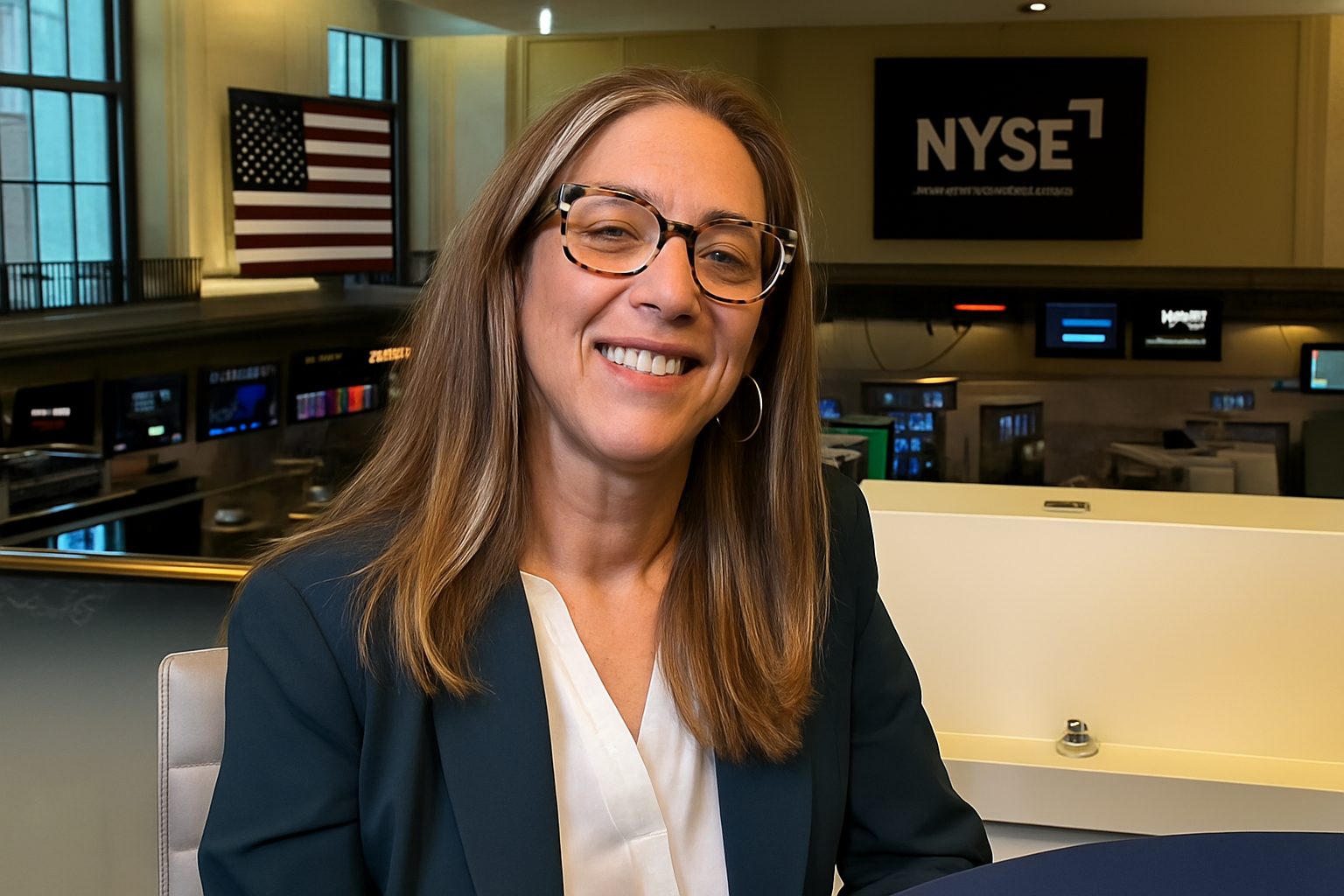
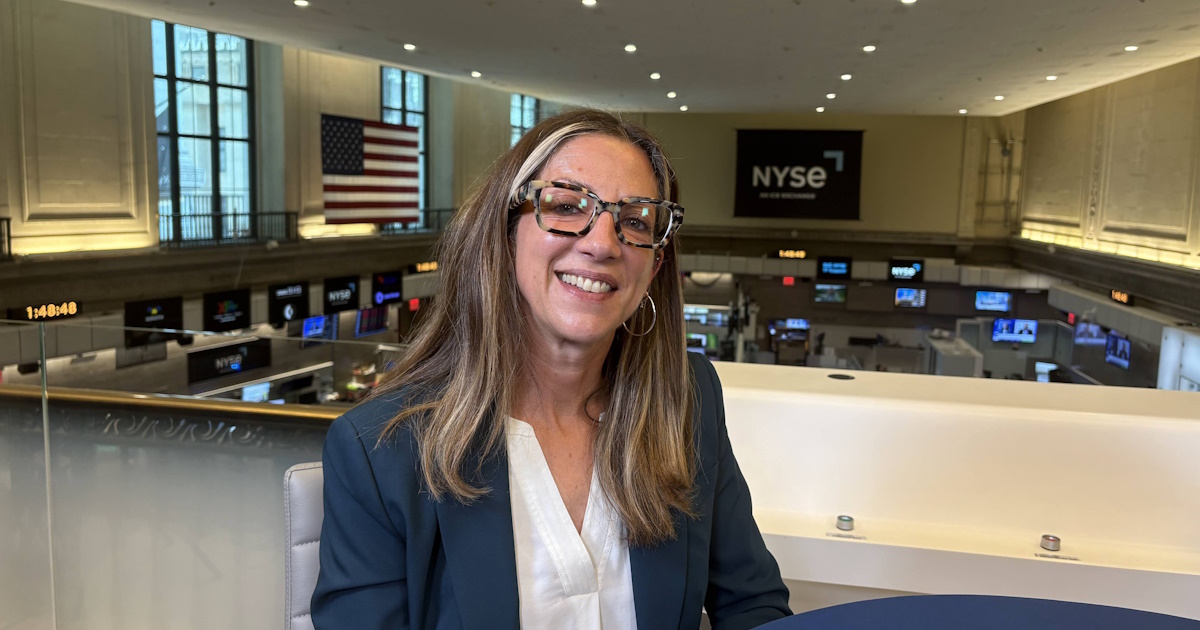
In this theCUBE + NYSE Wired segment from AI Factories – Data Centers of the Future, theCUBE’s Dave Vellante sits down with Mary Kiernan, director of GenAI Global Consulting and practice lead at Dell Technology, to unpack how enterprises are operationalizing AI at scale. Kiernan shares field insights on why many organizations prototype in the cloud, then bring production closer to their data on-prem for reasons including cost, sovereignty and security. She walks through the real work of moving from POC to production: aligning hardware choices with workload needs, selecting orchestration and observability tooling and integrating “new” AI stacks with long-standing enterprise policies, processes and training.
The conversation explores how AI factories are becoming the backbone of enterprise infrastructure and what that means for stack design. Kiernan explains customer patterns such as setting up internal GPU-as-a-Service for chargeback/showback and isolation across business units. She notes Dell’s “opinionated” reference architectures for getting started – from an AI factory with NVIDIA software plus orchestration – to more flexible builds that meet customers where they are. The pair also discuss Dell-on-Dell lessons, including deploying agentic capabilities to support large sales teams, and why the rapid cadence of new chips and systems (“the speed of NVIDIA”) introduces complexity that elevates the role of consulting. The result: practical guidance on scaling use cases, data ingestion pipelines and governance – while building toward a cloud-like experience on the data center floor.
Forgot Password
Almost there!
We just sent you a verification email. Please verify your account to gain access to
theCUBE + NYSE Wired: The AI Factory - Data Center of the Future. If you don’t think you received an email check your
spam folder.
Sign in to AI Factories - Data Centers of the Future.
In order to sign in, enter the email address you used to registered for the event. Once completed, you will receive an email with a verification link. Open the link to automatically sign into the site.
Register for AI Factories - Data Centers of the Future
Please fill out the information below. You will receive an email with a verification link confirming your registration. Click the link to automatically sign into the site.
You’re almost there!
We just sent you a verification email. Please click the verification button in the email. Once your email address is verified, you will have full access to all event content for AI Factories - Data Centers of the Future.
I want my badge and interests to be visible to all attendees.
Checking this box will display your presense on the attendees list, view your profile and allow other attendees to contact you via 1-1 chat. Read the Privacy Policy. At any time, you can choose to disable this preference.
Select your Interests!
add
Upload your photo
Uploading..
OR
Connect via Twitter
Connect via Linkedin
EDIT PASSWORD
Share
Forgot Password
Almost there!
We just sent you a verification email. Please verify your account to gain access to
theCUBE + NYSE Wired: The AI Factory - Data Center of the Future. If you don’t think you received an email check your
spam folder.
Sign in to AI Factories - Data Centers of the Future.
In order to sign in, enter the email address you used to registered for the event. Once completed, you will receive an email with a verification link. Open the link to automatically sign into the site.
Sign in to gain access to theCUBE + NYSE Wired: The AI Factory - Data Center of the Future
Please sign in with LinkedIn to continue to theCUBE + NYSE Wired: The AI Factory - Data Center of the Future. Signing in with LinkedIn ensures a professional environment.
Are you sure you want to remove access rights for this user?
Details
Manage Access
email address
Community Invitation
Mary Kiernan, Dell Technologies
Mary Kiernan of GenAI Global Consulting and practice lead at Dell Technologies joins Dave Vellante on theCUBE to discuss AI factory implementation and the future of data centers. Engaging with top enterprises, Kiernan and their team focus on evolving AI strategies for cost-effective and secure data management.
In this insightful session, Kiernan, who leads Dell Technologies' GenAI Global Consulting, discusses with Vellante of theCUBE Research the challenges enterprise customers face in transitioning AI workloads from cloud-based proofs of concept to on-premises environments. The conversation explores Dell's approach to meeting varied customer needs with tailored AI solutions and effectively scaling AI initiatives. Vellante, co-founder of SiliconANGLE Media, lends expertise to extract valuable insights from the discussion.
Key takeaways from this session include the importance of data organization before adopting AI practices, as emphasized by Kiernan. They also highlight Dell’s consulting capabilities, which help customers navigate the complexities of AI stack customization and implementation. According to Kiernan, Dell's real-world experience with GenAI and internal case studies presents a unique advantage for enterprises striving to optimize their AI strategies.
Director, GenAI Global Consulting (Practice Lead)Dell Technologies
In this theCUBE + NYSE Wired segment from AI Factories – Data Centers of the Future, theCUBE’s Dave Vellante sits down with Mary Kiernan, director of GenAI Global Consulting and practice lead at Dell Technology, to unpack how enterprises are operationalizing AI at scale. Kiernan shares field insights on why many organizations prototype in the cloud, then bring production closer to their data on-prem for reasons including cost, sovereignty and security. She walks through the real work of moving from POC to production: aligning hardware choices with workload ne...Read more
exploreKeep Exploring
What are some reasons customers might choose to bring their AI and data processing back on-premises instead of using cloud services?add
What steps do customers take to integrate their business utilities into an AI environment and build the necessary infrastructure to support high-value use cases?add
What are the different ways customers approach their needs and use cases when working with tool and integration development?add
What is the current status and impact of Dell's internal adoption of AI and GenAI technologies on their sales organizations?add
What is the impact of the evolving complexity in on-prem and enterprise AI on the future of consulting?add
>> Hi, everyone. Welcome back to the New York Stock Exchange. My name is Dave Vellante and you're watching The CUBE and NYSE Wired's coverage of AI factories, data centers of the future. Mary Kiernan is here. She's the director of GenAI Global Consulting at Dell Technology. She's the practice lead. Mary, good to see you.
Mary Kiernan
>> It's nice to be here. Thank you so much for having me.
Dave Vellante
>> I love talking to Dell Consulting. I love the services angle. You guys are in the field. You got the pulse of the customer. Our focus, of course, is on enterprise AI. We know there's a lot of action happening in the cloud. You guys work with a lot of big customers. You're based in Philly. Go Eagles. I know. Go Pats. All right, cool. Hope we see you in the Super Bowl someday again, and I think we're one in one, right, with you guys, right?
Mary Kiernan
>> No, you might want to go back and check that.
Dave Vellante
>> Is that right?
Mary Kiernan
>> Yeah.
Dave Vellante
>> We beat you twice?
Mary Kiernan
>> No, you're right. One in one.
Dave Vellante
>> Yes.
Mary Kiernan
>> .
Dave Vellante
>> Yes.
Mary Kiernan
>> Yes.
Dave Vellante
>> Right. So we're even?
Mary Kiernan
>> Yeah.
Dave Vellante
>> All right, we need a tiebreaker, so let's pray for that. Okay. Anyway, you're in the field, a lot of big customers in Philly and New York. What's happening? What's the pulse of the customer with respect to enterprise AI? AI factories? What's going on?
Mary Kiernan
>> Well, we're still seeing, I think, customers coming in from almost everywhere on the spectrum in terms of maturity, right? So we do have customers that want to try a POC, in which case they might need help identifying some of their use cases. They might need to understand some of their strategy. We have a lot more customers that have already done POCs in the cloud or have production workloads that are running in the cloud. Very sophisticated use cases, very sophisticated agents, and now for reasons of cost, for reasons of data sovereignty or for data security, they want to move some of that on-prem. So my team, they're all consulting. So our job is to go in and try and help the customer figure out how best to go about that move. In some cases, they know they want to get the hardware first, right? So they're looking at the hardware architecture first. In which case we need to think about, what do those workloads look like? What does that software stack look like? What is the best way to orchestrate this? How can we help them through that journey? A second phase to that is integration with production. So I think you know by now what a lot of customer data centers look like, right, and a lot of our customers, they have policy policies. They are using tooling, they're using protocols and sort of training mechanisms that have grown up organically within that enterprise for years and are there for a reason. So how do they get this shiny new hardware, this brand new software and all of these new use cases working with their data in their environment? And that is an area where I think we're seeing more and more of our consultants being brought in. How do we take something from POC to production? What does that look like and how best do we set that customer up for scale? They might be in one or two use cases now, but that's not going to be their future.
Dave Vellante
>> I want to put a finer point on that, Mary, because I'm inferring it's not so much what I would call a reverse lift and shift repatriation as it is, and correct me if I'm wrong, the POC was done in the cloud, but the crown jewels are on-prem and they want to build the production system on-prem, bring that AI to their data, or is it a repatriation play?
Mary Kiernan
>> In some cases it can be either. So some of our customers, they go POC first and then they know, okay, we have to somehow figure out how to do this on the floor. Other customers, they've made a significant amount of headway in some of the cloud providers or in some of the CSPs or their R&D organizations, their data science organizations. They have been building models and they have been doing machine learning for a while and now they're building agents and all of that sort of thing. And now because of security or because of cost reasons or IP, they want to start bringing that back on-prem, so it really could be either.
Dave Vellante
>> When you talk to customers, as they build that on-prem AI stack or today that on-prem AI stack doesn't exist. It's all new. The cloud guys were first. They're spending hundreds of billions. Okay, great. So let's do the POC in the cloud. All the tools are there. Fine. As the on-prem stack matures, do you expect that more POCs are going to be done on-prem?
Mary Kiernan
>> I do expect that more is going to be done on-prem, yes. I think, as our enterprise customers become more comfortable with operating and running this equipment and this software and this tooling on-prem, and once they have fully invested in the value, whether it's the processes that they're able to economize, the scales that they're able to economize by bringing some AI tooling into their day-to-day business, the more that they invest there, the more that we're going to see this. Right now I think it's a matter of, there is so much to choose. There's so much to decide. There's a lot of software, there's a lot of hardware, there's a lot of things that they have to learn. How do I get my data over there and how do I take advantage of all of the use cases that I might have in other pockets of the organization? So any business unit in an enterprise, there are AI use cases that can help find efficiencies within that particular business unit, right? HR or accounting or things like that. How do I start managing my infrastructure to take advantage of that because those use cases and those kinds of agents that you can build within your enterprise, that becomes your IP and you want to keep that internal to the business. You don't necessarily want to share that in the cloud.
Dave Vellante
>> So one of the first steps I presume you have to help customers with is to get their data act in order before they start applying AI. Otherwise, you're sort of wasting money. What is that? My general question is what's the on-prem stack look like? But I'm specifically interested in the data piece. You're not a data company, per se, but as consultants, you understand the importance of that. You may in fact work with some of your other partners. So let's start with the data. First of all, is that the right place to start? Are customers starting there and how are you guys helping?
Mary Kiernan
>> Some customers do start there. It is from my seat, in AI consulting, it's not where most of them start. Most of them start with the reason customers go POC is because there is, I think, an immediate sort of return on the investment. They're able to see a use case. They're able to see an application, they're able to see something that speaks to them. When they're able to see that use case, they're able to generate more internal interest. And that internal interest is what sparks the data conversation because then it's okay, how do we expand this use case? How do we expand this agent so that I can search for more things or I can get, instead of just asking for directions on this cruise ship, how about if I ask where the ports are and when the movies are and what's for dinner tonight? How do I get all that data in there? That opens the door to a broader data conversation. So in many cases, the customers are starting with what are the business utilities that I want to bring into the AI environment, and then how do I get my data from wherever it is into the models that are going to feed those use cases in that environment?
Dave Vellante
>> So presumably they go through a prioritization exercise. The POCs help too, I know Dell went through that itself internally. I want to get to Dell on Dell. So let's say you've got those priorities and you understand what the high value use cases are, you know where you're going to get the ROI. Maybe some of them are small, maybe some of them are medium. Maybe you're waiting for your big high risk net present value ones. We'll put those aside for a moment. But then, so I'm now going to build an infrastructure AI on-prem infrastructure stack to support those use cases. What does that stack look like? I mean, from Dell's standpoint, you've got the AI factory, NVIDIA. Okay, great. But there's a data stack, there's governance around it, there's security, there's applications that are running on top of. What does that stack look like?
Mary Kiernan
>> So right now, that stack is largely informed by a customer, I think, preference. So we have a few different flavors of what that might look like. But you are spot on. An AI factory for a POC is a very self-contained thing, but when you start getting into what does this need to look like in order to provide a cloud-like experience on my data center floor, then it becomes observability tools, it becomes orchestration tools, it becomes security processes, some of which is tooling and some of which is governance. You're absolutely correct. And when you think of all of these things together, it can be a phenomenal amount of choices. Some of our customers are at a maturity level right now where they come to us already kind of knowing some of the choices they want in those tools or the integrations that they want us to roll things into, in which case it's a reverse engineering exercise. In other cases, we do try to talk to the customers about what it is that they're trying to achieve. So the use cases, the outcomes, the business outcomes feed into and help us define what the rest of those tools might look like, is developing three or four agentic use cases, the end state of this initial phase of your build out, your AI build out. If it is, then let's make sure that we concentrate on how your data ingestion pipelines, what your automation tooling is going to look like and how you provision the models within. So some of your tool choices might look like that. In other cases, we have customers, this is very prevalent in enterprise right now. We're seeing a lot of customers who are making an investment in the hardware, which is, it's a significant investment, not just money, but also in training and in time and in process changes. We're seeing a lot of our customers, because they're making that investment, they want to set up an internal GPU as a service. So they want to be able to provision the GPUs that they've invested in to different business units and charge back, show back, make sure that you can't see into his use cases and he can't see your models. In which case that is a different pathway, I think, to define the software orchestration and the tooling, there's a number of different options that an organization might consider depending on scale and depending on security, what they might want to do. We're still in a position now where there are more choices, I think, than there are official usage patterns. And I think that's really right now for the best because I think it allows us to give our customers something that they are the most confident in as they learn to take this over and they start to think about scale.
Dave Vellante
>> So right now it sounds like, especially from a Dell consulting standpoint, it's not so much a solution sale. Dell AI factory with NVIDIA is a solution, but the stack around it is, well, it depends. It depends on what you have skill sets around and processes around, what the databases are, what the observability tools that you're using.
Mary Kiernan
>> Correct.
Dave Vellante
>> And the vector databases.
Mary Kiernan
>> And I don't want to interrupt because we do have recommendations. We do have recommendations for what that tooling should look like.
Dave Vellante
>> Okay, so you've got opinionated reference architectures?
Mary Kiernan
>> We do, we do. We do. We do. It can be as extensive as all of the things that we just talked about, or it can as easy as the basic AI factory with the NVIDIA software architecture as well as maybe an additional orchestration piece.
Dave Vellante
>> AI in a box with some orchestration.
Mary Kiernan
>> Correct.
Dave Vellante
>> And let's get started, sort of thing.
Mary Kiernan
>> Correct. Correct.
Dave Vellante
>> Okay.
Mary Kiernan
>> But customers need flexibility in terms of the other tooling, right? I mentioned before there's millions of options. The AI software game right now is pretty healthy. You want to make sure that you're getting something that's giving you the right amount of value for your investment and that could support the scale that you want to achieve.
Dave Vellante
>> And you have to be Switzerland. I mean, other than the fact that you obviously want Dell hardware.
Mary Kiernan
>> We do have to be, yeah.
Dave Vellante
>> But beyond that, it's like you can make recommendations.
Mary Kiernan
>> Correct.
Dave Vellante
>> But if they want to run it on their Oracle database, they're going to run it on their Oracle database.
Mary Kiernan
>> Correct.
Dave Vellante
>> You're not going to change that.
Mary Kiernan
>> Right, and I probably sound a little bit like I'm tooting my organization's horn here, but that's where consulting can be really valuable. Dell has a long history of working with our customers and meeting our customers where they are. We have a long history of making our products work best for their outcomes in their environment with their preferred vendors and with their preferred tooling. AI factory is no different and there's no one better, I think, in a position to be able to help them understand how to take these new capabilities and make it work for them.
Dave Vellante
>> Let's talk about Dell as customer Zero. You guys have a lot of experience. I know before Jeff Boudreau left the company, his main task was to identify all those potential use cases and start narrowing them down. I've talked to John Rose since then who's now the Chief AI officer as well as the CTO, and you guys I think did a pretty good job of identifying those use cases. I know things like Next Best Action are something that you guys developed internally, and of course you're Dell, so you're doing a lot of this stuff on-prem, so you're a great Petri dish for enterprises. What can you tell us about how you're deploying AI, GenAI, Agentic, and how's it going?
Mary Kiernan
>> It's going, I would say, really, really well, right? We learn a lot from our internal organizations that are standing all that up, and they are wonderful in supporting a lot of our customer conversations, right? Because the investment that Dell has made in the internal adoption of AI and GenAI technologies has been huge, and it's allowed us to put a lot of really great mindshare into evaluating a lot of this tooling and a lot of these integration pain points and a lot of these data challenges to the test in real time before we are in a position where maybe our customers are evaluating or looking at some of those things themselves, and we've done it at scale. Dell has transformed, fairly recently, a lot of our internal tooling to better support our sales organizations, right? Where we have an agentic, sort of, sales chat capability that I know allows a lot of our sellers to be able to find real time information, to be able to support their clients better almost immediately based on huge amounts of potential products, services, integration software, all kinds of things. And being able to turn something out and turn it on to a sales force in the tens of thousands takes an Army. And it's been extremely valuable for us to use because we can talk to our customers about things like that, the power like that, but we can also talk to them about the challenges with that, right? It is very hard. It is a lot of data. There is a lot to sift through. There is a lot of potential tooling. So being able to show the customer the art of the possible and then be able to help them define what it will take us together to get there, it's a wonderful thing.
Dave Vellante
>> I want to close with a question. It's kind of a two part question. But I want to set it up with, it's a question about the future of consulting in the AI factory era, in the context of our customers underestimating the complexity of doing on-prem and enterprise AI, and how does that inform the future of consulting in the ?
Mary Kiernan
>> I don't think that my job is going to go away anytime soon.
Dave Vellante
>> So it's more complex than many people think?
Mary Kiernan
>> Well, it is. I had the great privilege of attending GTC in March. And I got to see the NVIDIA keynote with Jensen and the light speed at which the chips are maturing and what that means for hardware around those chips in terms of maturity and the amount of, I think, investment that NVIDIA as well as Dell are putting into maturing the software tools around that mean that we are seeing new, new, new, new all the time. And for every new chipset, for every new AI server that Dell cranks out of the factory shiny and new, there's complexity. The cables don't go in the same way. They don't connect in the network the same way. Maybe the software that you were using before-
Dave Vellante
>> Not the same way....
Mary Kiernan
>> you have to figure out how to do it here. I think in some cases the solutions are going to simplify over time, but right now the speed of the development, and I think the urgency of the customer demand means that we need to help our customers a lot more along the way, right? Things are maturing faster than it probably takes me to cross the room.
Dave Vellante
>> We call it moving at the speed of NVIDIA. You have to keep up with the speed of NVIDIA. The customers are typically moving at the speed of the CIO in reducing risk. But today the mantra is not move fast and break things, it's move fast and don't break things.
Mary Kiernan
>> Correct. Correct. No, that's true. But a customer said actually yesterday in a presentation that he was making, somebody asked him the question, what's the value of Dell? And he talked about our consulting and he talked about how Dell can see around corners and we can get things done. So because we can see around those corners, we can kind of see what's coming a few iterations down the road, or we have the benefit of having tried this before with another customer and knowing it will work really well for you Mr. customer, because we can do that and we can anticipate that we are in a much better position to walk into a customer environment and help them get there faster.
Dave Vellante
>> Mary, thank you.
Mary Kiernan
>> Thank you.
Dave Vellante
>> Appreciate you coming in.
Mary Kiernan
>> Thank you.
Dave Vellante
>> So great to meet you.
Mary Kiernan
>> Great to meet you too.
Dave Vellante
>> And thank you for watching AI Factories, data Centers of the Future, NYSE Wired plus theCUBE's ongoing coverage. Dave Vellante for John Furrier. You're watching theCUBE. Right back, right after this short break.