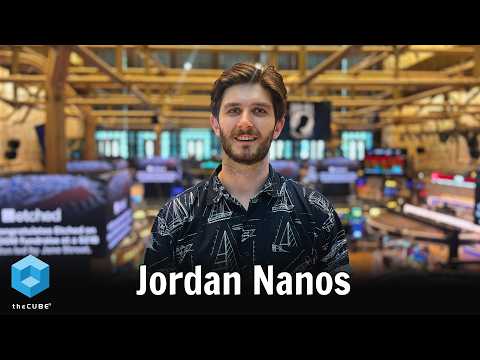
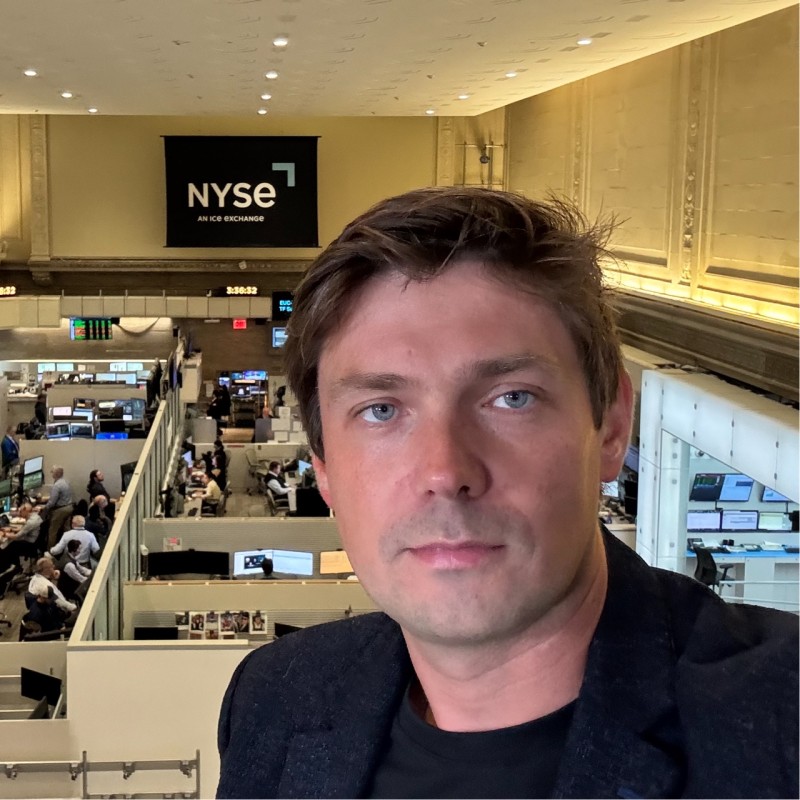
In this theCUBE + NYSE Wired conversation from AI Factories – Data Centers of the Future, Pawel Czech, chief executive officer and co-founder of NativelyAI (and co-founder of Lablabs), joins theCUBE’s John Furrier at the NYSE to define what it means to be AI-native. Czech explains why enterprises must use intent-driven orchestration to pick models and compute in real time by cost-per-token – from data center to edge. He outlines a shift to prompt-to-software and event-driven systems that can spin up, scale, go dormant or be deleted as to accelerate the cleanup of legacy stacks while keeping environments vendor-agnostic and heterogeneous.
The discussion connects transformers with reinforcement learning for deterministic/probabilistic control and frames AI factories as the new unit of value reshaping economics, resilience and hybrid cloud strategy. Czech highlights the builder movement through Lablabs, a 200K+ global developer community powering large-scale hackathons that crowdsource production-grade solutions. Current momentum includes a new program with ElevenLabs, Coral Protocol, Mistral, Crossmint and Nebius, with Solana hosting the finals – ~3,000 curated participants expected to deliver ~100 production-ready agentic systems in five days – and a global roadshow spanning Singapore, Paris, London, New York and San Francisco.
Forgot Password
Almost there!
We just sent you a verification email. Please verify your account to gain access to
The AI Factory - Data Center of the Future. If you don’t think you received an email check your
spam folder.
Sign in to AI Factories - Data Centers of the Future.
In order to sign in, enter the email address you used to registered for the event. Once completed, you will receive an email with a verification link. Open the link to automatically sign into the site.
Register for AI Factories - Data Centers of the Future
Please fill out the information below. You will receive an email with a verification link confirming your registration. Click the link to automatically sign into the site.
You’re almost there!
We just sent you a verification email. Please click the verification button in the email. Once your email address is verified, you will have full access to all event content for AI Factories - Data Centers of the Future.
I want my badge and interests to be visible to all attendees.
Checking this box will display your presense on the attendees list, view your profile and allow other attendees to contact you via 1-1 chat. Read the Privacy Policy. At any time, you can choose to disable this preference.
Select your Interests!
add
Upload your photo
Uploading..
OR
Connect via Twitter
Connect via Linkedin
EDIT PASSWORD
Share
Forgot Password
Almost there!
We just sent you a verification email. Please verify your account to gain access to
The AI Factory - Data Center of the Future. If you don’t think you received an email check your
spam folder.
Sign in to AI Factories - Data Centers of the Future.
In order to sign in, enter the email address you used to registered for the event. Once completed, you will receive an email with a verification link. Open the link to automatically sign into the site.
Sign in to gain access to The AI Factory - Data Center of the Future
Please sign in with LinkedIn to continue to The AI Factory - Data Center of the Future. Signing in with LinkedIn ensures a professional environment.
Are you sure you want to remove access rights for this user?
Details
Manage Access
email address
Community Invitation
Pawel Czech, NativelyAI
Analyzing Trends in AI Development with Pawel Czech
Pawel Czech, Chief Executive Officer and Co-Founder of NativelyAI and Lablabs, joins the host of theCUBE at NYSE CUBE and Wired Studios. They discuss the transformative impact of AI factories and large-scale clustered systems in the software industry. Together, they explore the dynamics of AI-native software development and the evolving landscape of modern computing systems.
In this conversation, Czech shares insights into the rapid advancements in generative AI and the shift towards AI-native software, which can redefine enterprise operations. With over 200,000 developers engaged in the AI-native movement, Lablabs leads the way in fostering innovation through community-driven hackathons and virtual teams. The discussion, guided by insights from theCUBE Research and video hosts, emphasizes the importance of embracing new technologies to remain competitive.
Czech highlights the inevitable changes AI-native environments bring to market dynamics, stressing that enterprises must adapt to harness these innovations effectively. Key takeaways include the significance of decoupling application layers from model layers and ensuring data fluidity for optimal AI-native software performance. Czech asserts that careful selection of computing models and resources will drive the efficiency and success of future business operations.
In this theCUBE + NYSE Wired conversation from AI Factories – Data Centers of the Future, Pawel Czech, chief executive officer and co-founder of NativelyAI (and co-founder of Lablabs), joins theCUBE’s John Furrier at the NYSE to define what it means to be AI-native. Czech explains why enterprises must use intent-driven orchestration to pick models and compute in real time by cost-per-token – from data center to edge. He outlines a shift to prompt-to-software and event-driven systems that can spin up, scale, go dormant or be deleted as to accelerate the cleanu...Read more
exploreKeep Exploring
What is the relationship between NativelyAI and Lablabs, and what insights can be provided about their roles in the current technology landscape?add
What change in software development was observed in relation to AI and how did it affect collaboration and productivity?add
What is meant by the term "AI native" and how does it impact economics, operational workflows, and market positions?add
What are the key considerations in developing AI-native software and deploying it effectively?add
What is a description of event-driven software that is created dynamically in real time based on specific requirements?add
What is the financial impact of legacy software being deleted from balance sheets?add
What are some reasons for the failure of prototypes built by large companies, and how might large-scale hackathons contribute to finding solutions?add
What potential challenges might companies face as they work to adopt new software, and could these challenges lead to a significant decline in their market presence similar to what happened with Kodak?add
What is the importance of accessing the right resources for achieving real-time decision-making in AI systems?add
What is your perspective on the hybrid approach to AI deployment, particularly in terms of edge devices versus centralized compute?add
>> Welcome back, everybody. I'm John Furrier, host of theCUBE here at our NYSE, New York Stock Exchange Studios, on the balcony overlooking on the show floor. Of course, this is our East Coast hub and access point. Of course, we've got Palo Alto connecting Wall Street, and Silicon Valley, and creating a backbone of relationships. That is theCUBE and the NYSE, NYSE Wired community. Got a great guest. Pawel Czech here is the CEO and Co-Founder of NativelyAI, as well as Lablabs, a growing, thriving community of developers. An amazing mission, and again, one that we've been documenting on SiliconANGLE and theCUBE that AI factories, these large scale clustered systems are going to power this next generation. It is a shift in technology, it's a shift in generations, and it is ushering in the transition from old to new in software and large scale systems. A topic we care a lot about, because you got to run software on these new large scale systems. Pawel, great to have you on. Good to see you again. Thanks for coming on here at our NYSE CUBE and Wired Studios.
Pawel Czech
>> Thank you, John. It's a pleasure. It's an amazing location. I was saying that you feel the excitement the moment that you enter.>> Yeah. We met in Paris at the RAISE Conference and you ran a very successful hackathon there as part of your mission. You're doing amazing work, because you're doing two things really, really well in parallel. You're building a enterprise scale platform to essentially build the next generation software that's going to run on these modern AI systems, whether it's large scale systems or distributed computing, devices, edge. I mean the edge is getting more intelligent. And then at the same time, the developers who are going crazy with the AI models are also building. We're in an era. So, explain the trend that you're riding and creating that's game changing. And talk about the entity, NativelyAI and how does Lablabs fit in? Explain it all.
Pawel Czech
>> Absolutely. So, I noticed quite early on in the current technology cycle that the way that transformers, so-called generative AI, is progressing and the performance of these systems is going to outpaced human performance. So, when you look at the data, you have to come to a conclusion, probably five, six years ago, these systems will beat us. So, what's the consequence of that? How do you play into that situation? So, you have to think about constructors, like talent, like electricity, compute. So, it was very clear for me very early that people will be able to build amazing new AI native software, and that the way we operate and build software is going to drastically change. So, based on that, for me a fact, a data-driven finding, I decided to invite people to build together, to become builders of tomorrow and the AI native builders. So, we started very early organizing hackathons where we invited PhDs, where we invited some subject matter experts. And it turned out very quickly that the new way of building is much faster, much more effective, that you can go from an idea to a prototype in a few hours, a few days to a production ready software. So, that to me, coming from the software industry, felt like an amazing change. So, finally, the gates were open. Anybody and everybody could participate in the new AI economy. So, I decided to devote my time, my life to bringing in the new era of AI native software.>> Yeah. And what's great about that is as the world realizes now that is happening. And people talk about hype cycle, certainly there's some hype was here at NYSC. So, you see companies going public soon. I think the pipeline will open up. But there's real business being done on this AI native. And I want to get your thoughts on this, because in the cloud era, cloud native was a topic. And that was great, because cloud had large scale. It's interesting, cloud has taught us what scale looks like. Now you got quantum computing. Oh, my God, we're going to crack our encryption now. Super computing enters the scene. Essentially, we're talking about super computing capabilities, new use cases, new capabilities, and so everyone can now connect the dots. Cloud showed us scale, cloud showed us agility, developer, cloud native, Kubernetes, all that great stuff we know and love. It can become boring, which is good. But now you're getting into a mindset, a generational shift of the mechanics of AI. I want you to explain this, because I think this is so important because a lot of people don't even know what AI native means. Because what AI native means to us as we look at it, and we've talked off camera about this, is everything's done differently but better. And so, economics change, operational, workflows change, benefits change. I mean, it's a multitude of things happening at once that AI native brings in. So, of course, that's going to attract builders, because entrepreneurs see opportunity and they capture it, they go after it. This is going to change market positions on existing companies. It's going to change the financial outlooks for many. Some might even be caught with their pants down and be on the wrong side of history, because they may be poo-pooing it or just dismissing it. Meanwhile, it's an opportunity because it's all up in the air. And when it lands, it's going to be a reconfiguration of things. Not so much a reset, it's just more of a chapter closes, a new one opens. And we saw this in open source software when proprietary software was replaced by open source. Well, that's great. Now, open source is thriving. Great. Now you've got software generally, not just open source software, all software. Open source is a standard. This is key, because software is the key to this, and the advances within video, Broadcom, switching and routing. I mean networking is the OS layer now. Who would've thought about that 10 years ago? So, all that being said creates great change. How do you define AI native? What does that mean from a technical perspective? And how are people looking at value construction? Share your thoughts and vision.
Pawel Czech
>> I think you gave an amazing summary there, number one. So, not to repeat word for word. I think when you look at AI native software, so it's not only the way you build it. So, it's not only that you write code differently. You also write code in a way that can be then changed and adopted using artificial intelligence systems. But when you think about the orchestration of how that system scales. So, you think about the mechanics of deploying software in the cloud or on edge devices, the ability to bring a model to the data, it's thinking about building for a specific use case. And people say prompt to software. Imagine a situation that you can create software based on a specific need or an event, so event driven software. It's created in real time dynamically based on your specific requirements. That happened just a second ago. It's deployed, it runs, it uses the most optimized cost per token. It uses the most optimized access to a data structure. Potentially, it creates a market dynamically in real time to acquire the compute, to acquire model access, and to acquire the product or service that you're after. And then once the software isn't needed anymore, it can run in the background or it can basically be dormant until you need it again.>> Or deleted.
Pawel Czech
>> Or deleted.>> Next prompt.
Pawel Czech
>> Next prompt. Absolutely. And you see this unfolding right before your eyes. So, ultimately, I believe in the future that we have this Star Trek-like computer and everything that is done by the software is almost secondary. So, the software industry overall will create a lot of value right now, but there's also going to be a lot of legacy software that's going to get deleted from the balance sheets. So, there are people that are tracking this and it is already in the trillions of dollars.>> Of deleted software?
Pawel Czech
>> Of deleted software, yes. So, there's already trillions of dollars every year of legacy software that just gets deleted out of the balance sheet, because there's no point in spending all that money again to maintain it. It's just so much cheaper, so much more effective to rebuild that whole software stack in an AI-native way and remove the function.>> Okay. So, take me through, because this means that if you were in the software business, say 20 years, you would fall into the legacy category unless you modernize with AI. Are there people looking at doing that? I mean, we hear about Salesforce, others, because Salesforce is probably a great example of a bunch of stuff they've acquired. You got companies like Dell that have an AI factory solution with Nvidia. Nvidia obviously promotes that as well. Enterprises are looking at this saying, I have software, we'll talk about the deleted and then we'll get to the factory. And then I have, okay, I'm buying essentially a new system. Not a server, a collection of servers, a collection of XPUs or GPUs, whatever you want to call it, a large scale system that doesn't actually have software to run on it yet or does or it's not optimized. So, we're seeing two shifts, legacy, deletion, replacement, and then this new server, quote, or system that an old server would put Linux on it. We all know. We've been there. You put Linux on it or it's preloaded. But the old days we used to load Linux on, but that's a concept that people would understand. It puts some software on the server, the server runs the hardware, the software runs the OS, applications and services run with that, but not anymore. So, there really isn't a clear... And this is what my question is, what is the clarity around what runs on a large scale system? No, Nvidia's got a clear answer, run their stuff, which is fine. And it's like the Apple, everything runs. But large enterprises, like a JPMorgan or a bank, they have monster IT. What's their factory being powered by? And startups want to sell into it as well. So, what stack do they write it to? These are open questions. I asked that, because we can't find anything. I mean, I say that generally, but there's probably stuff that runs on it. But you're going to spend a million dollars on a large scale cluster, it's got to run something.
Pawel Czech
>> So, there's been just lately a lot of talk about most of the prototypes that large companies build or try to build that they fail. And part of the answer is running these large-scale hackathons, because you can get two, three, 4,000 people online. And basically, almost crowdsource a solution to a very specific use case or a problem. Whether that's payment systems or chatbots or a very specific industry verticalized software, people will come up with the solution. And I don't really think that the answer will come from these very big companies. I see a lot of fractionalization of the market itself. The pie is getting bigger and bigger. The economy is growing and we see a lot of these single-person, two-person, six-person companies that solve a very specific problem. They thrive on a specific opportunity and they don't need a big company to build the software. Before you needed millions, sometimes tens, hundreds of millions of dollars to build the software stack. And today, it turns out you don't. You just need a few talented people, access to the right technology, and the prototype, the MVP, the production software can be built. So, I believe that that process will be replicated in the enterprise setting as well.>> And on the enterprise specifically, there's a ton of POCs. We talk to the enterprises all the time, the actual practitioners, and they tell us pretty much the same story. And I'm paraphrase, because it's not all the same, but it's pretty close to the pattern. We love it. We don't have a huge budget. And now when they say that it's big, but it's not as big as say a hyperscaler dropping $30 billion for a data center. They go, we like it, but I don't want to overbuy for something. I could run that on a different cluster. Say there's a hackathon or a solution, it has to run everything at scale, because the benefits of native AI is that you're going to get new functionality. So, they want to have a very heterogeneous environment to maximize the compute, the network resource that they're architecting. So, in one hand it's like it looks good on paper. And on the other hand it's like, wait a minute, I only got three or four workloads on this thing. Or is that optimized? So, there's like a chicken and the egg thing going on now. And I think the answer is it's going to converge. I'd love to get your thoughts on this because this is a computer science problem. This is a mechanical engineering problem, if you want to look at it. It's a semiconductor. Back in the '90s, memory management. Now that's kind of coming full circle. So, there's a lot going on. Where is the state of the enterprise relative to really standing up these systems? Is it waiting for the software side? What's your view on this, because this is a open question?
Pawel Czech
>> So, it's a very hard problem to solve. That's number one. So, in my opinion, the answer is you remain agnostic. So, you detach the application layer from the model layer and you derive your value in the data. So, you make sure that the data is available to the AI models, so it becomes AI native. And that's selecting the right databases, labeling the data, preparing that stack. And once that's ready, rebuilding the application layer today seems really not a big issue anymore. You can just, as you said, prompt the AI to rebuild the application layer. And in a agnostic way, select the model that has the most optimum cost per token. And the cost per token, I like the analogy that I saw somebody talk about, which is pelicans riding bikes. So, if you're just building pelicans riding bikes, you probably need less costly model than when you're generating kittens in outer space holding you by the hand. And that cost per token is or should be a dynamic selection process. So, it should almost be semantic. We saw and we are seeing these intent-driven systems come to life. And that's where my personal focus is, is to create these intent-driven systems. Very good example is when OpenAI removed the model selection. The system actually goes down and selects the most optimum cost per token model. It just says GPT-5. It might be running a variety of other models underneath that are specific to your use case. For the enterprise client, this means that they should be able to select an open source model or a commercial model, the model that's most optimized for coding or image generation. And that process at some point will become transparent to them. It will become seamless. Then you add the component that you mentioned, which is scale. And scaling that problem means selecting the compute provider in real time dynamically. And that doesn't mean that you should sign a $20 million contract with a compute provider or 300 billion with a single compute provider, because in all likelihood you will not be fully utilizing the complete bandwidth of that compute. So, I think there's a lot of room there for marketplaces, for compute fractionalization, being able to deploy a model in the application for a specific work stream and optimize the cost of compute. So, that's the problem that I'm focused on solving personally. And that's where it will go.>> I mean Pawel, what you're basically saying is you've illustrated the complexity.
Pawel Czech
>> Yes, it's very complex.>> That will be abstracted away. Totally see that. That's what AI does. It will do in my opinion. So, I think we have a clear shared vision on that. But you brought up a couple of things. I mean, we were talking about routing. I'm thinking about packet routing. Remember the old days, cost per route, take lease cost paths. So, you got kind of networking. You mentioned some other things all compute. Okay, and models. So, you got model selection, that's use case driven It's a resource. This is an operating system conversation. I mean this is the kind of dialogue you'd expect in a room on a whiteboard, people building the kernel of an OS. Resource loading, linking things together, assembling, and then you have a runtime layer. Call it generative. Generative is runtime. It's like a prompt. Hey, computer, not static resource prompts. They don't know what you're going to do next. That's runtime. So, we're talking about an operating system, but we're not. We're talking about the application. So, all of this is kind of coming together. What's your reaction to that? Do you agree or am I oversimplifying it? What's the consequence or opportunity? Because it's a system discussion, not how much EC2 do I need to run my SaaS app. This is like a whole nother level.
Pawel Czech
>> Yes. It's a completely new way to build and operate software. And that's the fundamental change. That's the difference between AI native. That's the core of the initial question, that's AI native. Everything else is legacy. So, if you're not building towards AI native, you might just be priced out of the market fully, because you won't be able to compete with the cost of the software that you're building. Whether that's a software company or you're a services company or an industrial company, you'll need that software layer. And your job or the enterprise's job is to out-compete and then create the most optimum solution there. But to answer your question directly, it will happen in stages. It's a very difficult problem. It's not instantaneous. And a very good example of this is the conversation that the industry is having right now about connecting generative models and transformer technology with reinforcement learning. So, being able to have some rule-based system, more deterministic systems, and combine their continuous framework with a probabilistic outcome. So, with the most optimal outcome driven in real time.>> It's a hybrid non-deterministic meets deterministic?
Pawel Czech
>> Yes, I believe so.>> Not mutually exclusive?
Pawel Czech
>> I believe not mutually exclusive.>> What makes sense, you have left brain, right brain. I mean you can go almost... think about that way.
Pawel Czech
>> Yes, in a way. But also, as you said, you can't have everything up in the air all the time. Some things have to actually be set. And the question is, what are you setting? Are you setting the policy, the regional blockers around models, the maximal compute use and so on?>> Reinforced learning's like the older brother. The younger brother's generative, because reinforced learning's been around from a science... so, it's a little bit more mature. I mean, talk to the big banks. They've been doing machine learning for generations, fraud detection. It's really bulletproof in the sense of their... passes all their resilient bars that they have to hurdle over. So, I think a lot of the IT has solved some of this kind of key factors. What is your view on this is happening, accelerates, accelerating fast? It's like going to school. You're in kindergarten, you go up a grade, it's happening really, really fast. What are some of the things that's going to happen in your mind from an enterprise standpoint? Because they're motivated, because their benefit is competitive advantage, potentially more revenue, better product and cost reduction. I mean, it hits top and bottom line for businesses, so they're highly motivated. What are some of the things that you see them doing? What's the readiness look like? What's the preparation? Are there things you're seeing in the enterprise side? Because when you got a quarter million developers like you have constantly developing and building, they're doing stuff. That's going to get their attention. More stuff's hitting the POC line. So, the POCs are coming and they're already happening.
Pawel Czech
>> So, very, very big enterprises, I think they're already very advanced, especially in the US. There's large systems like Palantir that are being implemented. And it just is going to take years of work for these companies to fully adopt and be able to use that software. The question is, in the time that it takes them to switch, will they face a Kodak moment? Will they make it in time? And then on the other side->> Kodak, you're referring to not a picture, like the obsolescence of a leader?
Pawel Czech
>> The obsolescence. Yes.>> Yes.
Pawel Czech
>> The obsolescence.>> Kodak moment. Yeah, you on the wrong side of history.
Pawel Czech
>> In distance, yes. It's not the traditional Kodak moment, but you can combine both. And on the other side you see companies racing bottom up to disrupt. So, that creates an extremely healthy competitive environment. And things that we took for granted, and a very good example of this is Google search. This is the crown example of this. For years, 20 years now, nobody in their right mind would say that Google is going to get displaced from the search market. And it's happening in a way that it might end in a way that Google wins the market. That's totally possible.>> They have a real threat for the first time?
Pawel Czech
>> Yeah. They have a real threat for the first time. And you can see people coming back for this wave. Jeff Bezos coming back to Amazon, Sergey Brin coming back to Google.>> Their search business is up too, by the way. Amazon has a search business and an ad business.
Pawel Czech
>> And they're focusing all of those businesses towards AI.>> Again, this is where Google who's getting under pressure because of antitrust, their claim is there's competition out there. And they're right.
Pawel Czech
>> And they're totally right. They're totally right. And I think the judge ruled and underlined that in their specific case. But my point is that->> AI native is creating this opportunity?
Pawel Czech
>> Yes, AI native's creating that opportunity.>> And we're seeing this in Wall Street, just as a side tangent. We've been doing the Crypto Trailblazer series, Brian and I, on the Wired program. And one of the biggest things that's happening in New York here, being from California and moving here now, is that for the first time in the history in New York ever, in the history in my lifetime, there's now financial entrepreneurship. Meaning, there's always been entrepreneurial hustles, but it's been parasitic to the existing incumbents. I can do some prepaid calling cards and make a couple million dollars, buy a boat, mansion, whatever, but not like structural change. Like someone's at Goldman Sachs four or five years, they say, I can do credit better than them and they can go do it because blockchain, the protocols and AI are all coming together. This highlights the massive opportunity. So, it's happening here, too, but it's all around in this generational thing. So, that's awesome. Now, let's bring this back to what's happening with the developers, because their Lablabs and NativelyAI what you're building is one cool thing and it's a builder culture. Andy Jassy, one of my favorite executives, always had that builder mindset years ago before it became fashionable. Of course, AWS set the standard on cloud. Now people are catching up. They have competition. They're going to probably pivot, we'll see how they do. But one of their first enterprise customers was Netflix. Adrian Cockroft, friend of mine, friend of theCUBE, he's in our CUBE research collective, had a quote because he was the first guy to do DevOps at scale. Netflix was going to build data centers. They decided to use AWS early on, which was not... no one was doing it at this level. And when asked, he said, "It's easier to teach a developer to run operations than to teach an operations person to develop." That quote has become legend, because not only was he right, it scaled for them. So, he grinded. There was some stuff he had probably worked with Amazon on, but that's the same thing we're seeing now. So, I want to get your thoughts on this, because I think that same exact playbook is happening a little bit different environment, but with AI. The builders may not even be writing code, but it's the same concept. You either teach the old how to do the new or get the new to do the old. So, in this case, Netflix decided to go in and use developers, and that became DevOps. There's an AI version of that. I'm trying to get you to help me frame this, because it's not DevOps in the sense, but it's AI. It's not AIOps either, but it's AI native that's controlling the paradigm. How would you describe the...? Is there an analogy between Adrian Cockroft's phrase, because that flips the roles and what you optimize for? Now you're an AI native. What is that optimization? Obviously, developers' a big part of it. What's your thoughts on this, because this is a big topic?
Pawel Czech
>> So, from what we are seeing, we will need more developers than ever, because there's going to be more software than ever. And there's going to be more software than ever, because more things will become optimized by software, but the type of the developer will be different. It's not necessarily somebody that has to always write all the specific code. Famously, there's a quote, I don't remember by who, but the new coding language is English. And it means that as long as you have the ability to set the architecture and the logical framework of what you want the AI to build, and you are able to explain it and articulate it, you win. You simply win. And that's MLOps, that's DevOps, that's networking, network engineering. That's just basic front and back and UX. So, you have some top global minds now confirming that 90% of what they actually commit and write is AI generated. So, it doesn't mean that people will be out of the loop. The human will be important there until we or somebody else figures out how to actually be inventive using AI. We're missing that spark of creation still>> And the key is what you set up to enable that. So, the prompts or the English only works if the system is built for it.
Pawel Czech
>> Correct.>> That's the software fundamentals of -
Pawel Czech
>> If you're not running AI native software, you can't ask these new developers to come in and actually make these specific changes. And that's crazy, because you're going to have a whole layer of people that will have to run this legacy software. But then that whole new group of people, again, we see over 200,000 developers decided to join us in the AI native movement. So, what that means that whenever new systems are built, they will need to be called upon to operate them and to make these changes. The good news is or the very good news is that if you are currently in the business, you can switch. Nobody's stopping you from coming in and starting to build in an AI native way. And most developers that I've met, that spent in the industry 10, 15, 20 years plus, they don't have a problem with moving towards using AI tools for some specific use cases. Also, please think about how different this conversation would've been 12 months ago, how many things happened, how many cycles of improved software we have experienced. So, what does that mean in 12 months from now? How will this conversation look like 12 months from now? Will it be obvious that event-driven software exists in real time? It's not out of the question.>> I think if I had to put the 12 month forecast out, I think it's like the progressions of going to school. You go to the next level, to the next level. And I think this is why our focus on AI factories and large-scale systems are so important around what Broadcom, and Nvidia, and all the chip folks we're working on. Because once you have the chips in, you can put the fabrics together, and then you got the kind of the hardware, quote hardware, but system. Because things will grow out of that. And it's like good soil, flowers up, nice applications. So, I love that decouple the app layer from everything else. But I think the proof will be value. Agents should come out of this. So, what should come out of this, in fact that think about what success would look like in 12 months is AI factories with full software stacks that could be deployed, could be running and using deterministic, non-deterministic capabilities to make good decisions of resource to enable the better outcome. Could be an answer, could be a software written up for it.Could be an app, could be a community.
Pawel Czech
>> A completely new market. So, as I'm walking around New York, I can imagine an agent that I would task with finding me the best slice of pizza at the optimal price. And normally, that's a transaction that's not worth spinning up a GPU. But if you optimize the usage, and the cost per token, and all you're asking for is pelicans riding bikes or agents finding me a slice of pizza, and suddenly you have a marketplace for pizza slices and then you scale that in your mind.>> I'll subscribe to that, by the way.
Pawel Czech
>> Absolutely.>> You have some good places. I can give you a few that I've found. I love the New York pizza, my favorite.
Pawel Czech
>> And on the other side, you're going to have the pizza place agent going out and bidding to sell you that slice. And it's going to bid with both the best price, but also a Starbucks gift card, whatever->> I like it a little bit crispy, but not burnt. I like to fold my pizza, of course. It's a secret here, folder and not fold. Would you fold your pizza?
Pawel Czech
>> I fold my pizza. I am a folder as well. But that's a great example of a completely new .>> I mean we joke, we're joking, but I mean the seriousness of that, that was never an outcome that's on a SaaS app, roadmap.
Pawel Czech
>> No, never.>> There's no product manager going, "Hey, what's the market definition resource requirements for this? Let's do a PRD." First of all, waterfall's dead. But now you're talking about generative value, real time. That's a hard technical challenge. I mean, I think this is the thing that everyone's kind of scratching their heads, which is why I think the enterprise is stalled right now is because that's a huge shift and a change. I think it's going to be natural, because like you said, there is a Kodak moment where you're on the wrong side of history here and you could be out of business. I mean, that's the fact.
Pawel Czech
>> So, I'm seeing quite the opposite thanks to the community-driven approach, which is people solve very hard problems because they love to build together. Building together makes them stronger. And you find your tribe, you find the people around you. You bring the problem that you want to solve, so you're a subject matter expert in medicine or industry or manufacturing, whatever it is. And very, very smart people now, thanks to the speed and the compression that these new models allow, create these solutions. And the time to market is so compressed, it's so fast, it's so effective. And the enterprise, whether they will adopt it or not, it just will either create more competitors for them that are eating out their market share, eating up their market share a little bit. So, again, if you're building that agent for pizza, why wouldn't you build the same agent for oil or gold, or anything else, and go and start to capture that market? And if your AI is just slightly better than your next best decision-making mechanism, which might be or might not be AI-driven, you're going to win regardless. You're going to win every time, because AI never sleeps. It doesn't care. It has no feelings.>> I think the speed is the value, because-
Pawel Czech
>> The speed is the value.... >> beating someone to the customer or the value proposition will be the end game here. And they'll be just to shake the industries out. And it's every industry, too, by the way. This is what's happening. I want to get back to this builder thing, because I think the builder movement is real. I think it's a systems mindset. I've been saying that on theCUBE for years. Every wave has its mindset. Agile, fail fast, all these things, these cliches. But I think the system mindset, the developers are now much more savvy around systems. You make a decision, has a second-order effect, maybe third-order effect. Systems thinkers get this, so they look at the holistic design. That's one. And the second thing is the developers. So, now you're seeing developers with a systems mindset. They're building the baseline for the enablement. What's happening there? You've got Lablabs, which is a community that you built. Part of your mission. I think what almost a quarter a million, 250,000 roughly. People now point free, so they're participating. You provide tooling for them. What are they doing? Because I was watching a Sam Altman video the other day with Vinod Khosla. And he was talking about when they had the moment of... that they kind of got the product wrong. And what he meant, what he was describing, that's my words, not his. He said when they first started showing people the first version, it was people having conversations with it. They were doing it. They were looking for some other KPI, other metric. And they're like, wait a minute, everyone's over here's engaging with it. So, then they go, okay, there it is. And that became obvious. It was probably not an easy decision. But what are the developers doing? Because they vote with their actions. And when you have that kind of collective intelligence, you have metadata on what they're doing or observational data. Obviously, the brands and the big companies are leaning in with you, so they're co-creating with you. So, you got a nice spot there. What does your data tell you? What's your observation look like here? Because their behavior will dictate, help us predict what's happening.
Pawel Czech
>> Yes. So, the data tells us a few things. It almost now does not matter where are you building from. So, you have very synchronized results, whether you're building out of Croatia, Saudi Arabia and South Africa, versus you're sitting in a room in Silicon Valley. So, the results are almost synchronized. In a blind trial that we did, we had judges from the biggest Silicon Valley companies, Google, IBM, the big AI labs, and they couldn't tell whether this team is a Silicon Valley team or it's a team->> Co doesn't lie.
Pawel Czech
>> No, Co doesn't lie. That's it. So, it's simple as that. So, that's the first thing.>> You're talking on the quality, the results?
Pawel Czech
>> The quality, the results, the team interaction, the quality of the products, the go-to-market approach, which means simply that there's going to be as... Again, Sam Altman did say this, there's going to be one person, $1 billion companies. And there's going to be tens and hundreds of companies that will be two people, five people, six people that are making 10, 20, $100 million in revenue. So, the whole definition of what is a company is changing. That's what the data is telling us. So, builders and developers on our platform, they want to find people that are similar to them, but also they don't care where they're from, what's their education, what's their background. All they want to do is make sure that they have somebody that contributes and is equal with them.>> And then the meritocracy kicks in. That's classic open source. We've seen this before.
Pawel Czech
>> Absolutely. Of classic open source, equality of opportunity, yes?>> Access.
Pawel Czech
>> Access.>> Transparency.
Pawel Czech
>> Transparency. I have an idea and a vision that at least on the very early stages, all technology for everybody should be free, until you start to make it commercial and make money on it, or you turn it into some sort of an application that brings value to you. But until then, why not just give everything to everybody for free?>> You had me at free and access. I want to ask you, because this came up during the lean startup generation. I was talking with a friend. We knew Steve Jobs. He lived in Palo Alto and the family and all the Apple folks. An old Apple executive developer said to me, this was during the lean in... not lean in days, lean startup days, fail fast, be agile. It really helped the cloud, because it was a speed game using resources. And this old timer said in a very Steve Jobs way, where's the craft in the product? He didn't mean strength wrap packaging, he meant it like the product excellence. And so, I'm like, that's a good point, because it was very much iterate fast, which means make a bad product and make it better, which is fine. I'm not against that at all. But the issue was now you have fast product development. People want quality products. So, craft comes back into it, the craft of the product. It's beautiful code or beautiful functionality. How do you think about that? Because you want to go fast, but you want to make a great product. This is the goal. Now you've got collective intelligence with developers all over the world, uniting up, united developers, vendors. Maybe they're building and crowdsourcing. So, product quality becomes a question. I'm not saying I'm questioning product quality. I'm saying how do you ensure and continue to have that as a first principle?
Pawel Czech
>> So, what's very important, that equal opportunity does not mean equal outcome. So, it's still extremely important to have the craft, as you said, of the individual. And a lot of people attribute this to taste. You just have to have taste. And tasteful products outperform bad products. And I think that's as simple as that. And this idea of taste is unquantifiable today to many. I don't know if we already have AI systems that we could attribute taste to.>> Well, this could come into your point about the teams. I mean, this is where I think team formation, your point about people don't really care where people come from, but they kind of do care. Well, we're equal. We respect each other. Whatever that goes on, that protocol and that team formation stage.
Pawel Czech
>> Well, they care about their skill, they care about their taste.>> And they bring something to the table.
Pawel Czech
>> They have to bring something to the table, no question about it.>> If I'm putting together a virtual team and doing a hackathon and doing a thing, they kind of want to look for someone. It's like sports. It's like, do you play your position well? Who are you? What do you say you do best? And this is the transparency side of it. So, this is kind of taken into the taste, it's taken into the human side. Now, you can train AI to understand those preferences maybe.
Pawel Czech
>> Maybe. I mean, if I would be kind of setting a dream goal, you would have enough metadata, like you correctly said, to replicate the spark of creation, that almost godly idea of innovation. So, is writing great code any different than writing a poem or writing a great novel? Is the skillset any different? Creating a great product is somebody's, in many cases, life work. Creating an amazing book or the banger hit. And that requires a lot of taste. And that requires a lot of resilience and a lot of .>> And original thought.
Pawel Czech
>> And original thought.>> Original content, whether it's media or code, you got to have the unique... IP comes from the brain of someone, and the support can be AI. Sure. Yeah.
Pawel Czech
>> So, coming back to what you're saying around scale and the AI factories. Once you have all of that compute available, all of that data layer available, then it becomes a question, who can create the most tasteful product, the most well-performing product? Will AI be able to replicate that? And I don't think anybody has the answers today, but we're all going for it. We're all trying to make that system and then have it done at scale. So, access to these resources is crucial. So, that's why, for example, I love being in the US, because there's such a big push towards making these resources available now. And the results are very clear. Most of the AI labs come from the US now. Most of the best-performing software systems and the best-performing companies come from the US, because there's a deep-rooted investment into the infrastructure. And then the question becomes, okay, how do we optimize the use of that infrastructure at scale?>> Yeah. And I like what you're doing because you're... and as the saying goes, democratizing access. But there's real production here. And I want to ask about Lablabs, because I think you've got a great venture with NativelyAI. I think AI native, there's no debate for me at least. I don't think anyone with a half a brain would disagree with you. Yeah, it's good play out. But the Lablab thing is interesting because the old hackathons were in physical rooms. You solved that problem. Now you open up to the world. But now it's not just win a prize. Hey, here's 50K or 100K. You're talking about creation, so there's value being created. How do you look at the production system that's coming out of these environments? We're seeing the trend HF0 House in San Francisco. These alpha teams come together. They walk out there with big fat financing. They basically build a company in 12 weeks. That's basically a hackathon in my mind. So, call it whatever you want. It's 12 weeks of lock in and crush it. I get that. So, you've got the same thing going on here. How do you view the Lablabs? I know you want to keep it open, free, great tooling, great resources for people to build, but you've got a production system here.
Pawel Czech
>> It's a machine.>> It's a machine. What's your vision? Do you see ventures popping out? Because I imagine people... I'd be pretty excited if I was on a team that we come together, solve a problem as a group, feel good about belonging to that outcome. Why stop here?
Pawel Czech
>> So, that's one of the things that we are seeing is that actually people are creating hundreds of companies based on this process. And then I might say something less popular. I don't think a lot of the venture capital firms are today especially doing an amazing job on returning capital and picking the winners. There's a very small group, small percentile of very good people that create most of the returns. And the house that you mentioned, I visited that last week actually.>> We were there.
Pawel Czech
>> And you were there.>> Of course.
Pawel Czech
>> And the projects there are quite impressive. The teams are amazing. But it's->> Curated.
Pawel Czech
>> It's curated. And it's a few companies.>> It's like the Navy SEALs.
Pawel Czech
>> It's like the Navy SEALs.>> Everything's betting on them.
Pawel Czech
>> Absolutely.>> The pressure's on.
Pawel Czech
>> And I don't see why people from Texas or North Carolina or Jakarta should not enjoy the same quality and the same opportunity benefits. So, part of the mission is to allow->> By the way, that's a bigger opportunity. That's scalable.
Pawel Czech
>> That's scalable. Yes, absolutely.>> And repeatable.
Pawel Czech
>> And it's a machine to create value. So, without giving away too much, I think that I look at a whole new AI economy. So, that means that there'll be hundreds of thousands of enterprises creating smaller value, but the total value will increase. So, there's room for communities like ours that aggregate the value, and potentially index, and show a way, a path forward towards capital formation. I'm a big, big fan of decentralized capital formation. I'm a big fan of that.>> Why? More efficient?
Pawel Czech
>> More efficient, less costly to the builders. Yes. They get a fairer share. They don't have to enjoy sometimes predatory practices. And it's not about who you know, it's what you built. And that's a huge difference for many people.>> It's transactional deals versus relationship, the long game with decentralized. And open source, it's interesting, we keep coming back to that. And again, we modeled theCUBE after open source and the media business, because we're not shipping software, we're shipping content. And you guys are doing the same thing where if you do your mission, the business model is a pull model. You can monetize what comes in. So, you're not trying to monetize specifically the thing.
Pawel Czech
>> Yes, yes.>> You put an ad in front of this video, the long game actually creates more value. Then you can get value, but you've got to create more value than you extract. That's an open source principle. And that's work that's scalable.
Pawel Czech
>> I believe it is. I believe it's very scalable. I believe that then providing compute services, model access services in an agnostic way to that pool of builders is the right business model for us long term. And I don't really see, again, a difference between a builder that's in a big organization and an enterprise organization, and an individual team that's forming somewhere through the hackathon. So, because they're building AI native software, they're going to need a very similar set of services. At least in my mind, that's how it's going to end up.>> All right. So, let's put some data out there on what you got currently going on. What's on your calendar? You got a lot going on obviously. We're going to do some work together with theCUBE, NYC, NYC Wired. You got data you're going to share. We're going to be out in the open. We'd love promoting your mission, so that's no problem. What do you have on your schedule? What's on the radar? You're here, you got some things going on. Give some data to what the mechanics are for your business. Share some of the successes and the momentum.
Pawel Czech
>> Sure. So, this Monday we launched one of the hackathons with ElevenLabs, with Coral Protocol, with Mistral, Crossmint, Nebius. It's hosted. Solana gracefully gave us their Solana power to host the finals. So, think about that. This is 3,000 very carefully curated and selected people that we're putting together in teams. And I expect that they're going to build between at least 50.>> And the leading names, too, by the way. These aren't throw away.
Pawel Czech
>> Absolutely. No, no, no.>> These aren't like C-listers. They're like A-listers.
Pawel Czech
>> These are all A-listers. All A-listers. And I think we're going to end up with about 100 agentic systems that are built in five days. We're going to build 100 completely production ready agentic systems. That's one metric. And on Sunday, we're going to have the finals there, so that's amazing. But it doesn't stop there. We have to bring that show on the road. We're going to go Singapore, Paris, London, New York, San Francisco. Together, we're going to be promoting this mission. So, I believe that there's a lot of research that needs to be done and it has to be codified. And hopefully, we will work on that together as well.>> So, I'll share this, because I know you told me. I want to have you explain it because I think this is super important. There's intentional reasoning behind the selection of the companies and the tools, because you're trying to align state-of-the-art with the developers to give them the freshest value.
Pawel Czech
>> Absolutely.>> Explain that. I know you personally and your team spend time on this.
Pawel Czech
>> Yeah. I mean we both spend personal time on this, but we also have AI systems that help us make the selection. It's an amazing LACMOS paper. How quickly can something be built and how quickly can you onboard builders to use a specific technology? So, the way that it's done is obviously there's a certain release cycle. I don't know if anybody has seen this meme online where you're here in the cycle. This is Anthropic, OpenAI, Cohere, and then Google. And everybody has the newest model.>> It's like a relay race. It's like they catch up with each other and then they slow down, then they sprint. It's like watching F1. They pull into a pit lane, keep the tires on, get the soft tire. I mean it's so accelerated. They're so close.
Pawel Czech
>> Yes. So, how do you then make the selection? How do you test everything?>> The only way is to abstract the app layer. Because it's like APIs, if you hard code an API into the UI, you're dead. Everyone knows that. That's an old weird example. that jumped in .
Pawel Czech
>> But this is my suggestion, is that we are in a constantly innovation cycle. That's the thesis, that the innovation cycle is constant and it's only going to accelerate. And then we have the odd shots from the side, like DeepSeek coming in and saying, well, you had an amazing relay race, but I'm sprinting right past you and all four of you are just running around in a circle now. And I'm just .>> By the way, not to throw another haymaker out there, but this would put a stick in the mud for all the financial analysts. The bet on these CapEx deals is interesting because that cycle of innovation will pop up another DeepSeek-like innovation where someone might say, oh, actually I can use compute, old-school compute for that in the cluster. I don't need to buy all the GPUs from Nvidia. So, you might see kind of like, hate to use the word grid computing, because that's an old '90s term. Kind of a systematic way to saying what's the best compute for that thing at any given time. As the flywheel kicks into gear, everything just gets more advanced. Oh, this model works better on an AMD processor.
Pawel Czech
>> Correct.>> Or my laptop at home.
Pawel Czech
>> Or you bypass the chip provider's layer, and go directly to the chip route, and you optimize 40, 50% runtime for the specific model. And suddenly, you need half as much to deliver the same value. And your competitors don't have that innovation layer or they can't switch. You're totally right. The cost per token, both on the model and then you apply that also to the margins of the model providers, just to finish on that, that you can have an open source one or you have a commercial one, but you might not need->> It's a quality of service.
Pawel Czech
>> It's a quality of service.>> Pawel, I want to just illustrate that point you mentioned, go to the root level of the chip. Let me translate that, because I had just explained it to someone the other day and it worked. So, a lot of my metaphors failed, but this one worked. They go, I don't understand, have those OpenAI and all these ChatGPTs and perplexity. I don't understand the GPU side of it. I go, here's how it works. Have you ever used ChatGPT? Yeah. Do you ever put in a formula, like calculate some number on your spreadsheet? I'll give you one plus one. What is one plus one equal? That's tying up a GPU. A high-powered resource that costs a lot of money that you could just do on your hand, but in this case it could be a spreadsheet formula. But basic stuff that most people use ChatGPT for, it doesn't even need the GPU. So, they go, oh, I get it. The app is using the big machinery to do remedial things that I could do with other things. That's to your point around understanding what to do when with what resource. You want runtime, you go right to the root.
Pawel Czech
>> Yes, absolutely. That's .>> Because high speed abbot's real time, maybe computer vision or something that's so needs reasoning and intelligence. I go right to the best resource for that. Something easy a first grader could figure out, you go to the first grade resource.
Pawel Czech
>> Yes. That's exactly the future that we should strive for, because simply there isn't enough resources for everybody. As many people know, when you're trying to use even the most advanced cutting edge AI systems today, and you ask a complex question, the response time is sometimes in minutes. It's not in milliseconds. When you take that into real time decision-making, that is not an acceptable outcome. So, what you do is you reserve dedicated resources for yourself, but you're making that decision once a day. But you're reserving it for 24 hours, but you're making that decision only once per day. So, that's a very good example of how I believe that there's optimization in the resource of structure, so that applies is to compute, electricity talent, to these constructors. And as a lot of people like to say, their profit is the potential for our margin.>> I know we got to wrap, because it's kind of quiet here at the NYC. It's getting late here, but always love to go late. Distributed computing has happened. It's always happened. We're talking about distributed computing. The big data centers that everyone reads in the news, $30 billion in North Carolina or whatever. You don't have that kind of spend on the street light or the camera on the red light. The edge also needs a data center. The data center's can be this big now, so you're starting to see the edge. I know you've done some hackathons. Certainly, Paris had some mobile-like chips in there. It's certainly a software stack needed at the edge. It needs to talk back to the main brain, if you will. How do you see, just curious your view on edge AI? Because if I'm going to be AI native, I have to make all my devices. Brian Bauman loves his Garmin watch, because he's a kite surfer. He gets all the stats on there. I love my IoT. Everything's on an IoT device now, your consumer device. So, that's throwing off data. So, how do you see the edge play out? Because now if I'm writing software, that's going to be the human piece. What's your view on the edge, whether it's street light, thrown off a camera or personal device?
Pawel Czech
>> So, my view is very much hybrid. So, the specific use case is going to get applied to the capacity of the device. So, like you correctly said, running a one plus one calculation with AI is going to be deployed in real time and happen on the edge device. Whereas, running a complex calculation, complex equation, graphical equation or a real time model training, so hyper local training of models, adjusting weights, adjusting bias of the model is going to happen in centralized compute. So, what we're working on right now is a system of protocols that allow these different clouds to communicate. And I think that's a fascinating problem to solve, because everything is happening all at once. You have to pick the model, pick the compute, and then pick also the deployment mechanism. So, you have to deploy it on edge. And as you correctly said, we've worked with some very, very big chip manufacturers for mobile devices. And we see, I want to say hundreds of cases, probably it's thousands of use cases that are popping up. And the consumers right now, as these new devices ship, are going to experience access where they can build using their device, but also they will be reached by their device with a whole array of on-demand local services. But I don't believe that there's a future where everything will run just on your phone, just on your device. Yes, there's always going to be the cutting edge. The biggest models will require large-scale data centers. So, it's a mixed future.>> Pawel, great to have you on. Great conversation. Congratulations. And we're going to continue to just getting started. So congratulations. Great mission, love the architecture of your venture. Love the Lablab piece, making that free, fully accessible virtual teams all around the world. Again, it's fast and furious with AI right now, so thanks for sharing.
Pawel Czech
>> Thank you very much for having me, and it was a pleasure and great show. Thank you.>> I'm John for theCUBE. The world is changing, of course. We're doing our best part to keep up the speed game. Of course, our CUBE AI soon will be out there, our app, we're going to build some AI native tools. Hopefully, soon we'll have a hackathon with the team. So, thanks for watching the AI factory session, the NYC Wire and theCUBE. Thanks for watching.