In this interview from the Nvidia GTC AI Conference and Expo in San Jose, Charlie Boyle, vice president of DGX at NVIDIA, joins theCUBE's Dave Vellante to discuss how the Vera Rubin platform is redefining AI factory economics through extreme co-design and a relentless one-year silicon cadence. Boyle explains how two decades of CUDA software compatibility enable NVIDIA to deliver 35x generational performance leaps — a target that independent testing on the prior generation actually exceeded at 50x. He traces the critical role of fabric from the Mellanox acquisition through InfiniBand and Spectrum-X Ethernet, and reflects on the 10th anniversary of DGX, when the most common customer question was what anyone could possibly need eight GPUs for.
The conversation also explores NVIDIA's expansion into agentic infrastructure, including a new STX storage reference architecture that places a Vera processor and BlueField-4 DPUs directly alongside drives to move data processing closer to where it physically resides. Boyle unpacks the DSX data center design and its Max-Q dynamic power controls, which allow operators to reclaim the roughly 40% of provisioned power that today's data centers typically waste — translating into more GPUs and dramatically lower token costs within the same power envelope. He also details the emergence of a new business model mapped to a Pareto curve of throughput versus responsiveness, where a single AI factory can serve everything from free-tier consumers to premium low-latency coding workloads. From OpenClaw democratizing agent creation through natural-language prompts to a fundamental shift in how CEOs view CapEx as a revenue accelerator rather than a cost center, Boyle outlines why every enterprise leader needs to understand where they sit on that curve.
Forgot Password
Almost there!
We just sent you a verification email. Please verify your account to gain access to
theCUBE + NYSE Wired: The AI Factory - Data Center of the Future. If you don’t think you received an email check your
spam folder.
Sign in to AI Factories - Data Centers of the Future.
In order to sign in, enter the email address you used to registered for the event. Once completed, you will receive an email with a verification link. Open the link to automatically sign into the site.
Register for AI Factories - Data Centers of the Future
Please fill out the information below. You will receive an email with a verification link confirming your registration. Click the link to automatically sign into the site.
You’re almost there!
We just sent you a verification email. Please click the verification button in the email. Once your email address is verified, you will have full access to all event content for AI Factories - Data Centers of the Future.
I want my badge and interests to be visible to all attendees.
Checking this box will display your presense on the attendees list, view your profile and allow other attendees to contact you via 1-1 chat. Read the Privacy Policy. At any time, you can choose to disable this preference.
Select your Interests!
add
Upload your photo
Uploading..
OR
Connect via Twitter
Connect via Linkedin
EDIT PASSWORD
Share
Forgot Password
Almost there!
We just sent you a verification email. Please verify your account to gain access to
theCUBE + NYSE Wired: The AI Factory - Data Center of the Future. If you don’t think you received an email check your
spam folder.
Sign in to AI Factories - Data Centers of the Future.
In order to sign in, enter the email address you used to registered for the event. Once completed, you will receive an email with a verification link. Open the link to automatically sign into the site.
Sign in to gain access to theCUBE + NYSE Wired: The AI Factory - Data Center of the Future
Please sign in with LinkedIn to continue to theCUBE + NYSE Wired: The AI Factory - Data Center of the Future. Signing in with LinkedIn ensures a professional environment.
Are you sure you want to remove access rights for this user?
Details
Manage Access
email address
Community Invitation
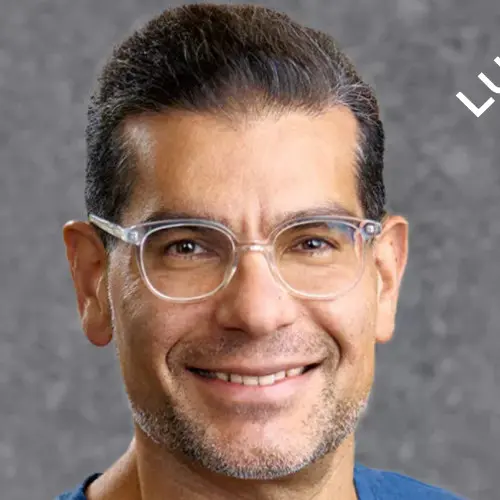
Shahin Farshchi, Lux Capital
In this interview from the Nvidia GTC AI Conference and Expo in San Jose, Charlie Boyle, vice president of DGX at NVIDIA, joins theCUBE's Dave Vellante to discuss how the Vera Rubin platform is redefining AI factory economics through extreme co-design and a relentless one-year silicon cadence. Boyle explains how two decades of CUDA software compatibility enable NVIDIA to deliver 35x generational performance leaps — a target that independent testing on the prior generation actually exceeded at 50x. He traces the critical role of fabric from the Mellanox acquisition through InfiniBand and Spectrum-X Ethernet, and reflects on the 10th anniversary of DGX, when the most common customer question was what anyone could possibly need eight GPUs for.
The conversation also explores NVIDIA's expansion into agentic infrastructure, including a new STX storage reference architecture that places a Vera processor and BlueField-4 DPUs directly alongside drives to move data processing closer to where it physically resides. Boyle unpacks the DSX data center design and its Max-Q dynamic power controls, which allow operators to reclaim the roughly 40% of provisioned power that today's data centers typically waste — translating into more GPUs and dramatically lower token costs within the same power envelope. He also details the emergence of a new business model mapped to a Pareto curve of throughput versus responsiveness, where a single AI factory can serve everything from free-tier consumers to premium low-latency coding workloads. From OpenClaw democratizing agent creation through natural-language prompts to a fundamental shift in how CEOs view CapEx as a revenue accelerator rather than a cost center, Boyle outlines why every enterprise leader needs to understand where they sit on that curve.
In this interview from theCUBE + NYSE Wired: AI Factories – Data Centers of the Future, Shahin Farshchi, partner at Lux Capital, joins theCUBE's John Furrier to discuss how mounting energy and regulatory constraints are driving a fundamental infrastructure shift from terrestrial data centers to orbit. Farshchi draws a compelling parallel between today's AI infrastructure build-out and the historical transition from desktop to mobile computing, arguing that ground-based data centers face hard limits — energy scarcity, regulatory resistance and community opposi...Read more
exploreKeep Exploring
What is your thesis on how the world of technology is evolving, including major infrastructure shifts and investment opportunities?add
Is moving terrestrial data centers and computing infrastructure into space inevitable, and how will computing, communications, and related technologies need to adapt?add
How is generative AI already affecting software development, and how might it disrupt semiconductor (chip) design and other engineering disciplines?add
Possible neutral question(s) the excerpt answers:
- How did you become a space investor?
- What impact do you expect developments in space technology to have on everyday life?add
What is your firm's background, investment focus, assets under management, and preferred stage(s) for investing?add
>> Welcome back everyone to theCUBE. Here at theCUBE's NYSE studios. Of course, we have our Palo Alto studio connecting Silicon Valley to Wall Street. I'm John Furrier, host of theCUBE. This is our AI Factory series. It's the impact of AI is changing our lives. Certainly, we're seeing the productivity changing how we build, operate, and invest in our world. Shahin's here. Lux Capital, he's a partner. Legendary firm, 7 billion under management, been around since the internet. They've seen the waves. Great to have you on theCUBE.
Shahin Farshchi
>> Great to be here, John.
John Furrier
>> Thanks for coming on.
Shahin Farshchi
>> Thank you for having me.
John Furrier
>> You doing a podcast with Molly over there I saw on the balcony. Now you just slide right into theCUBE. Thanks for coming in. Appreciate it.
Shahin Farshchi
>> Love it. Thank you.
John Furrier
>> Love to get the investor perspective. You see a lot of deals, you see the signal, you see the patterns, you've seen the waves. This market is unbelievable. The AI infrastructure build out has catapulted supercomputing to the forefront of software. It's the forefront of enablement. It's accelerating every aspect, every vertical. Technology is the market. And yeah, there's a lot of money involved. You're investing in deals. Companies are staying private longer, going public. But the real story is that the computer revolution is going to continue, but there's a lot of unknowns that we haven't invented yet. You see a lot of that, and this is something that you're excited about. Share your thesis on how you see the world of tech.
Shahin Farshchi
>> Absolutely. So we're seeing a massive infrastructure shift literally from earth to orbit. We saw 50 years, if not more, of investment going into building compute for the purpose of being on the ground. In fact, you had a few decades of compute being meant for going into closets and then onto desktops in the '90s, to going into our pockets. And many great companies emerged in this transition from desktop to mobile. We're going to see a whole new slew of companies come into being in this transition from terrestrial to in orbit. I was one of the big skeptics, up until relatively recently, of data centers in space. My question was like, "Why on earth would you build data centers in space?" But then I came to appreciate the limitations that AI have imposed on us and energy has imposed on us as to what you can do on the ground. There's meaningful energy limitations. There's meaningful regulatory limitations. People don't want massive data centers and the massive nuclear or natural gas power plants that need to be built next to them in their backyards. Where else to put this, where energy is abundant, where energy management and radiation of heat is far more straightforward. And with the massive amount of launch capability that we have now with SpaceX, makes it realistic to put data centers in space, and that requires a whole new slew of innovations to come into being.
John Furrier
>> And that's a great point because I remember when people were bitching and moaning about cell towers. You go back to the build out of telecom. First of all, that was trillions of dollars. Let's put it in comparison. Trillions in CapEx-
Shahin Farshchi
>> Yes.
John Furrier
>> ... to get mobile phones.
Shahin Farshchi
>> Yes.
John Furrier
>> Back in the day, it was like, "Cellular's going to fry your brain." People freaked out. They would block towers. So data centers has a similar vibe. No one wants a monster data center. So I can see that logic. Okay. So well, first of all, what's your reaction? You see the similar pattern?
Shahin Farshchi
>> Well, I think there's a far more fundamental issue with building these giant power hungry warehouses on the ground. So we see that the launch cadence, and technology has gotten to the point where it's possible and we're getting to the point where it's becoming inevitable. And so taking technology meant for the ground and putting it in space is the equivalent of taking a desktop computer and putting it in a briefcase, or taking a phone from your desk and putting it in your car, putting it in your pocket, which is what we saw back in the '80s and '90s.
John Furrier
>> Well, the compact first portable PC was a luggable, they called them luggables.
Shahin Farshchi
>> I don't know if you saw the Cheers episode where Dr. Crane puts the briefcase onto the bar, opens the briefcase, and there's a phone in it. And that's where we are right now with data centers and space. We're taking this iron that's meant to be on the ground and launching it into space. It's my expectation that there's going to be a whole new slew of companies making compute, making communications, making thermal management technology, networking, interconnect, optics, all of that purpose built for space.
John Furrier
>> Talk about the acceleration because it's a pretty good point. I just had a guest on talking about high performance computing. And we were talking about back, go back even six years ago. If you were doing a wing design, anything aerodynamic, physics, weeks to even model out wind, so many variations now, GPUs come in, AI and GPUs go well together. That's taken us to today and it's much faster. We haven't even seen anything yet. So what is your vision? Because if we've accelerated this fast, you can launch a VSAT in space for like 50K. Anyone can start launching, and see what SpaceX is doing. So we know we can get stuff up now.
Shahin Farshchi
>> Yes.
John Furrier
>> How fast do you see the tech accelerating, and what does that deep tech look like? Because if we've gotten this fast, this far so fast in literally four years, what do you think the speed will be to get literally autonomous data centers rotating around space?
Shahin Farshchi
>> So the acceleration is yet to come. If you think back 20, 30 years ago, electronic design automation brought engineering to a whole new level. You're able to build cars that were 100 times more complex. You're able to build chips with trillions of transistors. And so I think that revolution had huge impacts and there's going to be a giant impact again with this new wave through AI enabled engineering. And what do I mean by that?
John Furrier
>> Explain that first, because a lot of people might not know that generation. Take us through that, because that was a pivotal moment. Explain that a little bit deeper.
Shahin Farshchi
>> So with electronic design automation, you were taking what was otherwise manual ... So for example, you had armies of engineers that were literally drafting polygons, squares, on sheets of paper that represented transistors that were going to be patterned into silicon. And these were sheets of paper that probably could have been the size of this room that were going to be mapped out onto a centimeter by centimeter chip. Imagine how crazy and ridiculous that was. And electronic design automation basically allowed you to put trillions of transistors onto a chip by doing all of that in a computer aided design or CAD environment. If you were designing an aerofoil for an airplane, you would literally put strings on it and put it in a wind tunnel and see how those strings moved with computational fluid dynamics. All of that is being done in silico.
John Furrier
>> And then massive innovation happened after.
Shahin Farshchi
>> Massive innovations happen after that. So now you have airplanes that consume probably a fraction of the fuel to go the same distance. You have computers that are millions, if not billions, of times more powerful, all made possible by electronic design automation.
John Furrier
>> And now connect the dots now with AI generation. Where does that connect?
Shahin Farshchi
>> We're seeing it already right now with software development. So think about how software development has been impacted. Think about how building an application today can be simply done by whispering into a microphone. You can literally sit at a cocktail party and whisper into your phone and build software, which would have sounded crazy three or four years ago and is now mainstream. You have armies of people sitting at their desks, just talking into microphones and building software that would have required otherwise many, many hours to generate. And that is accepted in mainstream today. And that is the first discipline in engineering that is going to be impacted by generative AI. We've invested in a couple of companies that are doing this for semiconductors. So today, if you want to design a chip, you have to write many, many, if not thousands of lines of code, and then you have to map that into an electronic design automation environment, to Cadence or Synopsys. And then you have to verify all of that. This requires a lot of manual, tedious engineering work. All of that can be disrupted with AI. So that's the second low hanging fruit, automate design of chips that will help you make better AI that will make even better chips. And that virtuous cycle, in my expectation, will apply to many other fields of engineering as well.
John Furrier
>> Yeah. I like the engineering. We've been having conversations on theCUBE. It's not well documented in the industry, I got to say, not a lot of mainstream coverage of this, but a lot of the software gets talked about from a consumer standpoint. If you think about the engineering tooling, you gave a great example on electronic design tooling, there hasn't been massive needle moving moments for engineering.
Shahin Farshchi
>> That's right.
John Furrier
>> And engineering also has gotten physical, but still software. You can't do break, fix in space. So you can't send a technician up unless it's a robot. Maybe we'll get robots by then. So take us through your view on this, because engineers are now much more prominent in the role because with all the AI augmentation, a lot of the problem solving, we hear this critical skills are needed.
Shahin Farshchi
>> Yes.
John Furrier
>> I mean, when I graduated in college in the 80s, we were called software engineers-
Shahin Farshchi
>> Yes.
John Furrier
>> ... not a developer.
Shahin Farshchi
>> That's right.
John Furrier
>> So engineering was always the kind of thing. What is the state of the tooling for engineering right now? How would you scope that market? Is it developing?
Shahin Farshchi
>> Yes.
John Furrier
>> Is it waiting to be disrupted? Is it antiquated? What's your view? I'm not-
Shahin Farshchi
>> So I'm sure you've heard about digital twins.
John Furrier
>> Yep.
Shahin Farshchi
>> This whole notion of simulating the physical environment. A lot of that is being accelerated today with AI. So if you look at traditional simulators, these dependent on finite element analysis, which is a very mathematically intense process where if you're talking about doing things in the time domain, it can take a very, very long time. AI is collapsing the amount of compute required to perform these simulations by many orders of magnitude. And there are companies out there, well, there's efforts at large companies, startup companies out there that expect to be able to collapse this time that'll help us be able to simulate more. So a lot of the engineering that goes into actually designing things will be displaced. Just like again, going back to the software development example has been displaced by natural language, you can tell a machine, "I would like to build a suspension component for a car that meets these requirements under these conditions with these constraints." And that will then translate to many simulations that otherwise would have taken days each into minutes, and out comes a recommended design.
John Furrier
>> I love the digital twin concept. And I think also the trend is to lower the cost and access to that. It used to be NVIDIA, big cluster, Omniverse, the whole deal. Now you're starting to see DGX boxes for $5,000 have the horsepower to do this kind of thing.
Shahin Farshchi
>> That's right.
John Furrier
>> So how do you see that kind of coming in? Is digital twins one element of that mix? I see things like Thor, for instance, NVIDIA, great for banging out reference architectures. Back in the day, go back a few years, reference architectures was like six months.
Shahin Farshchi
>> That's right.
John Furrier
>> Now you can literally do things much faster. Talk about this dynamic. Where are we on that democratization and access to these kinds of tooling?
Shahin Farshchi
>> So the tooling is advanced significantly and there's going to be even more ... It's a great time to be an engineer. That's the way I would put it.
John Furrier
>> Yeah.
Shahin Farshchi
>> So you can build things that you otherwise couldn't build before. I feel like the equivalent was open source and cloud for software developers 25 years ago. So the same is now happening for engineers. These compute capabilities that the boxes are obviously very helpful. I tried to buy a Mac mini a couple of weeks ago and realized I'd have to wait until July so I can get my Mac mini.
John Furrier
>> Everyone's running OpenClaw. Everyone .
Shahin Farshchi
>> OpenClaw on these things.
John Furrier
>> Everyone under the age of 30 is smoking OpenClaw. It's like a whole tech drug.
Shahin Farshchi
>> Exactly.
John Furrier
>> It's like if you were under 30, why wouldn't you do it?
Shahin Farshchi
>> Exactly. Why not? Why not?
John Furrier
>> Okay. So engineers, they want more horsepower though.
Shahin Farshchi
>> So right now, people are using agents to draft emails and do marketing campaigns. OpenClaw is going to be used to actually perform engineering tasks. So I feel like engineering is going to go from solving problems to translating needs into specifications that can be fed into a computer to actually do the engineering for you. And so it's my expectation that there is going to be very, very personalized products for people or for enterprises to use. Today, you basically think about what's already out there to be able to serve your needs so you configure products. There will be products that can be bespoke to what you need because of the rapidly collapsing timelines and designs.
John Furrier
>> Yeah. Engineers are going to be really in need. What's the makeup of an engineer? There's a lot of curation involved, a lot of complex problem solving. If this automation comes in, what do we do?
Shahin Farshchi
>> I feel like the onus on engineers is going to go higher. Think about an engineer today versus an engineer from the '60s or '70s. The engineers in the '60s and '70s were very much focused on solving one problem. They were very good at doing one thing. And then in the '80s and '90s with electronic design automation, they had to be good at doing many things. Controlling the computers, for example. They had to be good software developers because they were running a lot of their engineering in the end compute. And I feel like the next wave of engineers benefiting from these agentic AI solutions will have to have even broader skill sets to best leverage people.
John Furrier
>> That's a great point. If you look at the cloud, you mentioned cloud and open source driving that wave, that generation, DevOps was dev and ops, developer and operations. Basically we were born-
Shahin Farshchi
>> That was not a thing.
John Furrier
>> We were born in the cloud like, "Hey, why would I get a data center and get Outlook and put anything in my telephone closet? Just go to the cloud." We were operating our infrastructure because we were developers.
Shahin Farshchi
>> That's right.
John Furrier
>> Okay. So take that to this AI level. Okay. So then DevSecOps came, of course. Shift left happened.
Shahin Farshchi
>> Yep.
John Furrier
>> Now you have the AI. Is there a similar DevOps because Dev and Ops means it's functional? What is that engineering roles? What are going to be the DevSecOps for this new era?
Shahin Farshchi
>> 100%. 100%. So that's a great analogy. So DevOps came into being as a result of all these tools that were available to software engineers and developers and engineers broadly. And I think the same trend is going to come where you have to have a whole new set of disciplines available to you to be able to build on top of these new tools. So is it going to be called DevOps? Is it going to be called AIOps? Who knows?
John Furrier
>> It'll be functional. To your point, every business, I was talking about shadow IT. I explained to someone who never heard the term before because they said shadow AI. I'm like, "Hey. What's shadow IT?" Shadow IT went around IT, put the credit card down, got an Amazon instance, and then showed the prototype, got promoted, or fired, but mostly promoted. That drove a lot of innovation. But shadow AI is happening in every single department. CFOs are doing shadow AI. They're closing the books and now realizing that this shit's real.
Shahin Farshchi
>> Yes.
John Furrier
>> And so now you have everyone kind of feeling the productivity.
Shahin Farshchi
>> 100%.
John Furrier
>> So I don't know what you call it. I just call it business.
Shahin Farshchi
>> Yeah.
John Furrier
>> But engineering, they're building, but they're operating.
Shahin Farshchi
>> That's right.
John Furrier
>> They're investing.
Shahin Farshchi
>> Hence, these new roles that are going to be required, to your point, the DevOps equivalent is yet to come of an AI. In this next-
John Furrier
>> All right, let's talk about space. Space is highly contested, congested. It's like that movie, Martian. It's like who owns the space? It is like the ocean. It's a maritime environment. A lot of cybersecurity issues. Security's a huge factor in all this. Trust, performance. These are huge issues. What's your view on this and how do you look at that as an investor? Because that's got to be on the radar.
Shahin Farshchi
>> New technology always brings about new vulnerabilities. And so you saw the whole Mythos concern around its ability to go in and find vulnerabilities in operating systems. So-
John Furrier
>> Is that a feature or a bug? .
Shahin Farshchi
>> Depends on who you ask.
John Furrier
>> .
Shahin Farshchi
>> Depends on who you ask. But my expectation is that yes, there will be vulnerabilities. Think about the internet in the early days. Think about operating systems in the early days, going back. And so I feel like there's going to be new vulnerabilities and new security issues that are raised, but I have huge trust and confidence in the technical abilities of our engineering community to be able to quickly close those vulnerabilities. And so I feel like that's just the reality of progress. You build the car. With the car comes car accidents, and then people quickly build the safety systems and properly train the drivers to avoid those acts.
John Furrier
>> Who could imagine Palo Alto having Waymo? It'll never come to Palo Alto, but now in Waymo, San Francisco's littered with Waymo. The progress. It's just phenomenal.
Shahin Farshchi
>> I feel safer in a Waymo in LA and busy LA streets than I do in a traditional Uber because Uber drivers can get tired. A lot of them work jobs-
John Furrier
>> And they're checking their phones while they're driving.
Shahin Farshchi
>> They have to check their phones to get directions. They get alerts from the app. And so no disrespect of the drivers.
John Furrier
>> It's humans.
Shahin Farshchi
>> Yeah, but they're humans, ultimately.
John Furrier
>> We make mistakes.
Shahin Farshchi
>> We're all humans. We're all flawed. And I feel like the technology, again, brings about its own risks, its own concerns. But again, the innovation that we have available to us and from our engineering community will likely close those .
John Furrier
>> Well, you're here. It's awesome to have you here in theCUBE Studios at NYSE Wired. The space conference is going upstairs. It's not a suit gathering. A lot of tribes there, technical people, PhDs. This isn't like Wall Street vibe, this is builders, inventors-
Shahin Farshchi
>> That's right.
John Furrier
>> ... on the frontier. What's your view of it? How are you investing in it? Take us through what you're liking these days and what you're looking at.
Shahin Farshchi
>> Very excited for it. I became a space investor by accidents when I invested in Planet. And the reason why I invested in Planet was because I was blown away by the founders. I was blown away by their ambition. And it was my first time seeing a clean room actually in the offices of a startup, which I thought was very impressive. And I was very lucky to be part of their journey. So I kind of accidentally stumbled into becoming a space investor, even though I viewed myself as a technology investor broadly. I continue to invest in technology broadly, but I feel like all of the excitement around space, the prospects of a very attractive SpaceX IPO will create a lot of capital inflows into the category. And I think there's going to be many interesting new companies created that will serve this next generation, quote unquote, "Space economy."
John Furrier
>> I'll get your thoughts. It's a great point about innovation. I remember I grew up on, I'm sure you did too, Cold War mentality and there was a lot of research going on. You look at East Coast and West Coast, ton of academic research, that spawned a lot. So a lot of this defense tech and space work that's going on, not only is it cool, who doesn't love space? Space is like the coolest thing ever, but there's a lot of R&D going into this.
Shahin Farshchi
>> Yes.
John Furrier
>> What's your view on some of the impact that's going to have on our lives? Because a lot of these breakthroughs built for this turns out to be a great enabler over here.
Shahin Farshchi
>> Yeah. Think about what space has brought to us already. So intercontinental communications before fiber was laid down was enabled by space, and GPS came to us from ... These are two easy ones that we can talk about if that impacts us on a daily basis. Now, think about what you can manufacture in space that you couldn't manufacture in the ground. The types of drugs that you can make in space that you can't make on the ground. We funded a company called Varda, which is doing this right now, which will bring us next generation of pharmaceuticals manufactured in space in zero gravity that can't be made on the ground. So that's going to have another huge impact on us. So these are just examples of companies. We invested in Reflect Orbital, which is directing sunlight to where we need it. Instead of us having to wait for high noon to get energy and light from space, we get it as we need it. And so by reflecting that sunlight to the desired areas, whether it's search and rescue, whether it's for a concert. And so these are just examples of how space applications are going to vastly broaden away from just simple GPS and comms to these new applications that we have yet to imagine.
John Furrier
>> It's funny how sci-fi has impacted a lot of the technology. In fact, being a Star Trek fan myself, I had a guest on theCUBE about when we started, had a quote, he said, "Everything that we saw in Star Trek will be invented except maybe the transporter." And he said, "Maybe even that's possible." And it was kind of a cheeky comment just to kind of say, "Hey, we don't know what's going to happen." But most of the stuff we see in a lot of the sci-fi has happened. So there's a lot of unknowns that are going to come down the pike. What's your reaction to that just in general, the things that still haven't been invented?
Shahin Farshchi
>> So there are aspects of Star Trek that, yes, you have the communicator. With VR, you probably have the Holodeck.
John Furrier
>> Doors can open up, Holodeck.
Shahin Farshchi
>> You have 3D printers, that could be the replicator. And so we're getting there. Just keep in mind that sci-fi was always limited by human imagination, and engineering can go beyond human imagination. So I expect elements of all the science fiction-y stuff that we're seeing to be implemented and then some. Now there are some that defy physics. Maybe faster than light travel may defy physics, but maybe it won't be necessary. Transporters may defy physics, like the Heisenberg compensators that you had in Star Trek may not be realistic to actually build, but maybe we don't need to send humans into space. What if we just send robots and probes and machines into space to do all the work of humans, and we just use space tourism as a method of getting people out there who want to experience space, but the actual work to be done by machines.
John Furrier
>> Well, great to have you on. Put a little plug in for Lux Capital. Big fan of the firm. You guys been around, like I said, since the internet. And a lot of the internet comparisons happen here. A lot of unknowns. There was an adoption curve. It's still evolution. It was very evolutionary, but it accelerated fast. Talk about what you guys are doing at the firm, how much under capital are you guys managing.
Shahin Farshchi
>> Sure.
John Furrier
>> And some of the things you guys are investing in.
Shahin Farshchi
>> Sure. Firm's been around for roughly 25 years. We were born in the ashes of the dot-com bust, with the expectation that the next wave in great companies will be rooted by innovations in the basic sciences. We invest now across technology. We very much focus on great founders that are building businesses that could be transformational and iconic companies ultimately. We have about $7 billion under management. Current fund is a billion and a half, and we love to invest in companies at the earliest stages and be their long-term capital partners through IPO.
John Furrier
>> Yeah. Great value. Well, thanks for coming, Shahin. Appreciate it.
Shahin Farshchi
>> Great to be here, John. Thank you for having me.
John Furrier
>> Yeah. Deep tech is going to have broad implications. Whether it's space, defense tech, AI is enabling and accelerating the value opportunities, and of course the capture as well. We're doing our part to share the data with you. Thanks for watching.



























 John Furrier