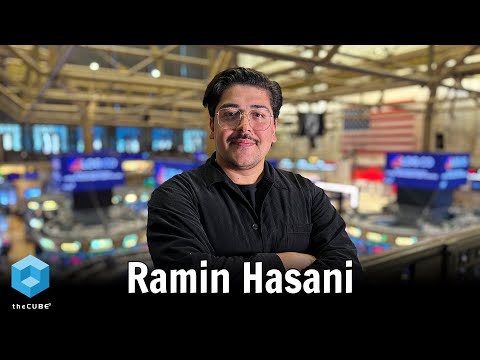
In this segment from the theCUBE + NYSE Wired: AI Factories - Data Centers of the Future event, Howie Xu, chief AI officer of Gen Digital, joins theCUBE’s John Furrier to discuss the rapid evolution of artificial intelligence from the "ChatGPT moment" to physical reality. Drawing on his deep industry experience, including the early days of Netscape, Xu draws parallels between the historic browser wars and the emerging battle for the "AI interface," predicting a shift where AI companions act as the new operating system for digital life. The conversation explores the concept of AI factories, analyzing how compute power is transitioning from centralized hubs to distributed "micro-factories" at the edge, enabling real-time, context-aware experiences that will redefine consumer and enterprise applications.
Xu and Furrier also delve into the critical "execution risk" facing enterprises in 2026, moving beyond high-level strategy to the practical application of marrying AI with proprietary data. Xu highlights the rise of the "Forward Deployed Engineer" (FDE) model, where technical talent is embedded on the front lines to shorten feedback loops and solve business problems instantly. The discussion touches on how leaders like Elon Musk are scaling "founder mode" mentalities across large organizations to drive efficiency. Finally, they examine the necessity of overbuilding infrastructure to meet future demand, emphasizing that the true challenge lies not just in hardware investment, but in upskilling the workforce to thrive in an AI-driven economy.
Forgot Password
Almost there!
We just sent you a verification email. Please verify your account to gain access to
theCUBE + NYSE Wired: The AI Factory - Data Center of the Future. If you don’t think you received an email check your
spam folder.
Sign in to AI Factories - Data Centers of the Future.
In order to sign in, enter the email address you used to registered for the event. Once completed, you will receive an email with a verification link. Open the link to automatically sign into the site.
Register for AI Factories - Data Centers of the Future
Please fill out the information below. You will receive an email with a verification link confirming your registration. Click the link to automatically sign into the site.
You’re almost there!
We just sent you a verification email. Please click the verification button in the email. Once your email address is verified, you will have full access to all event content for AI Factories - Data Centers of the Future.
I want my badge and interests to be visible to all attendees.
Checking this box will display your presense on the attendees list, view your profile and allow other attendees to contact you via 1-1 chat. Read the Privacy Policy. At any time, you can choose to disable this preference.
Select your Interests!
add
Upload your photo
Uploading..
OR
Connect via Twitter
Connect via Linkedin
EDIT PASSWORD
Share
Forgot Password
Almost there!
We just sent you a verification email. Please verify your account to gain access to
theCUBE + NYSE Wired: The AI Factory - Data Center of the Future. If you don’t think you received an email check your
spam folder.
Sign in to AI Factories - Data Centers of the Future.
In order to sign in, enter the email address you used to registered for the event. Once completed, you will receive an email with a verification link. Open the link to automatically sign into the site.
Sign in to gain access to theCUBE + NYSE Wired: The AI Factory - Data Center of the Future
Please sign in with LinkedIn to continue to theCUBE + NYSE Wired: The AI Factory - Data Center of the Future. Signing in with LinkedIn ensures a professional environment.
Are you sure you want to remove access rights for this user?
Details
Manage Access
email address
Community Invitation
Howie Xu, Gen
In this segment from the theCUBE + NYSE Wired: AI Factories - Data Centers of the Future event, Howie Xu, chief AI officer of Gen Digital, joins theCUBE’s John Furrier to discuss the rapid evolution of artificial intelligence from the "ChatGPT moment" to physical reality. Drawing on his deep industry experience, including the early days of Netscape, Xu draws parallels between the historic browser wars and the emerging battle for the "AI interface," predicting a shift where AI companions act as the new operating system for digital life. The conversation explores the concept of AI factories, analyzing how compute power is transitioning from centralized hubs to distributed "micro-factories" at the edge, enabling real-time, context-aware experiences that will redefine consumer and enterprise applications.
Xu and Furrier also delve into the critical "execution risk" facing enterprises in 2026, moving beyond high-level strategy to the practical application of marrying AI with proprietary data. Xu highlights the rise of the "Forward Deployed Engineer" (FDE) model, where technical talent is embedded on the front lines to shorten feedback loops and solve business problems instantly. The discussion touches on how leaders like Elon Musk are scaling "founder mode" mentalities across large organizations to drive efficiency. Finally, they examine the necessity of overbuilding infrastructure to meet future demand, emphasizing that the true challenge lies not just in hardware investment, but in upskilling the workforce to thrive in an AI-driven economy.
In this segment from the theCUBE + NYSE Wired: AI Factories - Data Centers of the Future event, Howie Xu, chief AI officer of Gen Digital, joins theCUBE’s John Furrier to discuss the rapid evolution of artificial intelligence from the "ChatGPT moment" to physical reality. Drawing on his deep industry experience, including the early days of Netscape, Xu draws parallels between the historic browser wars and the emerging battle for the "AI interface," predicting a shift where AI companions act as the new operating system for digital life. The conversation explor...Read more
exploreKeep Exploring
What is the introduction and context of the NYSE Wired program on The Cube podcast?add
What are the key technological revolutions and transitions discussed in relation to AI and crypto?add
Is there a bubble in the artificial intelligence market?add
What are the implications and applications of AI in both consumer experiences and enterprise strategies?add
What challenges is the enterprise facing in successfully implementing AI strategies?add
What challenges are faced in integrating AI with enterprise data?add
What was the impact of the internet bubble and how does it compare to the current demand for AI?add
What are the contributions and successes of Elon Musk's ventures in comparison to more established companies in fields like artificial intelligence and autonomous driving?add
What is the concept of a forward deployed engineer and how does it apply to problem-solving in enterprise settings?add
What are the current trends and impacts of technology and AI in relation to finance and politics?add
>> Hello, John Furrier with The Cube. Welcome to The Cube podcast. This is the NYSE Wired program, a Cube Original, part of the Cube family, and also the NYC Wired community, headed up by Brian Baumann. It's an open network of leaders coming together. We have Cube alumni and kind of a contributor for the Cube, he's almost like our own reporter, Howie Xu, but he's also the chief AI officer, Gen Digital. Pedigree goes way back to the early days of Cisco, invented many things in technology. If you know the Cube, you know Howie Xu. Howie, great to see you here in our studio.
Howie Xu
>> Hi, John. So glad to be back to The Cube and the New York Stock Exchange.
John Furrier
>> I mean, we were just talking before we came on camera. I wish that we were rolling. We were just having some good chats about some of the historical perspectives. And you've seen many ways, we've talked about this many times on the Cube...
Howie Xu
>> BitGo just went IPO yesterday, former Netscape CTO, which is the building I work in day in and day out now in Mountain View.
John Furrier
>> I mean, you got former Netscape... Netscape was a cultural revolution. AI and crypto...
Howie Xu
>> revolution.
John Furrier
>> Cultural and crypto. AI is going through a cultural revolution as physical AI is right around the corner. But it's so hyped up. It's so changing. I mean, we had the wave, Howie. Paper, you write stuff down on paper, you mail stuff, and then the internet came along, then you got mobile and cloud. So that generation was really a great movement. Everything was invented. The computer industry was thriving and scaled up beautifully. And then now we started to see that transition. We saw crypto early, we saw some AI stuff happening, but really go back five years as the AI stuff came out of Google and other academic areas, ChatGPT came online and the rest just has been a barn burner of activity. This wave... You almost started, okay, transformer, AI, ChatGPT to autonomous everything.
Howie Xu
>> Yeah.
John Furrier
>> Okay?
Howie Xu
>> Not quite yet, but we are getting there.
John Furrier
>> But this is the similar way. Print to mobile and cloud with internet in between. That was a cycle. This super cycle is AI to move along and then at the end game, fully autonomous stuff. Physical AI, digital, all converging together. Well, that's talked about in the industry in that context, but it's happening. So I want to get your thoughts. You were on a few months ago on our AI leader series. You're very active in your job, obviously, as chief AI officer, but you're also out and about talking to entrepreneurs in Silicon Valley. What are you seeing? What's the big trend line, observation, sentiment around where AI is now?
Howie Xu
>> Yeah. I think you see conversations on different sides of the spectrum. On one side, it's the AGI, right? Building huge data center. That's the one end. The other end is, is that an AI bubble going on? It's like, there's a conversation about Open AI. Sure. $20 billion revenue is big, but still they are committing 1.5 trillion, maybe, by the end of the conversation, $2 trillion. Infra build out, is that too much? Is there a bubble going on? And then everywhere in between. Personally, from my point of view, AI is real. We see it. I mean, from the ChatGPT moment, we realized the AI we've been talking about for ages, finally it's in the reality. Now it's the question is how to bring this technology to marry with your, in the enterprise world, marry with your data, in the consumer side, how do I change the way we live? So it's about just to marry the technology to reality at this point. I think we are three years into ChatGPT moment, and I would say it's already big, but give another three years, it's going to be upside down.
John Furrier
>> I absolutely agree. I like how you said that, bringing AI to the reality. And that's physical. That's our life. So on consumer side, AI into our experiences. I was interviewing Frontier Digital Health. They are saving lives. I mean, that's as real as it can get. We're seeing...
Howie Xu
>> Surgery.
John Furrier
>> Surgery. We're seeing retail experiences. So there's no doubt that the physical nature of what we do as humans, we go to stores, we go, we walk around.
Howie Xu
>> Autonomous driving becomes real, right?
John Furrier
>> We drive around. We have families. We do things. So that's clear. Enterprise, they're in business to serve customers who are users in reality, so they're moving around. So let's break those out. So let's start with the enterprise. We'll come to the consumer. I think they're more fun, more active. But the enterprise has been struggling because... Not struggling in the sense of momentum. The strategy's clear, infuse AI in your business. That's a strategy, no debate. How to do that? The execution risk is coming. And so it's not like you can just go in the enterprise and be like, okay, magic wand, throw everything out and introduce an NVIDIA box. All the people are...
Howie Xu
>> I know where you're coming from. There is this MIT report that said 95% of the budget or the experiments didn't go anywhere. Gartner reports... None of those reports show the super optimistic sort of the result...
John Furrier
>> I didn't like that MIT report. I'm against that because experiments generally do fail, one. Number two, we have enough evidence, we've just done the Cube interviews we've done where the benefits of people who are doing Agentic and agents and AI actually have done it right. They executed, knocked down some wins, and whether it's a saving the life today or increasing profits for a retailer like Zebra technologies and others, it's working. So it's not a fail. It's not a category fail.It's just where it is.
Howie Xu
>> So you're speaking my words. I'm not going to repeat. So I'll just to give you my own insights into why that's the case, right? There are two things going on. By the way, it's nothing new. This has been going on for the last three years since ChatGPT moment. One is technology still needs to mature. When it first came out, the reasoning the capability wasn't there until September, the OM model out, right? Now finally the model has the reasoning capability. But it will take a few more iterations to get to a level that the technology is mature enough to do a lot of the, not just the less hallucination, but also can take actions with higher confidence. Enterprise, think about it, right? People want higher accuracy. Unlike consumers, when something is wrong, hallucination, ha, ha, ha, right?
John Furrier
>> Yeah, try again.
Howie Xu
>> Yeah. Enterprise...
John Furrier
>> Oops, fraud detection. We missed it. Oops.
Howie Xu
>> So that's the technology side, right?
John Furrier
>> Yeah.
Howie Xu
>> But the more important part is the data. So the AI is not going to make huge inroads into enterprise unless you get marry the technology with the data. But what does the data mean? Data is in different departments, has all sorts of the tribe knowledge. Even without AI, we have a hard time to understand what data do we have. Do we have the comprehensive data? Do we even have the right data sitting there? So without the context, without the data, AI is not going to make a huge difference. So now we are at the point that technology is getting mature to a level that... I wouldn't say it's not a bottleneck, it's a lesser bottleneck. The bigger bottleneck is getting the data. How to marry the AI versus the data is... I wouldn't say it's a science. It's not a playbook. People know left and right. Every enterprise is different, so we are in that stage, but I have no doubt.
John Furrier
>> But that's just the momentum of where it is. It's not so much a vote on viability.
Howie Xu
>> Exactly. So that's why when MIT report came out, I was like, I mean, why do you even report that? We're in the middle of doing that.
John Furrier
>> Yeah. It's all failing.
Howie Xu
>> This is expected.
John Furrier
>> Edison failed 10,000 times before he invented electricity.
Howie Xu
>> Exactly. By the way, electricity didn't make a real dent in human's life for 20, 30 years after it was invented. So I think this time it's not going to be 20, 30 years.
John Furrier
>> So it's not a bubble in the sense of what we know as bubbles. And the most famous bubble that we lived through was the internet.com bubble, and that popped and then it was carnage everywhere. People lost their jobs, families were impacted. It was just so terrible.
Howie Xu
>> Highway 101 was empty.
John Furrier
>> It was terrible. However, the demand curve wasn't as strong because people were onboarding to the internet. Mary Meeker used to have her famous... She was the analyst at Morgan Stanley at the time. She had a famous chart that she would chronicle all the online population, internet population, user population. And it would go up because the internet was great. We didn't like the internet, right? So the web, the web was growing, and so that was fact. And all the fiber laid down. I don't think AI has a demand problem, okay? I think...
Howie Xu
>> AI doesn't have a demand problem, partially because a lot of things we want it to be autonomous is what we are otherwise doing today anyway.
John Furrier
>> Here's my point, that's why I want to get your reaction. Because if the internet built faster everything, that might have accelerated a little bit of the online population. But today, my premise is if you have great AI, it will be consumed. You can see that with ChatGPT. So your point about the consumer side, which I'll want to pivot to, is that we all love it. It's changed our lives, people are getting better at it and adopting it, they're infusing it in how they do business. I was talking to some folks in Silicon Valley recently and they're building a platform for ad insertion. Not like a display ad, but like data. So why wouldn't a brand want to be available because people are using ChatGPT in their daily life? So there it is. So okay, if that's where the eyeballs are or the people, why wouldn't you want to have ads?
Howie Xu
>> We're still bottlenecked by the compute the resource. And as we all know, compute resource is also bottlenecked by the build out of data center, electricity, that kind of things. And every, whether Open AI, Anthropic, they all went at least the order of magnitude more in terms of the compute capacity in the last two years or so alone. So I think my premise is AI technology is still at least auto magnitude, if not too auto magnitude, too expensive, arguably too slow, arguably it needs to be a lot more accurate. But I see it's coming. It's not like there's no...
John Furrier
>> I would point out too, and you saw this, that the internet was a consumer first, enterprise second, even though people had intranets. I mean, I was working at HP, Hewlett Packard, in 1995, and they think they had the first intranet. It's basically DNS. They had all the internet technologies, essentially an intra web, intranet. And yeah, great. They had intranet. Big deal. Click on a document. But the enterprise adoption on the web was much slower than the consumer. So the question for you is, as you talk to developers and the young guns and seasoned pros who are coming back, what are some of those consumer things you're seeing? Because in the internet, we had breakout brands, Yahoo, eBay, the list goes on and on, and with the cloud mobile bubble or growth, we had Airbnb, Dropbox. So SaaS created new brands that were basically kids in the dorm room, kids coming together, entrepreneurs. Will there be a breakout in the consumer? Do you seeing anything? I mean, is that the pursuit of the holy grail by the young developers?
Howie Xu
>> We're not seeing... We're seeing people use AI, consumers using AI tremendously more today than two years ago, than three years ago, right? But whether you like it or not, ChatGPT or maybe Gemini a little bit more these days...
John Furrier
>> Anthropic too. They've got some revenue.
Howie Xu
>> No, Anthropic is more enterprise for consumers. It's predominantly ChatGPT and then Gemini. If you include the developers, then the Cloud Code, the curse of the world, they have a lot more adoption. But consumers and then prosumers... So we don't see too many very big variety of the consumer AI native applications. Part of the reason is ChatGPT is pretty good. Gemini is pretty good.
John Furrier
>> Is very good. They're very good.
Howie Xu
>> They're very good, right? Think about Gemini. They already connect... Well, as long as I'm allowed to, it can connect to my Gmail, connect to... So it's a very good. ChatGPT, it's not just a Q&A, it can do a lot more things. So these two applications are pretty good. A lot of time people have a new things, people say, "Well, isn't that just a ChatGPT wrapper?" So that slowed down the innovation a little bit. But I don't think that's going to be the norm for too long. My prediction is in three years there will be, just like Instagram for mobile world, YouTube for internet, there will be new applications that's not tied to the old guards. I think I'm pretty sure...
John Furrier
>> And you think there'll be room for people to come in...
Howie Xu
>> Absolutely....
John Furrier
>> and sit next to Open AI on the app side?
Howie Xu
>> Yeah, absolutely. I'll give you an example, which is dear to my heart. Browser, right? We discussed the Netscape. Netscape is generation one. Of course, IE sort of eventually took over.
John Furrier
>> Internet Explorer, if people don't know what IE is.
Howie Xu
>> Yeah.
John Furrier
>> IE is an Internet Explorer.
Howie Xu
>> From Microsoft, for people who do not know.
John Furrier
>> The monopoly who beat Netscape. We'll leave that to historians. But yeah, Gen one.
Howie Xu
>> So Gen one, Netscape to Microsoft Internet Explorer. Gen two, it's the Google's Chrome, right? Which started taking over the browser 2008, 2010. By 2012, 2013, it became the dominant browser. That world didn't change for almost 13, 15 years. It's time for that change. Now you may argue, well, Chrome may change, but let's leave that...
John Furrier
>> No, no, I like your path because let's just kind of chronicalize what happened. This is good. For the folks who don't know, a little history lesson here. So when Netscape came out with the first browser, everyone went, "Oh wow." And by the way, their stock popped. They became the most valuable company. At that time, it was very open AI-like, which is what...
Howie Xu
>> Setting the building Netscape went IPO.
John Furrier
>> I know that building very well. Been there many times talking to the Netscape folks. But let me just explain. So everyone was so excited about Netscape. Mark Andreessen, my friends, Greg Sand, he wrote the business plan for Netscape, the founder of BitGo, he's from Netscape, as I mentioned. So Netscape was the winner. They were the Open AI.
Howie Xu
>> They were the Open AI.
John Furrier
>> At the time. Internet, the gold rush, blah, blah, blah. Okay. In comes Microsoft. They were OEMing Spyglass browser and they were building their own, Internet Explorer or IE3. Joe Belfiore and all the teams there, I knew those guys too. What they did was they tied the browser to the Windows, the system software. Windows is the operating system, as you know, for the folks out there. So we saw the beginning, and that was considered bad behavior. And the government, the DOJ broke up... I had this debate with Dave Vellante all the time. I think that was about collateral damage. Microsoft was told that they were a monopoly. Netscape complained, Jim Barksdale hired a lawyer, I forget his name, and they tried to break up Microsoft. So that was the beginning of what now is a feature. So tying the browser to the system software, the OS, Windows, was an advantage. Actually genius by Microsoft. Competitive strategy 101. Job's not done till Netscape doesn't run. That's what they did. And they did that and they were broken up. Fast forward to SaaS, tied to the cloud. Not necessarily the same company, but kind of an operating environment, large scale, horizontally scalable, don't need a data center. We saw that kind of nestedness. So okay, now comes the AI era. So I like the thesis. So Chrome, I was in the room when Sergei and Larry launched it. And I asked Sergei directly, "Is this going to be tied to Android and Google as system software?" And the PR people were coaching him, "Don't answer the question." And he smirked. And Cara Swish was right next to me in that meeting. "What did you ask him?" And he smirked. And I knew it was. And what Chrome ended up doing was syncing up with all your services, Gmail. So again, scratching this, so a little bit gun shy with all the regulatory. They didn't flaunt it. They got away with it. But I think...
Howie Xu
>> And they flourished for two reasons. One is the technology advantage. They were much faster than IE when it comes to JavaScript, kind of the thing. But the other thing is they still play the distribution game because eventually they won because of the distribution.
John Furrier
>> They run distribution. It was faster, so better product. They had the distribution and the nestedness in with Google services. And at that time, Safari and Firefox were the dominant browsers, if you remember. Remember Firefox is still around, but okay. So I like where you're going. So now let's push forward to the AI era. Open AI. I like that browsers have this native systems hooks, call it hooks. Data hooks, Open AI hooks, look at Perplexity. People who use the Perplexity browser love it. So I think the browser wars are going to be back, Howie.
Howie Xu
>> So, the...
John Furrier
>> Take me through your thinking.
Howie Xu
>> This is the third browser war, right? The IE versus Netscape. Chrome versus IE. Now it's kind of everyone else versus the Chrome. The third browser war is going on. I don't know what's your definition of AI browser. Unfortunately, a lot of people tie AI browser with Agentic browser. I think it's wrong. Agentic browser is, okay, hey, doing some funny stuff like a type a command, it will open up the tab, log onto my amazon.com, do things. I think it looks fun, but I don't know that it's really useful. But that's the Agentic browser. I don't know it's useful enough today. But there is another kind of AI browser definition, which is my definition for foreseeable future, which is companion. Meaning that you do all the browser stuff, there's AI-BU companion and then make a recommendation for you, remember things for you, be your brain, not be your brain, be your partial brain, be your partial memory so that you are augmented.
John Furrier
>> I think you're right. Let's unpack this kind of in the frontier of what's happening. The word browser came about because the web had a browser, you browse sites, and that was the user experience of the utility.
Howie Xu
>> Yeah.
John Furrier
>> You go to a website, you browse and you click and you do shit. Okay. We're not in a browser utility. We are in a user utility of getting things. So browsers would be discovery and navigation. Discover a site and you navigate to a destination. That's the search engines, you click, destination URL, navigation. These are words that are used in that era.
Howie Xu
>> By the way, I would have broadened that definition even. I would say browser is my entry point to my digital world. Whatever the entry point means. It could mean navigation. It could be my memory. It could be autonomously doing things for me.
John Furrier
>> I'm saying browser is an irrelevant term for what you're saying because what you're saying is we do things differently now because what we do with the internet is not just browse.
Howie Xu
>> Yeah.
John Furrier
>> It's native app. I have now a lot of applications.
Howie Xu
>> Yes.
John Furrier
>> I have a lot of applications that I use, they have different identity systems, different utility, but I also do a lot of things that are kind of horizontal. I could be at work, I could be at play, I might want to buy movie tickets, I might want to go to a play, I might want to go to an event or talk to a friend. These are utilities. This is like internet usage. So I think the word browser... So okay, if you...
Howie Xu
>> I view browser as the AI era consumers operating system.
John Furrier
>> An interface to the world.
Howie Xu
>> Interface to the digital world.
John Furrier
>> Interface to the digital world. Let's just leave it at generic. Call it... Howie. Okay. That application. So if you believe that, then you say, okay, what's the underlying system software? So if we're tying in the advantage of native experience, I think what Perplexity is doing is you get down to the root level of data, you want to get at the data. So the question is, what is the system software of the internet now in the AI era? It's a multitude of language models, you got cameras on everything, you got autonomous vehicles, you're contextually situational.
Howie Xu
>> Right. Connect to your personal data, or maybe if it's a browser for the enterprise, your enterprise data, right? Tool use, the connection to the data, not just answering question for you, but also... Sorry. Loading a page for you, answering question for you, be your chat, but also taking actions for YOU.
John Furrier
>> Yeah. So look, I like the companion angle. I think that's a great way to start thinking about it, but there's more. Okay. So if that's the case, lay out the playing field. If we were sitting here advising Open AI or starting a company, what would we do? What would be the land grab? To me, it would be like, okay, reinvent a new app that consolidates everything. It could have agentic, but it's got to be personalized. I mean, all the healthcare benefits I'm covering in AI is personalization, precision medicine. So precision, personalization, accuracy. Where's my data? Do I store it somewhere? So there's a lot of things missing in the picture of what could actually work. I mean, I guess that's my question, what's required to make it work in your mind?
Howie Xu
>> I think it's similar to the enterprise world. I said that there are two things that sort of, I wouldn't say bottleneck, that's sort of slowing down the adoption. One is technology maturity. You want the Gen AI to be having better reasoning capability, less hallucination, right? That's technology set. But you also want the technology to have access to the right data at the right time. Same thing with consumers, right? So think about it. I do so many things every day, can AI help me to remember things, right? Can AI help me to distill the insights, right? That's sort of the data access or whatnot. Whatever my eye sees, hopefully AI see the same and then can amplify the insights than human would do. So that's their angle. But the other thing is the technology side, the multi-modality, right? The accuracy. I think we need both advancements.
John Furrier
>> I want to talk about Open AI. We were talking, you and I were talking before we came on here, this pod episode, around Open AI and we're talking about job loss where people fear for their jobs. You've been hearing some rumblings or observing that most people...
Howie Xu
>> Yeah, you were asking me what did I hear during the holiday right before this show. The biggest aha moment... I wouldn't to say aha moment. The biggest surprise to me is I met so many engineers, researchers from Meta, Open AI, Anthropic, Gemini of the world, right? Dozens of them in the last two months. And of course I met so many other people. And the surprise thing is people from Open AI and Anthropic, they worry whether I still have a job three years from now far more than the rest of people. Far more.
John Furrier
>> What are they worried about?
Howie Xu
>> Because I think they see that the technology can do so many wonderful things, right? It can even do research, it can build models, right? It can do coding. Sure. Coding is still not mature, but guess what? At least Anthropic. The CEO says, Dario says 90% of code is done by AI. So I think within Anthropic, they see that being more real than people outside of Anthropic. I actually invited even one Anthropic engineer to my team and I say, "Hey, you worked at Microsoft, one of the division not long ago, and you were using curse of the world. Now you kind of add Anthropic. Why you are telling me that you have a very different view?" And he told me the following, he said, "Before I see, oh, AI can do this, AI cannot do this. Okay. But today I don't think about that." I said, "What do you think?"
He said, "When AI cannot do X, I think about how can they make AI do X? What context does it have? What data does it have? What improvement do I need? So by the end of the exercise, AI can do X. So what I see..." What he said there, "What I see is AI can do everything, it's a matter of how I'm going to make this happen." But before, I'm just thinking, "Oh, AI can do this, okay, then great, but otherwise I do whatever AI cannot do." My mentality shifted a bit.
John Furrier
>> So they're enabling AI. They're marrying the data to AI.
Howie Xu
>> That's Just the one big part.
John Furrier
>> Yeah. And I would say in my NVIDIA coverage, the one thing NVIDIA is doing right now, they're bringing NVIDIA's AI to telco. They're bringing AI to things. So I think that is on point.
Howie Xu
>> By the way, you just met Jensen Huang not long ago. What is the biggest aha moment or insight you got from that interview?
John Furrier
>> Well, first of all, I had many interactions with him. That was my first Cube interview. I was at the GSA Awards. You got the award obviously.
Howie Xu
>> Yep.
John Furrier
>> Broadcom came in second or got a different award, but basically came in second. He is an authentic person.
Howie Xu
>> Okay.
John Furrier
>> He is original and authentic and trusted person. I think he's a good executive, great leader. He answers every question from memory.
Howie Xu
>> In an authentic way.
John Furrier
>> He doesn't have talking points. Now, he's got things he repeats, but he doesn't have scripted talking points. He is authentically answering questions all the time. My big aha moment from Jensen, and I was a little bit biased, I'm looking for things for my puzzle and putting the AI puzzle together. My big aha moment is that AI factories term...
Howie Xu
>> The inference building.
John Furrier
>> That basically means that infrastructure, the hardware, a box, the God box, what do you want to call it? Is going to have different form factors. And we're going to have a distributed computing, heterogeneous environment.
Howie Xu
>> In the space?
John Furrier
>> In the entire world. And whoever can deploy a solution, call it a size of a DGX box that they have or a big rack and data centers from central systems and data centers that are building out to the Edge. My big aha moment was we're going to have micro factories, subnets or sub nodes, like a metro. Remember the old internet days, you had metro points of presence.
Howie Xu
>> Yeah, yeah, yeah.
John Furrier
>> Dial for dial up, big fat pipes in the region, in the major metro areas.
Howie Xu
>> Yeah.
John Furrier
>> So I think...
Howie Xu
>> Pop.
John Furrier
>> A pop. Yeah, a metro pop, they call it. So I think we're going to see factories at the Edge very quickly, smaller device that will enable the real world reality to have more AI. Models coming in, either watch through some sort of programmatic utility, like a Copilot or an assistant, as you say, where if I'm going to go into a shopping store or I'm going for a walk with my dog or whatever...
Howie Xu
>> Intelligence is not just going to sit in the giant data center, but also...
John Furrier
>> It's going to be pushed to the Edge and be completely real time generative. Meaning, if I'm walking my dog or going shopping and I walk into, say, Nordstrom's, it's now going to be able, with some good programs, and it doesn't do this today, go to my PC and see what's in my inbox, or know what's in my inbox that I'm thinking about buying and then letting me know with computer visual, "Oh, here comes John," Authenticate me, because I maybe opt in, and then, "Oh, that coat you wanted..."
Howie Xu
>> I'm curious, why is he optimistic about that being the reality soon? Because if anything, laptop or Edge is still not...
John Furrier
>> Intelligence is token driven, okay? So more tokens, more compute, more GPUs. So a factory is raw materials in, output out. I want to build a car, I get supplies come in. It's data in, tokens out or outcomes.
Howie Xu
>> So basically the pop is going to be more and more powerful.
John Furrier
>> And Jensen didn't say this, but I put the dots together. I think New York City will have its own cloud, private cloud or multi-tenant cloud, because if you have an Edge that has a factory, you're going to have carriers like AT&T and Verizon and T-Mobile with services to consumers. We all have phones. We have access to unlicensed spectrum, which is ethernet. Good for back haul, by the way, connected to a box. Radios could form a mesh configuration, blanket RF, be a transceiver to the internet, and then with spectrum and unlicensed spectrum and license spectrum merge together, you have untethered access that could be policy. So for example, if you're a AT&T wireless customer and you could come in, if it's a business account, "Oh, here's the business Howie." The AI factory will figure out what your needs are, provision for you, instantly provision, VPN, cross networks. I mean, it's a little bit of stretch, but like that's plausible now. It's only possible if you collapse the Edge, hyper convergent with factories. Okay. Now if that happens, which I believe it will, and we'll find out at MWC, so far the thesis is panning out, then you have a micro factory in between.
Howie Xu
>> Okay.
John Furrier
>> So you're going to have metros. So why would I want to go to Texas, or wherever these data centers are? And then New York City cloud would service Homeland Security, EMS, hospitals, consumers, independent of what they subscribe to, their wireless carrier, their ethernet provider, businesses, opens up AI factories for...
Howie Xu
>> By the way, I'm looking forward to that day, speaking of browser. I want my Neo browser, by the way, that's the name of my product, Norton Neo, the browser to have that level of intelligence. But I can say today, intelligence is weak on the Edge because the 7AB model, 30B model is definitely far better than 3B model. So today it's the...
John Furrier
>> What is the Edge? What's the blocker of the Edge? Is it connectivity? Is it data?
Howie Xu
>> I think there is in Intelligence, big shift when you go from a 1B, 3B model to 30B, 7AB model, there's a big shift. So we haven't cracked the code how to make the 7AB model, 30B model to 1B model. We haven't done that. That's why whatever the model on your cell phone, on your desktop is still weak.
John Furrier
>> Because it's smaller.
Howie Xu
>> That's smaller, just a huge difference.
John Furrier
>> Or you could distill down the big models and shift it to the Edge, maybe. No?
Howie Xu
>> Yeah, but then you have to do very finite things, right? As long as it's kind of a general purpose model. As an industry, we haven't seen big success. That's part of the reason you probably are disappointed about your iPhone, local model performance so far.
John Furrier
>> Yeah. I mean, it's not as good. It's not enough horsepower. But okay, great. So let's just take this to the next step. So if all that compute and productivity's coming with its intelligence, that's going to change how we work. So I want to talk about Elon Musk. You have a feeling that he succeeds with less people. And so this is a classic too many cooks in the kitchen metaphor.
Howie Xu
>> This is a very interesting...
John Furrier
>> In the old days, you throw a lot of engineers at a project, get a project lead. You've been on many of those teams, you've led those teams. Now in the entrepreneur circles, the solo entrepreneur, first unicorn that's going to be a , that's a big discussion, it's kind of a meme, but you can do more with less with AI generally. So startups to big companies, is the successfulness smaller, not bigger?
Howie Xu
>> Yeah. I think there are two angles here. One angle is Elon angle, the other one is Sam Altman angle, even though these two people...
John Furrier
>> Hate each other.
Howie Xu
>> So let me give you my thinking. The Sam Altman angle, right? He has been talking about one person unicorn for about two years by now. What he really meant is, well, in the past I have to hire this guy to do this, that guy to do this. But guess what? The ChatGPT democratized this. Of course, I still need a lawyer, still need the financial guy, but a lot of the basic knowledge, ChatGPT would have given it to me. I don't need to sort of... So that's his premise. And I don't think it's a one person unicorn, but I think a much smaller number of people can potentially make a company bigger. I have a friend who said, "I wanted to make sure that when I go IPO, I have less than a hundred people." That's sort of because of AI. So that's the Sam Altam...
John Furrier
>> That's a north star, but that's a first principle. Do more with the smarter people. That's a Steve Jobs kind of vibe too. It's like, okay, hire the best people, surround them with eight players.
Howie Xu
>> Yes. But all of that is do more with less. But I think Sam Altman's angle is a lot of the previously dormant knowledge is being democratized so that you kind of... One human plus AI can be powerful. That's one angle.
John Furrier
>> So talk about Elon Musk.
Howie Xu
>> Elon Musk is a slight difference.
John Furrier
>> He's got a track record of doing this. It's not like a one-off. XAI came out of nowhere, smaller team.
Howie Xu
>> Autonomous driving. Waymo has been there for so many years. At this moment, it's still controversial, but there's a chance that robo taxi or the FSD is going to be far more successful than other people who have been doing this for a longer time. And then that's just one example. XAI, right? I mean, not long ago people said, "Oh, the only credible players are Open AI, Gemini, Anthropic, maybe Meta." At this point, no one counts XAI out anymore. XAI is a very credible tier one frontier model guide. Why is that? And then you count the number of people. It's like far less, right? I think I have been thinking about this for a long time. At one point I was like, "Hey, Elon Musk is smart, first principle, unique guy," Right? But the company wouldn't be why I can do this with one guy only. And then over the last few years, I realized it's not just... Elon just made sure that his way of thinking is populated in the entire company. So just last week, I visited one of Elon's company. I took my team to visit there. And I have to say that I came out of the building, I was embarrassed myself because their mindset is everything is possible. Hey, in the enterprise world, "Hey, let's schedule a meeting with my client the next Wednesday. Let's figure out." Their question on the Friday, right now it's three o'clock. Their question is, why can't I have the meeting four o'clock? Why do we wait for next week? Their mentality is different. I mean, I feel like...
John Furrier
>> Is that founder mode or is that actually more of a way of doing business?
Howie Xu
>> That's actually very interesting. I think what's happening is Elon made a founder mode a reality for a big company.
John Furrier
>> He took founder mode and made it contagious.
Howie Xu
>> Yes. Because a founder mode works very well when you have two people, five people. It works all the time, or not all the time, a lot of time. But when you have 50 people, 500 people, 5,000 people, I mean, there's no founder mode for entire 5,000 people, but he somehow made the founder mode for 5,000 people. That's amazing part.
John Furrier
>> Yeah. And I think that's a great point. All right, Howie. So as you look at 2026, one of the things I've been saying on the Cube, and I want to get your reaction, I've been saying this is not a year of strategy risk, but of execution risk because strategies are generally AI apply to the data,. Generally is a global statement, a little bit oversimplified, it's different for all companies, but the winning hand is marry the data, marry the AI to the data. That's the key to success. That's clear. You said that. Okay, you believe that to be true. So that's a strategy. That's a high level, "Our strategist here is very..."
Howie Xu
>> By the way, since we have been around the block enough times, I no longer believe strategy. I felt like even you take a random strategy, as long as you have the good execution, you can be super successful.
John Furrier
>> Okay. I think if you look at all the successes, the MIT study you mentioned, all the things that I see working and not working is coming down to just straight up execution. Ali Godsey sat in that seat two months ago, he's like, "Forget AGI." His quote was great. I'll say it to you. He said, "If you went back to me eight years ago and said, 'What's AGI?' I would show you ChatGPT today." But the goalposts keep moving because it's a philosophical thing. I go, "So you're down on AGI?" "No, no, I'm not down on AGI. It's a North Star. Yeah, it's a vision." He goes, "Let's just try to solve today's problems." And his point was because he sells to the enterprise. They're not actually executing. They're a little bit too boiling the ocean over. So I think execution risk is going to be very, very big. For startups, the execution risk is product market fit. For enterprise, it's a lot of brittle working systems that could be abstracted away with agents, so that's a data problem. So this is my thinking. So what's your reaction to the execution risk?
Howie Xu
>> Okay. Two angles I can think of, enterprise and the consumer. Let's first talk about enterprise. You probably know that in Silicon Valley, this FDE sort of the notion is a pretty big thing.
John Furrier
>> What's FDE?
Howie Xu
>> Forward deployed engineer.
John Furrier
>> Yeah, exactly.
Howie Xu
>> Right. So what is the gist of that? To me, the gist of that is lending the technology for real so that we don't have meetings and meetings just to sit there next to the person you want to solve the problem. That's called a forward deployed. Meaning that when we say that, how do we learn the technology? Let's actually solve the problem from the beginning. Here's the pinpoint, let's write a code, let's test it in one afternoon sitting together. That's forward...
John Furrier
>> So forward deploy engineer is bringing engineers to the front lines.
Howie Xu
>> Yes.
John Furrier
>> That's what you're saying. And that applies to solving internal problems.
Howie Xu
>> Where's the data? Let's have this...
John Furrier
>> Integrations for agents.
Howie Xu
>> Yes.
John Furrier
>> Because agents need a little bit of delegation.
Howie Xu
>> Needs the context, and also need to figure out, hey, do you layer multiple layers? Because agentic stuff can be powerful, you may have 99% accuracy, but when you lay 30 things together, that's...
John Furrier
>> So you and I are both in the same religion on that. I'm huge fan of forward deployed engineer, FDE. So how do you know if a company's doing FDE or not? What are some of the signs that would say that company's deploying their engineers forward?
Howie Xu
>> Speed.
John Furrier
>> No, what would it look like in the company? Would they behave like an ISG shop?
Howie Xu
>> Oh, that's actually very interesting. Org redesign. Service Now CEO was in the fireside chat ago, I was right there front row, and he said, "Today's orgs are not going to survive the AI era. Whatever we have, sales department, marketing department, within the marketing department, there are eight different sub departments. That sort of orgs are not going to survive." We see that. I see that with my company. My CMO is redesigning the org and then my CEO is also rethinking about the org, and every Fortune 500 or Fortune 2000 company have to do that. So what's the sign? If you still have the same old department, same old process, I don't even want to look at it. There's no way you are...
John Furrier
>> It's like, yeah, fail.
Howie Xu
>> Yes.
John Furrier
>> Yeah.
Howie Xu
>> Yeah. You have to rethink, right? Can one person do a department's job? In the past it's like, yeah, you can do it, but the quality, whatnot. But think big. That's where the Elon...
John Furrier
>> So here's my thinking on that. So here's the way I think about it. So forward deployment engineer can work in three areas. Productivity will help a department with an app. Business growth, integration, a business deal. And then ultimately just overall product enhancements.
Howie Xu
>> Deliver outcome.
John Furrier
>> Yeah. I mean, better product. So better productivity, better product, more revenue through either integrations because everything's connected. Do you agree?
Howie Xu
>> Yeah. I think forward deploy the thing, have shortened the loop. One thing is to expose the ugly truth that in the past we do a lot of busy work, but there's no outcome. But now you have everyone sitting together, the loop is shortened, and then whether there's outcome or not, it's exposed, either there or not there. So I think AI is not really making this from not necessary to necessary. I mean, with or without AI, we need that.
John Furrier
>> All right.
Howie Xu
>> Just AI made it possible.
John Furrier
>> So let's end this talk.
Howie Xu
>> There is a consumer.
John Furrier
>> Okay, let's have a go at consumer.
Howie Xu
>> Yeah. Consumer angle, it's very simple. In the past, getting application out is a big deal, right? But guess what? I was talking to my colleague just this week. He said, "Well, we will have a product." I paused for a second and I was thinking, why am I pausing when he said we will have a product? And I realized that five minutes later because today, product is not a product unless you have a distribution. To me, product equals distribution. So because of vibe coding, because of AI...
John Furrier
>> Explain distribution. Putting in the hands of users, you mean?
Howie Xu
>> Putting to the hands of the user. People are not going to use your stuff unless you're solving some pain points, right? Identify the pain points, making that onboarding experience and all that kind of thing. So distribution becomes far more important than before. Why is that? Because in the past, you kind of spent three months, three weeks getting application. Guess what? Everything, 15 minutes, you have applications. DocuSign.com, salesforce.com. I can make it in 15 minutes. Now, of course, not apple to apple comparison, but I can make application real fast, but it doesn't matter. If you cannot solving people's problem, distribute to the end user, it's not interesting. To me, the next decade, maybe not the next decade, even next three years, the real game is distribution for consumers.
John Furrier
>> Awesome. I love that analysis. It's great analysis, Howie. You're awesome. Final point, and then we could wrap up. I'm going to read you a quote from NVIDIA's CEO. NVIDIA CEO, Jensen Huang, thinks that not only is there no bubble in artificial intelligence, but we actually need more investment. We wrote about it on siliconangle.com. Wall Street Journal had a story on it. This is from Davos. What's your takeaway from that? They're in the business of selling infrastructure, so of course more investment make more money, but does that hold water in your mind? We need more investment.
Howie Xu
>> I think there are two types of investment. I think what Jensen Huang wanted is more electricity, more data centers so that he can sell more GPU cards. There's a reason he wants...
John Furrier
>> They're systems now. They were cards, now they're like monster systems.
Howie Xu
>> Systems, not cards.
John Furrier
>> We all had our NVIDIA cards.
Howie Xu
>> GPU data center, how about that? GPU cluster, whatever that is. So there is a reason he said that. I think this is always the case, right? Internet. Do you overbuild internet or not? I remember the day when I saw, this is about roughly the dot com crash time. I saw this is the pop, right? The major pop, Chicago, Virginia, major pop. Internet utilization at that time was 8%, 5%, 4% utilization. That's the major sort of the pop. And I was like, okay, we overbuild the internet. However, guess what? Within three years or I don't know how many years, YouTube of the world, Netflix utilizing entire internet. So you always want to overbuild infrastructure at a given time. I think we are at that stage. We are overbuilding, maybe, but we have to overbuild it. That's one investment we have to make. But I always say one more thing when it comes to investing. We have to invest in how to get people to survive and then thrive in the AI era. That's something I'm very passionate about because the question you asked me, what do I see? I said, people working at Open AI worry about the job security, but what about the rest of the eight billion people? There are only small number of people working there. Eight billion people, how do they survive and then thrive in the AI era? I'm very passionate about it and I think that needs investment. I think that needs bigger investment than the data center, in my opinion.
John Furrier
>> Yeah. I mean, they go hand in hand because the utility of the AI used to be so good. It's how you drive the AI and use the AI, whether it's you're creative, whether you're curating... I mean, there's so many things that you could do with AI, but if you go head to head with it, you're going to lose.
Howie Xu
>> I mean, New York this week, my entire leadership team is thinking about how do we make AI relevant to users, consumers, so that they can on ramp to that era better.
John Furrier
>> Well, as the chief AI for Gen Digital, thank you for coming on, also Cube contributor in our Cube Collective. Really appreciate you sharing your knowledge, opinions. And you're always on the ground. You're like a reporter, but you're also the chief AI officer of a company.
Howie Xu
>> I'm so happy to go back to Stock Exchange and then The Cube.
John Furrier
>> What do you think about our new set here? Not too shabby, huh?
Howie Xu
>> Well, it's actually always so inspiring. You told me, why did you do this? Because you believe that the tech is the capital, right? From my point of view, marrying the capital and the tech is very important. Just like how to on ramp people on this floor to understand, to appreciate the technology. I think you are at the front line.
John Furrier
>> Yeah. Well, technology is the market in all categories. Technology is in politics, technology is in business, technology is in our lives. And to your earlier comment, I totally agree with you, is that it's the reality that we live that's called physical real world. That's where AI is going fast. It's a great time to be alive if you're an engineer, entrepreneur, business person or just a human.
Howie Xu
>> Speaking of the best time and a great time to be alive. I mean, I've been in Silicon Valley for so many years, this is for the first time I feel like every day you wake up, there is something new, not just new, something amazing about technology.
John Furrier
>> Well, I like it because we're both nerds and geeks. We love tech, or we love building things. When you see technology just open up to everything... And the technology's changing fast, as is the experience. It's like the perfect storm. It's somewhat intoxicating. It's really fun.
Howie Xu
>> And also that together with everything changing, the politics, geopolitics, it's an interesting time.
John Furrier
>> We've crossed the threshold, Howie. We are seeing AI come onto the scene and it's super relevant. Anyone who studied computer science knows that AI theory, we took in class, or maybe coded something statically is now happening. It's like, "Oh, it's SaaS, I know this." But it's getting better.
Howie Xu
>> So technology in Silicon Valley, finance, Wall Street in New York, and then the Washington Beltway politics, these three things are together for the first time.
John Furrier
>> And that's why the NYSC wired program, Cube Original, brings together that capital markets and tech and the community as a result is open. So we're bringing that open community and we're seeing just great participation because people are hungry. How does it impact me? How does this tech impact my life? What does it mean? It's very nuanced. No one knows what HBM is, no one knows what FDE stands for in the mainstream, but it's been changing everyone's workplace. Now, project managers that never dealt with engineers, why is the engineer in the meeting? Well, he's going to build the app by tomorrow to solve your problems.
Howie Xu
>> When you're back to Silicon Valley, I want you to come to the Netscape building, former Netscape building, the fountain you knew, right? And then do another talk.
John Furrier
>> I'll bring an old PC I have and I'll try to boot it up and we'll stand it outside and have some fun.
Howie Xu
>> And maybe show you a Netscape...
John Furrier
>> Howie, great to see you. You're always a great contributor. I'm John Furrier with The Cube. We're here as part of our NYSC Wired program in community, bringing you all the tech as technology's the market that's driving all social change. It's creating the consumer disruption and utilities changing and the businesses will be impacted because they reach those consumers as B2B2C. They're going to bring their data to the AI, the AI will go to their data and all new things will happen, things we have in fathomed. As quantum and crypto and AI come together, we're going to see the digital and physical world completely converge in a first party basis. Of course, we're doing our part to bring that technology market coverage to you. Thanks for watching.