Exploring AI Innovations in the Insurance Industry with MSIG USA and NWN Corporation
In the latest installment of theCUBE's AI Factory series at the New York Stock Exchange, we explore a forward-thinking discussion with Peter McKenna of MSIG USA and Jim Sullivan of NWN Corporation. Hosted by John Furrier of SiliconANGLE Media, this session examines how artificial intelligence revolutionizes the infrastructure of data centers and becomes the cornerstone for data-driven companies.
Peter McKenna highlights MSIG USA's journey toward becoming a data-driven insurance entity. As part of the global MS&AD Group, MSIG USA leverages AI to enhance data ingestion processes and refine decision-making, thereby increasing efficiency and accuracy in underwriting. Jim Sullivan discusses how NWN supports companies such as MSIG in navigating the complex transformation toward AI-driven infrastructure, emphasizing the importance of strategic planning and integration.
The conversation also provides critical insights into the current state and future prospects of AI within enterprises. Key takeaways include the challenges and successes in deploying AI, particularly around projects that offer clear returns, and the importance of upgrading underlying information technology infrastructures. According to McKenna and Sullivan, the success of AI deployments lies in aligning them with business outcomes, which involves an interplay of technology upgrades and workforce engagement strategies.
Forgot Password
Almost there!
We just sent you a verification email. Please verify your account to gain access to
theCUBE + NYSE Wired: The AI Factory - Data Center of the Future. If you don’t think you received an email check your
spam folder.
Sign in to AI Factories - Data Centers of the Future.
In order to sign in, enter the email address you used to registered for the event. Once completed, you will receive an email with a verification link. Open the link to automatically sign into the site.
Register for AI Factories - Data Centers of the Future
Please fill out the information below. You will receive an email with a verification link confirming your registration. Click the link to automatically sign into the site.
You’re almost there!
We just sent you a verification email. Please click the verification button in the email. Once your email address is verified, you will have full access to all event content for AI Factories - Data Centers of the Future.
I want my badge and interests to be visible to all attendees.
Checking this box will display your presense on the attendees list, view your profile and allow other attendees to contact you via 1-1 chat. Read the Privacy Policy. At any time, you can choose to disable this preference.
Select your Interests!
add
Upload your photo
Uploading..
OR
Connect via Twitter
Connect via Linkedin
EDIT PASSWORD
Share
Forgot Password
Almost there!
We just sent you a verification email. Please verify your account to gain access to
theCUBE + NYSE Wired: The AI Factory - Data Center of the Future. If you don’t think you received an email check your
spam folder.
Sign in to AI Factories - Data Centers of the Future.
In order to sign in, enter the email address you used to registered for the event. Once completed, you will receive an email with a verification link. Open the link to automatically sign into the site.
Sign in to gain access to theCUBE + NYSE Wired: The AI Factory - Data Center of the Future
Please sign in with LinkedIn to continue to theCUBE + NYSE Wired: The AI Factory - Data Center of the Future. Signing in with LinkedIn ensures a professional environment.
Are you sure you want to remove access rights for this user?
Details
Manage Access
email address
Community Invitation
Jim Sullivan, MSIG & Peter McKenna, NWN
In this interview from theCUBE + NYSE Wired: AI Factories – Data Centers of the Future event, Glean co-founder and CEO Arvind Jain joins theCUBE’s John Furrier to unpack what’s really working in enterprise AI today and what comes next. Jain explains why knowledge access remains the first successful AI use case at scale and how Glean’s enterprise search brings AI into everyday work. He details the past year’s lessons with AI agents – from the need for guardrails, security, evaluation and monitoring to democratizing agent building so business owners (not just data scientists) can create production-grade agents.
The conversation dives into Glean’s vision of the enterprise brain powered by an enterprise graph, highlighting the importance of deep context, human workflows and behavior to reduce “noise” and drive outcomes. Jain outlines core building blocks – hundreds of enterprise integrations and a growing actions library – that let agents securely read company knowledge and take actions across systems (e.g., CRM updates, HR tasks, calendar checks). He discusses how organizations are standing up AI Centers of Excellence, prioritizing “top 10–20” agents across functions like engineering, support and sales, and why a horizontal AI data platform that unifies structured and unstructured data – accessed conversationally and stitched together via standards like MCP – sets the foundation for AI factory-scale operations. Looking ahead, Jain says Glean’s upgraded assistant is evolving from reactive tool to proactive companion that anticipates tasks and accelerates productivity.
In this theCUBE + NYSE Wired: AI Factories – Data Centers of the Future segment, theCUBE’s John Furrier sits down with Jim Sullivan, chief executive officer of NWN, and Peter McKenna, chief executive officer of MSIG USA, to explore how an AI-first infrastructure strategy is reshaping a 350-year-old insurance brand for the next era of compute, efficiency and growth. McKenna explains how MSIG USA, part of the MS&AD Group, is partnering with NWN to become a truly data-driven insurer by unifying internal and third-party data so underwriters can make better, faste...Read more
exploreKeep Exploring
What is the focus and strategy of MSIG USA in the context of insurance and technology?add
What is the approach and thought process for leveraging AI and data transformation in a business context?add
What is the significance of claims experience in the insurance industry and how might AI improve it?add
What are the current efforts and focus areas related to the integration of generative AI within the infrastructure of the business?add
>> Hello, I'm John Furrier with theCUBE. We are here at our NYSE CUBE Studios, end of the trading days here, part of our NYSC Wired program. Of course, we've got a Silicon Valley studio, connecting Silicon Valley and Wall Street. It's part of our AI Factory series where we talk to the leaders who are building out AI solutions from infrastructure all the way to applications. I've got a great lineup here. Jim Sullivan, CEO of NWN, and Peter McKenna, CEO of MSIG USA. Both doing amazing projects. Thanks for coming on theCUBE, really appreciate it.
Jim Sullivan
>> Pleasure to be here.
John Furrier
>> We were talking before we came on camera. I was rambling about the edge and architecture, but we are living in an AI changeover, a AI infrastructure. We saw this with cloud, cloud-native, SaaS, there was a changing in that operating model. A lot of benefits came out of it. A lot of brands like Airbnb, Dropbox and that was great. But now, we have AI where that value is now extending really to everybody. So, I guess the first question is, how are you guys using AI? Tell the story about how you guys are working together.
Peter McKenna
>> Well, maybe I'll just kick off a little bit. MSIG USA is a large financial institution, specifically focused on insurance here in the United States. We're part of the MS&AD Group, headquartered in Tokyo, eighth-largest insurance company globally. Here in the United States, we've committed to growing our US footprint. And with the help of our friends over here, Jim and his team, we've been implementing AI and really converging our technology into what we're hopefully is going to create a data-driven insurance company. And data driven for us is key. And the key focus is for us is to build ingestion tools that take the data from applications or what policyholders might give us to all the third-party data that's out there, so that our underwriters can make better decisions, quicker decisions, and make sure that the policies that we're putting in place are the right policies and priced accordingly. So, this AI generation of transforming information to real time is critical for us to grow our business, and we've been growing that business because I truly believe we're making better decisions in the market.
John Furrier
>> Yeah. And you guys are loaded with data. I mean, if you're in the AI business and have data, you're looking at a lot of leverage if you can get it done. Jim, talk about how that transformation went down because, okay, here they're in perfect position to take advantage of this accelerated transformation. Take us through the thought process because it's not that easy. You got to zoom out a little bit, look at workflows, look at old architectures, maybe legacy databases, all kinds of other factors. What was your approach in this? Because this is the whole thesis of the AI factor, where you can create a super computer, like a data center that acts like a supercomputer, to work on these kinds of projects. What's been your approach and what's worked?
Jim Sullivan
>> Our approach overall has been to work with the customers where what outcome are you trying to drive? And then, in AI in particular, it is all about the data. And data is customer application, employee information, and then how do you leveraging some of the new AI capabilities? What applications do you really want to tackle first? How do you leverage the data? And then, how do you set that up for success? And then, also all of the underlying infrastructure. So, where's the data going to be? It's going to need to be housed in the cloud, need to be on the edge or in new private data centers? And then, really have the right tools that deliver the business outcomes on the application and what you're trying to achieve. And then, it's going to affect a lot of the right infrastructure that needs to be refreshed with the right, whether it's either for how you're driving business value or how you're also trying to drive employee experience for everyone in the infrastructure side.
John Furrier
>> Yeah, the market right now on the AI side, we all see it every day in terms of the stock prices, and NVIDIA's obviously doing really well. The CapEx is going to mostly the hyperscalers, the neoclouds. The enterprise was supposed to be opening up this year. A little bit of a stall going on, we've been reporting on that. We think next year is probably going to be a year where the enterprise starts to really accelerate in terms of adoption, more production workloads. And one of the things we pointed out, and I want to get both of your reactions to this, is that yeah, the infrastructure, we need a large scale going on for sure, check. But with enterprise, that environment hasn't changed over decades. It's still the IT infrastructure. And the way that the business was done in the past was, "Hey, let's do a POC." And everyone I talk to on the enterprise, they're backlogged. They got a zillion POCs. So, the mechanisms of how do you do transformation has changed. What's your thoughts on this? Because we're seeing two stories, a lot of projects failing or not accelerating the production and other ones working extremely well. It's not your yesterday's process. What is the best practice or what's your view on what works and what doesn't work? Because backlogging POCs is like an old process. A startup comes in or a new vendor comes in or, "How do I do this with that?" They test it, where's the skilled labor for it? Take us through that because I think this is a very nuanced point, but it really separates the difference between success and failure.
Jim Sullivan
>> Right. I think the first point would be, both for Peter and I, this probably our fourth wave of technology from the internet to cloud adoption. And so, you do have a lot of hype and then you have, okay, people begin to figure out where's the place to start and the biggest impact and return? And so, I think that's what's going on right now, where I think there are real deployments going on with real value, particularly around the data for customer experience. And that's where AI can really apply because you're right on the data, you're right on either the internal data of customer history, like the insurance type of files, or you're right around what outcomes our customers' customers are trying to find. And these technologies can go really, not necessarily POC, but they can move pretty quickly-
John Furrier
>> So, like low-hanging fruit kind of projects.
Jim Sullivan
>> Absolutely.
John Furrier
>> Clear line of sight, search, RAG, that kind of thing?
Jim Sullivan
>> Yeah. Clear line of sight where you can have the data, the large language models can learn the data really fast and give the outcome pretty fast. And I think they're pretty low bar to success or failure pretty quick on some of these applications. And then, once you're deploying it, then the infrastructure's got to be refreshed to keep up with it. But you've got some good examples of how you guys got .
John Furrier
>> Yeah. You've seen those POCs. You know the playbook. What's changed? What's working? Give us the scoop.
Peter McKenna
>> Well, I think we look at it in probably three different contexts on this whole AI strategy. I think, really, we focused initially on the low-hanging fruit, where we think that the machine and the learnings through the machine can improve our efficiency, really, on some of the back office types of work that we do in the insurance business. And that's very expensive for us to do, right? And we've transformed from an industry to offshoring. Now, we can do a lot of this onshore with AI, right? The machine can do a lot of this. So, I think the industry as a whole is transforming on that. The other piece is the efficiency of our worker. And what I mean by our worker is our underwriters. Those are those individuals that are taking on that risk and that process, historically, has always been one of data gathering, right? And so, what we're trying to use AI for is to put all of this information that's out there, whether it's us internally, that we've consolidated for the many, many years that we've been here, or third-party data, right? You can buy a lot of data out there and a lot of that information is sold and we want to ingest that and overlay that into our mechanisms. That allows us to price the risk better, that allows us to price quicker. And speed's an efficiency game right now. And first response is always a winner and that's the way we want to do it. We want to do it well, but we want to respond very quickly back to our-
John Furrier
>> That's kind of in-tune and aligned with some of the commentary and also content at NVIDIA's GTC in DC last week. Jensen Wong said, "Don't focus on the tool, focus on the work." And these factories pump out tokens, which enables AI. The work aspect is what the key is because agents are going to come and then physical AI happens, as I say, but the work piece is huge. I want to double down on that. So, when you say work, there's the human.
Peter McKenna
>> The human.
John Furrier
>> The job to be done, underwriting. That's direct value to the company. So, do it faster, do it more accurate, less risk.
Peter McKenna
>> Less risk.
John Furrier
>> Okay, good. Check, check, check. Then, you got the agents coming in. Thoughts on the agent piece? Because now you start seeing the scale of the data, scale of having the right data, having the right context. What's your thoughts, Peter, on agents as part of that work stream for your business? Because again, these verticals are exploding. Retail, insurance. You name the vertical that was classically IT environment now becoming ripe for AI.
Peter McKenna
>> Well, when you talk about agents, one of the other things that I didn't get a chance to speak on, which I think is really ripe for change is the claims experience. And you were talking about the customer experience. Claims for us is the reputational risk that insurance companies take. The industry as a whole is pretty tattered in respects to how consumers view us. I think AI is going to speed the efficiency of how we settle these claims, the tools that we're able to build, so that we can really respond to a client in a tough set of circumstances. We've seen these natural catastrophes. People want their checks. They want to rebuild their businesses. They want to rebuild their lives. We, as an industry, really have to move quickly. So, the claims area for us, as much as we're taking all this data in it to make the right underwriting decision, when the claim happens, we need to respond in a very efficient way. I think AI is going to really make that happen. We're using it already in our first notice of loss experiences. You helped us with that as well, and really getting those checks to people a lot more quicker.
John Furrier
>> Yeah. I mean, that's a good point. And similar analog in the financial services area. Fraud detection is a similar other side of the coin.
Peter McKenna
>> Absolutely.
John Furrier
>> They have services for retail, their core business, but then the fraud detection... So, claims is a opportunity for customer satisfaction, retention. If you get it wrong, you have unhappy customers, brand risk. Machine learning's been around for a while. On the financial side, the answer is, "Yeah, we've been using machine learning for years." And this has been last year's cliche, but generative AI is different. Do you guys have a view on that because there's a resilience bar, there's other factors that are very enterprise-like that you have to hurdle over.
Jim Sullivan
>> Yeah, I think almost all of us now have experience with consumer-grade generative AI tools, ChatGPT, Grok, whatever, people are using. Everyone's experimenting with this. Now, when you take that type of experience, you map it to your actual real job customer data where this becomes an enabling tool and that data is actually trained up to be very efficient and getting better and better with either an assist for the employee or agentic AI virtual agents beginning to participate in the work stream becomes a very compelling combination on better outcomes, better customer experience, faster claims of things that you're trying to really drive. And then, the right infrastructure there, where it's enhancing the business, enhancing speed, enhancing productivity in general, but also, staying pretty safe and secure of how you've deployed it. And we're still first inning, but these are not things that are going to take years and years and years of deployment, it's moving really fast.
John Furrier
>> And on the AI side, I had someone say to me, "I just want to get the answer out faster." And the speed to get the right piece of data for either a claim or a good underwriting solution is about speed of getting the right data in the right place at the right time and getting an answer, whether it's search... I mean, that's a trivial example. People love the search engines that are getting embedded into applications, search all the documents, I get an answer quickly, whether it's a call center or whatever, things are happening. Where does that happen for gen AI for you guys? Where do you see that going, the gen AI piece where it's like, "Hey, I just want an answer"?
Peter McKenna
>> Well, I think for us, I think we touched on a couple of areas where I think gen AI can help and is already helping us. I think also the point that I'm most focused on, looking at this business, is how that gen AI is actually integrated across the whole infrastructure, right? Because AI, as we've been very fragmented as an industry, you go into here, the ingestion piece, does it take you all the way through the billing cycle, through the issuance of the policy and that whole experience? We, along with our partner to the left, we've been trying to build that infrastructure link through the whole value chain. So, you get AI just all the way through, not just to one piece of the pie. So, I think that is what our organization, led by Prashant Hinge, is trying to accomplish, so that AI can really multiply across the whole value chain.
John Furrier
>> You guys are great examples of the classic line, "People, process and technology." It's been bantered around all the time. It's pretty much generic, but it applies to anything. Here, there's two threads. One, the technical, you mentioned scaling up and leveling up on the performance side, whether it's cloud or on-prem. And then, there's the employees who are actually doing the work. So, there's the employees who do the technology innovation, got to get them onboard, and then you got to get everyone else to pull along, that's the workers. So, take us through those two threads, because I think one is the tech stack or tech approach. You mentioned that earlier.
Jim Sullivan
>> I think in any organization, there's going to be different employees in different kind of roles, right? And Peter mentioned it really well. And then, in that organization, there's going to be structured data, unstructured data, but ultimately the whole life cycle of how someone's serving a customer. Then, that process is one aspect of interfacing with that data and then how that workflow goes all the way through the organization. And sometimes we call it quote to cash and just the overall life cycle of what's happening there. And then, ultimately, so we did a lot of work as like device-as-a-service, right? So, the lifecycle of the employees have the right tools, you're mapping it to the right data, and then that data flow goes through the entire infrastructure. And then, areas where there's automation throughout and then different actual high-impact gen AI is what we're talking about here is part of the front-end of really doing that. But then all of the layers of that infrastructure is modern, is simplified-
John Furrier
>> End-to-end.
Jim Sullivan
>> End-to-end, automation, integration between everything. So, it's a very seamless experience for the overall infrastructure and support where productivity goes up. And ultimately, the way we're talking about this, costs do go down because there's a lot more new tools and efficiencies than the old days and very efficient.
John Furrier
>> So, you'd agree with the following statement that the value is the workflows and the data and AI or am I oversimplifying it?
Jim Sullivan
>> I agree. I think it's like what business outcome are you trying to drive? Then it's like getting the data really set up and then it is the, here's the workflow, the infrastructure and processes and the people supporting that. And that's like the dream, the nirvana, but it gets very real to do it end-to-end, but everyone's usually getting started somewhere.
John Furrier
>> I mean, it's technology, it has to work. Talk about the psychology of selling the... I use the word selling people to come along for the ride. There's a huge employee piece of this. The users who are going to do the work or be augmented with AI to do their job. What's been that experience like? What's been the accelerant? Has there been a practice or a technique? Hammer, a carrot and a stick.
Peter McKenna
>> A little bit of a carrot and a stick. I think for us as an organization, we did a great job in really trying to bring all our employees along on this journey. We're a quite small organization here in the United States, 40,000 globally, but in the United States, less than 500. And a lot of this has been employee engagement, understanding where we're going, how we're going there. As with any big significant change, and this was a big change for us, you've got to take them on the journey and you want them as part of the journey, right? Because to your point, Jim, there is human in the loop, you got to have it. There's things that are going to need to be augmented, not just through the AI journey. So, it's about getting those employees on board and engaged. I think it's also important to note that you've got to bring the right people in through this process. And there's skill gaps all over the place and people are learning as they're going. But there needs to be a firm commitment from the organization that we're on this journey. This hasn't happened overnight. We've been on this journey for three and a half years, it seems like a decade. But every day we're getting a little bit better and I think it's also around the vendors that you use. The insurance business has historically tried to do this all on their own and built stuff, that game is over. You've got to go to the right vendors, scale it, bring it in and augment the whole lifecycle of an insurance product. And make sure you've got the right vendors helping you through this process because they see a lot more than you see and I think that speeds the adoption process.
John Furrier
>> Peter, talk about where you guys are now and your business and how you see this unfolding because if you take what you guys have done, it's almost like a setup. It's at the table. What's your thoughts on what happens next? Because you're going to start to see benefits. Can you share the accelerated results? What's accelerated? What's in pole position? What's that next piece? And then maybe how you guys think about how that all comes together.
Peter McKenna
>> I think we're, as you said, first inning, right? I think we have set the foundation. I think we've been very committed to setting the foundation properly. We have seen some moderate growth into our business, I highlighted that a little bit. I do see that continuing. I think the customer experience and our experience is bifold because we work through brokers. And then, our ultimate clients, the insureds. So, we've got to engage in two different venues there. So, I think this is going to be game changing for us. We're now only engaging on the claims side, which I think is really going to set us up well, but as Mitsui Sumitomo-
John Furrier
>> Claims and underwriting?
Peter McKenna
>> Well, the underwriting is where we started. We're working now on how we're going to change the claims organization and build AI into all-
John Furrier
>> How's the underwriting results been? I mean, you guys have seen demonstrative-
Peter McKenna
>> Well, we're in the first inning here and these contracts can go for a while. The litigation world here in the United States is quite different. But I will say this, I think we're making better decisions, quicker decisions, and our response times have gone way, way down. From when we get a submission to when we return that quotation back to the client, the service standards usually were a week, we can get something back in hours if-
John Furrier
>> That's huge. That's huge.
Peter McKenna
>> So, that's the efficiency gain. And I think we're making better decisions, ultimately, and that's what we need to do.
Jim Sullivan
>> I think one point that I would make about this AI rollout that's probably different than the cloud rollout or other rollouts is when cloud is coming, it really happened in shadow IT and IT organizations and bubbled up. The opportunity here, and we see the most successful organization, like Peter's, Prashant leading the technology rollout, but really executive sponsorship. And so, coming down from the board level or the CEO around, how can we make this business impact now? Very, very different than I think where things came from the IT and up.
John Furrier
>> Bottoms up, yeah.
Jim Sullivan
>> And then, the organizations that have the management team engaged, the CEO engaged, doing it in a really pragmatic way with a great IT team, like these guys have, are going to be separating to get the first-mover advantage, separating quick winners, quick losers of getting either getting more market share, getting more business impact or retaining market share, and then having a better business model.
John Furrier
>> I mean, it's top down and bottoms up. They meet in the middle. And whoever's not moving is going to be left behind. And this wave, there's not fast-followers in this market it seems to me.
Jim Sullivan
>> Yeah.
John Furrier
>> I mean, you guys are getting some wins already, you're learning. It's one of those markets where you get some momentum.
Jim Sullivan
>> Yeah, with their organization, there's a lot of tools coming in where people are getting the right efficiencies. And so, you're in the game and you're in the game with people having the tools and there's lots of different various aspects of the organization that are getting these type of higher-productivity type tools. And then, on the business side, it's probably more business pilots versus technology pilots, right?
John Furrier
>> Got it. All right.
Peter McKenna
>> I agree on that.
John Furrier
>> So, put a plug in for what you're working on, Peter. Talk about what you're optimizing for. You guys looking for talent? Looking for anything out in the market? Put a plug in for the business, what you're doing.
Peter McKenna
>> I think for us, we feel very fortunate to be part of one of the largest insurance companies in the world and one of financial stability. We're building for the long-term, right? This company's been around for 350 years. We've been in the States for 70 years. We look at things in a very long-term manner. So, for us, the next years, our expectations is to see if we can get to a $5 billion gross written premium company by 2030. We want to see that. We're just at $2 billion this year. For us, it's about continuing to move that growth, but it's got to be profitable growth. It's got to be bottom line driven. So, that's where the decision making and the data comes all together and making sure that we can scale the business.
John Furrier
>> Great approach. Close us out, what are you out there for? What are you looking to do?
Jim Sullivan
>> NWN is a full-stack managed-services company. We've got 5,000 customers North America. The last 12 months, we've refreshed all the offerings of really being AI-led from the entire stack. From here are the business outcomes you're looking for on the application level. How can we help enable those? And then, all of the infrastructure from the employee experience, all the way what we're talking about around business impact, around better customer experience. So, looking to continue to really engage predominantly with our customers and help them get on this journey and accelerate the business journey to get high impact.
John Furrier
>> Well, congratulations. And thanks for coming in and sharing the story. Again, this is, again, inning one and a lot of the peers are looking at this and saying, "How do we do it successfully?"
Jim Sullivan
>> Yeah.
John Furrier
>> They know they got to and they've got to make some good choices. Thanks for sharing. I appreciate it.
Jim Sullivan
>> Thanks for having us.
Peter McKenna
>> Thank you for having us.
John Furrier
>> All right. I'm John Furrier, host of the AI Factories. This is the next wave. The leaders who are making it happen. They've taken a similar approach. Get in the arena, get things going, get some wins, understand that it's a long-game journey and you got to get it right. And if not moving fast, there's no fast-followers in this market, you might be left behind. I'm John Furrier, doing our best to bring that to you. Thanks for watching.


























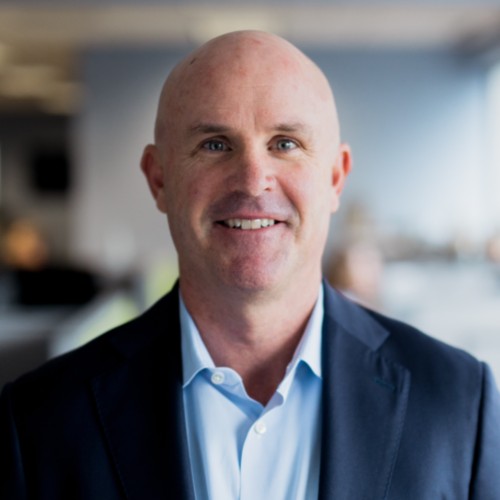

 John Furrier