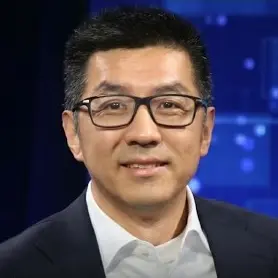
Jimmy Cheng of CASPA and of Synopsys' Technology Intelligence Center serves as president of CASPA for 2026–2027 and previews the CASPA Silicon System Intelligence event, which takes place on October 23–24 as part of CASPA's 35th anniversary programming that focuses on semiconductor systems, artificial intelligence infrastructure and cross-discipline industry collaboration.
In this theCUBE Research interview, hosts John Furrier and Dave Vellante speak with Jimmy Cheng of CASPA about the organization’s role in the semiconductor ecosystem. Cheng outlines an engineering-driven background and the organization’s 35-year evolution. They describe the conference’s single-track Silicon System Intelligence theme and the objectives for convening leaders across industry and analysis.
The discussion covers the blending of legacy and AI-native players, mentorship and career programs and the inclusion of chief executive officers to address strategic capital expenditure and market decisions. Cheng identifies a shift from accelerator-centric conversations to system constraints such as memory bandwidth, interconnect and thermal design, which Cheng identifies as critical bottlenecks. They characterize current capital as exuberant yet rooted in real physical demand and say CASPA convenes industry leaders and leading analysts to separate hype from sustainable investment strategies.
This conversation provides actionable insights for professionals in chip design, semiconductor systems and AI infrastructure and for organizations shaping investment and product road maps in heterogeneous computing and graphics processing units.
Forgot Password
Almost there!
We just sent you a verification email. Please verify your account to gain access to
theCUBE + NYSE Wired: The AI Factory - Data Center of the Future. If you don’t think you received an email check your
spam folder.
Sign in to AI Factories - Data Centers of the Future.
In order to sign in, enter the email address you used to registered for the event. Once completed, you will receive an email with a verification link. Open the link to automatically sign into the site.
Register for AI Factories - Data Centers of the Future
Please fill out the information below. You will receive an email with a verification link confirming your registration. Click the link to automatically sign into the site.
You’re almost there!
We just sent you a verification email. Please click the verification button in the email. Once your email address is verified, you will have full access to all event content for AI Factories - Data Centers of the Future.
I want my badge and interests to be visible to all attendees.
Checking this box will display your presense on the attendees list, view your profile and allow other attendees to contact you via 1-1 chat. Read the Privacy Policy. At any time, you can choose to disable this preference.
Select your Interests!
add
Upload your photo
Uploading..
OR
Connect via Twitter
Connect via Linkedin
EDIT PASSWORD
Share
Forgot Password
Almost there!
We just sent you a verification email. Please verify your account to gain access to
theCUBE + NYSE Wired: The AI Factory - Data Center of the Future. If you don’t think you received an email check your
spam folder.
Sign in to AI Factories - Data Centers of the Future.
In order to sign in, enter the email address you used to registered for the event. Once completed, you will receive an email with a verification link. Open the link to automatically sign into the site.
Sign in to gain access to theCUBE + NYSE Wired: The AI Factory - Data Center of the Future
Please sign in with LinkedIn to continue to theCUBE + NYSE Wired: The AI Factory - Data Center of the Future. Signing in with LinkedIn ensures a professional environment.
Are you sure you want to remove access rights for this user?
Details
Manage Access
email address
Community Invitation
Jimmy Cheng, CASPA
Jimmy Cheng of CASPA and of Synopsys' Technology Intelligence Center serves as
president of CASPA for 2026–2027 and previews the CASPA Silicon System
Intelligence event, which takes place on October 23–24 as part of CASPA's 35th
anniversary programming that focuses on semiconductor systems, artificial
intelligence infrastructure and cross-discipline industry collaboration. In this
theCUBE Research interview, hosts John Furrier and Dave Vellante speak with
Jimmy Cheng of CASPA about the organization’s role in the semiconductor
ecosystem. Cheng outlines an engineering-driven background and the
organization’s 35-year evolution. They describe the conference’s single-track
Silicon System Intelligence theme and the objectives for convening leaders
across industry and analysis. The discussion covers the blending of legacy and
AI-native players, mentorship and career programs and the inclusion of chief
executive officers to address strategic capital expenditure and market
decisions. Cheng identifies a shift from accelerator-centric conversations to
system constraints such as memory bandwidth, interconnect and thermal design,
which Cheng identifies as critical bottlenecks. They characterize current
capital as exuberant yet rooted in real physical demand and say CASPA convenes
industry leaders and leading analysts to separate hype from sustainable
investment strategies. This conversation provides actionable insights for
professionals in chip design, semiconductor systems and AI infrastructure and
for organizations shaping investment and product road maps in heterogeneous
computing and graphics processing units.
>> Palo Alto studio, connecting Silicon Valley and Wall Street. I'm John Furrier, co-host of theCUBE here with Dave Vellante, my co-host. Well, I'm John Furrier, host of theCUBE. We are here in theCUBE's NYSE Wired Studio. Palo Alto, of course, we have our NYSE studio connecting Silicon Valley to Wall Street. I'm here with Jimmy Cheng, who is the president of CASPA for 2026 and '27 and head of Technology Intelligence Center at Synopsys. Jimmy, thanks for coming in. We're going to do a little preview of your big event coming up in a month. So welcome to theCUBE and NYSE Wired program and community.>> Thank you, John. I really appreciate it. And I'm so excited to be here today and discuss the upcoming event. I think this is the event of the year. And some people call it the Semiconductor Davos. I think this is something that we're gearing up towards. I hope I can give a glimpse of what it is to the audience here.
John Furrier
>> Well, I wish I could say I had vision of the future when I started SiliconANGLE 17 years ago. Silicon Valley, SiliconANGLE, but silicon has become the biggest, hottest topic with the AI infrastructure boom. It's been one of the most exciting times in my lifetime that I've seen the waves of converging technology at the semiconductor level, memory, the chips, the software, and the capabilities that it's ushering in is something I've never seen before. We saw the big iron minicomputers, we saw the personal computers, the servers, but now we're seeing huge AI factories. So it's been quite an enabling time for the community of leaders. And then you got the young guns coming in right outta school building chips. Some are using AI to build chips. You're seeing all the demand. So it's been super exciting and I'm psyched that you're here because this event you have is the Davos of silicon and chips and semiconductors, but it's in Silicon Valley where the— it's birthplace here for chips. it's well known. This is Silicon Valley. So you're doing it here. This is the Davos, I guess, Silicon Valley. Explain for the folks that don't know what CASPA is, because this is an organization that's now in its 35th year. It's been around, so it's been doing the work. Now it's prime time for semiconductors. And this is just the wonderful— explain for the folks that don't know the organization, some of the things going on, explain what's happening.>> Well, CASPA stands for Chinese American Semiconductor Professional Association. It started in 1991 by a whole bunch of engineers. And at the time, they're looking to trade notes and advance their career. And since then has bloomed into one of the biggest organizations of its kind. Now we have 7,000 members strong, and now we have 12 local chapters ranging from Hsinchu, Singapore to Austin. And our corporate members are 80, 90 strong today and ranging from everything from EDA, foundry, packaging, and everything else. And I think our mission has been consistent through the 35 years is to promote technology innovation and connecting Silicon Valley to the rest of the world and open doors for others who are doing the work.
John Furrier
>> Yeah. And it is an engineering focus. I love that call out because there's so much work to be done, but the times have changed. Okay. The speed, we're hearing it in all the conversations, tape out in X months, not years. So years turn into months. So it's just so much advancement. So congratulations to everyone in the community because we need it faster. Everyone wants the demand. So I guess I have to ask you as president, what's your agenda? What's on your to-do list? Because you have massive marketplace demand. The engineers, you can't hire fast enough. There's a lot of community activity. What's your agenda this year?>> Well, a couple of things. First, I want to level up the game. Well, CASPA traditionally has been a technology-focused organization. This year we're bringing CEOs in. Why we do that is because we're in an unprecedented time of AI infrastructure buildout, and the key decisions, especially the OpEx and the CapEx expense, are decided by the CEO level and the capital market, right? So we want to bring the key stakeholders in for the discussion. Meanwhile, we want to keep the ladder down. Our founders are engineers who actually come here to Silicon Valley without a map. And today they're running the biggest company in the industry right now. But we still want to help those who are trying to go through the process. And we have mentorship, scholarship, as well as career fairs to help them to advance their careers.
John Furrier
>> Explain some of those dynamics. I think that's part of the camaraderie. I saw a talk last night with some semiconductor leaders and some practitioners, people building, entrepreneurs, and they're all on stage, but they kind of compete and they're like, competition among friends is good. What's the community like now? What's the vibe? Well, how would you describe the kind of camaraderie? Because this is not like, hey, I just vibe coded a chip. No one does that. But there's a lot of engineering involved. What's it like in the community as they look for mentors, figure out the maps? What— give a taste of what's a slice of life like in the community.>> Well, the thing is we are helping all the professionals, whether they're in the early phase of career. For example, we provide scholarship to the people who actually just graduated high school. And we also have early mentorship targeting professionals that are starting out their careers. And then we have career fairs that are targeting more mature engineers who try to look for new opportunities. So we have different, and we partner with some of the most prominent industry organizations around the world. SEMI, for example, SEMI's CEO, Ajit is going to be one of my guests, and GSA, Jodi is going to be also one of my keynote speakers in my event. So yes, we hope that we bring all the predominant organizations together so we have momentum and help all the engineers.
John Furrier
>> I really like the philosophy of helping people figure out their path. There's some technical opportunities. There's always sharing going on. But one thing that hasn't changed is entrepreneurship. Silicon Valley is entrepreneurial, and that's a great aspect too. So I have to ask you, in the 35 years, we've seen entrepreneurship, but it's happening faster and maybe it's bigger and more acute and happening faster. What's changed the most? If you had to look back and say, okay, this year Now you're president. You've got a great community. What's been the biggest change?>> Well, the 35 years of CASPA, if you remember, 35 years ago, that was 1991. Back then it was a PC era. Right. And at the time, the semiconductor industry was a $54 billion industry. Today it's a $1.6 trillion industry. So there's a lot of change, 30x growth in that 30, 35 years. And if you compare that perspective compared to Bay Area housing, grew only 5x and gold only grew 10x. So tremendous growth for semiconductor and CASPA has played an instrumental role in helping to facilitate this growth along the way.
John Furrier
>> And it's also global too. Silicon Valley, I've watched over my career many people when I moved out here from the East Coast in the late '90s, I always was enamored by the special nature of Silicon Valley, and because it wasn't like that everywhere else. And then people tried to replicate Silicon Valley, but it's hard to replicate the magic of that. So when you look at the engineering culture, people will stay in their jobs, they're engineering away, but then all of a sudden it goes mainstream. How has that impacted the community? Because now everyone wants to talk about chips on Wall Street. It's chips, semiconductors. So it's kind of gone, okay, I love the game I'm playing. I love to build products. I love to engineer. I'm building something. But now it's like a sport. It's like super athletes, semiconductors. What's that been like? What's that cultural change been like, if any?>> Well, certainly I think there's a lot of excitement this year about, because there's a lot of capex spend and semiconductor becomes super hot again. Right. So I think that's one of the things and some of our guests become megastars, essentially. And I'll give you an example of that. Lip-Bu Tan is going to be one of my fireside chat speakers and also Andrew Feldman. Those are iconic figures in semiconductors. So I'll have a fireside chat with them. I am looking forward to it. So I think those have a strong following nowadays because semiconductor is the new hottest thing. And Lip-Bu, what he does is very, very much admirable. What he does is trying to save an American icon. It's extremely something that I admire most about.
John Furrier
>> Yeah. I have to say that that's been very impressive, but what's not talked about enough too with Lip-Bu is that he's also been a great investor. He kind of came off the bench to help Intel, right? Let's just see what happened. And so if you look at what he's doing, I think that's remarkable work he's doing. So he's got two things going on. But when I look at the guest list and you have an amazing distinguished lineup in front of me. You got Lip-Bu Tan, you're at the top with him, so you're the president, I'm quite sure, top. But you've got some great names on here. You've got Samsung, you've got Cerebras, you've got SiLith, you've got luminaries from Cal Berkeley, Multibeam, you've got Cognichip, which has an amazing new opportunity. Etched is in. All the big names are in here. SanDisk. Everyone's here. Altera. Again, FPGA, who would've thought? That's, you know, everyone loves that, but now that's gone supernova. So there's so much happening and there's so much intersection of what everyone now, if you look at the AI factories, Jimmy, it's like, okay, high bandwidth memory has to work with the GPU. You got solid state, you have subsystems. So these things are now working together in kind of a new way. So a new system architecture is emerging and it's all grounded in the semi players, the chips. And I just, again, I've never seen anything like it before. So we got a great list. What do you think the agenda is going to be like? Take us through in your mind's eye the event. What's the date? Saturday, October— what's it?>> October 23rd, Saturday, October 24th, 2-day event. And we actually have 2 fireside chats 2 fireside chat speakers are Lip-Bu Tan and Andrew Feldman. And we have 9 panels, very exciting panels, and 8 keynote speakers as well. So those keynote speakers, let me give you a little bit of an overview of them. So those are kind of the biggest organizations around the world. SEMI CEO Ajit and IEEE President Mary are going to join us. And of course, GSA President and CEO Jodi. And along with that, we also have some of the prominent CEOs, for example, CEO of Synopsys, CEO of Lumentum, and president of Fortinet and CEO of Western Digital. So those are our keynote speakers. Along with that, we have all the upcoming players, for example, SambaNova, Cerebras. Cerebras is not an upcoming player. They actually IPO'd, one of the biggest IPOs in the history of the chip industry.
John Furrier
>> Yeah, d-Matrix, Etched, Rebellions, SiMa.ai, Ayar Labs, ScaleFlux, Cognichip, Normal Computing, Unconventional AI. And a bunch of others. This is a huge lineup because you've blended kind of old school, new school. And one of my observations is on the AI side, you have a lot of the AI native young guns, but all the innovation is coming from folks who have been doing systems work forever. It's almost like the perfect storm of everything coming together. So you have a blending of fusion of old and new coming together, people who have been doing systems work since the '90s, which by the way, the game's kind of the same, but a little bit different. Talk about that dynamic of the culture. It's not the old guard getting displaced by the new guard. It's coming together in one.>> Correct. And one of the things in this conference we call Silicon System Intelligence. System is a very instrumental theme for our conference. So a lot of conferences, the way they set up, they divide into tracks and design track, test track and all that. And they're very siloed. This year we have a single track and we want the people from different areas, interconnect, memory, and chips, they talk together. It's 'cause they are making decisions, the decision cannot be made alone. So I think the system is important. today we cannot design a chip without considering the thermal considerations. In the past, maybe that's possible, but not anymore. So it's all combined. So I think the system plays a huge role and that's why this year we're bringing some of the panels, like interconnect panels, memory panel, So they are part of our system. Yeah.
John Furrier
>> You know, that's a great point because it used to be, hey, you do this, send me over your designs, I'll integrate it in. No, now it's highly coupled in the design. With that in mind, how is that mapping to some of the changes? You talked about demand before, obviously AI infrastructure. What is the most underdiscussed problem in the AI infrastructure that people should be paying attention to?>> Well, I think we hear a lot about accelerator, hear a lot of those, But I think the really underserved topic should be anything but accelerator. So the compute has scaled fast enough, but the things that are feeding into it haven't really caught up. Memory bandwidth, interconnect, and all that thermal consideration hasn't caught up yet. You can buy all the flop you want, but if you can't get data in fast enough, you can't get the heat out fast enough, that's useless. Those are serious constraints. So we want to actually bring those into the center piece of discussion, and we have memory discussion, interconnect discussions. So that's something we want to really focus on.
John Furrier
>> It brings up a great point, and my next question was going to be about the AI bubble and the enthusiasm. Everyone's excited, but you just brought up a great point. On paper, it may look good in the specs, but there's some fundamental changes. Data movement. If you can't feed the system data, the AI can't work.>> Right.
John Furrier
>> And that's fundamental.>> That's right.
John Furrier
>> So that has to be designed. The other thing I want to talk to you about is the bubble piece, because we debate this on our theCUBE Pod all the time, me and Dave Vellante, about the bubble. I think there's no bubble. He's like, there's definitely a bubble. But he goes to the classic definition. When you have this kind of demand and innovation, my soapbox is, hey, there's no bubble because the demand curve is just so massive. Maybe prices might be high. There's some scarcity. But scarcity doesn't really matter. It drives the price up, doesn't drive the bubble. But when you look at, say, the role of the GPU, the GPU is not the GPU, it's AI infrastructure. So the GPU was a conversation. Now it's AI infrastructure, which is compute, XPU, memory. And Wall Street is all over this because now they're like, okay, follow the money. Now when you unpack the follow the money, you say, okay, where does the money go to? And what do engineers work on? Constraints. So you talk about constraints, unpack that a little further because that's where the engineers are. That's where the entrepreneurs are. You follow the constraints in a massively shifting market. It works. And that's where the money goes versus, hey, they're in semiconductors, throw money at them. Talk about that constraint because the smart money is going out there looking at and watching and putting money into things that are solving constraints, power, memory. What are some of the constraints?>> Yeah, there's a lot of money going currently into those constraints. For example, you mentioned the infrastructure build-out. So is there a bubble or not? I would describe it as there's a lot of capital exuberance right now, right? But the thing is really, I think there's real demand. there's serious, real physical capacity constraint demand out there, and that's certainly not a sign of a bubble. You have fab that's booked a year in advance and then you have memory (computer memory) that's in shortage and then you have interconnect that's also booked for years down the road. So those are clearly not a sign of any bubble. But again, is there too much overcapacity built? That's something that we don't know yet. Right. And will there be people who are going to be left with assets when the shakeout comes? We don't know yet. That's why I bring some of the best brains in this industry to dissect what's hype, what's real. So we have Bernstein analyst Stacy and also Dylan from SemiAnalysis who are going to talk about that. What's real, what's hype. Yeah.
John Furrier
>> And of course we'll be there too. TheCUBE will be unpacking that. Talk about some of the custom work because back in the old days, custom ASICs, custom work was always viewed as kind of a one-off. Yeah, we got an order, we'll fulfill it. You're seeing custom is an interesting thing because once you can get custom, then the packaging kicks in. Also, you're seeing people use AI for things. Cognichip is a great example of a company that I like where they've kind of created their own physics model for how to bottle up all this intellectual property and domain expertise around designing chips. So, okay, if they can make it go faster, we heard OpenAI the other night talking about, how they're using their LLM to make and design chips. Is that something that's going to be discussed? And what's your take on that? Because that could speed up what TSMC will get and they're going to be loaded. They're going to be like backordered. So that means more fabs. So if you have more inbound designs coming in, right, you're going to have a lot more things happening. What's your view on all this AI use for systems and the custom work? Is it now mainstream?>> I think, you're right. currently we see AI usage being ramped up and especially on the agentic side, right? So there's a lot of people focused on agentic as well as models. I think those are going to play a huge role down the road in the chip design. I think some of the examples you mentioned about cognitive recursive design, they focus on models and they focus on agents and all that stuff. But I think overall, Jensen had mentioned, in the future a lot of agents are going to help him design the chips. I think we are very enthused and very enthusiastic about that future as well.
John Furrier
>> Yeah. OpenAI was asked, what's the future look like in 5, 10 years? everyone get an agent now and get going. I want to ask about the GPU as a dominant piece because insiders in Silicon Valley saw the rise of NVIDIA. We saw the CUDA stuff. They're kind of playing a low profile. Obviously, mathematics plays well in Math feeding math. I wrote a big post on that. Does the GPU stay dominant? Because when you start to look at some of these system architectures, there's different use cases. Like you said, you got to feed the data. This is changing the narrative around what was a few years ago. I got to get my hands on GPUs. Of course, they do a great thing, but the big systems are not just using GPUs. What's your view on dominance of the GPU? Does it stay dominant for a while? Does it continue? Is it a standard set piece?>> Well, you probably know the incumbent is very strong and the software is the moat today. But however, one thing that we know is that the workload is diversifying. We have tons of different workload today. We have inference workload, agentic workload. I don't know if you follow news recently, Meta's just recently announced AI agents for everyone. And then, the CPU usage is going to shoot up because AI agents. So there will be different use cases and a different workload. And in the future, there will be a very dynamic environment. We have NPU, CPU, GPU, DPU, and I think they all play a big role. So it's not winner take all here. We're going to have a very, very vibrant community here.
John Furrier
>> You know, one of the things I like about the organization's 35th anniversary, it goes back and actually picks a date, okay, early '90s, '91. If you look at that period of time, that was really the beginning of the heterogeneous movement. Open systems became a huge deal. This is a big conversation in the semi world about open interoperability. There's always been kind of a buzzword that's kind of been consistent every wave. How has open heterogeneous systems Let me rephrase. What does heterogeneous mean in this AI era for semis? Because that's the— we're hearing that from all the leaders because they have to rely on their frenemies or their friends that they're competing with or partners. So having friends with benefits here is interesting because that seems to be the playbook versus I'm going to build a chip, I'm going to ship it, dominate the world.>> Right. I think what you're seeing is actually an interesting time right now is that there isn't always a competitor there. Sometimes you are a partner with it. For example, NVIDIA is actually also in some ways competing with Intel, but they're also financing Intel as well. So I think there's a lot of things that you're seeing aren't going to be clear-cut competition here. There will be partnerships going on for semiconductors and there will be collaboration because there's different usage modes and different needs.
John Furrier
>> We got a great event coming up. I'm psyched for you. Final question for you. When you're sitting around the table as president with the community, what's the agenda? You guys get up there and whiteboard chips. You talk about the companies, talk about the trends, some of the technology. What's the— what does that meeting look like? Take us through inside the curtain, a peek inside the curtain of what happens in these big meetings?>> Well, in the end, I think we really want to basically continue the growth of the semiconductor industry overall. We are at $1.6 trillion. We're projecting to grow to double that in a few years, and also I think we're— the momentum is not stopping. I really hope by bringing the CASPA in, we're going to help the semiconductor growth to the next new level. That's the goal.
John Furrier
>> Yeah. And obviously there's a lot of things going on in the market, the power, capital, kind of the bounding functions on the output side. Final question is, what's the— if you had to pick a cool thing, I know people don't like to pick their favorite children, but what do you like most? What are you excited about right now in the tech world out in the landscape? What's exciting you the most? What gives you the energy?>> Well, I'm so excited that I really hope we have personal intelligence, personal intelligence, someone actually can do a lot of work for me. That's why I'm so excited. I'm looking forward to that day and whether that's going to be coming from a digital form or a humanoid physical AI form. I'm so excited about the future. I think the future is almost here and we're getting to a point that my childhood science fiction dream is going to be fulfilled. We're going to have robots and we're going to have a personal assistant who knows so well about you and is going to do the work for you. And we're almost
John Furrier
>> here.Yeah, we're almost there. Right now I'm checking my emails. My first concern is, solve my email problem. Now I'm going to move on to some other areas. Jimmy, thank you for coming on and looking forward to your event.>> Thank you so
John Furrier
>> much.Jimmy Cheng is the president of CASPA 2026 and 2027. Again, this is an event that brings people together. Again, you're seeing a generational shift going on from the engineers and also the companies forming to solve these problems that will usher in the AI era for us as humans and us as a society, it's going to a global scale and there is no bubble. You heard it from me first and we'll argue about that on theCUBE Pod. Stay tuned for more of this, theCUBE and the NYSE Wired program. Thanks for watching.
>> Palo Alto studio, connecting Silicon Valley and Wall Street. I'm John Furrier, co-host of theCUBE here with Dave Vellante, my co-host. Well, I'm John Furrier, host of theCUBE. We are here in theCUBE's NYSE Wired Studio. Palo Alto, of course, we have our NYSE studio connecting Silicon Valley to Wall Street. I'm here with Jimmy Cheng, who is the president of CASPA for 2026 and '27 and head of Technology Intelligence Center at Synopsys. Jimmy, thanks for coming in. We're going to do a little preview of your big event coming up in a month. So welcome to theCUBE and NYSE Wired program and community.>> Thank you, John. I really appreciate it. And I'm so excited to be here today and discuss the upcoming event. I think this is the event of the year. And some people call it the Semiconductor Davos. I think this is something that we're gearing up towards. I hope I can give a glimpse of what it is to the audience here.
John Furrier
>> Well, I wish I could say I had vision of the future when I started SiliconANGLE 17 years ago. Silicon Valley, SiliconANGLE, but silicon has become the biggest, hottest topic with the AI infrastructure boom. It's been one of the most exciting times in my lifetime that I've seen the waves of converging technology at the semiconductor level, memory, the chips, the software, and the capabilities that it's ushering in is something I've never seen before. We saw the big iron minicomputers, we saw the personal computers, the servers, but now we're seeing huge AI factories. So it's been quite an enabling time for the community of leaders. And then you got the young guns coming in right outta school building chips. Some are using AI to build chips. You're seeing all the demand. So it's been super exciting and I'm psyched that you're here because this event you have is the Davos of silicon and chips and semiconductors, but it's in Silicon Valley where the— it's birthplace here for chips. it's well known. This is Silicon Valley. So you're doing it here. This is the Davos, I guess, Silicon Valley. Explain for the folks that don't know what CASPA is, because this is an organization that's now in its 35th year. It's been around, so it's been doing the work. Now it's prime time for semiconductors. And this is just the wonderful— explain for the folks that don't know the organization, some of the things going on, explain what's happening.>> Well, CASPA stands for Chinese American Semiconductor Professional Association. It started in 1991 by a whole bunch of engineers. And at the time, they're looking to trade notes and advance their career. And since then has bloomed into one of the biggest organizations of its kind. Now we have 7,000 members strong, and now we have 12 local chapters ranging from Hsinchu, Singapore to Austin. And our corporate members are 80, 90 strong today and ranging from everything from EDA, foundry, packaging, and everything else. And I think our mission has been consistent through the 35 years is to promote technology innovation and connecting Silicon Valley to the rest of the world and open doors for others who are doing the work.
John Furrier
>> Yeah. And it is an engineering focus. I love that call out because there's so much work to be done, but the times have changed. Okay. The speed, we're hearing it in all the conversations, tape out in X months, not years. So years turn into months. So it's just so much advancement. So congratulations to everyone in the community because we need it faster. Everyone wants the demand. So I guess I have to ask you as president, what's your agenda? What's on your to-do list? Because you have massive marketplace demand. The engineers, you can't hire fast enough. There's a lot of community activity. What's your agenda this year?>> Well, a couple of things. First, I want to level up the game. Well, CASPA traditionally has been a technology-focused organization. This year we're bringing CEOs in. Why we do that is because we're in an unprecedented time of AI infrastructure buildout, and the key decisions, especially the OpEx and the CapEx expense, are decided by the CEO level and the capital market, right? So we want to bring the key stakeholders in for the discussion. Meanwhile, we want to keep the ladder down. Our founders are engineers who actually come here to Silicon Valley without a map. And today they're running the biggest company in the industry right now. But we still want to help those who are trying to go through the process. And we have mentorship, scholarship, as well as career fairs to help them to advance their careers.
John Furrier
>> Explain some of those dynamics. I think that's part of the camaraderie. I saw a talk last night with some semiconductor leaders and some practitioners, people building, entrepreneurs, and they're all on stage, but they kind of compete and they're like, competition among friends is good. What's the community like now? What's the vibe? Well, how would you describe the kind of camaraderie? Because this is not like, hey, I just vibe coded a chip. No one does that. But there's a lot of engineering involved. What's it like in the community as they look for mentors, figure out the maps? What— give a taste of what's a slice of life like in the community.>> Well, the thing is we are helping all the professionals, whether they're in the early phase of career. For example, we provide scholarship to the people who actually just graduated high school. And we also have early mentorship targeting professionals that are starting out their careers. And then we have career fairs that are targeting more mature engineers who try to look for new opportunities. So we have different, and we partner with some of the most prominent industry organizations around the world. SEMI, for example, SEMI's CEO, Ajit is going to be one of my guests, and GSA, Jodi is going to be also one of my keynote speakers in my event. So yes, we hope that we bring all the predominant organizations together so we have momentum and help all the engineers.
John Furrier
>> I really like the philosophy of helping people figure out their path. There's some technical opportunities. There's always sharing going on. But one thing that hasn't changed is entrepreneurship. Silicon Valley is entrepreneurial, and that's a great aspect too. So I have to ask you, in the 35 years, we've seen entrepreneurship, but it's happening faster and maybe it's bigger and more acute and happening faster. What's changed the most? If you had to look back and say, okay, this year Now you're president. You've got a great community. What's been the biggest change?>> Well, the 35 years of CASPA, if you remember, 35 years ago, that was 1991. Back then it was a PC era. Right. And at the time, the semiconductor industry was a $54 billion industry. Today it's a $1.6 trillion industry. So there's a lot of change, 30x growth in that 30, 35 years. And if you compare that perspective compared to Bay Area housing, grew only 5x and gold only grew 10x. So tremendous growth for semiconductor and CASPA has played an instrumental role in helping to facilitate this growth along the way.
John Furrier
>> And it's also global too. Silicon Valley, I've watched over my career many people when I moved out here from the East Coast in the late '90s, I always was enamored by the special nature of Silicon Valley, and because it wasn't like that everywhere else. And then people tried to replicate Silicon Valley, but it's hard to replicate the magic of that. So when you look at the engineering culture, people will stay in their jobs, they're engineering away, but then all of a sudden it goes mainstream. How has that impacted the community? Because now everyone wants to talk about chips on Wall Street. It's chips, semiconductors. So it's kind of gone, okay, I love the game I'm playing. I love to build products. I love to engineer. I'm building something. But now it's like a sport. It's like super athletes, semiconductors. What's that been like? What's that cultural change been like, if any?>> Well, certainly I think there's a lot of excitement this year about, because there's a lot of capex spend and semiconductor becomes super hot again. Right. So I think that's one of the things and some of our guests become megastars, essentially. And I'll give you an example of that. Lip-Bu Tan is going to be one of my fireside chat speakers and also Andrew Feldman. Those are iconic figures in semiconductors. So I'll have a fireside chat with them. I am looking forward to it. So I think those have a strong following nowadays because semiconductor is the new hottest thing. And Lip-Bu, what he does is very, very much admirable. What he does is trying to save an American icon. It's extremely something that I admire most about.
John Furrier
>> Yeah. I have to say that that's been very impressive, but what's not talked about enough too with Lip-Bu is that he's also been a great investor. He kind of came off the bench to help Intel, right? Let's just see what happened. And so if you look at what he's doing, I think that's remarkable work he's doing. So he's got two things going on. But when I look at the guest list and you have an amazing distinguished lineup in front of me. You got Lip-Bu Tan, you're at the top with him, so you're the president, I'm quite sure, top. But you've got some great names on here. You've got Samsung, you've got Cerebras, you've got SiLith, you've got luminaries from Cal Berkeley, Multibeam, you've got Cognichip, which has an amazing new opportunity. Etched is in. All the big names are in here. SanDisk. Everyone's here. Altera. Again, FPGA, who would've thought? That's, you know, everyone loves that, but now that's gone supernova. So there's so much happening and there's so much intersection of what everyone now, if you look at the AI factories, Jimmy, it's like, okay, high bandwidth memory has to work with the GPU. You got solid state, you have subsystems. So these things are now working together in kind of a new way. So a new system architecture is emerging and it's all grounded in the semi players, the chips. And I just, again, I've never seen anything like it before. So we got a great list. What do you think the agenda is going to be like? Take us through in your mind's eye the event. What's the date? Saturday, October— what's it?>> October 23rd, Saturday, October 24th, 2-day event. And we actually have 2 fireside chats 2 fireside chat speakers are Lip-Bu Tan and Andrew Feldman. And we have 9 panels, very exciting panels, and 8 keynote speakers as well. So those keynote speakers, let me give you a little bit of an overview of them. So those are kind of the biggest organizations around the world. SEMI CEO Ajit and IEEE President Mary are going to join us. And of course, GSA President and CEO Jodi. And along with that, we also have some of the prominent CEOs, for example, CEO of Synopsys, CEO of Lumentum, and president of Fortinet and CEO of Western Digital. So those are our keynote speakers. Along with that, we have all the upcoming players, for example, SambaNova, Cerebras. Cerebras is not an upcoming player. They actually IPO'd, one of the biggest IPOs in the history of the chip industry.
John Furrier
>> Yeah, d-Matrix, Etched, Rebellions, SiMa.ai, Ayar Labs, ScaleFlux, Cognichip, Normal Computing, Unconventional AI. And a bunch of others. This is a huge lineup because you've blended kind of old school, new school. And one of my observations is on the AI side, you have a lot of the AI native young guns, but all the innovation is coming from folks who have been doing systems work forever. It's almost like the perfect storm of everything coming together. So you have a blending of fusion of old and new coming together, people who have been doing systems work since the '90s, which by the way, the game's kind of the same, but a little bit different. Talk about that dynamic of the culture. It's not the old guard getting displaced by the new guard. It's coming together in one.>> Correct. And one of the things in this conference we call Silicon System Intelligence. System is a very instrumental theme for our conference. So a lot of conferences, the way they set up, they divide into tracks and design track, test track and all that. And they're very siloed. This year we have a single track and we want the people from different areas, interconnect, memory, and chips, they talk together. It's 'cause they are making decisions, the decision cannot be made alone. So I think the system is important. today we cannot design a chip without considering the thermal considerations. In the past, maybe that's possible, but not anymore. So it's all combined. So I think the system plays a huge role and that's why this year we're bringing some of the panels, like interconnect panels, memory panel, So they are part of our system. Yeah.
John Furrier
>> You know, that's a great point because it used to be, hey, you do this, send me over your designs, I'll integrate it in. No, now it's highly coupled in the design. With that in mind, how is that mapping to some of the changes? You talked about demand before, obviously AI infrastructure. What is the most underdiscussed problem in the AI infrastructure that people should be paying attention to?>> Well, I think we hear a lot about accelerator, hear a lot of those, But I think the really underserved topic should be anything but accelerator. So the compute has scaled fast enough, but the things that are feeding into it haven't really caught up. Memory bandwidth, interconnect, and all that thermal consideration hasn't caught up yet. You can buy all the flop you want, but if you can't get data in fast enough, you can't get the heat out fast enough, that's useless. Those are serious constraints. So we want to actually bring those into the center piece of discussion, and we have memory discussion, interconnect discussions. So that's something we want to really focus on.
John Furrier
>> It brings up a great point, and my next question was going to be about the AI bubble and the enthusiasm. Everyone's excited, but you just brought up a great point. On paper, it may look good in the specs, but there's some fundamental changes. Data movement. If you can't feed the system data, the AI can't work.>> Right.
John Furrier
>> And that's fundamental.>> That's right.
John Furrier
>> So that has to be designed. The other thing I want to talk to you about is the bubble piece, because we debate this on our theCUBE Pod all the time, me and Dave Vellante, about the bubble. I think there's no bubble. He's like, there's definitely a bubble. But he goes to the classic definition. When you have this kind of demand and innovation, my soapbox is, hey, there's no bubble because the demand curve is just so massive. Maybe prices might be high. There's some scarcity. But scarcity doesn't really matter. It drives the price up, doesn't drive the bubble. But when you look at, say, the role of the GPU, the GPU is not the GPU, it's AI infrastructure. So the GPU was a conversation. Now it's AI infrastructure, which is compute, XPU, memory. And Wall Street is all over this because now they're like, okay, follow the money. Now when you unpack the follow the money, you say, okay, where does the money go to? And what do engineers work on? Constraints. So you talk about constraints, unpack that a little further because that's where the engineers are. That's where the entrepreneurs are. You follow the constraints in a massively shifting market. It works. And that's where the money goes versus, hey, they're in semiconductors, throw money at them. Talk about that constraint because the smart money is going out there looking at and watching and putting money into things that are solving constraints, power, memory. What are some of the constraints?>> Yeah, there's a lot of money going currently into those constraints. For example, you mentioned the infrastructure build-out. So is there a bubble or not? I would describe it as there's a lot of capital exuberance right now, right? But the thing is really, I think there's real demand. there's serious, real physical capacity constraint demand out there, and that's certainly not a sign of a bubble. You have fab that's booked a year in advance and then you have memory (computer memory) that's in shortage and then you have interconnect that's also booked for years down the road. So those are clearly not a sign of any bubble. But again, is there too much overcapacity built? That's something that we don't know yet. Right. And will there be people who are going to be left with assets when the shakeout comes? We don't know yet. That's why I bring some of the best brains in this industry to dissect what's hype, what's real. So we have Bernstein analyst Stacy and also Dylan from SemiAnalysis who are going to talk about that. What's real, what's hype. Yeah.
John Furrier
>> And of course we'll be there too. TheCUBE will be unpacking that. Talk about some of the custom work because back in the old days, custom ASICs, custom work was always viewed as kind of a one-off. Yeah, we got an order, we'll fulfill it. You're seeing custom is an interesting thing because once you can get custom, then the packaging kicks in. Also, you're seeing people use AI for things. Cognichip is a great example of a company that I like where they've kind of created their own physics model for how to bottle up all this intellectual property and domain expertise around designing chips. So, okay, if they can make it go faster, we heard OpenAI the other night talking about, how they're using their LLM to make and design chips. Is that something that's going to be discussed? And what's your take on that? Because that could speed up what TSMC will get and they're going to be loaded. They're going to be like backordered. So that means more fabs. So if you have more inbound designs coming in, right, you're going to have a lot more things happening. What's your view on all this AI use for systems and the custom work? Is it now mainstream?>> I think, you're right. currently we see AI usage being ramped up and especially on the agentic side, right? So there's a lot of people focused on agentic as well as models. I think those are going to play a huge role down the road in the chip design. I think some of the examples you mentioned about cognitive recursive design, they focus on models and they focus on agents and all that stuff. But I think overall, Jensen had mentioned, in the future a lot of agents are going to help him design the chips. I think we are very enthused and very enthusiastic about that future as well.
John Furrier
>> Yeah. OpenAI was asked, what's the future look like in 5, 10 years? everyone get an agent now and get going. I want to ask about the GPU as a dominant piece because insiders in Silicon Valley saw the rise of NVIDIA. We saw the CUDA stuff. They're kind of playing a low profile. Obviously, mathematics plays well in Math feeding math. I wrote a big post on that. Does the GPU stay dominant? Because when you start to look at some of these system architectures, there's different use cases. Like you said, you got to feed the data. This is changing the narrative around what was a few years ago. I got to get my hands on GPUs. Of course, they do a great thing, but the big systems are not just using GPUs. What's your view on dominance of the GPU? Does it stay dominant for a while? Does it continue? Is it a standard set piece?>> Well, you probably know the incumbent is very strong and the software is the moat today. But however, one thing that we know is that the workload is diversifying. We have tons of different workload today. We have inference workload, agentic workload. I don't know if you follow news recently, Meta's just recently announced AI agents for everyone. And then, the CPU usage is going to shoot up because AI agents. So there will be different use cases and a different workload. And in the future, there will be a very dynamic environment. We have NPU, CPU, GPU, DPU, and I think they all play a big role. So it's not winner take all here. We're going to have a very, very vibrant community here.
John Furrier
>> You know, one of the things I like about the organization's 35th anniversary, it goes back and actually picks a date, okay, early '90s, '91. If you look at that period of time, that was really the beginning of the heterogeneous movement. Open systems became a huge deal. This is a big conversation in the semi world about open interoperability. There's always been kind of a buzzword that's kind of been consistent every wave. How has open heterogeneous systems Let me rephrase. What does heterogeneous mean in this AI era for semis? Because that's the— we're hearing that from all the leaders because they have to rely on their frenemies or their friends that they're competing with or partners. So having friends with benefits here is interesting because that seems to be the playbook versus I'm going to build a chip, I'm going to ship it, dominate the world.>> Right. I think what you're seeing is actually an interesting time right now is that there isn't always a competitor there. Sometimes you are a partner with it. For example, NVIDIA is actually also in some ways competing with Intel, but they're also financing Intel as well. So I think there's a lot of things that you're seeing aren't going to be clear-cut competition here. There will be partnerships going on for semiconductors and there will be collaboration because there's different usage modes and different needs.
John Furrier
>> We got a great event coming up. I'm psyched for you. Final question for you. When you're sitting around the table as president with the community, what's the agenda? You guys get up there and whiteboard chips. You talk about the companies, talk about the trends, some of the technology. What's the— what does that meeting look like? Take us through inside the curtain, a peek inside the curtain of what happens in these big meetings?>> Well, in the end, I think we really want to basically continue the growth of the semiconductor industry overall. We are at $1.6 trillion. We're projecting to grow to double that in a few years, and also I think we're— the momentum is not stopping. I really hope by bringing the CASPA in, we're going to help the semiconductor growth to the next new level. That's the goal.
John Furrier
>> Yeah. And obviously there's a lot of things going on in the market, the power, capital, kind of the bounding functions on the output side. Final question is, what's the— if you had to pick a cool thing, I know people don't like to pick their favorite children, but what do you like most? What are you excited about right now in the tech world out in the landscape? What's exciting you the most? What gives you the energy?>> Well, I'm so excited that I really hope we have personal intelligence, personal intelligence, someone actually can do a lot of work for me. That's why I'm so excited. I'm looking forward to that day and whether that's going to be coming from a digital form or a humanoid physical AI form. I'm so excited about the future. I think the future is almost here and we're getting to a point that my childhood science fiction dream is going to be fulfilled. We're going to have robots and we're going to have a personal assistant who knows so well about you and is going to do the work for you. And we're almost
John Furrier
>> here.Yeah, we're almost there. Right now I'm checking my emails. My first concern is, solve my email problem. Now I'm going to move on to some other areas. Jimmy, thank you for coming on and looking forward to your event.>> Thank you so
John Furrier
>> much.Jimmy Cheng is the president of CASPA 2026 and 2027. Again, this is an event that brings people together. Again, you're seeing a generational shift going on from the engineers and also the companies forming to solve these problems that will usher in the AI era for us as humans and us as a society, it's going to a global scale and there is no bubble. You heard it from me first and we'll argue about that on theCUBE Pod. Stay tuned for more of this, theCUBE and the NYSE Wired program. Thanks for watching.