Mahdi Yahya of Radiant, co-founder and president, discusses building graphics processing unit powered artificial intelligence infrastructure and the merger with Brookfield to scale neocloud capacity. Yahya explores European and U.S. market dynamics, alignment with NVIDIA, cooling strategies, sovereign AI considerations and network challenges for future inference workloads. theCUBE hosts the conversation for the NYSE Wired AI Factories series.
Yahya states Radiant plans to deploy hundreds of megawatts in the next six months and targets multiple gigawatts within a year. They emphasize vertically integrated solutions across land, power, hardware, software and capital and warn that inference will become a network problem. theCUBE analysts frame sovereign AI as control over data, infrastructure and national AI utilities.
Forgot Password
Almost there!
We just sent you a verification email. Please verify your account to gain access to
theCUBE + NYSE Wired: AI Factories - Data Centers of the Future. If you don’t think you received an email check your
spam folder.
Sign in to AI Factories - Data Centers of the Future.
In order to sign in, enter the email address you used to registered for the event. Once completed, you will receive an email with a verification link. Open the link to automatically sign into the site.
Register for AI Factories - Data Centers of the Future
Please fill out the information below. You will receive an email with a verification link confirming your registration. Click the link to automatically sign into the site.
You’re almost there!
We just sent you a verification email. Please click the verification button in the email. Once your email address is verified, you will have full access to all event content for AI Factories - Data Centers of the Future.
I want my badge and interests to be visible to all attendees.
Checking this box will display your presense on the attendees list, view your profile and allow other attendees to contact you via 1-1 chat. Read the Privacy Policy. At any time, you can choose to disable this preference.
Select your Interests!
add
Upload your photo
Uploading..
OR
Connect via Twitter
Connect via Linkedin
EDIT PASSWORD
Share
Forgot Password
Almost there!
We just sent you a verification email. Please verify your account to gain access to
theCUBE + NYSE Wired: AI Factories - Data Centers of the Future. If you don’t think you received an email check your
spam folder.
Sign in to AI Factories - Data Centers of the Future.
In order to sign in, enter the email address you used to registered for the event. Once completed, you will receive an email with a verification link. Open the link to automatically sign into the site.
Sign in to gain access to theCUBE + NYSE Wired: AI Factories - Data Centers of the Future
Please sign in with LinkedIn to continue to theCUBE + NYSE Wired: AI Factories - Data Centers of the Future. Signing in with LinkedIn ensures a professional environment.
Are you sure you want to remove access rights for this user?
Details
Manage Access
email address
Community Invitation
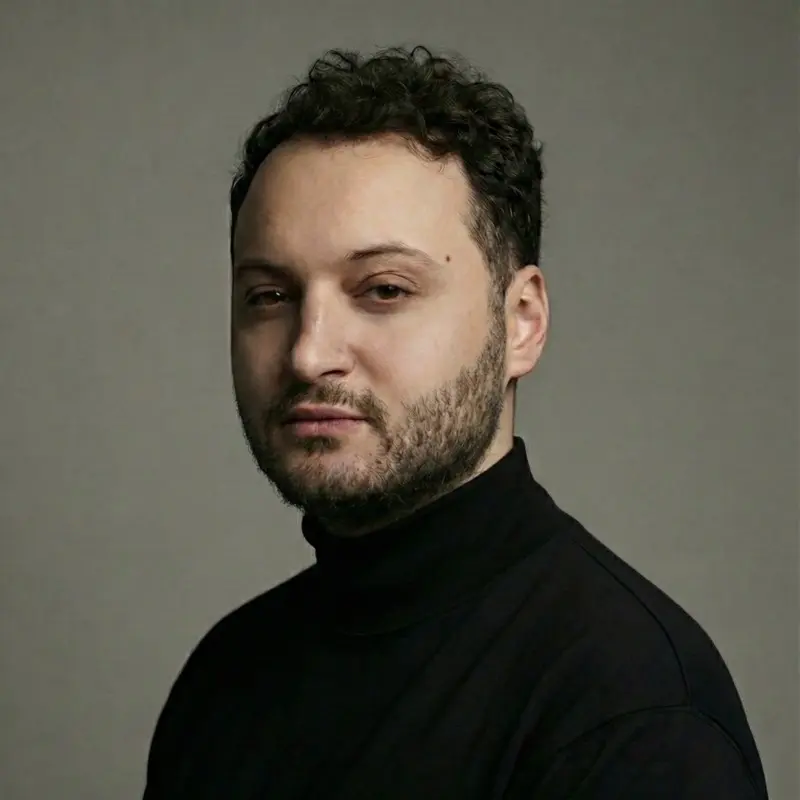
Mahdi Yahya, Radiant
Mahdi Yahya of Radiant, co-founder and president, discusses building graphics
processing unit powered artificial intelligence infrastructure and the merger
with Brookfield to scale neocloud capacity. Yahya explores European and U.S.
market dynamics, alignment with NVIDIA, cooling strategies, sovereign AI
considerations and network challenges for future inference workloads. theCUBE
hosts the conversation for the NYSE Wired AI Factories series. Yahya states
Radiant plans to deploy hundreds of megawatts in the next six months and targets
multiple gigawatts within a year. They emphasize vertically integrated solutions
across land, power, hardware, software and capital and warn that inference will
become a network problem. theCUBE analysts frame sovereign AI as control over
data, infrastructure and national AI utilities.
In this interview from theCUBE + NYSE Wired: AI Factories - Data Centers of the Future, Mahdi Yahya, co-founder and president of Radiant, joins theCUBE + NYSE Wired's Gemma Allen to discuss the formation of Radiant and why winning the AI infrastructure race demands full vertical integration across capital, power, hardware and software. Yahya traces the eight-year journey of Ori through its merger with Brookfield, one of the world's largest asset managers, to form Radiant — a new cloud purpose-built for the AI supercycle. He details Radiant's European footprin...Read more
exploreKeep Exploring
Why did Ori partner with Brookfield to create the Radiant cloud?add
How is demand for compute, data center capacity, and power evolving in Europe, and what are the current capacity and expansion plans (now vs. targets through 2028)?add
What is the typical customer profile and use case for neocloud in Europe, and which types of customers—hyperscalers, mid‑market companies, large enterprises, or government/sovereign projects—are driving demand?add
What differentiates the successful neocloud providers from the many available on the market today?add
>> Palo Alto Studio, connecting Silicon Valley and Wall Street. I'm John Furrier with Dave Vellante, my co-host.
Gemma Allen
>> Welcome back to theCUBE Studio here at the New York Stock Exchange. I'm Gemma Allen with NYSE Wired AI Factories, and joining me now from London is Mahdi Yahya, Co-founder and President of Radiant. Welcome, Mahdi.
Mahdi Yahya
>> Again, Gemma, good to be here.
Gemma Allen
>> So before we get into all the business stuff and the technical stuff, which we very much will, I first want to check how accurate ChatGPT is about you, Mahdi, because something really intrigued me about your story. I learned that you used to be an actor, theater guy who broke into the world of tech. Is this true?
Mahdi Yahya
>> I was never an actor, but I did study theater at university, yes. And I didn't bring into tech through that, because I did tech first and then while doing tech, I decided to go to theater school for a while.
Gemma Allen
>> Wow. And does on skillset help the other in any way?
Mahdi Yahya
>> I think so. I mean, theater in general teaches you about humans and life. And when you're doing business, you have to understand both very well to succeed, I feel.
Gemma Allen
>> For sure. Well, you've certainly learned a good bit about business, I imagine, in the last year because you have sold your company, Ori, to Brookfield, a huge titan of the energy industry, and are now I guess bringing things to the next level. Maybe talk us through what's been going on and fill in the gaps in that story for me, please.
Mahdi Yahya
>> Yeah, of course. As Ori, we've been going on for about eight years before that, and we've been building AI infrastructure globally. And as you know, as the demand for AI and the AI infrastructure started to increase, the cost of putting these systems in the ground started to increase as well. AI infrastructure is not cheap and it requires vast amounts of capital to basically deploy, but also it requires vast amounts of energy and power and data centers, as we all know. So, Brookfield is one of the largest investors in the world and one of the best asset managers in the world. They own a portfolio of data centers and powered land globally across the world, in the gigawatts. So, it just made sense for us to combine our capabilities in managing and deploying AI infrastructure globally with the Brookfield capabilities to launch a brand new cloud, which is Radiant today, combining all these four components together under one roof.
Gemma Allen
>> Wow. Okay, so it's like somewhat of a bridgehead for Brookfield into the neocloud industry, per se. Were they a customer of yours at Ori? And how, I guess, did this deal come about?
Mahdi Yahya
>> We were in the market raising capital and we got introduced to Brookfield and we got talking. And eventually out of all of the different options we had ahead of us, it just made sense to basically partner with Brookfield through this merger that we've done.
Gemma Allen
>> So let's talk about the world of neoclouds, specifically as it relates to the world in Europe and the world here in the US, because obviously those markets are becoming somewhat of different animals and beasts, as we see things move at the speed of sound. Classify, I guess, the journey for Ori, now Radiant, in Europe. Give me some sense of the footprint, and I guess, how are those kind of two markets as well and the build out of those markets and the pace of that has taken place?
Mahdi Yahya
>> I mean, the demand is constantly increasing, it's not slowing down, and both for the compute and also for the data centers and the power that host this compute. And I would say the last six months, we're seeing an increasing amount of demand in Europe, specifically across the entirety of Europe, whether it's the mainland Europe or even the Nordics as well. We have a very large footprint in Europe. Today we have around 150 megawatts live that we're basically deploying into, and we're basically looking to grow that to about two gigawatts by the end of 2028, today. So we are basically preparing for that demand and we don't see it slowing down at all in the next two years, especially in Europe.
Gemma Allen
>> Wow. And in terms of the actual stock, I mean, you guys work with NVIDIA, I'm sure you work with AMD. Do you work across... Are you a GPU agnostic, per se? What has been the kind of focus there and how have things been playing out as well, market to market?
Mahdi Yahya
>> Yeah. We're heavily involved with NVIDIA. We are aligned with NVIDIA, and NVIDIA is one of our partners even before the Brookfield transaction and even more so now after the Brookfield transaction. So, all of our equipment and infrastructure is NVIDIA powered and all of the demand we have coming our way is for NVIDIA infrastructure today.
Gemma Allen
>> Wow. Okay, so exclusively NVIDIA?
Mahdi Yahya
>> Today, yes.
Gemma Allen
>> Okay, great. And in terms of the world of neocloud in Europe in particular, I'm interested to understand. Profile the typical customer for me, the typical use case in the European landscape. Are you again working with lots of hyperscalers, any mid-market players? What are we seeing playing out there?
Mahdi Yahya
>> I would say on the large scale of things, most of the demand is coming from US-based hyperscalers that require capacity in Europe to support their European customers and users. On the other end, we are engaged in a number of sovereign projects as well with a number of European governments or government led initiatives in Europe as well. And most recently, we're starting to see demand scale from some of the large enterprises based in Europe, in pharma, in the automotive space, and manufacturing. But in the first instance, I would say the biggest demand is from the hyperscalers setting infrastructure up.
Gemma Allen
>> Wow, okay. It's interesting when we hear about demand from hyperscalers in any market, you almost assume that there's nothing left for anyone else, right? Because it seems as though that demand is so hot, especially here. Talk a little bit about sovereign AI though, and I guess, that growing use case and client base, and what sorts of trends as well you're seeing, especially in a market like Europe, which let's be frank, has a very different regulatory rhythm to the US.
Mahdi Yahya
>> I think sovereign can mean many things to different people today, like with sovereign AI, and it depends on from which lens you're looking at it. I'd say, I mean, the core driver behind sovereign AI today is control. So, governments are looking at ways to control the data this AI is exposed to and the data this AI is also generating over a period of time. And therefore, that takes us to the infrastructure that AI is running on, and is that infrastructure sovereign or not? So there's multiple layers of what sovereignty is and how you can achieve it, whether it's physical sovereignty of putting everything inside the country, or even using software, basically technologies to actually achieve sovereignty within the boundaries that each, I would say sovereign initiative is looking for. I'd say the definition is not very well defined yet today, but the conversations are all basically consistent around control and controlling that infrastructure and therefore, controlling the AI and the models and the data that this infrastructure hosts. And I think that's where the conversation is today.
Gemma Allen
>> And I guess what's interesting about the conversation around sovereign AI, particularly in this kind of growing user base or customer example, is that a lot of these folks, especially governments and other small cap, mid-cap players, even in the enterprise space, didn't really control their own data and control plane in the previous world, right?
Mahdi Yahya
>> Yeah.
Gemma Allen
>> So it's somewhat of a step to suddenly run your own AI end-to-end infrastructure. I'd love to hear, what sorts of challenges are you seeing? I guess, is there a level of naivety out there still, do you think, when it comes to the end-to-end world of AI from an IT control perspective? And how do you see it play out?
Mahdi Yahya
>> Yeah. I think, I mean, it's a very interesting point because yes, this whole topic of control was not as present as it is today, and it became very topical everywhere when AI came into play. And I think AI drove a lot of governments to think about data, because AI is all about data, right? It controls data, it also generates a lot of data. So, that drove a lot of people to think about, a lot of governments to think about how they can control that. But more importantly is that we've never seen a technological shift that is actually transforming every single layer of our lives, of government, of how we run businesses, how we build businesses, and that's why AI is so... Basically, naturally we've got driven towards, if this is going to control everything, then we need to think about how we can control it, and that's where sovereign AI came into play and stay. So, that's the difference between traditional IT systems before and now. So, I wouldn't say it's a naive thinking. I think it's the right thing to do and it's the right way to think about it, because I talk to basically different government initiatives and we say AI and AI infrastructure is the same as the electricity grid in the country. That's a sovereign asset that you control. And you might have components from different companies and different countries around the world, but you still have the controls around that as well. The keys for that is not with another country. So when governments are thinking about AI as a utility that is basically a sovereign asset, that's when things basically start falling into place, I would say. And that's where the thinking is and what we're doing as well in Europe through our solutions and our initiatives.
Gemma Allen
>> I mean, I guess I should clarify and say that I sometimes wonder if there's a whole tailwind here, where a long tail of a huge amount of business services and services players that will come into make this happen, I guess, at a government level, in terms of filling the gaps in what has been somewhat of a fragmented IT strategy for quite a while. But moving on, I'd love to ask you a little bit about the world of neoclouds generally, and some of the, I guess, conversations or narratives that we hear here in the US quite regularly. Some folks at GGC this year, for example, I heard someone say, "I feel like there's a new neocloud every day." Right? We also know though, there isn't enough demand or there's too much demand right now for the space, but also that kind of conversation between becoming a real estate play and a hardware-software infrastructure play.How do you think about that, Mahdi, in terms of growing this business out?
Mahdi Yahya
>> There's definitely a lot of neoclouds on the market today, in various sizes. And I think that's natural. When there's demand for a service, a lot of people would want to be, take part in the action, right? It's normal. Now, being part of it and actually executing are two very different things, I believe. And you can't think of this as just an energy play or a hardware play, like a GPU or compute play, or just a software play. And I would say the best players out there, and there are very few of them, are the ones who think about this as a full vertically integrated solution between the software, the hardware, the land, the power, and actually build out a solid offering to the customers that are basically using this service. And I'll add one more layer to that, which is the capital piece as well. The capital is not necessarily something, an afterthought or a side thing to the technical stack, because when you're structuring these large scale infrastructure build outs, capital plays a big part in terms of how you structure the capital, how you deploy it, and how you allocate it as well to that. And the people who do that best are the ones who can basically scale from here, I would say. And there's only very few people, very few neoclouds in the world are actually doing that today.
Gemma Allen
>> I think that's a very fair and pragmatic answer. In terms of that vertical stack, if we unpack that a second and talk about some of the trends or some of the promise that we hear about at different layers, what are you doing, seeing, and innovating for in cooling, for example? Are you using liquid cooling? Are you using... We've heard about diamond cooling lately here on the show, we've seen all sorts of innovations. What are you, I guess, using within your own footprint?
Mahdi Yahya
>> I mean, we do use liquid cooling. We have systems that are liquid cooled. We have systems that are air cooled. I would say again, not one component of one technology can make a difference on its own, whether on the cooling stack or on the compute or again, the software. And what we do is we look at the entire chain holistically, and the solutions we come up with basically are always to offer the best infrastructure for our customers that is always up and always running, because that's the key differentiator today in terms of keeping this infrastructure running and making sure there's the least amount of downtime for your customers. And to achieve that, you really need to think about the entire chain holistically and actually basically bake that into a fully comprehensive service to the customer.
Gemma Allen
>> And when we think about the world of inference and the software race in that space, performative engineering, all the things that are happening, what sorts of trends or again, innovations are you seeing and working towards in that side of the integration, the optimization layer, which is becoming increasingly important, as we both know?
Mahdi Yahya
>> So we actually look at inference from a different lens than most people do today. And they were looking at inference or what inference is going to become two to three years from now and the problems inference would face. And I don't think there are compute or silicon problems, really. I fully believe, and we believe they're going to be network problems. And when we talk about network problems, we think about the amount of inference requests that are coming from people and devices on daily basis that are passing through the internet, which is the biggest network in the world. And we believe that the internet pipes today, they're not built for inference. So, there's a lot of work that we're doing today in terms of how do we change that, whether through software or even whether through placement of compute and placement of networks over time. And the work we're doing is for the inference that is going to come later, I would say in two, three years from now, and that's what we're preparing for on the network front.
Gemma Allen
>> Wow. Well, it's certainly a very interesting and innovative and highly necessary space. So, we look forward to checking back with you to hear how things are developing. Last question to you, Mahdi, maybe just a short answer if you can. What's ahead for you and the team like, six months into this deal with Brookfield? What does the next six months look like, or even 12 months?
Mahdi Yahya
>> We're deploying hundreds of megawatts on the ground in the next six months is the plan, and we plan to get to a few gigawatts by the end of next year, and that's what we're focused on. We see the demand and we have the capabilities to do that today. Myself and the entire team and our partners at Brookfield are all focused on that goal.
Gemma Allen
>> Wow. Well, it's certainly a seller's market, that's for sure. Mahdi Yahya, thank you so much for joining us on theCUBE and NYSE Wired.
Mahdi Yahya
>> Thank you, Gemma,. Good to meet you.
Gemma Allen
>> I'm Gemma Allen here at theCUBE Studios and New York Stock Exchange. This is NYC Wired AI Factories. Thanks for joining.






























 John Furrier
 Gemma Allen