Quantum Leap: The Next Frontier of AI Computing | theCUBE + NYSE Wired: AI Factories
Forgot Password
Almost there!
We just sent you a verification email. Please verify your account to gain access to
theCUBE + NYSE Wired: AI Factories - Data Centers of the Future. If you don’t think you received an email check your
spam folder.
Sign in to AI Factories - Data Centers of the Future.
In order to sign in, enter the email address you used to registered for the event. Once completed, you will receive an email with a verification link. Open the link to automatically sign into the site.
Register for AI Factories - Data Centers of the Future
Please fill out the information below. You will receive an email with a verification link confirming your registration. Click the link to automatically sign into the site.
You’re almost there!
We just sent you a verification email. Please click the verification button in the email. Once your email address is verified, you will have full access to all event content for AI Factories - Data Centers of the Future.
I want my badge and interests to be visible to all attendees.
Checking this box will display your presense on the attendees list, view your profile and allow other attendees to contact you via 1-1 chat. Read the Privacy Policy. At any time, you can choose to disable this preference.
Select your Interests!
add
Upload your photo
Uploading..
OR
Connect via Twitter
Connect via Linkedin
EDIT PASSWORD
Share
Forgot Password
Almost there!
We just sent you a verification email. Please verify your account to gain access to
theCUBE + NYSE Wired: AI Factories - Data Centers of the Future. If you don’t think you received an email check your
spam folder.
Sign in to AI Factories - Data Centers of the Future.
In order to sign in, enter the email address you used to registered for the event. Once completed, you will receive an email with a verification link. Open the link to automatically sign into the site.
Sign in to gain access to theCUBE + NYSE Wired: AI Factories - Data Centers of the Future
Please sign in with LinkedIn to continue to theCUBE + NYSE Wired: AI Factories - Data Centers of the Future. Signing in with LinkedIn ensures a professional environment.
Are you sure you want to remove access rights for this user?
Details
Manage Access
email address
Community Invitation
Quantum Leap: The Next Frontier of AI Computing
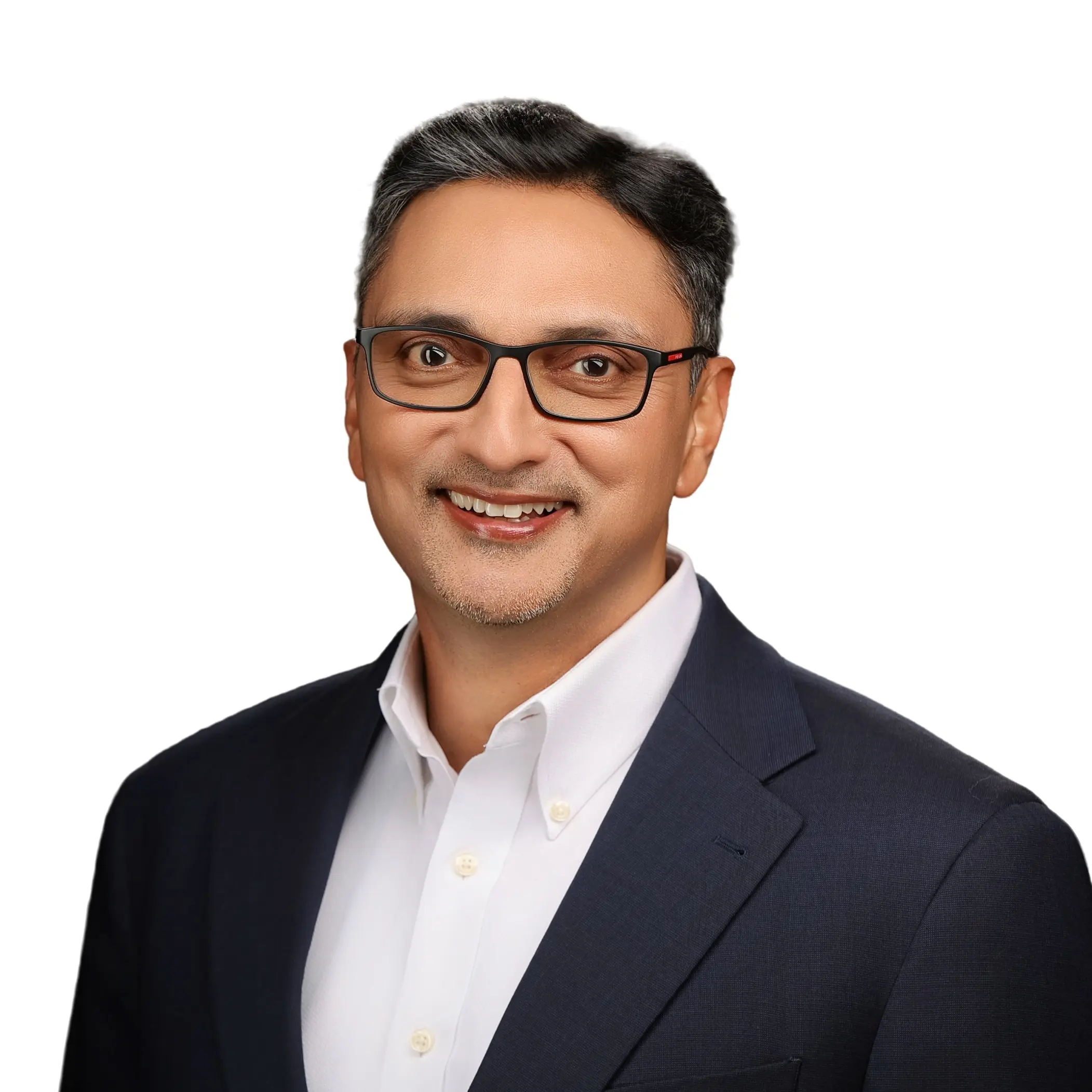
In this interview from theCUBE + NYSE Wired: AI Factories – Data Centers of the Future event, Glean co-founder and CEO Arvind Jain joins theCUBE’s John Furrier to unpack what’s really working in enterprise AI today and what comes next. Jain explains why knowledge access remains the first successful AI use case at scale and how Glean’s enterprise search brings AI into everyday work. He details the past year’s lessons with AI agents – from the need for guardrails, security, evaluation and monitoring to democratizing agent building so business owners (not just data scientists) can create production-grade agents.
The conversation dives into Glean’s vision of the enterprise brain powered by an enterprise graph, highlighting the importance of deep context, human workflows and behavior to reduce “noise” and drive outcomes. Jain outlines core building blocks – hundreds of enterprise integrations and a growing actions library – that let agents securely read company knowledge and take actions across systems (e.g., CRM updates, HR tasks, calendar checks). He discusses how organizations are standing up AI Centers of Excellence, prioritizing “top 10–20” agents across functions like engineering, support and sales, and why a horizontal AI data platform that unifies structured and unstructured data – accessed conversationally and stitched together via standards like MCP – sets the foundation for AI factory-scale operations. Looking ahead, Jain says Glean’s upgraded assistant is evolving from reactive tool to proactive companion that anticipates tasks and accelerates productivity.
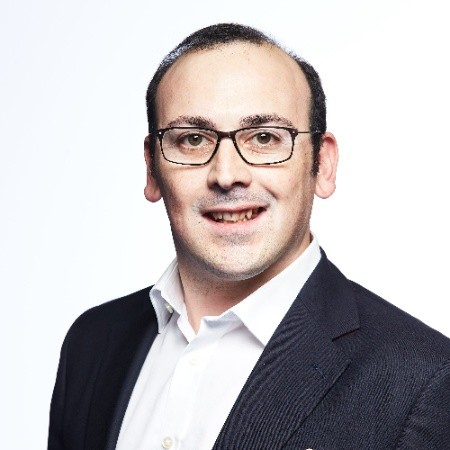
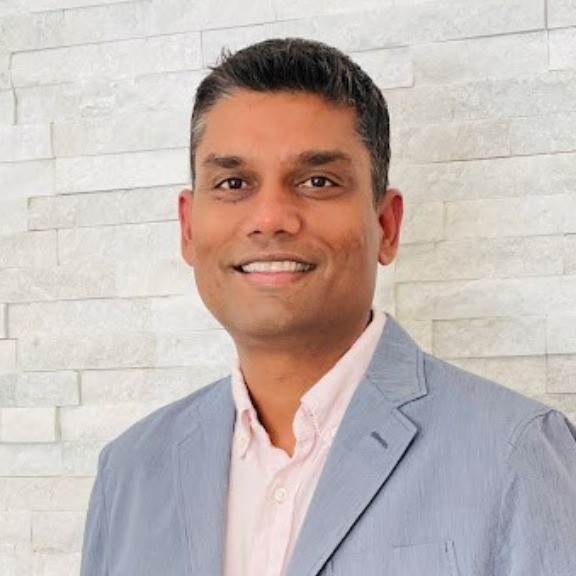
In this interview from theCUBE + NYSE Wired: AI Factories - Data Centers of the Future, Adam Lewis, head of engineering at SandboxAQ, joins Pranav Gokhale, chief technology officer and co-founder of Infleqtion, Anuj Jaiswal, chief product officer at Fortanix, and Amit Sinha, chief executive officer of DigiCert, to talk with theCUBE's John Furrier about how quantum computing is crossing the threshold from theoretical promise to product reality across AI, cryptography and material science. Gokhale showcases Infleqtion's neutral atom quantum computer — boasting ...Read more
exploreKeep Exploring
What is Infleqtion's neutral-atom core, and how do Infleqtion's quantum computers relate to GPUs, affect cryptography/security, and contribute to advances in AI?add
How are you addressing security concerns related to quantum computing—specifically the risk of "harvest now, decrypt later" and the transition to quantum-safe (post‑quantum) cryptographic algorithms for customers?add
>> Welcome back theCUBE here in our Palo Alto Studios. I'm John Furrier, host of theCUBE with Dave Vellante and our entire CUBE team. Special Sunday edition of pre-game GTC preview. We had six expert panels. We're on our sixth, going to wrap up, then head to San Jose to kick off GTC. This panel is the Quantum Leap: The Next Frontier of AI Computing. We have a lot of CUBE alumnis here, been on before. Adam, head of engineering at SandboxAQ. Your first time, but we had Jack on. Pranav, CTO, co-founder of Infleqtion. Anuj with... Chief Product GTM of Fortanix. And Amit, CEO of DigiCert, many time CUBE alumni. Gentlemen, quantum. It is the hottest topic that I wouldn't say that not the mainstream's talking about, but starting to see mainstream media pick up quantum. Certainly, a lot of the heavyweight tech vendors are starting to flex quantum in their messaging. At Mobile World Congress or MWC, it probably was the biggest quantum washing I've seen. People putting quantum on their boot, but weren't showing any quantum, right. But certainly, AI was hot in the Telco area. So, quantum seems to be breaking through this year. Amit, we've... you've been on two years in a row, you had quantum preparedness and then quantum readiness.
John Furrier
>> Yeah.
John Furrier
>> Where are we? Is it breaking through finally to the mainstream?>> Well, John, first, very exciting to be here. Absolutely. At DigiCert, we have done two world quantum-readiness days. The last one was in September. We had about 3000 people sign up for it. Our problem that we are trying to tackle is quantum computers break current cryptography. So it's kind of a once in a 30-year refresh cycle of the foundational math that goes behind all the digital trust that we take for granted. So it is moving from theory to, "Give me prescriptive solutions of what can I do." If you look at the latest Cloudflare blog, they talk about 40% of the top 100 websites have moved to quantum safe key encapsulation on the internet. But for enterprises, it's a huge lift, right. They have to look at their machines, their software, their long-lived content, their devices that are out in the field. And it's kind of like a Y2K times 10 problem, and DigiSert's helping customers -
John Furrier
>> Well, we're certainly very appreciative of that because you are the one who kind of tipped our hand to start digging into the quantum. And I think, now, what gets me excited is you're hearing it on the main stage in Davos, for instance.>> Yes.
John Furrier
>> Quantum was huge. You started to see real engineering. Sort of you highlight the alpha geeks getting in the networks like Cloudflares of the world, because they know the consumers. But then you start to see it more of a product strategy, value creation piece of it, chips being made, systems being worked on, NVIDIA endorsing it in a meaningful way, not in kind of like a Haymaker way. CES, Jensen, you guys saw it, Jensen kind of made a comment off the cuff about stock prices. The whole market crashed because Jensen said, "Why is the stock so high?"
But then he actually intentionally walked that back in a proactive way and said, "No, what I meant was the stock prices, because we're using quantum." Then he unvieled... unveiled that NVIDIA is aggressively behind quantum because the GPUs can be used on things like error checking, things that are helpful for engineers talking about this. So you're seeing the engineering piece on the product development side, the infrastructure there. Where are we on the product side? Who wants to take a shot at it? Let's go there first.
Pranav Gokhale
>> I'll be happy to take that on. I mean, it's been an amazing transition in the last five years in quantum being kind of the backshelf future technology to now being very much on the show floor for GTC for Mobile World Converse... Congress for Davos, et cetera. I'd be remiss not to show maybe a little prop -
John Furrier
>> Yeah, let's get the props out.
Pranav Gokhale
>> Show the audience what the heart of a quantum computer can look like.>> That's cool.
Pranav Gokhale
>> Indeed, this is cool. And this is Infleqtion's neutral atom core. So we use this technology to build quantum computers and quantum sensors. Inside of this core, we get individual atoms to be extremely still, and those become qubits or quantum bits. We have the world record for in a commercial system number of qubits, 1600. And what is fun is that tomorrow, this is the night before GTC starts, we will have our quantum computer on site. We've announced this at the NVIDIA booth. And it goes to show how NVIDIA is thinking about GPUs and QPUs playing together to unlock new frontiers of compute. One of those frontiers, maybe especially relevant to this audience here, is quantum computers do have an implication on security. We have shown on a system recently, the first demonstration of decryption using a quantum computer with air-detected logical qubits. This is the really frontier for how, eventually, quantum computers will render existing crypto systems broken. But there's also this frontier of how quantum computers help in terms of accelerating AI, the same way that GPU stood on top of CPU to create AI as we know today. We think there's a frontier of physical AI and world models that are going to incorporate quantum mechanics in their building blocks, and also ways that quantum computers can extend the power of existing models like large language models with better memory, better context windows, and overcome some of the existing scaling laws. So I think it's an important transition -
John Furrier
>> Well, there's two things that I want to just double-click on. One is the NVIDIA booth situation, then we'll come back to the frontier. What are you guys showing in the booth? What's the use case? What's the feature?
Pranav Gokhale
>> Sure. So we're showing our quantum computer connected to NVIDIA's latest GPUs. It's the GB200 Series. And so it's right at the NVIDIA booth. And as you pointed out, GPUs help push forward quantum computing. So we have shown now in a publication just a couple of months ago, solving a material science problem for design of better batteries, better solar cells with our quantum computer in tandem with NVIDIA's GPU. And so that's one of the main use cases in the near term, where we expect QPUs to be co-processors accelerating GPUs and vice versa.
John Furrier
>> Do I get it right if I say classic computing was data processing, and then material science is a whole nother world that quantum's more on that side? Is that a... How should people think about... I'm trying to figure out a way to explain it to someone who wants to try to understand.
"I don't get the quantum piece. Is it like an NVIDIA GPU? Well, not really, but kind of." So explain how to position quantum. And then specifically, how's NVIDIA using it to kind of help the engineers and help people build?
Pranav Gokhale
>> Yeah, sure. So there's a great analogy, actually, just a GPU. GPU, we sometimes forget the G stands for graphics. So the very first use cases of GPUs were for video games for rendering your computer screen. For the same reason, the QPU is first going to be used for quantum applications that are manifestly quantum when you zoom in. Material science, being one of them, when you really pull in, you find electrons interacting with electrons as quantum. But just like GPUs today, now they've been used for cryptocurrency mining, for AI, things that have nothing to do with graphics, there's this next frontier of quantum applications that have nothing to do with quantum. It's things like factoring very large numbers that matters to encryption. It's things like extending the context window of AI. So it was designed for solving quantum problems, but it unlocks entirely new worlds out there of breakthrough applications, just broader in compute.
John Furrier
>> So how about security? You guys in security, that's a big piece of it too.
Anuj Jaiswal
>> It is. It is. And indeed, I mean, I think we are passing through the noisy era of quantum computing and going into the real era of quantum computing. And with that, the challenge comes around harvest now, decrypt later, which is what bad actors do when they steal that current data, which is secured with some sort of a cryptography. And if it is not asymmetric, it's prone to be broken down by the quantum computers. And that's where we are being more advancing towards in terms of providing quantum-safe algorithms. And NIST has done a fantastic job in terms of releasing all the quantum-safe . So that's what we are integrating, and we are providing support to our customers, but also supporting through the journey. Like Amit talked about, majority of the enterprise are the confused, right. What state they are in. These are the data centers which are built like 50, 60 years ago and has evolved over the period of time, but they don't know where the cryptography stands. They don't know where they're using what kind of algorithm, what service is protecting, and whatnot. So we help with the entire transition to the post-quantum cryptography, and that is important.
John Furrier
>> And you guys have some news this week. You can't really reveal it because you'll get in trouble, but we have-
Anuj Jaiswal
>> Yeah....
John Furrier
>> the video we're going to launch with you guys.
Anuj Jaiswal
>> It's more around securing AI, and with the AI factories becoming more and more prominent. Jensen has been talking about it. We work with a lot of AI factories and another part of the company. What we do is we provide security for AI, we're using confidential competing. So you'll hear some announcements.
John Furrier
>> Adam, talk about SandboxAQ. Jack was on. Very interesting story. Probably the biggest startup that's ever been incubated I think alphabet.
Adam Lewis
>> Gosh, I don't know about the size -
John Furrier
>> It's like the Y Combinator of alphabets that comes out. No, but I mean, it's a lot of hard problems you guys are attacking.
Adam Lewis
>> Yeah. So we're doing a... we have some... And thanks for having us on the CUBE, by the way. It's kind of a rhomboidal prism. Anyway.
John Furrier
>> Yeah.
Adam Lewis
>> Yeah. We have a-
John Furrier
>> Close to Googleplex.
Adam Lewis
>> Yeah. We have a division working on cryptograph... cryptography. Started off with a post-quantum cryptography angle. It's now really providing cryptographic agility, as I'm sure will come up a bit more later. We have some quantum navigation and hardware aspects. And then we also have a business unit really focused on drug and material science problems, both from an AI perspective and from a physics-based modeling perspective. And I think we are starting to see some very exciting applications of quantum to those fields. The case for the modeling of drug and materials, it's kind of subtle, actually. You really need to find a problem where a classical computer doesn't do a good job already of finding a good material or a drug. It was looking for a little while there maybe pro quantum computers could just be like big prime number factoring machines. I don't think that's the case. There really are applications coming right now where I think we're going to see these things providing some good calculations of things like transition states, predicting drug molecule binding, not binding affinities, but they're called off times, which is sort of a superior proxy for and then some other material science -
John Furrier
>> Talk about some of the hard problems you're working on for people that haven't seen Jack's video, but it's basically, I mean, this is my lame attempt to explain a frontier model for science.
Adam Lewis
>> Mm-hmm.
John Furrier
>> Is that a... How should people think about the problem that you guys or the models you're building?
Adam Lewis
>> Yeah, we like to call them LQMs as kind of an intentional sort of positioning against the natural language space. It's not so much like we have one big model called an LQM that does everything you would want. But it's more like we really see that just throwing more cat videos and text into a big box is not really going to lead to the emergence of AI that can treat hard scientific problems, where you really need to get the structure of the molecule, the exact quantum behavior of a system, really how this thing is going to work in the lab right. It's not like things like Gemini won't be useful for that. Of course, they will be, but they're not going to scale to that on their own. That's kind of our core thesis. To do that, you really need sophisticated algorithms and ground truth data that's specific to the problems at hand. And one major application of quantum is in computing those ground state systems without needing a lab in the first place, we would say.
John Furrier
>> So there's two things going on here that you guys are all... First of all, great work that you guys are all doing. It's amazing.