In this interview from theCUBE + NYSE Wired: AI Factories – Data Centers of the Future event, Glean co-founder and CEO Arvind Jain joins theCUBE’s John Furrier to unpack what’s really working in enterprise AI today and what comes next. Jain explains why knowledge access remains the first successful AI use case at scale and how Glean’s enterprise search brings AI into everyday work. He details the past year’s lessons with AI agents – from the need for guardrails, security, evaluation and monitoring to democratizing agent building so business owners (not just data scientists) can create production-grade agents.
The conversation dives into Glean’s vision of the enterprise brain powered by an enterprise graph, highlighting the importance of deep context, human workflows and behavior to reduce “noise” and drive outcomes. Jain outlines core building blocks – hundreds of enterprise integrations and a growing actions library – that let agents securely read company knowledge and take actions across systems (e.g., CRM updates, HR tasks, calendar checks). He discusses how organizations are standing up AI Centers of Excellence, prioritizing “top 10–20” agents across functions like engineering, support and sales, and why a horizontal AI data platform that unifies structured and unstructured data – accessed conversationally and stitched together via standards like MCP – sets the foundation for AI factory-scale operations. Looking ahead, Jain says Glean’s upgraded assistant is evolving from reactive tool to proactive companion that anticipates tasks and accelerates productivity.
Forgot Password
Almost there!
We just sent you a verification email. Please verify your account to gain access to
theCUBE + NYSE Wired: AI Factories - Data Centers of the Future. If you don’t think you received an email check your
spam folder.
Sign in to AI Factories - Data Centers of the Future.
In order to sign in, enter the email address you used to registered for the event. Once completed, you will receive an email with a verification link. Open the link to automatically sign into the site.
Register for AI Factories - Data Centers of the Future
Please fill out the information below. You will receive an email with a verification link confirming your registration. Click the link to automatically sign into the site.
You’re almost there!
We just sent you a verification email. Please click the verification button in the email. Once your email address is verified, you will have full access to all event content for AI Factories - Data Centers of the Future.
I want my badge and interests to be visible to all attendees.
Checking this box will display your presense on the attendees list, view your profile and allow other attendees to contact you via 1-1 chat. Read the Privacy Policy. At any time, you can choose to disable this preference.
Select your Interests!
add
Upload your photo
Uploading..
OR
Connect via Twitter
Connect via Linkedin
EDIT PASSWORD
Share
Forgot Password
Almost there!
We just sent you a verification email. Please verify your account to gain access to
theCUBE + NYSE Wired: AI Factories - Data Centers of the Future. If you don’t think you received an email check your
spam folder.
Sign in to AI Factories - Data Centers of the Future.
In order to sign in, enter the email address you used to registered for the event. Once completed, you will receive an email with a verification link. Open the link to automatically sign into the site.
Sign in to gain access to theCUBE + NYSE Wired: AI Factories - Data Centers of the Future
Please sign in with LinkedIn to continue to theCUBE + NYSE Wired: AI Factories - Data Centers of the Future. Signing in with LinkedIn ensures a professional environment.
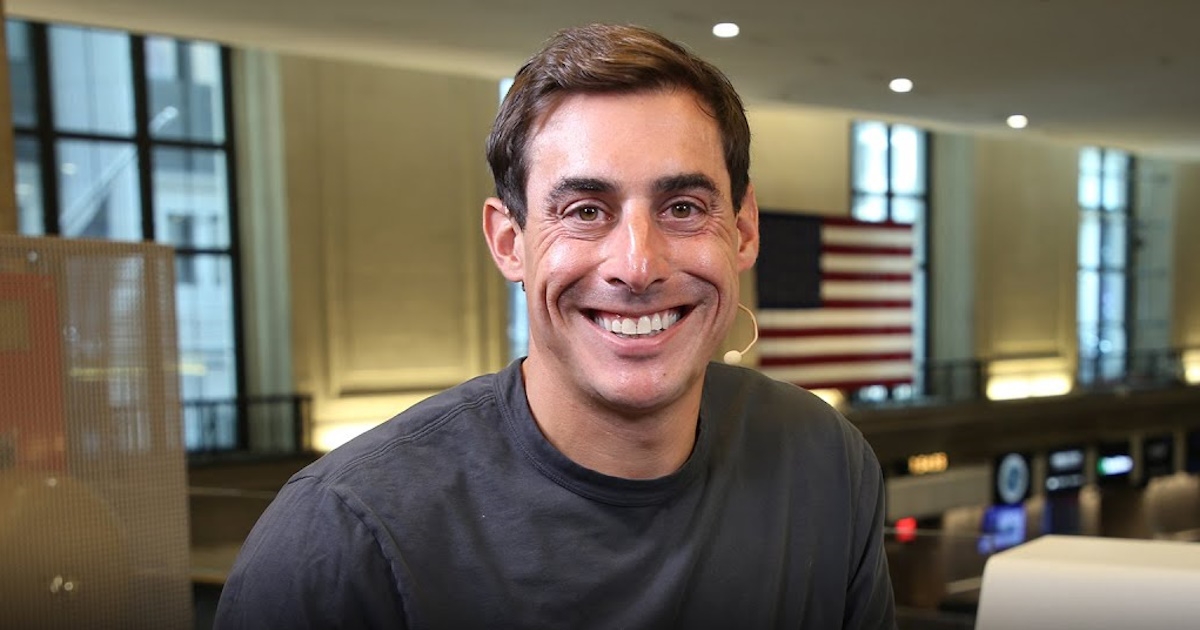
In this segment from theCUBE + NYSE Wired’s “AI Factories – Data Centers of the Future” series, theCUBE’s Dave Vellante sits down with Rob Biederman, managing partner at Asymmetric Capital, to unpack a disciplined approach to early-stage investing amid AI-scale infrastructure shifts. Biederman explains Asymmetric’s founder-first model: writing $1–$10M checks (often via SAFEs), joining boards as they form and helping operators with go-to-market, operations, finance and strategy (not product/engineering). He shares why the firm avoided 2021’s lofty SaaS multipl...Read more
exploreKeep Exploring
What year did the organization start operating and what is their approach to partnering with founders at early stages?add
What was the investment strategy during the years 2021 to 2023?add
What unique approach does the speaker's private equity firm take in their acquisition strategy compared to traditional methods?add
What is the process for determining the valuation orientation in venture capital investments?add
>> Everybody, welcome back to the New York Stock Exchange. My name is Dave Vellante and we're here overlooking the Buttonwood Podium at the Options Exchange in the New York Stock Exchange, NYSE Wired plus theCUBE's AI Capital Series coverage. I'm here with John Furrier and super excited to have Rob Biederman here. He's the managing partner at Asymmetric Capital. Rob, good to see you. Thanks for coming in.
Rob Biederman
>> Great to be here. Thanks for having me.
Dave Vellante
>> Oh, you're very welcome. Okay, so Asymmetric, let's get a little background on Asymmetric. You guys invest in early stage, disruptive, SaaS, FinTech. Give us the lowdown on the firm.
Rob Biederman
>> Yeah, so we started in 2021 and we want to partner with founders at the earliest possible stage. So this is before they may even have an idea, get to know them, people with a track record of success in a lot of different contexts, primarily obviously tech and venture, give them just the right amount of capital to try to get something off the ground and probably try to turn it profitable with maybe fewer than two rounds of capital, which is obviously something that's different from the rest of the industry.
Dave Vellante
>> Yeah, that's unique. Okay, so you started in 2021 and you're talking about seed rounds of primarily hundreds of thousands or what-
Rob Biederman
>> Yeah, millions.
Dave Vellante
>> Okay.
Rob Biederman
>> So our typical check is between 1 and 10, but it probably skews on the lower part of that.
Dave Vellante
>> Okay, and you take a board seat for that?
Rob Biederman
>> Ordinarily we do. A lot of early stage investing now is on safe notes, so there's no formal governance at that point, but typically when a board is formed, we will usually join it.
Dave Vellante
>> So you'll do a safe and then you'll price it on the A round?
Rob Biederman
>> Correct.
Dave Vellante
>> And so what would you say is your unique value to these startups? Your ability to sort of sniff them out or provide support? How do you differentiate?
Rob Biederman
>> In the game of venture, people find a lot of ways to make money. I think for us it's certainly identifying people that maybe have not yet hit the broader venture ecosystem. They're somewhere within a large company like a Klaviyo or a HubSpot or a Demandware, and we're able to pull them out, set them up with a little bit of capital and then get them their first couple customers. We are not technology people, even though I previously founded and scaled a technology company, we are not tech product engineering people. We help with go-to-market operations, finance and strategy, and I think really world-class technical people actually really enjoy that kind of partnership.
Dave Vellante
>> Interesting. So you started in 2021, the market was pretty hot at the time and in 2022, were you deploying capital in '21 or?
Rob Biederman
>> It was funny, I looked the other day and we had exactly the same deployment in '21, '22 and '23. I think the difference between us and everybody else in 21 was we looked at a bunch of SaaS deals at 75, 100, 150 times ARR. We said the probability weighted fan on these deals is just not good. So we went and found people at the early days and we could back them at an $8 million pre-money, a $10 million pre-money, and I think our 2021 cohort may end up actually being our strongest cohort of the three we've had so far.
Dave Vellante
>> Really. Oh, interesting. Okay, 2022 was kind of tough. How are the portfolio runways looking for 2022?
Rob Biederman
>> Yeah, I think we've been lucky to partner with founders that have a really good attitude about cash and understand unit economics really well. We made a large investment in 2022 in a Latin American e-commerce company that scaled unbelievably well. So we backed it at around one or two of revenue. I think they're going to do about 50 million in revenue this year, and they've done it an incredibly cash efficient way. We're looking for founders that we think can understand great unit economics and then be able to create enterprise value out of those unit economics. Those thoughts don't always connect in this world.
Dave Vellante
>> So the other thing about 2022, if I recall it was a lot of the premise at the time was betting on companies with hybrid work or remote work and SaaS companies in particular, maybe even vertical SaaS, and you guys do some SaaS investments and then all of a sudden we had the AI heard around the world and that threw everything for a loop. What are your thoughts on that?
Rob Biederman
>> Yeah, look, we've made obviously investments in the future of work. The company I founded is a future of work company. One of our most successful investments in fund one was a marketplace of near shore, primarily software developers that exited to a public company, Randstad. We think AI is an incredibly important trend. It's going to change every single industry, but any other technological development, it's not the case that you can just throw any kind of dart against the dartboard and make money. 99% of AI deals are going to be big disappointments. The secret is finding the 1% or the 10 basis points of deals that are going to return all the value.
Dave Vellante
>> Right. Okay, so that was my follow-up question is that the philosophy, and that's most VC firms, you 10% and you get a hundred bagger, it works. At the same time, I saw a stat recently that the percent of companies, series A, B and C companies that return 1X or less than 1X or less to their investors is the same, it's like 70%, which was astounding to me. Now, you mentioned that you bring go to market expertise. I have a premise that part of the reason is because companies try to scale go to market before they get product market fit. What's your experience around... Are you trying to attack that problem or does it not matter? And what's your experience around scaling go to market before you have product market fit?
Rob Biederman
>> I fully agree with that. The challenge of venture capital is historically the returns in the industry are not good. I think they're not good simply because there's just too much capital in the industry and there's too much capital in the industry because everybody looks at the one or two companies in a space that scale and wants to fast follow them. And so you end up, getting to your point about go to market, with 10X too many salespeople and 10X, too many marketing dollars in any one individual space. So in that way, we almost think of ourselves as kind of anti-thematic. So if everybody is running at going to play soccer, we're going to go play football because maybe football is a slightly less attractive game, but if you have 1/10 the competition, it's far easier to go get customers in that space.
Dave Vellante
>> Or maybe women's sports is even a better example, right?
Rob Biederman
>> Yeah, for sure.
Dave Vellante
>> Okay. You have this buy and build strategy for cash flow positive assets. What is that about? What is that?
Rob Biederman
>> Well, surely this is nothing new, private equity has been doing add-on acquisitions since the 1980s. I think where we take a different spin on it is we're doing it at super subscale. So a lot of the underlying assets that our platforms are buying, our 500,000 of EBITDA, a million of EBITDA, two million of EBITDA, and they're largely buying them in spaces like tech enabled services where we think the value of the platform, particularly with technology, can create a huge multiple uplift. I think the other delta is historically folks have focused on industries that have very clear and obvious potential for consolidation. So HVAC, accounting, there must be a hundred separate roll-ups in each of those, and a lot of them have done well. We tend to go one spot outside of that, so we have a pool cleaning business in San Diego. We have a sleep apnea clinic in Houston. Neither company you expect to hear as part of a venture capital portfolio, but very, very core to our strategy, and I think very core to why our limited partners are attracted to working with us.
Dave Vellante
>> And so the operating leverage comes from the roll up and the backend infrastructure that you guys put in place?
Rob Biederman
>> Yeah, if you think about a business like a pool cleaning business, there are so many opportunities to be more efficient, and one of the biggest of those is the density of your roots. So if you serve number one, three, five, seven on Main Street, going to get number nine on Main Street, hugely incrementally profitable, going to get one more house that's 10 blocks away, way less so and our entrepreneur there, we think is an incredibly special guy, has really techified the entire pool cleaning industry in a way that we don't think that many people have.
Dave Vellante
>> Well, like you said, Rob, I mean it's common in private equity. It's less common I think in VCs, so I love that strategy. What are your thoughts on physical AI in disrupting some of those industries?
Rob Biederman
>> Look for sure. I think in a lot of relatively low-skilled services businesses, the chance that robots or other automation may be hugely impactful to that process is key. Now we think of it as more of an opportunity for those companies that we've backed than a threat, because if we already own the customer and we own the brand substituting robots for humans, would be a relatively easy trade, whereas a company beginning just with the pool cleaning robots would have to go out and actually do all of the work to aggregate those houses.
Dave Vellante
>> So I got to ask you, so the tech bros on podcasts are all in, they're complaining about how difficult your business is these days and, get out the violin, nobody's crying for those guys. But at the same time, it's true. The exits were much tougher with lack of M&A, IPOs are heating up again, but there was just sort of a dog days of IPOs there for a couple of years. And generally speaking, investors are saying, "Look, we got at least 7 years to 10 years sometimes to actually get an exit and get a return." So how has that dynamic affected your strategies?
Rob Biederman
>> For sure. Look, every business is a hard business, venture capital is historically a really hard one. I think we've been able to separate from the herd a little bit by getting a lot of early liquidity in the portfolio. So we returned 20 cents on the dollar before the third anniversary of our fund. I think investors who participated in fund two were really excited about that because venture has always been a hopes and dreams industry, and it's actually really hard to tell for one, two, three, five, seven years if things are actually working. Obviously, one great metric is just, how many of the companies are still alive? Because if a company has failed, it's probably pretty unlikely to create any kind of enterprise value. We've backed 35 companies since the fall of 2021, 34 of them are still alive, and three of them have been happily sold. So I think the focus on consistent unit economics, spending the right amount of capital, and then in a couple of cases getting early exits two or three years into an investment is something the industry could benefit from a lot more of.
Dave Vellante
>> What are your thoughts on the state of AI, capital formation? I mean, it's a very bubble-licious market. It's like a one-trick pony right now with hyperscalers just pounding it and the market goes up and everybody's happy. And now of course the narrative from the analysts and on CNBC is, "Oh, is this 1999 all over again? What are the similarities? What are the differences?" But how do you think about that momentum and where to place your bets?
Rob Biederman
>> If you read this morning's DealBook, it was certainly the case that Mr. Sorkin was expressing some questions politely.
Dave Vellante
>> Yes, right. Uh-huh.
Rob Biederman
>> Look, I think AI, as I said, is an incredibly important development. It's going to change the economics of every industry. It has certainly been over-invested in, and I think the thing that concerns me the most right now is the order of magnitude of infrastructure bets requires that so much compute is used, and if we have any kind of pullback or deceleration in the amount of compute being used, prices fall. And a lot of the industry is currently predicated on relatively high prices for people needing to use AI. My broader concern about the industry is I don't think anybody's really looking at the ROI right now on their AI spend, because you have boards of directors at public companies and private companies and dry cleaners saying, what are we doing about AI? We need to be doing something. So somebody on their team goes out and signs a contract with OpenAI or with any of the other providers, and I fear one, two, three, four years from now, people are going to start looking at those bills and looking at the incremental revenue they're generating or the costs they're saving and saying, "These two numbers don't really match."
So there are situations, like we had one great portfolio company that was AI for insurance claims, unbelievable use case made, insurance claims management 10X faster, 10X better. There are other cases like making pretty pictures on your computer that don't really actually create any value, but actually suck up a decent amount of compute. And so-
Dave Vellante
>> The pets.com of AI.
Rob Biederman
>> Yeah. I think one day there may unfortunately be a reckoning in the amount of spend that people are doing.
Dave Vellante
>> Yeah. Okay, so that says it's likely going to be a trough at some point, and then people are going to go, "Uh-oh," and the music stops and there's no , there's going to be some challenges. So how do you approach value discipline in a market like that?
Rob Biederman
>> Yeah, and it is not something you hear from a lot of venture capitalists, my whole team and I all came from both private equity investing and operating, so I think we bring more of a kind of nuts and bolts valuation orientation. It's a pretty simple process. We basically say, what is the chance based on the amount that we can invest, at what valuation that we're able to return $137 million fund off this investment? So back into that, you basically say, you need to sell it for a billion dollars. You own 15% before dilution, you end up 13, 14 after when all is said and done. We don't love entering situations where we either have super low ownership or we're entering at a relatively high valuation, which is obvious. I think one thing that VCs sometimes don't calibrate is the ultimate market size multiplied by the chance of winning that market by how well the cash flows are going to be valued by the public market, by a private equity firm. And if you do that, the average venture capital deal doesn't really make very much sense.
Dave Vellante
>> Right, okay. And as interest rates come down, that math gets a little bit more friendly, but probably higher for longer. You mentioned your concern about the picks and shovels, I'll say, emphasis right now. So how do you think about where's and loses in the stack, particularly given your affinity for SaaS? How do you see AI? Some people have said, "Oh, agentic's going to completely upend the SaaS market." Satya Nadella says it's going to be agents talking to CRUD databases. Benioff says, "You're Clippy." No, that's not true. How do you parse through all that?
Rob Biederman
>> It's a simple equation for us anytime we look at a B2B company, does the product or service create 10X value for the customer? So we charge 19.99 a month for the software, does the customer experience $199 of value? When you experience that, it becomes the case that the cost of inaction exceeds the cost of action, and that's when people make the decision to buy, it's when they make the decision to switch software or to migrate their database. Unfortunately, a lot of value propositions we get pitched by founders are, "Oh, this helps you get better observability on your data." Or, "If you take this and you multiply it with this other system, then you hire a data analyst, you can do all this." When we've seen products that just scale really crazily, it's because the software just does it and it has that 10X value equation.
Dave Vellante
>> That kind of gets me to my last question, which is advice for entrepreneurs, whether they're a pool cleaning company or a tech company, what do you tell entrepreneurs that are aspiring to raise capital?
Rob Biederman
>> Yeah, in my prior life, I was a restaurant investor at Bain Capital, large Cap P/E, obviously. Value propositions that win are ones that are relevant, credible, and differentiated. If you don't have all three of those, you're not going to create a big company. You have to do something that is highly important for the customer. You have to prove to them that you're capable of doing it and you have to do it in a different way than anybody else.
Dave Vellante
>> Right. Rob, thanks so much for coming on theCUBE.
Rob Biederman
>> Good to be here.
Dave Vellante
>> I appreciate it.
Rob Biederman
>> My pleasure.
Dave Vellante
>> And thank you for watching our AI capital series. This is Dave Vellante for the NYSE Wired, plus theCUBE here at the New York Stock Exchange. We're right back right after this short break.

































 Dave Vellante