In this insightful session from theCUBE and NYSE Wired, Dave Vellante hosts a deep-dive discussion on "AI Factories: Data Centers of the Future." Joining the conversation is Dave Driggers, the Chief Executive Officer and Chief Technology Officer of Cirrascale, who sheds light on the transformation and growing impact of neoclouds and AI-driven data centers in today's technology landscape.
Driggers, with extensive expertise in cloud solutions, discusses Cirrascale's role as a boutique cloud provider, often termed a neocloud. The conversation explores significant topics such as global data center market trends, AI's expansive role, and strategic partnerships with major players such as NVIDIA and AMD. Hosted by theCUBE's co-founder Dave Vellante, this session provides an in-depth examination of current industry shifts.
Key takeaways from the discussion include Driggers' observations on regional technology adoption patterns and the pressing need for adaptable, optimized data center architectures. Notable insights from theCUBE Research highlight the exponential growth and future dominance of AI in global markets, projected to contribute 85% of data center expenditure by the decade's end. According to Driggers, the future landscape depends on the capability to evolve infrastructure for both training and inference workloads effectively.
**Hashtags:**
Forgot Password
Almost there!
We just sent you a verification email. Please verify your account to gain access to
theCUBE + NYSE Wired: AI Factories - Data Centers of the Future. If you don’t think you received an email check your
spam folder.
Sign in to AI Factories - Data Centers of the Future.
In order to sign in, enter the email address you used to registered for the event. Once completed, you will receive an email with a verification link. Open the link to automatically sign into the site.
Register for AI Factories - Data Centers of the Future
Please fill out the information below. You will receive an email with a verification link confirming your registration. Click the link to automatically sign into the site.
You’re almost there!
We just sent you a verification email. Please click the verification button in the email. Once your email address is verified, you will have full access to all event content for AI Factories - Data Centers of the Future.
I want my badge and interests to be visible to all attendees.
Checking this box will display your presense on the attendees list, view your profile and allow other attendees to contact you via 1-1 chat. Read the Privacy Policy. At any time, you can choose to disable this preference.
Select your Interests!
add
Upload your photo
Uploading..
OR
Connect via Twitter
Connect via Linkedin
EDIT PASSWORD
Share
Forgot Password
Almost there!
We just sent you a verification email. Please verify your account to gain access to
theCUBE + NYSE Wired: AI Factories - Data Centers of the Future. If you don’t think you received an email check your
spam folder.
Sign in to AI Factories - Data Centers of the Future.
In order to sign in, enter the email address you used to registered for the event. Once completed, you will receive an email with a verification link. Open the link to automatically sign into the site.
Sign in to gain access to theCUBE + NYSE Wired: AI Factories - Data Centers of the Future
Please sign in with LinkedIn to continue to theCUBE + NYSE Wired: AI Factories - Data Centers of the Future. Signing in with LinkedIn ensures a professional environment.
Are you sure you want to remove access rights for this user?
Details
Manage Access
email address
Community Invitation
Dave Driggers, Cirrascale
In this insightful session from theCUBE and NYSE Wired, Dave Vellante hosts a deep-dive discussion on "AI Factories: Data Centers of the Future." Joining the conversation is Dave Driggers, the Chief Executive Officer and Chief Technology Officer of Cirrascale, who sheds light on the transformation and growing impact of neoclouds and AI-driven data centers in today's technology landscape.
Driggers, with extensive expertise in cloud solutions, discusses Cirrascale's role as a boutique cloud provider, often termed a neocloud. The conversation explores significant topics such as global data center market trends, AI's expansive role, and strategic partnerships with major players such as NVIDIA and AMD. Hosted by theCUBE's co-founder Dave Vellante, this session provides an in-depth examination of current industry shifts.
Key takeaways from the discussion include Driggers' observations on regional technology adoption patterns and the pressing need for adaptable, optimized data center architectures. Notable insights from theCUBE Research highlight the exponential growth and future dominance of AI in global markets, projected to contribute 85% of data center expenditure by the decade's end. According to Driggers, the future landscape depends on the capability to evolve infrastructure for both training and inference workloads effectively.
In this AI Factories – Data Centers of the Future interview from the floor of the NYSE, Cirrascale CEO & CTO Dave Driggers joins theCUBE’s Dave Vellante to unpack how neocloud providers are reshaping enterprise infrastructure for AI-scale workloads. Driggers details Cirrascale’s “horses for courses” approach across training and inference, emphasizing why enterprises want their own co-pilot-class models and how model size (from billions to over a trillion parameters) drives distinct hardware choices. Drawing on theCUBE Research’s market view, Vellante frames a...Read more
exploreKeep Exploring
What are the trends and growth patterns observed in the global data center market, particularly in relation to neoclouds and AI?add
What considerations does Cirrascale take into account when determining the appropriate architecture and infrastructure for different AI workloads?add
What are the goals and strategies for training a machine learning model?add
>> Hi everybody. Welcome back to the New York Stock Exchange. This is Dave Vellante. And you're watching theCUBE and NYSE Wired's coverage of AI Factories: Data Centers of the Future. We're excited to have Dave Driggers here as the CEO and CTO of Cirrascale. Dave, welcome. I love the title. It's like a little bit of Larry Ellison in there, CTO and hands-on operator, so well, you're busy.
Dave Driggers
>> Well, today, with how rapidly AI is changing and this technology mark, it's moving. You kind of got to have two hats on right now.
Dave Vellante
>> I'll bet. Well give us the update on Cirrascale. What's the lowdown, what's the business update?
Dave Driggers
>> So we're a boutique cloud provider, what people started to coin as a neocloud. So as everybody's seen from CoralWeave as well as Lambda, there's a lot of chatter out here around with the neoclouds and we're right in the middle of it. We work with both NVIDIA and AMD, and it's a pretty crazy time right now.
Dave Vellante
>> I love the fact that you use neoclouds as a term. A lot of neocloud companies don't like the term. I love the term because neo, as in novel, and that's way I see it, and Neo from the Matrix like the superpowers. I want to focus on the global data center market. And before I get into it, I'm looking at our numbers from theCUBE Research and, Dave, this is just an amazing market. When you look at all data center spend, so power, cooling, storage, compute, networking, it's been a perpetual $200 billion market for a long, long time. And then all of a sudden in 2024 it exploded to like $350 billion, and it's growing at mid twenties from a CAGR basis. And the AI portion of that is just taking over. It was probably less than 10% in 2020 and it's going to be 85% by the end of the decade. It's just an enormous transformation. So what are you seeing in terms of just the global market? Which regions are growing? What are you seeing in your business?
Dave Driggers
>> Pretty much we're seeing it across the board. Now because it is being driven primarily by AI/technology, it's going to always start in the US first, then it's going to be into China and then to Europe. And then after Europe, then Southeast Asia and India, Africa, etc. And that's exactly what we're seeing. So we're seeing what is the historical trend of how technology is being adopted and you've had a couple of really big announcements recently from the neoclouds within Europe, two big, big announcements there. And that's what we're expecting. I think within six months, you'll start seeing Southeast Asia have similar types of announcements as well.
Dave Vellante
>> Dave, what's driving it? What is the next wave of applications and use cases look like. Some people, I know John Furrier and I talk all the time in theCUBE Pod, he thinks the SaaS business is going to both get injected with intelligence and disrupted with intelligence. George Gilbert at theCUBE Research uses the term services as software. Just like we had software as service, now we're going to see a whole new set of productivity drivers coming through services as software. What are those next waves of applications that you're seeing?
Dave Driggers
>> Well, the ones we're already seeing pretty heavily within enterprise is enterprises really, they've been doing POCs around chat bots and ChatGPT and Gemini, as well as you name it, you see POCs. But most of those enterprises, ultimately they want to have their own version of ChatGPT. One that's specific to them, that understands their business, but yet still provides the same type of almost a AI assistant or co-pilot, but one that's personalized.
Dave Vellante
>> So let's put on your CTO hat for a minute and talk about architecture. How does Cirrascale think about the right tool for the right job, horses for courses as the Brits like to say, for specific workloads? Are you putting a general purpose infrastructure that's optimized for AI in front of customers? Are you able to tune it for different jobs? How do you think about that from an architecture standpoint?
Dave Driggers
>> Well, definitely as we're migrating from training being the primary driver for the growth of this technology and into the deployment of those models, it absolutely is a horse for a course. All models are not just created equal. You've got small models, medium-sized models, large models, and gigantic models. With the previous wave with auto, the order of magnitude from a small AI model to a big AI model was within one order. We had 100 million parameters to 300 million parameters. With this gen AI and LLMs, we see models that are a billion all the way to over a trillion. And the bigger the model, the bigger the hardware that needs to be utilized. The smaller the model, the only way to really drive the cost and the performance and scale is through smaller hardware. So lots of smaller hardware versus a one size fits everything. So it's definitely horses for courses. If a company's running a small model, it should be running on smaller hardware.
Dave Vellante
>> And you're seeing, people like to say the shift from training to inference. I don't think it's necessarily a shift, I think it's just this more inference now. And so when you think about that, I want to ask you about the nuances there from a workload standpoint. Let me start there and then I have a follow-up question on the economics. So from a horses for courses standpoint, talk to us about the training versus inference from an architectural standpoint. How do you approach that?
Dave Driggers
>> Your main job when you're trying to train a model is to get the model trained. It's all about time. How quickly can I move from concept to having a trained model? So we've got a very specific path there, which is go as fast as I can to train as big of a model as I can afford. That means we're going to build the biggest platform we can, simple as that. Whatever the budget will support, we want the biggest model. And we want that to be a consistent performance, a guarantee from beginning to end guarantee, which is why we're using NVIDIA for those. It's an NVIDIA, you buy the latest NVIDIA GPU tied to the latest NVIDIA networking, you build a cluster, you train a model. That's not the case with inferencing. Inferencing, as I was saying, it's not a one size... It's not build the biggest thing I can. It now comes down to where I need to get this job done as low cost as I can, as long as it meets my time requirement. So if it's a chat bot, it's low latency, so I've got to hit that latency. I've got to hit that time to answer. But now that it's doing work for me, it's how cheaply can I get that work done? Because if I replace a worker and it costs me 10 times as much to automate it, that's a failure. So cost really matters what we're talking about inference.
Dave Vellante
>> Yeah, it makes sense. You've got your training, you're going to do a YOLO training, run. The whole team's excited. They do the training run, they hope it runs end to end and they get as much utilization as possible and it gets them the results they need. Inference is a whole different animal. So from an economic standpoint, the funding model in the neocloud space seems to be that you put out the CapEx, you've got to get to monetization before the asset is depreciated. And then at the end of it, there are interesting financial models where you basically own the asset at the end of whatever, four or five years, and hope it's worth something. But even if it's not worth something, if you can monetize it, that's okay. How do you guys approach that? Does today's training infrastructure become tomorrow's inference infrastructure? Is that not the case? Is this moving too fast? What about the monetization?
Dave Driggers
>> Yeah, because the training, I can tell you if a customer comes to me for training today, they have no interest in the previous generation. They want the latest and greatest, fastest thing they can get. Because their goal is to get that model trained as fast as possible, which means they either need a bigger cluster or they need a faster cluster or a bigger and faster cluster. So training people are always looking for the latest and greatest. Now, our goal to be able to... Which means that platform only lives 12 to 18 months, because that's the cadence that NVIDIA is setting for next generation technology. So it's super exciting for 12 to 18 months for training and then it starts tailing quickly. As a cloud provider, our goal and our requirement is we have to build to repurpose that equipment into inferencing, which it's the second life, it's the long tail for that equipment is inferencing. It may not be ideal for inferencing when it first launches, but once it gets depreciated and in its second life, our main thing we deal with it is repurpose it towards inferencing.
Dave Vellante
>> Everybody talks about power is the constraint. Tokens per watt is the new KPI. I coined a piece called the New Jensen's Law. Buy more, make more or buy more, save more.
Dave Driggers
>> Buy more, save more.
Dave Vellante
>> Right. Both ends of that equation. And then there's a corollary on... NVIDIA would say network is free. If your utilization is low, I guess it's economically neutral. And there's real math behind that. I think it's legit. If power is the constraint, then that law actually holds. And if your utilization-
Dave Driggers
>> And everything changes as you start to move to inferencing.
Dave Vellante
>> Yeah. So I want to ask you about that. So does the New Jensen's Law hold? It sounds like it does in training. It changes in interesting... Double click on that and explain the nuance, David.
Dave Driggers
>> So when we're talking about training, power's aren't big constraint because we need a lot of it to train a big cluster, but it's actually not our big cost. It's a forcing function that we've got to have a big data center. It's what's driving so much of this new data center growth is building out these training facilities. But power's not our big cost. It's depreciation of the hardware, depreciation of the hardware, depreciation of the hardware. That's where all of our biggest cost is when it comes to training. That flips on its head with inferencing. With inferencing, especially in real time, those activities are going to need to occur closer and closer to the edge. And frankly the cost of operations is a bigger part of our business, whereas training, cost of operations, we can optimize it by putting those training systems in places where environments are tax free, where power's low cost, where things are readily available. I don't have the option with inferencing. With inferencing, if it's real time. I got to be where the people are. Think NFL cities, I've got to have compute there. Power's expensive, power's scarce. I've got tax issues that I deal with. And then more importantly, I shift a lot towards networking. This is where the networking becomes important because I'm moving data to and from users and to and from companies. With training, I may have one person running 1000 GPUs by themselves. The network gets cut and nobody even notices it. When it's inferencing, that network is mission critical. Totally different animal.
Dave Vellante
>> I wonder if you could give us a CTO's perspective on the network. You hear companies like NVIDIA talk about scale up, scale out, scale across. You hear the debate, Ethernet versus InfiniBand, and they're both obviously winning in the market. From your perspective, talk about the importance of networking and the horses courses discussion again. And what about that InfiniBand and Ethernet? Is it a yes both? Is it a one or the other? Is it a horses for courses? Please elaborate.
Dave Driggers
>> InfiniBand, without question, when you're talking training, InfiniBand's the king. You're trying to build a big cluster. You're trying to turn all these machines into one single big machine for training. And that's when InfiniBand really excels, especially when you've got the whole software stack from NVIDIA. So you're coupling the GPU plus the InfiniBand plus the network switching, which is also all NVIDIA, all NVIDIA/Mellanox. So there's a reason why we do it there. We don't use InfiniBand in inferencing. Inferencing is all about Ethernet. It's all about the internet. It's all about connecting to users from one data center to another, and that's all Ethernet. So when we start talking about inferencing, it's all Ethernet.
Dave Vellante
>> Do you see... Jensen talks about AI in the cloud, AI in enterprise, AI in robotics. AI in the cloud, get that. AI in robotics, there's your classic edge case. How do you see AI in the enterprise playing out? The neoclouds obviously play a key role there. Will enterprises actually build their own big AI clusters in your view? Will solutions evolve like the AI factories that NVIDIA and companies like Dell talk about? How do you see that playing out?
Dave Driggers
>> It's going to be tough for enterprises to do this by themselves. Again, if it's a real-time application, you have to build to when your business is actually running. If it's something as simple as answering your phone and your phone is supposed to ring from 9:00 to 9:00, you have to build to that peak. And that's not efficient because the rest of the time that computer is not going to be used. So it looks an awful lot like when enterprises first went to cloud, when you had these servers that were underutilized and you could go to AWS and pay a lot less because, even though AWS was making money on you, but you were using the server only for what you needed it for. This is a little bit more challenging because unlike traditional enterprise applications, these are real-time and real-time makes it harder to know how much capacity you need by accident. Your real-time goes up and down based upon when the users are using it. So it's a classic cloud, except it's not. So there's going to be some real challenges there for enterprises to adopt in-printing. They don't want to do it on-prem. They have too much wasted infrastructure. It's harder to do versus traditional cloud because it is real-time. So we've got to have this ability to turn up and turn down, and turn up and turn down resources. So cloud's going to have to be evolved to be able to solve this problem.
Dave Vellante
>> Yeah, thank you for that. Last question is related to what's in the future for Cirrascale, your objectives for the company. We're here, of course, on Wall Street. Article in the Wall Street Journal today and Wall Street's not doing their typical banker layoffs for the fall because they need the capacity to do M&A, to do IPOs, and the market's heating up. IPO in your future? Where do you want to take the company?
Dave Driggers
>> Oh, well, we'll definitely wind up doing some type of a financing. In order to keep up with the growth of the market, you can only self-fund 4 to 5X per year so many years in a row. So we'll have to do a funding of some type. Just like all the other successful neoclouds, they have to wind up doing a funding, because if you want to participate, the market's growing that fast.
Dave Vellante
>> Well how closely, I'm sure you look at the IPO market. I was here last December in November talking to potential IPO candidates who were like, "Yeah, probably first half I don't think so. Second half probably heats up. Maybe it's 2026 thing." It seems like that's been somewhat pulled forward. How much attention do you pay to that? Or is it more a case of, "Hey, when we're ready, we'll talk to you"?
Dave Driggers
>> We're definitely of the type that when we're ready, we'll be ready. But we do see 2026 as a major breakout for enterprises moving into AI. And so we think there's going to be a lot of opportunity for the neoclouds that are focused on enterprise and really have a differentiated enterprise solution, there's going to be a lot of opportunity to get out in 2026.
Dave Vellante
>> Yeah, and then it's just the beginning, isn't it? The future is bright. We are, as they say, in the early innings. And it's just mind boggling when you think about the types of innovation that companies like yours are enabling. So Dave, really appreciate your time. Thanks so much for coming on theCUBE and NYSE Wired.
Dave Driggers
>> Thank you.
Dave Vellante
>> You bet. And thank you for watching AI Factories: Data Centers of the Future. This is Dave Vellante. For John Furrier, our entire CUBE team, keep it right there. Be right back, right after the short break.































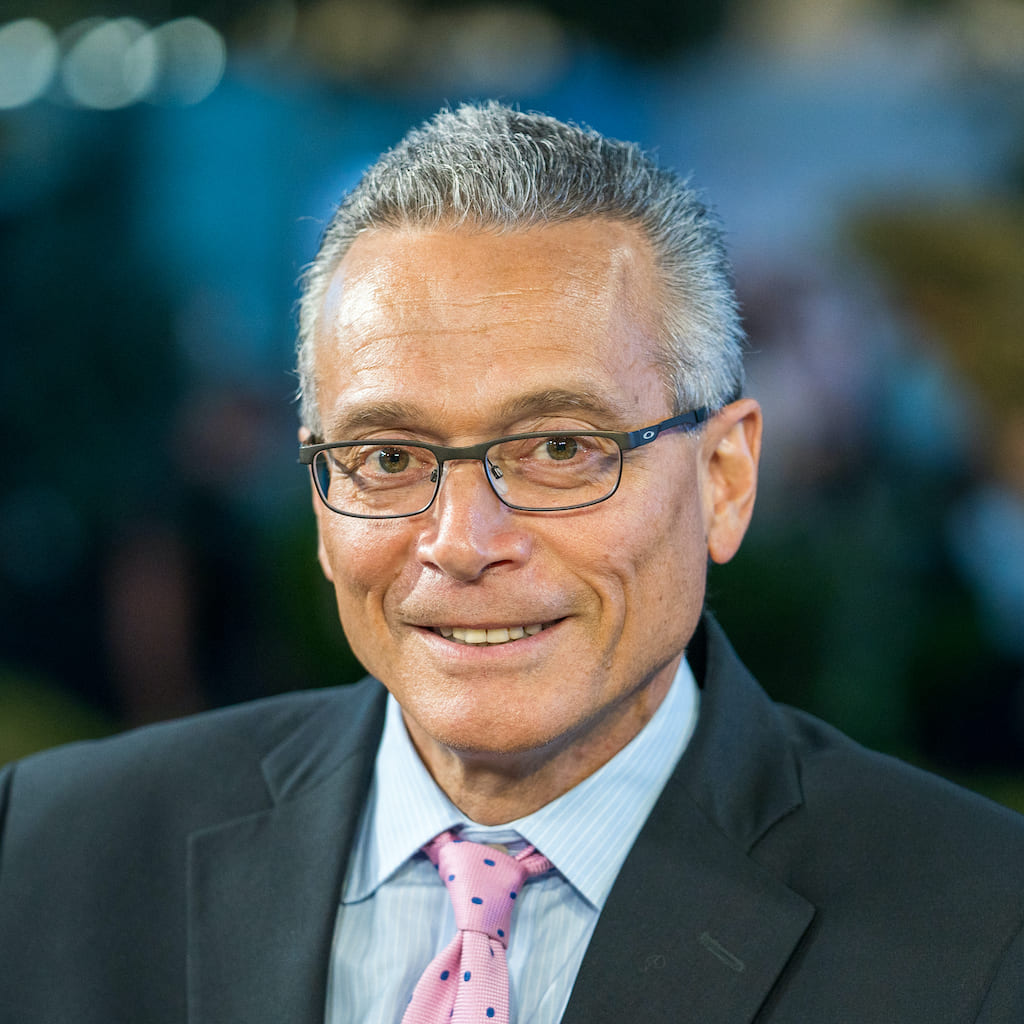 Dave Vellante