Understanding the Intersection of AI, Data, and Enterprise
In this insightful discussion, Sri Ambati, co-founder and Chief Executive Officer of H2O.ai, and Satish Iyer, Vice President of Emerging Services at Dell Technologies, share their perspectives on the convergence of AI and enterprise technology as part of the Cube's AI Factories series filmed at the New York Stock Exchange.
With seasoned expertise in AI and enterprise infrastructure, the conversation explores the latest trends in AI deployment. The Cube hosts, including John Furrier of SiliconANGLE Media, guide the discussion. Ambati and Iyer examine partnerships between Dell and H2O.ai and discuss emerging opportunities in agentic AI, emphasizing the significance of deploying AI models on-premises to enhance performance and manage sensitive data.
According to Satish Iyer, Dell's AI factories enable enterprises to innovate within secure environments, focusing on data integrity and building domain-specific solutions. Ambati highlights key advancements such as the adoption of agentic AI and the impact of deploying sophisticated models in various sectors, from finance to healthcare, noting how these innovations are poised to transform the way organizations approach complex tasks.
Forgot Password
Almost there!
We just sent you a verification email. Please verify your account to gain access to
theCUBE + NYSE Wired: AI Factories - Data Centers of the Future. If you don’t think you received an email check your
spam folder.
Sign in to AI Factories - Data Centers of the Future.
In order to sign in, enter the email address you used to registered for the event. Once completed, you will receive an email with a verification link. Open the link to automatically sign into the site.
Register for AI Factories - Data Centers of the Future
Please fill out the information below. You will receive an email with a verification link confirming your registration. Click the link to automatically sign into the site.
You’re almost there!
We just sent you a verification email. Please click the verification button in the email. Once your email address is verified, you will have full access to all event content for AI Factories - Data Centers of the Future.
I want my badge and interests to be visible to all attendees.
Checking this box will display your presense on the attendees list, view your profile and allow other attendees to contact you via 1-1 chat. Read the Privacy Policy. At any time, you can choose to disable this preference.
Select your Interests!
add
Upload your photo
Uploading..
OR
Connect via Twitter
Connect via Linkedin
EDIT PASSWORD
Share
Forgot Password
Almost there!
We just sent you a verification email. Please verify your account to gain access to
theCUBE + NYSE Wired: AI Factories - Data Centers of the Future. If you don’t think you received an email check your
spam folder.
Sign in to AI Factories - Data Centers of the Future.
In order to sign in, enter the email address you used to registered for the event. Once completed, you will receive an email with a verification link. Open the link to automatically sign into the site.
Sign in to gain access to theCUBE + NYSE Wired: AI Factories - Data Centers of the Future
Please sign in with LinkedIn to continue to theCUBE + NYSE Wired: AI Factories - Data Centers of the Future. Signing in with LinkedIn ensures a professional environment.
Are you sure you want to remove access rights for this user?
Details
Manage Access
email address
Community Invitation
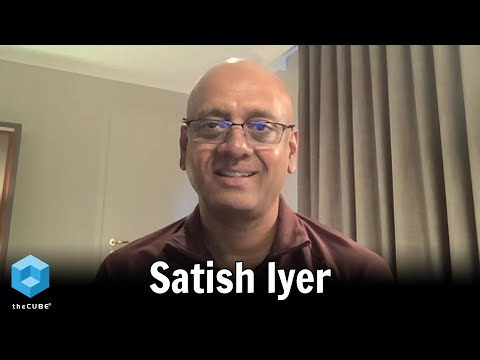
Satish Iyer, Dell & Sri Ambati, H2O.ai
In this interview from theCUBE + NYSE Wired: AI Factories – Data Centers of the Future event, Glean co-founder and CEO Arvind Jain joins theCUBE’s John Furrier to unpack what’s really working in enterprise AI today and what comes next. Jain explains why knowledge access remains the first successful AI use case at scale and how Glean’s enterprise search brings AI into everyday work. He details the past year’s lessons with AI agents – from the need for guardrails, security, evaluation and monitoring to democratizing agent building so business owners (not just data scientists) can create production-grade agents.
The conversation dives into Glean’s vision of the enterprise brain powered by an enterprise graph, highlighting the importance of deep context, human workflows and behavior to reduce “noise” and drive outcomes. Jain outlines core building blocks – hundreds of enterprise integrations and a growing actions library – that let agents securely read company knowledge and take actions across systems (e.g., CRM updates, HR tasks, calendar checks). He discusses how organizations are standing up AI Centers of Excellence, prioritizing “top 10–20” agents across functions like engineering, support and sales, and why a horizontal AI data platform that unifies structured and unstructured data – accessed conversationally and stitched together via standards like MCP – sets the foundation for AI factory-scale operations. Looking ahead, Jain says Glean’s upgraded assistant is evolving from reactive tool to proactive companion that anticipates tasks and accelerates productivity.
In this interview from theCUBE + NYSE Wired: AI Factories – Data Centers of the Future at the New York Stock Exchange, Satish Iyer, vice president of innovation and ecosystem in the Office of the CTO at Dell, and Sri Ambati, co-founder and chief executive officer of H2O.ai, join theCUBE’s John Furrier to explore how AI factories are becoming the new unit of value in enterprise infrastructure. They break down the Dell–H2O.ai partnership around Sovereign AI, showing how GPU-powered Dell AI factories and Dell-validated blueprints bring cloud-class large language...Read more
exploreKeep Exploring
What is the nature and significance of the partnership between Dell and H2O?add
What factors contribute to the enterprise value in AI?add
What are the benefits of using agentic technology in business processes?add
What strategies has Dell implemented to demonstrate the value of their AI projects to customers and partners?add
>> Welcome back everyone to theCUBE here at The New York Stock Exchange, our new studio on the East Coast. Of course, we've got our Palo Alto Studio connecting Wall Street and Silicon Valley. This AI factory series is really featuring the leaders. We're making things happen to build out the infrastructure and also the agentic layer and ultimately the road to physical AI, which is where the NVIDIA and all the AI that's bringing brought to the table have impact. We got two great CUBE alumnis here. We have Satish, Vice President, Innovation and Ecosystem at the Office of CTO at Dell. Satish, great to see you.
Satish Iyer
>> Great to see you, John.
John Furrier
>> Sri, Co-Founder and CEO of H2O.ai. Great to have you on too.
Sri Ambati
>> Fantastic to be here. Thank you.
John Furrier
>> We've been together on some CUBE interviews in the past. Really I think two cycles now I'd say of IT. This AI cycle is pretty significant. Dell has ecosystem partners developing. You've been pioneering on the AI side for how many years now? How long has it been?
Sri Ambati
>> 14.
John Furrier
>> So the perfect storm has arrived. The AI infrastructure being built out. The AI factories really are changing the game because it's still infrastructure, but it's tokens. Sri, talk about the partnership with Dell because you guys are cutting into some new turf here with your solution. Talk about the partnership with Dell.
Sri Ambati
>> You're crushing it together. Our customers are super excited. One of the biggest turning points that we're beginning to see is ROI from generative AI through agentic AI and agentic AI needs a lot of large models and you can't necessarily send all of your prompts to the public cloud. So that's where Dell and H2O have partnered very closely. We brought Sovereign AI for air gap in regulated industries where we can absolutely power give the same power that you'd otherwise get with large language models in the public clouds completely on-prem and on your private data and public data.
John Furrier
>> Satish, in the past year, you guys, you've been working hard. We've been covering some of the work you've done in the ecosystem. There's a new partnership kind of ecosystem developing, watching Jensen on stage recently in DC at his event he had, mini half-time GTC report. Extreme co-design is one of their philosophies, and you're starting to see the error now where it's beyond just cloud. Cloud is still going to be there, but the on-prem activity is high because that data is going to have its own models for the companies. Sometimes it's very sensitive data, but still you want to use language models. Talk about how that's developing on your side. You're deploying the factories and now the software stacks and the solutions are coming together where you're starting to see enough value. The models are good enough. If you go back seven years ago and said, "What does AGI look like?" And you look at what we're doing today, you'd say, "Today's AGI." It's that good.
Satish Iyer
>> Yeah, like you said, the data part is the key, right? And we have been a very strong proponent of doing, like we always said, do AI where the data is and to what she was mentioning, how H2O is adding value on that as well. The enterprise value in AI is all about the data and a lot of the stuff is on-prem, and I think it's important. That's why I think when we work with the likes of H2O, it's important to understand that whatever you deploy, you're tasked to be on where your core asset is in terms of what your intelligence needs are. One of the things we see a lot of customers and we have our own 3,000 plus AI factory customers now. A lot of them are enterprises, and we do see a lot of enterprises now picking and choosing, especially where they want to be able to go solve the problem, right?
John Furrier
>> Yeah. I know you sell a lot. Dell is doing well with the neoclouds too. They're buying a lot of Dell factories. Sri, I want you to talk about this dynamic. Dell has huge, I talked to Kyle who runs North America sales for Dell yesterday here on theCUBE, and Dell has relationships. They're there in all the accounts and now there's new purchases being made with factory. You got to run workloads on these machine systems, and by the way, ROI comes up all the time, get the beachhead, get those use cases. What are you seeing in terms of adoption, those kinds of AI native-like deployments where it's model first? How do we deal with the different models? When should I have a proprietary model? Not proprietary model, an on-prem secure model? What's your view on that?
Sri Ambati
>> I think if you go back to what you kind of touched on earlier, what we've always done is we've been obsessed with our customers and working closely with customers, the last mile of AI is about 99 miles, to be honest. And so we've worked really with partner like super-powerful partners like Dell. We can actually now land in more of the big banks, telcos. Historically, we had a very strong affinity for banking and retail and capital markets as well as business banking. But now, we can even go one step further, build vertical solutions, vertical AI, which is in financial crime, in data mean, Satish touched on data being the goldmine for the fuel for AI, and I think that data agents where you can start making the less messy using agentic AI, we pioneered a product called Superagent, which is deep research. What this is able to do is actually do a very good planning using large language models and then execute. So it's a very good coding agent. We converted large business tasks to real code and then tool calling. This kind of code code is a little less of the hallucinations, so you can quickly catch when you run a code, you execute it and so you trap it early so you can do a very long chain of thought without kind of losing train. That kind of deep thought is leading to deep research and better results. So our customers are able to get the same power on-prem as they would get in the cloud. Now, the on-prem models are open source models if you think about it. So the power of open source is kind of showing up in democratizing agentic AI for everyone. Historically, agentic AI, it needs large models, but of course globally, we are getting models from everywhere in the planet at this point where large language models are now become more and more commodity. So agency is how you actually can leverage value from AI.
John Furrier
>> I really liked how you brought the domain expertise into this because these vertical models, whatever you want to call them, they're very domain specific, but they're not the end all be all. There's other things going on, and this is where I think the agent piece is going. Satish, because you guys have power scale, you've got Spectrum-X, you've got PowerEdge, you've got the infrastructure nailed on the factory. Now you've got to deploy this, and I want to get both of your reactions because this is what we're seeing. I want to see if you agree. The agent work being done now is kind of boring work, and that's when I say boring, I put it in quotes because there's real world workflows that you could actually solve right now. And so the hyped up is, "Oh, agents." All this kind of tech shiny object kind of vibe going on, which is not bad, by the way. I love agents, but the trend is people are buckling down on essentially use cases that don't look good on the flash in the pan, but they're like toil, they're real tasks, they're real work mean.
Satish Iyer
>> At the end of the day, you've got to make the business process simple. So the technology is there to make your day-to-day workflows simple, streamlined and drive more productivity. And to your point earlier about agents, I think the way we understand in Dell and we see some of the enterprises doing, there is a core set of platforms and agentic platforms which everybody will develop on, but we see more and more domain specific agentic tech. So there's a company which will solve, let's say for example, a customer experience problem using agent. There is a company which will solve financial problem using agents. So if you are an enterprise deploying some agentic tool chain within solving a CFO's problem or solving a supply chain's problem, then you would actually anchor to that. So that's where we see these coming. So when an enterprise says, "Okay, I want you have a common agentic thing to solve, but my specific domain I want to solve, it's a supply chain problem." Or, "My CFO's have some tax and audit issues I need to solve." Then we deploy those specific domain specifications and they do rely and lean on quite a bit of small language models because they're very domain specific.
John Furrier
>> So Sri, talk about this factory dynamic because when asked what's an AI factory, it's just this massive token generating machine system. There's more tokens. Tokens are coming fast. Jensen laid out the three power loss scales, training, inference, and then deep thinking and then where the tokens volume goes up. So if they can pump out the tokens, then you can go to work, talk about this dynamic because these agents need to be wired up. They need more tokens, they're going to have more thinking. And it reminds me of like Kubernetes and Linux, when it becomes boring and invisible, you won. And that's why I like this boring quote because it's not boring when it works, it's actually great when it works, it's you've just created a work task, it just becomes done-
Satish Iyer
>> Out of life.
John Furrier
>> It becomes exciting, actually.
Sri Ambati
>> I think the biggest disruption we are seeing with agentic AI is actually the coding agent, if you will. So software industry as we know it, AI has actually eaten software. And of course when you've seen the transformation of the hardware industry before AI, after AI, so you begin to see that dramatic change where you don't need hundreds of thousands of engineers to build massive core bases. So I think that's completely changed, MD files as the new language. So that means that now a small number of group of individuals can transform the whole planet with their own massive organizations. So you are saying the new AI native orgs are which are dependent on neoclouds, depending on the Dell-
John Furrier
>> They're model first. They're model-centric.
Sri Ambati
>> Completely. The entire HR processes are AI-first with Power BI model, the entire company building is AI native. Now then you see one step to the companies like the big banks, if they are imitating, they want to be just like they wanted to imitate PayPal, in the early days, most of my customers like Capital One and big banks wanted to be like the internet native companies. I think now we're seeing the big banks trying to emulate agentic banks, but the biggest challenge, as you mentioned earlier-
John Furrier
>> Don't forget the neobanks that are forming. There's a whole new layer of banking infrastructure coming.
Sri Ambati
>> Absolutely.
John Furrier
>> Especially with the changes in crypto. So talk about the relationship with Dell because what's another trend I want to get, because I think you guys highlight and I think it's a template, is the relationship between, I'll say software or what you're doing on H2O and the hardware. All the stuff that's down at the kernel software level. When we talk about HBM memory and how close it can be to the GPU or XPU, you have now subsystems fabrics. So how are you tuning and managing and leveraging the Dell?
Sri Ambati
>> So the Dell AI factory is an example of that extreme co-design with our partner, sort of make our customers really successful. So we've rolled out simple, the Dell-validated blueprints as they call it, and rolled them out to our customers, and then they started playing with contracts. You said the boring use cases, things like that, like looking at procurement, which is not a famous use case, a contact center, it was a poster child. What we've done for a large company like AT&T is they were burning through the tokens on public clouds. So we reduced the token cost by token utilization by 10 x by actually using a small language model that is fine-tuned on Dell hardware and now hosted on-prem for a large telco. That take the top 20 successful use cases, and then custom purpose-built s SLMs, purpose-built agents. That's where the world has moved, where the agents are doing the big brain stuff, but the actual execution of the tool, like a Wikipedia tool doesn't need to go and burn all of those tokens online.
John Furrier
>> We took a lot of heat when we predicted four years ago, small language models, but what you laid out is we're hearing the same thing is that you can break the system architecture to the tasks, but you're not foreclosing the option to do other model integrations. You're just optimizing the scope of the data and the agents to be in line with the workflow.
Sri Ambati
>> The keyword that transformed s SLMs before and now is distillation and deep seek hit that home run where everybody could now see a distilled fine-tuned model, a small model could deliver an outsized punch. We begin to see that with coding, the latest models that came out even this week.
John Furrier
>> So you see that now as a standard practice?
Sri Ambati
>> Absolutely.
John Furrier
>> And you guys are implementing that on your side?
Sri Ambati
>> Yeah, we have an LLM studio, enterprise LLM studio that runs on Dell GPUs to start customizing, taking advantage of the private data that the large banks have or the large telcos have.
John Furrier
>> Fine-tuning a public service is something that is now a standard.
Sri Ambati
>> It's an agent.
John Furrier
>> It's an agent.
Sri Ambati
>> It's an agent.
John Furrier
>> It's always on-tuning.
Sri Ambati
>> Yeah, they don't call it fine-tuning anymore, but that's basically what it is. Well, there are some companies just, I mean the whole Nemotron class of models are taking LLM models and fine-tuning for different purposes. I think we are doing something very similar where we can then fine-tune them further for banks OCR use cases, we have a visual language model that does OCR called Mississippi, again, runs very simply on.
John Furrier
>> Sri, I want to ask you a question since you're on top of the Dell systems factories. The number one question I get either on theCUBE or off-camera is love AI factories because it really resonates and the word is becoming standard, people can relate. It's a supercomputer basically, whether it's a full-on data center or racks stacked up with all kinds of systems stuff, it's purpose-built supercomputer, not purpose-built, but a supercomputer. The question is what do I run on it? So can you share some successes you've had with Dell because no one's ever done this before. It's kind of like new in the enterprise i, they've done other versions of HPC, high-performance computing, you have the racks and stacked systems, Dell servers over the years, but now they're getting re-architected with the memory architecture for really managing the power. You guys got that the template and the reference architecture and hardware, but what are companies running on these? What examples can you share of successes?
Sri Ambati
>> So Sovereign AI is absolutely a must have if you're in Singapore, Middle East nation states that absolutely need to keep their data on-prem locally that all the three letter agencies in the US federal government, if you're counting the number of objects that are flying anywhere, all of that stuff is absolutely one superpower that H2O and Dell bring together is we've been, as you've mentioned, the first Dot AI domain. Over the years, Predictive AI hydrogen torch, which we delivered that does counting of visual things. Then transformer architecture, SLMs, agentic AI. So we integrated the predictive generative and agentic AI in one AI as a service. And that runs now powered by Dell Super. You call it the supercomputer, but all the GPUs that come with it and the end-to-end systems. And I think the thing that it's a super system, basically there's lot of computers in there. HPC is the new PC, right? So everybody's essentially using that to just run simple things. You're coding your IDE is connected to a HPC system today. So the net of that is that our customers are transforming their old stacks. So if you want to work a mainframe system, you're doing a computer user agent, you're doing a browser user agent instead of trying, you can also have the agent learn the APIs and write the code. But most of the times you're just using a CUA or a browser user agent and then bring the old stacks to life in today's world as well. But the biggest power punch use case, we've seen contact center. So we've seen customers take reams and reams of documents and start look for payment terms. You're a large FMCG, you want to optimize cash flow with payment systems. Healthcare, we power some of the biggest healthcare systems in New York City like Montefiore and back then in Kaiser Permanente, they're all big customers, common customers. We see in about a dozen different opportunities with the governments in Middle East and Singapore. One of the common thing just to add to is if you look at all the examples Sri gave, it's basically enterprises which are in very environment where the data is very, very trusted and needs to be secure, financials, healthcare, government, sovereign government, and where the data is not going anywhere and there is a lot of smarts and intelligent to apply. So I think that's kind of where the power comes from. So it's like all the financial sector, all the sectors he talked about, they're all like know throws, the apply smarts and there's no other way to do this technically in public cloud. And you've got to have an on-prem AI factory story to get the smarts.
John Furrier
>> The biggest-
Sri Ambati
>> You saw the MIT paper with the 95% of AI experiments not taking off. I think the 5%, if you look at the 5%, one of the cornerstone of them is they all went on, did the non-sexy, the boring stuff first, the backend, the middle office, right? Not the obvious ones.
John Furrier
>> Yeah, I poo-pooed that. You know how I feel about that survey. First of all, I wanted to see the data and my friend at UPenn Morton also poo-pooed it too, mainly because everyone's experimenting. So it's kind of a false narrative in the sense because we are in the biggest experimentation stage.
Sri Ambati
>> The number of questions.
John Furrier
>> What data don't they see? So there are production workloads. We're seeing data where people have done it and they're knocking down the low-hanging fruit and learning and then they get better. So we're in this kind of progression and I think Michael Dell brought this up here on theCUBE and also Jensen Wong mentioned it on stage, which was the adoption is critical that people just get adopted and going to your point, pick something and it's a workflow at end-to-end. You have the data sources. That's a place where you can play and implement.
Sri Ambati
>> The biggest ROI for our banking customers and telcos still comes from predictive AI, surprisingly, not so surprisingly because you actually have tabular data that's able to lend better or kind of catch fraud earlier or prevent losses. But the way customers are now beginning to see is can I really cut down this head count? So you're beginning to see that kind of, can I run the same operation with a much smaller workforce? You're going to see a lot more disruption in the traditional IT contracting because software has essentially become more of a code gen exercise as a result. You'll see some disruption there.
John Furrier
>> Well, you guys have had great success. I really appreciate you sharing. I guess my final question for both of you guys and three mainly you on the front side of this and Dell powering the solution is what is the frame in the mind of the customer in terms of ROI? Because we're seeing the conversation shift from, hey, we can save costs to actually revenue. So in the past eight months, the narrative is, "Well, we can get top line and bottom line efficiencies and people tend to go where the costs are." But actually the thinking has shifted to, "Wow, we did that boring workflow that's caused a lot of toil and undifferentiated heavy lifting, but that's a simple task that actually has outcomes work product and that generated more revenue." So do you agree that that's shifted and how are people thinking about ROI? So is it revenue generated now or is it-
Satish Iyer
>> I'll go quickly. I think in Dell we have been demonstrably doing this for the better part of a year where we've been telling our customers that we have demonstrated value in terms of not only saving cost, but also driving top line revenue. And every project, every AI project we do within Dell has been very clear goals of ROI in terms of what the investments are. And we've been working on those four pillars inside Dell. And we have been very publicly openly sharing a lot of these things with customers and partners because we basically believe in Dell as customer zero. So when we actually go tell our customers that this is what we do, they're interested in say, "Where do I start? Well, I have the same problem as you have. Maybe I start here, right?" It's absolutely real.
John Furrier
>> Peer review by the way, is company. It's interesting. People are watching other peers.
Satish Iyer
>> Oh, totally.
John Furrier
>> All the time. They're sharing.
Satish Iyer
>> And then the fact that we are all sharing and we are doing some agent interop work in the valley that, and it's like we have all the customers, some of them are competitors, a lot of competitors themselves coming together because we all want to know what's happening in this agent world and we all need to share. There's a lot of sharing, a lot of openness. And I think that's the beauty of this because the tech is moving so fast. Everybody's like, what do you think? What do you think? So I think to me that's a great way to actually learn from others and also adopt some of the best practices.
John Furrier
>> Sri, what's your take on the ROI and the revenue on one of our customers? Do you think that sentiment has changed?
Sri Ambati
>> No, absolutely. So like in any phase of new technology adoption, the first two years of most of our customers is cost doesn't matter. Let's innovate, right? Let's show that it actually works. Let's adopt. It's a whole new life skill. So like a customer like AT&T, which first went all in, go get everything done. Then they said, "Okay, let's optimize it."
So for every dollar they invested in AI, they made 3X returns or banking customer like Cornèr Bank, they've announced on CUBE a few quarters ago that they've cut down scams by about 70%, sort of dramatic improvements across the board. Millions of dollars of true year-on-year optimization and better stuff. One, healthcare is getting better, more personalized. These are three big ones. Public sector, this is a geopolitical level competition going on sort of this Sputnik moment as they called it. So massive investments going in from public sector. What we are beginning to see is companies CEOs measuring which departments have adopted how much. So 98% of one of my big banking customer has used an agent every week. Are they creating their own-
John Furrier
>> Adoption is key, right?
Sri Ambati
>> And I would say, I'll leave you with a very, we are here in stock exchange. So a good capital markets use case. One of my customers obviously can't name. They ended up in February using our deep research to figure out which commodity to invest in given that Trump is here and is doing all the tariffs. And one beautiful thing that the deep research agent that we built it, and it was kudos to them. They asked the question is it studied Trump's behavior from 1980 and looked at everything he said and done Trump chatbot and measured and found what looks obvious in hindsight that he loves gold. So then they bet a bit heavily on gold, made quarter billion dollars in just a few months. So top line also possible, but you have to now start thinking creatively and deploy capital.
John Furrier
>> That would fall on the third power law scale law, which is thinking deep thought, deep thinking. That's where that shines?
Sri Ambati
>> The future. There's a benchmark on future X. We are number one on Gaia benchmark, which long-running business task for enterprise. But the future X benchmark is for capital markets and quantitative traders looking for eking out alpha and alpha used to be coding and related to hedge fund coding. Now you can actually generate these alphas and see, bake them off and see how they will out.
John Furrier
>> It's a fantastic market. It's an accelerated, it's not just a disruptive, but it's an enabler. So it's accelerated enablement.
Sri Ambati
>> The way I look at it, and it kind of sees the word, right now, people are saying, can I cut down headcount and transform my industry? My company? Whether it's software industry or in banks or in telcos, but where I see the future is abundance. So now 10 people can create a billion-dollar company or a hundred people, trillion dollar companies are going to emerge. So the vision I see for AI, and we said it before on Cube, we see a million billionaires, right? So there's a thousand trillion air vision and a million billionaire vision. And I see that and I see that for CUBE as well.
John Furrier
>> Well, we hope to be on that one side of that. We'll, hope we're in the right side. Look, we're just doing our part to get the data out there. Sri, thank you. Satish, great to see you guys. Thanks for coming on. We went overtime as usual. I'm John Furrier, host of our AI Factories series. The trades are making a trillion dollars earlier, now they're trading on it. AI factories powering everything here at the New York Stock Exchange CUBE Studio. Thanks for watching.
































 John Furrier