Mara Maehara Baiao of TOTVS and Diego Puerta of Dell Technologies join John Furrier and Dave Vellante for theCUBE Research coverage at NYSE Wired: AI Factories. The discussion explores how artificial intelligence, AI factories, cloud-native enterprise resource planning, ERP and agentic applications reshape enterprise software infrastructure and data platforms to enable customer-level AI.
Baiao explains that TOTVS's AI foundation LYNN enables agents tied to customer data to create business value and drive revenue and efficiency when applied to business-specific data. They describe how cloud-native ERP and structured data platforms support customer-level AI deployment across TOTVS's more than 7,000 customers and a growing ecosystem.
Puerta outlines how Dell Technologies infrastructure and emerging infrastructure as a service, IaaS, offerings provide the performance, security and supply resilience required to scale AI factories for large enterprise adoption. They emphasize integrated deployment approaches, cross-selling strategies and operational models that accelerate enterprise-level transformation.
The conversation examines market leadership, deployment approaches and factors to consider for implementing AI factories across enterprise environments. For further analysis subscribe to theCUBE and NYSE Wired channels.
Forgot Password
Almost there!
We just sent you a verification email. Please verify your account to gain access to
theCUBE + NYSE Wired: AI Factories - Data Centers of the Future. If you don’t think you received an email check your
spam folder.
Sign in to AI Factories - Data Centers of the Future.
In order to sign in, enter the email address you used to registered for the event. Once completed, you will receive an email with a verification link. Open the link to automatically sign into the site.
Register for AI Factories - Data Centers of the Future
Please fill out the information below. You will receive an email with a verification link confirming your registration. Click the link to automatically sign into the site.
You’re almost there!
We just sent you a verification email. Please click the verification button in the email. Once your email address is verified, you will have full access to all event content for AI Factories - Data Centers of the Future.
I want my badge and interests to be visible to all attendees.
Checking this box will display your presense on the attendees list, view your profile and allow other attendees to contact you via 1-1 chat. Read the Privacy Policy. At any time, you can choose to disable this preference.
Select your Interests!
add
Upload your photo
Uploading..
OR
Connect via Twitter
Connect via Linkedin
EDIT PASSWORD
Share
Forgot Password
Almost there!
We just sent you a verification email. Please verify your account to gain access to
theCUBE + NYSE Wired: AI Factories - Data Centers of the Future. If you don’t think you received an email check your
spam folder.
Sign in to AI Factories - Data Centers of the Future.
In order to sign in, enter the email address you used to registered for the event. Once completed, you will receive an email with a verification link. Open the link to automatically sign into the site.
Sign in to gain access to theCUBE + NYSE Wired: AI Factories - Data Centers of the Future
Please sign in with LinkedIn to continue to theCUBE + NYSE Wired: AI Factories - Data Centers of the Future. Signing in with LinkedIn ensures a professional environment.
Are you sure you want to remove access rights for this user?
Details
Manage Access
email address
Community Invitation
Mara Maehara Baiao, TOTVS & Diego Puerta, Dell
Mara Maehara Baiao of TOTVS and Diego Puerta of Dell Technologies join John
Furrier and Dave Vellante for theCUBE Research coverage at NYSE Wired: AI
Factories. The discussion explores how artificial intelligence, AI factories,
cloud-native enterprise resource planning, ERP and agentic applications reshape
enterprise software infrastructure and data platforms to enable customer-level
AI. Baiao explains that TOTVS's AI foundation LYNN enables agents tied to
customer data to create business value and drive revenue and efficiency when
applied to business-specific data. They describe how cloud-native ERP and
structured data platforms support customer-level AI deployment across TOTVS's
more than 7,000 customers and a growing ecosystem. Puerta outlines how Dell
Technologies infrastructure and emerging infrastructure as a service, IaaS,
offerings provide the performance, security and supply resilience required to
scale AI factories for large enterprise adoption. They emphasize integrated
deployment approaches, cross-selling strategies and operational models that
accelerate enterprise-level transformation. The conversation examines market
leadership, deployment approaches and factors to consider for implementing AI
factories across enterprise environments. For further analysis subscribe to
theCUBE and NYSE Wired channels.
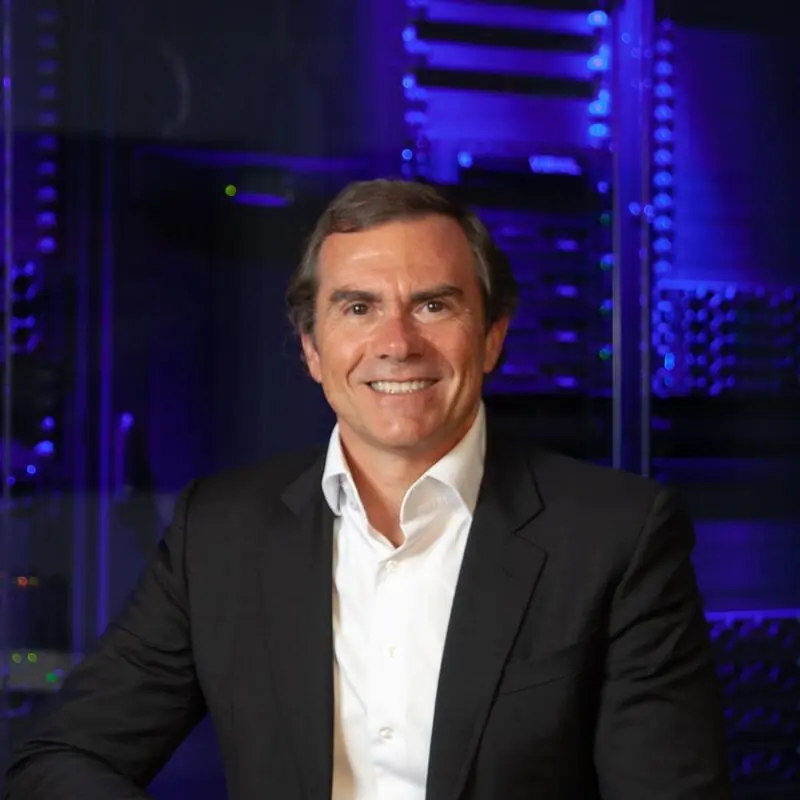
>> Palo Alto Studio Connection, Silicon Valley and Wall Street. I'm John Furrier, co-hosting theCUBE here with Dave Vellante, my co-host. Hello, I'm John Furrier with theCUBE, back here in theCUBE's NYSE studio. We have a great international crowd in here from the World Cup. Of course, theCUBE has our Palo Alto Studio connecting Silicon Valley To Wall Street. This is our AI Factory series where we're talking to the leaders who are making it happen, bringing in the technology to power the next generation of IT and business transformation. Of course, the benefits to business and society. We've got two great guests. Diego Puerta is back, Brazil general manager for Dell. Great to see you back on theCUBE. Thanks for coming on.
Diego Puerta
>> My pleasure.
John Furrier
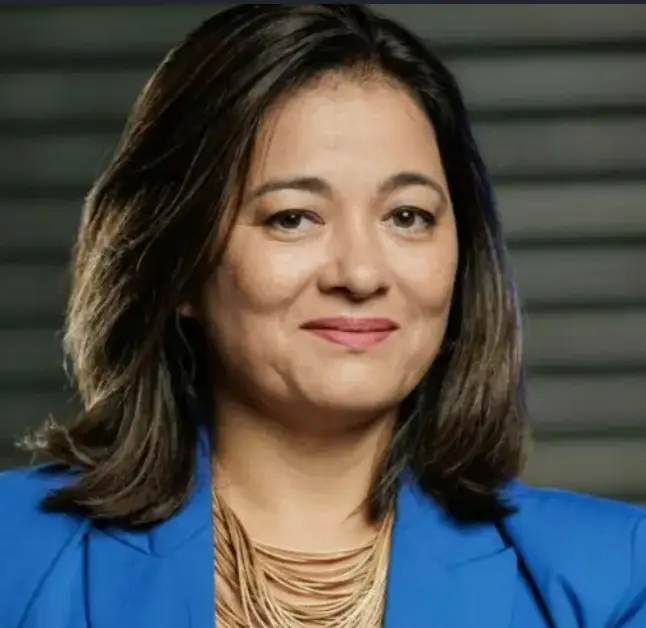
>> Thanks for hosting us. Mara Maehara Baiao, thanks for coming on theCUBE. She's the CIO of TOTVS. Large player in Brazil in ERP. Congratulations on your market leadership.
Mara Maehara Baiao
>> Yeah, thank you for the invitation.
John Furrier
>> So AI factories are obviously the hot topic for us. It's been the number one popular program here in New York as well as in Palo Alto and the tech scene. Dell Tech World, Michael Dell is showing the fruits of all the benefits and the hard investments they've made in betting on this direction. Easy bet for Michael. Supply chain, build-to-order, rack scale. It's their core competency.
Diego Puerta
>> Yeah.
John Furrier
>> Diego, this is now translating into growth.
Mara Maehara Baiao
>> Yeah.
John Furrier
>> Share the story. How has Dell helped you continue your leadership with TOTVS?
Mara Maehara Baiao
>> Well, Dell is our partner for a long time in Brazil in different ways. We invest in infrastructure with them. They are a provider, important provider for us.
John Furrier
>> You gotta talk about— she's being humble.
John Furrier
>> Yes.
John Furrier
>> Success of the company. Talk about that, because I think this is a very unique growth story. Very great template.
Diego Puerta
>> Now, TOTVS is an amazing company, is a Brazilian company that starts as a single company and grew both organically and through acquisition. How many companies did you guys acquire?
Mara Maehara Baiao
>> At least 20, 25.
Diego Puerta
>> 20, 25 companies. It's a public company nowadays. Brazil is the only country where the ERP market has not SAP as a leader, it's TOTVS. They play incredibly well in the SMB space. And what they are doing that is unique, and I think that is where we are being able to help them, is to expand the offering, like offering AI to their customers, expanded the ERP capabilities. They now have the TOTVS Cloud. That's a very interesting offering for their customers. And they are growing, they're growing at a very fast pace. And now they are, I would say, one of the first movers in Brazil to take advantage of the AI opportunities.
John Furrier
>> Talk about your strategy with AI infrastructure and some of the things with Dell, because obviously their business performance broadly is extremely well done. Factories are now token factories. That's going to turbocharge, it's going to create acceleration. Yeah. Leaders like you guys, what's the strategy? What do you think? What's your thinking?
Mara Maehara Baiao
>> Well, our strategy in AI is to take advantage of our software in enterprises, in large enterprises, as we have more than 7,000 clients using our software nowadays. So we enable these clients to organize the data and then use this data to bring some advantage in their business. So recently we launched our AI foundation. The name is LYNN. So LYNN is our foundation, and we are prepared to use this foundation to enable our clients to prepare agents and AI using their data connected to their system to bring advantage to the business. To them.
John Furrier
>> Talk about the revenue because AI clearly is showing revenue growth. It's not just cost reduction. That's— we see great examples of that.
John Furrier
>> Yes.
John Furrier
>> But AI is bringing that intelligence, brings in efficiencies that drives revenue. And certainly agent, that agent conversation is front and center. How do you look at the agentic and the AI from a revenue? Because you got a lot of companies you guys bought. You got a big operation. I'm sure there's got to be nice revenue in there?
Mara Maehara Baiao
>> Well, we believe that the difference is coming to a specific using of the intelligence to bring difference to the business. So the general intelligence or artificial intelligence is like a commodity, you know. So we use this commodity to bring the technology to a specific using of the intelligence with the data of our business. So we really think that this kind of use can bring some difference, some use cases that really can bring revenue to our clients and for sure revenue to the company as well.
John Furrier
>> So Diego's here. So while he's here, talk about Dell. How has Dell helped you? Look, he's smiling. Well, I'm going to ask him the same question, how he's helped you. So how has Dell helped? You.
Mara Maehara Baiao
>> Well, to prepare this foundation in a very robust way to our clients. And also we have another offering going to the market right now. It's Infrastructure as a Service. So it's a new offering that we can deliver to our clients, not just in the products that TOTVS used to provide, but also in all environment of our clients inside the same infrastructure to provide performance, security, scalability. So at this moment, Dell is a very important partner that we are analyzing how we are testing this technology, how we can launch together, going to the market. So I think we have some good ways.
Diego Puerta
>> No, it's a good way.
John Furrier
>> I didn't plant that, Diego. It's all on her own.
Diego Puerta
>> No,
John Furrier
>> but—Now, how have you helped her? Elaborate.
Diego Puerta
>> Yeah, that's, as I mentioned to you before, I think that TOTVS has a kind of unique business and they are in a great position to take advantage. They have more than 7,000 customers. They are very good on cross-selling. They expand the revenue on the customers. They buy new companies, they add that, they cross-sell it.
John Furrier
>> Now you bring intelligence in.
Diego Puerta
>> And they collect a lot of data. They now just bought another big company in Brazil that makes transactions. They have the finance arm. They are amazing at cross-selling.
John Furrier
>> So how are you helping them? They have a lot of challenges. As a leader, you have to enable them to be successful. What's your strategy? What are some successes?
Diego Puerta
>> We had to sit down a couple of times. At the beginning, it was not an easy conversation. It was a very challenging one. Less supply, more costs and everything else. But we work together. In order to make sure that you're going to be able to support them, make sure that you're going to have the supply, and most important, our team worked with them to go into the very last details, understanding we have the right products, the right offering. That's the part, the beauty of the process when our team works understanding our customers' business. And I think that TOTVS is a great example of that.
John Furrier
>> TOTVS is a great example of a company that's successful. We're seeing here in the US interviews that I've done. It's my first time talking to folks from Brazil, but the pattern is the same. You want to protect your core business momentum while preparing and bringing in the new capabilities, which with AI you can do more. I don't want to say you do more with less. You do more with more at a lower cost.
John Furrier
>> You do more faster.
John Furrier
>> Jensen says buy more, save more, buy more, do more. Whatever, as Dave has a good expression there. But no, but the point is, this is not a disruption, it's an extension. So you got to protect that core. How do you guys do that? How does the AI help you do that?
Mara Maehara Baiao
>> Well, we have a lot of data of our clients flowing through our system at this moment. We have around 35% of GDP, Brazilian GDP, is passing through our system nowadays. So we are protecting our clients when we transform all this environment or this context of information important to direct intelligence for data. So when you have your data organized, it's more possible to implement intelligence. That can transform this data in advantage for the business. So we really think that we are protecting our clients when we deliver value to them. We're using all the information that they have, applying one foundation like Lean, for instance, that can transform this information in advantage.
John Furrier
>> And as the dominant ERP in Brazil. That's a lot of data.
John Furrier
>> Yeah.
John Furrier
>> So we're starting to see the system of record with the workflows. We've seen, we've talked about systems of engagement over the years. Now we have systems of intelligence. And then behind that, systems of agency and execution. It's right here. You guys are right in position. This is where AI factories soar.
Diego Puerta
>> Yes. And I believe I know the entrepreneur that founded TOTVS. He's the kind of, I would say, aggressive entrepreneur that wants to expand the portfolio. And I think that AI will enable TOTVS to go even faster and longer. I think that's going to be an amazing journey. It's a pleasure for us to be part of that process.
John Furrier
>> Well, great to see. I love that founder mode. They call it founder mode. And AI is going to help go faster. Yeah. Yeah. And just get that cost right. The value is there. Value creation is happening. Thanks for coming on theCUBE. Obviously, the World Cup's in town. You guys excited?
Mara Maehara Baiao
>> Yeah, yeah, very exciting. The expectation is high.
John Furrier
>> All right, thanks for coming on theCUBE. Appreciate it. AI factories going beyond the boundaries of global economy impact of the AI factories enabling the value creation, the tokens, the value extraction, and the applications are all coming and everyone wins. This is our part here at theCUBE doing our job to share that data with you. I'm John Furrier, your host of theCUBE. Thanks for watching.
>> Palo Alto Studio Connection, Silicon Valley and Wall Street. I'm John Furrier, co-hosting theCUBE here with Dave Vellante, my co-host. Hello, I'm John Furrier with theCUBE, back here in theCUBE's NYSE studio. We have a great international crowd in here from the World Cup. Of course, theCUBE has our Palo Alto Studio connecting Silicon Valley To Wall Street. This is our AI Factory series where we're talking to the leaders who are making it happen, bringing in the technology to power the next generation of IT and business transformation. Of course, the benefits to business and society. We've got two great guests. Diego Puerta is back, Brazil general manager for Dell. Great to see you back on theCUBE. Thanks for coming on.
Diego Puerta
>> My pleasure.
John Furrier
>> Thanks for hosting us. Mara Maehara Baiao, thanks for coming on theCUBE. She's the CIO of TOTVS. Large player in Brazil in ERP. Congratulations on your market leadership.
Mara Maehara Baiao
>> Yeah, thank you for the invitation.
John Furrier
>> So AI factories are obviously the hot topic for us. It's been the number one popular program here in New York as well as in Palo Alto and the tech scene. Dell Tech World, Michael Dell is showing the fruits of all the benefits and the hard investments they've made in betting on this direction. Easy bet for Michael. Supply chain, build-to-order, rack scale. It's their core competency.
Diego Puerta
>> Yeah.
John Furrier
>> Diego, this is now translating into growth.
Mara Maehara Baiao
>> Yeah.
John Furrier
>> Share the story. How has Dell helped you continue your leadership with TOTVS?
Mara Maehara Baiao
>> Well, Dell is our partner for a long time in Brazil in different ways. We invest in infrastructure with them. They are a provider, important provider for us.
John Furrier
>> You gotta talk about— she's being humble.
John Furrier
>> Yes.
John Furrier
>> Success of the company. Talk about that, because I think this is a very unique growth story. Very great template.
Diego Puerta
>> Now, TOTVS is an amazing company, is a Brazilian company that starts as a single company and grew both organically and through acquisition. How many companies did you guys acquire?
Mara Maehara Baiao
>> At least 20, 25.
Diego Puerta
>> 20, 25 companies. It's a public company nowadays. Brazil is the only country where the ERP market has not SAP as a leader, it's TOTVS. They play incredibly well in the SMB space. And what they are doing that is unique, and I think that is where we are being able to help them, is to expand the offering, like offering AI to their customers, expanded the ERP capabilities. They now have the TOTVS Cloud. That's a very interesting offering for their customers. And they are growing, they're growing at a very fast pace. And now they are, I would say, one of the first movers in Brazil to take advantage of the AI opportunities.
John Furrier
>> Talk about your strategy with AI infrastructure and some of the things with Dell, because obviously their business performance broadly is extremely well done. Factories are now token factories. That's going to turbocharge, it's going to create acceleration. Yeah. Leaders like you guys, what's the strategy? What do you think? What's your thinking?
Mara Maehara Baiao
>> Well, our strategy in AI is to take advantage of our software in enterprises, in large enterprises, as we have more than 7,000 clients using our software nowadays. So we enable these clients to organize the data and then use this data to bring some advantage in their business. So recently we launched our AI foundation. The name is LYNN. So LYNN is our foundation, and we are prepared to use this foundation to enable our clients to prepare agents and AI using their data connected to their system to bring advantage to the business. To them.
John Furrier
>> Talk about the revenue because AI clearly is showing revenue growth. It's not just cost reduction. That's— we see great examples of that.
John Furrier
>> Yes.
John Furrier
>> But AI is bringing that intelligence, brings in efficiencies that drives revenue. And certainly agent, that agent conversation is front and center. How do you look at the agentic and the AI from a revenue? Because you got a lot of companies you guys bought. You got a big operation. I'm sure there's got to be nice revenue in there?
Mara Maehara Baiao
>> Well, we believe that the difference is coming to a specific using of the intelligence to bring difference to the business. So the general intelligence or artificial intelligence is like a commodity, you know. So we use this commodity to bring the technology to a specific using of the intelligence with the data of our business. So we really think that this kind of use can bring some difference, some use cases that really can bring revenue to our clients and for sure revenue to the company as well.
John Furrier
>> So Diego's here. So while he's here, talk about Dell. How has Dell helped you? Look, he's smiling. Well, I'm going to ask him the same question, how he's helped you. So how has Dell helped? You.
Mara Maehara Baiao
>> Well, to prepare this foundation in a very robust way to our clients. And also we have another offering going to the market right now. It's Infrastructure as a Service. So it's a new offering that we can deliver to our clients, not just in the products that TOTVS used to provide, but also in all environment of our clients inside the same infrastructure to provide performance, security, scalability. So at this moment, Dell is a very important partner that we are analyzing how we are testing this technology, how we can launch together, going to the market. So I think we have some good ways.
Diego Puerta
>> No, it's a good way.
John Furrier
>> I didn't plant that, Diego. It's all on her own.
Diego Puerta
>> No,
John Furrier
>> but—Now, how have you helped her? Elaborate.
Diego Puerta
>> Yeah, that's, as I mentioned to you before, I think that TOTVS has a kind of unique business and they are in a great position to take advantage. They have more than 7,000 customers. They are very good on cross-selling. They expand the revenue on the customers. They buy new companies, they add that, they cross-sell it.
John Furrier
>> Now you bring intelligence in.
Diego Puerta
>> And they collect a lot of data. They now just bought another big company in Brazil that makes transactions. They have the finance arm. They are amazing at cross-selling.
John Furrier
>> So how are you helping them? They have a lot of challenges. As a leader, you have to enable them to be successful. What's your strategy? What are some successes?
Diego Puerta
>> We had to sit down a couple of times. At the beginning, it was not an easy conversation. It was a very challenging one. Less supply, more costs and everything else. But we work together. In order to make sure that you're going to be able to support them, make sure that you're going to have the supply, and most important, our team worked with them to go into the very last details, understanding we have the right products, the right offering. That's the part, the beauty of the process when our team works understanding our customers' business. And I think that TOTVS is a great example of that.
John Furrier
>> TOTVS is a great example of a company that's successful. We're seeing here in the US interviews that I've done. It's my first time talking to folks from Brazil, but the pattern is the same. You want to protect your core business momentum while preparing and bringing in the new capabilities, which with AI you can do more. I don't want to say you do more with less. You do more with more at a lower cost.
John Furrier
>> You do more faster.
John Furrier
>> Jensen says buy more, save more, buy more, do more. Whatever, as Dave has a good expression there. But no, but the point is, this is not a disruption, it's an extension. So you got to protect that core. How do you guys do that? How does the AI help you do that?
Mara Maehara Baiao
>> Well, we have a lot of data of our clients flowing through our system at this moment. We have around 35% of GDP, Brazilian GDP, is passing through our system nowadays. So we are protecting our clients when we transform all this environment or this context of information important to direct intelligence for data. So when you have your data organized, it's more possible to implement intelligence. That can transform this data in advantage for the business. So we really think that we are protecting our clients when we deliver value to them. We're using all the information that they have, applying one foundation like Lean, for instance, that can transform this information in advantage.
John Furrier
>> And as the dominant ERP in Brazil. That's a lot of data.
John Furrier
>> Yeah.
John Furrier
>> So we're starting to see the system of record with the workflows. We've seen, we've talked about systems of engagement over the years. Now we have systems of intelligence. And then behind that, systems of agency and execution. It's right here. You guys are right in position. This is where AI factories soar.
Diego Puerta
>> Yes. And I believe I know the entrepreneur that founded TOTVS. He's the kind of, I would say, aggressive entrepreneur that wants to expand the portfolio. And I think that AI will enable TOTVS to go even faster and longer. I think that's going to be an amazing journey. It's a pleasure for us to be part of that process.
John Furrier
>> Well, great to see. I love that founder mode. They call it founder mode. And AI is going to help go faster. Yeah. Yeah. And just get that cost right. The value is there. Value creation is happening. Thanks for coming on theCUBE. Obviously, the World Cup's in town. You guys excited?
Mara Maehara Baiao
>> Yeah, yeah, very exciting. The expectation is high.
John Furrier
>> All right, thanks for coming on theCUBE. Appreciate it. AI factories going beyond the boundaries of global economy impact of the AI factories enabling the value creation, the tokens, the value extraction, and the applications are all coming and everyone wins. This is our part here at theCUBE doing our job to share that data with you. I'm John Furrier, your host of theCUBE. Thanks for watching.
































 John Furrier