Join John Furrier, Co-Founder and Co-CEO of SiliconANGLE Media, as he hosts Stu Miniman of Red Hat, the senior director of market insights for hybrid platforms, a key player in the AI and cloud landscape, at theCUBE's NYSE Wired event. Delve into the transformative potential of AI factories and the role of data centers in shaping the future of technology.
In this insightful discussion, Miniman shares expertise from Red Hat, a leading open-source solutions provider, focusing on how AI and cloud innovations pave the way for the next wave of technological advancement. The conversation explores perspectives from theCUBE Research and the hosts on significant developments within AI-native and cloud-native infrastructures.
Key takeaways from the conversation include the importance of Linux and Kubernetes as foundational elements in AI infrastructure, as emphasized by Miniman. Miniman notes that partnerships with tech leaders such as Nvidia enhance the capabilities of AI factories, considered the backbone of future intelligent applications. The discussion also highlights IBM's strategic acquisition of Red Hat, which propels innovations in AI and hybrid cloud solutions.
Forgot Password
Almost there!
We just sent you a verification email. Please verify your account to gain access to
theCUBE + NYSE Wired: AI Factories - Data Centers of the Future. If you don’t think you received an email check your
spam folder.
Sign in to AI Factories - Data Centers of the Future.
In order to sign in, enter the email address you used to registered for the event. Once completed, you will receive an email with a verification link. Open the link to automatically sign into the site.
Register for AI Factories - Data Centers of the Future
Please fill out the information below. You will receive an email with a verification link confirming your registration. Click the link to automatically sign into the site.
You’re almost there!
We just sent you a verification email. Please click the verification button in the email. Once your email address is verified, you will have full access to all event content for AI Factories - Data Centers of the Future.
I want my badge and interests to be visible to all attendees.
Checking this box will display your presense on the attendees list, view your profile and allow other attendees to contact you via 1-1 chat. Read the Privacy Policy. At any time, you can choose to disable this preference.
Select your Interests!
add
Upload your photo
Uploading..
OR
Connect via Twitter
Connect via Linkedin
EDIT PASSWORD
Share
Forgot Password
Almost there!
We just sent you a verification email. Please verify your account to gain access to
theCUBE + NYSE Wired: AI Factories - Data Centers of the Future. If you don’t think you received an email check your
spam folder.
Sign in to AI Factories - Data Centers of the Future.
In order to sign in, enter the email address you used to registered for the event. Once completed, you will receive an email with a verification link. Open the link to automatically sign into the site.
Sign in to gain access to theCUBE + NYSE Wired: AI Factories - Data Centers of the Future
Please sign in with LinkedIn to continue to theCUBE + NYSE Wired: AI Factories - Data Centers of the Future. Signing in with LinkedIn ensures a professional environment.
Are you sure you want to remove access rights for this user?
Details
Manage Access
email address
Community Invitation
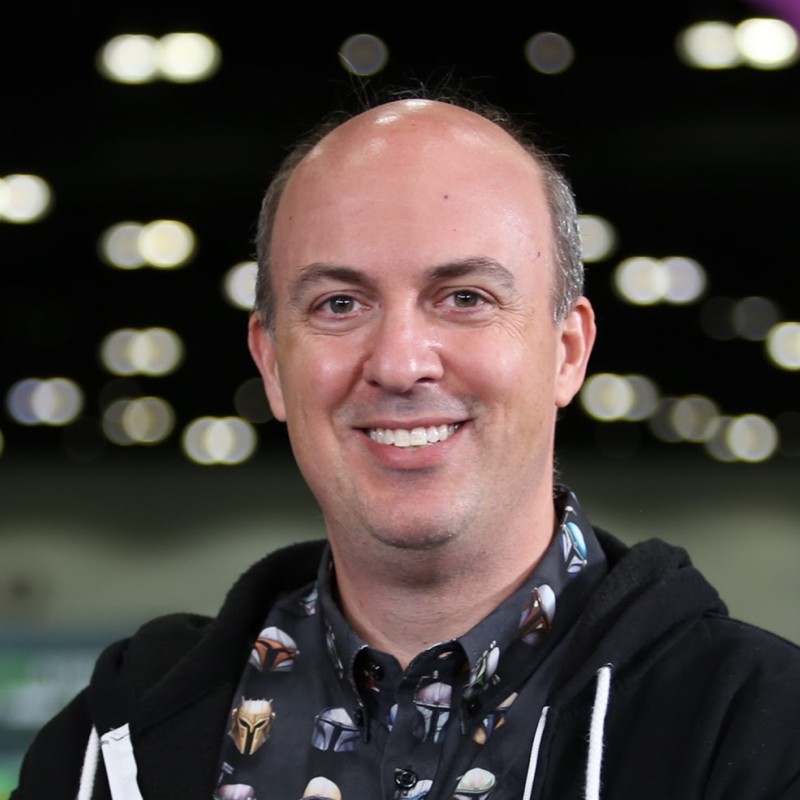
Stu Miniman, Red Hat
In this interview from theCUBE + NYSE Wired: AI Factories – Data Centers of the Future event, Glean co-founder and CEO Arvind Jain joins theCUBE’s John Furrier to unpack what’s really working in enterprise AI today and what comes next. Jain explains why knowledge access remains the first successful AI use case at scale and how Glean’s enterprise search brings AI into everyday work. He details the past year’s lessons with AI agents – from the need for guardrails, security, evaluation and monitoring to democratizing agent building so business owners (not just data scientists) can create production-grade agents.
The conversation dives into Glean’s vision of the enterprise brain powered by an enterprise graph, highlighting the importance of deep context, human workflows and behavior to reduce “noise” and drive outcomes. Jain outlines core building blocks – hundreds of enterprise integrations and a growing actions library – that let agents securely read company knowledge and take actions across systems (e.g., CRM updates, HR tasks, calendar checks). He discusses how organizations are standing up AI Centers of Excellence, prioritizing “top 10–20” agents across functions like engineering, support and sales, and why a horizontal AI data platform that unifies structured and unstructured data – accessed conversationally and stitched together via standards like MCP – sets the foundation for AI factory-scale operations. Looking ahead, Jain says Glean’s upgraded assistant is evolving from reactive tool to proactive companion that anticipates tasks and accelerates productivity.
Senior Director of Market Insights, Hybrid PlatformsRed Hat
In this installment of theCUBE + NYSE Wired: AI Factories – Data Centers of the Future, John Furrier welcomes back theCUBE alumnus Stu Miniman, senior director of hybrid platforms at Red Hat, to examine how open-source infrastructure is shaping the next generation of AI-driven data centers. From Linux to Kubernetes, Miniman traces the technologies that underpinned cloud computing and now serve as the operating system for AI factories. He explains how standardization, repeatability and GPU utilization are becoming central to scaling AI workloads, and why Red H...Read more
exploreKeep Exploring
How did Linux (and projects/companies like Red Hat) and Kubernetes contribute to the adoption of the internet and cloud computing and come to underpin AI — and what role did community events like KubeCon play in that evolution?add
How are hyperconverged and hybrid distributed architectures (including edge computing and AI factories) shaping AI infrastructure, and what roles do Kubernetes, NVIDIA, and Red Hat play in enabling GPU utilization, scalability, standardization, and the supporting software stack?add
How do Red Hat and NVIDIA collaborate to enable scalable, secure AI deployments (AI "factories") and help customers move from experimentation to production?add
How are your products and projects evolving to support AI (including generative AI) workloads on Kubernetes—including GPU utilization and making Kubernetes easier for data scientists and the late majority?add
What is Red Hat’s equivalent response to SaaS becoming AI-enabled, and what priorities and approaches is it using to accelerate cloud-native platforms toward AI?add
>> Welcome back. I'm John Furrier, host of theCUBE here at our NySE Cube Studios. Of course, we got Palo Alto in Boston. This is our West Coast, East Coast connection, connecting Wall Street, Silicon Valley, bringing the tech content. We have a distinguished Cube alumni, Emeritus cube host, Stu Miniman. He's the senior director of hybrid platforms at Red Hat, a wholly-owned subsidiary of IBM, which according to Stu, just their multiples now bigger than Microsoft. So ABM has made a resurgence. We've been following it. Stu, great to have you back on theCUBE. Here, your first time in our new studio on the West Coast.
Stu Miniman
>> John, this is awesome. You and I grew up in the tri-state area. So I was talking to Alicia before we went on here. And I'm like, when I look at my social media, like on Instagram, I think I've got more posts from New York City than I do from Boston. I love being down, live there, work there, but special place in my heart for New York. So awesome to join you here and love what I'm seeing with theCUBE out of here.
John Furrier
>> Two Jersey guys, Megan right here now in Manhattan. People always ask me, "Do you like how cold..." I'm like, "Look, I grew up in New Jersey and how cold..." You got a problem with that? Oh, you fit right in. But 25 years in Palo Altos too, I will say, you and I have done a lot of Cube work together and certainly at Red Hat. You guys have been huge partners with us with open source. We've seen so much innovation. Technology on the West Coast, a lot of the startups, that grew the cloud native world. That spills over to be a global KubeCon, EU, North America. Technology is the market. It's not just the market... CNBC covers the market, well, yeah, I guess stocks and whatnot, but technology stocks are dominating the boards every day. It is driving all aspects of life and cloud native and OpenShift, which you're involved in have kind of set the table for ushering in this AI native era, which kind of looks like a little replay of cloud native, but at larger, faster speeds.
Stu Miniman
>> Yeah. John, you and I were there when some of this wave started. When I look back and we say, John, the internet and cloud... Linux was really one of those technologies that drove that adoption. We wouldn't have Google without Linux. We wouldn't have the cloud without Linux. Red Hat plays an important part of that. And if I look at AI, really Kubernetes has become the operating system for AI. And you mentioned KubeCon, a show that we used to host together when I was with theCUBE, and one that I still go to pretty regularly. It is at the core in underpinning all of this innovation that's happening with AI.
John Furrier
>> I'm really glad you called out the Linux piece and tied that into Kubernetes because I remember I was with you in Seattle. We were having beer after one of the events that the Linux Foundation had and it was me, you, and two other folks from Cisco just sitting there and riffing like Kubernetes could be big. They could actually be the orchestrator, could be like the TCPIP. And that was very early. It actually happened and now it's boring, it's running things, it's the runtime, it's all the services. So it actually happened. We've seen that wave. So I have to ask you now, you see the hybrid distributed computing architecture being foundational for AI. Edge is going to open up when it hyper converges. We're going to predict that. We're going to have a big report coming out in MWC. You got AI factories. This series has been unpacking certainly the big data centers. I mean, you wrote about hyperconvergence at the server level. Now it's unconverged. NVIDIA has kind of put it in new packaging, but now the edge is kind of converged too.
Stu Miniman
>> Yeah. Well, John, even back when we called it hyperconverged, it was really about distributed architectures. And that's what we're seeing. If I look at an AI factory, I want repeatability. I want standardization. Many of the echos that we heard from the cloud is, I want to get rid of the undeferentiated heavy lifting and make it easier to adopt technologies. So I want to get utilization out of my GPUs. I want to be able to scale it. And that's where Kubernetes plays an important piece of it. And at Red Hat, we've got a big partnership with Nvidia. I knew you saw the news that we had at CES where we've got day zero support for the Vera Rubin. We've got, of course, all the Blackwell support and working closely with Nvidia to make sure that the software stack underneath can support all of the hardware. And John, you know Red Hat. Our history with the Linux, all of the vendors that you see that are putting out the full stacks for an AI factory, they're all ones that we've been working with for decades.
John Furrier
>> Yeah. And Arvind Krishna, the CEO of IBM deserves a huge amount of credit for acquiring Red Hat, which people were poo-pooing that number. You and I, I remember the commentary we had was like, we were riffing on, we were actually saying, "If this works, here's what could happen." It ended up turning around their software division. It enabled them to get Watson Xback on track. And we're kind of seeing that same movie happen at scale, you mentioned Nvidia, they're also enabling that market because they're not just a supply chain company wants to do, they're an ecosystem, kind of a two-sided marketplace. They got great job on the chips and supply chain, but their ecosystem is fairly new for Nvidia, but exploding. Unpack the Red Hat announcement. What does it mean? Obviously Linux runs everything. They got these factories, tons of software innovation, CUDA, CUDA X, Nemo, all these things are happening and connecting in to the factories.
Stu Miniman
>> Yeah. So great point, John. So if we look at the Linux itself, Nvidia's had a Linux option just inbox with them that they've been shipping for a long time. And it's a popular Linux that many people use. But when we talk about scalability, when we talk about security, Red Hat is really unparalleled in that space. We have the majority of the paid Linux market share out there. And as Nvidia's customers went from I'm playing with things to I'm scaling them out, Nvidia saw that they had a lot of overlap. I mean, John, you know, when it comes to the Fortune 1000, Red Hat's got over 90% of those customers. So having that full Linux support and giving them a Red Hat Linux option was pretty key. And we see deep partnership, not just from the Linux standpoint, but for what we're doing, the product line that I work on, OpenShift and from automation, Ansible standpoint, lots of opportunity for us to partner together because, John, as you said, it is an ecosystem. And if we're building an AI factory, it's a stack and no one vendor has all the pieces. So the hardware, the software, we're working really closely, not just with the hardware vendors themselves, but some of the key systems integrators that are helping the customers with that last mile of deployment and really getting productivity of production workloads, which is... That's our history at Red Hat.
John Furrier
>> Yeah. And the Linux piece is so important. And it's very nuanced, but Nvidia is leaning in because it runs everything. A lot of softwares run on Linux. I was just talking upstairs with Alan Salmasi, who's going to come on theCUBE here. He invented CDMA, which is basically one, two, 3G. I think 4G might have been GSM, I can't remember. He's working on a startup right now that essentially is running Linux and a small little access point for intelligent edge. My point is, Stu, Linux is running everywhere. So how do you look at that? Because the hybrid market that is now full-blown standard, it's finally here, Stu.
Stu Miniman
>> Yeah. So John, when we look at what has been the thing that has slowed down technology adoption, before we had cloud, I mean, John, you remember the XSP market. It's like, "Ah, I don't have the security and ah, the networking's not there." Where does data live? Data lives everywhere. Where does a lot of the data live? It lives out on the edge. So what we bring from Red Hat is that consistency everywhere you are. So it's the first piece is the Linux piece and Kubernetes can live everywhere that is. We've got Kubernetes running in very small footprints. We've got it running in drones. We've got it running up on the International Space Station in satellites. So we know that we... I've heard things lately about talking about data centers in space, what operating system is going to be, it's going to be Linux to use Kubernetes .
John Furrier
>> Red Hat will never stop. Open source will be there. I want to ask you about how you see Kubernetes and the CNCF, KubeCon. We've been to all of them. Hybrid is the standard. You get KubeCon coming up in EU and North America. How are you seeing that play out? Okay, we see some stuff and engine X is not going to get supported, see some other things happening. Has it cleared out the standard? What's going on? Give us the update.
Stu Miniman
>> Yeah, sure. So first of all, we have reached a certain level of maturity in that market. The basics, is it getting a little boring? Yes. A few years ago, we went from four releases a year to three releases a year. And when we look at what's going into the product now, into the projects itself, which make it into the products, a lot of that over the last couple of years has been, how do we actually make that a little bit better for AI as a workload? So John, I mean, you remember, it was originally 12 factor apps. What specifically do we run on it today? I can bring my virtual machines and put them into Kubernetes or the 12 factor apps and AI, we've had predictive AI workloads for a year, but when we talk about gen AI, there's a lot of work that needs to be done. Some of the little details to how do we utilize the GPUs, how do we do all of that? A project that we helped launch in partnership with Google and Nvidia and others was LLMD. And that really is how do we take advantage of all of that underpinning that Kubernetes brings and let AI take advantage of it. The knock on Kubernetes for years, John, has been like, "Oh, I don't have that skillset." And what we're trying to get to is that late majority, how do we make it simpler to be able to take advantage of that? We've got services that we offer with our cloud partners, and when it comes to AI, the data scientist doesn't want to have to think about the Kubernetes group underneath that. So we make that easier, and that's something that Red Hat really takes a leadership standpoint, working in the projects, because it's all upstream, and then of course, just making it easier for everybody to take advantage of it.
John Furrier
>> I just had Harrison Chase on co-founder and CEO of LangChain, Sam Partee, co-founders to Arcade.dev, both open source tools for AI native. Okay. So I have to ask you, Stu, AI native versus cloud native. And by the way, those young guns who are building amazing open source and software applications for AI native generation all were very complimentary about they are definitely standing on the shoulders of the cloud native and their whole point was the new era is building on top of it, but doesn't have to know everything. So is that a good thing? Is cloud native going to step up or continue to do the plumbing that they do and what distinction between an AI native, cloud native infrastructure, because agents will certainly be very helpful in managing, say Kubernetes clusters and all kinds of services.
Stu Miniman
>> Yeah. Look, John, I've been watching you and Dave and listen to some of the commentary they have on this. We're working with a lot of the NeoClouds out there. Are they going to displace the... God, I hate to... John, do we call Amazon, Microsoft and Google traditional clouds?
John Furrier
>> Cloud legacy.
Stu Miniman
>> Cloud legacy. John, we're going to give Andy Jassy a call and see what he-
John Furrier
>> That's a two-way door, by the way.
Stu Miniman
>> I don't see NeoClouds replacing it. It's optionality. And look, there's a lot of great innovation coming out from a lot of these AI companies, but it does not obviate all of the SaaS players. I've been thinking about this a lot on some of the SaaS selloffs going on, John. The thing you always ask is, really, is this something that you should be building because it adds value to your business? I rolled out Salesforce for Silicon Angle when I was at the company, and if I had the opportunity to build my own, would I have? It's like, I don't know. That's really not our focus. And I'd rather pay somebody to do it because it's that maintenance. Even we work in open source, John, and one of the first things we always ask is like, "Hey, if we launch something, who is going to maintain that?"
Because you now own it for years, years out there, and that is not something that is simple.
John Furrier
>> Yeah. And I think the whole narrative around AI replacing SaaS is somewhat true. Dave and I debated this. We kind of agreed that it's going to happen in some areas, but not all areas. I just interviewed earlier this morning before you came in, the head of growth at OpenTable. Been around for 27 years. It is the classic SaaS app, and it's become a platform now, and they have an ecosystem of restaurants and venues and users. Well, guess what? There's a lot of white space to build low-code, no-code. You get Claude, a restaurant owner could build a new set of tools to take advantage of the distribution. So you're starting to see SaaS evolve and become AI-affied.
Stu Miniman
>> Sure.
John Furrier
>> What's the equivalent that you see in Red Hat's world? Because I'm sure you guys are having a lot of conversations around, okay, we got Nvidia, we got this new platform wave. What do we work on? What are some of the priorities? How do you take that cloud native enablement, accelerate it to AI?
Stu Miniman
>> Yeah. So obviously just things are moving really fast, John. So if we were talking a year ago, it was, hey, OpenShift AI, platform that sits on top of OpenShift. WatsonX from IBM was built on top of that, giving some of the great open source tools. Last year, inferencing is really hot. We made an acquisition in the space of Neural Magic to really go after that. We actually made a couple other acquisitions, Chatterbox since that acquisition. So I mean, John, you understand the Red Hat playbook. A lot of times if there is an exciting open source project, we participate in it and sometimes it makes sense to make an acquisition. Not saying-
John Furrier
>> You got a great leader. Matt Hicks is smart. He loves what you guys do. Obviously he's been in the religion of open source, but the innovation of Red Hat always continues. Talk about the culture. Even with IBM buying Red Hat, is it's still a wholly-owned subsidiary. It is a cultural shift. It's not IBM bluewashed or become IBM, although there's IBM resources at your disposal. Talk about the culture, because you guys are continuing to do more M&A, organic growth, adding more capabilities. What's the culture like these days?
Stu Miniman
>> Yeah. So we are still Red Hat. And what does that mean? It means that IBM is our most important partner. And when it comes to something like M&A, our strategy team is making sure that they have discussions with IBM because... Which does it make sense to go to Red Hat, does it make sense to go to IBM? There have been products and groups that have moved from IBM to Red Hat. We had a bunch of IBM researchers that helped start some of our AI activity, and there's certain groups that have moved from Red Hat to IBM. We had the storage team a couple of years ago because Red Hat isn't the first company to think about storage. John, you know the history of IBM in storage. I mean, come on. IBM Mainframe really invented that market. And even in the open source space from AIX to blade servers and everything they did, IBM was involved.
John Furrier
>> By the way, I saw their Mainframe Z announcement. They had a lot of Red Hat in there too, running workloads that weren't mainframe workloads on the mainframe. And the performances were phenomenal.
Stu Miniman
>> ZLinux and even OpenShift can run on the mainframe, so that's all there. Red Hat culture, the commentary I made to Paul Cormier, who was our CEO when I joined Red Hat was, "You know, Paul, Red Hat's even more Red Hat on the inside than the outside." And what do I mean by that? John, you know the open source ecosystem, the community, very vocal, very opinionated. Internally, people have questions about our AI strategy. People have questions about what we're doing. People have questions about whether or not we should go a certain direction or not. And that's very Red Hat, but you were free at Red Hat to voice that. Jim Whitehurst, who was CEO of Red Hat for a long time and was CEO when IBM bought them, did a TED Talk on, even if you're a junior engineer, you can get up in the middle of a meeting and be like, "I think we're doing the wrong thing." And they don't get chastised. They get told thank you. When I've brought new people onto Red Hat, I tell them, "Your first 90 days, not only see where you fit, but if you see something and you think we should be doing it differently... Or especially we have lots of interns that have converted to full-time. You learn something in college or in an internship somewhere else, bring that to us." And that balance of how formalized are we for a 30-year-old company versus how flexible are we? I'm not going to say, John, that we're a 30-year-old 20,000 person startup because we're not-
John Furrier
>> I think the point about respect for the individual and it's an engineering culture, there's pride in that you could let people do that.
Stu Miniman
>> You're spot on, John.
John Furrier
>> But there's always still the delivery of it. You pound your fist on the table, you got to back it up. If you're going to say that's bad or that sucks or we should do it differently, you can't just say it. You got to back it up. That's the culture.
Stu Miniman
>> And John, I've been really happy at Red Hat for five years. I joined around the time when IBM bought Red Hat. Red Hat was, I think three and a half billion dollars worth of revenue. In the Q4 earning, which was just a couple of weeks ago, the OpenShift product that I work on is closing in on $2 billion of ARR, which is just phenomenal. I mean, John, how many billion dollar open source products are there out there? It was a dozen years... 2011, I think when Red Hat became a billion dollars and to have two products that are well over a billion dollars-
John Furrier
>> What's interesting too is, you and I, again, before you joined Red Hat, we were doing the commentary on Red Hat, especially OpenShift. There was a moment there where OpenShift, it was a bubble. It could have gone either way. And I think the key was the bet on hybrid. Go back and take us through the key moment, the moment of consequence for OpenShift. What was the key to success? If you could put that-
Stu Miniman
>> Back from my days on theCUBE, John, in the early days, before Docker came out and before Kubernetes came out, the Cloud Foundry team was out executing an open source ecosystem compared to Red Hat. And the thing that that gave Red Hat the opportunity to do is when Docker came out, Red Hat embraced it much faster than the Cloud Foundry team and Pivotal did. And again, Kubernetes also, they jumped on that because there was a discussion as to which orchestrator was going to win. And Red Hat was actually starting to move down a path before Kubernetes. And when Kubernetes came out, they pivoted, they worked closely with Google to help make that an open source project and they dove into that and that really helped them-
John Furrier
>> That was a key moment.
Stu Miniman
>> ... and drive that product.
John Furrier
>> The bet on Kubernetes-
Stu Miniman
>> Absolutely.
John Furrier
>> I think it's a seminal moment.
Stu Miniman
>> Yeah.
John Furrier
>> And that's why you got the two, $3 billion. And that's just what you're doing. And if you look at what's around that for Red Hat, it's a lift. And for IBM, by the way too.
Stu Miniman
>> Sure. I mean, John, being here in New York, I've had plenty of meetings here where we're working with a customer on a couple million dollar deal and IBM has consulting engagements that are 10X multiples of that to be able to help them, whether that is a move to help modernize or lately we're doing a lot with our partnership on IBM on the virtualization migrations to get people over to cloud native where virtual machines and containers can live together.
John Furrier
>> And what's interesting too is, you bring up a good point because it's accelerating the enablement. The services get a lift, not the services are driving the mechanism. Stu, great to see you. We got a busy day here today. Great to have you come into the studio. We'll see you at KubeCon EU with theCUBE. Really appreciate the support. And again, Red Hat has been continuing to stay on mission while innovating with the times, making the right bets, giving a lift to IBM's earnings and business success. We're doing a big case study with IBM on transformation. You got to give IBM props, Red Hat combination, good lift. The way they worked with you guys was a real success story. So congratulations being on the right side of that.
Stu Miniman
>> Thanks, John. Appreciate it and great to be here. Congrats on this.
John Furrier
>> We're here at the AI Factories here. It's two minutes from Red Hat. Again, Linux is everywhere. The AI factories are the new computing token generating source for feeding intelligent applications. And as tokens and AI continues, the intelligent infrastructure will continue to grow and that's going to get smarter with AI. And again, you got to have that base Linux kernel, Linux enablement, Kubernetes, everything under the covers. I'm John Furrier, your host. Thanks for watching.






























 John Furrier