Alan Butler, SF Compute | theCUBE + NYSE Wired: Robotics & AI Infra Leaders
Forgot Password
Almost there!
We just sent you a verification email. Please verify your account to gain access to
theCUBE + NYSE Wired: AI Factories - Data Centers of the Future. If you don’t think you received an email check your
spam folder.
Sign in to AI Factories - Data Centers of the Future.
In order to sign in, enter the email address you used to registered for the event. Once completed, you will receive an email with a verification link. Open the link to automatically sign into the site.
Register for AI Factories - Data Centers of the Future
Please fill out the information below. You will receive an email with a verification link confirming your registration. Click the link to automatically sign into the site.
You’re almost there!
We just sent you a verification email. Please click the verification button in the email. Once your email address is verified, you will have full access to all event content for AI Factories - Data Centers of the Future.
I want my badge and interests to be visible to all attendees.
Checking this box will display your presense on the attendees list, view your profile and allow other attendees to contact you via 1-1 chat. Read the Privacy Policy. At any time, you can choose to disable this preference.
Select your Interests!
add
Upload your photo
Uploading..
OR
Connect via Twitter
Connect via Linkedin
EDIT PASSWORD
Share
Forgot Password
Almost there!
We just sent you a verification email. Please verify your account to gain access to
theCUBE + NYSE Wired: AI Factories - Data Centers of the Future. If you don’t think you received an email check your
spam folder.
Sign in to AI Factories - Data Centers of the Future.
In order to sign in, enter the email address you used to registered for the event. Once completed, you will receive an email with a verification link. Open the link to automatically sign into the site.
Sign in to gain access to theCUBE + NYSE Wired: AI Factories - Data Centers of the Future
Please sign in with LinkedIn to continue to theCUBE + NYSE Wired: AI Factories - Data Centers of the Future. Signing in with LinkedIn ensures a professional environment.
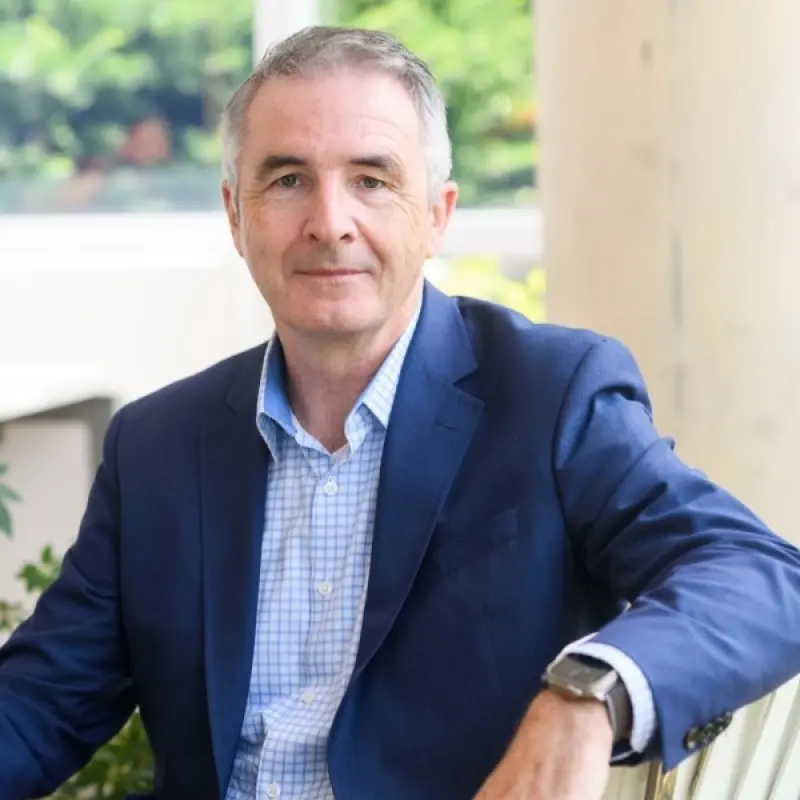
>> Welcome back to theCube, I'm John Furrier, host here in our Palo Alto studio. This is our third annual AI Leaders Infrastructure Summit. Of course, we have a party, 180 people getting together together tonight for our pool party reception, where people are going to interact, share their knowledge. As the AI infrastructure continues to be built out, I always choose my co -host filling in for Dave Vellante. Our next guest is Alan Butler, Chief Business Officer at SF Compute. Also the youngest ever employee at Sun Microsystems back in the day, we were just having a great retro throwback. Alan, great to see you on theCUBE. Thanks for coming on.
Alan Butler
>> Pleased to meet you guys.
John Furrier
>> You got your shirt, you got the swag there. Good to have you here.
Howie Xu
>> Good to have you advertising, San Francisco Compute Company. Yeah, we've got no outbound sales and marketing. It's all inbound. And so this is the marketing.
John Furrier
>> Yeah, let's get into it. I mean, obviously, the little plug about Sun, I brought that up intentionally because, you know, the computer industry was really built on the backs of a few companies. Sun was one of them. A lot of Berkeley DNA, a lot of Stanford DNA, but that built that out. But we're seeing a revolution again happening now that feels the same but bigger, highly accelerated, a lot of new infrastructure enabling new kinds of things. That's what we're in the middle of. What are you up to? What's your take on this, given your history? You're a historian and an executive. What's your take? I've been called worse.
Alan Butler
>> It's a bit of back to the future, right? It's definitely a bit of back to the future. We should all go back and watch that movie, I guess, from years ago. Take a watch. That's all I need is to power that car.
John Furrier
>> Yeah, yeah. Yeah, we live in DeLorean. Another Irish car. I mean, now we have gigawatt factories. I mean, we're in an AI factory revolution.
Alan Butler
>> Yeah, we are. And the pace of change is off the charts. I've been fortunate, actually, because Scott actually was involved in Lambda in 2019 and joined the company in 21 and moved on and helped sell a company to NVIDIA two years ago called Brev .dev, who's doing great for the developer community. But the core of the basics of it goes back to the early, early days. You know, Sun and other companies like Sun that were very innovative and trying to drive solutions in a way that people could consume in a transparent, secure manner.
John Furrier
>> How would you explain this market? Because it's a lot of things kind of coming together at the same time. It's not just, you know, compute, networking, storage. storage. We've seen that before with cloud. Then you got unbundled. Now you have user interface change. That feels a lot like a revolution. You have the data layer completely changing, given the user change. And then lower level at the semi, the density of the servers, rack scale systems are the new server. It's a bunch of servers, a lot of switches in that one scale -up system. That's just the racks. That's not including the scale out and scale across stuff going on. So So a lot of new componentry, architecture changes. How do you explain that given the magnitude of this revolution?
Alan Butler
>> Well, the definition of a FRU has changed, Field Replaceable Unit. It feels like it's half the rack as opposed to a component, right? You know, I think we're really back to basics. We're back to basics, and it's back to the world of hybrid, right? Jensen talks about it at NVIDIA, Michael Dell talks about it at Dell. It's a hybrid world that I don't believe ever went away, actually. It's just that the appetite and the risk profile for who's willing to jump in and lean in. We're in the Bay Area, right? So we've got the 49ers, and it feels a little bit like the gold rush on steroids, and the pace is just off the charts.
John Furrier
>> The demand, obviously, is there. How do you look at what you guys are doing? Explain your business that you guys are going after. This velocity, the architecture, the solutions, the supply chain challenges. The computing architectures are different but need to be high -performing. What are you guys up to?
Alan Butler
>> Yeah, we at the San Francisco Compute Company, you know, we started out by accident two and a half years ago. We're having a cluster that we figured out we couldn't use all of and we had to sell some of. So we started partitioning, the team started partitioning off pieces of it to be able to rent out for when they weren't using it to help pay the bill. And that was the kind of part of the genesis of how the company came to be. How many cards? Thousands of them? No, it was small. It was a rack. Even that? Oh yeah, yeah, yeah. Bare bones, right? Right. And and one of my colleagues, Eric Park, who is the CTO of San Francisco Compute Company at the time, was the CEO of Voltage Park and involved in that. And an SF compute was dealing with Lambda and they were dealing with Voltage Park, which is kind of a small circle. Right. And all of a sudden they get creative on how to pay the bills, how to partition off pieces of compute when they weren't using it. And that was the genesis of having a compute layer to where you can rent out on short -term provisioning that became then the basis of, in essence, a marketplace. And we don't like the word marketplace in all honesty. The New York Times called us the Airbnb of GPU compute from last December. It's not a bad analogy, but there's a lot of marketplace companies that are flipping GPUs over a fence with no SLAs behind it. And everything we do has an SLA standing behind it with a data center provider. So there's not a whack -a -mole when it comes to, I have an outage, go call someone. So we've started off with that. We closed Series A back in November when I joined the company. We went for 40 million on a 300 million valuation. We've grown 18x in revenue in the last 12 months. 100 % of it is inbound, so we've got no up -hound in that context.
John Furrier
>> So inbound means that demand is huge, and then how long do you think the party is going to last? Why?
Alan Butler
>> Well, I grew up and I lived through, I grew up at Sun and I lived through the dot -com, as we all did, right? And the 401K is with us and everything else. I don't know why I don't know, but I think you've got to be in the game and you got to plan for the downside, not hope it doesn't happen or hope you get out. Because, you know, whether that's a 5 % or a 35 % drop, I think you just plan for it. I actually really like our position because when you look at a neocloud world and if you're someone like NVIDIA and you're looking at someone like CoreWeaver or Lambda, they're at the top of the pyramid trying to sell, in essence, 10 deals for 10 billion each for five -year contracts, hypothetically, but it's a low -volume, high -dollar model. We're at the bottom of that pyramid working up, doing a high -volume, low -cost model, right, for shorter -term capacities. You can compute with us, subject to availability, one hour for one node, right? So you're more diversified.
John Furrier
>> Far more diversified. Low volume serving just a small number of the labs, but for you, serve a lot of, which model do you think is going to be for the next three, five years? If you had the choice.
Alan Butler
>> I like our model from one hour to three years, and I think the higher risk is years four and five. We're building this with the right SLAs and with the right financial profile. We're the only ones in the industry that allows you to resell out of your commitment. So if you come to us hypothetically for six months for 100K worth of H100s, and you decide, ah, three months I needed three months worth, or I only need 50K worth, we'll help you take that back. Now, you're not getting out of your obligation. We'll remarket it back to our marketplace. And now we've done a small percentage on the original resell, and we've done another small percentage on the new resell. So now it's a gift to keep something given, and that's very palatable and very powerful. You get those costs back.
John Furrier
>> Talk about the SLA piece because there's two different approaches. There's I'm going to stand up a bunch of stuff and sell it to the hyperscalers. And there's I'm going to stand up a bunch of stuff and actually make a business out of it and go to either enterprises or Neo clouds for capacity offload. And those are workflows, those are engineered systems. It's not like, hey, bulk raw GPUs, go configure it. It's going to have to have the software control plane. they don't want to run ages on some workload, deterministic workloads. Is that how you see you guys doing it?
Alan Butler
>> Yeah, we're extremely opinionated on the cluster we will onboard. And so when we go to a, let's call it new supplier, which we've got over a dozen so -called suppliers, which is data centers which compute capacity today in various stages, we've got a very strong technical opinion on what is minimum acceptable, including what's with InfiniBand. We need the bare metal provision and we need certain access that not everyone outside of us require. But that's because we tie it directly back to the SLA, right? And we want to stand behind our two nines and three nines capabilities that we live with. And so it's very important that we're pretty opinionated upon it.
John Furrier
>> You know, I would have many conversations and one of my revelations from my conversations today was the notion of single tenant, multi -tenant world. And we've been kind of talking about it, but I kind of locked in on this now because it's clear, I'd love to see if you agree or not, but to me it's clear that multi -tenancy is critical on AI -like workloads because that's what cloud does. You can do virtual private networks, you can do all those things like microservices to get them in there, because it's faster.
Alan Butler
>> What's your reaction to that? Do you agree? Yeah, multi -tenancy, absolutely. With the right security provisions in place, which all of it, frankly, are table stakes, they're not negotiable, right? And we're helping shape some of that. We have to put a volume in place for scale, right? And to be relevant, not as a one -trick pony or a snowflake. And multi -tenancy is absolutely a requirement.
John Furrier
>> On agents, I was riffing on, this is just an early thought, but I was riffing on the idea that, well, okay, multi -tenancy means company A, company B can be multi -tenant, but inside their own company, they have multi -tenancy of agents, because agents act as agency. And so you're starting to see now multi -tenancy move to agentic workflows. Thoughts on that, how that comes in from an enablement standpoint? Does that change the nature of SF computes, thinking around how you provision and scale up?
Alan Butler
>> Yeah, I'll have to have Eric on with me on that one, or CTO, but what I will say to you is noisy neighbors and security and division of everything and separation is really important. And having the compliance security around it is a no -brainer, right? And it's stuff that people are not paying enough attention to, actually.
John Furrier
>> Yeah, and security's huge.
Alan Butler
>> So you mentioned that you are the Airbnb for GPUs, right? Well, the New York Times called us that, but yeah. Okay, so, but what about the rest? Like, do you see that a GPU may become more and more or sort of a less scarce resource, and the memory, networking, storage. What do you see? I'm pretty sure all of them are still scarce resources, but how do you see the evolution at this point?
John Furrier
>> You know, you're dealing with what's long pole in the tent. I had two conversations with a tier one OEM today, and you're dealing with what am I doing with networking, and we've actually been strategically buying ahead some networking that gets out of some of that long pole in the tent element. So network is definitely one of the lampposts. Yeah, and I think you have to plan for it to be available, right? Today it's networking, tomorrow it's something else. So you just have to deal with that, and in some ways, back to 1849, it feels like a bit of combination of Gold Rush days and Las Vegas gambling.
John Furrier
>> It's some picks and shovels for that blackjack. That's right. On your customers, take us through the motion. Who are you targeting? what's the ideal customer for you? Because you're seeing a lot of different diversity of whether enterprises leaning in. It's usually different by company, seeing physical AIs coming in for robotics. But a lot of on -premises, but also distributed computing is in play. You said hybrid. Yeah. Hybrid is essentially now the standard. Essentially everyone has their own cloud, so why not connect through a service? What's the, who's the customer right now and as you go to the one hour to three year contracts, which I think makes sense, no one really knows what they're going to do in year four and five.
John Furrier
>> Well, maybe there's two answers to that I'll give you. One is we have a lot of well -funded AI startups. A lot of them are headquartered in San Francisco, but that's where the genesis of it, hence the San Francisco Compute Company. But they're after us for compute. We're trusted. We've got a team that's well -recognized technically and so forth. But there's a second bucket that's meaningful. full. NVIDIA's got 40 ,000 inception members today. That's everyone from two -person startups globally to series C, D, and E. I'm going to suggest that 90 -odd percent of them are underserved or unserved today. When they go to get compute, they've got to go off and say, where can I get it? And they don't have the ability to buy five -year contracts. And there's quite a bit of collaboration going on between us and NVIDIA on how to help fulfill some of that.
John Furrier
>> That sounds a lot like AWS AWS around 2012, 2013, a lot of the underserved startups buy a super micro box, get a data center, put it in a shared rack, good luck with that, that's a pain in the ass, put my credit card down. Open stack, back end. Go to AWS, much easier for a startup, hey, I don't even know what I'm building, but I got some traction, I don't want to stop. Yeah, we, we, we. There's a lot of the startups who are like, in that version of AI, it's like, oh, I got 10 ,000 customers, what do I do?
John Furrier
>> Right, and whether it's on the supply side or on the demand side for us, because we're looking at both, right? We find it really fascinating. We have got to talk to a lot of people that don't know what they're talking about on both sides of the fence to get to the people who do. And we end up having a lot of almost on -the -job training and education on configuration, compute, elasticity, availability, and oh, by the way, the pricing demands and the pricing models. They want it tomorrow. They want it today. Yeah, yesterday.
John Furrier
>> Yeah, and it is truly crazy. And what's your strategy now as you guys look at this? Because obviously the demand curve's there, you're balancing both sides, supply chain is constrained, so you have to engineer around those. What's the focus, what are you optimizing for?
John Furrier
>> Yeah, I think there's a couple of things. One is, number one, it's all about the customer, right? I mean, it needs to be about the customer, and to do that, it means you're delivering delivering a high quality service that can be counter on, right? And you've got SLAs and some reasonable penalties to back up what you're talking about. A. B, it's a very heavily underserved community globally, right? We were just at the RAISE Summit event in Paris a couple of weeks ago. We've done Dell World a few weeks or a month or two before that. AWS reInvent in the list. GTC, we had a boot at the inception area at GTC. Open Compute's coming up. Super Compute is coming up. We'll be at Super Compute. Exactly right, right. And so it's a crazy appetite for what's going on. But it still goes back to basics. And it goes back to basics on the technical components, the technical team, the pricing ability, and then, frankly, from our point of view, the unique resale capability we have that others don't have is very, very appealing. And frankly, our OEM strategies are aligned very well with some of the key OEM providers.
Alan Butler
>> What is the primary pinpoint that they have with the other solutions, like a hyperscaler or fireworks of the world? Is that a cost or the privacy? What is the thing that drives them to go to you?
John Furrier
>> I think it's speciality, more of a focus. if you would, right? Not trying to be all things to everyone. And I'm sure there'll be plenty of opportunity when someone will pivot from one orchestration to the other for multiple reasons. But I do think the landscape is shifting. And I think, and you have to plan for, I mean, AWS is a great company, right? And JCP and the rest goes on. Great companies that will absolutely be around. I think they're learning some things from the likes of us as well.
John Furrier
>> Yeah, and you've got to build that durable business. Amazon started out that's basic building blocks, just the ease of use for developers, underserved market, they build high level services, build out scale. Similar thing going on with the Neo Clouds, and it's interesting, we're just riffing on the whole Sun. Back in the days, you had to design the systems, manufacture them, put them together, sell them, support them, run a business. That was a real - An upgrade. That was a real, we got some service revenue in there. But that was the business, and a lot of monetization conversations were seeing the same pattern, are in a little bit different scale, but like a Neo Cloud's got to stand up and they got to be in business. And this is now fundamentally, you mentioned going back to the basics, this isn't as easy as putting a SaaS app in an app store.
Alan Butler
>> No, it's not.
John Furrier
>> This is real physical gear, infrastructure. I mean, not the same as the old school days, but like it's the same concept. You spend a lot of cash ahead of bookings. Yeah. So get down to basics. What is that basic playbook? I see customer, but how do you guys think about this? Because we're kind of in a similar era.
Alan Butler
>> Well, I think it's not just NeoClouds, by the way. It's, for instance, NVIDIA's NCP partners, if you will. That's a big population that have compute already. Think about this. At Sun, we were doing this in the late 90s, utility computing. Yeah, I remember.
Howie Xu
>> Right? Great computing, utility computing. Uh -huh, right.
Alan Butler
>> Black computing in the 90s. And Project Black Box with the containers for the data centers, talking about back to the future. Here we are again. and I think that there is a lot of rinse and repeat that's highly appropriate to your sentiment, even if there's variances and differences logically, right? But the basics are the basics, and at the end of the day, if you're delivering a high quality solution that's reasonable value, then you will get sticky more than your IP.
John Furrier
>> Great. Alan, thanks for coming on theCUBE. Put a plug in for what you're working on. on what are you looking to do, hire customers, why they should they go to you guys, put a plug in.
Alan Butler
>> Appreciate it. Two things, if you're looking for H100s and above, now or over the next six months and beyond, give us a call, sfcompute .com, right? It's a website. If you've got capacity that is, in your opinion, underutilized, H100s and above, come to us and we'll help you improve your utilization in a very dynamic way that you cannot do and your own today.
John Furrier
>> Great, thanks for coming on, I appreciate it. And definitely, we should definitely do a session, get Scott McNeely on, we'll do a little sun throwback. Lot of parallels between the system revolution back at the Berkeley, Stanford days, East Coast, that early computer industry we're seeing kind of a redo, but in a whole modern way. It is. Thanks for coming on, I appreciate it. Thank you very much. I'm John Furrier, Howie Hsu, we're here. Our third annual AI Summit of AI Leaders here in the studio. I'm John Furrier, host of theCUBE, thanks for watching. Thank you.
>> Welcome back to theCube, I'm John Furrier, host here in our Palo Alto studio. This is our third annual AI Leaders Infrastructure Summit. Of course, we have a party, 180 people getting together together tonight for our pool party reception, where people are going to interact, share their knowledge. As the AI infrastructure continues to be built out, I always choose my co -host filling in for Dave Vellante. Our next guest is Alan Butler, Chief Business Officer at SF Compute. Also the youngest ever employee at Sun Microsystems back in the day, we were just having a great retro throwback. Alan, great to see you on theCUBE. Thanks for coming on.
Alan Butler
>> Pleased to meet you guys.
John Furrier
>> You got your shirt, you got the swag there. Good to have you here.
Howie Xu
>> Good to have you advertising, San Francisco Compute Company. Yeah, we've got no outbound sales and marketing. It's all inbound. And so this is the marketing.
John Furrier
>> Yeah, let's get into it. I mean, obviously, the little plug about Sun, I brought that up intentionally because, you know, the computer industry was really built on the backs of a few companies. Sun was one of them. A lot of Berkeley DNA, a lot of Stanford DNA, but that built that out. But we're seeing a revolution again happening now that feels the same but bigger, highly accelerated, a lot of new infrastructure enabling new kinds of things. That's what we're in the middle of. What are you up to? What's your take on this, given your history? You're a historian and an executive. What's your take? I've been called worse.
Alan Butler
>> It's a bit of back to the future, right? It's definitely a bit of back to the future. We should all go back and watch that movie, I guess, from years ago. Take a watch. That's all I need is to power that car.
John Furrier
>> Yeah, yeah. Yeah, we live in DeLorean. Another Irish car. I mean, now we have gigawatt factories. I mean, we're in an AI factory revolution.
Alan Butler
>> Yeah, we are. And the pace of change is off the charts. I've been fortunate, actually, because Scott actually was involved in Lambda in 2019 and joined the company in 21 and moved on and helped sell a company to NVIDIA two years ago called Brev .dev, who's doing great for the developer community. But the core of the basics of it goes back to the early, early days. You know, Sun and other companies like Sun that were very innovative and trying to drive solutions in a way that people could consume in a transparent, secure manner.
John Furrier
>> How would you explain this market? Because it's a lot of things kind of coming together at the same time. It's not just, you know, compute, networking, storage. storage. We've seen that before with cloud. Then you got unbundled. Now you have user interface change. That feels a lot like a revolution. You have the data layer completely changing, given the user change. And then lower level at the semi, the density of the servers, rack scale systems are the new server. It's a bunch of servers, a lot of switches in that one scale -up system. That's just the racks. That's not including the scale out and scale across stuff going on. So So a lot of new componentry, architecture changes. How do you explain that given the magnitude of this revolution?
Alan Butler
>> Well, the definition of a FRU has changed, Field Replaceable Unit. It feels like it's half the rack as opposed to a component, right? You know, I think we're really back to basics. We're back to basics, and it's back to the world of hybrid, right? Jensen talks about it at NVIDIA, Michael Dell talks about it at Dell. It's a hybrid world that I don't believe ever went away, actually. It's just that the appetite and the risk profile for who's willing to jump in and lean in. We're in the Bay Area, right? So we've got the 49ers, and it feels a little bit like the gold rush on steroids, and the pace is just off the charts.
John Furrier
>> The demand, obviously, is there. How do you look at what you guys are doing? Explain your business that you guys are going after. This velocity, the architecture, the solutions, the supply chain challenges. The computing architectures are different but need to be high -performing. What are you guys up to?
Alan Butler
>> Yeah, we at the San Francisco Compute Company, you know, we started out by accident two and a half years ago. We're having a cluster that we figured out we couldn't use all of and we had to sell some of. So we started partitioning, the team started partitioning off pieces of it to be able to rent out for when they weren't using it to help pay the bill. And that was the kind of part of the genesis of how the company came to be. How many cards? Thousands of them? No, it was small. It was a rack. Even that? Oh yeah, yeah, yeah. Bare bones, right? Right. And and one of my colleagues, Eric Park, who is the CTO of San Francisco Compute Company at the time, was the CEO of Voltage Park and involved in that. And an SF compute was dealing with Lambda and they were dealing with Voltage Park, which is kind of a small circle. Right. And all of a sudden they get creative on how to pay the bills, how to partition off pieces of compute when they weren't using it. And that was the genesis of having a compute layer to where you can rent out on short -term provisioning that became then the basis of, in essence, a marketplace. And we don't like the word marketplace in all honesty. The New York Times called us the Airbnb of GPU compute from last December. It's not a bad analogy, but there's a lot of marketplace companies that are flipping GPUs over a fence with no SLAs behind it. And everything we do has an SLA standing behind it with a data center provider. So there's not a whack -a -mole when it comes to, I have an outage, go call someone. So we've started off with that. We closed Series A back in November when I joined the company. We went for 40 million on a 300 million valuation. We've grown 18x in revenue in the last 12 months. 100 % of it is inbound, so we've got no up -hound in that context.
John Furrier
>> So inbound means that demand is huge, and then how long do you think the party is going to last? Why?
Alan Butler
>> Well, I grew up and I lived through, I grew up at Sun and I lived through the dot -com, as we all did, right? And the 401K is with us and everything else. I don't know why I don't know, but I think you've got to be in the game and you got to plan for the downside, not hope it doesn't happen or hope you get out. Because, you know, whether that's a 5 % or a 35 % drop, I think you just plan for it. I actually really like our position because when you look at a neocloud world and if you're someone like NVIDIA and you're looking at someone like CoreWeaver or Lambda, they're at the top of the pyramid trying to sell, in essence, 10 deals for 10 billion each for five -year contracts, hypothetically, but it's a low -volume, high -dollar model. We're at the bottom of that pyramid working up, doing a high -volume, low -cost model, right, for shorter -term capacities. You can compute with us, subject to availability, one hour for one node, right? So you're more diversified.
John Furrier
>> Far more diversified. Low volume serving just a small number of the labs, but for you, serve a lot of, which model do you think is going to be for the next three, five years? If you had the choice.
Alan Butler
>> I like our model from one hour to three years, and I think the higher risk is years four and five. We're building this with the right SLAs and with the right financial profile. We're the only ones in the industry that allows you to resell out of your commitment. So if you come to us hypothetically for six months for 100K worth of H100s, and you decide, ah, three months I needed three months worth, or I only need 50K worth, we'll help you take that back. Now, you're not getting out of your obligation. We'll remarket it back to our marketplace. And now we've done a small percentage on the original resell, and we've done another small percentage on the new resell. So now it's a gift to keep something given, and that's very palatable and very powerful. You get those costs back.
John Furrier
>> Talk about the SLA piece because there's two different approaches. There's I'm going to stand up a bunch of stuff and sell it to the hyperscalers. And there's I'm going to stand up a bunch of stuff and actually make a business out of it and go to either enterprises or Neo clouds for capacity offload. And those are workflows, those are engineered systems. It's not like, hey, bulk raw GPUs, go configure it. It's going to have to have the software control plane. they don't want to run ages on some workload, deterministic workloads. Is that how you see you guys doing it?
Alan Butler
>> Yeah, we're extremely opinionated on the cluster we will onboard. And so when we go to a, let's call it new supplier, which we've got over a dozen so -called suppliers, which is data centers which compute capacity today in various stages, we've got a very strong technical opinion on what is minimum acceptable, including what's with InfiniBand. We need the bare metal provision and we need certain access that not everyone outside of us require. But that's because we tie it directly back to the SLA, right? And we want to stand behind our two nines and three nines capabilities that we live with. And so it's very important that we're pretty opinionated upon it.
John Furrier
>> You know, I would have many conversations and one of my revelations from my conversations today was the notion of single tenant, multi -tenant world. And we've been kind of talking about it, but I kind of locked in on this now because it's clear, I'd love to see if you agree or not, but to me it's clear that multi -tenancy is critical on AI -like workloads because that's what cloud does. You can do virtual private networks, you can do all those things like microservices to get them in there, because it's faster.
Alan Butler
>> What's your reaction to that? Do you agree? Yeah, multi -tenancy, absolutely. With the right security provisions in place, which all of it, frankly, are table stakes, they're not negotiable, right? And we're helping shape some of that. We have to put a volume in place for scale, right? And to be relevant, not as a one -trick pony or a snowflake. And multi -tenancy is absolutely a requirement.
John Furrier
>> On agents, I was riffing on, this is just an early thought, but I was riffing on the idea that, well, okay, multi -tenancy means company A, company B can be multi -tenant, but inside their own company, they have multi -tenancy of agents, because agents act as agency. And so you're starting to see now multi -tenancy move to agentic workflows. Thoughts on that, how that comes in from an enablement standpoint? Does that change the nature of SF computes, thinking around how you provision and scale up?
Alan Butler
>> Yeah, I'll have to have Eric on with me on that one, or CTO, but what I will say to you is noisy neighbors and security and division of everything and separation is really important. And having the compliance security around it is a no -brainer, right? And it's stuff that people are not paying enough attention to, actually.
John Furrier
>> Yeah, and security's huge.
Alan Butler
>> So you mentioned that you are the Airbnb for GPUs, right? Well, the New York Times called us that, but yeah. Okay, so, but what about the rest? Like, do you see that a GPU may become more and more or sort of a less scarce resource, and the memory, networking, storage. What do you see? I'm pretty sure all of them are still scarce resources, but how do you see the evolution at this point?
John Furrier
>> You know, you're dealing with what's long pole in the tent. I had two conversations with a tier one OEM today, and you're dealing with what am I doing with networking, and we've actually been strategically buying ahead some networking that gets out of some of that long pole in the tent element. So network is definitely one of the lampposts. Yeah, and I think you have to plan for it to be available, right? Today it's networking, tomorrow it's something else. So you just have to deal with that, and in some ways, back to 1849, it feels like a bit of combination of Gold Rush days and Las Vegas gambling.
John Furrier
>> It's some picks and shovels for that blackjack. That's right. On your customers, take us through the motion. Who are you targeting? what's the ideal customer for you? Because you're seeing a lot of different diversity of whether enterprises leaning in. It's usually different by company, seeing physical AIs coming in for robotics. But a lot of on -premises, but also distributed computing is in play. You said hybrid. Yeah. Hybrid is essentially now the standard. Essentially everyone has their own cloud, so why not connect through a service? What's the, who's the customer right now and as you go to the one hour to three year contracts, which I think makes sense, no one really knows what they're going to do in year four and five.
John Furrier
>> Well, maybe there's two answers to that I'll give you. One is we have a lot of well -funded AI startups. A lot of them are headquartered in San Francisco, but that's where the genesis of it, hence the San Francisco Compute Company. But they're after us for compute. We're trusted. We've got a team that's well -recognized technically and so forth. But there's a second bucket that's meaningful. full. NVIDIA's got 40 ,000 inception members today. That's everyone from two -person startups globally to series C, D, and E. I'm going to suggest that 90 -odd percent of them are underserved or unserved today. When they go to get compute, they've got to go off and say, where can I get it? And they don't have the ability to buy five -year contracts. And there's quite a bit of collaboration going on between us and NVIDIA on how to help fulfill some of that.
John Furrier
>> That sounds a lot like AWS AWS around 2012, 2013, a lot of the underserved startups buy a super micro box, get a data center, put it in a shared rack, good luck with that, that's a pain in the ass, put my credit card down. Open stack, back end. Go to AWS, much easier for a startup, hey, I don't even know what I'm building, but I got some traction, I don't want to stop. Yeah, we, we, we. There's a lot of the startups who are like, in that version of AI, it's like, oh, I got 10 ,000 customers, what do I do?
John Furrier
>> Right, and whether it's on the supply side or on the demand side for us, because we're looking at both, right? We find it really fascinating. We have got to talk to a lot of people that don't know what they're talking about on both sides of the fence to get to the people who do. And we end up having a lot of almost on -the -job training and education on configuration, compute, elasticity, availability, and oh, by the way, the pricing demands and the pricing models. They want it tomorrow. They want it today. Yeah, yesterday.
John Furrier
>> Yeah, and it is truly crazy. And what's your strategy now as you guys look at this? Because obviously the demand curve's there, you're balancing both sides, supply chain is constrained, so you have to engineer around those. What's the focus, what are you optimizing for?
John Furrier
>> Yeah, I think there's a couple of things. One is, number one, it's all about the customer, right? I mean, it needs to be about the customer, and to do that, it means you're delivering delivering a high quality service that can be counter on, right? And you've got SLAs and some reasonable penalties to back up what you're talking about. A. B, it's a very heavily underserved community globally, right? We were just at the RAISE Summit event in Paris a couple of weeks ago. We've done Dell World a few weeks or a month or two before that. AWS reInvent in the list. GTC, we had a boot at the inception area at GTC. Open Compute's coming up. Super Compute is coming up. We'll be at Super Compute. Exactly right, right. And so it's a crazy appetite for what's going on. But it still goes back to basics. And it goes back to basics on the technical components, the technical team, the pricing ability, and then, frankly, from our point of view, the unique resale capability we have that others don't have is very, very appealing. And frankly, our OEM strategies are aligned very well with some of the key OEM providers.
Alan Butler
>> What is the primary pinpoint that they have with the other solutions, like a hyperscaler or fireworks of the world? Is that a cost or the privacy? What is the thing that drives them to go to you?
John Furrier
>> I think it's speciality, more of a focus. if you would, right? Not trying to be all things to everyone. And I'm sure there'll be plenty of opportunity when someone will pivot from one orchestration to the other for multiple reasons. But I do think the landscape is shifting. And I think, and you have to plan for, I mean, AWS is a great company, right? And JCP and the rest goes on. Great companies that will absolutely be around. I think they're learning some things from the likes of us as well.
John Furrier
>> Yeah, and you've got to build that durable business. Amazon started out that's basic building blocks, just the ease of use for developers, underserved market, they build high level services, build out scale. Similar thing going on with the Neo Clouds, and it's interesting, we're just riffing on the whole Sun. Back in the days, you had to design the systems, manufacture them, put them together, sell them, support them, run a business. That was a real - An upgrade. That was a real, we got some service revenue in there. But that was the business, and a lot of monetization conversations were seeing the same pattern, are in a little bit different scale, but like a Neo Cloud's got to stand up and they got to be in business. And this is now fundamentally, you mentioned going back to the basics, this isn't as easy as putting a SaaS app in an app store.
Alan Butler
>> No, it's not.
John Furrier
>> This is real physical gear, infrastructure. I mean, not the same as the old school days, but like it's the same concept. You spend a lot of cash ahead of bookings. Yeah. So get down to basics. What is that basic playbook? I see customer, but how do you guys think about this? Because we're kind of in a similar era.
Alan Butler
>> Well, I think it's not just NeoClouds, by the way. It's, for instance, NVIDIA's NCP partners, if you will. That's a big population that have compute already. Think about this. At Sun, we were doing this in the late 90s, utility computing. Yeah, I remember.
Howie Xu
>> Right? Great computing, utility computing. Uh -huh, right.
Alan Butler
>> Black computing in the 90s. And Project Black Box with the containers for the data centers, talking about back to the future. Here we are again. and I think that there is a lot of rinse and repeat that's highly appropriate to your sentiment, even if there's variances and differences logically, right? But the basics are the basics, and at the end of the day, if you're delivering a high quality solution that's reasonable value, then you will get sticky more than your IP.
John Furrier
>> Great. Alan, thanks for coming on theCUBE. Put a plug in for what you're working on. on what are you looking to do, hire customers, why they should they go to you guys, put a plug in.
Alan Butler
>> Appreciate it. Two things, if you're looking for H100s and above, now or over the next six months and beyond, give us a call, sfcompute .com, right? It's a website. If you've got capacity that is, in your opinion, underutilized, H100s and above, come to us and we'll help you improve your utilization in a very dynamic way that you cannot do and your own today.
John Furrier
>> Great, thanks for coming on, I appreciate it. And definitely, we should definitely do a session, get Scott McNeely on, we'll do a little sun throwback. Lot of parallels between the system revolution back at the Berkeley, Stanford days, East Coast, that early computer industry we're seeing kind of a redo, but in a whole modern way. It is. Thanks for coming on, I appreciate it. Thank you very much. I'm John Furrier, Howie Hsu, we're here. Our third annual AI Summit of AI Leaders here in the studio. I'm John Furrier, host of theCUBE, thanks for watching. Thank you.