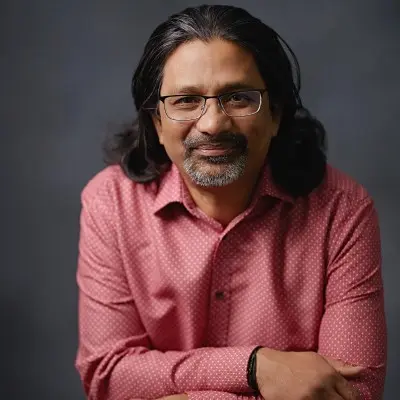
This episode examines rack-scale platform intelligence, security and efficiency
for robotics and artificial intelligence AI infrastructure. Gopi Sirineni of
Axiado, founder and chief executive officer, appears on theCUBE and NYSE Wired
Robotics and AI Infra Leaders series at the third annual AI Leaders Summit in
Palo Alto. Sirineni discusses Axiado’s approach to embedding platform
intelligence into silicon and delivering a full stack for rack-scale AI
deployments. They describe integrated hardware, firmware and AI engines,
built-in cybersecurity, dynamic power and cooling controls and how these
components work together to improve utilization. Sirineni states Axiado delivers
10–30% more tokens per dollar by offloading platform management to silicon-level
AI engines and optimizing cooling, power and runtime attestation. They highlight
reduced downtime, faster recovery, multitenancy security at rack and pod scale
and readiness for Open Compute Project OCP qualification. theCUBE analysts
observe that this approach addresses urgent economic and operational challenges
in AI infrastructure. theCUBE Research segment is hosted by John Furrier and
Gabe Olave, who guide the technical and market conversation.
Forgot Password
Almost there!
We just sent you a verification email. Please verify your account to gain access to
theCUBE + NYSE Wired: AI Factories - Data Centers of the Future. If you don’t think you received an email check your
spam folder.
Sign in to AI Factories - Data Centers of the Future.
In order to sign in, enter the email address you used to registered for the event. Once completed, you will receive an email with a verification link. Open the link to automatically sign into the site.
Register for AI Factories - Data Centers of the Future
Please fill out the information below. You will receive an email with a verification link confirming your registration. Click the link to automatically sign into the site.
You’re almost there!
We just sent you a verification email. Please click the verification button in the email. Once your email address is verified, you will have full access to all event content for AI Factories - Data Centers of the Future.
I want my badge and interests to be visible to all attendees.
Checking this box will display your presense on the attendees list, view your profile and allow other attendees to contact you via 1-1 chat. Read the Privacy Policy. At any time, you can choose to disable this preference.
Select your Interests!
add
Upload your photo
Uploading..
OR
Connect via Twitter
Connect via Linkedin
EDIT PASSWORD
Share
Forgot Password
Almost there!
We just sent you a verification email. Please verify your account to gain access to
theCUBE + NYSE Wired: AI Factories - Data Centers of the Future. If you don’t think you received an email check your
spam folder.
Sign in to AI Factories - Data Centers of the Future.
In order to sign in, enter the email address you used to registered for the event. Once completed, you will receive an email with a verification link. Open the link to automatically sign into the site.
Sign in to gain access to theCUBE + NYSE Wired: AI Factories - Data Centers of the Future
Please sign in with LinkedIn to continue to theCUBE + NYSE Wired: AI Factories - Data Centers of the Future. Signing in with LinkedIn ensures a professional environment.
Are you sure you want to remove access rights for this user?
Details
Manage Access
email address
Community Invitation
Gopi Sirineni, Axiado
This episode examines rack-scale platform intelligence, security and efficiency
for robotics and artificial intelligence AI infrastructure. Gopi Sirineni of
Axiado, founder and chief executive officer, appears on theCUBE and NYSE Wired
Robotics and AI Infra Leaders series at the third annual AI Leaders Summit in
Palo Alto. Sirineni discusses Axiado’s approach to embedding platform
intelligence into silicon and delivering a full stack for rack-scale AI
deployments. They describe integrated hardware, firmware and AI engines,
built-in cybersecurity, dynamic power and cooling controls and how these
components work together to improve utilization. Sirineni states Axiado delivers
10–30% more tokens per dollar by offloading platform management to silicon-level
AI engines and optimizing cooling, power and runtime attestation. They highlight
reduced downtime, faster recovery, multitenancy security at rack and pod scale
and readiness for Open Compute Project OCP qualification. theCUBE analysts
observe that this approach addresses urgent economic and operational challenges
in AI infrastructure. theCUBE Research segment is hosted by John Furrier and
Gabe Olave, who guide the technical and market conversation.
>> Welcome back everyone to theCUBE studio here in Palo Alto, of course we have our NYSE Wired Studio connecting Silicon Valley to Wall Street. We're here for all day theCUBE coverage. This is our third annual AI leaders summit here in Palo Alto. Of course, big reception tonight, 180 leaders seeing each other again for the third time, some new faces but they're all leaders making it happen from the Silicon all the way up to the models. We're seeing the AI infrastructure build out going on at epic proportions. We're seeing a demand curve that's unprecedented, token growth, unprecedented, companies growing at exponential scale. We haven't seen companies like OpenAI and Anthropic ever in the history. as they continue to bring in this new era. A lot is still going on, a lot more enablement, a lot more acceleration. Gopi is here, he is the CEO, Axiado founder. He's been a part of our program from day one. Welcome back. Things are happening, you got progress happening. Good to see you.
Gopi Sirineni
>> Good to see you guys, nice to be here.
John Furrier
>> Your TCU really meets the needs in the cybersecurity space we talked about in your first time on. You really were kind of keeping your cards close to the vest. Last year we see the results, you get the silicon, you get the cybersecurity built in, but now you got the software stack. Give us the update, what's going on? Give us the latest and greatest with you guys.
Gopi Sirineni
>> Yeah, so we'll just start a little bit of recap of what we make. We make a control and management platform with security, platform security for that. This goes into every blade, every compute tray, every switch tray no matter what you're using in the racks. So, one, we started with the integration of all these functions and then intelligence, these are patented algorithms, what we did. Now take it to the next level. So if you take a server for the last 20 years, the CPU, GPU, and DPU, and the memory, everything is changed to 10x of compute power, different variations. Innovation was, quadruple and all that. But the thing not touched is the controller management, which used to be on a platform only. That's what we envision the company to start with. And not just the blade only, but we could actually do this with the intelligence of what we can do on the blades to each rack, each blade to the rack level and the pod level also. There is a tremendous need in this market. In olden days, whole rack management is done by the big CSPs. They have thousands of people for decades of experience been doing for a long time, including the physical security. So they build that. That's what they want. But as you see the trend of AI world, you see, NVIDIA making racks by themselves, AMD making racks, SambaNova making racks.
John Furrier
>> Rack scale is what people are doing.
Gopi Sirineni
>> Everybody's making, Arm is making racks also. So when they build all this stuff, and they have the intelligence to make the world compute and how many billions of parameters they can do, but then, their security and platform management is not the innovation they have. And we are the story for that. We are providing now is expansion, should be not just a silicon plug -in or a cloud plug -in to each blade but full rack management so with that management and full stack solutions call it a rack level management or data center infrastructure management combinations we could be complementary to what is available today and all this total together i wanted to start saying this and this is the key tagline for us we could give you a 10 to 30 percent more tokens per dollar you spend this is the music for every neocloud in the market and how we do it, we do the efficiency and intelligence what we can provide in a platform to scale up to the rack and then a compute pod level. So that's built in security combinations.
John Furrier
>> First of all, 10 to 30 % more tokens for the same dollar you're spending today, that cuts the line, you go right to the front. I'm sure they're opening, come on, come on in, you're first in. What happens next? Because it's not obvious, but people see the racks, they see the token per dollar curves, okay, NVIDIA, AMD, We saw Helios, another rack scale, Dell AI factories are booming. What is it about your approach that makes it different? Why, what happens next? All right, you guys sit in all the racks, how do you engage, say a Neo cloud, who by the way are price-sensitive, given GPU costs. So they have economics. Yeah. So they're going to love that story, but how do they take the next step?
Gopi Sirineni
>> So overall today, most of the efficiency management on the racks is done in the software. So either it's running on a CPU or whether it's for inference or the training done on the GPU side. We're bringing that intelligence into a silicon level and it will be offloaded off of your GPUs, CPUs. We'll be running on it. We have the AI engines on top. We have ATOPs engines working on our own silicon. So we do a granular, very detailed, we're already connected to everything on the blade itself. CPU, GPU and all these other root of trust functions, they all need to talk to us. So we're monitoring the system itself, including the fans, liquid cooling and all that. So number one, we manage the efficiency by managing the fans and fan controls and liquid cooling and all that. And based on an as needed basis, this will give you some efficiency and overall you save the power. And then two, we do dynamic frequency and voltage scaling for the platform. That will give you when a GPU is based on the workload, you can tune it that way. And today again, that's done mostly by the software on the top level. We can offload that. We are the only one that can do that because we are the platform management. Every component on the blade is connected to you. Every component on the rack is connected to you. That is a benefit for us. There's nothing in the market like this. So we are re-envisioning this market to be able to grow. So that's why we're able to do this.
John Furrier
>> there's an old saying in Silicon Valley in VC circles and entrepreneurial circles that invest in what looks different. You guys look different. and we had this conversation before, because a lot of people want to put you in a category, the old school way, are you a dog or a cat? You make silicon, you got cyber security, you have a software stack, you're in a controller-like position, and most people think about controllers like, okay, controller manages the resource. You guys have a lot. How do you explain the company? Because now in this new era, there's no category. It's hard to put it in a category. Okay, management, but you're a silicon chip too.
Gopi Sirineni
>> Yeah.How do you explain that to people? So, at the end of the day, we are a silicon company, so we build the intelligence in the silicon. So that silicon goes into, you need some memory around it to make some functionality. It's a subsystem. So we build a platform management, intelligence management as a subsystem. And that subsystem goes with a stack in there. We have firmware, software combinations, AI models. We will provide a customer with a card and then complete stack on that, along with our foundation models for the AI engines to know what to do. and then we allow the customers to write their own AI agents to work on top of it, along with what we provide as default. So it's a full set.
John Furrier
>> Just to clarify, you can offer any hardware configuration that they need. You want a card, you get a card. You want some silicon, you get some silicon.
Gopi Sirineni
>> Either way, yeah. So mostly right now business is on the card because we bring something to the table, and there is a lot of training that needs to be done on that. Models come up, so even big customers are taking the card directly from us to work with. Are we open for silicon? Yeah, definitely on that. At this point, the card with a full stack, it's offloaded from people. So think this way, right? We're not a mainstream AI, but we are using the same models of AIs and everything, functionality that the whole world is buzzing about, and applying to the security and platform management and platform intelligence to a blade and to a rack and to the power level. That's the difference.
John Furrier
>> And you inject intelligence so that your function, that's where you get the TCO advantage.
Gopi Sirineni
>> Exactly. Exactly. So because of that efficiency management per blade, how the GPU operates and when this is free. CPUs today are orchestrators for GPUs and the functions. So that orchestration, we can give you a lot of efficiency by giving platform intelligence. So you can compare this in the company. As I said, we're not a mainstream AI, but with AI driven into the AI market, we're on every computer, every switch, every PDU, every inference engine, whether it's a training engine, it doesn't matter for us. Any compute we can go on and be part of it. So companies like Astera are similar to what they're trying to do, not in the mainstream AI, but they are the connectivity solution.
John Furrier
>> I got the hardware, let's get into the software stuff because this is where I think the real value is for you guys. So take us through that. Standard software packages, standards -based interface, you have those. What about things like resilience, recovery,
Gopi Sirineni
>> Exactly.
John Furrier
>> Root of trust? These are questions that come up for mostly cybersecurity companies.
Gopi Sirineni
>> Yeah, you hit it, John, perfectly on this. Not just a general world of software we're talking about. When we say platform management, that's what comes up to me. This is the biggest problem mostly CSPs are addressing and solving. When a system is set up in here, there is a configuration you need to do. It's when you need to do it, whether you want to use it for that system to be a root of trust means owned by who. So this platform is owned. When a firmware update needs to happen to it, whoever owns the platform needs to do the update. Dell made a big business out of that. So something called commissioning, decommissioning, these things. It means you take a system, if the lifetime is done, you take it away. But there's a lot of secrets in that take it away. The no -IT guy goes and turns up properly, cleans up. So with us, we were able to do that clearly, and you take our card away, pretty much intelligence goes away. That's a dummy system afterwards. So that's the one...
John Furrier
>> That's a huge benefit, is that you don't have leakage.
Gopi Sirineni
>> Exactly. No leakage. and recycle cost now you don't need to take a whole system to be recycled and that's one the two is enablement of that when you wanted to be able to somebody attacked you and now you paid money and you got the system back but you can't use the system because there is possible leakage on that so you throw away the whole system but with us, you could take the card away that system is reusable you don't need to throw away the computer and all that so there's a cost advantage for us being there. And we are the brains for that. So there is no true motherboard in the market today. Everything is pluggable. We are the first board to boot up, means we are the ones enabling everybody. So we don't call it our motherboard, but we are the key attestation board for every platform. So that's a new trend in the market we're creating. I'm sure there are more...
John Furrier
>> And you see everything, you know what's going on.
Gopi Sirineni
>> Exactly.
John Furrier
>> That's where the software stack comes in.
Gopi Sirineni
>> Exactly.
John Furrier
>> So you got the silicon, you got cybersecurity built in from day one, that's grounded with the silicon. On the software stack, how does this appeal to, say, an operator, say I'm a Neo cloud. I got one side I'm taking calls, more GPUs, build out faster, now I have to operate. Yeah. The operation is down time.
Gopi Sirineni
>> This is where it gets key. because of how we partition the silicon and et cetera, so there is no downtime. If you need to do a firmware update, we can, part of the chip is active and taking care of the actions on a daily basis of what needs to be done. The other part then gets a firmware update and attestation, verify that, checking out, all that is true, right, all in a secure way, then implement that to be in the running. So there's something called all the security platform management used to be only boot time before. And we are now taking it from a boot time to runtime applications while everything is running. And at a granular level, I can tell you, we're the only one in the world can tell you when something is wrong happening, whether it's by port, by user, by app, by LLM, by anything.
John Furrier
>> And what does that translate to for the benefit for the operator?
Gopi Sirineni
>> So the downtime. Downtime is less. Recovery is faster for you. You don't need to bring down the system. Basically, business is not going down. So I'm giving you uptime for you, efficiency we talked about that I can give you. So overall, when you count this.
John Furrier
>> The money machine stops, basically, because that's their business.
Gopi Sirineni
>> Exactly. And then by overall efficiency of the platform also, I'm giving you, we talked about it. We already showed without you changing anything, plug in my card, you get the 10 % efficiency, 10 % more tokens per dollar.
John Furrier
>> I heard 30 is a number.
Gopi Sirineni
>> You can go to 30 based on the workload models. If you can work with me on how your workloads are fine-tuned, those things. With our efficiency included, we can get up to 30. We already showed. So that's the beauty of it.
John Furrier
>> And you're banking on 10. You're basically guaranteeing. Plug in, 10%.
Gopi Sirineni
>> 10 % off the shelf, 10%.
John Furrier
>> Yeah. With some tuning, 30, depending on what's happening.
Gopi Sirineni
>> Yes.
John Furrier
>> That's real money. This is real. That's on top of the current dollar today.
Gopi Sirineni
>> Yeah, whatever you're doing with all CUDA's of the world, ROCm's of the world, is all helping you to do more, add this on top. This is a platform efficiency, which nobody's looking at. This is where we add value for you.
John Furrier
>> Yeah, performance management, basically for AI scale. All right, so translate this into the business success. Where are you now? Obviously, that's going to get attention. You come out, you've been misunderstood for a while, now people start to figure it out. Okay, what's happening next? who's buying, what are the trends, what's the engagements look like, walk us through some of the mechanics on the business side?
Gopi Sirineni
>> Yeah, I won't say the characterization is misunderstood. I would say more of a, you know, takes time. This is convincing a startup company coming up and telling that I'm going to take care of your rack management, platform management. It takes a little time, which is we are pretty much done. Mostly, not today, but mostly in October, we'll be able to announce the bigger things to be in the market.
John Furrier
>> This October?
Gopi Sirineni
>> Yeah, this October. It's a few months away. We're almost pretty close to having all qualifications done to go to a big huge...
John Furrier
>> So you have big news coming up on OCP.
Gopi Sirineni
>> It's pretty, yeah, OCP will be the...
John Furrier
>> All right, so without giving away any of the trade secrets, zoom out and say what's resonating, what's popping, obviously the economics, that jumps off the page. What are some of the other things that people might not see that you want to share?
Gopi Sirineni
>> So the world we talked about, per rack used to be around 12 to 20 kilowatts before the total power. Today racks are around 120 to 140 kilowatts and density is becoming used to be single CPU, dual CPU maximum. But now you're talking about 72 GPUs, and 30, 32 CPUs and possibly, people talking about hundreds of CPUs. So density becomes.
John Furrier
>> That's just on scale up. You got scale out and across.
Gopi Sirineni
>> So power becomes. So these all need to act like a single unit. So when you need to act like a single unit, the management has to be also a single unit. But at the same time, like you have an apartment complex. Apartment complex has to act like security has to be single. You cannot have one apartment secure and the other one is not.
John Furrier
>> So that's where we come into the picture.
Gopi Sirineni
>> That's what we're working to do.
John Furrier
>> And so acting like one system, that's the key. Multi -tenancy is a big thing for these guys. We're seeing that table stakes agents are going to act like tenants. Yeah. Their workloads will be deterministic running.
Gopi Sirineni
>> Yeah, we will be able to secure whether you partition the CPU into different people's usage or you combine the multiple GPUs together as a service to somebody to be holding or including whole party servicing only one function. And we are the ones that will.
John Furrier
>> It's interesting what I like, first of all I love talking with you because I love the tech conversations are good, but I think the relevancy and coolness of what you're doing is important because performance management in the old days wasn't like an apartment building. and it was, here's an app, performance management. And by the way, that ran on your server. That was not, maybe it was connected networking wise, but you had performance management loaded on another server. Talk about how performance management has changed in the AI era. As a founder, as you look at the tech, what are some of the key challenges technically, and how do you think about, and how should people think about performance management when you're talking about a lot of integrated systems, a lot of density, a lot of network computing, distributed computing, edges coming on super fast. This is not going away.
Gopi Sirineni
>> Yeah. So we are just scratching the surface on the AI world, okay? I'll give you just one data point and we'll just come back. Today, most of that, whatever billions of dollars, each FMC company is no longer CSP-driven. It's FM companies, foundation model companies, OpenAI, Anthropic of the world driving this market. All these guys are looking for, right now, an enormous number of tokens to sell. Why? Why? The market, even though they're all $50, $100 billion revenue today, we're all sampling. Today's just trial -based only. That itself is generating these many companies and this much money. Enterprises like us started adopting the AI to be a production tool. So we started using cloud also for ourselves to be in production. In the next two years, every enterprise is going to start using these tools. It means I need more tokens. So pretty much software is dead. I'm sorry for saying that to the software guys.
John Furrier
>> Long live software.
Gopi Sirineni
>> Software's dead. But that means...
John Furrier
>> Well, intelligence lives.
Gopi Sirineni
>> Intelligence, exactly. Software is a commodity. Writing code is a commodity that tools can do. But intelligence... Yeah. You need to have brains. You add a brain to what you want to do, that needs to run in our silicon hardware side of it. So that's where more tokens need to be running. Means every software in the world needs to be able to go and run on these systems and write themselves code, write agents for themselves and complete functions to be able to do it. So this is still the tech industry is going to adopt it and then further expansion to utilities, airlines and all that. So it means this is exuberant growth.
John Furrier
>> So steady state is going to be massive.
Gopi Sirineni
>> Massive.
John Furrier
>> And you're saying, okay, compute, which I would agree is software, but in a way it's a compute factory. The root of intelligence comes to be now.
Gopi Sirineni
>> So everybody's scalability is more number of GPUs, CPUs, more of that stuff. That's all working. But somebody has to pay attention to how do you secure these? How do you plumb these guys? properly, not just everything is what has been happening for the last 10 years has been how many billions of parameters GPUs can generate and functions CPUs can handle and Data Processing Unit (DPU) which is network guys can give you a pump and memories can handle that. But who is securing all these things? How are you managing this?
John Furrier
>> You build a new system architecture.
Gopi Sirineni
>> Exactly. It's an efficiency management. Today, they do not. It's all LEGO blocks coming together trying to do their own functions faster, but we can help that coordination much better. That's the platform intelligence, platform efficiency, what we are.
John Furrier
>> Just put it in perspective, go back a few waves to the PC era, which then brought in the server era during the Wintel days. Now it's reversed. You've got servers first, now the AI PCs are coming out. That kind of system intelligence, like the motherboard on a PC, had a lot of that stuff too. They had controllers. I remember you had disk controllers, you had these kinds of controllers. So now you're looking at that and AI at a whole other scale.
Gopi Sirineni
>> Yeah, so you can consider this as an AI -driven, similar technology. If everything is solved in a GPU and AI functions, and what are we talking about AI solving it, your platform management needs also need to be an AI. So that's the AI controller. You can call it as, platform efficiency AI controllers.
John Furrier
>> As founder, president, and CEO, how are you feeling? Obviously, you're pumped. You see the world, the steady state is still going to be huge. Business, market, what's the...
Gopi Sirineni
>> So we doubled the size of the team from, I think, the last time I talked to you guys, seven, eight months ago. We doubled pretty much on that. We're going to do another maybe 100 people more we're going to add. So we need, there are around 90 customers lined up for us to, we need to service these guys. The sales team is in place, marketing, finance teams, we're hiring support teams. So we are scaling this. There's a good stage of the company, phenomenal growth for us. So we're looking for people and if somebody watching, don't be part of the companies which are already highly valued already. You can be part of something changing.
John Furrier
>> What's the culture like for people watching? Obviously, you solve hard problems. You're in a great area. You're in pole position to bring everything together. What's the culture like at the company?
Gopi Sirineni
>> So we are a family.I always run this as a family. I was trained at Marvell. We treat it as family. You have your own family as family number one. This is a family two for you. You need to take care of, make sure that that's priority one, but then you got to be coming here. That means hours don't matter for us, you need to be. I tell everybody this. I think only founders think this is their company and operate that way, and whatever, two people, three people, versus in a general startup, 20 % of people think that's their company, they all work towards. Can I change the culture to be 80 % of my company? Everybody thinks that's their company, and you get a lot more out of that. So we take care of people. Everything is ours. It's all together ours. It's not one. There's a shared mission, shared vision. There's no hero ball. It's all the teamwork. And I may be in the front in here. There's 200 people behind me helping me with what I'm talking about. Whatever the growth is now did not magically happen. I love these guys and I'm fortunate to have all of these guys.
John Furrier
>> And team pulls together. It's a team sport.
Gopi Sirineni
>> Yeah, we do team sport. Definitely. We do volunteer work together. I do encourage people to be. It's just typical startup in Bay Area. We have a pool table. We have TV. So all included. It's hard work.
John Furrier
>> It's hard work. You want to have people that you enjoy to work with that are smart, with similar culture with theCUBE and our NYSE Wired community. Really appreciate you being in our family and love the success. And again, you've got a lot more work to do. I'm not going to say it's easy. It's hard.
Gopi Sirineni
>> Supply chain is a big problem, as everybody's facing right now. So we are at the stage now facing that music. We got to figure out all this stuff too. Luckily, what we made, Micron is an investor, AMD is an investor, TSMC, Samsung, I'm saying all these guys are helping us out in these kind of situations.
John Furrier
>> Well, engineers, what they do when they have constraints, they work around them.
Gopi Sirineni
>> Yeah.
John Furrier
>> And that is actually turning out to be where the success is today, because you got to be ready architecturally to move. Okay, I got less memory, more memory. This is where your value proposition kind of really highlights.
Gopi Sirineni
>> Startup success depends on, as I said, the people that can work around the constraints. That's including, I've got great investors to support with Maverick Capital and those guys are amazing and then shout out to them and also my team. They've been 20%, 30 % of people are actually working with me in different companies and before, so they trust in coming in. So this is a family and we're almost there.
John Furrier
>> Well, you're a great founder and love the team, love the success. Again, the market's super hot, the AI infrastructure build out continues to demand and it's a new architecture. And it's kind of the same, it rhymes, but it's different. It has to work different, has to scale and you can quantify the results. we're in an era now where there's a lot on the table that's of consequence. And you can actually quantify it. You are doing that. Thanks for coming on theCUBE.
Gopi Sirineni
>> Appreciate it. Thank you. I appreciate it, John.
John Furrier
>> I'm John Furrier with theCUBE and NYSE Wired, bringing it together for theCUBE, NYSE Wired. Third annual summit. We have the event tonight, 180 leaders getting together. We're going to mingle, talk about the future and make connections. Doing our part here. Stay tuned for more full day coverage after this short break. Thank you.
>> Welcome back everyone to theCUBE studio here in Palo Alto, of course we have our NYSE Wired Studio connecting Silicon Valley to Wall Street. We're here for all day theCUBE coverage. This is our third annual AI leaders summit here in Palo Alto. Of course, big reception tonight, 180 leaders seeing each other again for the third time, some new faces but they're all leaders making it happen from the Silicon all the way up to the models. We're seeing the AI infrastructure build out going on at epic proportions. We're seeing a demand curve that's unprecedented, token growth, unprecedented, companies growing at exponential scale. We haven't seen companies like OpenAI and Anthropic ever in the history. as they continue to bring in this new era. A lot is still going on, a lot more enablement, a lot more acceleration. Gopi is here, he is the CEO, Axiado founder. He's been a part of our program from day one. Welcome back. Things are happening, you got progress happening. Good to see you.
Gopi Sirineni
>> Good to see you guys, nice to be here.
John Furrier
>> Your TCU really meets the needs in the cybersecurity space we talked about in your first time on. You really were kind of keeping your cards close to the vest. Last year we see the results, you get the silicon, you get the cybersecurity built in, but now you got the software stack. Give us the update, what's going on? Give us the latest and greatest with you guys.
Gopi Sirineni
>> Yeah, so we'll just start a little bit of recap of what we make. We make a control and management platform with security, platform security for that. This goes into every blade, every compute tray, every switch tray no matter what you're using in the racks. So, one, we started with the integration of all these functions and then intelligence, these are patented algorithms, what we did. Now take it to the next level. So if you take a server for the last 20 years, the CPU, GPU, and DPU, and the memory, everything is changed to 10x of compute power, different variations. Innovation was, quadruple and all that. But the thing not touched is the controller management, which used to be on a platform only. That's what we envision the company to start with. And not just the blade only, but we could actually do this with the intelligence of what we can do on the blades to each rack, each blade to the rack level and the pod level also. There is a tremendous need in this market. In olden days, whole rack management is done by the big CSPs. They have thousands of people for decades of experience been doing for a long time, including the physical security. So they build that. That's what they want. But as you see the trend of AI world, you see, NVIDIA making racks by themselves, AMD making racks, SambaNova making racks.
John Furrier
>> Rack scale is what people are doing.
Gopi Sirineni
>> Everybody's making, Arm is making racks also. So when they build all this stuff, and they have the intelligence to make the world compute and how many billions of parameters they can do, but then, their security and platform management is not the innovation they have. And we are the story for that. We are providing now is expansion, should be not just a silicon plug -in or a cloud plug -in to each blade but full rack management so with that management and full stack solutions call it a rack level management or data center infrastructure management combinations we could be complementary to what is available today and all this total together i wanted to start saying this and this is the key tagline for us we could give you a 10 to 30 percent more tokens per dollar you spend this is the music for every neocloud in the market and how we do it, we do the efficiency and intelligence what we can provide in a platform to scale up to the rack and then a compute pod level. So that's built in security combinations.
John Furrier
>> First of all, 10 to 30 % more tokens for the same dollar you're spending today, that cuts the line, you go right to the front. I'm sure they're opening, come on, come on in, you're first in. What happens next? Because it's not obvious, but people see the racks, they see the token per dollar curves, okay, NVIDIA, AMD, We saw Helios, another rack scale, Dell AI factories are booming. What is it about your approach that makes it different? Why, what happens next? All right, you guys sit in all the racks, how do you engage, say a Neo cloud, who by the way are price-sensitive, given GPU costs. So they have economics. Yeah. So they're going to love that story, but how do they take the next step?
Gopi Sirineni
>> So overall today, most of the efficiency management on the racks is done in the software. So either it's running on a CPU or whether it's for inference or the training done on the GPU side. We're bringing that intelligence into a silicon level and it will be offloaded off of your GPUs, CPUs. We'll be running on it. We have the AI engines on top. We have ATOPs engines working on our own silicon. So we do a granular, very detailed, we're already connected to everything on the blade itself. CPU, GPU and all these other root of trust functions, they all need to talk to us. So we're monitoring the system itself, including the fans, liquid cooling and all that. So number one, we manage the efficiency by managing the fans and fan controls and liquid cooling and all that. And based on an as needed basis, this will give you some efficiency and overall you save the power. And then two, we do dynamic frequency and voltage scaling for the platform. That will give you when a GPU is based on the workload, you can tune it that way. And today again, that's done mostly by the software on the top level. We can offload that. We are the only one that can do that because we are the platform management. Every component on the blade is connected to you. Every component on the rack is connected to you. That is a benefit for us. There's nothing in the market like this. So we are re-envisioning this market to be able to grow. So that's why we're able to do this.
John Furrier
>> there's an old saying in Silicon Valley in VC circles and entrepreneurial circles that invest in what looks different. You guys look different. and we had this conversation before, because a lot of people want to put you in a category, the old school way, are you a dog or a cat? You make silicon, you got cyber security, you have a software stack, you're in a controller-like position, and most people think about controllers like, okay, controller manages the resource. You guys have a lot. How do you explain the company? Because now in this new era, there's no category. It's hard to put it in a category. Okay, management, but you're a silicon chip too.
Gopi Sirineni
>> Yeah.How do you explain that to people? So, at the end of the day, we are a silicon company, so we build the intelligence in the silicon. So that silicon goes into, you need some memory around it to make some functionality. It's a subsystem. So we build a platform management, intelligence management as a subsystem. And that subsystem goes with a stack in there. We have firmware, software combinations, AI models. We will provide a customer with a card and then complete stack on that, along with our foundation models for the AI engines to know what to do. and then we allow the customers to write their own AI agents to work on top of it, along with what we provide as default. So it's a full set.
John Furrier
>> Just to clarify, you can offer any hardware configuration that they need. You want a card, you get a card. You want some silicon, you get some silicon.
Gopi Sirineni
>> Either way, yeah. So mostly right now business is on the card because we bring something to the table, and there is a lot of training that needs to be done on that. Models come up, so even big customers are taking the card directly from us to work with. Are we open for silicon? Yeah, definitely on that. At this point, the card with a full stack, it's offloaded from people. So think this way, right? We're not a mainstream AI, but we are using the same models of AIs and everything, functionality that the whole world is buzzing about, and applying to the security and platform management and platform intelligence to a blade and to a rack and to the power level. That's the difference.
John Furrier
>> And you inject intelligence so that your function, that's where you get the TCO advantage.
Gopi Sirineni
>> Exactly. Exactly. So because of that efficiency management per blade, how the GPU operates and when this is free. CPUs today are orchestrators for GPUs and the functions. So that orchestration, we can give you a lot of efficiency by giving platform intelligence. So you can compare this in the company. As I said, we're not a mainstream AI, but with AI driven into the AI market, we're on every computer, every switch, every PDU, every inference engine, whether it's a training engine, it doesn't matter for us. Any compute we can go on and be part of it. So companies like Astera are similar to what they're trying to do, not in the mainstream AI, but they are the connectivity solution.
John Furrier
>> I got the hardware, let's get into the software stuff because this is where I think the real value is for you guys. So take us through that. Standard software packages, standards -based interface, you have those. What about things like resilience, recovery,
Gopi Sirineni
>> Exactly.
John Furrier
>> Root of trust? These are questions that come up for mostly cybersecurity companies.
Gopi Sirineni
>> Yeah, you hit it, John, perfectly on this. Not just a general world of software we're talking about. When we say platform management, that's what comes up to me. This is the biggest problem mostly CSPs are addressing and solving. When a system is set up in here, there is a configuration you need to do. It's when you need to do it, whether you want to use it for that system to be a root of trust means owned by who. So this platform is owned. When a firmware update needs to happen to it, whoever owns the platform needs to do the update. Dell made a big business out of that. So something called commissioning, decommissioning, these things. It means you take a system, if the lifetime is done, you take it away. But there's a lot of secrets in that take it away. The no -IT guy goes and turns up properly, cleans up. So with us, we were able to do that clearly, and you take our card away, pretty much intelligence goes away. That's a dummy system afterwards. So that's the one...
John Furrier
>> That's a huge benefit, is that you don't have leakage.
Gopi Sirineni
>> Exactly. No leakage. and recycle cost now you don't need to take a whole system to be recycled and that's one the two is enablement of that when you wanted to be able to somebody attacked you and now you paid money and you got the system back but you can't use the system because there is possible leakage on that so you throw away the whole system but with us, you could take the card away that system is reusable you don't need to throw away the computer and all that so there's a cost advantage for us being there. And we are the brains for that. So there is no true motherboard in the market today. Everything is pluggable. We are the first board to boot up, means we are the ones enabling everybody. So we don't call it our motherboard, but we are the key attestation board for every platform. So that's a new trend in the market we're creating. I'm sure there are more...
John Furrier
>> And you see everything, you know what's going on.
Gopi Sirineni
>> Exactly.
John Furrier
>> That's where the software stack comes in.
Gopi Sirineni
>> Exactly.
John Furrier
>> So you got the silicon, you got cybersecurity built in from day one, that's grounded with the silicon. On the software stack, how does this appeal to, say, an operator, say I'm a Neo cloud. I got one side I'm taking calls, more GPUs, build out faster, now I have to operate. Yeah. The operation is down time.
Gopi Sirineni
>> This is where it gets key. because of how we partition the silicon and et cetera, so there is no downtime. If you need to do a firmware update, we can, part of the chip is active and taking care of the actions on a daily basis of what needs to be done. The other part then gets a firmware update and attestation, verify that, checking out, all that is true, right, all in a secure way, then implement that to be in the running. So there's something called all the security platform management used to be only boot time before. And we are now taking it from a boot time to runtime applications while everything is running. And at a granular level, I can tell you, we're the only one in the world can tell you when something is wrong happening, whether it's by port, by user, by app, by LLM, by anything.
John Furrier
>> And what does that translate to for the benefit for the operator?
Gopi Sirineni
>> So the downtime. Downtime is less. Recovery is faster for you. You don't need to bring down the system. Basically, business is not going down. So I'm giving you uptime for you, efficiency we talked about that I can give you. So overall, when you count this.
John Furrier
>> The money machine stops, basically, because that's their business.
Gopi Sirineni
>> Exactly. And then by overall efficiency of the platform also, I'm giving you, we talked about it. We already showed without you changing anything, plug in my card, you get the 10 % efficiency, 10 % more tokens per dollar.
John Furrier
>> I heard 30 is a number.
Gopi Sirineni
>> You can go to 30 based on the workload models. If you can work with me on how your workloads are fine-tuned, those things. With our efficiency included, we can get up to 30. We already showed. So that's the beauty of it.
John Furrier
>> And you're banking on 10. You're basically guaranteeing. Plug in, 10%.
Gopi Sirineni
>> 10 % off the shelf, 10%.
John Furrier
>> Yeah. With some tuning, 30, depending on what's happening.
Gopi Sirineni
>> Yes.
John Furrier
>> That's real money. This is real. That's on top of the current dollar today.
Gopi Sirineni
>> Yeah, whatever you're doing with all CUDA's of the world, ROCm's of the world, is all helping you to do more, add this on top. This is a platform efficiency, which nobody's looking at. This is where we add value for you.
John Furrier
>> Yeah, performance management, basically for AI scale. All right, so translate this into the business success. Where are you now? Obviously, that's going to get attention. You come out, you've been misunderstood for a while, now people start to figure it out. Okay, what's happening next? who's buying, what are the trends, what's the engagements look like, walk us through some of the mechanics on the business side?
Gopi Sirineni
>> Yeah, I won't say the characterization is misunderstood. I would say more of a, you know, takes time. This is convincing a startup company coming up and telling that I'm going to take care of your rack management, platform management. It takes a little time, which is we are pretty much done. Mostly, not today, but mostly in October, we'll be able to announce the bigger things to be in the market.
John Furrier
>> This October?
Gopi Sirineni
>> Yeah, this October. It's a few months away. We're almost pretty close to having all qualifications done to go to a big huge...
John Furrier
>> So you have big news coming up on OCP.
Gopi Sirineni
>> It's pretty, yeah, OCP will be the...
John Furrier
>> All right, so without giving away any of the trade secrets, zoom out and say what's resonating, what's popping, obviously the economics, that jumps off the page. What are some of the other things that people might not see that you want to share?
Gopi Sirineni
>> So the world we talked about, per rack used to be around 12 to 20 kilowatts before the total power. Today racks are around 120 to 140 kilowatts and density is becoming used to be single CPU, dual CPU maximum. But now you're talking about 72 GPUs, and 30, 32 CPUs and possibly, people talking about hundreds of CPUs. So density becomes.
John Furrier
>> That's just on scale up. You got scale out and across.
Gopi Sirineni
>> So power becomes. So these all need to act like a single unit. So when you need to act like a single unit, the management has to be also a single unit. But at the same time, like you have an apartment complex. Apartment complex has to act like security has to be single. You cannot have one apartment secure and the other one is not.
John Furrier
>> So that's where we come into the picture.
Gopi Sirineni
>> That's what we're working to do.
John Furrier
>> And so acting like one system, that's the key. Multi -tenancy is a big thing for these guys. We're seeing that table stakes agents are going to act like tenants. Yeah. Their workloads will be deterministic running.
Gopi Sirineni
>> Yeah, we will be able to secure whether you partition the CPU into different people's usage or you combine the multiple GPUs together as a service to somebody to be holding or including whole party servicing only one function. And we are the ones that will.
John Furrier
>> It's interesting what I like, first of all I love talking with you because I love the tech conversations are good, but I think the relevancy and coolness of what you're doing is important because performance management in the old days wasn't like an apartment building. and it was, here's an app, performance management. And by the way, that ran on your server. That was not, maybe it was connected networking wise, but you had performance management loaded on another server. Talk about how performance management has changed in the AI era. As a founder, as you look at the tech, what are some of the key challenges technically, and how do you think about, and how should people think about performance management when you're talking about a lot of integrated systems, a lot of density, a lot of network computing, distributed computing, edges coming on super fast. This is not going away.
Gopi Sirineni
>> Yeah. So we are just scratching the surface on the AI world, okay? I'll give you just one data point and we'll just come back. Today, most of that, whatever billions of dollars, each FMC company is no longer CSP-driven. It's FM companies, foundation model companies, OpenAI, Anthropic of the world driving this market. All these guys are looking for, right now, an enormous number of tokens to sell. Why? Why? The market, even though they're all $50, $100 billion revenue today, we're all sampling. Today's just trial -based only. That itself is generating these many companies and this much money. Enterprises like us started adopting the AI to be a production tool. So we started using cloud also for ourselves to be in production. In the next two years, every enterprise is going to start using these tools. It means I need more tokens. So pretty much software is dead. I'm sorry for saying that to the software guys.
John Furrier
>> Long live software.
Gopi Sirineni
>> Software's dead. But that means...
John Furrier
>> Well, intelligence lives.
Gopi Sirineni
>> Intelligence, exactly. Software is a commodity. Writing code is a commodity that tools can do. But intelligence... Yeah. You need to have brains. You add a brain to what you want to do, that needs to run in our silicon hardware side of it. So that's where more tokens need to be running. Means every software in the world needs to be able to go and run on these systems and write themselves code, write agents for themselves and complete functions to be able to do it. So this is still the tech industry is going to adopt it and then further expansion to utilities, airlines and all that. So it means this is exuberant growth.
John Furrier
>> So steady state is going to be massive.
Gopi Sirineni
>> Massive.
John Furrier
>> And you're saying, okay, compute, which I would agree is software, but in a way it's a compute factory. The root of intelligence comes to be now.
Gopi Sirineni
>> So everybody's scalability is more number of GPUs, CPUs, more of that stuff. That's all working. But somebody has to pay attention to how do you secure these? How do you plumb these guys? properly, not just everything is what has been happening for the last 10 years has been how many billions of parameters GPUs can generate and functions CPUs can handle and Data Processing Unit (DPU) which is network guys can give you a pump and memories can handle that. But who is securing all these things? How are you managing this?
John Furrier
>> You build a new system architecture.
Gopi Sirineni
>> Exactly. It's an efficiency management. Today, they do not. It's all LEGO blocks coming together trying to do their own functions faster, but we can help that coordination much better. That's the platform intelligence, platform efficiency, what we are.
John Furrier
>> Just put it in perspective, go back a few waves to the PC era, which then brought in the server era during the Wintel days. Now it's reversed. You've got servers first, now the AI PCs are coming out. That kind of system intelligence, like the motherboard on a PC, had a lot of that stuff too. They had controllers. I remember you had disk controllers, you had these kinds of controllers. So now you're looking at that and AI at a whole other scale.
Gopi Sirineni
>> Yeah, so you can consider this as an AI -driven, similar technology. If everything is solved in a GPU and AI functions, and what are we talking about AI solving it, your platform management needs also need to be an AI. So that's the AI controller. You can call it as, platform efficiency AI controllers.
John Furrier
>> As founder, president, and CEO, how are you feeling? Obviously, you're pumped. You see the world, the steady state is still going to be huge. Business, market, what's the...
Gopi Sirineni
>> So we doubled the size of the team from, I think, the last time I talked to you guys, seven, eight months ago. We doubled pretty much on that. We're going to do another maybe 100 people more we're going to add. So we need, there are around 90 customers lined up for us to, we need to service these guys. The sales team is in place, marketing, finance teams, we're hiring support teams. So we are scaling this. There's a good stage of the company, phenomenal growth for us. So we're looking for people and if somebody watching, don't be part of the companies which are already highly valued already. You can be part of something changing.
John Furrier
>> What's the culture like for people watching? Obviously, you solve hard problems. You're in a great area. You're in pole position to bring everything together. What's the culture like at the company?
Gopi Sirineni
>> So we are a family.I always run this as a family. I was trained at Marvell. We treat it as family. You have your own family as family number one. This is a family two for you. You need to take care of, make sure that that's priority one, but then you got to be coming here. That means hours don't matter for us, you need to be. I tell everybody this. I think only founders think this is their company and operate that way, and whatever, two people, three people, versus in a general startup, 20 % of people think that's their company, they all work towards. Can I change the culture to be 80 % of my company? Everybody thinks that's their company, and you get a lot more out of that. So we take care of people. Everything is ours. It's all together ours. It's not one. There's a shared mission, shared vision. There's no hero ball. It's all the teamwork. And I may be in the front in here. There's 200 people behind me helping me with what I'm talking about. Whatever the growth is now did not magically happen. I love these guys and I'm fortunate to have all of these guys.
John Furrier
>> And team pulls together. It's a team sport.
Gopi Sirineni
>> Yeah, we do team sport. Definitely. We do volunteer work together. I do encourage people to be. It's just typical startup in Bay Area. We have a pool table. We have TV. So all included. It's hard work.
John Furrier
>> It's hard work. You want to have people that you enjoy to work with that are smart, with similar culture with theCUBE and our NYSE Wired community. Really appreciate you being in our family and love the success. And again, you've got a lot more work to do. I'm not going to say it's easy. It's hard.
Gopi Sirineni
>> Supply chain is a big problem, as everybody's facing right now. So we are at the stage now facing that music. We got to figure out all this stuff too. Luckily, what we made, Micron is an investor, AMD is an investor, TSMC, Samsung, I'm saying all these guys are helping us out in these kind of situations.
John Furrier
>> Well, engineers, what they do when they have constraints, they work around them.
Gopi Sirineni
>> Yeah.
John Furrier
>> And that is actually turning out to be where the success is today, because you got to be ready architecturally to move. Okay, I got less memory, more memory. This is where your value proposition kind of really highlights.
Gopi Sirineni
>> Startup success depends on, as I said, the people that can work around the constraints. That's including, I've got great investors to support with Maverick Capital and those guys are amazing and then shout out to them and also my team. They've been 20%, 30 % of people are actually working with me in different companies and before, so they trust in coming in. So this is a family and we're almost there.
John Furrier
>> Well, you're a great founder and love the team, love the success. Again, the market's super hot, the AI infrastructure build out continues to demand and it's a new architecture. And it's kind of the same, it rhymes, but it's different. It has to work different, has to scale and you can quantify the results. we're in an era now where there's a lot on the table that's of consequence. And you can actually quantify it. You are doing that. Thanks for coming on theCUBE.
Gopi Sirineni
>> Appreciate it. Thank you. I appreciate it, John.
John Furrier
>> I'm John Furrier with theCUBE and NYSE Wired, bringing it together for theCUBE, NYSE Wired. Third annual summit. We have the event tonight, 180 leaders getting together. We're going to mingle, talk about the future and make connections. Doing our part here. Stay tuned for more full day coverage after this short break. Thank you.