In this segment from theCUBE + NYSE Wired’s “AI Factories – Data Centers of the Future” series, theCUBE’s Dave Vellante sits down with Rob Biederman, managing partner at Asymmetric Capital, to unpack a disciplined approach to early-stage investing amid AI-scale infrastructure shifts. Biederman explains Asymmetric’s founder-first model: writing $1–$10M checks (often via SAFEs), joining boards as they form and helping operators with go-to-market, operations, finance and strategy (not product/engineering). He shares why the firm avoided 2021’s lofty SaaS multiples in favor of backing proven builders earlier (single-digit pre-money), and highlights portfolio execution such as a cash-efficient LATAM e-commerce company scaling from ~$1-2M to about $50M in revenue. The discussion also explores Asymmetric’s subscale buy-and-build plays (e.g., pool cleaning in San Diego, sleep apnea clinics in Houston), where density, tech-enabled services and platform ops expand margins and enterprise value.
Biederman weighs in on AI economics as enterprises race to “AI factories,” cautioning that not every AI workload creates ROI and that overbuilt compute assumptions could face a reckoning. He argues that winners will prove a clear 10× value equation and avoid scaling go-to-market before product-market fit. Additional insights include early liquidity discipline (returning $0.20 on the dollar before the fund’s third anniversary), portfolio survivability (34 of 35 companies still operating; three positive exits), and guidance to founders: make your value proposition relevant, credible and differentiated. Tune in for candid perspective on how capital efficiency, ownership discipline and anti-thematic sourcing intersect with a world where GPU-dense data centers and AI-scale software are reshaping enterprise infrastructure and economics.
Forgot Password
Almost there!
We just sent you a verification email. Please verify your account to gain access to
theCUBE + NYSE Wired: AI Factories - Data Centers of the Future. If you don’t think you received an email check your
spam folder.
Sign in to AI Factories - Data Centers of the Future.
In order to sign in, enter the email address you used to registered for the event. Once completed, you will receive an email with a verification link. Open the link to automatically sign into the site.
Register for AI Factories - Data Centers of the Future
Please fill out the information below. You will receive an email with a verification link confirming your registration. Click the link to automatically sign into the site.
You’re almost there!
We just sent you a verification email. Please click the verification button in the email. Once your email address is verified, you will have full access to all event content for AI Factories - Data Centers of the Future.
I want my badge and interests to be visible to all attendees.
Checking this box will display your presense on the attendees list, view your profile and allow other attendees to contact you via 1-1 chat. Read the Privacy Policy. At any time, you can choose to disable this preference.
Select your Interests!
add
Upload your photo
Uploading..
OR
Connect via Twitter
Connect via Linkedin
EDIT PASSWORD
Share
Forgot Password
Almost there!
We just sent you a verification email. Please verify your account to gain access to
theCUBE + NYSE Wired: AI Factories - Data Centers of the Future. If you don’t think you received an email check your
spam folder.
Sign in to AI Factories - Data Centers of the Future.
In order to sign in, enter the email address you used to registered for the event. Once completed, you will receive an email with a verification link. Open the link to automatically sign into the site.
Sign in to gain access to theCUBE + NYSE Wired: AI Factories - Data Centers of the Future
Please sign in with LinkedIn to continue to theCUBE + NYSE Wired: AI Factories - Data Centers of the Future. Signing in with LinkedIn ensures a professional environment.
Are you sure you want to remove access rights for this user?
Details
Manage Access
email address
Community Invitation
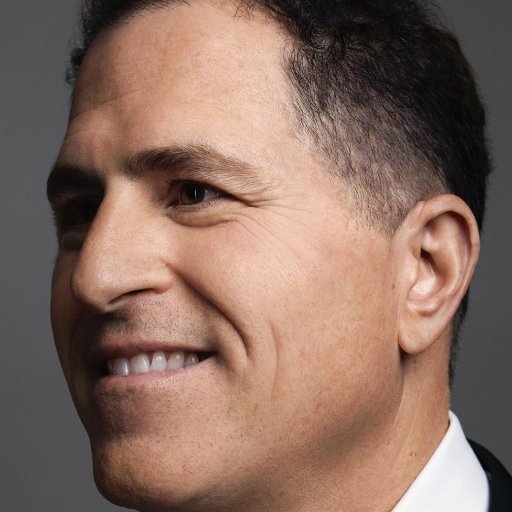
Michael Dell, Dell Technologies
In this segment from theCUBE + NYSE Wired’s “AI Factories – Data Centers of the Future” series, theCUBE’s Dave Vellante sits down with Rob Biederman, managing partner at Asymmetric Capital, to unpack a disciplined approach to early-stage investing amid AI-scale infrastructure shifts. Biederman explains Asymmetric’s founder-first model: writing $1–$10M checks (often via SAFEs), joining boards as they form and helping operators with go-to-market, operations, finance and strategy (not product/engineering). He shares why the firm avoided 2021’s lofty SaaS multiples in favor of backing proven builders earlier (single-digit pre-money), and highlights portfolio execution such as a cash-efficient LATAM e-commerce company scaling from ~$1-2M to about $50M in revenue. The discussion also explores Asymmetric’s subscale buy-and-build plays (e.g., pool cleaning in San Diego, sleep apnea clinics in Houston), where density, tech-enabled services and platform ops expand margins and enterprise value.
Biederman weighs in on AI economics as enterprises race to “AI factories,” cautioning that not every AI workload creates ROI and that overbuilt compute assumptions could face a reckoning. He argues that winners will prove a clear 10× value equation and avoid scaling go-to-market before product-market fit. Additional insights include early liquidity discipline (returning $0.20 on the dollar before the fund’s third anniversary), portfolio survivability (34 of 35 companies still operating; three positive exits), and guidance to founders: make your value proposition relevant, credible and differentiated. Tune in for candid perspective on how capital efficiency, ownership discipline and anti-thematic sourcing intersect with a world where GPU-dense data centers and AI-scale software are reshaping enterprise infrastructure and economics.
>> Hello, I'm John Furrier, the co-host of theCUBE, here with Dave Vellante, my co-host. Of course, this is our NYSE CUBE Studios, here on the East Coast. Of course, we've got our Palo Alto and Silicon Valley and of course Boston. We bring you all the signal, not the noise, here on theCUBE. Michael Dell is back, the CEO of Dell Technologies, in for the first time in our CUBE Studios. Thanks for coming in. NYSE.
Michael Dell
>> Great to be with you guys. Congrats on the new location here.
Dave Vellante
>> Thank you.>> Appreciate it.
Michael Dell
>> In the heart of business.>> Dell Technologies, listed company on the NYSE, of course, doing extremely well.
Michael Dell
>> >> Congratulations on the financial performance.
Michael Dell
>> Thank you.>> I think last time we talked was at GTC at the Dell booth overlooking the beautiful NVIDIA logos on top of the floor, and we talked about the reinvention, again, this wave coming and it's continuing. Can you share an update since GTC? Because so much has gone on with AI Factories, agents has hyped up, physical AI, we've been covering the robotics area. Every vertical is lighting up, life sciences, financial service, anything where they need large-scale compute. What's the update since GTC when we last saw you?
Michael Dell
>> Yeah. I think underlying all this is that the models continue to improve at a tremendous rate, and you see this broad range of open and closed models and lots of companies participating at that layer. And as it moves from the one-shot LLMs to the multimodal to the agents and multi-agent systems, the amount of tokens just expands tremendously. And so, you've heard about 100x token growth and that sort of thing, all that means, that data is becoming more valuable, because it's the fuel for these AI Factories, and the demand for compute is maybe insatiable, we can say it that way. We don't see any slowdown in that demand, and for us, it's coming from not just the tier-two CSPs, it's coming from sovereign AI, it's coming from enterprise AI, and I think we're still in the early stages of the S-curve adoption of how this is being used inside companies.>> The consumer side of the business and the enterprise side with AI, you see, obviously, OpenAI and all this consumer activity, their user behavior has changed. The enterprise side is expected to be massively growing. Arthur Lewis was just on theCUBE, he was talking about some of the decisions you guys made years ago that are paying off now. I want to ask you the same question, what were some of those key things that you decided that are fitting into the AI Factories and soon to be a surge in enterprise growth as full-stack new ecosystems are developing, what's the keys that you guys did that puts you in such a great financial performance?
Michael Dell
>> We've always been a company that's had big ears and listened to our customers, and we started hearing about the demand for these GPU servers, and we kicked into gear and started designing the original H100 systems and we were first to deliver the GB200 at scale, now first to deliver the GB300, and the engineering effort required to deliver these kinds of systems is getting much, much more complicated. And so, we've just thrown whatever resources were needed to support the enormous build-out that's occurring. And as I said, it doesn't seem to be slowing down. To be honest, we're watching for any signs of change in the demand pattern, and it seems to just continue to be...
Dave Vellante
>> We've all lived in the cycle.
Michael Dell
>> Sure, yeah.
Dave Vellante
>> Sleep with one eye open. You called it an S-curve, we had Eric on last week, the economist, he thinks it's a J-curve, which is kind of interesting. And just to support that, I think two years ago, at the Securities Analyst Meeting, you guys said, "We expect a couple of hundred billion to be spent on CapEx." It's now well over 400 billion. Something you said on the BG2 Pod really caught my attention, when you think about it, because people are asking you, "Are we overspending here?" And you said, "Well, it's a $115 trillion economy. If we can get 10% productivity improvement, we're under-spending just doing that."
Michael Dell
>> We could be way underinvesting, that's right.
Dave Vellante
>> And again, you do watch for those signs. But you said today, there's really no evidence of those signs, you've seen them before, you're watching very closely, and so there's no end in sight.
Michael Dell
>> Customers are deploying and using the capacity that we provide them instantaneously upon delivery and they want it as fast as they can get it. They're usually gated by power availability to the building, and I think that could continue to be a constraint for a long time to come, because it just takes time to build all the power generation capacity. But again, going back to where we are in the adoption cycle and the number of tokens that the new systems are using, it feels like this has a long way to go. And again, there's been this fundamental shift, the first 50 years that we all participated in was about calculating and computing, and now we've had this fundamental shift into machines that are thinking and helping us think and thinking for us, and that is just a fundamentally different architecture, that's why all these new systems are being built. And the demand for intelligence and thinking is probably the biggest market there is, because if we show up at a company and we say, "We've got this new thing, and if you use it, all of your people get 15 more IQ points," they want that, because it's going to make them a more successful company, they can't afford not to have it, particularly if their competitor has it. And so, that's what I think, it's just a fundamental shift.
Dave Vellante
>> I think too, the vectors of growth here are quite interesting. You've got CSPs, you're crushing it there, you've got sovereign, then you've got enterprise, and then even beyond that, you've got edge, and those are four related, but somewhat distinct growth opportunities, are they not? And what are the differences in terms of what you have to deliver, what Dell has to deliver, for customers in those areas?
Michael Dell
>> Yeah, I think those are all key demand drivers. And again, in the enterprise and at the edge, there's an architectural shift that's very significant. In the past, we had these siloed databases and independent systems and there was no reason really to bring all the data together, nobody had any tools to do anything with it. And so now, we've had this big unlock of the power of that data, and so there's a big re-architecture going there. I think it'll occur in all four of those areas, and it's a big build.>> Yeah. One of the things you said years ago, I forget which Dell Tech World it was, you were really talking about owning the end-to-end workflow, which you've gone and done that. On your slides, one of the big endpoints in the growth is physical AI, which is going to come after agents and some other things. That's the full convergence of physical and digital. How do you see the edge playing out? Because right now, inference on the edge is hot, because devices can do that, but training's not yet there. So you're going to start to see faster, cheaper, smaller devices, the size of a fire alarm, that's essentially an AI Factory node. Has your edge vision changed at all in terms of how you see the dots connecting? We get through reasoning, we start thinking, multistep reasoning, that gets into agents, agentic infrastructure, physical AI. What's your view on the edge as you look at that piece of it? Because it has to get smarter, it has to be connected.
Michael Dell
>> I think the key point is that the intelligence is going to go where the data is, and if you can shrink the model and the system to be something that's super small and it's in a robot, it's in anything that has electrons passing through it, and as there's data created, it somehow enhances the experience, at the right cost and value equation, you're going to go do that., And that feels like just a fundamentally big change that we're at the beginning of. The early adopters are things like advanced manufacturing and it's clearly happening there, but I think that's just a precursor to everything becoming intelligent, connected with these small models. We've been working on this for a long time, we have our OEM business, our embedded business, with like 10,000 customers across every industry, they're the precursors to this.
Dave Vellante
>> Yeah. Oh, go ahead, please.>> On customers, I want to get your thoughts on some of the unlock. One of the things we're seeing and observing with this AI Factory and all those series we're doing is these verticals that are exploding, financial services are always buying the best and greatest, so they're always a good happy customer. Supercomputing is coming up, that used to be an HPC show, you guys were always active in that, but now it's like an AI supercomputing show. Actually, the name of the show is supercomputing, it's actually doing supercomputing. But life sciences, healthcare, these are verticals that are seeing massive breakthroughs from the new architecture. Are there any examples that you're observing that's growing faster than others as you talk to customers and look at the landscape? Pharma, drug discovery to healthcare, what's your view on the people who are seeing this kind of bandwidth, this kind of compute power, just using up capacity and wanting to buy more? This seems to be the pattern. I'm done, I need another upgrade, I need more systems. Which verticals do you see most innovative?
Michael Dell
>> What I would say is that we're seeing it's more variable, and within an industry, you have leaders and laggards. But across all sectors, we do see certain companies that have just approached this as an existential crisis/opportunity and they're being super aggressive, but I would say that's only maybe 10% of companies. So I think all companies will get there over time. Financial services is an obvious one. Yes, it's accelerating drug discovery. I think anybody doing design work, if you're not using these tools, you're going to fall behind pretty quickly. There are clear examples in customer service and sales. And again, it's all about how do you make people more capable, more productive, and be able to grow and expand faster, innovate faster.
Dave Vellante
>> So you have a point of view on this, because you're one of those early adopters. You're not only an AI technology seller, you're an AI practitioner. You kind of alluded to it today in the Securities Analyst Meeting, that you're just getting started with harmonizing the data, as you talked about earlier. So what can we learn from Dell as the Petri dish and take to the market and how that's going to evolve? Because it sounds like you have internally a lot more runway.
Michael Dell
>> What we've learned is that if you just look for an AI thing to plug into your company, you'll probably fail, and there's a lot more fundamental work that has to be done. First thing you have to do is use your imagination, which is to say all organizations are a relic of whatever archeological technologies were available at that time. And so, you say, "Well, yeah, we had slide rules and calculators and computers, and so this is how we set up the organization."
Now, as we have these models and agents and multi-agent systems, what could it be in three or five years, and then what should the process of the organization look like? And let's first understand that, let's simplify, standardize the processes, let's get all the data together, let's then apply the AI models and we'll have something that comes out very different than the old thing we had. That's not an easy thing to do, and it often requires a lot of undoing of things that have been there for a long time. Not everybody wants to do that, that's hard, et cetera. That's what we're doing, and I think more companies will find themselves down that path. And we do have some help that we can provide companies as they go through that process, and we've created these blueprints and reference designs and starter kits, we've got hundreds of them now across all sorts of industries, to help customers and our partners to get going on this road.
Dave Vellante
>> And the key point there is you're not paving the cow path, I like to call it, just paving over existing processes, you're really rethinking, and that takes time.
Michael Dell
>> There are well-known, well-established playbooks for how to do this, and we're continuing to develop those and propagating them among our customers.>> One of the unique things about you guys, I always admired, Michael, is one, you're a thinker, you're always tinkering with all the latest and greatest since day one, always reinventing whenever you can to get ahead of the curve. We've been having a conversation on theCUBE with folks who have to struggle with this... Not struggle with, but rationalize the, what am I optimizing that I have existing for AI, and how do I bring in AI-native software, software stacks, whether that's running on new Dell, AI Factory, or previous Dell stuff? You have a lot of installed base, and it's clear that the existing workloads aren't going away. In fact, that's where most of the AI is being applied to in a methodology and playbook. But there's also the AI-native wave coming, where people are writing software for the capabilities of the hardware or supercomputer, call it a data center, it's a computer, but I'm going to write software, I'm a startup, I'm going to be LLM-first, computer vision-first, a little bit different coding mindset. How do you think about those two worlds? Because I think that's a big observation where there's no wrong answer. If you have a workflow you can make more productive, the ROI speaks for itself. But there's a wave of new entrepreneurs coming in, do an AI-native, they call it, where they separate the app stack and they treat the model layer fundamentally like a flywheel and they'll pick whatever model's best at any given time and fuse it together, and then the underlying infrastructure. So there's different approaches, there's no one winning general purpose formula. But how do you think about that, retrofitting, my word, and AI-native?
Michael Dell
>> I think there's some related points that go with this, and that is that the rate of creation of new code and software is going to be increasing quite dramatically, and the reason is it's way easier to create software and code than ever before. And so, you're going to see some changes in that landscape. And ultimately, why are people creating this code? They're creating it because it's an expression of their competitive advantage, and it'll be more rapidly tuned and applied to their business so that they can succeed as an organization. But that's pretty different than what we had before, so it'll take some time and it'll be a multi-speed race, some will go faster than others. But I do think this is...>> You see code acceleration coming as a key differentiator?
Michael Dell
>> Well, you can create more code, it's easier to. You don't necessarily have to speak code, you can just speak English now you have code. And so, that's a game changer in terms of how does a company actually have technology that helps it achieve what it wants to achieve.>> Dave and I always joked, when the old PC revolution, "Yeah, the 286 went to the 386 and Windows runs the same because they added more features," or, "486 comes, those processor improvements." Now, it's such a systems increase that there's new ways to do everything, so the software gets better, that is clear.
Dave Vellante
>> If you think about, again, inside of Dell and your customers, the way that you're applying essentially software to reformat, restructure, your entire business, do you think that learning curve dynamics and software-like economics will increasingly apply to not just software companies, but to all companies? And does that set up a winner-take-most dynamic? In other words, if I'm on the learning curve faster and I'm getting software-like marginal economics in my business, not just my IT, I'm going to beat my competitors because I'm going to be ahead of them. And we saw this in the software industry in the '80s and '90s. Does that move to every company and every industry?
Michael Dell
>> I think another way of saying this is the role of technology continues to increase in the economy, and it's for the kind of reasons that you're suggesting, that network effects and software and data are able to be used to improve virtually anything, and it is a quick or dead kind of thing in many industries, where you're either adopting this and creating a competitive advantage or you're falling behind in a faster way. And look, the rate of success or failure is increasing, so there'll be more disruption and you'll have a greater range of outcomes for companies. So if you look at any five-year period, the number of companies that either succeeded tremendously or failed horribly, it's increasing every five years, and this is only going to speed that up. So it's Schumpeter's creative destruction just turbocharged to the max here, and I think it's not going to slow down, it's not going to be slower five years from now. We'll have new waves of technology built on all the things we're building now that'll just make it go faster.>> Michael, thank you so much for coming on theCUBE, especially in our new location. Always like to end it on a fun note, what are you optimizing for these days? It's like a kid in a candy store right now in this market, all the action on the hardware and the systems side, the software, productivity, it's like a whole refresh. What are you optimizing for these days? How do you spend your time? What are you working on?
Michael Dell
>> What Arthur and Jeff and I and our colleagues at Dell have really done is we've viewed this moment as a reset and we've said, "What could our company actually be if we completely reimagined everything using this technology?" And that's what we're building, because that's the company that's going to succeed in the 2030s, and that's incredibly exciting.>> Yeah. Thanks so much for coming on, appreciate it.
Michael Dell
>> Okay .>> All right. Michael Dell inside our new CUBE Studios, part of the NYSE and CUBE partnership and the NYSE Wired program and community, of course. We're doing our part to bring you all the data here. Thanks for watching.
>> Hello, I'm John Furrier, the co-host of theCUBE, here with Dave Vellante, my co-host. Of course, this is our NYSE CUBE Studios, here on the East Coast. Of course, we've got our Palo Alto and Silicon Valley and of course Boston. We bring you all the signal, not the noise, here on theCUBE. Michael Dell is back, the CEO of Dell Technologies, in for the first time in our CUBE Studios. Thanks for coming in. NYSE.
Michael Dell
>> Great to be with you guys. Congrats on the new location here.
Dave Vellante
>> Thank you.>> Appreciate it.
Michael Dell
>> In the heart of business.>> Dell Technologies, listed company on the NYSE, of course, doing extremely well.
Michael Dell
>> >> Congratulations on the financial performance.
Michael Dell
>> Thank you.>> I think last time we talked was at GTC at the Dell booth overlooking the beautiful NVIDIA logos on top of the floor, and we talked about the reinvention, again, this wave coming and it's continuing. Can you share an update since GTC? Because so much has gone on with AI Factories, agents has hyped up, physical AI, we've been covering the robotics area. Every vertical is lighting up, life sciences, financial service, anything where they need large-scale compute. What's the update since GTC when we last saw you?
Michael Dell
>> Yeah. I think underlying all this is that the models continue to improve at a tremendous rate, and you see this broad range of open and closed models and lots of companies participating at that layer. And as it moves from the one-shot LLMs to the multimodal to the agents and multi-agent systems, the amount of tokens just expands tremendously. And so, you've heard about 100x token growth and that sort of thing, all that means, that data is becoming more valuable, because it's the fuel for these AI Factories, and the demand for compute is maybe insatiable, we can say it that way. We don't see any slowdown in that demand, and for us, it's coming from not just the tier-two CSPs, it's coming from sovereign AI, it's coming from enterprise AI, and I think we're still in the early stages of the S-curve adoption of how this is being used inside companies.>> The consumer side of the business and the enterprise side with AI, you see, obviously, OpenAI and all this consumer activity, their user behavior has changed. The enterprise side is expected to be massively growing. Arthur Lewis was just on theCUBE, he was talking about some of the decisions you guys made years ago that are paying off now. I want to ask you the same question, what were some of those key things that you decided that are fitting into the AI Factories and soon to be a surge in enterprise growth as full-stack new ecosystems are developing, what's the keys that you guys did that puts you in such a great financial performance?
Michael Dell
>> We've always been a company that's had big ears and listened to our customers, and we started hearing about the demand for these GPU servers, and we kicked into gear and started designing the original H100 systems and we were first to deliver the GB200 at scale, now first to deliver the GB300, and the engineering effort required to deliver these kinds of systems is getting much, much more complicated. And so, we've just thrown whatever resources were needed to support the enormous build-out that's occurring. And as I said, it doesn't seem to be slowing down. To be honest, we're watching for any signs of change in the demand pattern, and it seems to just continue to be...
Dave Vellante
>> We've all lived in the cycle.
Michael Dell
>> Sure, yeah.
Dave Vellante
>> Sleep with one eye open. You called it an S-curve, we had Eric on last week, the economist, he thinks it's a J-curve, which is kind of interesting. And just to support that, I think two years ago, at the Securities Analyst Meeting, you guys said, "We expect a couple of hundred billion to be spent on CapEx." It's now well over 400 billion. Something you said on the BG2 Pod really caught my attention, when you think about it, because people are asking you, "Are we overspending here?" And you said, "Well, it's a $115 trillion economy. If we can get 10% productivity improvement, we're under-spending just doing that."
Michael Dell
>> We could be way underinvesting, that's right.
Dave Vellante
>> And again, you do watch for those signs. But you said today, there's really no evidence of those signs, you've seen them before, you're watching very closely, and so there's no end in sight.
Michael Dell
>> Customers are deploying and using the capacity that we provide them instantaneously upon delivery and they want it as fast as they can get it. They're usually gated by power availability to the building, and I think that could continue to be a constraint for a long time to come, because it just takes time to build all the power generation capacity. But again, going back to where we are in the adoption cycle and the number of tokens that the new systems are using, it feels like this has a long way to go. And again, there's been this fundamental shift, the first 50 years that we all participated in was about calculating and computing, and now we've had this fundamental shift into machines that are thinking and helping us think and thinking for us, and that is just a fundamentally different architecture, that's why all these new systems are being built. And the demand for intelligence and thinking is probably the biggest market there is, because if we show up at a company and we say, "We've got this new thing, and if you use it, all of your people get 15 more IQ points," they want that, because it's going to make them a more successful company, they can't afford not to have it, particularly if their competitor has it. And so, that's what I think, it's just a fundamental shift.
Dave Vellante
>> I think too, the vectors of growth here are quite interesting. You've got CSPs, you're crushing it there, you've got sovereign, then you've got enterprise, and then even beyond that, you've got edge, and those are four related, but somewhat distinct growth opportunities, are they not? And what are the differences in terms of what you have to deliver, what Dell has to deliver, for customers in those areas?
Michael Dell
>> Yeah, I think those are all key demand drivers. And again, in the enterprise and at the edge, there's an architectural shift that's very significant. In the past, we had these siloed databases and independent systems and there was no reason really to bring all the data together, nobody had any tools to do anything with it. And so now, we've had this big unlock of the power of that data, and so there's a big re-architecture going there. I think it'll occur in all four of those areas, and it's a big build.>> Yeah. One of the things you said years ago, I forget which Dell Tech World it was, you were really talking about owning the end-to-end workflow, which you've gone and done that. On your slides, one of the big endpoints in the growth is physical AI, which is going to come after agents and some other things. That's the full convergence of physical and digital. How do you see the edge playing out? Because right now, inference on the edge is hot, because devices can do that, but training's not yet there. So you're going to start to see faster, cheaper, smaller devices, the size of a fire alarm, that's essentially an AI Factory node. Has your edge vision changed at all in terms of how you see the dots connecting? We get through reasoning, we start thinking, multistep reasoning, that gets into agents, agentic infrastructure, physical AI. What's your view on the edge as you look at that piece of it? Because it has to get smarter, it has to be connected.
Michael Dell
>> I think the key point is that the intelligence is going to go where the data is, and if you can shrink the model and the system to be something that's super small and it's in a robot, it's in anything that has electrons passing through it, and as there's data created, it somehow enhances the experience, at the right cost and value equation, you're going to go do that., And that feels like just a fundamentally big change that we're at the beginning of. The early adopters are things like advanced manufacturing and it's clearly happening there, but I think that's just a precursor to everything becoming intelligent, connected with these small models. We've been working on this for a long time, we have our OEM business, our embedded business, with like 10,000 customers across every industry, they're the precursors to this.
Dave Vellante
>> Yeah. Oh, go ahead, please.>> On customers, I want to get your thoughts on some of the unlock. One of the things we're seeing and observing with this AI Factory and all those series we're doing is these verticals that are exploding, financial services are always buying the best and greatest, so they're always a good happy customer. Supercomputing is coming up, that used to be an HPC show, you guys were always active in that, but now it's like an AI supercomputing show. Actually, the name of the show is supercomputing, it's actually doing supercomputing. But life sciences, healthcare, these are verticals that are seeing massive breakthroughs from the new architecture. Are there any examples that you're observing that's growing faster than others as you talk to customers and look at the landscape? Pharma, drug discovery to healthcare, what's your view on the people who are seeing this kind of bandwidth, this kind of compute power, just using up capacity and wanting to buy more? This seems to be the pattern. I'm done, I need another upgrade, I need more systems. Which verticals do you see most innovative?
Michael Dell
>> What I would say is that we're seeing it's more variable, and within an industry, you have leaders and laggards. But across all sectors, we do see certain companies that have just approached this as an existential crisis/opportunity and they're being super aggressive, but I would say that's only maybe 10% of companies. So I think all companies will get there over time. Financial services is an obvious one. Yes, it's accelerating drug discovery. I think anybody doing design work, if you're not using these tools, you're going to fall behind pretty quickly. There are clear examples in customer service and sales. And again, it's all about how do you make people more capable, more productive, and be able to grow and expand faster, innovate faster.
Dave Vellante
>> So you have a point of view on this, because you're one of those early adopters. You're not only an AI technology seller, you're an AI practitioner. You kind of alluded to it today in the Securities Analyst Meeting, that you're just getting started with harmonizing the data, as you talked about earlier. So what can we learn from Dell as the Petri dish and take to the market and how that's going to evolve? Because it sounds like you have internally a lot more runway.
Michael Dell
>> What we've learned is that if you just look for an AI thing to plug into your company, you'll probably fail, and there's a lot more fundamental work that has to be done. First thing you have to do is use your imagination, which is to say all organizations are a relic of whatever archeological technologies were available at that time. And so, you say, "Well, yeah, we had slide rules and calculators and computers, and so this is how we set up the organization."
Now, as we have these models and agents and multi-agent systems, what could it be in three or five years, and then what should the process of the organization look like? And let's first understand that, let's simplify, standardize the processes, let's get all the data together, let's then apply the AI models and we'll have something that comes out very different than the old thing we had. That's not an easy thing to do, and it often requires a lot of undoing of things that have been there for a long time. Not everybody wants to do that, that's hard, et cetera. That's what we're doing, and I think more companies will find themselves down that path. And we do have some help that we can provide companies as they go through that process, and we've created these blueprints and reference designs and starter kits, we've got hundreds of them now across all sorts of industries, to help customers and our partners to get going on this road.
Dave Vellante
>> And the key point there is you're not paving the cow path, I like to call it, just paving over existing processes, you're really rethinking, and that takes time.
Michael Dell
>> There are well-known, well-established playbooks for how to do this, and we're continuing to develop those and propagating them among our customers.>> One of the unique things about you guys, I always admired, Michael, is one, you're a thinker, you're always tinkering with all the latest and greatest since day one, always reinventing whenever you can to get ahead of the curve. We've been having a conversation on theCUBE with folks who have to struggle with this... Not struggle with, but rationalize the, what am I optimizing that I have existing for AI, and how do I bring in AI-native software, software stacks, whether that's running on new Dell, AI Factory, or previous Dell stuff? You have a lot of installed base, and it's clear that the existing workloads aren't going away. In fact, that's where most of the AI is being applied to in a methodology and playbook. But there's also the AI-native wave coming, where people are writing software for the capabilities of the hardware or supercomputer, call it a data center, it's a computer, but I'm going to write software, I'm a startup, I'm going to be LLM-first, computer vision-first, a little bit different coding mindset. How do you think about those two worlds? Because I think that's a big observation where there's no wrong answer. If you have a workflow you can make more productive, the ROI speaks for itself. But there's a wave of new entrepreneurs coming in, do an AI-native, they call it, where they separate the app stack and they treat the model layer fundamentally like a flywheel and they'll pick whatever model's best at any given time and fuse it together, and then the underlying infrastructure. So there's different approaches, there's no one winning general purpose formula. But how do you think about that, retrofitting, my word, and AI-native?
Michael Dell
>> I think there's some related points that go with this, and that is that the rate of creation of new code and software is going to be increasing quite dramatically, and the reason is it's way easier to create software and code than ever before. And so, you're going to see some changes in that landscape. And ultimately, why are people creating this code? They're creating it because it's an expression of their competitive advantage, and it'll be more rapidly tuned and applied to their business so that they can succeed as an organization. But that's pretty different than what we had before, so it'll take some time and it'll be a multi-speed race, some will go faster than others. But I do think this is...>> You see code acceleration coming as a key differentiator?
Michael Dell
>> Well, you can create more code, it's easier to. You don't necessarily have to speak code, you can just speak English now you have code. And so, that's a game changer in terms of how does a company actually have technology that helps it achieve what it wants to achieve.>> Dave and I always joked, when the old PC revolution, "Yeah, the 286 went to the 386 and Windows runs the same because they added more features," or, "486 comes, those processor improvements." Now, it's such a systems increase that there's new ways to do everything, so the software gets better, that is clear.
Dave Vellante
>> If you think about, again, inside of Dell and your customers, the way that you're applying essentially software to reformat, restructure, your entire business, do you think that learning curve dynamics and software-like economics will increasingly apply to not just software companies, but to all companies? And does that set up a winner-take-most dynamic? In other words, if I'm on the learning curve faster and I'm getting software-like marginal economics in my business, not just my IT, I'm going to beat my competitors because I'm going to be ahead of them. And we saw this in the software industry in the '80s and '90s. Does that move to every company and every industry?
Michael Dell
>> I think another way of saying this is the role of technology continues to increase in the economy, and it's for the kind of reasons that you're suggesting, that network effects and software and data are able to be used to improve virtually anything, and it is a quick or dead kind of thing in many industries, where you're either adopting this and creating a competitive advantage or you're falling behind in a faster way. And look, the rate of success or failure is increasing, so there'll be more disruption and you'll have a greater range of outcomes for companies. So if you look at any five-year period, the number of companies that either succeeded tremendously or failed horribly, it's increasing every five years, and this is only going to speed that up. So it's Schumpeter's creative destruction just turbocharged to the max here, and I think it's not going to slow down, it's not going to be slower five years from now. We'll have new waves of technology built on all the things we're building now that'll just make it go faster.>> Michael, thank you so much for coming on theCUBE, especially in our new location. Always like to end it on a fun note, what are you optimizing for these days? It's like a kid in a candy store right now in this market, all the action on the hardware and the systems side, the software, productivity, it's like a whole refresh. What are you optimizing for these days? How do you spend your time? What are you working on?
Michael Dell
>> What Arthur and Jeff and I and our colleagues at Dell have really done is we've viewed this moment as a reset and we've said, "What could our company actually be if we completely reimagined everything using this technology?" And that's what we're building, because that's the company that's going to succeed in the 2030s, and that's incredibly exciting.>> Yeah. Thanks so much for coming on, appreciate it.
Michael Dell
>> Okay .>> All right. Michael Dell inside our new CUBE Studios, part of the NYSE and CUBE partnership and the NYSE Wired program and community, of course. We're doing our part to bring you all the data here. Thanks for watching.
















 Dave Vellante