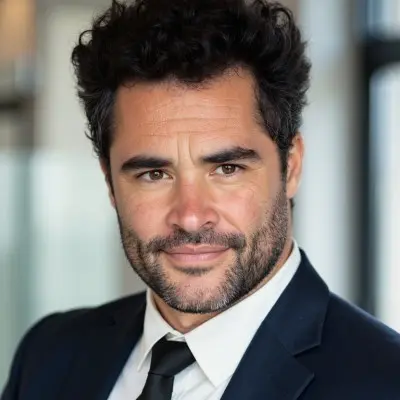
Gautier Cloix, H Company | theCUBE + NYSE Wired: Robotics & AI Infra Leaders
Forgot Password
Almost there!
We just sent you a verification email. Please verify your account to gain access to
theCUBE + NYSE Wired: AI Factories - Data Centers of the Future. If you don’t think you received an email check your
spam folder.
Sign in to AI Factories - Data Centers of the Future.
In order to sign in, enter the email address you used to registered for the event. Once completed, you will receive an email with a verification link. Open the link to automatically sign into the site.
Register for AI Factories - Data Centers of the Future
Please fill out the information below. You will receive an email with a verification link confirming your registration. Click the link to automatically sign into the site.
You’re almost there!
We just sent you a verification email. Please click the verification button in the email. Once your email address is verified, you will have full access to all event content for AI Factories - Data Centers of the Future.
I want my badge and interests to be visible to all attendees.
Checking this box will display your presense on the attendees list, view your profile and allow other attendees to contact you via 1-1 chat. Read the Privacy Policy. At any time, you can choose to disable this preference.
Select your Interests!
add
Upload your photo
Uploading..
OR
Connect via Twitter
Connect via Linkedin
EDIT PASSWORD
Share
Forgot Password
Almost there!
We just sent you a verification email. Please verify your account to gain access to
theCUBE + NYSE Wired: AI Factories - Data Centers of the Future. If you don’t think you received an email check your
spam folder.
Sign in to AI Factories - Data Centers of the Future.
In order to sign in, enter the email address you used to registered for the event. Once completed, you will receive an email with a verification link. Open the link to automatically sign into the site.
Sign in to gain access to theCUBE + NYSE Wired: AI Factories - Data Centers of the Future
Please sign in with LinkedIn to continue to theCUBE + NYSE Wired: AI Factories - Data Centers of the Future. Signing in with LinkedIn ensures a professional environment.
>> . Welcome back to theCUBE here in Palo Alto, California. I'm John Furrier, host of theCUBE. This is our third annual AI Leaders Infrastructure Summit. Of course, we have our pool party tonight, Tonight, third annual, 180 people getting together to talk about the future and how it's being built out. This is part of our Cuban NYSE WIRE program. Gautier Gouassi, CEO of H Company, founder, one of the founders. Gautier, great to coming on. We were just in Paris with the RAISE Summit. Great to see you, thanks for coming on.>> Yeah, thank you, it was great to see you at the Paris Coupe.
John Furrier
>> Paris is turning into be quite the city for AI, so a lot of action happened there. So props to the folks in France watching. Appreciate you coming on. But the one thing that you guys are doing that I find interesting is the autonomous enterprise. And we see AI, a lot of that's being discussed with agents. But there's a lot of work to get that done. Explain what you guys are doing because there's a lot of ontologies involved. I just did a whole three days in San Francisco on graph databases, which kind of brings back people are architecting their systems to be fully ready for large -scale intelligence.>> Yeah, yeah, I know it's fascinating what's happening right now, right? I've been deploying data and AI in big corporates for a long time in the US and in France, my team as well. And yeah, basically we've seen like three phases of AI. The first one was LLM. So like deploying these chatbots, putting the enterprise data and getting answers. It was nice. I don't think productivity or, you know, ROI was really there, but it was like, it's a good tool. Then we moved to agents. So like plugging these LLMs to all the IT systems, right? it. That's what I've been doing for a very long time. The issue with agents is that it takes a very long time to plug to every system. And the world is the real world. So you don't have an API everywhere waiting for AI to be plugged into it. So what we did is to develop a third generation. We use the technology called computer use. We build our models. And basically, you can deploy any workflow in a matter of minutes. You don't have to do the preliminary work of of trying to understand what does who, you can go as the world exists and deploy our technology and create ROI very quickly in a matter of a couple of days rather than, it used to take me nine months to deploy an agent before.
John Furrier
>> You know, I was at the AMD conference and we saw this trend at Nvidia GTC as well, and I made a statement where the winners and the losers are going to be determined by who can build the best infrastructure that aligns with how people think and work. The user interface has been graphically user interface since the 80s. Certainly SAS didn't change that, but you can download an app. But now that the interface has changed, that changes all the downstream prep and or data. And so you're seeing the rise of the word ontology being kicked around. That's been around since the 80s as well. It's not a new concept, but with all the AI infrastructure, that's becoming a mainstream word. We see Palantir talking about that all the time. Well, ontology, okay, yeah, and it's not really new. but if you deploy things properly, you can have an ontology, it scales. If you have data and you have a company, your brain of the enterprise could be this time series database, that database. So if you think about the data architecture properly, you can get there. Some take the different approach, like the old school IT approach of, hey, let's do a, stand up a cluster for that workload, and it's kind of single tenant infrastructure, infrastructure, not multi -tenant, horizontal, scalable, and data is always as good as what you have. So talk about this new shift in terms of how to think about what you need to do in preparation to get that kind of outcome that moves fast at the speed of thought, can have inference and reasoning right at the point of execution, at the runtime. Talk about that layer, because this seems to be the hottest conversation with agents, and certainly you have to to ingest everything, but take us through your thoughts on what does a successful architecture look like and what are the table states, what are the requirements?>> Yeah, I mean, it's changing a lot, right? So for a long time, for the past 10 years, I've been hearing about, oh yeah, we need to migrate to new systems or when it was data, like we need to migrate to a data lake with all the data organized. I think that was always for the next six months and then the next six months, and you never really saw these projects ending. So I think we're entering a phase where companies, especially like our big corporates, have all these legacy systems. I don't think they're going to disappear. I don't think they're going to be replaced or migrated because it's also the value of the company. But I really believe that the way they are going to be operated is not going to be by humans anymore. As you said, human interfaces have been there for the past 50 years. We are using mouse, keyboard, and screen. It's really archaic to communicate an intention to a computer. Sometimes you have to spend two hours on the phone with my grandfather who wanted to send a picture via email. And it took me like half an hour to explain. What's email, Gaia? Is it Slack? No, it's emails. Exactly. But it's also the case in big companies. You work for a big train company. You want to say, oh, how about we do like airplanes? We allow people to change their seats, to choose their seats. If you don't have that, you're going to be told, oh, it's nine months of IT, and then the booking system needs to be migrated, and we need to do all that work. So we've learned that the execution layer is a bottleneck. Having ideas is easy, but executing them takes forever, and sometimes the stack is not compatible, and so I think we are, and really, you.
John Furrier
>> And that's the layer you're talking about. That's where the domain expert actually who wants the solution is an IT person.>> Yeah, exactly. Exactly. Yeah, exactly. And so what happens when execution becomes infinite, when it's not the bottleneck anymore? When you have an idea in the morning at 9am and that idea can be put in production at 10am, then you start to have a whole different company. It's not just productivity or use cases or new workflows or automation. It's just like you remove the existing layer for humans so that they can focus having new ideas, having new intentions. And it's not only solving problems, it's also changing the business. And I think we are entering a phase where AI used to be seen as automation and productivity. And now we are seeing it as like changing the way people work in it.
John Furrier
>> You know, one of the things that's come up here and other conversations on theCUBE is the frontier models are also highly motivated to accelerate this too because if you don't have adoption of people taking advantage of those frontier models, then the use cases would be as good as the last Opus version. So the models are coming out super better and the specialized models are coming out with domain expertise. The combination of both gets more power. So the usage to take advantage of that system of intelligence is critical. Talk about that adoption piece because if people don't actually push the envelope, 8 o 'clock in the morning, 9 o 'clock, production by 10, okay, did it work? Double down, more reasonings coming in. So talk about that flywheel of adoption.>> Yeah, so it's really the secrets. Having the best technology, and I think we are number one in the computer use models. We have the cheapest models. They're great for enterprise. We have the great products, but 50 % of the value is what you just said. It's making sure that humans on the ground who have the intuition, the intention, the knowledge, like the front line, are using it. We have forward deployed engineers. So that's a concept that we built in my previous company. A lot of them come from there. And they go on the ground. They sit next to the user. They don't sit next to the manager or the CEO. They sit next to the user. And they record what they are doing. And once you stop, you have your computer use agent that's ready. and the thing that people don't understand always about corporations is you you might have somewhere you know perfect process in a PDF saying like oh this is how we originate alone this is how we build an airplane but the reality is very different when you speak to someone it's like oh yeah we were supposed to do that but we release with all these exceptions undocumented workload yeah exactly because if you use a documented one it's not gonna work or It's not perfect. So that's what you record. You immediately create your computerized agents. You don't wait for like two weeks to have them. And so the users that are actually, they always want to focus on something that is like more meaningful. Like if you talk to a nurse, she or he doesn't want to spend like half of its time on old software to find a bed and find a prescription. Administrative tasks, logging data, huge problem. Which is 80 % of humanity right now. Yeah. Like if you enter any office, you look at hospital, manufacturing plants, energy, bank, you're going to see the same thing.
John Furrier
>> Let's take that example of a nurse, because I think this highlights the system of intelligence. I want to get your thoughts on it. So I think what you guys are doing is an indicator where the direction is in going, because the system of intelligence is an abstraction layer that sits on top of system of engagements and system of records. I was talking to the CTO at Workday, Gabe, and he's like, yeah, we're the system of record. We don't necessarily want to be the interface. He didn't say that. that's my words, but that's basically what he was saying. We'll deploy an abstraction up to the next layer, so then the agents can use all that system of record because it's deterministic. We know who's in what department, we know their pay grade, we know who should be looking at the data. So there's all this pre -existing legacy work that's not necessarily bad if you think about the architecture differently. What's your reaction to that? How do you see that? Because if you look at it that way, then it's not necessarily the only thing, It's an input to the system of intelligence.>> Yeah, I agree with that. And I think it's actually legacy is seen for most people as a burden. It's actually an asset. Legacy is an asset because you have these tools. Okay, the way you interact with them is very archaic. Like you need to move a mouse, it moves a small arrow on a screen and you try to tell what you want to do. Or the nurse entering data into the system so they get it, that could be automated away. Entries like five times and like looking for a bed and trying to, so I think these systems of record, software that are acting, sometimes record, but sometimes it's also acting. I come from a wine making family. We have this very old software that's going to like feel a cube and you press on it. That is not going to like change, but the way we want to operate it, I don't think humans are going to be in front of software.
John Furrier
>> It's like using Windows of Work Groups, old like 1995 technology. But that's the old IT, and talk about the role of agents, because you still got to get data into the system of records, so this is where agents are flourishing right now. That's a known task, it's deterministic, I got to go, this has got to get into that, but that's only the ingestion to the data. Talk about how agents are filling that gap where the toiled, undifferentiated heavy lifting is, the grunt work, whatever word you want to use, nobody wants to do that work.>> Yeah, no, nobody wants to do that. So nobody wants to enter the data. The data can come from many places. It can come from the real world. Usually it comes from another software or PDF or it comes from a website. Maybe you need to like log into a website to get the data. So you have a lot of ways to get data, but that's very low value. So our computer agents are doing it very very quickly. One thing that you don't want to do as well is, so we talk about filling forms, basically from summarize like data. What we don't want to do as well is clicking buttons. Clicking buttons is doing these actions that are generating tasks that are like running a business, basically. And these are the two things that we do, getting data in and getting actions in. But humans are not supposed to see that. Computers can be in the basement, and people can be just having ideas, getting intentions. If we take the example of a nurse spending time with their patients instead of spending time in front of a computer. Same for salespeople, like spending time in front of clients instead of computer. But it's interesting, we're in 2026, and it's obviously changing with what we do and other companies, but we still interact with the technology the same way as like in 2060.
John Furrier
>> And that's not the way we think. Talk about the company, because I think you guys are onto something, because when you design systems for scale at the way people think and work, that's not clicking. No one wakes up and says, I want to do that. They were told to do that. This is the manual, you've got to enter things this way, where you can now just upload a file, take a picture, or just have devices, say in a hospital, just send it directly in, and then they can focus all their energy on what they want to do, creativity, optimization. Talk about that piece of it, and how far along are you? Where are you with some of your customers? Talk about some examples of the momentum where this is playing out in action.>> Yeah, so we have a huge growth, like every time we go to a business. It's interesting because people ask me about use cases, and my answer is often like, Like use cases are probably the one way to think about a technology. Like do you think about the use case for an LLM or for a pen? Use case for a pen, is it like to write a note or is it to do, you know, accounting or is it to... Actually, you know, we deploy that technology. So I can give you like the ways people are using it in financial services. For instance, they're going to use it for a lot of manual workflows, claims, corporate, corporate insurance, KYC, all these things. but at the end of the day, we did a hackathon last weekend with Nvidia in San Francisco, and we had like 200 people, 200 students and geeks and people from tech companies coming, and they built each of them a workflow or a tool with computer use. None of them had think about it before. It's a new technology. People are using it in a way that is close to their heart, like what they want to do with it, what their experience of life is. And so obviously we start to see these first use cases, but really quickly after deploying these first use cases, what we start to see is people changing the way they think. Oh, I don't have to do that manual work anymore, which means 80 % of my day is free. But either I spend 80 % of my day at the coffee machine and I'm going to be fired, or I spend 80 % of my day finding more customers if I'm a salesperson, spending more time with patients if I'm a nurse, if I'm in the purchasing department. You have more fun. You have actually what you want to, yeah.
John Furrier
>> Nobody likes to do repetitive tasks. Yeah, I mean it's liberating and relief on one hand, but freedom on the other. You get the, it's unburdened on that piece, but you get the benefit. Talk about the models, because I think the enterprise has a lot of data that's locked down. When you unlock that proprietary data, it's not general, it's specialized intelligence. It is the company brain. the agents can take unstructured, structured data, and even non -deterministic, make it deterministic. You're seeing that a lot. Physical AI is certainly a great example. Robots can't get things wrong for safety reasons, but workflow has consequences too. You got to get that retail transaction right. You don't want to be wrong. So you have to kind of be right a lot in the enterprise and the physical AI. This is a big thing.>> It's probably the hardest part that we had to solve, but I think it's the same thing when you look at autonomous driving. it's probably easy to do it 20 years ago, but maybe you would kill someone from time to time or hit something. What's hard is to do it without, with the safety part, without the risk. And that's the same thing for enterprise. So the way we built our agency is that they cannot execute irreversible tasks, so like sending an email, deleting something, ordering something, without a human validation at first, and then like after a month or two people are like, okay, like maybe under 10K you can order that, or because we but but that's you need to build trust such a security of like or rather where the inference happening or where's the data store it's actually trust that our computer is agent that when in do things and if it's sort of like one of the first time in history where people don't do you know autonomous things are done by a computer and so so that's where we focus a lot of of energy, making sure that deterministically our agents cannot do the wrong things.
John Furrier
>> I love the name of the company, H -Cub. We were talking before we came on camera what the H stands for. You said human. That's a big core DNA of the business, being human -centric. We mentioned some of the interfaces have changed. We've gone past the GUI interface. It's now natural language, voice, agents on our behalf. So we are very human -centric. Yeah. What's your take when someone says, hey, I want to build something that aligns with how people think and work? What comes to mind? How would you describe the ideal system?>> Yeah, so the ideal system to me is a system where you don't have to think about how to do it. Right now, if you have a new software, you need to figure out, so like we've seen a lot of software we can understand like pretty quickly, but still you have like, you know, you've never used AutoCAD, like the 3D software. You need to learn how to build your perfect house or car in that system. You shouldn't. You should just be able to say, to tell. So I think voice is going to be very important. We've been around for, let's say, 3 million years, humans. The way we communicate right now, we could communicate in many ways. We could have sign language. We could write things and show it to each other. We use voice because it's the most efficient way. The other way we use to communicate is to show. If we go kite surfing together, or if we go playing tennis, and I've never played tennis, you're going to show me the gesture. So these are the two things that... It's hard to learn tennis without playing.>> It's like, I can read about, okay, how to, but unless you swimming, tennis, golf, these are sports you got to physically do it.>> Exactly, you need to show, that's the muscle part. And that's how also we capture the context and the value of users, by having them showing us. So we sit next to them, like show me. So they're okay, I click here, I go to my image, oh that's an order, I go to SAP, this is the button to do this, blah, blah, blah. And then you hit stop, and you've had the best two ways humans can communicate value, speech and showing. And once you have that, nobody's frustrated, nobody had to like.
John Furrier
>> Okay, so my take away from this conversation is the forward deployed engineers, not only an innovator, but they're also the coach. Yeah. Here's how you swim. Sometimes the coach, and sometimes the user is the coach to the forward. Exactly, so there's a two -way, again, this is the new work. Ford deploys, this is one example, there's many more. Role of a manager, the role of fleets of agents, all these things are playing out. Okay, great stuff, give a quick plug for the company, where you guys are at, momentum -wise, in France, US presence, what's the status? Give us some stats and put a plug in.>> Yeah, so we are, I'd say, a Franco -American company. A lot of our research teams are in France, They have very good talent in France, but a lot of them have been educated in the Silicon Valley. They've spent a lot of time in companies like DeepMind, Meta, all these companies. On the forward deploy side, we have people coming from BCG, McKinsey, Palantir. And it's the wedding, it's the marriage of these two worlds. One team is building these models. We have Holo 3 .1 now. It's the latest version of our model. It's the first model ever to hit the 80 % bar on the OS world verified. benchmark, which is the benchmark for computer use. We are signing roughly like, you know, three to five customers, new customers every month. We started in Europe, but we have the fastest growth in the US. I don't think we have a lot of competition in the US for what we do. And the US is a market that is like, eager to try, eager to experiment, new technology a bit more than Europe. So that's the reason why I'm spending most of my time here in the US. We have a wide diversity of customers from like financial services to manufacturing to governments as well. NGOs, hospitals, because we hit a place where you know, humanity is spending too much time on what they are doing manually on computers. We are 120 people in the company. We have offices in London, Paris, New York, Texas.
John Furrier
>> It's interesting is that you guys have a great mission with the human centric view of AI. I love that, but also on the business side, it's a business model transformation that's generational. I mean, it's not an IT transformation discussion. What you just said, I got a labs team building models, and I have the McKinsey's of the world coming together, BCG, Bain, all the brains come in. You're essentially helping companies re -architect their business model. Yeah, exactly.>> Basically, from what I take away. Re -architect and re -energize. Put a fit in the next world, because very often when I start a discussion with a CEO, like, oh, this is my problem, I want to go from like, you know, it's like, it takes three days, I want to take a few minutes to do that. So it's like, it's fine, let's start with what exists. But very quickly you get used to new technology, and the way you think about the management of your company becomes very different. Oh, we could do this, oh, we could do that. I thought it was not possible, so it's too complex, so it's too expensive. No, it's actually very easy. And then you start to rewire the brain of the CEO and the rest of the teams. so that they can.
John Furrier
>> You build the brain for the companies. This is what people are doing. This is if you could create the intellect of your company as a moat, what would it look like? That's the intelligence. Yeah, you'll talk to the general intelligence, that's the internet. You might not use them when you can, but that's not going to drive the business. That's what you're doing.>> Yeah, yeah, definitely, and the arms, like the action parts of the.
John Furrier
>> That's the people, and the agents. That's it, thank you for coming on. I really appreciate it. We'll have a lot more conversations, I know for sure, as agents become very much part of the human doing work, whether it's on the network side, tech side, or business side, personal side, and hopefully will make us, our free time, work on better relationships, better time with their job, with customers, or their function. Thanks for coming on. That's my hope, yeah. I'm John Furrier with theCUBE. We are here at the NYC Wired program, theCUBE and NYC Wired doing our third annual AI leadership summit and pool party tonight. I'm John Furrier, your host. Thanks for watching. Thank you.
>> . Welcome back to theCUBE here in Palo Alto, California. I'm John Furrier, host of theCUBE. This is our third annual AI Leaders Infrastructure Summit. Of course, we have our pool party tonight, Tonight, third annual, 180 people getting together to talk about the future and how it's being built out. This is part of our Cuban NYSE WIRE program. Gautier Gouassi, CEO of H Company, founder, one of the founders. Gautier, great to coming on. We were just in Paris with the RAISE Summit. Great to see you, thanks for coming on.>> Yeah, thank you, it was great to see you at the Paris Coupe.
John Furrier
>> Paris is turning into be quite the city for AI, so a lot of action happened there. So props to the folks in France watching. Appreciate you coming on. But the one thing that you guys are doing that I find interesting is the autonomous enterprise. And we see AI, a lot of that's being discussed with agents. But there's a lot of work to get that done. Explain what you guys are doing because there's a lot of ontologies involved. I just did a whole three days in San Francisco on graph databases, which kind of brings back people are architecting their systems to be fully ready for large -scale intelligence.>> Yeah, yeah, I know it's fascinating what's happening right now, right? I've been deploying data and AI in big corporates for a long time in the US and in France, my team as well. And yeah, basically we've seen like three phases of AI. The first one was LLM. So like deploying these chatbots, putting the enterprise data and getting answers. It was nice. I don't think productivity or, you know, ROI was really there, but it was like, it's a good tool. Then we moved to agents. So like plugging these LLMs to all the IT systems, right? it. That's what I've been doing for a very long time. The issue with agents is that it takes a very long time to plug to every system. And the world is the real world. So you don't have an API everywhere waiting for AI to be plugged into it. So what we did is to develop a third generation. We use the technology called computer use. We build our models. And basically, you can deploy any workflow in a matter of minutes. You don't have to do the preliminary work of of trying to understand what does who, you can go as the world exists and deploy our technology and create ROI very quickly in a matter of a couple of days rather than, it used to take me nine months to deploy an agent before.
John Furrier
>> You know, I was at the AMD conference and we saw this trend at Nvidia GTC as well, and I made a statement where the winners and the losers are going to be determined by who can build the best infrastructure that aligns with how people think and work. The user interface has been graphically user interface since the 80s. Certainly SAS didn't change that, but you can download an app. But now that the interface has changed, that changes all the downstream prep and or data. And so you're seeing the rise of the word ontology being kicked around. That's been around since the 80s as well. It's not a new concept, but with all the AI infrastructure, that's becoming a mainstream word. We see Palantir talking about that all the time. Well, ontology, okay, yeah, and it's not really new. but if you deploy things properly, you can have an ontology, it scales. If you have data and you have a company, your brain of the enterprise could be this time series database, that database. So if you think about the data architecture properly, you can get there. Some take the different approach, like the old school IT approach of, hey, let's do a, stand up a cluster for that workload, and it's kind of single tenant infrastructure, infrastructure, not multi -tenant, horizontal, scalable, and data is always as good as what you have. So talk about this new shift in terms of how to think about what you need to do in preparation to get that kind of outcome that moves fast at the speed of thought, can have inference and reasoning right at the point of execution, at the runtime. Talk about that layer, because this seems to be the hottest conversation with agents, and certainly you have to to ingest everything, but take us through your thoughts on what does a successful architecture look like and what are the table states, what are the requirements?>> Yeah, I mean, it's changing a lot, right? So for a long time, for the past 10 years, I've been hearing about, oh yeah, we need to migrate to new systems or when it was data, like we need to migrate to a data lake with all the data organized. I think that was always for the next six months and then the next six months, and you never really saw these projects ending. So I think we're entering a phase where companies, especially like our big corporates, have all these legacy systems. I don't think they're going to disappear. I don't think they're going to be replaced or migrated because it's also the value of the company. But I really believe that the way they are going to be operated is not going to be by humans anymore. As you said, human interfaces have been there for the past 50 years. We are using mouse, keyboard, and screen. It's really archaic to communicate an intention to a computer. Sometimes you have to spend two hours on the phone with my grandfather who wanted to send a picture via email. And it took me like half an hour to explain. What's email, Gaia? Is it Slack? No, it's emails. Exactly. But it's also the case in big companies. You work for a big train company. You want to say, oh, how about we do like airplanes? We allow people to change their seats, to choose their seats. If you don't have that, you're going to be told, oh, it's nine months of IT, and then the booking system needs to be migrated, and we need to do all that work. So we've learned that the execution layer is a bottleneck. Having ideas is easy, but executing them takes forever, and sometimes the stack is not compatible, and so I think we are, and really, you.
John Furrier
>> And that's the layer you're talking about. That's where the domain expert actually who wants the solution is an IT person.>> Yeah, exactly. Exactly. Yeah, exactly. And so what happens when execution becomes infinite, when it's not the bottleneck anymore? When you have an idea in the morning at 9am and that idea can be put in production at 10am, then you start to have a whole different company. It's not just productivity or use cases or new workflows or automation. It's just like you remove the existing layer for humans so that they can focus having new ideas, having new intentions. And it's not only solving problems, it's also changing the business. And I think we are entering a phase where AI used to be seen as automation and productivity. And now we are seeing it as like changing the way people work in it.
John Furrier
>> You know, one of the things that's come up here and other conversations on theCUBE is the frontier models are also highly motivated to accelerate this too because if you don't have adoption of people taking advantage of those frontier models, then the use cases would be as good as the last Opus version. So the models are coming out super better and the specialized models are coming out with domain expertise. The combination of both gets more power. So the usage to take advantage of that system of intelligence is critical. Talk about that adoption piece because if people don't actually push the envelope, 8 o 'clock in the morning, 9 o 'clock, production by 10, okay, did it work? Double down, more reasonings coming in. So talk about that flywheel of adoption.>> Yeah, so it's really the secrets. Having the best technology, and I think we are number one in the computer use models. We have the cheapest models. They're great for enterprise. We have the great products, but 50 % of the value is what you just said. It's making sure that humans on the ground who have the intuition, the intention, the knowledge, like the front line, are using it. We have forward deployed engineers. So that's a concept that we built in my previous company. A lot of them come from there. And they go on the ground. They sit next to the user. They don't sit next to the manager or the CEO. They sit next to the user. And they record what they are doing. And once you stop, you have your computer use agent that's ready. and the thing that people don't understand always about corporations is you you might have somewhere you know perfect process in a PDF saying like oh this is how we originate alone this is how we build an airplane but the reality is very different when you speak to someone it's like oh yeah we were supposed to do that but we release with all these exceptions undocumented workload yeah exactly because if you use a documented one it's not gonna work or It's not perfect. So that's what you record. You immediately create your computerized agents. You don't wait for like two weeks to have them. And so the users that are actually, they always want to focus on something that is like more meaningful. Like if you talk to a nurse, she or he doesn't want to spend like half of its time on old software to find a bed and find a prescription. Administrative tasks, logging data, huge problem. Which is 80 % of humanity right now. Yeah. Like if you enter any office, you look at hospital, manufacturing plants, energy, bank, you're going to see the same thing.
John Furrier
>> Let's take that example of a nurse, because I think this highlights the system of intelligence. I want to get your thoughts on it. So I think what you guys are doing is an indicator where the direction is in going, because the system of intelligence is an abstraction layer that sits on top of system of engagements and system of records. I was talking to the CTO at Workday, Gabe, and he's like, yeah, we're the system of record. We don't necessarily want to be the interface. He didn't say that. that's my words, but that's basically what he was saying. We'll deploy an abstraction up to the next layer, so then the agents can use all that system of record because it's deterministic. We know who's in what department, we know their pay grade, we know who should be looking at the data. So there's all this pre -existing legacy work that's not necessarily bad if you think about the architecture differently. What's your reaction to that? How do you see that? Because if you look at it that way, then it's not necessarily the only thing, It's an input to the system of intelligence.>> Yeah, I agree with that. And I think it's actually legacy is seen for most people as a burden. It's actually an asset. Legacy is an asset because you have these tools. Okay, the way you interact with them is very archaic. Like you need to move a mouse, it moves a small arrow on a screen and you try to tell what you want to do. Or the nurse entering data into the system so they get it, that could be automated away. Entries like five times and like looking for a bed and trying to, so I think these systems of record, software that are acting, sometimes record, but sometimes it's also acting. I come from a wine making family. We have this very old software that's going to like feel a cube and you press on it. That is not going to like change, but the way we want to operate it, I don't think humans are going to be in front of software.
John Furrier
>> It's like using Windows of Work Groups, old like 1995 technology. But that's the old IT, and talk about the role of agents, because you still got to get data into the system of records, so this is where agents are flourishing right now. That's a known task, it's deterministic, I got to go, this has got to get into that, but that's only the ingestion to the data. Talk about how agents are filling that gap where the toiled, undifferentiated heavy lifting is, the grunt work, whatever word you want to use, nobody wants to do that work.>> Yeah, no, nobody wants to do that. So nobody wants to enter the data. The data can come from many places. It can come from the real world. Usually it comes from another software or PDF or it comes from a website. Maybe you need to like log into a website to get the data. So you have a lot of ways to get data, but that's very low value. So our computer agents are doing it very very quickly. One thing that you don't want to do as well is, so we talk about filling forms, basically from summarize like data. What we don't want to do as well is clicking buttons. Clicking buttons is doing these actions that are generating tasks that are like running a business, basically. And these are the two things that we do, getting data in and getting actions in. But humans are not supposed to see that. Computers can be in the basement, and people can be just having ideas, getting intentions. If we take the example of a nurse spending time with their patients instead of spending time in front of a computer. Same for salespeople, like spending time in front of clients instead of computer. But it's interesting, we're in 2026, and it's obviously changing with what we do and other companies, but we still interact with the technology the same way as like in 2060.
John Furrier
>> And that's not the way we think. Talk about the company, because I think you guys are onto something, because when you design systems for scale at the way people think and work, that's not clicking. No one wakes up and says, I want to do that. They were told to do that. This is the manual, you've got to enter things this way, where you can now just upload a file, take a picture, or just have devices, say in a hospital, just send it directly in, and then they can focus all their energy on what they want to do, creativity, optimization. Talk about that piece of it, and how far along are you? Where are you with some of your customers? Talk about some examples of the momentum where this is playing out in action.>> Yeah, so we have a huge growth, like every time we go to a business. It's interesting because people ask me about use cases, and my answer is often like, Like use cases are probably the one way to think about a technology. Like do you think about the use case for an LLM or for a pen? Use case for a pen, is it like to write a note or is it to do, you know, accounting or is it to... Actually, you know, we deploy that technology. So I can give you like the ways people are using it in financial services. For instance, they're going to use it for a lot of manual workflows, claims, corporate, corporate insurance, KYC, all these things. but at the end of the day, we did a hackathon last weekend with Nvidia in San Francisco, and we had like 200 people, 200 students and geeks and people from tech companies coming, and they built each of them a workflow or a tool with computer use. None of them had think about it before. It's a new technology. People are using it in a way that is close to their heart, like what they want to do with it, what their experience of life is. And so obviously we start to see these first use cases, but really quickly after deploying these first use cases, what we start to see is people changing the way they think. Oh, I don't have to do that manual work anymore, which means 80 % of my day is free. But either I spend 80 % of my day at the coffee machine and I'm going to be fired, or I spend 80 % of my day finding more customers if I'm a salesperson, spending more time with patients if I'm a nurse, if I'm in the purchasing department. You have more fun. You have actually what you want to, yeah.
John Furrier
>> Nobody likes to do repetitive tasks. Yeah, I mean it's liberating and relief on one hand, but freedom on the other. You get the, it's unburdened on that piece, but you get the benefit. Talk about the models, because I think the enterprise has a lot of data that's locked down. When you unlock that proprietary data, it's not general, it's specialized intelligence. It is the company brain. the agents can take unstructured, structured data, and even non -deterministic, make it deterministic. You're seeing that a lot. Physical AI is certainly a great example. Robots can't get things wrong for safety reasons, but workflow has consequences too. You got to get that retail transaction right. You don't want to be wrong. So you have to kind of be right a lot in the enterprise and the physical AI. This is a big thing.>> It's probably the hardest part that we had to solve, but I think it's the same thing when you look at autonomous driving. it's probably easy to do it 20 years ago, but maybe you would kill someone from time to time or hit something. What's hard is to do it without, with the safety part, without the risk. And that's the same thing for enterprise. So the way we built our agency is that they cannot execute irreversible tasks, so like sending an email, deleting something, ordering something, without a human validation at first, and then like after a month or two people are like, okay, like maybe under 10K you can order that, or because we but but that's you need to build trust such a security of like or rather where the inference happening or where's the data store it's actually trust that our computer is agent that when in do things and if it's sort of like one of the first time in history where people don't do you know autonomous things are done by a computer and so so that's where we focus a lot of of energy, making sure that deterministically our agents cannot do the wrong things.
John Furrier
>> I love the name of the company, H -Cub. We were talking before we came on camera what the H stands for. You said human. That's a big core DNA of the business, being human -centric. We mentioned some of the interfaces have changed. We've gone past the GUI interface. It's now natural language, voice, agents on our behalf. So we are very human -centric. Yeah. What's your take when someone says, hey, I want to build something that aligns with how people think and work? What comes to mind? How would you describe the ideal system?>> Yeah, so the ideal system to me is a system where you don't have to think about how to do it. Right now, if you have a new software, you need to figure out, so like we've seen a lot of software we can understand like pretty quickly, but still you have like, you know, you've never used AutoCAD, like the 3D software. You need to learn how to build your perfect house or car in that system. You shouldn't. You should just be able to say, to tell. So I think voice is going to be very important. We've been around for, let's say, 3 million years, humans. The way we communicate right now, we could communicate in many ways. We could have sign language. We could write things and show it to each other. We use voice because it's the most efficient way. The other way we use to communicate is to show. If we go kite surfing together, or if we go playing tennis, and I've never played tennis, you're going to show me the gesture. So these are the two things that... It's hard to learn tennis without playing.>> It's like, I can read about, okay, how to, but unless you swimming, tennis, golf, these are sports you got to physically do it.>> Exactly, you need to show, that's the muscle part. And that's how also we capture the context and the value of users, by having them showing us. So we sit next to them, like show me. So they're okay, I click here, I go to my image, oh that's an order, I go to SAP, this is the button to do this, blah, blah, blah. And then you hit stop, and you've had the best two ways humans can communicate value, speech and showing. And once you have that, nobody's frustrated, nobody had to like.
John Furrier
>> Okay, so my take away from this conversation is the forward deployed engineers, not only an innovator, but they're also the coach. Yeah. Here's how you swim. Sometimes the coach, and sometimes the user is the coach to the forward. Exactly, so there's a two -way, again, this is the new work. Ford deploys, this is one example, there's many more. Role of a manager, the role of fleets of agents, all these things are playing out. Okay, great stuff, give a quick plug for the company, where you guys are at, momentum -wise, in France, US presence, what's the status? Give us some stats and put a plug in.>> Yeah, so we are, I'd say, a Franco -American company. A lot of our research teams are in France, They have very good talent in France, but a lot of them have been educated in the Silicon Valley. They've spent a lot of time in companies like DeepMind, Meta, all these companies. On the forward deploy side, we have people coming from BCG, McKinsey, Palantir. And it's the wedding, it's the marriage of these two worlds. One team is building these models. We have Holo 3 .1 now. It's the latest version of our model. It's the first model ever to hit the 80 % bar on the OS world verified. benchmark, which is the benchmark for computer use. We are signing roughly like, you know, three to five customers, new customers every month. We started in Europe, but we have the fastest growth in the US. I don't think we have a lot of competition in the US for what we do. And the US is a market that is like, eager to try, eager to experiment, new technology a bit more than Europe. So that's the reason why I'm spending most of my time here in the US. We have a wide diversity of customers from like financial services to manufacturing to governments as well. NGOs, hospitals, because we hit a place where you know, humanity is spending too much time on what they are doing manually on computers. We are 120 people in the company. We have offices in London, Paris, New York, Texas.
John Furrier
>> It's interesting is that you guys have a great mission with the human centric view of AI. I love that, but also on the business side, it's a business model transformation that's generational. I mean, it's not an IT transformation discussion. What you just said, I got a labs team building models, and I have the McKinsey's of the world coming together, BCG, Bain, all the brains come in. You're essentially helping companies re -architect their business model. Yeah, exactly.>> Basically, from what I take away. Re -architect and re -energize. Put a fit in the next world, because very often when I start a discussion with a CEO, like, oh, this is my problem, I want to go from like, you know, it's like, it takes three days, I want to take a few minutes to do that. So it's like, it's fine, let's start with what exists. But very quickly you get used to new technology, and the way you think about the management of your company becomes very different. Oh, we could do this, oh, we could do that. I thought it was not possible, so it's too complex, so it's too expensive. No, it's actually very easy. And then you start to rewire the brain of the CEO and the rest of the teams. so that they can.
John Furrier
>> You build the brain for the companies. This is what people are doing. This is if you could create the intellect of your company as a moat, what would it look like? That's the intelligence. Yeah, you'll talk to the general intelligence, that's the internet. You might not use them when you can, but that's not going to drive the business. That's what you're doing.>> Yeah, yeah, definitely, and the arms, like the action parts of the.
John Furrier
>> That's the people, and the agents. That's it, thank you for coming on. I really appreciate it. We'll have a lot more conversations, I know for sure, as agents become very much part of the human doing work, whether it's on the network side, tech side, or business side, personal side, and hopefully will make us, our free time, work on better relationships, better time with their job, with customers, or their function. Thanks for coming on. That's my hope, yeah. I'm John Furrier with theCUBE. We are here at the NYC Wired program, theCUBE and NYC Wired doing our third annual AI leadership summit and pool party tonight. I'm John Furrier, your host. Thanks for watching. Thank you.