Exploring the Future of Hybrid Computing with Sansbury and Cloudera
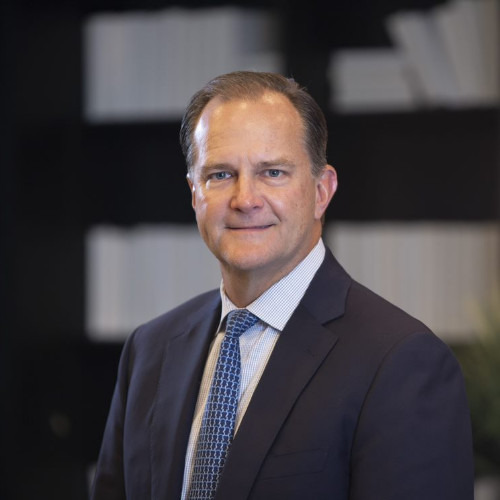
TheCUBE hosts a discussion with Charles Sansbury, chief executive officer of Cloudera, at the NYSE Wired: AI Factories, Data Centers of the Future event. Sansbury shares insights on Cloudera's evolution and its significant role in the transformative landscape of hybrid computing and private artificial intelligence (AI).
In this session, Sansbury delves into their leadership role at Cloudera during a pivotal phase where AI and big data paradigms shift towards hybrid computing environments. Joined by Dave Vellante of SiliconANGLE Media and analysts from theCUBE Research, the conversation illuminates how companies such as Cloudera navigate these technological transformations. The discussion covers how firms adopt hybrid models to optimize workloads across on-premise, private, and public clouds, emphasizing Cloudera's unique position in this dynamic industry shift.
According to Sansbury, the evolution of Cloudera’s Data Platform illustrates a focused effort on integrating and optimizing their offerings through substantial research and development investments. Key takeaways highlight the strategic development of Cloudera's services such as Cloudera AI and Cloudera Machine Learning, ensuring optimal performance and security across multiple computing environments. This adaptability serves enterprise needs for effective data management and implementation of private AI frameworks.
Forgot Password
Almost there!
We just sent you a verification email. Please verify your account to gain access to
theCUBE + NYSE Wired: AI Factories - Data Centers of the Future. If you don’t think you received an email check your
spam folder.
Sign in to AI Factories - Data Centers of the Future.
In order to sign in, enter the email address you used to registered for the event. Once completed, you will receive an email with a verification link. Open the link to automatically sign into the site.
Register for AI Factories - Data Centers of the Future
Please fill out the information below. You will receive an email with a verification link confirming your registration. Click the link to automatically sign into the site.
You’re almost there!
We just sent you a verification email. Please click the verification button in the email. Once your email address is verified, you will have full access to all event content for AI Factories - Data Centers of the Future.
I want my badge and interests to be visible to all attendees.
Checking this box will display your presense on the attendees list, view your profile and allow other attendees to contact you via 1-1 chat. Read the Privacy Policy. At any time, you can choose to disable this preference.
Select your Interests!
add
Upload your photo
Uploading..
OR
Connect via Twitter
Connect via Linkedin
EDIT PASSWORD
Share
Forgot Password
Almost there!
We just sent you a verification email. Please verify your account to gain access to
theCUBE + NYSE Wired: AI Factories - Data Centers of the Future. If you don’t think you received an email check your
spam folder.
Sign in to AI Factories - Data Centers of the Future.
In order to sign in, enter the email address you used to registered for the event. Once completed, you will receive an email with a verification link. Open the link to automatically sign into the site.
Sign in to gain access to theCUBE + NYSE Wired: AI Factories - Data Centers of the Future
Please sign in with LinkedIn to continue to theCUBE + NYSE Wired: AI Factories - Data Centers of the Future. Signing in with LinkedIn ensures a professional environment.
Are you sure you want to remove access rights for this user?
Details
Manage Access
email address
Community Invitation
Charles Sansbury, Cloudera
Exploring the Future of Hybrid Computing with Sansbury and Cloudera
TheCUBE hosts a discussion with Charles Sansbury, chief executive officer of Cloudera, at the NYSE Wired: AI Factories, Data Centers of the Future event. Sansbury shares insights on Cloudera's evolution and its significant role in the transformative landscape of hybrid computing and private artificial intelligence (AI).
In this session, Sansbury delves into their leadership role at Cloudera during a pivotal phase where AI and big data paradigms shift towards hybrid computing environments. Joined by Dave Vellante of SiliconANGLE Media and analysts from theCUBE Research, the conversation illuminates how companies such as Cloudera navigate these technological transformations. The discussion covers how firms adopt hybrid models to optimize workloads across on-premise, private, and public clouds, emphasizing Cloudera's unique position in this dynamic industry shift.
According to Sansbury, the evolution of Cloudera’s Data Platform illustrates a focused effort on integrating and optimizing their offerings through substantial research and development investments. Key takeaways highlight the strategic development of Cloudera's services such as Cloudera AI and Cloudera Machine Learning, ensuring optimal performance and security across multiple computing environments. This adaptability serves enterprise needs for effective data management and implementation of private AI frameworks.
play_circle_outlineCloudera's Journey in Big Data AI: From Experimentation to Implementation in Evolving Hybrid Computing Environments
replyShare Clip
play_circle_outlineEvolution of Cloudera Data Platform Post-Hortonworks Merger: Enhancing AI through Quality Data for Superior Model Performance
replyShare Clip
play_circle_outlineExploring Private AI: Impact on Corporate Data Security and Cloud Migration Trends for Enhanced Data Control
replyShare Clip
play_circle_outlineEnhancing Operator Experience and Economic Benefits of Data Infrastructure Across Multi-Cloud and On-Prem Environments for Large Enterprises
replyShare Clip
play_circle_outlineInsights from Cloudera Evolve user conferences and customer success stories.
In this theCUBE + NYSE Wired segment from AI Factories – Data Centers of the Future, Cloudera CEO Charles Sansbury joins theCUBE’s Dave Vellante on the floor of the New York Stock Exchange to unpack where we are in the big data-to-AI era and why “private AI” is reshaping enterprise infrastructure strategy. Sansbury explains how Cloudera’s multi-year, billion-dollar engineering effort merged Cloudera and Hortonworks into the Cloudera Data Platform (CDP), introduced in 2022/early 2023, and why customers are standardizing on hybrid environments spanning on-prem,...Read more
exploreKeep Exploring
What is the current status of the development and implementation of large language models in relation to cloud computing?add
What factors contributed to the development of the Cloudera Data Platform (CDP) and its significance in the data industry?add
What trends are being observed in how customers are using cloud technology in relation to artificial intelligence and data security?add
What are the economic and scale advantages of using Cloudera for AI workloads in different environments?add
What are the key messages that attendees should take away from the Cloudera Evolve event?add
>> Everybody, welcome back to the New York Stock Exchange, theCUBE plus NYSE Wired: AI Factories, Data Centers of the Future. My name is Dave Vellante. John Furrier is also here. We're really excited to have Charles Sansbury here. He's the CEO of Cloudera. Charles, thanks for coming in,
Charles Sansbury
>> Dave. Thanks for having me.
Dave Vellante
>> You bet. Cloudera got the big data era started. We all know you can't do AI without great data, so where are we at in the big data AI era?
Charles Sansbury
>> Well, good question. I think we're kind of in the third or fourth inning. Things moved pretty fast in the first inning. As you know, these large language models grew up on the cloud, and a lot of the training was done on the cloud. But as large companies have gone from experimentation to implementation, they've hit some roadblocks in terms of what the cloud can and cannot do. What we're seeing right now is in that third or fourth inning, customers thinking, "I need to think about the workload that I am solving for, and matching to the right computing platform." Increasingly, what that means is customers are thinking about hybrid computing environments where they do some workloads on-premise, some on private cloud, and some on public cloud. I'd really say we're in the middle stages of the evolution after what was an incredible adolescence and probably more rapid growth adoption excitement than we've seen in a long time.
Dave Vellante
>> It's amazing because, I mean, I certainly remember when Cloudera got it all started, we used to talk about early innings. Then all of a sudden, now there's this step function into a new game. It's almost like we jumped S-curves. I think one of the things a lot of people don't understand about Cloudera is when Cloudera and Hortonworks merged, you guys made the tough call from an engineering standpoint to build a modern data stack. I'd like you to talk to that because it was a gargantuan engineering effort. That catapulted you into a world-class capability. I'd like you to explain.
Charles Sansbury
>> Sure. Well, when the two companies came together, they were both still public and they had similar but not the same products. The decision was made to create the Cloudera Data Platform, what we abbreviate as CDP, which was a combination point of the prior Cloudera and Hortonworks standalone products. Over the course of about four years and more than a billion dollars of R&D spend, we brought the two products together, introduced CDP in its initial versions in 2022, early 2023. We now have a CDP version in the marketplace, which is probably the most scalable, most performant data platform that exists. What we've done now as a next step is leveraging that core data in the Cloudera data platform. I'll take a step back and make the point that quality AI is built on having quality data. Companies are now thinking about not just access to public training data, but what seems to make the difference in the quality of output from models is also leveraging your private data to fine-tune your model to give you optimal results for your company, for your data set. We've been able to, with CDP Cloudera Data Platform, enable or speed company's ability to do that.
Then we've also introduced a set of services around CDP, Cloudera Data Warehousing, Cloudera AI, Cloudera Machine Learning, Cloudera Data Flow, that give data practitioners the tools and capabilities to really build and deliver full-scale AI-based applications much more quickly than they could previously with the safety and security that exists from being able to run those both in their own data centers as well as on the private and public cloud. At this point, we're the only vendor who spans all those computing environments with that observability and orchestration capability, so we're pretty excited about that.
Dave Vellante
>> A couple things there. About nine months ago, George Gilbert and I wrote a piece why Jamie Dimon is Sam Altman's biggest competitor. We use Jamie Dimon as the metaphor for a corpus of data that's private in an enterprise, that is highly valuable, very large data sets, highly proprietary, that they don't want to move to the public cloud, they don't want to leak into the internet and LLMs, and they want to apply AI do that. They want to move AI to the data. The other piece, the last piece that you mentioned, we coined a term super cloud in late 2021. Super cloud was what multi-cloud should have been, an extraction layer, whereas a substantially identical experience across on-prem, cloud, eventually at the edges, et cetera. We created that and a lot of people gave us a little grief for that because it was essentially, again, what multi-cloud should have been. That's what you guys have done. The third point I wanted to make is we've seen a trend where we know all the action is happening, or a lot of action, in the cloud. It's being funded by hyperscalers spending hundreds of billions of dollars. The market loves it, of course, but enterprises don't want to move all their data into the cloud, and so they're building their own on-prem stacks. That brings me to an on-prem stack can't just be hardware. It's got to be a data stack, it's got to have a governance stack, it's got to have all kinds of surrounding security capabilities so that ultimately you can run applications and apply that data. What's happening in enterprise AI and where specifically does Cloudera fit in that scenario?
Charles Sansbury
>> Yeah, so a lot to that question. I'll tell you what we're seeing and hearing from customers. First of all, the cloud is critical as a component of their AI-based infrastructure, necessary but not sufficient for all their needs. What we're seeing is the rise of a concept called private AI. That's the idea of my AI models refined by data that, as you said, I don't want out in the public cloud, that are kind of the unique proposition and history of my company. What customers are doing is they're creating these private data stacks. It could be a private cloud, it could be private on-premises in the data center hardware, but they're using that as the environment, even more stringent in security. Some companies are requiring data sovereignty and creating sovereign clouds within a specific geography. Then branches of government want to have completely separate, distinct, and air-gapped environments. Across all of those motivating factor is control and security of core private, important, differentiated data. What we've been doing is working with customers around things like data quality and data governance. We did an acquisition of some data governance capabilities about a year and a half ago, which greatly improves data quality. We did a recent acquisition of a company that provides a containerization framework and orchestration. The drivers of those are to basically deliver to customers the control, the security, the safety they expect from environments that they own and control, but to also introduce elements of the convenience, the ease of use they expect from cloud-based infrastructure. Because I think historically, customers get the performance, the return on investment, the safety from a vendor like Cloudera. But then the cloud-based providers would give you more convenience, quicker time to value. With what we've done in engineering over the past 6, 9, 12 months is we create a situation where they don't have to choose. We can give them both those core Cloudera elements, security, cost of ownership, but also with a more cloud-like experience in terms of ease of use, usability, and deployment. That is important really to, I'd say, the largest customers in the world who are a customer set. That is the 2000 biggest companies in the world. For them, they're a little bit more forward-thinking in terms of how they're deploying AI. They also have the data gravity, but also the financial scale to make the investments required to build out these data platforms. We're seeing really rapid uptake in that hybrid computing environment. Customers, if asked a year ago, how many of your workloads will end up in the public cloud? They would've said 75%, maybe more. If you ask that question today, one of the research firms recently did a survey, and they said it's going to be 40% on-prem, 60% in the cloud. The point is that's a huge part of company's data infrastructure that's going to remain within their purview and their control. We've been spending research cycles, money, and doing R&D to basically build out the software suite that allows companies to manage that environment with the same cloud-like ease of use that they can get with the cloud-native providers. That's really been resonating with customers as we've talked to them about this direction and the output of the investments we've been making.
Dave Vellante
>> Andy Jassy says only 10% of it is in the cloud. I've always felt like it's maybe a little higher than that, but still the majority is still on-prem. That gets me to the data stack. I mean, you saw the ascendancy of companies like Snowflake, separate compute from storage, scale like crazy, but there's no on-prem alternative, correct? I mean, you could do materialized views, but that's not going to scale to the way that customers want in terms of applying AI to the data. But your play, from what I'm hearing, is that hybrid. How do you see Agentic playing here? What does that steady-state hybrid look like beyond conversational GenAI?
Charles Sansbury
>> Yep. Well, so first, what does the hybrid world look like? What we're doing actually with the core data platform in the upcoming release is we're actually going to separate storage and compute, and create containerization around the storage, as well as then what we call the Cloudera Data Services. You'll be able to spin them up more quickly, upgrade them more easily, also provide access to more users across the organization to give people that experience they want to empower not just the data scientists, but really your business users to get at your core data, but still within that framework of corporate control that makes people so passionate about maintaining control of their own data. I think that is really important for our customer set. Then secondly, Agentic AI has come up as a priority so very quickly, but because of the autonomous nature of agents and the fact that they can effectively do things on their own, I think the importance then of private AI and having control over your core corporate data assets in the world of the Agentic AI is become increasingly important. While I think we'll see rapid advances from how companies use Agentic AI to do things from simple recommendation capabilities to effectively having an autonomous capability to do something, right, to change something, to maintain or upend a manufacturing process or a business process, you don't want them doing that until you have better observability and control. What we've been trying to do is to give people the tools, capabilities, and frameworks to be able to implement those technologies in a way that they view as being safe and within their purview. That's not to minimize the importance of cloud. Again, we're doing a lot also in terms of improving our cloud-based interoperability. As we move forward, we're going to basically have the same form function for our cloud-based private cloud and on-prem data services, which is, I think, going to be unique in terms of the ability to deliver that functionality to customers. That is really where we've been focused from an R&D perspective.
Dave Vellante
>> Okay. You separate compute from storage, that's a good check because you can now scale them independently. But the real value is that singular experience across these states.
Charles Sansbury
>> Yes.
Dave Vellante
>> That's your play. I want to ask you about financial services as a lighthouse for Cloudera. You've got a big presence there. What are the learnings that you're taking away from their early instantiations of private AI? Because they are definitely the leaders here. There were some first. I mean, early on, they were even bringing in some silicon vendors, building their own sort of stacks. Now we're well into the first part of the game anyway. What are you learning from them?
Charles Sansbury
>> Well, I would say, first of all, we count, I think 9 of the top 10 banks in the US 17 or 18 of the top 10 banks in the world as our customers, top insurance companies. But these are businesses who, if you think about it, their business is around gathering information and using it to improve business decision making. They are really the early adopters, and they also probably spend more of their overall budgets on IT than any other industry. What we saw is a very early rush to cloud-based infrastructure, and they've all moved a lot of workloads to the cloud. But they've also realized that in the world of private AI, their core differentiation is going to be around making the right recommendations to their customers, identifying patterns in data that they own that they want to remain proprietary. They've been the first to think about separating what is available on the cloud versus what they keep proprietary. A lot of the largest banks in the world are building massive new data centers, as well as investing in cloud-based infrastructure. They are the early pioneers in these hybrid environments. I'd say we are partnering with most of them. One of the things that several of the largest banks in the United States have said to us in the last month actually is, "We have something of a cloud hangover and that we probably moved too many things to the cloud too quickly." Now, most new workloads are still going to be moving to the cloud, but there are other things that they've realized, whether it's a workload that is long-term running all the time in nature or something that is core and based on proprietary data, these are things that they're going to leave in their data centers for, I won't say perpetuity, but for a very long time. Again, that goes back to now, those large customers are thinking about the workload, its compute requirements, and then matching the computing platform to that workload, which means something that is temporary in nature or kind of a sandbox initiative or a promotion that's short-term, and that should be run in the cloud. But something like your fraud detection and prevention that runs 24 hours a day, seven days a week, that needs to run in your data center. That's a more mature view of how to apply the appropriate technology solution to the appropriate business problem.
Dave Vellante
>> I want to ask you about economics of Cloudera. I'm hearing a couple of dimensions. Well, one is very clear, that the operator experience across clouds, on-prem, all your states, multiple clouds, which everybody has multiple clouds, that operator experience is going to be more productive because it's identical essentially.
Charles Sansbury
>> Yes. We think about it as a single control plane, an orchestration layer across those multiple environments.
Dave Vellante
>> Okay. You've got that economic advantage attacking the labor problem and the rework. Is there also a scale advantage for Cloudera? Can you talk about that?
Charles Sansbury
>> There is, and we've been doing some work with some third parties and doing some modeling. What we've looked at to try to identify is that crossover point or that tipping point where a company should be running its AI on private infrastructure versus using the cloud. What we found is basically at around 150, 200 workloads, depending upon the scale of those workloads, in a cloud-based environment, workload 201 and 202 pull down more variable compute capacity. But in our model, you don't have that variable compute capacity for every single additional workload, so around 200 workloads is the point at which owning a portion of your infrastructure... The CEO of Nvidia called that owning your own AI factory. But at that point, you do get these economies of scale. From 200 to 400, some of the math says it's less than 50% the cost. That also says though, for medium and small companies, moving to the cloud and that cloud momentum will continue. But for the world's largest companies, they're going to be more nuanced in how they approach this problem and more of them will be adopting these hybrid environments for their computer environments going forward. The cost alone is compelling. We think at scale, we are probably less than half as expensive for these AI-based workloads, but again, that's for customers at scale.
Dave Vellante
>> Well, Jensen... I'm glad you brought that up because at GTC, he laid out three vectors of growth for AI: AI in the cloud, AI in the enterprise, and AI in robotics. We're really talking here with the AI factories about enterprise AI, as you call private AI. That's the gap that you guys are really attacking.
Charles Sansbury
>> That's our focus.
Dave Vellante
>> Yeah. I want to ask you about Cloudera Evolve this week. What were the key messages that people should take away from that event?
Charles Sansbury
>> We say Cloudera Evolve is our global set of user conferences. This is our third of six around the world, and so it's kind of a traveling road show around the world. The focus is really around the emergence of private AI and the idea of having data everywhere, power AI everywhere. What that really means is customers coming and talking about how they've been able to harness data and use it to make better business decisions. What's neat about these events is a lot of the content is driven by our customers and what they've done and what they've delivered in production. We have companies that do pharmaceutical research that have talked about how they have basically harnessed their global pool of data to make connections across trials that were done in different decades, in different languages, across different target diseases, but made connections with specific molecules and specific genes to say, "This works on this," to massively speed their drug discovery process, saving them hundreds of millions of dollars in drug discovery. But it's actually the practitioner talking to the audience about how they did that. Same is true in automotive, manufacturing, and financial services. We'll end up talking to about 4 or 5,000 different people across these global events. In New York, we had in excess of actually almost 1500 people registered for the event, standing room only, which is fantastic. We've also got a global set of partners that we work with who are super impactful. You'll hear from folks from AWS, from NVIDIA, from Dell, from others. Because the other thing is these big complex solutions are a team sport, and there's no one company right now that solves everything. But our focus is really around providing that software layer, that data platform that allows customers to manage across hybrid environments. We are the de facto standard in that market.
Dave Vellante
>> We've been talking here about bringing AI to the data. You're bringing Cloudera to the customers. Charles Sansbury, thanks so much for coming.
Charles Sansbury
>> Thank you very much for your time. Appreciate it.
Dave Vellante
>> Appreciate it. All right, and thank you for watching. This is AI Factories, the Data Centers of the Future. Dave Vellante for John Furrier. We'll be right back right after this short break. NYSE Wired and theCUBE.































 Dave Vellante