Exploring AI Ecosystems: Dell Technologies' Journey with Startups
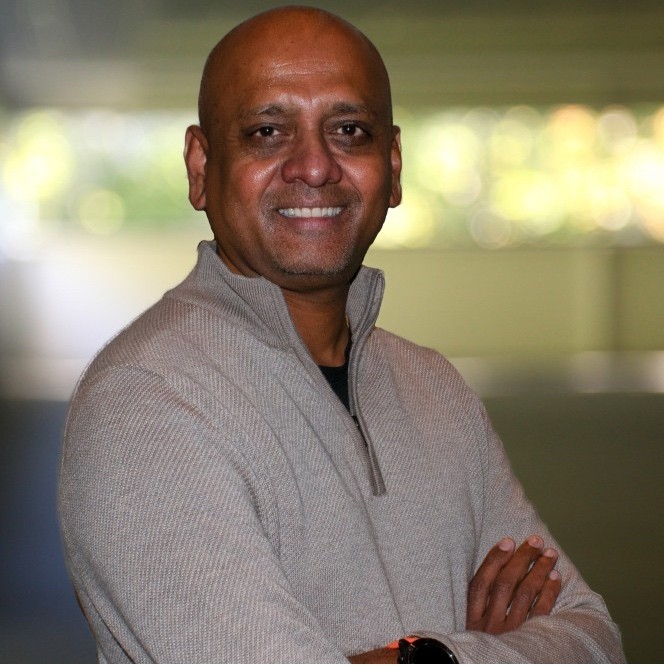
In this insightful episode, we feature Satish Iyer, vice president of emerging services at Dell Technologies. As part of theCUBE's collaboration with the New York Stock Exchange, we delve into the transformative domain of AI factories and emerging data center technologies. Joining the discussion is Dave Vellante of SiliconANGLE Media, who provides extensive insights into the AI landscape.
Satish Iyer shares expertise in innovation and ecosystems, focusing on Dell Technologies' role in the AI startup space. As a leader in general-purpose computing and enterprise AI, Dell is uniquely positioned to drive innovation by collaborating with over 500 startups within AI and technology transitions. The conversation is hosted by theCUBE Research and explores the evolving AI landscape with engaging inputs from seasoned analysts.
Key takeaways from the session include strategic insights on Dell's approach to partnering with startups in AI, emphasizing the importance of on-premise solutions for enterprise data integration. According to Iyer, Dell's leadership in enterprise infrastructure provides a unique advantage in solving data-oriented challenges. The benefits of Dell's AI Factory and its collaborations with innovative startups such as Glean and Cohere are highlighted as critical components in propelling enterprise AI forward.
Forgot Password
Almost there!
We just sent you a verification email. Please verify your account to gain access to
theCUBE + NYSE Wired: AI Factories - Data Centers of the Future. If you don’t think you received an email check your
spam folder.
Sign in to AI Factories - Data Centers of the Future.
In order to sign in, enter the email address you used to registered for the event. Once completed, you will receive an email with a verification link. Open the link to automatically sign into the site.
Register for AI Factories - Data Centers of the Future
Please fill out the information below. You will receive an email with a verification link confirming your registration. Click the link to automatically sign into the site.
You’re almost there!
We just sent you a verification email. Please click the verification button in the email. Once your email address is verified, you will have full access to all event content for AI Factories - Data Centers of the Future.
I want my badge and interests to be visible to all attendees.
Checking this box will display your presense on the attendees list, view your profile and allow other attendees to contact you via 1-1 chat. Read the Privacy Policy. At any time, you can choose to disable this preference.
Select your Interests!
add
Upload your photo
Uploading..
OR
Connect via Twitter
Connect via Linkedin
EDIT PASSWORD
Share
Forgot Password
Almost there!
We just sent you a verification email. Please verify your account to gain access to
theCUBE + NYSE Wired: AI Factories - Data Centers of the Future. If you don’t think you received an email check your
spam folder.
Sign in to AI Factories - Data Centers of the Future.
In order to sign in, enter the email address you used to registered for the event. Once completed, you will receive an email with a verification link. Open the link to automatically sign into the site.
Sign in to gain access to theCUBE + NYSE Wired: AI Factories - Data Centers of the Future
Please sign in with LinkedIn to continue to theCUBE + NYSE Wired: AI Factories - Data Centers of the Future. Signing in with LinkedIn ensures a professional environment.
Are you sure you want to remove access rights for this user?
Details
Manage Access
email address
Community Invitation
Satish Iyer, Dell
Exploring AI Ecosystems: Dell Technologies' Journey with Startups
In this insightful episode, we feature Satish Iyer, vice president of emerging services at Dell Technologies. As part of theCUBE's collaboration with the New York Stock Exchange, we delve into the transformative domain of AI factories and emerging data center technologies. Joining the discussion is Dave Vellante of SiliconANGLE Media, who provides extensive insights into the AI landscape.
Satish Iyer shares expertise in innovation and ecosystems, focusing on Dell Technologies' role in the AI startup space. As a leader in general-purpose computing and enterprise AI, Dell is uniquely positioned to drive innovation by collaborating with over 500 startups within AI and technology transitions. The conversation is hosted by theCUBE Research and explores the evolving AI landscape with engaging inputs from seasoned analysts.
Key takeaways from the session include strategic insights on Dell's approach to partnering with startups in AI, emphasizing the importance of on-premise solutions for enterprise data integration. According to Iyer, Dell's leadership in enterprise infrastructure provides a unique advantage in solving data-oriented challenges. The benefits of Dell's AI Factory and its collaborations with innovative startups such as Glean and Cohere are highlighted as critical components in propelling enterprise AI forward.
In this theCUBE + NYSE Wired segment, Satish Iyer, VP and CTO of Innovation & Ecosystems at Dell Technologies, joins theCUBE’s Dave Vellante to unpack how Dell is activating enterprise AI with an on-prem-first strategy. Iyer explains his two-pronged remit – co-innovating with customers via applied research and curating a fast-growing startup ecosystem – to bring cutting-edge capabilities to where the richest enterprise data lives: on premises. He details why data gravity, security and sovereignty put Dell’s AI Factory–ready infrastructure at the center of ado...Read more
exploreKeep Exploring
What is Satish Iyer's role at Dell Technologies regarding AI and startups?add
What is driving the current focus on activating enterprise AI at Dell and how does it align with the company's broader strategy?add
What role does on-premise infrastructure play in the Enterprise AI landscape and the partnerships with startups?add
What unique value can Dell offer that may not be provided by hyperscalers or venture firms?add
>> Hi, everyone. Welcome back to the New York Stock Exchange. This is theCUBE plus NYSE's coverage of AI factories and the data center of the future. We're super excited to have Satish Iyer in, and he's the VP and CTO of Innovation and Ecosystems for Dell Technologies, long-time CUBE alum, and friend of theCUBE. Satish, great to see you. Thanks for making some time.
Satish Iyer
>> Wonderful to see you, Dave. Thanks for having me here.
Dave Vellante
>> You've been busy, man. You and I have been talking for the better part of a year now about the trends that are going on in AI. And I wonder if you could set up for the audience just your role? I mean, people don't think of Dell as sort of an AI honeypot, but you are basically building out an ecosystem. I said AI. I meant startup honeypot. You are building out an ecosystem of startups, you're collaborating with startups. Of course, they want to work with a company like Dell, but what specifically is your role?
Satish Iyer
>> Yeah. So thank you again. So I'm part of the CTO office reporting to our global CTO generals. My focus is purely around developing innovation and ecosystems, so I kind of do two-pronged approach. One is I'm responsible for innovation we do with the customer, so we have a huge applied research team, so we take new technologies and apply it to some of the customer problems. The other aspect is startups, right? As you know, Dave, especially in the AI world, things move really, really fast, like the pace which we can't even imagine in the past, and this is one of the biggest transformation of technologies in many decades now. So I think the other area I focus on is purely to understand what is happening in this space in terms of the startups, there are various startups actually coming up with really, really cool innovations, to see how we can actually bring some of these things to Dell and how we can actually jointly work with them to actually solve some of the customer problems. So it's a pretty exciting goal.
Dave Vellante
>> Well, and Dell is the king of general-purpose computing, and x86, it built its business on PCs, and of course the enterprise off of x86. The deal we saw last week from NVIDIA and Intel is just amazing. I want to get to that. But Dell traditionally isn't thought of as a lure for startup companies, but you're building those deeper ties as you just mentioned into that ecosystem. Why now, what's driving this focus, and how does it align with your broader strategy?
Satish Iyer
>> That's a great question. So one of Dell's key focus is to basically activate what we call is activate enterprise AI, right? AI, as you know, it's pretty prominent in the consumer space now. A lot of startups are actually working towards what it takes for us to actually apply AI to enterprise. So Dell is actually very uniquely positioned. Like you said, on one hand, we are one of the biggest infrastructure players. In terms of AI, we are the biggest infrastructure player OEM in AI space. On the other hand, they're also big enterprise, right? We have to try AI ourselves. So we are in a unique situation where we can actually understand exactly where we can apply AI in a big enterprise, and we want to take advantage of lessons to our customers. And honestly, I think that's one of the main reasons startups are talking to us because when we talk about AI within an enterprise, Dave, and you know this, right? Enterprise AI landscape is all about data, and most, if not all of the rich enterprise data stays on-prem. And Dell is basically we are the leaders in on-prem infrastructure. So I think when we talk about how we can add scale and credibility to these startups by building these partnerships, every enterprise problem starts on-prem, because that's where all the rich, vast intelligent data is. And that's what gives us unique advantage on working with these startups.
Dave Vellante
>> So let's follow up on that, because 10 years ago, if you were a startup and you went into a venture capital to try to do a raise, if you weren't building in the cloud, they didn't want to talk to you, they didn't want you to spend the money on the CapEx. So let's double down on why they should be thinking about Dell right now. You just sort laid out a case which, by the way, we agree with, we've written extensively about. We put out a post about six, nine months ago, George Gilbert and I, why Jamie Dimon is Sam Altman's biggest competitor, the premise being that's where the proprietary data lives in enterprise tech, enterprise companies, Jamie Dimon being a metaphor for BroadStream Enterprises. But what unique value can Dell offer that hyperscalers might not be able to, or even venture firms?
Satish Iyer
>> Yeah. I mean, let's take a step back, right? A lot of startups still start. I mean, right now, at least since we started building a startup ecosystem, we have around 500 startups within our purview right now we are working with, a lot of them in the technology space, a lot of them in AI space, and some of them in the quantum space. We're not only looking at AI, but we're also looking at any technology transitions coming in this space. But to answer your question, I think one of the fundamental differences: startups do start, a lot of them do, it's easier for them to actually start with the cloud, easier for them to actually develop and validate their product market fit. But startups are realizing more and more that in order for them to be successful, they are to be on-prem, because when the enterprises are starting to apply AI, they're always thinking about what is their most critical business problem they need to solve? And then where they can actually apply AI to drive the productivity and where they get the biggest ROI from, right? So when the enterprises start looking at that, they are looking at their existing business processes, existing issues they have, whether it's internal or with their own customers, and that's what they want to solve. And good or bad, Dave, everything starts.
And I can tell you, talking to a lot of these startups in the last almost better part of a year now, it's incredible to see how many startups are actually thinking on-prem. I would probably say seven out of 10 startups or, yes, they may have some control implementation on the cloud, but they understand that vectorization and tokenization has to happen on-prem, and a lot of enterprises will not ship their data out. So I think that's a big advantage, and a lot of startups are already thinking that way, and that's incredible to see because obviously you and I know 15 years ago when the cloud wave started what happened, right? So I think in this time, it is different, and I see that most of these startups are thinking, "Really, how can we solve this for the customers who are going to be very, very protective about their data," right?
Dave Vellante
>> Yeah.
Satish Iyer
>> So data and security are paramount. I mean, that's kind of where everything starts.
Dave Vellante
>> Yeah. So let's connect the dots for the audience a little bit. So most startups, they don't have a route to on-prem in the enterprise other than through maybe a marketplace, and which makes sense that they start in the cloud to avoid those CapEx. But given that the real crown jewels of companies, organizations, data, we all know AI starts with data, that now there's a massive opportunity here. Again, what Intel and NVIDIA just announced unlocks. They pegged it, Satish, at about 50 billion, the TAM. Now, that's just the silicon TAM. David Floyer and I did an analysis over the weekend. We actually have it. If you look at all the spending, it's closer to a half a trillion. And so as we know, most of that lives on premises. So my question is, how do you decide which startups to engage with? Is it are you looking for technical fit? Is it a tie into the infrastructure? Is it Dell Capital maybe invest in them, the hybrid cloud angle, multi-cloud? How do you decide?
Satish Iyer
>> Yeah. That's a really good question. There is no easy answer, right? So I think if I really look at it simply, and I'll answer you in two parts. One is we look at it, what the typical architecture of, right? We are a very strong infrastructure player, then we start thinking about, "Okay, what is that it takes for our customers to be successful in on-prem AI deployment on Dell AI Factory?" Then we broke it down into data, model, and deploy, right? So we look at players within the data space, anything to do with data, right? And then we look at players within, for example, model space, in terms of model management, looking at various aspects of model security. And then we look at aspect of deployment space, what it takes for our customers to deploy these assets and then manage it by themselves, and because remember, they are not in public cloud. So I think one is, Dave, when you look at it from an architecture . The other way we looked at it is use case in, right? And this is actually our sweet spot. We actually have been really implementing AI within Dell quite massively in the last 18 months or so, and we have a lot of, obviously we treat ourselves as customer zero. So when we look at it, we are like, "Okay, what are the basic capabilities required for us to be able to drive top-down use cases?"
The use cases can be, for example, DevEx, it could be core gen, right? It could be something to do with next-generation support experiences. It could relate to having the best-in-class, let's say, invoicing mechanism or a partner mechanism for supply chain, or it could have best-in-class sales chat mechanisms. So we consciously in Dell knew we have four big tracks where we are actually applying AI in the company. So the second way to look at it is look at these use cases and say, "What are the startups which actually make us successful, allow us to be able to solve some of those problems?" It's a completely different approach. So in some way, we kind of drink our own Kool-Aid, right? We are bringing these startups, some of them solving a problem within Dell, and then we are turning it around to say, "Okay, let's actually take the same approach and same tech to go solve the same problem for our customers," and our customers love it. So that's kind of the simple way of looking at it is one of them is technology gaps, another one is basically , right? And it's , you know? And because we are applying some of these things within Dell, we can actually go to the enterprises and tell a really credible story in terms of how we are bringing these startups in. And it's a very different operating model for Dell, too. We are operating with a lot of these startups internally to solve some of these problems, which is actually amazing.
Dave Vellante
>> You mentioned earlier how fast things change in AI. It's so true. I go back to Dell Tech World. You mentioned 500 startups that you're working with, or at least on the radar. I go back to Dell Tech World, which was just last spring. It was in May, it feels like it was quite some time ago, but you had JPMC up on the stage. That was a great on-prem example. But I want to get into some of your favorite startups. One of my favorite is Starburst. They're really not a startup anymore, but the reason I like them is because AI and data go hand-in-hand. Starburst gives you access to that data in a federated fashion. We heard from Cohere a year ago at Dell Tech Summit last November. I had a deep, deep conversation with their COO and CTO with Cohere doing some really interesting thing with models. They're not chasing the holy grail of AGI. They're actually going after what we call enterprise AGI, i.e., that Jamie Dimon data. Glean is another one we heard. You guys made sort of an early announcement with them. I mean, I love Glean, what they're doing in collaborative AI, almost sort of improving on what we've seen with Microsoft Copilot. Who are some of your favorite examples of the startups that you're working with?
Satish Iyer
>> Yeah. I mean, again, the landscape is pretty broad in terms of who we touch. I mean, the examples you gave, especially Glean and Cohere are really good examples of startups we started to work with and that we are applying internally and we are building solutions with. So if you really think about it, before I give some names, I think the way we think about a success for a startup is four ways, right? One is we basically build a solution with them, potentially take it to our customer. We leverage them internally in terms of actually solving a Dell's problem within AI, and obviously we can take 180 and build a solution with the customer. We invest in them, and again, none of these are mutually exclusive, or we actually partner with them, right? So we have startups actually falling into multiple of these categories, so I would probably say, like I said, Gleam, we have Cohere, we work with a company in Boston called Maven AGI who actually does customer experiences with AI. We work with a company we just call Distyl, which actually does work for our supply chain. I'm thinking. We have Scan, which we actually do some work for automation and services, lakeFS which is actually allowing us to actually version-control data, which is actually pretty important for us, and it's a Israeli-based company. We work with some chip vendors, and we also work with SuperAnnotate, which is kind of a data annotation company. So I can go on and on. I mean, you also kind of made a comment about DTC. One of the things we are also doing now is Delta Capital. Our venture arm goes and invests in companies, and we have had really, really good record, but we are also tightly partnering with DTC-type. So we are doing a lot of back-and-forth homework because we bring a lot of companies to the table. If we think it's strategic to Dell, we take it to DTC and say, "Hey, you know what? This is cool tech." But our goal is to kind of identify, look around the corner, identify some of the cool companies, which will basically, we think we want to make a bet, we want to build something with them. And likewise, the opposite. So Dell Tech Capital also brings to us to say, "Hey, you are looking for a data cleanup company or a data prep company. Can you look at this one? We have made an investment in them." So it's been a very great experience actually working with our Dell DTC partners, and we share a lot of homework in terms of what you can find.
Dave Vellante
>> Right. And at GTC this year, Jensen laid out sort of three waves of AI: AI for the cloud, AI for enterprise, and AI for robotics. The cloud, frankly, right now is sort of running on one cylinder. I mean, it's hyperscaler CapEx. We're starting to see some evidence in enterprise adoption. The announcement of an x86 and CUDA, a hybrid stack, really we see as an accelerant. So my question to you is, if AI factories are the data centers of the future, where do you see startups playing the most important role? How is Dell positioning itself to be the premier partner of choice for those innovators?
Satish Iyer
>> Yeah. Again, we talked a lot about AI, but you are absolutely correct. I mean, our goal, we are also looking at startups, like I said, which are in the technology transition. So going into things like physical AI, which is we are looking at some robotics players. I just spent the last, two weeks ago, I was in Australia. We did a startup day with a whole bunch of startups in the ANZ region, and one of the startups I talked to is called Airspeeder.
And Airspeeder, basically they are building a flying car, like a Formula 1 racing, but the car flies, right? So, incredible. I mean, think about the amount of integration they have to bring to the table. So I think we are absolutely looking, not just looking at enterprise AI, also going into physical AI spaces where AI is applied to robotics and physical things. But in terms of where I see Dell positioned, it's also, look. Dell is one of the only, I would say, end-to-end infrastructure solution providers for startups that we can really, really nicely integrate a solution across the stack, and then we have a Dell AI Factory with NVIDIA stack. We also are big on embracing open ecosystems. If you see some of the recent announcements we have made, we've been working very, very closely on, I'm going to say yet, because we haven't said it the whole time in this call, on agent, right? So we've been working on agent interoperability and agentic, what it takes for enterprises to drive and adopt agentic architectures inside enterprises, so we've been working with a lot of agentic startups. So I think to me, that one of the main reasons why startups like to work with us is we not only have our AI factory with NVIDIA, but we also embrace open ecosystems, so we allow our customers want a choice, and if customers want to actually pick the best-in-class, we are able to actually demonstrate what those partners could be, right? And the fact that we can apply some of these, quote-unquote, enterprise problems, we are able to actually leverage Dell as customer zero. And we are not just talking there. We are actually applying this on those Dell AI factories and showing how that actually works inside Dell. It's an amazing proof point, and enterprise love to see that. So when I actually talk to startups, they're like, "Whoa, you're doing all of this stuff?" And so we can validate a lot of the startup technology ourself, and that's one of the cool things for us to do.
Dave Vellante
>> Yeah. Well, congratulations. We didn't mention agentic until 20 minutes in, and I'm glad you did mention it because we have Walmart coming on later, and that's all they're talking about is what they've done with autonomous agents. And I would love to have you back, Satish, to talk about robotics. We've done a couple of sessions now around robotics. I mean, it's fascinating. It's going to take some time to evolve. But that talk about TAM, the physical AI is just a super exciting space, and I'm glad to see you guys are thinking about that as well. Satish, I'll give you the final word. I really appreciate you taking the time and the work that you're doing with startups. Your thoughts to bring us home?
Satish Iyer
>> Look, at Dell, we are absolutely 100% committed in empowering. We think that empowering these startups by adding scale, adding credibility to their innovation and transforming some of those things to enterprise solutions. We are the leader in enterprise AI, right? We are the leader in enterprise infrastructure, we understand what it takes for enterprise to deploy AI on-prem, and we would love for players who are actually innovating and solving unique enterprise problems to come and talk to us. Like I said, we are broadening our technology scope, we are broadening our partner ecosystem. We are working with a lot of these small companies. It's been an amazing journey, and we love for you to come and talk to us and be part of this journey.
Dave Vellante
>> And bring them our way. We love the startups here at the NYSE Wired and theCUBE. So thank you, Satish Iyer, for spending some time with us. Really appreciate it.
Satish Iyer
>> Thank you. Thank you, Dave.
Dave Vellante
>> You bet. And-
Satish Iyer
>> Thank you....
Dave Vellante
>> thank you for watching AI Factory's The Future of Data Centers, theCUBE plus NYSE Wired. We'll be right back right after this short break.