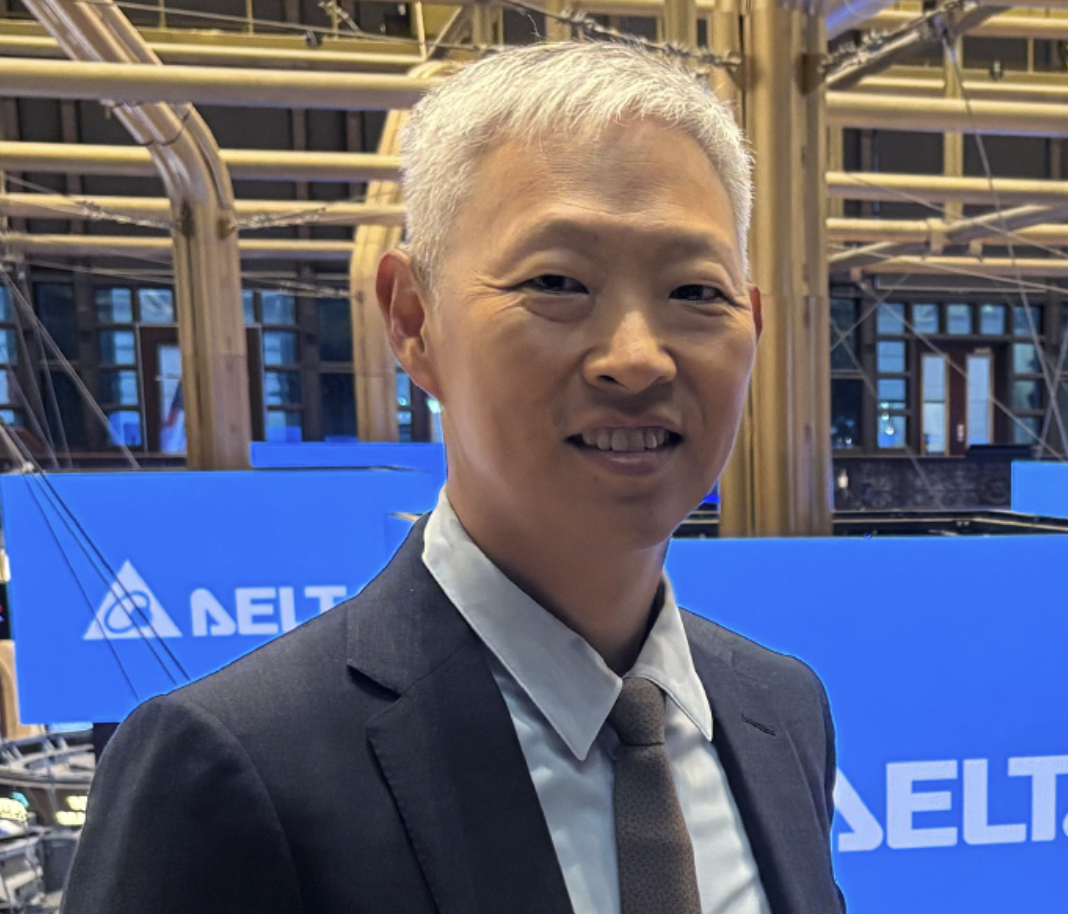
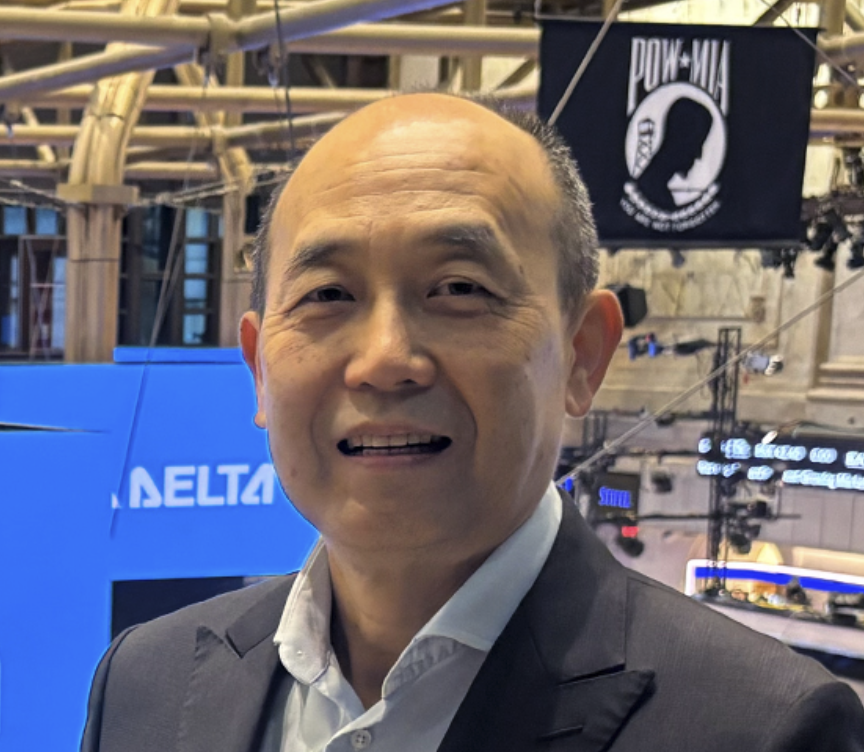
This conversation features Rodney Liu of Delta Electronics, Inc. and Lanford Liu of Delta Electronics, Inc., recorded for theCUBE and NYSE Wired: AI Factories. theCUBE Research frames the discussion while John Furrier moderates from the theCUBE and NYSE Wired studio.
The guests discuss power conversion, cooling and infrastructure for artificial intelligence scale data centers, covering power semiconductors, modular data centers and partnerships with hyperscalers. The discussion emphasizes data center efficiency, power electronics and practical AI infrastructure strategies for hyperscale deployments.
Lanford Liu of Delta Electronics, Inc. describes significant research and development investment approaching 10% of revenue and a sustained focus on efficiency. Liu notes many power conversion systems exceed 98% efficiency and outlines modular deployment approaches and collaboration models with hyperscalers; they emphasize the role of power semiconductors in scalable AI infrastructure and system-level reliability.
Rodney Liu of Delta Electronics, Inc. highlights close co-design with semiconductor partners and hyperscalers and a transition toward silicon carbide and gallium nitride as preferred power semiconductor materials. Liu details near-term adoption of liquid-to-air cooling and high-voltage DC architectures for AI factories and discusses implications for thermal management, modular data center design and power distribution.
Forgot Password
Almost there!
We just sent you a verification email. Please verify your account to gain access to
theCUBE + NYSE Wired: AI Factories - Data Centers of the Future. If you don’t think you received an email check your
spam folder.
Sign in to AI Factories - Data Centers of the Future.
In order to sign in, enter the email address you used to registered for the event. Once completed, you will receive an email with a verification link. Open the link to automatically sign into the site.
Register for AI Factories - Data Centers of the Future
Please fill out the information below. You will receive an email with a verification link confirming your registration. Click the link to automatically sign into the site.
You’re almost there!
We just sent you a verification email. Please click the verification button in the email. Once your email address is verified, you will have full access to all event content for AI Factories - Data Centers of the Future.
I want my badge and interests to be visible to all attendees.
Checking this box will display your presense on the attendees list, view your profile and allow other attendees to contact you via 1-1 chat. Read the Privacy Policy. At any time, you can choose to disable this preference.
Select your Interests!
add
Upload your photo
Uploading..
OR
Connect via Twitter
Connect via Linkedin
EDIT PASSWORD
Share
Forgot Password
Almost there!
We just sent you a verification email. Please verify your account to gain access to
theCUBE + NYSE Wired: AI Factories - Data Centers of the Future. If you don’t think you received an email check your
spam folder.
Sign in to AI Factories - Data Centers of the Future.
In order to sign in, enter the email address you used to registered for the event. Once completed, you will receive an email with a verification link. Open the link to automatically sign into the site.
Sign in to gain access to theCUBE + NYSE Wired: AI Factories - Data Centers of the Future
Please sign in with LinkedIn to continue to theCUBE + NYSE Wired: AI Factories - Data Centers of the Future. Signing in with LinkedIn ensures a professional environment.
Are you sure you want to remove access rights for this user?
Details
Manage Access
email address
Community Invitation
Rodney Liu & Lanford Liu, Delta Electronics, Inc.
This conversation features Rodney Liu of Delta Electronics, Inc. and Lanford Liu of Delta Electronics, Inc., recorded for theCUBE and NYSE Wired: AI Factories. theCUBE Research frames the discussion while John Furrier moderates from the theCUBE and NYSE Wired studio.
The guests discuss power conversion, cooling and infrastructure for artificial intelligence scale data centers, covering power semiconductors, modular data centers and partnerships with hyperscalers. The discussion emphasizes data center efficiency, power electronics and practical AI infrastructure strategies for hyperscale deployments.
Lanford Liu of Delta Electronics, Inc. describes significant research and development investment approaching 10% of revenue and a sustained focus on efficiency. Liu notes many power conversion systems exceed 98% efficiency and outlines modular deployment approaches and collaboration models with hyperscalers; they emphasize the role of power semiconductors in scalable AI infrastructure and system-level reliability.
Rodney Liu of Delta Electronics, Inc. highlights close co-design with semiconductor partners and hyperscalers and a transition toward silicon carbide and gallium nitride as preferred power semiconductor materials. Liu details near-term adoption of liquid-to-air cooling and high-voltage DC architectures for AI factories and discusses implications for thermal management, modular data center design and power distribution.
Director of Investor RelationsDelta Electronics, Inc.
Lanford Liu
Head of InvestmentsDelta Electronics, Inc.
search
John Furrier
>> (INTRO)I'm John Furrier, host of theCUBE. We are here in theCUBE's NYSE studio. Of course, we were at Palo Alto studio connecting Silicon Valley to Wall Street. This is part of our NYSE Wired program, the AI factories, the future of data center. Got two guests here are gonna go really deep on some of the important things around making these factories work. Delta Electronics makes some of the best components that makes the power behind the AI factories. These factories have to be powered by something that's part of it. Lanford Liu's here, head of Delta Electronics Capital Company. Thanks for coming on. Rodney Liu, head of investor relations for Delta Electronics, very successful company. Gentlemen, thank you for coming in early in the morning here at the NYSE.
Lanford Liu
>> Well, thank you for the invitation.
John Furrier
>> The, the AI infrastructure we've been covering has been really crazy good. the demand, the buildouts, they're all going rapid. but the power is a big part of it. The electronics, the systems themselves, the rack scale power distribution, cooling. These are the essential elements that make up the entire system. And these entire systems are producing intelligence. That's the driver for the AI generation. Can you guys explain the components that you guys offer and the technology? Because this is where there's innovation under the hood. This is where the engineering is. This is where the technology innovation's happening.
Lanford Liu
>> Sure. So we call ourselves, power conversion expert. What we do is we do all the way from chip to the grid, all the different types of power conversion devices. So on the chip level, you usually have some sort of a DC-to-DC converter and all the way to the grid, there are usually bigger systems, what we call AC-to-DC rectifier. And it's super important to have very, very efficient power supplies or power conversion equipment since you use so much electricity. Every single percentage of efficiency gain will just save tons of money for all these operators. So that's what we do. And most of our power conversion equipment, their efficiency is 98% and above.
John Furrier
>> Yeah, congratulations. A lot of people don't understand the complexities of the power piece. It's not as easy as thinking you're just going to deliver electricity. To power these systems. There's a lot that goes on, especially as these AI factories become such large scale. What are some of the key innovations that are going on? Because we hear DC current, that's obviously become a big thing. You see power and cooling is one of the hottest categories. Why is this so important? What's the key technology that makes it all happen?
Lanford Liu
>> So the power electronics, there's some really basic things. The basic theory has been around for decades, even, maybe over a century. But how to do it efficiently, that takes a lot of work, a lot of experiences. And actually, for a long time, a lot of universities sort of stopped teaching power electronics. They only focus on the digital side. Power electronics mostly is analog. And to be a good analog engineer, it takes years and years of training and experience. For Delta Electronics, we probably have more power electronic engineers than probably our next 2 or 3 competitors combined. So we've been at this game for a long, long time. we just, we spend a lot of resources in this. Our R&D cost is approaching 10% of our revenue. That's probably unheard of in our industry.
John Furrier
>> Rod, you also fly around, talk to your customers and partners. We always say constraints are where the engineers go and where the money goes. What are some of the constraints that are evolving with these new requirements? Because the systems, they're all connected, but these factories are powerful. What are the new constraints that are being worked on? you've got photonics, optical, co-packaged optics. There's so much innovation in packaging. What are the key areas that you guys are lasering in on right now?
Lanford Liu
>> So for power electronics, power conversion, it's always very incremental. Year after year, we work very closely with our suppliers, namely some of the really large semiconductor makers. We probably buy more power semiconductors than anybody else. Constantly, we're able to work with these key suppliers on critical next-generation technologies. So nowadays, most semiconductors are based on silicon, but we're also working on what's called silicon carbide and gallium nitride. And these will be able to increase the efficiency and also what we call the power density. Because in any kind of space, especially in the data center, it's limited, right? So you want to make these power supplies tighter, smaller, but at the same time, very efficient.
John Furrier
>> It's always a trade-off. Distance, density are two factors. How is that playing in? Because it seems like there's a lot more density in these AI factories. Obviously they're getting close together, but also you have scale up, scale out technology. So distance becomes challenging. So distance and density, how do you guys think about that in terms of some of the designs you're doing and partners you have?
Lanford Liu
>> Yeah, so that's basically on the semiconductor level, on the chip level. So again, we work very closely with companies like NVIDIA. So, we're able to produce these power supplies according to the next generation needs. For example, today we have been talking a lot about what we call vertical power delivery, that's directly on the chip level. So that takes a different type of technology. And again, it takes a lot of engineering effort to do that.
John Furrier
>> Well, you're in New York, you're head of capital investments, investor relations. What's some of the conversations that you guys have with investors, that go on? What— obviously the success has been amazing in the markets. The TAM is huge.
John Furrier
>> Yeah. is it a growth strategy discussion? Is it efficient use of capital? Is it M&A, organic innovation? What are some of the things you guys talk about? That you can say publicly.
Rodney Liu
>> I do come over quite regularly. And then, yeah, these days the key topics are always around this AI related data center related things, whether technologies or businesses or competition. And then also some issues, say supply issues, technology constraints and so on and so forth. We don't limit our scope of the discussion.
John Furrier
>> On growth, you mentioned before we came on camera, Lanford, that organic is a big part of it. Inorganic, that's acquisitions. Do you guys do less of that, more of— what's the strategy on the mix of growth?
Lanford Liu
>> Well, definitely we're looking more into M&A as part of our growth. Delta Electronics, Inc. has been the organic growth company, but at a certain size we need to look for more M&A opportunities. Last year we did about $17 billion. This year we're again looking at a very similar growth trajectory or even a little bit higher. So organically, we're doing well enough, but we are looking at longer term. Longer term, well, we definitely— we need additional growth drivers. So we're looking at a lot of different opportunities. A lot of them today, of course, are AI-related. We, besides majority acquisition and M&A, we also do a lot of investment. So through these minority investments, we also get to see what's coming up next.
John Furrier
>> So the speed is fast. Just on a personal note, What's it like now versus, say, 5 years ago in terms of the pace? It seems to me that it's just very fast. does that trickle down to you guys and add a lot of pressure? Well, let's talk about the velocity on the engineering side and the business side.
Lanford Liu
>> Well, that's definitely— there's always a lot of pressure, especially when you were going through such a fast growth trajectory. And for us, it's a lot of fun. And for engineers, and speaking from an engineering background, because I was trained as an engineer as well, it's exciting, but it's also long hours of work because you need to put in the hours, you need to put in the groundwork to make it right. So, but it's a part of our culture. We're very much engineering driven. And for us, it's really not just about electronics. We are also a major supplier on the cooling side for all these AI data centers. We probably supply more what's called liquid-to-air sidecar than anybody else. All these hyperscalers are our customers. And that's another very important part of the data center growth.
John Furrier
>> Yeah, the heat is massive. What does that look like as the AI factories grow? Because one of the things on liquid-cooled or air-cooled, they might not be big data centers, they might be medium-sized data centers. These AI factories are connecting. How does that product and technology evolve? Because if you can get these AI factories to be in a nice footprint, then the number of units being deployed at the edge in central offices. they don't have the megawatts yet, but you're going to start to imagine a world where you have some liquid, some air-cooled. How do you guys think about how is that market developing? What should people know?
Lanford Liu
>> So I think because the heat is being generated by all these GPU processors, some type of liquid cooling will become necessary. So Most of the data centers today are still purely air-cooled. I think most of them are gonna be converted to some type of liquid cooling. So the easiest way to do this is using liquid-to-air solutions that you don't have to build a brand new data center for it. Eventually we're gonna see new data centers built for liquid-to-liquid cooling. But it takes a much longer time. Of course, with that, you also need new land, new building, and so on. So for the immediate future, we see a lot of conversion from pure air cooling to liquid to air.
John Furrier
>> It's interesting. I wrote a post, a story about this. I said the AI factory is the new computer because you just mentioned those existing data centers. They're already preexisting. the cost to retrofit or rebuild is just easier to use the liquid to air. But the new ones that are being designed, every facet of the design is engineered.
Lanford Liu
>> Yeah.
John Furrier
>> How has that changed how you guys do business? Because in the old days, it was a real estate acquisition. You get some, you get some land, you get some power, and you put some racks in there, you're all good. Now they're thinking about it fully engineered. Every piece of material, every piece of the power connections, making sure they have the right flow coming into the data center behind the meter. So there's a whole nother engineering discipline emerging around that piece. What are your thoughts on that as an engineer? Because that's a fun area. Definitely takes a little longer to build, but when they're being built, they'll be efficient.
Lanford Liu
>> And of course it takes, longer to design as well. you really need to look at these new data centers as one big huge computer, right? So that's one big system. And we work with all these hyperscalers and NVIDIA very closely on their next build. So we understand what they need on a power side, also on a cooling side. On our own effort, we also have these products we call modularized data center. We actually put pretty much everything inside, sort of like a container, containerized data center. We, we already have a series of products for that, and we can pretty much populate that container with everything except for the server itself. So, we provide, of course, power, we apply thermal solutions. Also, we also provide some of the network connections, but for the server itself, it's up to customers to decide.
John Furrier
>> And you guys power, it's such a critical element of the system in that as a system, if it can't turn on, it doesn't work, right? So the game has changed. Standing up infrastructure was the old definition. Now you turn it on. So it all has to be designed. We just walked through that. So with that in mind, with the portfolio of Delta, what are the cool areas that are emerging? Because I'm imagining there's probably some technology coming for the new designs, for the expansion, because diversity of the footprints and the disaggregated infrastructure, they're going to have different requirements, right? Certainly constraints. Power is one of them.
Lanford Liu
>> Yeah, so I think the current trend is going towards higher voltage. So you have either 400-volt plus minus 400-volt DC or 800-volt DC. So that's definitely up and coming. You're going to see some of the bigger introductions of these 800-volt DC data centers this year, plus minus 400-volt DC, you already see some. We are a supplier to all these newer data centers as far as what's called high voltage DC architecture is concerned. Again, today most of that technology is still based on silicon power semiconductors. In the future, there's probably a bigger migration toward silicon carbide and then gallium nitride probably is the next step.
John Furrier
>> What's the most exciting part of your partnerships with the NVIDIAs of the world? Because they're building— what do they talk to you about? Do they just say, get it to 800? What are some of the conversations? Because you guys, again, you have to be part of the co-design. As they say, they're extreme co-design. They've pioneered that. That's been one of the big outcomes from this revolution is that co-designing is early and often?
Lanford Liu
>> So the conversation is always two-way. And of course, when you develop these new technologies early on, there could be a lot of design changes. And that puts additional pressure on engineers. And we do work very closely with semiconductor makers like NVIDIA. We also work with all the hyperscalers. And of course, with the hyperscalers today, most of them also have their own silicon and they might have a different type of thinking of how the system should look like. So we work with all the big ones and everybody thinks slightly differently. And again, in the early stage, there are a lot of changes. So it's constant working almost 24 hours a day.
John Furrier
>> Well, you guys have a very busy schedule here in the US. Are you going to be moving around meeting folks?
Lanford Liu
>> Yeah, both investors now and also, of course, as head of investment, I also look at a lot of potential acquisition targets. That's what I'm doing on this trip as well.
John Furrier
>> Okay. So if I asked you, how would you lay out your percentage of investment mix? How would you categorize that? Do you look at root technologies? Partnerships? How do you view that investment thesis?
Lanford Liu
>> So it's a mix. So we do both minority investment and full acquisition. When it comes to full acquisition, then usually we acquire a company immediately adjacent to what we do. Sometimes we do a little bit consolidation play. That means, we acquire some very similar type of business. But on the minority side, we actually invest in something not very close to what we do today. That way, we can experiment with some of the newer fields because you really never know what's going to come up next.
Rodney Liu
>> Yeah.
John Furrier
>> So adjacencies really mainly keep the core organic growth. That's the thesis. And then look at adjacencies. Any hot technologies that's on your radar that if anyone's watching, building and formulating a plan or engineering, What are some areas that are top of mind for you?
Lanford Liu
>> So again, on the power electronics side, where we look very closely at these semiconductor development, we definitely have a lot of investment in that field as well. On the thermal side, today of course is mostly liquid to air. For liquid to liquid, we have certain solutions. And next, it could be immersion cooling. We definitely were also working with quite a few companies on that as well. Great.
John Furrier
>> And you wanna put a plug in for some of the activities you have, Rodney?
Rodney Liu
>> I'll be visiting investors pretty much from East Coast to West Coast. And then I'll be at the booth of the OCP Summit next week to host some of the investor visits as well. We will attend a lot of these big events quite regularly and in fact we'll be there because a lot of investors, they want to see the actual products, especially the new things that we demonstrate at those trade shows.
John Furrier
>> What's the new things now that's hot? What are the new hot products?
Rodney Liu
>> I think it's going to be the new generationpower solution for the next generation AI server, and then on the grid side, we have lately kind of organized a new team to provide some of the very innovative things such as the fuel cells, the solid-state transformers, we've been working pretty hard on the microgrid front. Then we always try to demonstrate such innovations at the trade shows as well.
John Furrier
>> Yeah, people don't know this when they see the AI Factory, they think, okay, I'm getting tokens, but having a steady current really is a big deal. What happens? Explain what happens when you don't have the steady current, whether it's coming from the grid or onsite. This has a huge impact. Explain from your standpoint, because this is not well known in the mainstream.
Lanford Liu
>> Well, essentially, if the power supply is not steady, it can affect how the semiconductor work. So on a smaller level, just for example, on your laptop, if the current is not steady, it could just simply stop working. So you probably see a black screen sometimes. For the bigger data center, actually it's even more serious. Some of the processes could stop working altogether. And then whatever comes out is going to be useless. And so it's disruptive to the operations. It is, it is.
John Furrier
>> So today, because, it's not like the power went out, it's just fluctuations.
Lanford Liu
>> It's fluctuations. The voltage is not, it's not constant. Whatever, current is not constant. It's a
John Furrier
>> big—There's a lot of engineering. I wanted to point that out. I really appreciate that. Guys, thanks so much for coming in and being part of our AI Factory series where we interview leaders. I really appreciate what you do. We need the power, liquid to air cooling, get that current. Again, this is what powers AI factories, what you guys do. Thanks for coming on.
Lanford Liu
>> Thank
John Furrier
>> you.I'm John Furrier here with the AI Factory series at the NYSE Wired studio here in New York City. Of course, we have a Palo Alto studio. Thanks for watching.
>> (INTRO)I'm John Furrier, host of theCUBE. We are here in theCUBE's NYSE studio. Of course, we were at Palo Alto studio connecting Silicon Valley to Wall Street. This is part of our NYSE Wired program, the AI factories, the future of data center. Got two guests here are gonna go really deep on some of the important things around making these factories work. Delta Electronics makes some of the best components that makes the power behind the AI factories. These factories have to be powered by something that's part of it. Lanford Liu's here, head of Delta Electronics Capital Company. Thanks for coming on. Rodney Liu, head of investor relations for Delta Electronics, very successful company. Gentlemen, thank you for coming in early in the morning here at the NYSE.
Lanford Liu
>> Well, thank you for the invitation.
John Furrier
>> The, the AI infrastructure we've been covering has been really crazy good. the demand, the buildouts, they're all going rapid. but the power is a big part of it. The electronics, the systems themselves, the rack scale power distribution, cooling. These are the essential elements that make up the entire system. And these entire systems are producing intelligence. That's the driver for the AI generation. Can you guys explain the components that you guys offer and the technology? Because this is where there's innovation under the hood. This is where the engineering is. This is where the technology innovation's happening.
Lanford Liu
>> Sure. So we call ourselves, power conversion expert. What we do is we do all the way from chip to the grid, all the different types of power conversion devices. So on the chip level, you usually have some sort of a DC-to-DC converter and all the way to the grid, there are usually bigger systems, what we call AC-to-DC rectifier. And it's super important to have very, very efficient power supplies or power conversion equipment since you use so much electricity. Every single percentage of efficiency gain will just save tons of money for all these operators. So that's what we do. And most of our power conversion equipment, their efficiency is 98% and above.
John Furrier
>> Yeah, congratulations. A lot of people don't understand the complexities of the power piece. It's not as easy as thinking you're just going to deliver electricity. To power these systems. There's a lot that goes on, especially as these AI factories become such large scale. What are some of the key innovations that are going on? Because we hear DC current, that's obviously become a big thing. You see power and cooling is one of the hottest categories. Why is this so important? What's the key technology that makes it all happen?
Lanford Liu
>> So the power electronics, there's some really basic things. The basic theory has been around for decades, even, maybe over a century. But how to do it efficiently, that takes a lot of work, a lot of experiences. And actually, for a long time, a lot of universities sort of stopped teaching power electronics. They only focus on the digital side. Power electronics mostly is analog. And to be a good analog engineer, it takes years and years of training and experience. For Delta Electronics, we probably have more power electronic engineers than probably our next 2 or 3 competitors combined. So we've been at this game for a long, long time. we just, we spend a lot of resources in this. Our R&D cost is approaching 10% of our revenue. That's probably unheard of in our industry.
John Furrier
>> Rod, you also fly around, talk to your customers and partners. We always say constraints are where the engineers go and where the money goes. What are some of the constraints that are evolving with these new requirements? Because the systems, they're all connected, but these factories are powerful. What are the new constraints that are being worked on? you've got photonics, optical, co-packaged optics. There's so much innovation in packaging. What are the key areas that you guys are lasering in on right now?
Lanford Liu
>> So for power electronics, power conversion, it's always very incremental. Year after year, we work very closely with our suppliers, namely some of the really large semiconductor makers. We probably buy more power semiconductors than anybody else. Constantly, we're able to work with these key suppliers on critical next-generation technologies. So nowadays, most semiconductors are based on silicon, but we're also working on what's called silicon carbide and gallium nitride. And these will be able to increase the efficiency and also what we call the power density. Because in any kind of space, especially in the data center, it's limited, right? So you want to make these power supplies tighter, smaller, but at the same time, very efficient.
John Furrier
>> It's always a trade-off. Distance, density are two factors. How is that playing in? Because it seems like there's a lot more density in these AI factories. Obviously they're getting close together, but also you have scale up, scale out technology. So distance becomes challenging. So distance and density, how do you guys think about that in terms of some of the designs you're doing and partners you have?
Lanford Liu
>> Yeah, so that's basically on the semiconductor level, on the chip level. So again, we work very closely with companies like NVIDIA. So, we're able to produce these power supplies according to the next generation needs. For example, today we have been talking a lot about what we call vertical power delivery, that's directly on the chip level. So that takes a different type of technology. And again, it takes a lot of engineering effort to do that.
John Furrier
>> Well, you're in New York, you're head of capital investments, investor relations. What's some of the conversations that you guys have with investors, that go on? What— obviously the success has been amazing in the markets. The TAM is huge.
John Furrier
>> Yeah. is it a growth strategy discussion? Is it efficient use of capital? Is it M&A, organic innovation? What are some of the things you guys talk about? That you can say publicly.
Rodney Liu
>> I do come over quite regularly. And then, yeah, these days the key topics are always around this AI related data center related things, whether technologies or businesses or competition. And then also some issues, say supply issues, technology constraints and so on and so forth. We don't limit our scope of the discussion.
John Furrier
>> On growth, you mentioned before we came on camera, Lanford, that organic is a big part of it. Inorganic, that's acquisitions. Do you guys do less of that, more of— what's the strategy on the mix of growth?
Lanford Liu
>> Well, definitely we're looking more into M&A as part of our growth. Delta Electronics, Inc. has been the organic growth company, but at a certain size we need to look for more M&A opportunities. Last year we did about $17 billion. This year we're again looking at a very similar growth trajectory or even a little bit higher. So organically, we're doing well enough, but we are looking at longer term. Longer term, well, we definitely— we need additional growth drivers. So we're looking at a lot of different opportunities. A lot of them today, of course, are AI-related. We, besides majority acquisition and M&A, we also do a lot of investment. So through these minority investments, we also get to see what's coming up next.
John Furrier
>> So the speed is fast. Just on a personal note, What's it like now versus, say, 5 years ago in terms of the pace? It seems to me that it's just very fast. does that trickle down to you guys and add a lot of pressure? Well, let's talk about the velocity on the engineering side and the business side.
Lanford Liu
>> Well, that's definitely— there's always a lot of pressure, especially when you were going through such a fast growth trajectory. And for us, it's a lot of fun. And for engineers, and speaking from an engineering background, because I was trained as an engineer as well, it's exciting, but it's also long hours of work because you need to put in the hours, you need to put in the groundwork to make it right. So, but it's a part of our culture. We're very much engineering driven. And for us, it's really not just about electronics. We are also a major supplier on the cooling side for all these AI data centers. We probably supply more what's called liquid-to-air sidecar than anybody else. All these hyperscalers are our customers. And that's another very important part of the data center growth.
John Furrier
>> Yeah, the heat is massive. What does that look like as the AI factories grow? Because one of the things on liquid-cooled or air-cooled, they might not be big data centers, they might be medium-sized data centers. These AI factories are connecting. How does that product and technology evolve? Because if you can get these AI factories to be in a nice footprint, then the number of units being deployed at the edge in central offices. they don't have the megawatts yet, but you're going to start to imagine a world where you have some liquid, some air-cooled. How do you guys think about how is that market developing? What should people know?
Lanford Liu
>> So I think because the heat is being generated by all these GPU processors, some type of liquid cooling will become necessary. So Most of the data centers today are still purely air-cooled. I think most of them are gonna be converted to some type of liquid cooling. So the easiest way to do this is using liquid-to-air solutions that you don't have to build a brand new data center for it. Eventually we're gonna see new data centers built for liquid-to-liquid cooling. But it takes a much longer time. Of course, with that, you also need new land, new building, and so on. So for the immediate future, we see a lot of conversion from pure air cooling to liquid to air.
John Furrier
>> It's interesting. I wrote a post, a story about this. I said the AI factory is the new computer because you just mentioned those existing data centers. They're already preexisting. the cost to retrofit or rebuild is just easier to use the liquid to air. But the new ones that are being designed, every facet of the design is engineered.
Lanford Liu
>> Yeah.
John Furrier
>> How has that changed how you guys do business? Because in the old days, it was a real estate acquisition. You get some, you get some land, you get some power, and you put some racks in there, you're all good. Now they're thinking about it fully engineered. Every piece of material, every piece of the power connections, making sure they have the right flow coming into the data center behind the meter. So there's a whole nother engineering discipline emerging around that piece. What are your thoughts on that as an engineer? Because that's a fun area. Definitely takes a little longer to build, but when they're being built, they'll be efficient.
Lanford Liu
>> And of course it takes, longer to design as well. you really need to look at these new data centers as one big huge computer, right? So that's one big system. And we work with all these hyperscalers and NVIDIA very closely on their next build. So we understand what they need on a power side, also on a cooling side. On our own effort, we also have these products we call modularized data center. We actually put pretty much everything inside, sort of like a container, containerized data center. We, we already have a series of products for that, and we can pretty much populate that container with everything except for the server itself. So, we provide, of course, power, we apply thermal solutions. Also, we also provide some of the network connections, but for the server itself, it's up to customers to decide.
John Furrier
>> And you guys power, it's such a critical element of the system in that as a system, if it can't turn on, it doesn't work, right? So the game has changed. Standing up infrastructure was the old definition. Now you turn it on. So it all has to be designed. We just walked through that. So with that in mind, with the portfolio of Delta, what are the cool areas that are emerging? Because I'm imagining there's probably some technology coming for the new designs, for the expansion, because diversity of the footprints and the disaggregated infrastructure, they're going to have different requirements, right? Certainly constraints. Power is one of them.
Lanford Liu
>> Yeah, so I think the current trend is going towards higher voltage. So you have either 400-volt plus minus 400-volt DC or 800-volt DC. So that's definitely up and coming. You're going to see some of the bigger introductions of these 800-volt DC data centers this year, plus minus 400-volt DC, you already see some. We are a supplier to all these newer data centers as far as what's called high voltage DC architecture is concerned. Again, today most of that technology is still based on silicon power semiconductors. In the future, there's probably a bigger migration toward silicon carbide and then gallium nitride probably is the next step.
John Furrier
>> What's the most exciting part of your partnerships with the NVIDIAs of the world? Because they're building— what do they talk to you about? Do they just say, get it to 800? What are some of the conversations? Because you guys, again, you have to be part of the co-design. As they say, they're extreme co-design. They've pioneered that. That's been one of the big outcomes from this revolution is that co-designing is early and often?
Lanford Liu
>> So the conversation is always two-way. And of course, when you develop these new technologies early on, there could be a lot of design changes. And that puts additional pressure on engineers. And we do work very closely with semiconductor makers like NVIDIA. We also work with all the hyperscalers. And of course, with the hyperscalers today, most of them also have their own silicon and they might have a different type of thinking of how the system should look like. So we work with all the big ones and everybody thinks slightly differently. And again, in the early stage, there are a lot of changes. So it's constant working almost 24 hours a day.
John Furrier
>> Well, you guys have a very busy schedule here in the US. Are you going to be moving around meeting folks?
Lanford Liu
>> Yeah, both investors now and also, of course, as head of investment, I also look at a lot of potential acquisition targets. That's what I'm doing on this trip as well.
John Furrier
>> Okay. So if I asked you, how would you lay out your percentage of investment mix? How would you categorize that? Do you look at root technologies? Partnerships? How do you view that investment thesis?
Lanford Liu
>> So it's a mix. So we do both minority investment and full acquisition. When it comes to full acquisition, then usually we acquire a company immediately adjacent to what we do. Sometimes we do a little bit consolidation play. That means, we acquire some very similar type of business. But on the minority side, we actually invest in something not very close to what we do today. That way, we can experiment with some of the newer fields because you really never know what's going to come up next.
Rodney Liu
>> Yeah.
John Furrier
>> So adjacencies really mainly keep the core organic growth. That's the thesis. And then look at adjacencies. Any hot technologies that's on your radar that if anyone's watching, building and formulating a plan or engineering, What are some areas that are top of mind for you?
Lanford Liu
>> So again, on the power electronics side, where we look very closely at these semiconductor development, we definitely have a lot of investment in that field as well. On the thermal side, today of course is mostly liquid to air. For liquid to liquid, we have certain solutions. And next, it could be immersion cooling. We definitely were also working with quite a few companies on that as well. Great.
John Furrier
>> And you wanna put a plug in for some of the activities you have, Rodney?
Rodney Liu
>> I'll be visiting investors pretty much from East Coast to West Coast. And then I'll be at the booth of the OCP Summit next week to host some of the investor visits as well. We will attend a lot of these big events quite regularly and in fact we'll be there because a lot of investors, they want to see the actual products, especially the new things that we demonstrate at those trade shows.
John Furrier
>> What's the new things now that's hot? What are the new hot products?
Rodney Liu
>> I think it's going to be the new generationpower solution for the next generation AI server, and then on the grid side, we have lately kind of organized a new team to provide some of the very innovative things such as the fuel cells, the solid-state transformers, we've been working pretty hard on the microgrid front. Then we always try to demonstrate such innovations at the trade shows as well.
John Furrier
>> Yeah, people don't know this when they see the AI Factory, they think, okay, I'm getting tokens, but having a steady current really is a big deal. What happens? Explain what happens when you don't have the steady current, whether it's coming from the grid or onsite. This has a huge impact. Explain from your standpoint, because this is not well known in the mainstream.
Lanford Liu
>> Well, essentially, if the power supply is not steady, it can affect how the semiconductor work. So on a smaller level, just for example, on your laptop, if the current is not steady, it could just simply stop working. So you probably see a black screen sometimes. For the bigger data center, actually it's even more serious. Some of the processes could stop working altogether. And then whatever comes out is going to be useless. And so it's disruptive to the operations. It is, it is.
John Furrier
>> So today, because, it's not like the power went out, it's just fluctuations.
Lanford Liu
>> It's fluctuations. The voltage is not, it's not constant. Whatever, current is not constant. It's a
John Furrier
>> big—There's a lot of engineering. I wanted to point that out. I really appreciate that. Guys, thanks so much for coming in and being part of our AI Factory series where we interview leaders. I really appreciate what you do. We need the power, liquid to air cooling, get that current. Again, this is what powers AI factories, what you guys do. Thanks for coming on.
Lanford Liu
>> Thank
John Furrier
>> you.I'm John Furrier here with the AI Factory series at the NYSE Wired studio here in New York City. Of course, we have a Palo Alto studio. Thanks for watching.





























 John Furrier