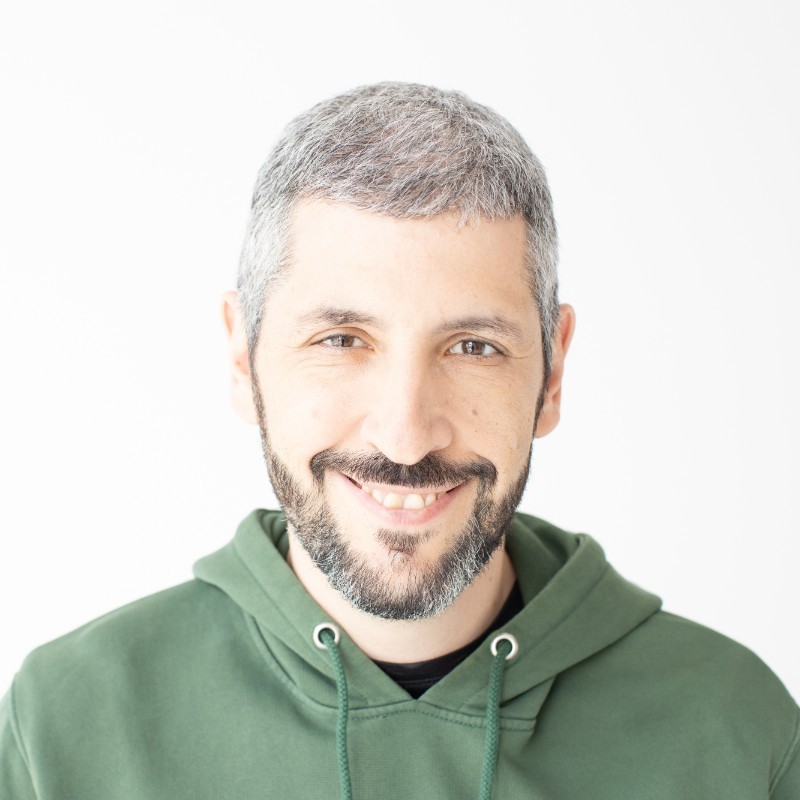
In this insightful discussion, Roman Chernin, co-founder and Chief Business Officer of Nebius, joins John Furrier, co-founder and Co-CEO of SiliconANGLE Media, on theCUBE's NYSE Wired program. The conversation centers around "AI Factories: Data Centers of the Future," an event exploring the evolutionary role of large-scale data centers in powering the next generation of artificial intelligence applications.
In this episode, Chernin shares their expertise on leveraging cloud infrastructure to accommodate AI workloads. They delve into Nebius's business model, highlighting a recent strategic collaboration with Microsoft. This partnership, valued at up to $20 billion, signifies a crucial step for the company in scaling their multi-tenant cloud services tailored for both small startups and large enterprises. The video, hosted by theCUBE Research and John Furrier, provides valuable insights into the development of global and sovereign systems.
Key takeaways from the discussion include the strategic importance of specialization in serving AI-centric workloads, according to Chernin. They emphasize the need for a hybrid approach combining supercomputing with cloud infrastructure to meet diverse enterprise requirements. The conversation also touches on Nebius's role in enabling open-source AI development and their strategic direction towards becoming a platform provider rather than a utility company.
Forgot Password
Almost there!
We just sent you a verification email. Please verify your account to gain access to
theCUBE + NYSE Wired: AI Factories - Data Centers of the Future. If you don’t think you received an email check your
spam folder.
Sign in to AI Factories - Data Centers of the Future.
In order to sign in, enter the email address you used to registered for the event. Once completed, you will receive an email with a verification link. Open the link to automatically sign into the site.
Register for AI Factories - Data Centers of the Future
Please fill out the information below. You will receive an email with a verification link confirming your registration. Click the link to automatically sign into the site.
You’re almost there!
We just sent you a verification email. Please click the verification button in the email. Once your email address is verified, you will have full access to all event content for AI Factories - Data Centers of the Future.
I want my badge and interests to be visible to all attendees.
Checking this box will display your presense on the attendees list, view your profile and allow other attendees to contact you via 1-1 chat. Read the Privacy Policy. At any time, you can choose to disable this preference.
Select your Interests!
add
Upload your photo
Uploading..
OR
Connect via Twitter
Connect via Linkedin
EDIT PASSWORD
Share
Forgot Password
Almost there!
We just sent you a verification email. Please verify your account to gain access to
theCUBE + NYSE Wired: AI Factories - Data Centers of the Future. If you don’t think you received an email check your
spam folder.
Sign in to AI Factories - Data Centers of the Future.
In order to sign in, enter the email address you used to registered for the event. Once completed, you will receive an email with a verification link. Open the link to automatically sign into the site.
Sign in to gain access to theCUBE + NYSE Wired: AI Factories - Data Centers of the Future
Please sign in with LinkedIn to continue to theCUBE + NYSE Wired: AI Factories - Data Centers of the Future. Signing in with LinkedIn ensures a professional environment.
In this theCUBE + NYSE Wired segment from “AI Factories – Data Centers of the Future,” Nebius co-founder and CBO Roman Chernin sits down with theCUBE’s John Furrier at the New York Stock Exchange to unpack how AI factories are reshaping enterprise infrastructure and the future of data centers. Chernin outlines Nebius’ two-track strategy: a multi-tenant cloud built for developer experience and managed services, and large-scale, mostly bare-metal deployments for hyperscalers and AI labs. He discusses the significance of Nebius’ Microsoft deal (described as “up ...Read more
exploreKeep Exploring
What is the business model and what services does the company provide?add
What is the significance of the Microsoft deal for AI development and the company involved?add
What is your perspective on the combination of cloud experience and supercomputing efficiency in technology development?add
What is the relationship between Nebius and ClickHouse, and what is Nebius's stake in the company?add
What are the key challenges and goals in scaling a platform for developers in the current market?add
>> Welcome back, everyone. I'm John Furrier, host of theCUBE here at the New York Stock Exchange CUBE Studios on the East Coast. This is our access point, our metro point of presence for the entrepreneurship going on here. Of course, we have theCUBE Studios in Palo Alto, California connecting Silicon Valley, and Wall Street. This is part of our NYSE Wired CUBE programming, and community. And we're featuring the AI factories, the future of the data center series, an ongoing series featuring the leaders, making it happen, building out next generation large scale infrastructure that's going to power in the next generation. A great guest here, entrepreneur, Roman Chernin, co-founder, and CBO of Nebius. Nebius? Nebius?
Roman Chernin
>> Nebius.>> Nebius.
Roman Chernin
>> Okay. Thanks for having me.>> Thanks for coming in. We love large scale systems. We've been saying this for four years now the world now has got there.
Roman Chernin
>> Even before it became luxury.>> We knew it was going to be big before it was big. I mean, you could see the writing on the wall. We've been covering cloud. Cloud capbacks has just been thundering away past four years, past two years in particular everyone on Wall Street, everyone's paying attention. The numbers are significant. They're not where they were. But it speaks to the trend, which is the world is moving to large scale systems, global systems, sovereign systems that will enable in what we see coming as the big wave, AI native, agentic, all that. New applications are going to need all that power, and horsepower, and power. Talk about what you guys are doing right now because you have momentum. You got a big deal, Microsoft, you just closed up to 20 billion. I mean, we're talking about large capacity build outs. Give a quick intro to the business model, and what you guys do.
Roman Chernin
>> Sure, happy to. We think that we have actually two parts of the business. We think about it as two parts of the business. The core business we built is actually the cloud. We build a multi-tenant cloud with a very sophisticated software platform with a lot of managed services, and we build it to serve all the variety of the customers, all the way from small start-ups to the large enterprises. And we can speak about it separately, like how we observe the evolution of the use cases, how we observe the evolution of the customers, and who is driving the consumption now, and so on. And then the second line of the business, you can call it the deals like Microsoft, like the large deployments, mostly bare metal when we help, when we enable the largest labs, and hyperscalers to move on with their AI development. So, we look at the Microsoft deal as these type of the operations, and it's a big milestone for the company, obviously for many reasons. One, because this is justification of our maturity. You can imagine that Microsofts of the world don't sign the deals with someone whom they didn't trust.>> They spent a lot of dough, but they have needs.
Roman Chernin
>> They have needs, and they have choice whom to work with obviously. So, this is justification. Then the second, this is actually tremendous scale to work with. I think when we will deploy the full scale project with Microsoft, it'll be one of the largest in one place, deployments of the GB300s for the moment. So, it's a challenge engineering, very interesting engineering challenge to provide it on scale, and the thought which may be even the most important for us, that gives us the scale, and the fuel to actually feed back to our core business. We look at this as a, you can think about it as a weird weight fundraise event. So, to build the cloud business, when you don't finance the large deployments against the deals, but you deploy in advance, you need a significant balance sheet. And the deals like one we did with Microsoft actually gives you A, more tools to raise, B, and you maybe mentioned that the Microsoft deal was followed by the fundraise. And B, this deal itself actually generates significant cash flow that we can reinvest to build the core product.>> Yeah, and you get the capacity. So, I think this again, you have two businesses build data center, large scale computing data centers, and serve AI workloads.
Roman Chernin
>> Yeah.>> Okay. So, what I like about what you guys are doing is that you're not like anti cloud. Cloud computing is a large scale on premise. If you think about us, it's a data center. And so distributed computing paradigm is such where, okay, I'm an enterprise, I will want to have my horsepower, my machine, large scale supercomputer, which is a cluster of clustered systems near my data, but I'll still talk to the cloud where the cloud can so they can see, I see blurring. I guess my question to you is what's your reaction to that? Because cloud is evolving, because now the distributed computing paradigm is changing. That's a fundamental system change. What's your reaction to that?
Roman Chernin
>> We look at this very simple, to be honest. I think that people really need the mix of two things. They need experience that they get used to living in the cloud, all the flexibility, all the tooling, all ability to provision as much resources as you need. The experience that people get used to have in the cloud, and supercomputing meaning large-scale distributed workloads to be run efficiently in this. What we actually try to build in our core business is we said the baby of supercomputer in the cloud. So, if you think what we built, this is the mix of these two things, experience of the cloud, developer experience as a cloud, and we very much thinking about what we built as a developer experience, and supercomputer efficiency. We don't want to lose any slopes of performance. And we actually do a lot to benchmark, and justify that when you come to the cloud experience with us, you don't lose efficiency because this is very expensive. This is very significant investment for any of our customer. They want to make sure that they extract any dollar out of any part of ROI out of their investments, and reality, it comes from both components. How much spend, how much your developers spend time to make thing work works a lot, and all the performance works a lot.>> Roman, this is a great conversation because you just basically boil down all the Twitter wars, and X wars down to a simple thing, choice. At the end of the day, money's being spent to run stuff at the highest speed possible. There's no dogma to that. So, take me through some of the hybrid, I mean, you basically said if you marry supercomputing with cloud, you're the baby. Okay. So, what is the choice? Why are they choosing you guys? What's the specifics? What's the secret sauce, or unique differentiation? Is it the fact that you can get that developer experience at the price performance levels? Is it workload specific? I want to run an AI lab on something, or I have a specific thing. What's the reason why that works?
Roman Chernin
>> Yeah, I think there are fundamental reasons, and there are different use cases that require some additional components to make them successful. The fundamental reasons actually the specialization. At the end of the day, I think that what gives us life is the fact that we are very much specialized. So, we don't try to build any universal cloud. We go only after AI centric workloads, meaning large distributed training, inference on scale, and we do everything, and we build the platform from the ground up to actually address these use cases in the best performance. And then the approach that we took that it's not just managed infrastructure, but this is the cloud actually addresses a lot of developer pay points. So, you can think about what is the time to value. You come to provider as a company, as a startup, or enterprise, how long time will it take from signing the contract, or asking the quota to running the production workload? Will it be hours, will it be days, will it be weeks, or will it be months because you actually wait when it'll be deployed on the physical level? So, we try to squeeze this time as possible, and we see a lot of positive feedback there. And then all you do in the process, all the tools that you introduce, all the managed services you introduce how you make sure that the performance is there. So, all that comes to the experience. And if you think about it economically, that's all the components of TCO, like their ROI.>> You guys are nerds, you guys are large scale techies. You have the capabilities, you've been playing with this building stuff how many years? Go back, what's...
Roman Chernin
>> The question when you start counting? So, our core engineering team that the company was built around came from Yandex, that was a Russian large you can call it hyperscaler. And they actually had 20 years of experience of building the infrastructure of the scale of the global companies. So, for example, people ask how the small company like you deal with the large contracts like Microsoft, and we say, you know what?>> We know our shit. That's why. We saw the scale. Okay, so we've been following you guys for a while, so we know a lot bit about you. That's why I wanted to ask that. It's important to point that out. It's not like you were born yesterday. It has been around for a while. Core competency, very solid, large scale systems, and software almost like AWS. Okay, got that. We're also a customer of ClickHouse by the way. We use ClickHouse database, and some of our backend, you guys started ClickHouse, right?
Roman Chernin
>> Spun off.>> Spun off. Again, this is kind of notable, but it shows the tech chops, but you still own a percentage of that?
Roman Chernin
>> Yeah, Nebius as a company has 27 if I'm not mistaken, percents of the ClickHouse, so we are big shareholder, and we are super excited actually to see how this is one of the hottest startups in the world probably today. For sure .>> That's your baby right there.
Roman Chernin
>> Yeah, for sure. The hottest in the database.>> Yeah, they're doing good. We've been following them. We like them a lot. And again, that's an example. I'm pointing this out because one you guys, that's income stream there because you guys probably get a little bit of taking off the table on the next round. I mean I think was six billion dollar valuation.
Roman Chernin
>> That's now, yes.>> But the reason why I brought up ClickHouse is that the database is the hottest area in AI because data fuels everything. So, I have to ask you as looking at this next generation as the large scale systems get locked in, it's going to be enabling this next wave data flows, workflows, computing, XPUs, how you configure memory, and all the IO. It's a networking problem too, of course. So, data has to go from point A to point B, and then act it upon. So, you got all kinds of systems thinking data will be critical, data flows. So, what's your take on what's next as you guys continue to serve these workloads, get some money in for the Microsoft deal, the enterprises, they're waiting to explode in value because they're just setting the table right now. What's next?
Roman Chernin
>> I think that's great take that. We actually see it as a few waves of growth, and types of the customers. So, if you look back, we started from mostly serving foundational model builders. So, now the next wave vertical AI companies, you can think about any Courser, Merkur like everyone who actually start building from the product down, and eventually they come to the large infrastructure needs as they scale. And then the third wave is obviously enterprises, and it starts mostly with ISVs now. We already work for example with Shopify, and scale, and the companies like tech-savvy, tech advanced companies like them. And we'll see the classical enterprises coming on the table as well. And you are absolutely right that those type of the customers, they don't look just for bare metal infrastructure, and they need platforms, they need developer platform, they need data platforms, secure all the security, all the classical cloud stuff. And we are working on that. So, we believe that >> And they have an on-prem need, so they're going to need
Roman Chernin
>> To orchestrate it in a hybrid way, and so on. So, we actually work on it building the full stack up. So, now we think that we figure out how the infrastructure of the service should look like, but how the platform as a service, how developer platform should look like. And especially when the software developer kind of paradigm is changing to agentic development, right?>> It's going faster.
Roman Chernin
>> It's still to be figured out, but there are some...>> What are the hot areas, Roman? Obviously I'm seeing finance, financial services always, they're always putting money out there. So, obviously they're tier one, life sciences is booming, they can do things they couldn't do before. So, you start to see healthcare
Roman Chernin
>> We see the healthcare, we just completed our compliance roadmap, and we see a lot of interest from this kind of >> Pharma?
Roman Chernin
>> Pharma, yeah.>> Drug discovery.
Roman Chernin
>> Yeah, absolutely.>> How about automotive?
Roman Chernin
>> Automotive I think...>> You guys see any action there?
Roman Chernin
>> We don't see too much yet, but we are now double downing on in general physical AI kind of industry. There are a lot of simulation workloads, and all the...>> Synthetic data?
Roman Chernin
>> ...synthetic data. So, it's interesting. But what I wanted to say that I think the challenge there for everyone is actually to build the next layer of the offering. Inference platform, fine-tuning as a service, reinforcement learning as a service, and build the flywheel to your point on the data. Because at the end of the day, the difference of those customers, and not only they have the security issues, or the requirements, and so on, but they have their unique data, and they want to get sense of that. And so when we think about what we need to build, we need to give them the tools to apply their data to extract the value from the models. And this is all like .>> Low latency is huge. Performance is bounded by...
Roman Chernin
>> In different cases.>> Okay, give me an example where it's not relevant.
Roman Chernin
>> If you think any, for example, if think about any reasoning model, the latency is not the first requirement. So, you optimize the smartness of the model rather than the latency. But on other front, for example, if you build, I don't know, voice agent of course you have a lot.>> So, it's really use case.
Roman Chernin
>> Yeah, it's very use case.>> I'd much rather spend a few seconds setting up my reasoning engine.
Roman Chernin
>> Yeah, absolutely. Or it .>> ...second.
Roman Chernin
>> Yeah, it even works like in the background, and...>> Yeah, or admit it, who cares? I want the output. So, there's a little bit user experience, and that's going to come from the app side. That's your inference angle.
Roman Chernin
>> Yeah.>> Okay. So, about the models. Do you abstract the app layer from the model layer, let the models fight for themselves? I mean Anthropic just announced Claude, whatever, it's the fastest tomorrow it'll be Gemini. The leapfrog. It's a leapfrog game.
Roman Chernin
>> I think, well how we see our kind of play, and mission is actually to help people build on open source models first of all. So, I think that at the end of the day, if people decide to build on Gemini, they will build it in Google ecosystem. But what if you want to build on open source? What if you want to build on... What if you have the need to go down the latency, go down the price, apply the data in more extensive way, and extract more value, have more control if you have type of thing, or just a corporate that doesn't want give all the control to the provider. So, here is our play, and we think that what we build is we want to lower the barrier for people, build smart systems from the open source models. And it's not only about the smartness of the model itself, but how you carry through the tooling, how you evolve the things, how you apply the data, how you fine-tune the models, how you combine the models together, how you integrate with enterprise stuff that you have with legacy systems. Like do, I don't know, internal search, external search. There is the universe of the things that people really need as a platform to build whatever deep research for the company based on open source model. And it's quite fascinating how this platform will look like at the end gate.>> All right, so final question for you. First of all, I really appreciate the conversation. I've been following you guys for a while. We've been tracking the greatness of you guys. And again, love the success you've had. Again, love the expertise. What's the current strategy now for business? Is it continue to more of the same? Inference platform? Are you buying more Nvidia GPUs? Are you in line? Give us some data. Come on, share some information.
Roman Chernin
>> Yeah, like...>> What do you got going on?
Roman Chernin
>> There is two dimensions. One is just you need to scale, and the current market is if you secure the power, you will be good. So, we have focused a lot on building the scale.>> It's founded by power.
Roman Chernin
>> Yeah, yeah. It's just like building the scale. Demand is there. We are building the scale. And then the second challenge is how we build the platform up stack. We don't want to be the large utility company. We want to be the platform. We want to be the cloud. And this is the question, what is the developer experience? What is the next thing we need to deliver? And there are obvious things that we discussed, like inference, platform. You need to run inference on scale, very performant, very reliable, very secure. There are fine-tuning people don't build models from the scratch. In the most cases they want to apply the data, and start from some...>> Lego block. I love those.
Roman Chernin
>> Yeah, so we build the Lego blocks for developers who built on AI. That's the second dimension.>> It's a proven model. Roman, thanks for coming in. Congratulations to you, and your other co-founders. Story history.
Roman Chernin
>> Thank you. Thank you.>> It's fascinating. What's this new company doing? You're not new. You guys have the expertise. Thanks for coming. Appreciate coming you in.
Roman Chernin
>> Thank you.>> Again. The system revolution is happening. theCUBE is doing its part to bring that to you. I'm John Furrier, your host. Thanks for watching.