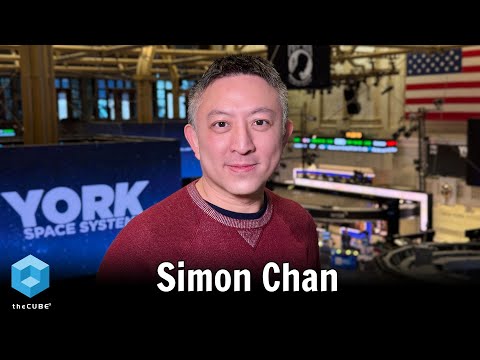
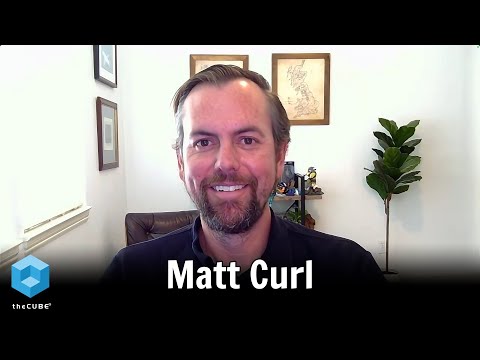
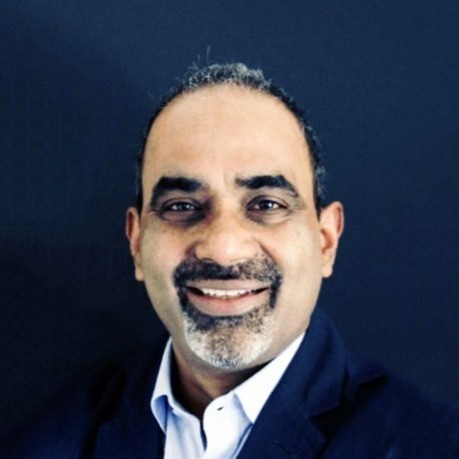
In this insightful session from the Mixture of Experts series, we join Sarbjeet Johal, a seasoned cloud consultant specializing in architecture and migrations, and Simon Chan, general partner at Firsthand Venture Capital. Together with Dave Vellante, co-founder and co-CEO of SiliconANGLE Media, they delve into the rapidly evolving landscape of AI agents and their role in transforming industries. This episode takes place at the prestigious New York Stock Exchange as part of theCUBE and NYSE Wired collaborative series.
Sarbjeet Johal brings a wealth of knowledge in cloud computing, while Simon Chan shares their experience as an entrepreneur and investor in early-stage startups at Firsthand. They discuss the recent AI Agent Conference and its significance in bridging the gap between AI technologists and various industry leaders. The conversation, hosted by Dave Vellante of theCUBE Research, explores the necessity of agentic AI technologies being accessible beyond tech companies, emphasizing the finance, healthcare and logistics sectors.
The discussion concludes with key insights into the challenges and opportunities in agentic AI. Chan emphasizes the potential for AI to complement rather than replace human roles, predicting a future where human-AI collaboration becomes the norm. The panelists also highlight the need for governance and trust in AI systems, focusing on developing new frameworks for agent control. These insights offer valuable perspectives for businesses and technology investors navigating the fast-paced AI landscape.
Forgot Password
Almost there!
We just sent you a verification email. Please verify your account to gain access to
theCUBE + NYSE Wired: AI Agent Conference. If you don’t think you received an email check your
spam folder.
Sign in to theCUBE + NYSE Wired: AI Agent Conference.
In order to sign in, enter the email address you used to registered for the event. Once completed, you will receive an email with a verification link. Open this link to automatically sign into the site.
Register For theCUBE + NYSE Wired: AI Agent Conference
Please fill out the information below. You will recieve an email with a verification link confirming your registration. Click the link to automatically sign into the site.
You’re almost there!
We just sent you a verification email. Please click the verification button in the email. Once your email address is verified, you will have full access to all event content for theCUBE + NYSE Wired: AI Agent Conference.
I want my badge and interests to be visible to all attendees.
Checking this box will display your presense on the attendees list, view your profile and allow other attendees to contact you via 1-1 chat. Read the Privacy Policy. At any time, you can choose to disable this preference.
Select your Interests!
add
Upload your photo
Uploading..
OR
Connect via Twitter
Connect via Linkedin
EDIT PASSWORD
Share
Forgot Password
Almost there!
We just sent you a verification email. Please verify your account to gain access to
theCUBE + NYSE Wired: AI Agent Conference. If you don’t think you received an email check your
spam folder.
Sign in to theCUBE + NYSE Wired: AI Agent Conference.
In order to sign in, enter the email address you used to registered for the event. Once completed, you will receive an email with a verification link. Open this link to automatically sign into the site.
Sign in to gain access to theCUBE + NYSE Wired: AI Agent Conference
Please sign in with LinkedIn to continue to theCUBE + NYSE Wired: AI Agent Conference. Signing in with LinkedIn ensures a professional environment.
Are you sure you want to remove access rights for this user?
Details
Manage Access
email address
Community Invitation
Sarbjeet Johal, Stackpane & Simon Chan, Firsthand VC
In this insightful session from the Mixture of Experts series, we join Sarbjeet Johal, a seasoned cloud consultant specializing in architecture and migrations, and Simon Chan, general partner at Firsthand Venture Capital. Together with Dave Vellante, co-founder and co-CEO of SiliconANGLE Media, they delve into the rapidly evolving landscape of AI agents and their role in transforming industries. This episode takes place at the prestigious New York Stock Exchange as part of theCUBE and NYSE Wired collaborative series.
Sarbjeet Johal brings a wealth of knowledge in cloud computing, while Simon Chan shares their experience as an entrepreneur and investor in early-stage startups at Firsthand. They discuss the recent AI Agent Conference and its significance in bridging the gap between AI technologists and various industry leaders. The conversation, hosted by Dave Vellante of theCUBE Research, explores the necessity of agentic AI technologies being accessible beyond tech companies, emphasizing the finance, healthcare and logistics sectors.
The discussion concludes with key insights into the challenges and opportunities in agentic AI. Chan emphasizes the potential for AI to complement rather than replace human roles, predicting a future where human-AI collaboration becomes the norm. The panelists also highlight the need for governance and trust in AI systems, focusing on developing new frameworks for agent control. These insights offer valuable perspectives for businesses and technology investors navigating the fast-paced AI landscape.
Sarbjeet Johal, Stackpane & Simon Chan, Firsthand VC
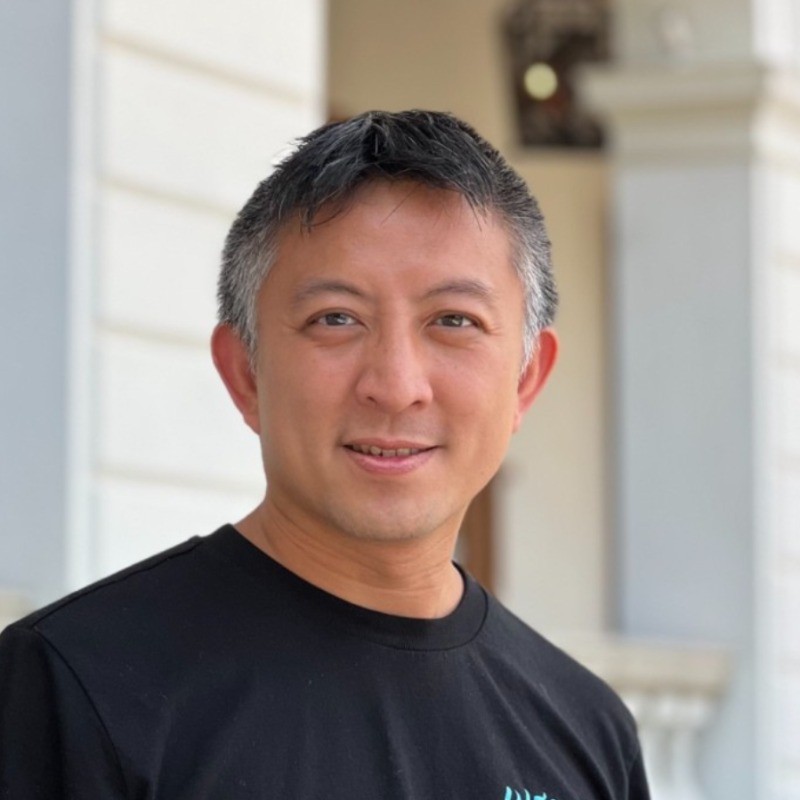
Simon Chan
General PartnerFirsthand VC
In this Mixture of Experts segment from theCUBE + NYSE Wired, theCUBE’s Dave Vellante sits down at the New York Stock Exchange with Simon Chan, general partner at Firsthand VC, and Sarbjeet Johal of Stackpane, to explore how agentic AI is moving from tech circles into real enterprise adoption. Chan shares why he launched the AI Agent Conference to bring AI technologists together with industry decision-makers across finance, healthcare, commerce and logistics – framing today’s moment as a supply–demand convergence where rapidly advancing models and agent frame...Read more
exploreKeep Exploring
What is the goal of bringing together AI technologists and industry leaders?add
What are the current trends and discussions surrounding the advancement of AI technologies and their application in enterprise environments?add
What are the concepts related to the semantic layer and agent control framework in the context of investment strategies in venture capital?add
What is the role of MCP (multiple context protocol) in the evolution of agent-based systems, and what challenges do organizations face in integrating agents with backend systems and access to business process knowledge?add
What is the role of humans in relation to AI in the context of technological advancements and workflow integration?add
Sarbjeet Johal, Stackpane & Simon Chan, Firsthand VC
search
Dave Vellante
>> Hi, everybody. We're back at the New York
Stock Exchange here at the Buttonwood Podium overlooking the options exchange at the NYSE. My name is Dave Vellante and this is our Mixture of Experts series, a continuing series bringing
in entrepreneurs, investors, startups, technologists,
practitioners, customers. I'm here with Sarbjeet Johal.
My friend, good to see you.
Sarbjeet Johal
>> Good to see you.
- Wow, we were just up in Boston.
Dave Vellante
>> Now we come down to New
York to meet. I love it.
Sarbjeet Johal
>> We were at IBM Think,
some good action there. And Simon Chan is here,
former entrepreneur, investor, general partner at Firsthand VC. Good to see you. Thanks so much for coming on. First time on theCUBE.
Simon Chan
>> Thank you. Yes, first time here. Great to have two gentlemen
here having a conversation.
Dave Vellante
>> That's awesome. In our NYSE
Wired and theCUBE studio. Okay. So tell us about your background and I want to get into
the AI agent conference, and then we're just going
to get into the market.
Simon Chan
>> Sure. So my name is Simon Chan. I have been an entrepreneur
for most of my life, I would say 17, 18 years. I've built a few companies
before, sold some companies, and now I'm taking the
easier side of the world. I invest in amazing early
stage startup company through my VC fund called Firsthand VC. When I have spare time though, I like to bring amazing people together and we have just done a wonderful, exciting conference a few days ago. It's called the AI Agent Conference.
Dave Vellante
>> So tell me about that. The
obvious question is why does the world need another AI
conference and why on agents, and why now?
Simon Chan
>> We do have a lot of gatherings, events, conferences around AI, and I think nowadays
around agentic AI, right? With all the respect,
these amazing gatherings, they're great bringing the
best AI leaders together, but I think something is
missing in the formula. If you look at what's
happening in the history of AI, a lot of these technology, they were built for the tech companies. But what we are seeing here
is with agentic AI, a lot of these technology are
actually available for the wider industries. And I think this is what we're missing, and I think this is what
is unique about New York. We have the industry in
finance, healthcare, commerce, logistics and all this. So my dream, my goal was can we bring two sides together, like the top AI technologists and these industry leaders coming together to have a conversation? So that's the AI agent-
Dave Vellante
>> So those companies applying AI,
Dave Vellante
>> not just the technologists, but those companies deploying AI. It's interesting, you used
to work at SAP, right?
Sarbjeet Johal
>> At Oracle.
- At Oracle, okay. But you know SAP.
Dave Vellante
>> Yeah.
- So back in the day, here's my point.
Dave Vellante
>> Back in the day, it really
wasn't clear that SAP was going
Dave Vellante
>> to become the ERP leader and then they got escape
velocity, and they won the game. But so it was hard to make that bet. You say investing is easy,
that's why I'm impressed.
Simon Chan
>> There's a special formula.
Dave Vellante
>> Technology's harder, but my point is, if you could have picked the
companies that had deployed ERP most effectively, those,
the New York Stock Exchange or whatever, probably
did really, really well. But that's what you're trying
to bring those two worlds together, a two-sided marketplace.
Simon Chan
>> Yeah. Now, I think the very interesting thing
is do we have more supply or do we have more demand? Supply means technological advancement, demand mean applications. Do we need that technology?
Dave Vellante
>> Ability to absorb it.
- Right.
Simon Chan
>> And what we see is,
Simon Chan
>> there's always each side
pushing each other together. So you can't have just one side of it. And what you see, I just wanted to say what we see these few years, but in fact it's just these few months, the large language models, agentic AI technologies getting ready. So the supply side is really, really high. But now we're pushing the demand side. Okay, with this
technology, what can we do?
Dave Vellante
>> What can we do? Yeah.
- What can we do in our industry?
Simon Chan
>> And so, the opportunity is
super exciting, especially for early stage companies. In the past, early stage
companies have a really long enterprise sales cycle. I mean, that's what Oracle's,
SAP sales also are great at getting the enterprise deals. But increasingly I see
enterprise companies going in, learn about, "Hey, what is
out there in the market? Can we do something?" So this
is supply-demand catching up.
Sarbjeet Johal
>> I think line-up business
started buying stuff, like in cloud, started
with line-up business. First it was like rogue IT. Line-up business came in and then IT said, "Oh, we
need to do this," right? The same thing will happen
in the AI space as well. The line-up business is buying. And then, we heard that at IBM ask me anything sessions as well. So we qualified this thinking, that now the discussion is
going up to the CXO level and even the board level. So it starts with the practitioners. When the new technology comes
in, practitioners hop onto it, then line-up business
starts picking it up, then it goes to IT and CXOs.
Dave Vellante
>> So what were some
Dave Vellante
>> of the themes you heard at
the AI agent conference? Where was the hype? Where was the reality?
Simon Chan
>> The conference, we're lucky to have really amazing
speakers, like high quality, top tier AI founders
who are at the frontier of these technologies. We also have decision
makers in large enterprise companies coming together. I think it's very clear that
we're moving beyond even what the industry was talking
about, like rec, for example, the technology where you
can retrieve information, generate the response,
make it less hallucinated, like less crazy, and then
give you the results.
Dave Vellante
>> Less crazy, I like that.
- Into what people are
Simon Chan
>> thinking towards
autonomous software, right? In my workforce or in my function serving our
customers, are there things that we can dedicate to this new coworker called AI agents? And when there's limitation, now companies are actually looking at
multi-agent orchestrations, just like what you're doing
in a company right now. You don't just put one
person to serve the customer, but it's a teamwork. How can we do that with
the new technology? And of course that's the direction. But when we go deeper into the
questions, especially in more regulated industries, like
finance and healthcare, and it would be like, "Wait
a minute, what is the margin of error-"
Sarbjeet Johal
>> You can tolerate?
Simon Chan
>> "... we can tolerate? " How do we regulate it psychologically? Are our customers ready for it? I think it goes from just
the technology questions to a very human-centric trust question. And it's fascinating to
hear all this conversation.
Dave Vellante
>> If I'm thinking about how AI is changing the stack, I mean, it's changing everything,
from silicon all the way up into the application. And I'd love your thoughts on this, Simon. There's two emerging
really high-value pieces of real estate in that stack, in addition to all the other stuff that's changing. But there's two new areas. One is the ability to
harmonize all that data, whether it's different formats
and different locations, and different access methods. So that I know that when I talk
about revenue, it's not ARR or NRR, or calendar year
or it's fiscal year. I know what actually we're talking about. It's not bookings, et cetera.
Harmonizing that data. Some people call it the semantic layer, but beyond what we think
of as the semantic layer, true harmonizing, maybe
knowledge graphs come into play. And the other is what you
had mentioned, sort of what we call the agent control framework. The ability to govern those
agents, to trust those agents, so that when they act,
the data is high quality. And I didn't have to have
all these humans doing a data pipeline to get it to high quality. And it's governed, and I know the right people have the right access. It can interact with other agents. So, long-winded, but that's our premise. What's your investment
premise at Firsthand VC? How are you thinking
about picking your bets?
Simon Chan
>> Things are changing very, very quickly. I think one traditional playbook
in the VC world is thesis- driven investing. We have a board meeting
maybe with some potential customers of these companies. At the beginning of the
year we sit together, "Hey, this is the thesis we will
invest in for this fund," and the fund cycle we're
talking about, investment for three years, for periods of time. And then we write that out. And this is my investment thesis.
Dave Vellante
>> So as an example, if I could interrupt, during COVID, it was everything. It was about hybrid work and remote work. And boy, if you double down
on that, you better pivot.
Simon Chan
>> So I think the VC world, because of how fast technology is moving, we become more agile. It's kind of like
iterative process learning. Now the technology is
here, listen to the demand. What do we need? Do we need some more guardrail around this or are we looking for other technological breakthroughs
to catch this wave? But I don't think, especially
as an early-stage investor, I invest in inception-stage,
very early-stage companies. I cannot just bet on, "Hey, this is the problem we
need next three months. " I like to invest in founders with the domain expertise. If you're building the
infrastructure companies, what have you seen before? Do you have the ability or willingness to talk to customers, to understand the needs? Investing in a learner is, I
think it's my little secret, lazy formula. I invest in a big market, but at the same time, if this
founder has unique insights, customer access to healthcare or to a certain domain, I
think it will make their life and my life easier.
Sarbjeet Johal
>> Yeah, actually I happened
to have interaction
Sarbjeet Johal
>> with Ron Conway, these guys seed- funded Twitter, Google.
Dave Vellante
>> Legend.
- Big legend. He's a legend, right?
Sarbjeet Johal
>> So he said, we had a quick discussion and I asked a question
like, "What do you see? " Because we have invested
in thousands of companies and there are big hits, of course, most fail, but few big hits. He said, "It's team and
timing. It's team number one. Then timing." So-
Dave Vellante
>> I have three teams. TAM, team, timing. And
so, I want a big TAM. I want a team that I can trust. And timing is interesting, right? So timing, what does that
mean? Is it the right time? But I don't want a 20 year.
I had Jim McNeil in recently. He invested I think 15, 20
years ago, I love you, Jim, but wow, are you patient,
in nuclear fusion. And it's probably another 10 years before that thing takes off. But that is a too long
of a time horizon for me. I could live with seven,
eight, nine years. I'm getting older, so
maybe I'm a little tighter, but seven to 10 years is
a reasonable timeframe.
Simon Chan
>> Seven, 10 years is the reasonable time.
Simon Chan
>> And what is exciting
about venture investing, especially at this stage is
things really change so quickly. I have invested in some kind companies at the first few weeks of
the formation of the company, and then they become a four,
five-month old company, but they're already the industry leader at that new category, because of the demand. Just give you an example. We had the models,
agents, models, LM models, but last few months or last couple of months,
people are talking about how these things talk to each
other, which becomes the MCP, the agent-to-agent technology. Would I be able to envision
that, oh, we need a big market about agents
talking to each other? Maybe, maybe not, but is there a company for you
to invest in five months ago? Probably not. But now
everyone's going into that. But of course that's
another topic. Now it's hot. Should I invest in it or
should I not invest in it?
Dave Vellante
>> Right, vector databases, RAG- based chatbots, I mean, it's like...
Sarbjeet Johal
>> Actually, I usually say that technology is like medicines, right? Every pill you take,
there's a side effect, and then we take another
pill to kill that side effect and it creates another side effect. So in other words, there
are gaps. We leave the gaps. When new things come in,
there are gaps, right? Now there's governance gap right now. And then agent-to-agent communication gap. We need enterprise. We built
enterprise services bus in the previous sort of era of
technology after a while. So we will always start
scrappy in software world. I mean, software is very
unregulated industry. You can cook it up as you want and there's no regulation of course. And then we leave the gaps
on security and compliance. So then people come in to fill that gap. And then, when we are
filling that gap, another big thing comes and we
start again, more gaps. I mean, I've seen people at
Cisco just filling the gaps. They create a company, invest in it, and then they sell the
company back to Cisco. So many times I've seen it. Same happens with other companies.
Dave Vellante
>> Look, the history of IBM
was fixing its own problems.
Dave Vellante
>> You were at EMC, EMC was
notorious for doing that.
Dave Vellante
>> Yeah, same thing.
- VMware was another one.
Simon Chan
>> Yeah, that's a really good point.
Dave Vellante
>> And that's why I always
go back to the basic,
Sarbjeet Johal
>> we're not just building the technology. You need supply, but you
also need the demand. The best entrepreneur
understand this demand side, and that's the role of Firsthand VC. That's the dream of the AI agents
conference. Hence the name.
Sarbjeet Johal
>> Actually, I like the name.
Simon Chan
>> Thank you. Yes.
Simon Chan
>> People with firsthand experience, with industry experience coming in. And with that, now you
start to see the roadmap, a little bit of glimpse
of the future roadmap of where things will happen. Now if we look back, we
got LLMs or generative AI. Oh, you can generate very
interesting creative writing images, videos, and now your enterprise customer starts to ask the questions. "Okay, this is super interesting, but wait, we want to use
it in customer service. "
You can't imagine a cue point code and send it to our customers. It will create problem. So we need some guardrail with
our existing knowledge base. You generate things, but
with that framework in mind-
Simon Chan
>> With the error.
- ...
Simon Chan
>> so that now you create a rig things.
Simon Chan
>> The next step, okay, you can do this, but can you automate some of our tasks? I think it will be really relevant. And the technology side will
say, "We can't do it right now, because you are using
so many other systems. You're using ServiceNow, you're using Salesforce, you're using this system. How can we talk to your system? " Now it comes to all this protocol, where agents talk to agents. You see, if you listen to your customers, the enterprise needs, you start to see where things will be you need.
Dave Vellante
>> So I have a question for
both of you guys. So MCP, multiple context protocol, right? It stands for, an entropic
standard, essentially so that agents can get access to
tools and talk to each other. Now, my understanding is that
we're trying to figure out how will this agentic wave evolve? Because you've got Salesforce doing its thing with Agentforce. You've got companies like
Snowflake, for instance, bringing agents to where they
are, Workday, ServiceNow, they're all doing it within
their own SaaS environments. We heard from IBM, they want
to be Switzerland of agents to do integration. We see Celonis suing SAP, because they can't get access to the data. My point is, to really have agents as a workforce, you need
access to the backend systems, the application data, the
logic, the business logic, and even the process
knowledge, I would argue. And I don't think MCP is necessarily in and of itself going to solve that. Getting access, especially
to that process knowledge, is going to be evidently challenging. How do you see that all playing out?
Simon Chan
>> I think one element that we as the industry have not
talked about enough is the involvement of human. There are certain areas where
only human have access to. There are certain elements
that you want humans to grant control, grant
permission at the right time. If we take a step back to
look at all this technology, technological breakthroughs,
you see that we, you talk about the height of AI. What is real world is
not real, right? Okay. We always think that
AI will replace human. We have been talking about that
for 50 years, I believe now. Same things for agents here, but if you look back to
the history every time AI is not replacing humans. AI is changing the role of humans. Like, AI helped you do this,
now your role has changed. Your role is to incorporate
that into your workflow. I think it's the same thing here. The relationship between
human agents, the knowledge, the workflow, and the AI agents. How do you put these two things together? So I would say if you need
to build a good product for enterprise customers,
think about, okay, we have this knowledgeable
human agent with a more arguably trustworthy access to data. How do you put them into
the picture to combine this to make it an integrated
workable solution?
Dave Vellante
>> That's good advice.
- Yeah, I see it a little
Sarbjeet Johal
>> differently. So let's say there are five steps in a work stream, in a workflow. Somebody's going on a vacation,
the system has to touch four or five systems, like HR, payroll-
Dave Vellante
>> Supply chain.
- ...
Sarbjeet Johal
>> other supply chain, all that
stuff like that. So they can be their voicemail deactivation or whatever. So there are three scenarios, I think, in every process. One is it can be autonomously
automated without any human supervision. The second is that human is in the loop. So two steps are done. Now an email goes to a human and they say, "Okay, I need to approve this or reject this, whatever. "
And then, other three steps or four steps are done by the machines. So human is in the loop. And there's another thing
that people are talking about, that I know, actually,
I think it's a good way to describe it, human on the loop. So there's automation, but humans are watching it if it's doing the right thing or not. If it's not, they have
ability to revert it. So I think those are the three options. But having said that, to
your question, the agent-to- agent communication
technically is feasible, easy to do thing. But in business terms, it's the
most cumbersome thing to do. We have seen this from
DLL health to API health, to now agent health. It will be the same thing.
We're going to fight this-
Dave Vellante
>> Yeah, yeah, governance and things,
Sarbjeet Johal
>> yeah.
- ... and then the same thing. We
used to have the enterprise services bus to settle all the stuff and roll back, and all that stuff. Ability to roll back. We will need that, but doing it across multiple vendors, like you're using SAP
here and ServiceNow here, and Workday here, and then you're trying to make all these agents
work with all these systems.
Dave Vellante
>> So that's music to your ears, because that is the white
space that needs to be solved.
Sarbjeet Johal
>> New companies will be
formed in that area, yeah.
Dave Vellante
>> Last question. So I get a lot
Sarbjeet Johal
>> of questions from young people. Maybe they're in college or
they're in their first job. I want to be in DC and I always tell them, "Unless
you're crunching numbers, you got to get some
operational experience. Either get into sales or get into product. And if you're technical, build something. If you're quasi-technical,
go into product management. If you like to sell, go into sales, get that operational experience. And then maybe you'll fail. It's okay, you'll learn from the failure. Maybe you'll get lucky. Ride a rocket ship, then you'll be golden. But get that operational
experience." Is that viable advice? What else would you tell young people?
Simon Chan
>> I think these are all great advice.
Simon Chan
>> I've never thought of being an investor when I was younger. And as I get into this industry, let's call it a professional industry, being a VC, being an investor. One thing I learned is it's so commoditized. When I was building my company, we can easily find a
unique value proposition, like I'm going after enterprise,
mid-market, whatever. It's easy to find at least
the initial unique value. Now VC, which VC doesn't tell
you, "We're founders friendly. " No one's telling you,
"We're founder hostile. "
"We're founder friendly, we have good resources,
we will support you"
Dave Vellante
>> Great network.
Simon Chan
>> "... great network," everyone
talk about the same thing.
Dave Vellante
>> You can really use ChatGPT
to generate a pitch for you as an investor. Now, if you put your product
hat, product designer hat on, the thing is, what is your uniqueness amongst all this
commoditized VC resources? Why the founder will pick you? And so, I think the answer
is actually more nuanced than going to do one thing, is to
be unique, uniquely helpful to founders. So it could be like,
you're a good networker, you have good insights of industry, you're a good number person. I don't know, but be unique.
Offer some very unique values.
Dave Vellante
>> That's great. Awesome.
Well, Simon, first of all, best of luck to you.
Simon Chan
>> Thank you.
- Really appreciate you coming on theCUBE.
Dave Vellante
>> And Sarbjeet, thank you.
Sarbjeet Johal
>> Was my first time here.
- Good to see you, finally.
Dave Vellante
>> Our friends in the CUBE
Collective are going to have FOMO,
Sarbjeet Johal
>> but we'll get you on, I promise. All right, thank you for watching. This is Dave Vellante and you're watching the
Mixture of Experts series with theCUBE and NYSE Wired. Thanks for watching.

















 Dave Vellante
 Sarbjeet Johal