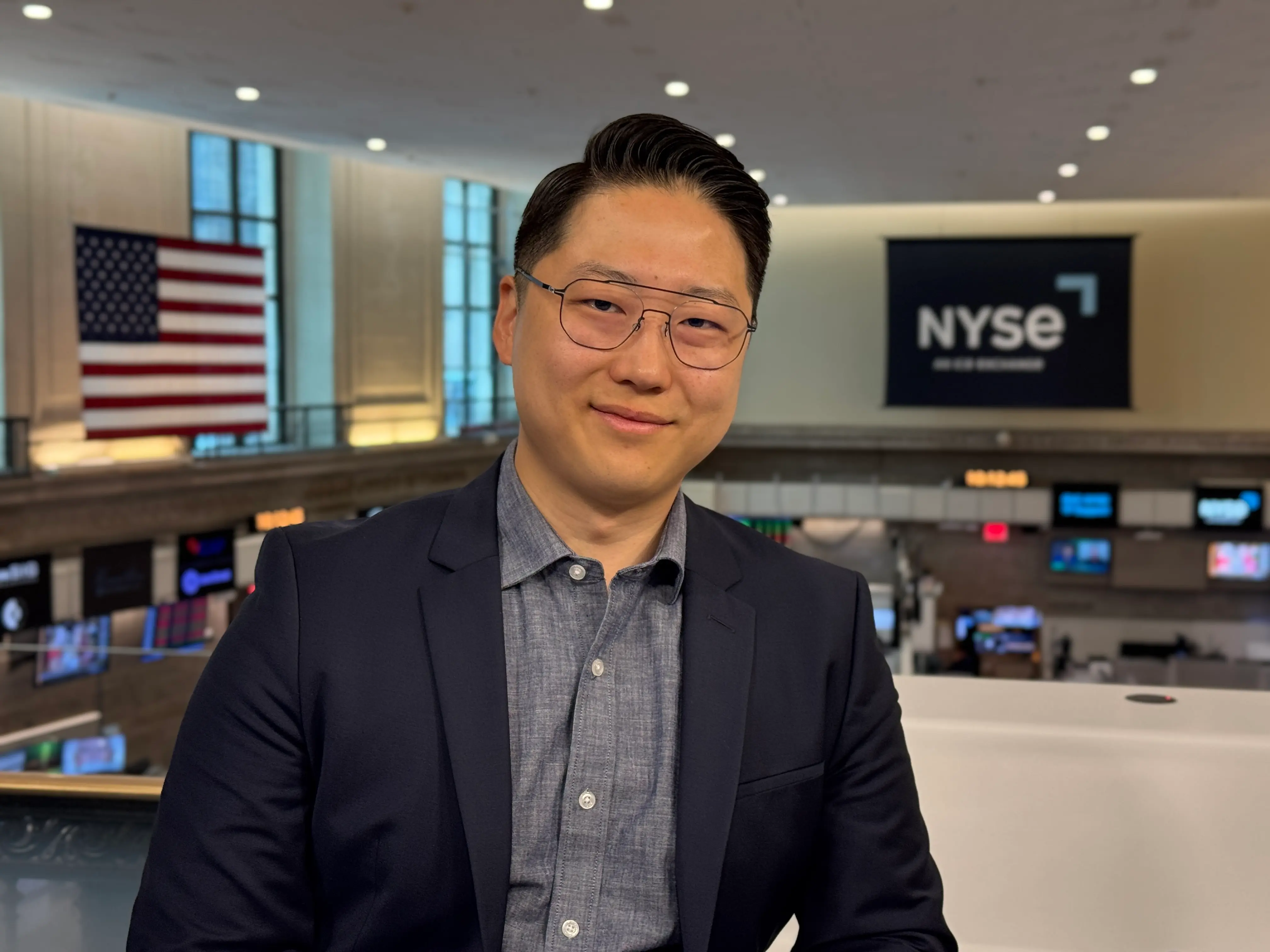
This interview features Jin Chang of Fieldguide, co-founder and chief executive officer, as part of theCUBE and NYSE Wired coverage of the AI Agent Conference 2026. Chang discusses their background in auditing and Fieldguide's focus on delivering vertically tuned artificial intelligence for certified public accountant firms. Gemma Allen of theCUBE Research moderates the conversation and clarifies how Fieldguide partners with large firms and integrates with general-purpose large language models.
Chang explains Fieldguide's agentic approach, ensemble model architecture and data ingestion capabilities. They describe the platform's ingestion suite and orchestration agent that route specific audit problems to the best models, improving speed to market and operational margins. Chang attributes faster higher-quality outcomes on audit tasks to the company's vertical specialization and proprietary model-evaluation process compared with general-purpose LLMs.
Chang emphasizes the urgency to do more with less given shrinking auditor pipelines and outlines how specialized models and orchestration improve audit efficiency and regulatory compliance. The discussion addresses agentic AI, audit technology, audit automation, vertical AI, ensemble AI, data ingestion, orchestration, large language models, regulatory compliance, CPA firms and professional services.
Forgot Password
Almost there!
We just sent you a verification email. Please verify your account to gain access to
theCUBE + NYSE Wired: AI Agent Conference. If you don’t think you received an email check your
spam folder.
Sign in to theCUBE + NYSE Wired: AI Agent Conference.
In order to sign in, enter the email address you used to registered for the event. Once completed, you will receive an email with a verification link. Open this link to automatically sign into the site.
Register For theCUBE + NYSE Wired: AI Agent Conference
Please fill out the information below. You will recieve an email with a verification link confirming your registration. Click the link to automatically sign into the site.
You’re almost there!
We just sent you a verification email. Please click the verification button in the email. Once your email address is verified, you will have full access to all event content for theCUBE + NYSE Wired: AI Agent Conference.
I want my badge and interests to be visible to all attendees.
Checking this box will display your presense on the attendees list, view your profile and allow other attendees to contact you via 1-1 chat. Read the Privacy Policy. At any time, you can choose to disable this preference.
Select your Interests!
add
Upload your photo
Uploading..
OR
Connect via Twitter
Connect via Linkedin
EDIT PASSWORD
Share
Forgot Password
Almost there!
We just sent you a verification email. Please verify your account to gain access to
theCUBE + NYSE Wired: AI Agent Conference. If you don’t think you received an email check your
spam folder.
Sign in to theCUBE + NYSE Wired: AI Agent Conference.
In order to sign in, enter the email address you used to registered for the event. Once completed, you will receive an email with a verification link. Open this link to automatically sign into the site.
Sign in to gain access to theCUBE + NYSE Wired: AI Agent Conference
Please sign in with LinkedIn to continue to theCUBE + NYSE Wired: AI Agent Conference. Signing in with LinkedIn ensures a professional environment.
Are you sure you want to remove access rights for this user?
Details
Manage Access
email address
Community Invitation
Jin Chang, Fieldguide
This interview features Jin Chang of Fieldguide, co-founder and chief executive officer, as part of theCUBE and NYSE Wired coverage of the AI Agent Conference 2026. Chang discusses their background in auditing and Fieldguide's focus on delivering vertically tuned artificial intelligence for certified public accountant firms. Gemma Allen of theCUBE Research moderates the conversation and clarifies how Fieldguide partners with large firms and integrates with general-purpose large language models.
Chang explains Fieldguide's agentic approach, ensemble model architecture and data ingestion capabilities. They describe the platform's ingestion suite and orchestration agent that route specific audit problems to the best models, improving speed to market and operational margins. Chang attributes faster higher-quality outcomes on audit tasks to the company's vertical specialization and proprietary model-evaluation process compared with general-purpose LLMs.
Chang emphasizes the urgency to do more with less given shrinking auditor pipelines and outlines how specialized models and orchestration improve audit efficiency and regulatory compliance. The discussion addresses agentic AI, audit technology, audit automation, vertical AI, ensemble AI, data ingestion, orchestration, large language models, regulatory compliance, CPA firms and professional services.
play_circle_outlinePresence at AI Agent Conference and NYSE partnership; event in May
replyShare Clip
play_circle_outlineFieldguide: Agentic Vertical AI for CPA Audit — Auditor-Like Agents Automating Service Delivery While Partnering with General-Purpose Models
replyShare Clip
play_circle_outlineSolving the Auditor Exodus: Specialized Audit AI That Boosts Quality, Speed, Margins, and Integrates Seamlessly
replyShare Clip
play_circle_outlineOrchestrating Ensemble AI: Continuous Proprietary Evaluation for Optimal Model Selection
>> Welcome back to theCUBE Studio here at the New York Stock Exchange. I'm Gemma Allen, and this is part of our programming with the NYSE Wired. And today, we are talking to the honorees of the AI Agentic list with the AI Conference happening here in New York in May. And joining me now is Jin Chang, CEO and co-founder of Fieldguide. Welcome, Jin.
Jin Chang
>> Gemma, thanks so much for having Fieldguide on the show.
Gemma Allen
>> Tell me, for those who might not be familiar, what exactly does Fieldguide do?
Jin Chang
>> Sure. So, Fieldguide is a Silicon Valley-based enterprise AI company, often referred to as a vertical AI company, that's fully focused on the CPA firm vertical. More specifically, we serve audit and advisory practitioners. These are folks that we affectionately call trust practitioners at Fieldguide. The people who facilitate trust between organizations and their stakeholders, many of which are listed on the New York Stock Exchange too.
Gemma Allen
>> Wow. Okay. And you, Jin, you started out in the CPA business, correct?
Jin Chang
>> Yes.
Gemma Allen
>> Talk us through the journey for you.
Jin Chang
>> And actually, Fieldguide is perhaps the last company I imagined starting, and that's because while I started my career at one of the big four as an auditor with grand aspirations to one day become a CFO of a public company, I quickly realized that I didn't enjoy the manual work that junior auditors go through. And the tragedy here is as I entered years three, four, or five, I found more joy in the job of auditing, but by then, I was already burnt out. So, I left the profession, knowing that I wanted to build a company from the ground up. That company became Fieldguide and turns out I wasn't the only one who felt that way. 25% of our company are former auditors themselves too. And when you zoom out to the wider industry overall, you see a population that's on the verge of collapse.
Gemma Allen
>> Wow. Okay. So, fast-forward, 2020, you start this company. It's now 2026, the world of AI, generative AI, general intelligence, LLMs. I mean, it has shifted fundamentally. We're here because you are part of the AI Agentic List that is happening in May. So, obviously, you guys are all in on agentic. You mentioned you consider this a vertically-integrated company. Talk to me a little bit about what exactly is happening in the space. How do you define what it means to be vertically integrated and stand up to that skepticism of this space right now in 2026?
Jin Chang
>> So, the CPA vertical is one of several white-collar services verticals out there that many Silicon Valley investors believe generative and now agentic AI will have immense impacts on. And we, of course, fundamentally believe the same, but that doesn't mean horizontal general purpose AI platforms aren't valuable too. In fact, we view them as very complimentary to what we do, but Fieldguide, we are super deep in the vertical itself, going deep into how auditors and consultants do their work, perform their work, at a level that a general purpose model provider just won't invest time into. And in fact, most CPA firms that we work with already, they already have something like a Claude for enterprise or ChatGPT for enterprise. In a lot of cases, we are interacting and collaborating well with those more operational agents too. Now, Fieldguide, we are more specifically focused on the service delivery lifecycle. The audit lifecycle itself, often referred to as the job to be done. And our agents act more like the auditors themselves, as opposed to more of the operational practice management back office use cases that more of the general purpose models seem to be gaining traction in.
Gemma Allen
>> So, talk to me about the decision by the big four and a large CPA service delivery or consultancy firm to use Fieldguide, as opposed to build something proprietary, right? I mean, we can guess the reasons, like speed, agility, legacy data. They've never technically been technology players and builders, per se, right? They're executors. But talk to me about what's happening in this space right now, like the true raw frontline advantages of using a technology like yours.
Jin Chang
>> So, our company, Fieldguide, has a unique vantage point in that we work with more than 50 of the top 100 CPA firms in the US, including eight of the top 10, so several big four as well. Now, our service offering does vary by segment. And what you're pointing out is the large global firms like the Big Four and the next several, they do appreciate or want to have a more proprietary platform, a more custom branded experience. And what we found is these global firms, what they care about is speed to market. They know that their competitors or peers are also moving and investing heavily into AI. And if you're able to show them a solution that gets them speed to market, but also the custom branding and the agents that are tailored to their specific audit methodologies, they seem very receptive to partnering with us. So, Fieldguide, while our general SaaS platform is made for the rest of the market, at the top end of the market, big four, next three, some other advisory consulting firms, including Accenture and Protiviti, they're partnering closely with us to bring their proprietary AI methods to market in partnership with us.
Gemma Allen
>> So, I am an engaging manager, a tech buyer at one of the big four. I have a large sell with some large Fortune 50 company, and I'm looking at this and thinking, "Wow, we need to do this faster, cheaper, leaner," which has always been the framework, right? I decide I'm going to give this technology a go. What does this look like? How plug and play is it in terms of actual rollout, execution, benefits? How quickly are we going to have realized opportunity and benefits from this?
Jin Chang
>> So, one thing you point out that's very important is the need to do more with less, increase margins. The way I think about it is AI presents this industry an opportunity to do more with less, to grow top line, despite the talent population not keeping up. So, the one thing that you're pointing out right now is the population of auditors is not increasing. In fact, it's on the verge of collapse. In short, too many people are leaving and not enough people are entering the profession. So, the need to do more with less is no longer a nice-to-have, it's a must-have. So, what we're seeing is the top firms, the global firms, they're really leaning into investing in agentic AI for the purpose of figuring out that operating model for the next two decades, because they see the writing on the wall. This is basic population replacement math. When you see that the population of practitioners isn't keeping up with the demand for CPA services and the rising complexity involved, the writing's on the wall. Now, Fieldguide, by being vertically-focused, what these CPA practitioners see in Fieldguide is a fit-for-purpose platform, right? A platform that understands the way they work at a general level, brings the best practices of the profession. Of course, we run our own model evals, model selection. We have our own orchestration agent that routes the right audit problem to the right LLM. All of these things add up towards a more domain-tuned platform. And when it comes to the big four or the next three global firms, it's very obvious at first glance and as they run tests for quality, not just speed, quality too, they see that our performance outperforms any general-purpose LLM out there that's specific to their work. For a big four firm, frankly, they view us as one of their technology partners that they partner with to build their proprietary stack. In some cases, a big four firm might use Fieldguide end-to-end, the entire platform, with all of our embedded agents that collaborate with their team members and they'll custom brand it to their firm. In other cases, they will leverage our agents off-platform as more of a microservice to be injected into their current workflow. One big four firm we work with right now is doing both. For some practices, the full Fieldguide platform experience that's custom branded and tailored to their methodology. In other cases, using our agents off the Fieldguide platform, but within their existing workflow platform end-to-end.
Gemma Allen
>> Okay. So, I guess you have a real mix there. You've got folks using it for the last-mile excellence, using it for verification on SenseTrack and using it really as a pure play system of action, correct?
Jin Chang
>> That's right.
Gemma Allen
>> It's doing the works of a lot of different folks. So, talk to me a little about the technology side of this. Let's talk two spaces within tech if we can. First, data, unstructured data, which we know has been somewhat of a hindrance, a challenge, an ongoing problem really in driving efficiencies. Whether you are a KPMG or any large firm working on behalf of another Fortune 50 company, we know that these problems tend to be unanimous in terms of making sure that the data's clean, it's ready, it's available and it's ingesting in the right way. And then, when you are building for something like this, especially in the world of agentic AI and AI and LLMs, I assume it's multimodal. You're building on lots of different technologies. How are you constantly staying apprised of developments, improvements, efficiencies? How hour-by-hour is that whole system?
Jin Chang
>> Great questions. I'll start off with answering the data-quality question that you started off with. So, Fieldguide, the platform itself has a very robust ingestion suite, and that includes both ingestion of very structured API-fed data from end client accounting systems and ERP systems. When we ingest that data, it's very clean, and then our AI agents can do a lot with it. The problem is most audit clients provide data in unstructured formats. And while the API integrations to accounting systems are valuable, what we find to be even more valuable is our AI's ability to understand that unstructured data, bring it into Fieldguide, structure it to then build work on top of it. That ingestion suite is proving to be extremely valuable because while the LLMs are extremely powerful these days, if the data and context isn't readily accessible to those LLMs, the performance just won't be there. Now, when it comes to our model architecture itself, we employ a multi-model approach, we call it ensemble AI, because we want the best models for the job, we want orchestration across those key use cases and we believe we have a very proprietary approach to this. One of the advantages of working with a Fieldguide that's vertically focused on this CPA firm vertical is we understand the best practices of the industry. We understand what the models need to accomplish. And over the years, we've built our own proprietary gold datasets to run evals against on a constant basis. Now, you point out a very real fact. The fact is there are new models that come out virtually every several weeks. It's intense, frankly. And at Fieldguide, the good news is about half our company is based out of San Francisco. Most of our engineers and product managers and designers are based out of San Francisco. So, we are living and breathing the AI hype within that bubble, frankly. What that means is we know when models are coming out, and by the time the models come out, oftentimes given our existing partnerships with these model providers, we know what those models are good at versus not before they release. So, yeah, one of the advantages and reasons why a CPA firm might want to work with us directly is because of that proprietary eval system, the model selection, the orchestration agent that routes audit tasks to the right models. Building that stack is not easy to do internally.
Gemma Allen
>> Well, Jin, incredible company. Raised $125 million last round, led by Goldman Sachs. Valued at $700 million right now. Last question, what is ahead? What is it going to take to get that next $300 million valuation and bring you to a billion dollars?
Jin Chang
>> So, Fieldguide has always been a mission-focused company. And while, of course, getting to unicorn status is a milestone, it is nowhere near the end of our journey. So, I always emphasize with our company, we are building a generational company. That means we're building a company that's durable, that goes public and truly changes this industry. Now, to answer your question directly, getting to unicorn status. The $700 million valuation happened more than a few months ago. I would say based on our revenue growth over even just the past few months, I wouldn't be surprised if in the private markets an investor valued us at above that billion dollar mark today.
Gemma Allen
>> Well, a month, 10 years ago is a millisecond right now, right, when it comes to venture capital?
Jin Chang
>> That's right.
Gemma Allen
>> So, listen, great to have you on the show. Look forward to seeing you here back in New York in May for the AI Agent Conference and wish you guys all the best.
Jin Chang
>> Fantastic. Thanks so much, Gemma.
Gemma Allen
>> I'm Gemma Allen, here at theCUBE Studio at the New York Stock Exchange. This is our NYSE Wired programming, part of our partnership with the AI Agent Conference happening here in New York this coming May, two weeks out. Thanks so much for watching.
>> Welcome back to theCUBE Studio here at the New York Stock Exchange. I'm Gemma Allen, and this is part of our programming with the NYSE Wired. And today, we are talking to the honorees of the AI Agentic list with the AI Conference happening here in New York in May. And joining me now is Jin Chang, CEO and co-founder of Fieldguide. Welcome, Jin.
Jin Chang
>> Gemma, thanks so much for having Fieldguide on the show.
Gemma Allen
>> Tell me, for those who might not be familiar, what exactly does Fieldguide do?
Jin Chang
>> Sure. So, Fieldguide is a Silicon Valley-based enterprise AI company, often referred to as a vertical AI company, that's fully focused on the CPA firm vertical. More specifically, we serve audit and advisory practitioners. These are folks that we affectionately call trust practitioners at Fieldguide. The people who facilitate trust between organizations and their stakeholders, many of which are listed on the New York Stock Exchange too.
Gemma Allen
>> Wow. Okay. And you, Jin, you started out in the CPA business, correct?
Jin Chang
>> Yes.
Gemma Allen
>> Talk us through the journey for you.
Jin Chang
>> And actually, Fieldguide is perhaps the last company I imagined starting, and that's because while I started my career at one of the big four as an auditor with grand aspirations to one day become a CFO of a public company, I quickly realized that I didn't enjoy the manual work that junior auditors go through. And the tragedy here is as I entered years three, four, or five, I found more joy in the job of auditing, but by then, I was already burnt out. So, I left the profession, knowing that I wanted to build a company from the ground up. That company became Fieldguide and turns out I wasn't the only one who felt that way. 25% of our company are former auditors themselves too. And when you zoom out to the wider industry overall, you see a population that's on the verge of collapse.
Gemma Allen
>> Wow. Okay. So, fast-forward, 2020, you start this company. It's now 2026, the world of AI, generative AI, general intelligence, LLMs. I mean, it has shifted fundamentally. We're here because you are part of the AI Agentic List that is happening in May. So, obviously, you guys are all in on agentic. You mentioned you consider this a vertically-integrated company. Talk to me a little bit about what exactly is happening in the space. How do you define what it means to be vertically integrated and stand up to that skepticism of this space right now in 2026?
Jin Chang
>> So, the CPA vertical is one of several white-collar services verticals out there that many Silicon Valley investors believe generative and now agentic AI will have immense impacts on. And we, of course, fundamentally believe the same, but that doesn't mean horizontal general purpose AI platforms aren't valuable too. In fact, we view them as very complimentary to what we do, but Fieldguide, we are super deep in the vertical itself, going deep into how auditors and consultants do their work, perform their work, at a level that a general purpose model provider just won't invest time into. And in fact, most CPA firms that we work with already, they already have something like a Claude for enterprise or ChatGPT for enterprise. In a lot of cases, we are interacting and collaborating well with those more operational agents too. Now, Fieldguide, we are more specifically focused on the service delivery lifecycle. The audit lifecycle itself, often referred to as the job to be done. And our agents act more like the auditors themselves, as opposed to more of the operational practice management back office use cases that more of the general purpose models seem to be gaining traction in.
Gemma Allen
>> So, talk to me about the decision by the big four and a large CPA service delivery or consultancy firm to use Fieldguide, as opposed to build something proprietary, right? I mean, we can guess the reasons, like speed, agility, legacy data. They've never technically been technology players and builders, per se, right? They're executors. But talk to me about what's happening in this space right now, like the true raw frontline advantages of using a technology like yours.
Jin Chang
>> So, our company, Fieldguide, has a unique vantage point in that we work with more than 50 of the top 100 CPA firms in the US, including eight of the top 10, so several big four as well. Now, our service offering does vary by segment. And what you're pointing out is the large global firms like the Big Four and the next several, they do appreciate or want to have a more proprietary platform, a more custom branded experience. And what we found is these global firms, what they care about is speed to market. They know that their competitors or peers are also moving and investing heavily into AI. And if you're able to show them a solution that gets them speed to market, but also the custom branding and the agents that are tailored to their specific audit methodologies, they seem very receptive to partnering with us. So, Fieldguide, while our general SaaS platform is made for the rest of the market, at the top end of the market, big four, next three, some other advisory consulting firms, including Accenture and Protiviti, they're partnering closely with us to bring their proprietary AI methods to market in partnership with us.
Gemma Allen
>> So, I am an engaging manager, a tech buyer at one of the big four. I have a large sell with some large Fortune 50 company, and I'm looking at this and thinking, "Wow, we need to do this faster, cheaper, leaner," which has always been the framework, right? I decide I'm going to give this technology a go. What does this look like? How plug and play is it in terms of actual rollout, execution, benefits? How quickly are we going to have realized opportunity and benefits from this?
Jin Chang
>> So, one thing you point out that's very important is the need to do more with less, increase margins. The way I think about it is AI presents this industry an opportunity to do more with less, to grow top line, despite the talent population not keeping up. So, the one thing that you're pointing out right now is the population of auditors is not increasing. In fact, it's on the verge of collapse. In short, too many people are leaving and not enough people are entering the profession. So, the need to do more with less is no longer a nice-to-have, it's a must-have. So, what we're seeing is the top firms, the global firms, they're really leaning into investing in agentic AI for the purpose of figuring out that operating model for the next two decades, because they see the writing on the wall. This is basic population replacement math. When you see that the population of practitioners isn't keeping up with the demand for CPA services and the rising complexity involved, the writing's on the wall. Now, Fieldguide, by being vertically-focused, what these CPA practitioners see in Fieldguide is a fit-for-purpose platform, right? A platform that understands the way they work at a general level, brings the best practices of the profession. Of course, we run our own model evals, model selection. We have our own orchestration agent that routes the right audit problem to the right LLM. All of these things add up towards a more domain-tuned platform. And when it comes to the big four or the next three global firms, it's very obvious at first glance and as they run tests for quality, not just speed, quality too, they see that our performance outperforms any general-purpose LLM out there that's specific to their work. For a big four firm, frankly, they view us as one of their technology partners that they partner with to build their proprietary stack. In some cases, a big four firm might use Fieldguide end-to-end, the entire platform, with all of our embedded agents that collaborate with their team members and they'll custom brand it to their firm. In other cases, they will leverage our agents off-platform as more of a microservice to be injected into their current workflow. One big four firm we work with right now is doing both. For some practices, the full Fieldguide platform experience that's custom branded and tailored to their methodology. In other cases, using our agents off the Fieldguide platform, but within their existing workflow platform end-to-end.
Gemma Allen
>> Okay. So, I guess you have a real mix there. You've got folks using it for the last-mile excellence, using it for verification on SenseTrack and using it really as a pure play system of action, correct?
Jin Chang
>> That's right.
Gemma Allen
>> It's doing the works of a lot of different folks. So, talk to me a little about the technology side of this. Let's talk two spaces within tech if we can. First, data, unstructured data, which we know has been somewhat of a hindrance, a challenge, an ongoing problem really in driving efficiencies. Whether you are a KPMG or any large firm working on behalf of another Fortune 50 company, we know that these problems tend to be unanimous in terms of making sure that the data's clean, it's ready, it's available and it's ingesting in the right way. And then, when you are building for something like this, especially in the world of agentic AI and AI and LLMs, I assume it's multimodal. You're building on lots of different technologies. How are you constantly staying apprised of developments, improvements, efficiencies? How hour-by-hour is that whole system?
Jin Chang
>> Great questions. I'll start off with answering the data-quality question that you started off with. So, Fieldguide, the platform itself has a very robust ingestion suite, and that includes both ingestion of very structured API-fed data from end client accounting systems and ERP systems. When we ingest that data, it's very clean, and then our AI agents can do a lot with it. The problem is most audit clients provide data in unstructured formats. And while the API integrations to accounting systems are valuable, what we find to be even more valuable is our AI's ability to understand that unstructured data, bring it into Fieldguide, structure it to then build work on top of it. That ingestion suite is proving to be extremely valuable because while the LLMs are extremely powerful these days, if the data and context isn't readily accessible to those LLMs, the performance just won't be there. Now, when it comes to our model architecture itself, we employ a multi-model approach, we call it ensemble AI, because we want the best models for the job, we want orchestration across those key use cases and we believe we have a very proprietary approach to this. One of the advantages of working with a Fieldguide that's vertically focused on this CPA firm vertical is we understand the best practices of the industry. We understand what the models need to accomplish. And over the years, we've built our own proprietary gold datasets to run evals against on a constant basis. Now, you point out a very real fact. The fact is there are new models that come out virtually every several weeks. It's intense, frankly. And at Fieldguide, the good news is about half our company is based out of San Francisco. Most of our engineers and product managers and designers are based out of San Francisco. So, we are living and breathing the AI hype within that bubble, frankly. What that means is we know when models are coming out, and by the time the models come out, oftentimes given our existing partnerships with these model providers, we know what those models are good at versus not before they release. So, yeah, one of the advantages and reasons why a CPA firm might want to work with us directly is because of that proprietary eval system, the model selection, the orchestration agent that routes audit tasks to the right models. Building that stack is not easy to do internally.
Gemma Allen
>> Well, Jin, incredible company. Raised $125 million last round, led by Goldman Sachs. Valued at $700 million right now. Last question, what is ahead? What is it going to take to get that next $300 million valuation and bring you to a billion dollars?
Jin Chang
>> So, Fieldguide has always been a mission-focused company. And while, of course, getting to unicorn status is a milestone, it is nowhere near the end of our journey. So, I always emphasize with our company, we are building a generational company. That means we're building a company that's durable, that goes public and truly changes this industry. Now, to answer your question directly, getting to unicorn status. The $700 million valuation happened more than a few months ago. I would say based on our revenue growth over even just the past few months, I wouldn't be surprised if in the private markets an investor valued us at above that billion dollar mark today.
Gemma Allen
>> Well, a month, 10 years ago is a millisecond right now, right, when it comes to venture capital?
Jin Chang
>> That's right.
Gemma Allen
>> So, listen, great to have you on the show. Look forward to seeing you here back in New York in May for the AI Agent Conference and wish you guys all the best.
Jin Chang
>> Fantastic. Thanks so much, Gemma.
Gemma Allen
>> I'm Gemma Allen, here at theCUBE Studio at the New York Stock Exchange. This is our NYSE Wired programming, part of our partnership with the AI Agent Conference happening here in New York this coming May, two weeks out. Thanks so much for watching.