We just sent you a verification email. Please verify your account to gain access to
theCUBE + NYSE Wired: AI Agent Conference. If you don’t think you received an email check your
spam folder.
Sign in to theCUBE + NYSE Wired: AI Agent Conference.
In order to sign in, enter the email address you used to registered for the event. Once completed, you will receive an email with a verification link. Open this link to automatically sign into the site.
Register For theCUBE + NYSE Wired: AI Agent Conference
Please fill out the information below. You will recieve an email with a verification link confirming your registration. Click the link to automatically sign into the site.
You’re almost there!
We just sent you a verification email. Please click the verification button in the email. Once your email address is verified, you will have full access to all event content for theCUBE + NYSE Wired: AI Agent Conference.
I want my badge and interests to be visible to all attendees.
Checking this box will display your presense on the attendees list, view your profile and allow other attendees to contact you via 1-1 chat. Read the Privacy Policy. At any time, you can choose to disable this preference.
Select your Interests!
add
Upload your photo
Uploading..
OR
Connect via Twitter
Connect via Linkedin
EDIT PASSWORD
Share
Forgot Password
Almost there!
We just sent you a verification email. Please verify your account to gain access to
theCUBE + NYSE Wired: AI Agent Conference. If you don’t think you received an email check your
spam folder.
Sign in to theCUBE + NYSE Wired: AI Agent Conference.
In order to sign in, enter the email address you used to registered for the event. Once completed, you will receive an email with a verification link. Open this link to automatically sign into the site.
Sign in to gain access to theCUBE + NYSE Wired: AI Agent Conference
Please sign in with LinkedIn to continue to theCUBE + NYSE Wired: AI Agent Conference. Signing in with LinkedIn ensures a professional environment.
Exploring AI in Healthcare: Insights from Counsel Health at the AI Agent Conference 2025
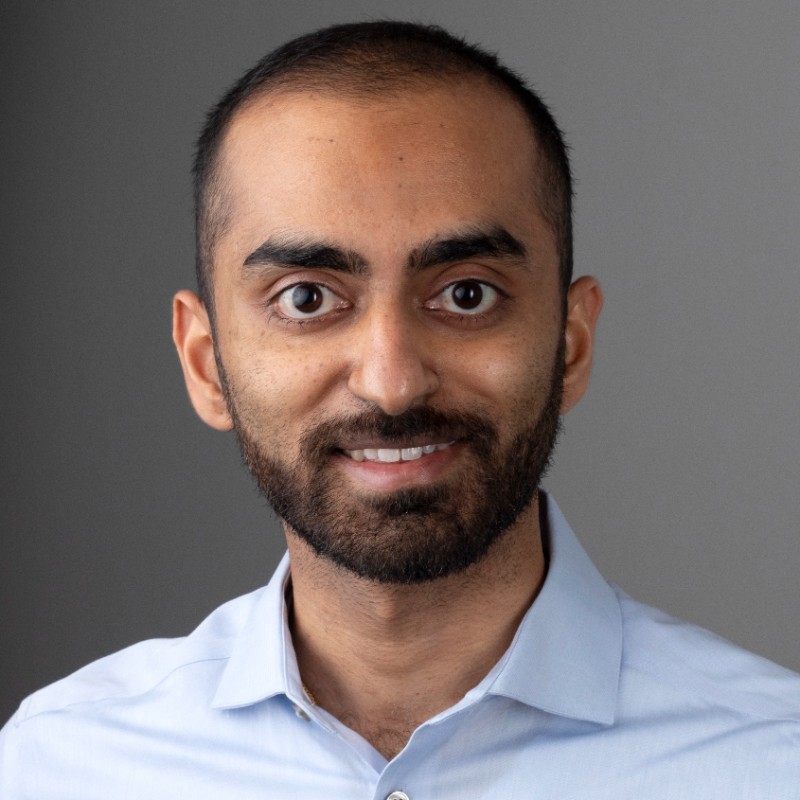
Dr. Muthu Alagappan, founder and CEO of Counsel Health, joins host John Furrier on theCUBE to discuss innovative developments in artificial intelligence and healthcare at the AI Agent Conference 2025 in partnership with NYSE Wired. Here, Dr. Alagappan shares insights into how Counsel Health is transforming access to healthcare through AI-powered asynchronous care models.
In this insightful conversation, Dr. Alagappan elaborates on Counsel Health's missio...Read more
exploreKeep Exploring
What is the mission of the company described in the text?add
What is Counsel's approach to improving primary care through a combination of AI and human doctors?add
What is the clinician cockpit and how does it benefit doctors in terms of patient capacity and quality of care?add
What are the main drivers of rising healthcare costs that platforms like Counsel can help with?add
What are some of the current challenges and areas of focus in the development of AI intelligence in medicine?add
>> Hello, and I'm John Furrier, host of theCUBE, here in our Palo Alto Studios for a special digital event and presentation around the AI Agent Conference happening in May. It's a preview of all the top speakers and experts, part of our NYSE Wired and theCUBE partnership, an open community of experts sharing their thoughts. Dr. Muthu Alagappan is here, founder and CEO of Counsel Health, transforming access to healthcare through AI-powered asynchronous care models. Obviously, the AI Agent Conference is probably instrumental. Dr. Muthu, thanks for coming on. I like to add the doctor in there, because you actually are a doctor. Thanks for coming on, and healthcare, why not have it?
Muthu Alagappan
>> Yeah, excited to be here, and thanks for having me, John.>> So the Agent Conference that Simon, that the community are putting on is very much about less hype, more about what's going on in the applications, what's going on at the agent infrastructure, and under the covers, what's transforming the businesses? So it's a lot of mix of great, diverse experts. I'm really intrigued by Counsel Health and what you're working on, because of the transformative power AI could bring to the market. And again, we're seeing this in all the verticals, where AI thought differently could actually make significant individual company and societal change. Huge story. So set the table, what is Counsel Health? Why was it formed? What was the motivation, and where are you today?
Muthu Alagappan
>> Yeah, so first of all, like I said, thanks for having me. It's a very exciting time that we're living in and building in right now. And when people talk about the potential of AI, almost all of them talk about healthcare as one of the iconic areas that AI will transform, and I think we're fortunate to be one of the companies building in that exact space. So the mission of the company is to multiply the world's clinical capacity. I'm a physician myself, I've spent a number of years working in large academic health systems in this country. And if people were to describe healthcare right now, they'd often use words like scarce, or limited, or constrained. And our mission is really to fix that supply/demand mismatch, to multiply clinical capacity, and make the world's best doctors as abundant as anything else you have in your life. And so the way that works is we essentially provide people the ability to message a doctor at any time for advice or care. So we often say it feels like having a doctor in your pocket or a doctor in the family, right? And the core question we asked when starting the company was could we productize what it was like to have a doctor in the family, someone that you can go to at any time, for any question or care, and that knows your medical history and your background really deeply? Now, we all know that the model, the concept of primary care physicians, which are a tremendous care model that has lasted many, many years... What we're excited about doing is moving us primary care doctors to personal doctors. Imagine if there was a physician that was only dedicated to your care, any time of the day, for any issue, that responded near instantly, and that's what we're excited about enabling. And we believe the way to do that is through a novel synthesis, a combination of AI and human doctors. We think too often, people take a solution at the extreme, either only an AI chatbot for medical care, which has tremendous risk, or that all care has to be from humans, which I think we're finding in the latest research, AI outperforms doctors in many skills. And so at Counsel, we've brought the two together. We've created a care model that interplays these two entities. The result is hopefully the best of both worlds. You get the speed, the intelligence, the accuracy, the personalization of AI, but you also get the trust and the safety of a real human doctor on our team that is able to write the prescription if you need one, order a lab test. And so that's how the platform works today, people can come to our website or app, and essentially get full, unlimited access to a personal doctor.>> So it's available today? People can actually leverage this today?
Muthu Alagappan
>> It's available today, but our primary distribution is through large enterprises, so people get access to Counsel via their employer, or their health plan, or another benefit.>> So you're distributing through the enterprise for the employee benefits kind of packet. Okay, cool. Well, just zooming out, because you brought up the supply demand thing. I mean, we all see Copilots as augmentation, but you identified the supply side of it, which is the doctors, and there's clinical care, the systems, the admin. I mean, I would describe the market as horrible, personally. There's a lot of customer satisfaction problems, timing, results, whether it's a scan or X-ray. We've seen all kinds of where AI helps. Now, on the other side, as a user, how many people actually go to Google and search for hours, right? Like, "Should I even go in? What do I have?" I mean, there's a demand. I mean, the user experience is changing, but the behavior's always been kind of like, "I got to figure what's going out." And this is the gap, the physical gap. So things like digital twins seem like an opportunity, things like... I mean, you're basically creating a digital twin of a doctor, for me, that sounds like. So this is kind of all AI kind of parlance and jargon, vectored into real world kind of nuance?
Muthu Alagappan
>> Exactly, and so what we're excited about is having a model where you can text us at any time. A doctor on our team will respond within a few minutes to either answer your question, provide advice, tell you if you should be worried about that rash or not, identify if you need antibiotics for that sore throat, nut all of that happening with a real doctor in under a few minutes. Now, behind the scenes we've built what we call a clinician cockpit. It's sort of like an Iron Man suit for doctors, where when our doctors use this software, it's like having an army of AI assistants behind the scenes, helping our doctors get to the right answer quickly, with high quality and very efficiently. What that means is that the number of patients any one of our doctors can support in a high-quality manner is an order of magnitude higher than the status quo. So to give you an example, your average primary care physician can see about three patients an hour. And on video visits, you can maybe see five or six patients an hour. And if you're just texting patients, you can maybe text eight patients an hour. But on Counsel's platform, we can see over 20 or 30 patients an hour, because we're doing it through real doctors, assisted by AI agents that are essentially helping them get to the right answer, do the research, review the medical record, all very seamlessly. And to your point, this behavior already takes place. There's about a billion medical health questions asked on Google every day, and on platforms like ChatGPT, a very large number of those questions are actually about someone's health. And so we know that people prefer to interact via messaging and asynchronously. We're just making it a lot easier to do that safely.>> They just have questions and they want answers, they want them fast from pros. So the movie analogies come up a lot on theCUBE and AI come up a lot. One is The Matrix. You know, when Neo learns how to do judo or fly a helicopter, it's like plug in, and boom, he's instantly enabled. And the other one's Minority Report. So when you were talking, I'm thinking Matrix meets Minority Report, moving like a zillion screens. So the operating cycle is significant. Can you just unpack that a little further, because I got to believe it's coming from that Matrix side, which is like the AI's facilitating lots of data coming in. Take us through that piece, because that's a huge operating cycle.
Muthu Alagappan
>> Yeah. I mean, I think if we're being honest with ourselves, doctors today are far from perfect, and it's hard to keep up. So medical information doubles every 73 days. It's almost unimaginable to conceive the idea that all of the medical information in the world doubles every two and a half months, and there are thousands of studies that are important, published every year. And so for a doctor to keep up with that level of medical advancement, and also to keep up with hundreds of pages of medical records for every patient they're seeing, it's cognitively impossible. And so to use your words, plugging into our clinician cockpit is a way of saying, "Let me get the assistance of the smartest AI agents in the world." Each one has a task. Maybe one of them is tasked with reading every journal article related to the question being asked. Another one is tasked with reviewing the entire medical history of the patient, which could be over 1,000 pages, to see if there's anything in there relevant to the question they're asking. Maybe another one is tasked with taking the answer and modifying it to the reading level that is best suited to the person we're communicating with. And you can imagine how you can take a human who has all of these imperfections, these cognitive limitations, you can fill all of those gaps, and sort of supercharge them, superpower them with AI, and that's the model we're creating. We have this doctor sort of in the loop, at the core. We're essentially giving them superpowers with AI agents that are doing the things that the human brain is probably just not able to do fast or effective enough.>> I mean, you're working backwards from the outcome. It's not about personalization, because the experience, outcome is personal. So it's not so much personalization as a mechanism. It's get the best care as fast as possible. The operating throughput is more efficient than the doctors and the system. So again, checks those boxes. I have to go to the third box to check, and I want to get your thoughts on the cost, okay, how much waste is in billing? I mean, the notes, who takes the notes? What is approved? What is a copay? I mean all kind... I'm just making this up, but I can imagine there's a massive list of inefficiencies on who gets paid in reimbursement, out of pocket, and all that overhead. Take us through that complexity.
Muthu Alagappan
>> Yeah, in my mind, healthcare costs are obviously rising at an unsustainable rate. I would say there are two large drivers of cost that platforms like Counsel can really help with. The first is what I would characterize as misutilization, so the idea that sometimes people get care that they don't need. They may go to a specialist when they could have gone to their PCP, they may go to the emergency room when they could have gone to urgent care. And all of that adds up to about $200 billion in waste every year, just misutilizing the resources we have. Counsel can help with that, because if you come to us with a question, we can help tell you, should you be worried, how soon should you seek care, and with whom should you seek care to sort of re-orchestrate utilization? But there's another category of waste that could be an even bigger area to capitalize on, which is, today, a lot of what is expensive in healthcare is doctors billing hundreds of dollars for their clinical expertise, right? So I have the knowledge to tell you that you need to double the dose of your statin, and I'm going to bill the insurance company $200 for that expert decision I made to double the dose. Now, it turns out, in many cases, AI can make that same decision often even more accurately, but not for $200, but rather at the cost of compute, 20 cents, 30 cents. And now, you've totally flipped the table, because you've taken things that doctors... Just judgment, just intellect, that used to be worth hundreds of dollars per 10 minutes, and you've now made it the cost of compute. And that should hopefully, fundamentally shatter a lot of the cost complexities of healthcare around the world.>> This is a great business model. I mean, having networks and two-sided marketplaces, really economically viable. It sounds like you got that in play. You got the demand side. Yeah, you got to channel through companies. You got the cost side. That's the people who say, "Hey, I would benefit using that. Hey, it'll reduce my payouts. Thank you." I mean, this is where the efficiency of AI... It's like the origination of the data, and the insights, and value, and then the messy middle is compressed by agents, and that's handled.
Muthu Alagappan
>> Exactly, and if you look at the areas where I think AI agents are making a big difference, it's in areas that previously were constrained by expert humans needing to do the job cognitively. So software engineers, lawyers, in our case, doctors. So constrained resource, very expensive for our cost. And I think in each of those fields, AI is saying, "Do we need to pay a software engineer a quarter million dollars a year, or could we have AI do a lot of that work?" At least 80% of it, let's say. And same with maybe on the legal side, on the financial analyst side, in our case, on the medical side. And it's not about not needing doctors, and as a doctor myself, I would say there's a lot of areas where you still need the doctor in the loop. It's just about reducing the cost of that judgment, so that more people get access to it.>> That argument about labor, I mean, I remember back in 15 years ago, when we started SiliconANGLE on theCUBE, big data was huge. Hadoop was a big topic. Okay, I remember the stat, I mean, "ATMs are going to kill the bank tellers." There's more bank tellers now than ever before, so the distribution of systems and efficiency just shift. So the human in the loop, so to speak here, the human intelligence is only compounded. I mean, are you seeing evidence of that on your side?
Muthu Alagappan
>> We are. I mean, I think the doctors that we have on our platform feel like they're practicing the highest-quality medicine that's ever existed, right? It would be like if you gave an average basketball player a trampoline, they're going to look->> They'll dunk every time.
Muthu Alagappan
>> And they'll enjoy playing basketball. And I think a lot of what we're doing is exactly that, we're empowering doctors to be the best version of themselves that they could be by sort of arming them in this way. And look, I mean, there's nearly unlimited demand for medical care around the world. There are parts of the world that care is essentially nonexistent. So this is mostly about increasing supply, it's not about taking away demand or reducing the need for doctors. I think there's so much demand and it's a matter of just ->> It's not a demand problem, it's not a demand problem. I mean, you're nailing it. Well, I'm super excited. I'd love to continue the conversation for an hour another time. I find this area super disruptive. There's a societal benefit to it as well. Its impact, right? So it's not just for profit. You got a great two-sided marketplace. You build a network of doctors, you get some AI built in there, they put their Iron Man suits on, and got to get the operating leverage there. It's beautiful, beautiful business model. What are you working on now? I mean, what's the coolest thing that's happening now? What's the plans? What's the focus?
Muthu Alagappan
>> Yeah, I mean, we're working on a lot now, as you can imagine, the AI space moves really quickly. And a lot of what we test internally with a small technical team is what is the next frontier of AI intelligence in medicine? What are the problems that we still have to unlock or make breakthroughs in? And there's quite a few, right? How do we manage multiple chronic conditions, which all conflict with one another, in a fairly autonomous way? How do we have AI supervise a physician to make sure that the way they're practicing medicine is accurate and empathetic? And so a lot of our focus is on those technical breakthroughs. And then, a lot of our focus is on how do we allow as many people to get access to something like Counsel as possible? And so there's a distribution focus that's certainly immense.>> How big is the company? Give us some stats on the numbers, funding, number of employees, how business is going.
Muthu Alagappan
>> So yeah, things have been going well. We're an early-stage company, so we started after large language models launched. So we started the company in the last couple of years. We are backed by some terrific investors, including Andreessen Horowitz, and Floodgate Fund, Asymmetric Capital, and so some of the leading AI investors in the world. And we're currently partnered with some of the largest care organizations and employer organizations in the world as well, so I think we're excited about where that's going to be headed. The company is a combination of AI researchers and doctors, and working together in a multidisciplinary way, and based around Boston and New York primarily.>> Yeah, two hot medical markets. Obviously, you got UCSF up here, you got Stanford, you got Cal. I mean, you have these epicenters, all great stuff. And soon, I imagine we'll talk about digital twins someday. But final question for you, who are you looking for in terms of hiring, and for folks that are watching that want to engage, as I see a huge generational shift of young people who actually want to make a difference and make money, I'm sure you've got some hiring? What are you looking for? What's the culture like there? And if someone was thinking about joining the team and the mission, what's the vibe? What's the culture?
Muthu Alagappan
>> Yeah, I think we're focused on people that have a deep emotional connection to the mission. Either that's because they have been doctors and have seen the inefficiencies of the system, maybe they've had a family member or themselves who've been a patient. Maybe they're just moved by this mission of wanting healthcare to feel abundant and not scarce. And so someone with a deeper connection in the mission I think is really important. And then, also, like others, we're excited about finding people who are driven, and ambitious, and motivated, and excited, and the best at what they do, and that could be any number of things. They could be the best storytellers, the best designers, the best brand and creative marketers, of course engineers or AI researchers, but anyone who has this track record of excellence in some often very specific domain, I think it's those people with pockets of excellence coming together, working across teams, that often creates best solutions.>> Well, congratulations. Of course, you got to scale up a business. You want operating people who can grow with that, ride that rocket ship. Thanks so much for coming on theCUBE and the NYSE Wired preview. We're looking forward to the event, Simon's event, the AI Agent Conference, and a diverse set of players. I mean, this is not a hype conference for sure. It's all people really rolling their sleeves up. What are you expecting to see there and talk about?
Muthu Alagappan
>> Yeah, we'll be presenting on some of our breakthrough approaches to enabling doctors, the clinician cockpit, sort of behind the scenes, some of the data we're seeing on the throughput and efficiency we can generate. So we're excited about announcing some of our latest research and techniques there. And I think you're right, I mean, there's a lot of activity in AI, there's a lot of conferences in AI. I think we look to hopefully be at the ones where there's a lot of substance, where people are building and showing what we feel is the frontier of the space. And this conference to us feels that way, and so we're excited to meet other folks, and to share more on what we've been up to.>> That's a great community, and I know a lot of folks there. Good stuff, thanks for sharing. Again, wish we had more time. Congratulations on your mission, really a game changer. Thanks for coming on theCUBE. Appreciate it.
Muthu Alagappan
>> Thanks so much, Sean. This was fun.>> Okay. I'm John Furrier, host of theCUBE here in our Palo Alto studios. This is for theCUBE Digital Event with the NYSE Wired community and theCUBE, together connecting Wall Street and Silicon Valley. This is part of the AI Agent by Simon and this community. Great community, check them out. Thanks for watching.