How can the U.S. government keep pace with AI innovation while safeguarding its most sensitive data? In Mixture of Experts segment, theCUBE+ NYSE Wired co-host Gemma Allen sits down with Knox Systems CEO Irina Denisenko to unpack the realities behind the high-stakes infrastructure powering federal cloud adoption. Denisenko traces her entrepreneurial journey from Class.com to founding Knox, revealing how firsthand experience with a costly, three-year authorization process inspired a radically faster model. She explains how Knox’s AI-managed cloud is cutting both time and cost, opening the door for SaaS innovators to serve government agencies without sacrificing security or scale.
The conversation goes deeper into the shifting threat landscape in the age of agentic AI, real-time monitoring and supply chain risk. Denisenko outlines why continuous observability and automated remediation are becoming essential as cyberattacks accelerate. She also explores the strategic implications of AI governance, arguing that speed and trust now define competitive advantage in public-sector technology. From supporting customers like Adobe and Celonis to preparing for new partnerships and product announcements at the AI Agent Conference, Denisenko lays out a roadmap for building resilient, future-ready systems at the intersection of innovation and regulation.
Forgot Password
Almost there!
We just sent you a verification email. Please verify your account to gain access to
theCUBE + NYSE Wired: AI Agent Conference. If you don’t think you received an email check your
spam folder.
Sign in to theCUBE + NYSE Wired: AI Agent Conference.
In order to sign in, enter the email address you used to registered for the event. Once completed, you will receive an email with a verification link. Open this link to automatically sign into the site.
Register For theCUBE + NYSE Wired: AI Agent Conference
Please fill out the information below. You will recieve an email with a verification link confirming your registration. Click the link to automatically sign into the site.
You’re almost there!
We just sent you a verification email. Please click the verification button in the email. Once your email address is verified, you will have full access to all event content for theCUBE + NYSE Wired: AI Agent Conference.
I want my badge and interests to be visible to all attendees.
Checking this box will display your presense on the attendees list, view your profile and allow other attendees to contact you via 1-1 chat. Read the Privacy Policy. At any time, you can choose to disable this preference.
Select your Interests!
add
Upload your photo
Uploading..
OR
Connect via Twitter
Connect via Linkedin
EDIT PASSWORD
Share
Forgot Password
Almost there!
We just sent you a verification email. Please verify your account to gain access to
theCUBE + NYSE Wired: AI Agent Conference. If you don’t think you received an email check your
spam folder.
Sign in to theCUBE + NYSE Wired: AI Agent Conference.
In order to sign in, enter the email address you used to registered for the event. Once completed, you will receive an email with a verification link. Open this link to automatically sign into the site.
Sign in to gain access to theCUBE + NYSE Wired: AI Agent Conference
Please sign in with LinkedIn to continue to theCUBE + NYSE Wired: AI Agent Conference. Signing in with LinkedIn ensures a professional environment.
Are you sure you want to remove access rights for this user?
Details
Manage Access
email address
Community Invitation
Anthony Sardain, Cavela
How can the U.S. government keep pace with AI innovation while safeguarding its most sensitive data? In Mixture of Experts segment, theCUBE+ NYSE Wired co-host Gemma Allen sits down with Knox Systems CEO Irina Denisenko to unpack the realities behind the high-stakes infrastructure powering federal cloud adoption. Denisenko traces her entrepreneurial journey from Class.com to founding Knox, revealing how firsthand experience with a costly, three-year authorization process inspired a radically faster model. She explains how Knox’s AI-managed cloud is cutting both time and cost, opening the door for SaaS innovators to serve government agencies without sacrificing security or scale.
The conversation goes deeper into the shifting threat landscape in the age of agentic AI, real-time monitoring and supply chain risk. Denisenko outlines why continuous observability and automated remediation are becoming essential as cyberattacks accelerate. She also explores the strategic implications of AI governance, arguing that speed and trust now define competitive advantage in public-sector technology. From supporting customers like Adobe and Celonis to preparing for new partnerships and product announcements at the AI Agent Conference, Denisenko lays out a roadmap for building resilient, future-ready systems at the intersection of innovation and regulation.
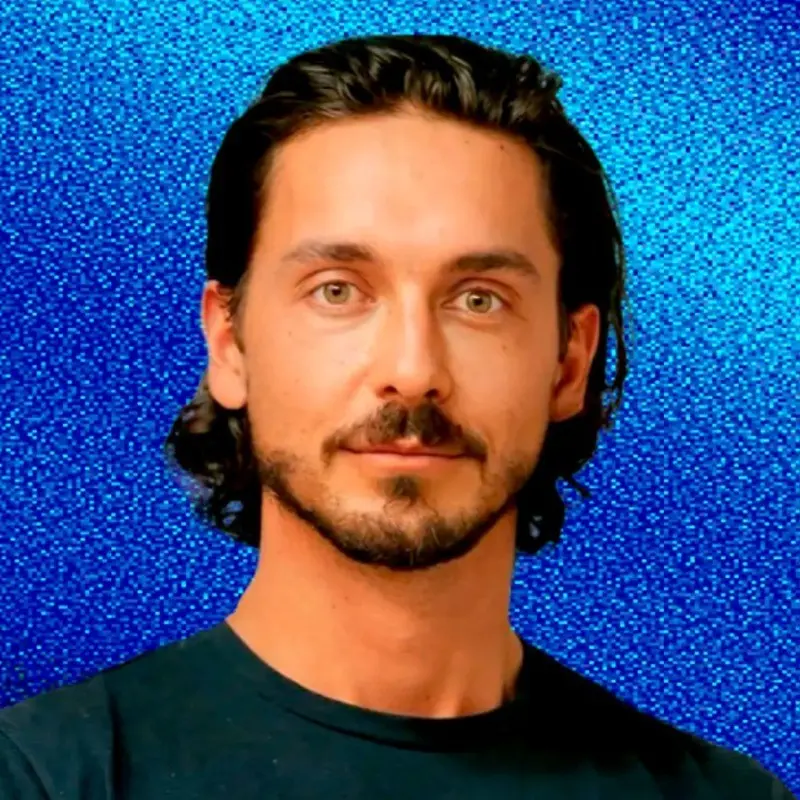
>> Welcome back to theCUBE Studio here at the New York Stock Exchange. This is part of our programming with the NYSE Wired. And this May, we're going on the road not too far in Midtown Manhattan, where we will be covering the AI Agent Conference with Simon Chan and his team. Joining me now is one of the honorees from that conference, Anthony Sardain, CEO and founder of Cavela. Welcome, Anthony.
Anthony Sardain
>> Thanks for having me.
Gemma Allen
>> So, one thing I love about Simon's guests is their background story is always really interesting, right? Because a lot of these companies are in stealth stage. Your story's particularly interesting because you've lived in various parts of Asia and had a family business that was in steel, right? Talk to me a little bit about how that led you to this.
Anthony Sardain
>> Yeah, absolutely. So, I was born and raised in South East Asia. We lived all over from Malaysia, Hong Kong, Thailand, Singapore. My family's been in Asia for about three generations in trade. And so, factory settings were very familiar to me. For grad school, I was doing research, applying AI models to global trade, so that's been a thing I've been thinking about for some time. Built out different AI businesses in legacy industries. Obviously, manufacturing is another one of those industries which has a little bit of some progress to be made in terms of tech input. And so, when we kicked off Cavela, it was just a natural marriage of something else we were interested in, manufacturing with AI.
Gemma Allen
>> Wow. And essentially, this is an AI agent that can help you with procurement, sourcing, supply chain, 1PL, 2PL, 3PL. What is the scope of what this can do?
Anthony Sardain
>> Absolutely. So, the way it works is we help brands and indeed anybody make physical products. So, the way that typically works when you're sourcing products is that you're reaching out to factories, you're drafting product specs. That can be a process that takes multiple days, reaching out to factories, knowing who to trust, going back and forth over email, WhatsApp and WeChat. It typically takes about 1,000 touchpoints back and forth to get a product made. What we do is we make that process a lot easier. So, we automate away about 90% of the work for brands and handle absolutely everything from ideation all the way to delivery. And through automation and plugging in directly into vetted factories, we essentially remove a lot of that work that brands experience and essentially just streamline the entire process. Taking a process that typically takes, for example for quoting, of multiple days, if not weeks, to just under 20 minutes.
Gemma Allen
>> Wow. And I mean, discovery is in and of itself a big, big challenge, right? So, talk to me about a scenario whereby I am a consumer brand. I want to, I don't know, create a suit line, okay? I go on your platform, I sign up, I pay a set fee. Talk to me about how it actually works. Is it based on my usage, based on the scope of the contract that we're signing into?
Anthony Sardain
>> Absolutely.
Gemma Allen
>> And then, how long does this take end-to-end?
Anthony Sardain
>> So what you'll do is you'll go on the platform, you will engage with an agent who will ask you all sorts of questions about the product that you're making. These are factory-level questions to understand exactly what it is that you're trying to make. And that way, what we can do is we can match you against a factory in our vetted network who can actually handle the product as such. And so, what we do is over the course of 20 minutes, we have a full idea of what it is you want to make and what we're going to have to do in order to make it. And we can then immediately quote that product then and there. So, that process in a normal world is happening back and forth over email, over, as I said, multiple days, if not weeks. Here, we're doing it in just 20 minutes. From there, you have the quote, you can purchase a sample. Sample gets made and sent to your doorstep. We try to one shot samples, but sometimes you might do a second or third iteration. And then, from there, you place an order and it's an order to your warehouse.
Gemma Allen
>> Wow. Okay. So, talk to me about what it means to be a vetted factory vendor.
Anthony Sardain
>> Sure.
Gemma Allen
>> What does that entail? And how do you find and keep up to date on the possibilities, right? Especially when you think about areas like Asia, where it seems as though so much of it, like I said, is discovery based, right?
Anthony Sardain
>> Absolutely. Well, we've been on the ground obviously in a lot of these countries to build those relationships firsthand. So, we're vetting the factories ourselves and making sure that they're delivering a high-quality product, that they're very responsive and professional. And that's how we're able to essentially ensure that these products that these factories are making are going to be of the highest quality. And so, as a result, we've never had a QA issue in the history of the company.
Gemma Allen
>> Wow. Okay. And what sorts of factories are coming into play here? Are people very motivated by cost, by opportunity, by scale? What sorts of things are you looking for in the factory network and meeting that with customer demand?
Anthony Sardain
>> Yeah. So, I mean, the way that brands are thinking about this is they don't know who to turn to, who to trust. They're obviously very cost-sensitive. They're looking for factories sometimes outside of Asia, outside of China, certainly. And what they're looking for is a seamless experience. They want somebody that basically helps them feel like they're in good hands. And by creating this process and the system that is very streamlined from start to finish, brands can trust that the product will get made and reasonably quickly as well. So, as I said, normally when you're making a product, it can take several months. With some of our brands, we've been able to go from ideation to commencement of production in under four weeks.
Gemma Allen
>> Wow. And is it similar to a typical supply chain scenario where you then have iterative cost, review, like a monthly business review with this agent per se, where you're looking at how this particular offering continues to meet your specific need? What does that relationship look like?
Anthony Sardain
>> Because we've essentially built these relationships with these factories, we can pre-negotiate a lot of terms, so that we keep things stable. One of the hardest things about supply chain is this continuous renegotiation of contracts. Certainly, right now with all of the volatility that's happening around tariffs, we're able to keep costs relatively flat. Now, sometimes there are things that happen, what we've seen with tariffs, but largely we can keep everything pretty pre-negotiated and stable.
Gemma Allen
>> Okay. Talk to me about the stage this company's at, size, funding?
Anthony Sardain
>> Absolutely.
Gemma Allen
>> Give me the deets.
Anthony Sardain
>> Yes. So, we raised our seed with SUSA and XYZ, $6.4 million, and we are now actively scaling. So, we raised at the end of last year, now growing the company. And we're primarily right now serving DTC brands in the soft-goods space. So, a lot of brands that are making anything that has a textile or apparel component, but we've sourced everything from jewelry to food-grade packaging, textiles, everything you can imagine.
Gemma Allen
>> And your typical user or client, are they small brands? Are they first-time entrepreneurs? Are they people who are making products at home? Give me a sense of who you're serving?
Anthony Sardain
>> So, it's primarily mid-market brands, brands that are doing somewhere between $1 and $100 million in revenue. Brands that essentially are actively scaling, they have a good product that their users love, that their clients love, and they're really looking to push out new products or essentially optimize their current supply chain. They might not necessarily have large dedicated procurement teams, but that's where we come in. We can basically give them access to an enterprise-grade procurement team through what we offer.
Gemma Allen
>> Wow. Okay. Let's go under the hood for a second on the technology that's involved here.
Anthony Sardain
>> Sure.
Gemma Allen
>> Talk me through that. I presume it's highly iterative and it's based on context too, which is a hugely important part of this.
Anthony Sardain
>> Absolutely.
Gemma Allen
>> What's it built on? What is your own stack? Are you building this using like a mixture of different foundational models? Talk me through.
Anthony Sardain
>> It's a mixture of foundational models, but importantly, a lot of the innovation is around the SOPs and the data that we're bringing into this. So, we have data at the factory level of what factories are producing, what their pricing structure is in terms of quoting products, what they're able to deliver. And all that is allowing us to do things such as proper matching of product to factory and immediate quoting of products based off of the specs we've built. We also know, for any given product, what the most important variables to get a accurate quote and an accurate product level factory spec sheet is. And all of that is this data that we've built out through our relationships with factories through the time we spent in sourcing, and that is really the massive value add. The models really are able to do their best work because we have so much data under the hood that is serving them.
Gemma Allen
>> And that data in terms of the feed side of this, that is structured data, right? There's also an element of relationships and dependencies there and ensuring that this flows in a way that adds value on the other side. Again, perhaps in the pre-AI world, right, that was a challenge, okay? And it created another challenge for discoverability for supply chain sourcing. Has AI magically fixed that?
Anthony Sardain
>> It has. I think that one of the main challenges with regards to sourcing and the reason that we didn't see tech innovation insourcing was that it's so heterogeneous. You talked about structured data. We had all sorts of unstructured data. You sometimes get a product request that is a sketch on a napkin. Sometimes you get a full tech pack. You get all sorts of different files, different languages, all sorts of different things. And in a pre-AI world, tech needed everything to be very predefined, pre-structured. AI now can handle absolutely anything. No matter what form factor it comes in, no matter what the file is, it can handle anything you throw at it.
Gemma Allen
>> Wow. And what sorts of other things are you seeing like on the origination side of this? Are you seeing folks vibe coding products into ideation?
Anthony Sardain
>> Absolutely.
Gemma Allen
>> So, talk to me through what's really changed. It's a fascinating time, right? Because it feels like in one way it's terrifying, but it's also never been a more opportunistic time to suddenly be an entrepreneur, bring a brand to life.
Anthony Sardain
>> Yeah, absolutely. I think that what has really changed now is it's just become easier and easier for anyone anywhere to create and launch physical products. You're seeing this across the stack where you're starting to see celebrity brands as becoming a trend. That is something that I think we're only going to see accelerate as people realize part of their personal brand has historically been primarily digital products, but can eventually be physical products as well as you're starting to see higher-quality merch, that's a version of this as well. My view is that in the years to come, every business is going to have an arm of its business that it's going to be in physical products. I'm always confused as to why Equinox, for example, doesn't have its own line of creatine, right? Why they're selling third-party creatine, they have a strong brand, they could certainly do that. That same thing can hold true for just about any business. They can have an arm of their business that sells a physical product that is very much in line with the brand that they've built out and that is going to become easier and easier as physical products become accessible to everyone.
Gemma Allen
>> Well, Americans love merch, that's for sure, right? Myself included, even though I'm not an American, but I've certainly sailed that ship. Okay. So, talk to me a second about the competitive dynamics of this. There are some 800-pound gorillas in this space, right? Companies like Alibaba. What's the vision here? How do you see yourself playing out in the longer term? Where do you want to bring this?
Anthony Sardain
>> Absolutely. Look, you mentioned Alibaba. Alibaba, I think they did a great job of what they did, but for me, it's a bit of an antiquated view of sourcing. I think that use Alibaba, you search water bottles and you get 10,000 suppliers who can make your water bottle. The problem is you're not looking for 10,000 suppliers, you're looking for one, right? It's very much that difference between Google search and ChatGPT or Claude, where Google gave you a search term and then 10,000 blue links, and then it's on you to click through everything and create a view. Claude, ChatGPT gives you one answer based on your exact query. That same thing is true in the sourcing world. How do I get to a point where I just say what it is I want and it gets made? That's a very different view. A lot of the work in sourcing is going from 10,000 to one, not just the 10,000 suppliers. So, what we're doing is we're making that process a lot easier and that's where we're going after.
Gemma Allen
>> Well, we love startups here on theCUBE. We love folks that are hungry and I always vote for an underdog. So, wonderful to have you on, Anthony. To close, tell us a little bit about what's ahead, especially between now and the summer, right? You're going to be at the AI Agent Conference in May. I think you're going to be one of the panelists or certainly honorees. What does the next three to six months look like?
Anthony Sardain
>> So, we just raised at the end of last year, so a period of growth for us as we're continuing to build out the automations and scale the company. A lot is happening in AI in terms of being able to automate more and more, and so we're just focusing on growth.
Gemma Allen
>> Okay. Wow. Well, we wish you all the best and look forward to seeing you in May. Thanks for coming on theCUBE at the NYSE.
Anthony Sardain
>> Thank you.
Gemma Allen
>> I am Gemma Allen here at theCUBE Studio at the New York Stock Exchange. This is part of our programming ahead of the AI Agent Conference happening here in New York in May. Thanks so much for watching.
>> Welcome back to theCUBE Studio here at the New York Stock Exchange. This is part of our programming with the NYSE Wired. And this May, we're going on the road not too far in Midtown Manhattan, where we will be covering the AI Agent Conference with Simon Chan and his team. Joining me now is one of the honorees from that conference, Anthony Sardain, CEO and founder of Cavela. Welcome, Anthony.
Anthony Sardain
>> Thanks for having me.
Gemma Allen
>> So, one thing I love about Simon's guests is their background story is always really interesting, right? Because a lot of these companies are in stealth stage. Your story's particularly interesting because you've lived in various parts of Asia and had a family business that was in steel, right? Talk to me a little bit about how that led you to this.
Anthony Sardain
>> Yeah, absolutely. So, I was born and raised in South East Asia. We lived all over from Malaysia, Hong Kong, Thailand, Singapore. My family's been in Asia for about three generations in trade. And so, factory settings were very familiar to me. For grad school, I was doing research, applying AI models to global trade, so that's been a thing I've been thinking about for some time. Built out different AI businesses in legacy industries. Obviously, manufacturing is another one of those industries which has a little bit of some progress to be made in terms of tech input. And so, when we kicked off Cavela, it was just a natural marriage of something else we were interested in, manufacturing with AI.
Gemma Allen
>> Wow. And essentially, this is an AI agent that can help you with procurement, sourcing, supply chain, 1PL, 2PL, 3PL. What is the scope of what this can do?
Anthony Sardain
>> Absolutely. So, the way it works is we help brands and indeed anybody make physical products. So, the way that typically works when you're sourcing products is that you're reaching out to factories, you're drafting product specs. That can be a process that takes multiple days, reaching out to factories, knowing who to trust, going back and forth over email, WhatsApp and WeChat. It typically takes about 1,000 touchpoints back and forth to get a product made. What we do is we make that process a lot easier. So, we automate away about 90% of the work for brands and handle absolutely everything from ideation all the way to delivery. And through automation and plugging in directly into vetted factories, we essentially remove a lot of that work that brands experience and essentially just streamline the entire process. Taking a process that typically takes, for example for quoting, of multiple days, if not weeks, to just under 20 minutes.
Gemma Allen
>> Wow. And I mean, discovery is in and of itself a big, big challenge, right? So, talk to me about a scenario whereby I am a consumer brand. I want to, I don't know, create a suit line, okay? I go on your platform, I sign up, I pay a set fee. Talk to me about how it actually works. Is it based on my usage, based on the scope of the contract that we're signing into?
Anthony Sardain
>> Absolutely.
Gemma Allen
>> And then, how long does this take end-to-end?
Anthony Sardain
>> So what you'll do is you'll go on the platform, you will engage with an agent who will ask you all sorts of questions about the product that you're making. These are factory-level questions to understand exactly what it is that you're trying to make. And that way, what we can do is we can match you against a factory in our vetted network who can actually handle the product as such. And so, what we do is over the course of 20 minutes, we have a full idea of what it is you want to make and what we're going to have to do in order to make it. And we can then immediately quote that product then and there. So, that process in a normal world is happening back and forth over email, over, as I said, multiple days, if not weeks. Here, we're doing it in just 20 minutes. From there, you have the quote, you can purchase a sample. Sample gets made and sent to your doorstep. We try to one shot samples, but sometimes you might do a second or third iteration. And then, from there, you place an order and it's an order to your warehouse.
Gemma Allen
>> Wow. Okay. So, talk to me about what it means to be a vetted factory vendor.
Anthony Sardain
>> Sure.
Gemma Allen
>> What does that entail? And how do you find and keep up to date on the possibilities, right? Especially when you think about areas like Asia, where it seems as though so much of it, like I said, is discovery based, right?
Anthony Sardain
>> Absolutely. Well, we've been on the ground obviously in a lot of these countries to build those relationships firsthand. So, we're vetting the factories ourselves and making sure that they're delivering a high-quality product, that they're very responsive and professional. And that's how we're able to essentially ensure that these products that these factories are making are going to be of the highest quality. And so, as a result, we've never had a QA issue in the history of the company.
Gemma Allen
>> Wow. Okay. And what sorts of factories are coming into play here? Are people very motivated by cost, by opportunity, by scale? What sorts of things are you looking for in the factory network and meeting that with customer demand?
Anthony Sardain
>> Yeah. So, I mean, the way that brands are thinking about this is they don't know who to turn to, who to trust. They're obviously very cost-sensitive. They're looking for factories sometimes outside of Asia, outside of China, certainly. And what they're looking for is a seamless experience. They want somebody that basically helps them feel like they're in good hands. And by creating this process and the system that is very streamlined from start to finish, brands can trust that the product will get made and reasonably quickly as well. So, as I said, normally when you're making a product, it can take several months. With some of our brands, we've been able to go from ideation to commencement of production in under four weeks.
Gemma Allen
>> Wow. And is it similar to a typical supply chain scenario where you then have iterative cost, review, like a monthly business review with this agent per se, where you're looking at how this particular offering continues to meet your specific need? What does that relationship look like?
Anthony Sardain
>> Because we've essentially built these relationships with these factories, we can pre-negotiate a lot of terms, so that we keep things stable. One of the hardest things about supply chain is this continuous renegotiation of contracts. Certainly, right now with all of the volatility that's happening around tariffs, we're able to keep costs relatively flat. Now, sometimes there are things that happen, what we've seen with tariffs, but largely we can keep everything pretty pre-negotiated and stable.
Gemma Allen
>> Okay. Talk to me about the stage this company's at, size, funding?
Anthony Sardain
>> Absolutely.
Gemma Allen
>> Give me the deets.
Anthony Sardain
>> Yes. So, we raised our seed with SUSA and XYZ, $6.4 million, and we are now actively scaling. So, we raised at the end of last year, now growing the company. And we're primarily right now serving DTC brands in the soft-goods space. So, a lot of brands that are making anything that has a textile or apparel component, but we've sourced everything from jewelry to food-grade packaging, textiles, everything you can imagine.
Gemma Allen
>> And your typical user or client, are they small brands? Are they first-time entrepreneurs? Are they people who are making products at home? Give me a sense of who you're serving?
Anthony Sardain
>> So, it's primarily mid-market brands, brands that are doing somewhere between $1 and $100 million in revenue. Brands that essentially are actively scaling, they have a good product that their users love, that their clients love, and they're really looking to push out new products or essentially optimize their current supply chain. They might not necessarily have large dedicated procurement teams, but that's where we come in. We can basically give them access to an enterprise-grade procurement team through what we offer.
Gemma Allen
>> Wow. Okay. Let's go under the hood for a second on the technology that's involved here.
Anthony Sardain
>> Sure.
Gemma Allen
>> Talk me through that. I presume it's highly iterative and it's based on context too, which is a hugely important part of this.
Anthony Sardain
>> Absolutely.
Gemma Allen
>> What's it built on? What is your own stack? Are you building this using like a mixture of different foundational models? Talk me through.
Anthony Sardain
>> It's a mixture of foundational models, but importantly, a lot of the innovation is around the SOPs and the data that we're bringing into this. So, we have data at the factory level of what factories are producing, what their pricing structure is in terms of quoting products, what they're able to deliver. And all that is allowing us to do things such as proper matching of product to factory and immediate quoting of products based off of the specs we've built. We also know, for any given product, what the most important variables to get a accurate quote and an accurate product level factory spec sheet is. And all of that is this data that we've built out through our relationships with factories through the time we spent in sourcing, and that is really the massive value add. The models really are able to do their best work because we have so much data under the hood that is serving them.
Gemma Allen
>> And that data in terms of the feed side of this, that is structured data, right? There's also an element of relationships and dependencies there and ensuring that this flows in a way that adds value on the other side. Again, perhaps in the pre-AI world, right, that was a challenge, okay? And it created another challenge for discoverability for supply chain sourcing. Has AI magically fixed that?
Anthony Sardain
>> It has. I think that one of the main challenges with regards to sourcing and the reason that we didn't see tech innovation insourcing was that it's so heterogeneous. You talked about structured data. We had all sorts of unstructured data. You sometimes get a product request that is a sketch on a napkin. Sometimes you get a full tech pack. You get all sorts of different files, different languages, all sorts of different things. And in a pre-AI world, tech needed everything to be very predefined, pre-structured. AI now can handle absolutely anything. No matter what form factor it comes in, no matter what the file is, it can handle anything you throw at it.
Gemma Allen
>> Wow. And what sorts of other things are you seeing like on the origination side of this? Are you seeing folks vibe coding products into ideation?
Anthony Sardain
>> Absolutely.
Gemma Allen
>> So, talk to me through what's really changed. It's a fascinating time, right? Because it feels like in one way it's terrifying, but it's also never been a more opportunistic time to suddenly be an entrepreneur, bring a brand to life.
Anthony Sardain
>> Yeah, absolutely. I think that what has really changed now is it's just become easier and easier for anyone anywhere to create and launch physical products. You're seeing this across the stack where you're starting to see celebrity brands as becoming a trend. That is something that I think we're only going to see accelerate as people realize part of their personal brand has historically been primarily digital products, but can eventually be physical products as well as you're starting to see higher-quality merch, that's a version of this as well. My view is that in the years to come, every business is going to have an arm of its business that it's going to be in physical products. I'm always confused as to why Equinox, for example, doesn't have its own line of creatine, right? Why they're selling third-party creatine, they have a strong brand, they could certainly do that. That same thing can hold true for just about any business. They can have an arm of their business that sells a physical product that is very much in line with the brand that they've built out and that is going to become easier and easier as physical products become accessible to everyone.
Gemma Allen
>> Well, Americans love merch, that's for sure, right? Myself included, even though I'm not an American, but I've certainly sailed that ship. Okay. So, talk to me a second about the competitive dynamics of this. There are some 800-pound gorillas in this space, right? Companies like Alibaba. What's the vision here? How do you see yourself playing out in the longer term? Where do you want to bring this?
Anthony Sardain
>> Absolutely. Look, you mentioned Alibaba. Alibaba, I think they did a great job of what they did, but for me, it's a bit of an antiquated view of sourcing. I think that use Alibaba, you search water bottles and you get 10,000 suppliers who can make your water bottle. The problem is you're not looking for 10,000 suppliers, you're looking for one, right? It's very much that difference between Google search and ChatGPT or Claude, where Google gave you a search term and then 10,000 blue links, and then it's on you to click through everything and create a view. Claude, ChatGPT gives you one answer based on your exact query. That same thing is true in the sourcing world. How do I get to a point where I just say what it is I want and it gets made? That's a very different view. A lot of the work in sourcing is going from 10,000 to one, not just the 10,000 suppliers. So, what we're doing is we're making that process a lot easier and that's where we're going after.
Gemma Allen
>> Well, we love startups here on theCUBE. We love folks that are hungry and I always vote for an underdog. So, wonderful to have you on, Anthony. To close, tell us a little bit about what's ahead, especially between now and the summer, right? You're going to be at the AI Agent Conference in May. I think you're going to be one of the panelists or certainly honorees. What does the next three to six months look like?
Anthony Sardain
>> So, we just raised at the end of last year, so a period of growth for us as we're continuing to build out the automations and scale the company. A lot is happening in AI in terms of being able to automate more and more, and so we're just focusing on growth.
Gemma Allen
>> Okay. Wow. Well, we wish you all the best and look forward to seeing you in May. Thanks for coming on theCUBE at the NYSE.
Anthony Sardain
>> Thank you.
Gemma Allen
>> I am Gemma Allen here at theCUBE Studio at the New York Stock Exchange. This is part of our programming ahead of the AI Agent Conference happening here in New York in May. Thanks so much for watching.

















 Gemma Allen