We just sent you a verification email. Please verify your account to gain access to
theCUBE + NYSE Wired: AI Agent Conference. If you don’t think you received an email check your
spam folder.
Sign in to theCUBE + NYSE Wired: AI Agent Conference.
In order to sign in, enter the email address you used to registered for the event. Once completed, you will receive an email with a verification link. Open this link to automatically sign into the site.
Register For theCUBE + NYSE Wired: AI Agent Conference
Please fill out the information below. You will recieve an email with a verification link confirming your registration. Click the link to automatically sign into the site.
You’re almost there!
We just sent you a verification email. Please click the verification button in the email. Once your email address is verified, you will have full access to all event content for theCUBE + NYSE Wired: AI Agent Conference.
I want my badge and interests to be visible to all attendees.
Checking this box will display your presense on the attendees list, view your profile and allow other attendees to contact you via 1-1 chat. Read the Privacy Policy. At any time, you can choose to disable this preference.
Select your Interests!
add
Upload your photo
Uploading..
OR
Connect via Twitter
Connect via Linkedin
EDIT PASSWORD
Share
Forgot Password
Almost there!
We just sent you a verification email. Please verify your account to gain access to
theCUBE + NYSE Wired: AI Agent Conference. If you don’t think you received an email check your
spam folder.
Sign in to theCUBE + NYSE Wired: AI Agent Conference.
In order to sign in, enter the email address you used to registered for the event. Once completed, you will receive an email with a verification link. Open this link to automatically sign into the site.
Sign in to gain access to theCUBE + NYSE Wired: AI Agent Conference
Please sign in with LinkedIn to continue to theCUBE + NYSE Wired: AI Agent Conference. Signing in with LinkedIn ensures a professional environment.
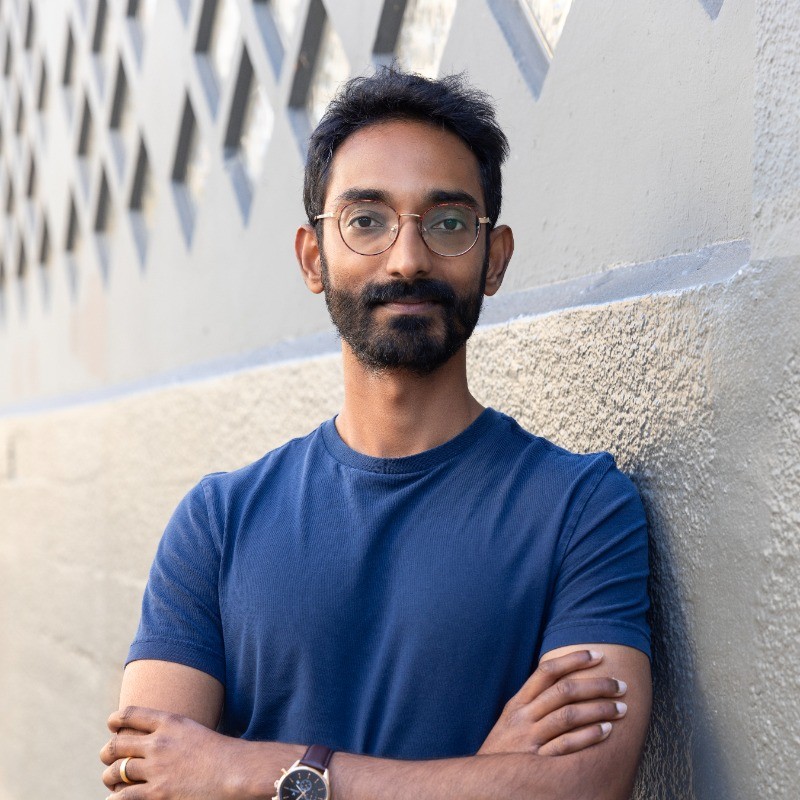
Arjun Prakash, co-founder and CEO of Distyl AI, joins John Furrier at theCUBE for an insightful discussion during the AI Agent Conference 2025, in collaboration with NYSE Wired. Together, they explore the evolving landscape of artificial intelligence agents and their transformative effects on enterprise systems, aligning Silicon Valley innovation with Wall Street demands.
In this dynamic video, Prakash shares expertise in steering Fortune 500 companies toward AI-native operational models. They outline the strategic interventions Distyl AI implements ...Read more
exploreKeep Exploring
What does your company do, who is your target audience, and why did you start the company?add
What is required for enterprises to successfully implement AI technology into their business processes while ensuring explainability and compliance?add
>> Welcome back everyone to theCUBE here in Palo Alto. I'm John Furrier, host of theCUBE for a special digital presentation of the AI agent conference preview with the NYC Wired community and theCUBE working together, bringing Wall Street and Silicon Valley together. Arjun Prakash is here, co-founder and CEO of Distyl AI, targeting the enterprise and really helping them move the needle on bringing workloads into production of course, bringing in the wave of agents, bringing in all that value creation, unpacking it all here. Arjun, thanks for coming on, theCUBE. Appreciate you. Good to see you. CUBE alumni. Thanks for coming on.
Arjun Prakash
>> John, fantastic to be here.>> We love the enterprise. The AI enterprise is super in build out mode of figuring out what their AI infrastructure is, and as they do that, once that's done, it's like the floodgates are going to open up with all kinds of new agent infrastructure, cloud-native, Kubernetes, all that world is rolling in and it's going to enable a plethora of AI agents, new kinds of apps. Some say it's going to be 10X the SaaS market, and it's something like going to a concert and the gates open, everyone rushes to the stage. That's coming and we're seeing all the action now here in the community that's doing all the work at the AI agent conference that Simon's putting on, has some of those people there. You're going to be giving a talk there, so thanks for coming on. I want to ask you first, give a quick overview of what you guys do and who you're targeting and why you started the company.
Arjun Prakash
>> So we work with large Fortune 500 enterprises to bring them onto the AI technology curve. And so what we practically do is we partner with them, shape these programs that can change their business and make it AI-native, drive it with agents. So it starts from day zero in partnering with the executives to shape what the transformation looks like, forward deploy people to then administer and run these programs over three-year time horizon, two-year time horizon. And then we also deploy our products. Our products are purpose-built to meet the accuracy requirements of meeting the operational and enterprise requirements. Safety is a big consideration. Explainability is a big consideration. So that batteries included, vertically integrated partnership, our customers really appreciate that about us. We started the business with a very simple goal, John. A lot of the digital-native companies and software companies were just able to create value from this technology gen AI models seamlessly. And we felt that a lot of the incumbents and enterprises needed a partner to bring them onto that digital curve, that AI curve to be able to use this technology to fundamentally reimagine their business so they could stay in the Fortune 500 over the next 15 years and really turn this into competitive advantage.>> Yeah, I mean, the enterprise was seeing the boardroom, hey, we need to be on this agent thing. Okay, I'm oversimplifying it, obviously the hyperbole, but also the bottoms-up side has been cloud-native working on, so all the top enterprises, they're used to the cloud-native distributed computing hybrid model. But in all the enterprises we talked to, there's like a high bar to get into production depending upon also, financial services is the highest bar obviously in some of those regulated industries. But still, production is tricky with generative AI. Machine learning's been in there. Okay, great for use cases like fraud detection and others. What are the needs of the enterprise? Because you start to see a backlog of POCs, we call it POC purgatory, where it's like, yeah, everyone's in there with the startups on these apps need to get verified in the enterprise because of the things that they have needs for, which is it's got to run. It's going to be operationally hardened. I got security posture, I have resilience. All these things kind of come into play. What's your view on that? What are some of the enterprise needs that you guys are seeing and how are they moving the needle to open up that door for business?
Arjun Prakash
>> I don't think I'm going to put it better. A lot of enterprises today are POC purgatory. So let's really unpack that a little bit, right? The technology is very powerful. It is also something that requires systems-level software to make it explainable, accurate to meet the needs of the enterprise. If all you want to do is have it edit your email like with a ChatGPT, then you should by all means, use the technologies that are already out there today. But if you want to be able to onboard that technology onto how your business processes work today, the data that's very unique to you, and make it explainable so that now you can have these agents make decisions, not get into regulatory compliance issues because the models made decisions that you couldn't explain, now you have a problem. So then let's unpack what actually takes to now meet that bar. Two things. Number one, on the AI side of things, it's important to make it explainable and accurate. How do you ground the models in the specifics of how your business work, the data that's unique to you, and have the subject matter experts be able to adjudicate and evaluate what the models are doing is as much a technology challenge as it is a change management challenge. By the way, we have had to do that already with humans. We hire humans, we onboard them, we evaluate them, and the similar premises from technology for the models and change management is extremely important. The second thing is fundamental software engineering. So as we scale these out, it is important to back these up with a certain set of enterprise capabilities that we have come to expect to protect our data. Things like role-based access controls, versioning, the ability to understand what's going wrong when something goes wrong. These are software design principles that we have followed for code for data, and AI is no different. So how do you take the things that are unique to AI, explainability and accuracy, and back them in an environment that brings the software design principles of data protection and security. That is fundamentally the big challenge of going from a really compelling demo to something in production serving the needs of millions of people.>> Yeah, A couple of things there that jump out at me. One is the cliche that's true, which is it's easy to show a demo than scale it.
Arjun Prakash
>> Exactly.>> A lot of issues come out. And the other one is that at Google Next, we just covered their event. One thing that came out of that event that was a data point that we extracted out of that event was that their role of their research was instrumental in some of their product decisions. So what you just walked through was you got the confluence of engineering, software engineering, engineering principles, platform engineering, development, stuff that builders talk about. Then you've got the confluence of the humans, all right, domain experts and the research around the models. So engineering, coding and computer science. Then you've got the middle, which is kind of like the models, how they work. And the third is culture, the people involved, what's the impact of the person? And it could be a company's culture, it could be society. So all three things are now factored into one thing, a design. How do you guys see customers dealing with that? Because the change management is just as huge of a problem if they're not on board as domain experts and if they don't have domain experts or their job shifts. I mean, do you agree with that? And if so, what are people doing? What are some examples of-
Arjun Prakash
>> I agree with that deeply, and it's a big challenge because there's so many moving parts. As you said, there's the engineering, there's the models, there's the change management, the people. That's a lot of moving parts, right? The only way to solve for this is pick a problem that can align everybody. Too often, we see projects fail because it's an experiment that is around the models without a purpose. But a great way to solve for this is start with a business use case, get the business's buy-in, and target it at an experience that now aligns everything towards solving a common problem. And by the way, we do this really well in Silicon Valley. When you think about designing great consumer products or enterprise products, it's not just let's start with the technology and work forward. No, this is the user experience that is going to create a great user journey. This is the user experience that creates high net retention. This is the user experience that allows them to have a delight factor. We start with product managers charting out the user journey, and then the engineers build a product that allows you to accomplish that. That's how we encourage our customers to think about it, start with a business problem that directs everybody towards solving it, and then all of a sudden these things become a lot more tractable.>> It reminds me of that famous Steve Jobs meme that goes around the, web work backwards from the customer to the technology, not the other way around. And you're saying pick a use case gets all three of those threads, the confluence of engineering models and people in a use case that everyone participate.
Arjun Prakash
>> That is exactly right. Align everybody by creating a common goal, a use case that you can solve with a very tangible problem statement.>> Okay, Arjun, I got to ask you the next question because this comes up a lot when I see companies that are hand-waved, oh, throw AI at the problem. Obviously isn't as complex as you pointed out. How do people get ROI? That's the number one. Where's the ROI in the spend? Or we spend too much and we misconfigured it. So that's a safety slash cost issue. Where's the ROI? Where's the value being created? Take us through some of use cases, low-hanging fruit to extensibility, kind of road-mapping out where value can be extended. So value capture and extension.
Arjun Prakash
>> Great question. I want to take a step back and just tell you how we encourage our customers to think about it. This is the topic of many boardrooms right now. Being AI-native is not just about taking the processes you do today and then slapping AI on it. That'll give you some 10% product improvements, but it's not going to be the change that you might have come to expect from AI. And I'll give you a simple example from history. The internet version of Yellow Pages wasn't Yahoo Pages, it was Google Maps. So you have to rethink what an AI-native version of things looks like. And so the first thing that we do when we sit down with our customers is ask them to think about where are the greatest capacity constraints in their business, and if they were to 10X the capacity in those parts of the business, the demand exists to be able to create value. Now we use AI to redesign the business processes to allow it to scale and overcome some of the previous cost and quality considerations that now AI ameliorates. That's how we ask them to approach the problem. Some examples include we work with one of the largest telcos to allow them to scale their contact center to go from serving few hundred million calls to now having billion plus interactions across a hundred million people. That is a pretty meaningful difference in the quality of interaction. We work with some of the largest healthcare insurance companies, the payers, to use AI agents to shorten the time for prior authorization and claims to give the customers a fundamentally meaningful, better experience with their care. And all of these are possible only if you start with the business problem and work backwards from it.>> Talk about the economics around your business model and give some examples where you're seeing some successes. Take us through a day in the life of a customer. What's happening? How do people engage with you guys?
Arjun Prakash
>> So it almost always starts at the C-suite with a ambition and aspiration to change a part of the business to be AI-native, which then leads to a program to carry that out. Once we agreed on it, like for example, let's automate the contact center, not just assist the agents, but automate it so we can fundamentally change the physics and the cost model of how to serve customers. Let's automate prior authorization. Let's automate supply chain. We pick the business problem, then we pick a slice of the problem that we can take into production in less than a month. Not the whole problem, but a slice of it that we can deploy against the product and the people and get it into production driven by agents with agents creating value in production. What happens? Everybody sees the value in under a month, and they begin to believe in the technology and they begin to see value. Now we enable the customers as subject matter experts to scale it up over a one-year period that now becomes a capability and organization level.>> Awesome. Talk about the company. How far along are you guys? What's some of the numbers, funding, mission focus?
Arjun Prakash
>> Yeah. So the company is now three years old. We are very fortunate to work with a good large number of the Fortune 100 and serve them on really ambitious transformations. We're backed by amazing investors like Lightspeed, Khosla Ventures, Coatue, as well as the board members of over 20 different Fortune 500 companies. And it's been amazing to see the support we have had from the investor community as well as the reception from our customers as well. The mission is really simple, support the most critical Fortune 500s in getting their business onto the AI technology curve so they can prepare their business to be AI-native and continue to be in the Fortune 500 over the next 15 years.>> Yeah, a lot of the enterprise we talked to are like, "Hey, I have all this gear being shown up to my doorstep. It's like, what do I run it on? How do I configure it?" A lot of AI infrastructure going on, but that's going to then open up the aperture. The AI agent conference really is going to be a sneak peek into what's going on with the players like you guys doing the work, and it's very elite conference. So I want to ask you, what's your talk track going to be? Is it some of this stuff? Is there any surprises? What's going on in New York for you?
Arjun Prakash
>> So we would love to share with the community the techniques and best practices we have learned in how to bring these systems into production, because that's the question everybody's asking. There's promise here, there's potential here. There's real technology here. How do we now build the systems and the programs to create value? So we would love to walk people through a set of case studies, the actual techniques involved so everybody can share in the success, and a rising tide lifts all boats.>> Arjun, great to have you on. You're part of our mixture of experts as well as being part of this series. We're doing a thing called MOE, kind of a pun on AI, mixture of experts. Of course, theCUBE and NYC, got a lot of experts. So give a plug for the company. What are you working on? You hiring? You doing a round of funding? Looking for customers? Who's out there? Why should they work with you? Give a plug.
Arjun Prakash
>> Well, our mission is very straightforward, to serve the most ambitious and aspirational fortune farming companies and get them onto the AI technology curve so they can become AI-native and stay in the Fortune 500 over the next 15 years. And we've had a really good track record of doing that with some of the largest Fortune 100s. And we really look forward to partnering with all the incumbents and keeping them the incumbents.>> And hiring areas?
Arjun Prakash
>> We're aggressively growing. We are very fortunate to have incredible demand. And ultimately, building companies is all about talent and people. So we're looking for researchers, engineers and strategicians who can build technologies that make the models explainable, because that's the core of the engineering and research we do, as well as strategists who work with the customers and partner with them on pulling off these ambitious programs.>> So you're a relationship motion on your go-to-market. You partner with the customers.
Arjun Prakash
>> Yes.>> And you engineer, bring that research in to that-
Arjun Prakash
>> Customer empathy is critical to success. We will not succeed if we don't fundamentally meet our customers where they are and make them successful at what makes them the most special. And that requires emotion that really partners with the customers.>> Yeah. And funding? Looking good?
Arjun Prakash
>> We're looking good. We're very fortunate to be profitable. I think that's a vote of confidence from the market. And we're also very fortunate to be supported by some of the best investors like Khosla, Lightspeed, Coatue, as well as the board members of about 20 Fortune 500s.>> You know what's great, Arjun? Building a business is hard. Entrepreneurship is hard. You cross over with the profitability while scaling is a wonderful thing because then just the rounds kind of naturally happen. So congratulations, and looking forward to chatting more with you. And thanks for coming on theCUBE with me and the team. Appreciate it.
Arjun Prakash
>> It's a pleasure to be here. Thank you.>> The AI agent conference in New York. Simon and his community had a great event down there. Again, these are the people that are not hyping up the promise. They're building it. So we get theCUBE covering it, NYSE Wired all together in one open community. Thanks for watching.