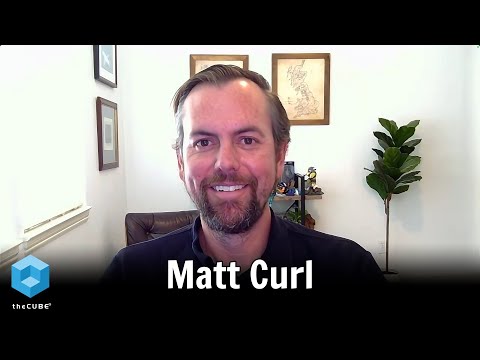
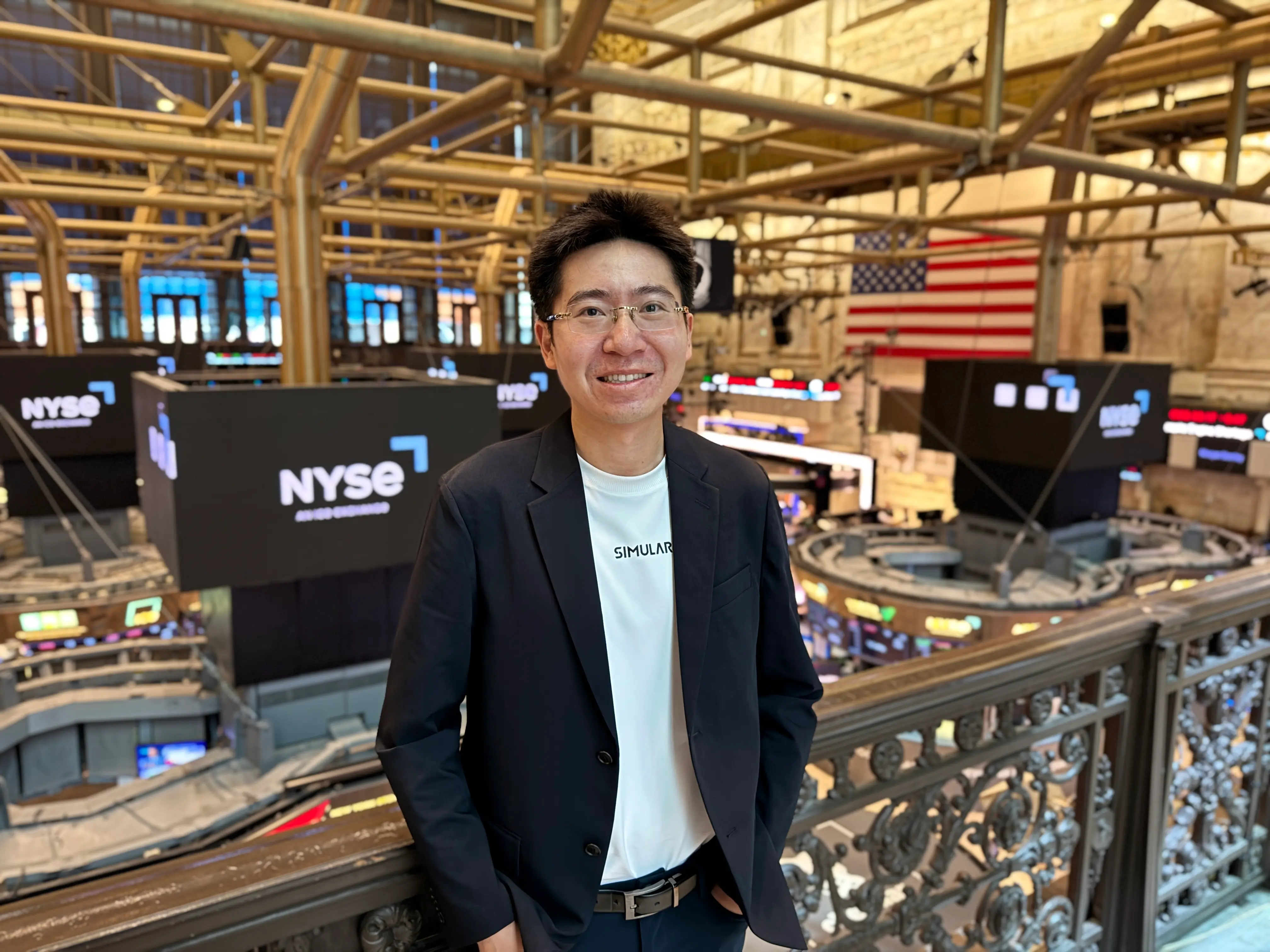
This conversation occurs as part of the Mixture of Experts artificial intelligence Agent Conference 2026 and is included in theCUBE and NYSE Wired programming. Ang Li of Simular, chief executive officer and co-founder, explains the company's work building an infrastructure layer for autonomous computers and the distinction between application programming interface agents and computer-use agents. Li attributes insights on agent reliability, trust and real-world deployments to demonstrations and exchanges at the conference, and they highlight the operational differences between API agents and computer-use agents.
Li emphasizes trust and deterministic workflows. They state that converting neural outputs into a symbolic or code layer improves reliability and reduces token costs, making repeatable automation feasible. The discussion also highlights cloud-based virtual desktops, small and medium-sized business and financial services use cases and the importance of enterprise guardrails and approval flows for safe enterprise deployments. The segment addresses AI infrastructure, agent reliability and pathways to production for autonomous computing.
Forgot Password
Almost there!
We just sent you a verification email. Please verify your account to gain access to
theCUBE + NYSE Wired: AI Agent Conference. If you don’t think you received an email check your
spam folder.
Sign in to theCUBE + NYSE Wired: AI Agent Conference.
In order to sign in, enter the email address you used to registered for the event. Once completed, you will receive an email with a verification link. Open this link to automatically sign into the site.
Register For theCUBE + NYSE Wired: AI Agent Conference
Please fill out the information below. You will recieve an email with a verification link confirming your registration. Click the link to automatically sign into the site.
You’re almost there!
We just sent you a verification email. Please click the verification button in the email. Once your email address is verified, you will have full access to all event content for theCUBE + NYSE Wired: AI Agent Conference.
I want my badge and interests to be visible to all attendees.
Checking this box will display your presense on the attendees list, view your profile and allow other attendees to contact you via 1-1 chat. Read the Privacy Policy. At any time, you can choose to disable this preference.
Select your Interests!
add
Upload your photo
Uploading..
OR
Connect via Twitter
Connect via Linkedin
EDIT PASSWORD
Share
Forgot Password
Almost there!
We just sent you a verification email. Please verify your account to gain access to
theCUBE + NYSE Wired: AI Agent Conference. If you don’t think you received an email check your
spam folder.
Sign in to theCUBE + NYSE Wired: AI Agent Conference.
In order to sign in, enter the email address you used to registered for the event. Once completed, you will receive an email with a verification link. Open this link to automatically sign into the site.
Sign in to gain access to theCUBE + NYSE Wired: AI Agent Conference
Please sign in with LinkedIn to continue to theCUBE + NYSE Wired: AI Agent Conference. Signing in with LinkedIn ensures a professional environment.
Are you sure you want to remove access rights for this user?
Details
Manage Access
email address
Community Invitation
Ang Li, Simular
This conversation occurs as part of the Mixture of Experts artificial intelligence Agent Conference 2026 and is included in theCUBE and NYSE Wired programming. Ang Li of Simular, chief executive officer and co-founder, explains the company's work building an infrastructure layer for autonomous computers and the distinction between application programming interface agents and computer-use agents. Li attributes insights on agent reliability, trust and real-world deployments to demonstrations and exchanges at the conference, and they highlight the operational differences between API agents and computer-use agents.
Li emphasizes trust and deterministic workflows. They state that converting neural outputs into a symbolic or code layer improves reliability and reduces token costs, making repeatable automation feasible. The discussion also highlights cloud-based virtual desktops, small and medium-sized business and financial services use cases and the importance of enterprise guardrails and approval flows for safe enterprise deployments. The segment addresses AI infrastructure, agent reliability and pathways to production for autonomous computing.
>> Welcome back to theCUBE studio here at the New York Stock Exchange. I'm Gemma Allen, and this is part of our programming with NYSE Wired. And today we're talking all things the AI agent conference happening here in New York. In two weeks, we're partnered Simon Shan on that team, and we are talking to some of the folks who are being honored on the AI Agent 100 list. Joining me now is Ang Li, CEO and co-founder of Simular. Welcome, Ang.
Ang Li
>> Thank you, Gemma. It's my pleasure to be here.
Gemma Allen
>> So for those not familiar, tell me a little bit about Simular, what exactly it is that you guys do.
Ang Li
>> Yeah, we are AI agent company, and we are building the infrastructure layer for autonomous computers. So basically the goal is to make this computer fully autonomous. So that's why we call it autonomous computers. And I think that the idea is computers are very useful. We move all of the information sharing to this digital space, but the problem is still not efficient. We actually did an experiment. We track some friends like time on moving their fingers on the trackpad, on this laptop. And surprisingly, we find one of them spend five hours a day just moving the fingers on the trackpad.
Gemma Allen
>> Wow.
Ang Li
>> Yeah, that's a huge amount of time to wasted.
Gemma Allen
>> I would probably be there myself.
Ang Li
>> Yeah. So that's the problem. Computers are useful, but it's not efficient. What if we have an infrastructure layer that can make the computers fully autonomous? And you don't have to work in front of the computers. You can just use your phone. Say computers, do this task for me, finish this paper, like book the restaurant, book the flight for me. That's going to be like human will be free from this kind of mountain task.
Gemma Allen
>> Well, it's certainly a fascinating concept to imagine. I think a year ago, a lot of people didn't really know what we meant by a fully autonomous computer, right? And agent acting on your behalf. But this year, because of OpenClaw and all of the noise and media surrounding that acquisition, and then we saw NemoClaw by NVIDIA, which is obviously a more enterprise focused version. Suddenly this idea of an autonomous agent working on your behalf on any device seems very real. How does your product differ to say an OpenClaw? What are the unique differences in what you're offering versus the Mac Mini option in a wardrobe somewhere in Brooklyn?
Ang Li
>> Yeah. Yeah. So the Mac Mini idea we had is we work on this problem for three years already. In the beginning, we're working on this AI computer use agents already. And probably I need to expand a little bit about computer use agents. So the idea is have software agents on your computers that can move the mouse, type on the keyboard for you. So it's a general purpose agents. And I think OpenClaw started in October last year. OpenClaw is really an agent that hook you up with a lot of APIs. Yeah. APIs meaning some companies, they produce API interfaces for other people to use for automating this software. But computer use is a different category. So from my perspective, in the current agent industry, we have two types of agents. One is API agents. The other is called CUA, computer use agents. API agents, you have all the softwares, coding, you do coding to connect all of the softwares in there. Computer use doesn't require anything. Computer use only require you to have a laptop or a computer that have the GUI on your interface. And the computer usage look at a screen and deciding which button I need to click on. What's the pixel I need to click on? What kind of thing I need to type in there. So it has the full capability of replicating any human digital work in your computer. It doesn't require any API connector in there. So that's the main differentiation I see from my perspective about our company. We are dedicated to solve the computer use agent problem, which is, I would say is a complimentary to most of the agent out there in the current industry. And in the end, I can see with combination of API agents and computer use agents, we have the full spectrum of capabilities for the agents in the digital space.
Gemma Allen
>> Wow. So much to unpack there for the tech side of it. And we're going to go there. But before we do, your own background, this company stage and funding, so you guys have raised 21 and a half million just this year, 27 total, correct?
Ang Li
>> Yes.
Gemma Allen
>> Yeah. Series A.
Ang Li
>> Yes.
Gemma Allen
>> You yourself have a research background, correct? You were at Google before this?
Ang Li
>> Yeah. I was in DeepMind. I was early team members in DeepMind in the Mountain View team.
Gemma Allen
>> Wow.
Ang Li
>> Yeah, sitting with the Google headquarters. So we do lots of collaboration with Google teams inside all of the alphabet projects.
Gemma Allen
>> Okay. Wow. And then the decision to find this company founded in 2017?
Ang Li
>> I joined DeepMind in 2017 and I founded the company in 2023.
Gemma Allen
>> Oh, wow. Okay. So six years of learning and seeing what led to this.
Ang Li
>> Yeah. I think the idea of this company is that already I've been thinking about this problem for long when I was in DeepMind. So the core thing is everyone in DeepMind is this smart. Everyone is smart. Everyone is fascinated about the concept called AGI, artificial general intelligence. And I have to ask myself this question, what is AGI and how do we achieve it? So to me, this autonomous computer is a minimum form of AGI. It's a mini form of general intelligence, meaning there's a machine that can just do everything that human can do in the digital space. That's general intelligence. And then the question for me is like, how do I achieve that? What's the approach? So I was basically leading the continued learning research in DeepMind. So my research agenda is thinking about how machines can continuously learn by interacting with the world. So in this computer context, it's about human using computers. And I somehow use computers do my task. I teach the agent to do all different kinds of digital tasks and how this computer can learn from me, right? Learn about my insight, how I do things, continuously improve itself. In order to have this kind of systems, we need a product to be in front of every human users. Yeah. Yeah. So that was the moment I feel we should start a company for doing this kind of work.
Gemma Allen
>> It's an interesting time in the space because we just heard this week about Meta recording keystrokes of employees. And there is this whole, I guess, fear, which is probably very real about what it will mean for human relevance and how humans will play in this next wave of technology. You mentioned the idea that actually computers are even having to use your own desktop to run tasks. It's holding us back, right? If you can prompt something remotely to run a whole load of tasks for you on a day-to-day basis, it can make humans more efficient.
Ang Li
>> Yeah, that's right.
Gemma Allen
>> The challenge is though, guess, and especially on enterprise level, and we saw and learned this with the introduction of NemoClaw and why that seemed like a more, I guess, advanced or mature option for enterprise and for businesses. Then OpenClaw is obviously governance, compliance, guardrails, how much you ever want any agent to have access to your Fidelity account, your bank accounts, whatever it is, right?
Ang Li
>> Yeah.
Gemma Allen
>> Talk to me a little bit about the, I guess right now, the prime use case for Simular. Give me an example of whose day this is making better. What sorts of individuals or scenarios and workflows is it solving for?
Ang Li
>> Yeah. Yeah. So that's a good question. And since our platform is pretty general, so we see all different kinds of use cases coming from different industries. For example, I can give you one example is there's a small business owners called me and saying, "Okay, I have to generate invoice in my QuickBooks every day a hundred times." Yeah, a hundred times, meaning the person needs to manually, that's the business owner, manually click on the keyboard, click on the mouse, general invoice a hundred times. They ask me, "Can you actually automate that?" Yeah. And after a few hours, we give them the option that's fully automated. They don't have to do this job. And there's another car dealership called me saying, "Okay, I have a hundred cars coming to my dealer every month and I have to search the VIN numbers and I have to pull out all the forms in there. How do I do that? How do I automate it?" Now it's also automated. And in terms of this general purpose agent called Sai, we just released in March. We also see a lot of use cases in financial services, like one of the fund manager, they asked the agent to automatically go to different platforms and research the information every morning from different sources and then aggregate the information and for them to decide, I don't know, like the important decisions in there. And the reason they can do that is because I also want to, I think you mentioned a very important part, which is the guardrails and security stuff, not just for enterprise, not just for business, everyone needs it. It's all about trust. And I want to mention one thing that I think is very important is we are the first company in the industry that break human performance, surprise human performance in a public benchmark called OSWorld, computers benchmark. That's happening in December and OpenAI and Anthropic are also part of the benchmark. They break human performance this year. And people keep asking me like, "Okay, you break human performance there, then why computer use agents not taking off yet?" The reason is the benchmarks only tell us the capability of the agents. It doesn't talk about the reliability of the agents. It's kind of like you hire a person who are capable, but you want a person to be successful every time you delegate the task to the person. So that's the part we are currently missing in the industry, which is the trust and reliability. Can we actually let the agents to perform this task every day and successful? So that's something we are building. Our proprietary technology actually solve that problems and we don't believe the current large language models and the neural net based approach can solve the reliability problem because every time you ask ChatGPT the same question, it's not going to give you the same answer each time, right? But we are talking about the workflow with a million steps. Each time you ask chat LLMs about what to do next, it's not going to give you ... you have like maybe 1% of chance give you something random and then your whole workflow screwed up. So that's the problem we believe is going to be the last mile of agents. Once this reliability problem is solved, agents will be massively adopted in the whole industry. So that's what we see in it.
Gemma Allen
>> It's interesting that you give the example of small business, right? Because I think it's such an important part of society and in some ways it is a part of society that was failed by SaaS. Licensing models were very expensive. A lot of small business owners didn't gain the benefit of some of these huge platforms and tools to the same degree, I guess, that mid-cap or upper cap companies did, right? And when you think about even the conversation right now around OpenClaw, it's very difficult for somebody who's running like the example that you gave a small business and creating or recording VIN numbers to imagine how they would go about buying a Mac Mini, creating an agent, setting it up, right? That part of it is very intimidating.
Ang Li
>> Yeah. Yeah. Yeah.
Gemma Allen
>> How plug and play is this option? If I am a small business owner selling in the kind of 10 to 50 million bucket every year, how quickly can I adopt something like this and how quickly can I gain efficiencies from it?
Ang Li
>> Yeah, that's actually what we pushing for. We want something that's so easy to use that you come to our platform five seconds, you have a computer already there, so you don't have to buy a Mac Mini. It just feels so weird that you have to buy a Mac Mini and then run the agents in there. So we actually have a cloud infrastructure. We have all the Windows machines in a cloud infrastructure, a user came here, 10 seconds, we give you a virtual machine, virtual desktop in there. It's a full desktop with all the GOI. It's just like the screen you're using right now. So I feel that's very important because we feel if we have this technology that can make computers fully autonomous and trustworthy, and every time our agents always ask you for approval, if they want to submit a LinkedIn post or send an email, you always ask for approval. So you won't do something without your approval. So this is also important for the guardrail. If we solve the reliability problem, we solve the trust, we solve the capability problem, we're almost there. And then the question is, do everyone in the world still want just one computer? You might come to me saying, "I want a hundred because that's the only way for you to be 100X productive in your work."
Gemma Allen
>> That's right.
Ang Li
>> Then the question is, "Do I need to buy 100 Mac Mini's?" No, I don't have space in my home. So it feels so natural that we as a company, we should just build the infrastructure for the cloud computers and give a hundred computers to you as a user, and then you suddenly become 100X productive. So that's actually an interesting observation. When we build a product, we saw two types of people in the industry. One type of people is they really hate their job. They don't like what they do, just manually, like copy pasting stuff every day.
Gemma Allen
>> Competitive, mundane, I'm sure.
Ang Li
>> Yeah, yeah. They don't like their job. They come to us saying, "Can you actually help me to do the job so I don't have to do it?" They can be more creative by this technology, which we believe we are helping people in the positive way. And interestingly, another big set of people, they're really passionate about their job. They also come to us as well. So that's an interesting part. What we observe is they want to do more. Yeah. They feel AI technology can help them to do more in what they already love.
Gemma Allen
>> For sure.
Ang Li
>> Yeah. For example, people building apps, building products, I found that they spend more time on using agents and become so scalable.
Gemma Allen
>> So we've talked to some small business owners here that would say they could spend anything in excess of 14 to $1,800 a month just on LLLMs, right? Like burning two tokens. How does this work from the perspective of tokens, licensing? Is it usage based? How do you, I guess, cost configure this for small business?
Ang Li
>> So that's actually an interesting part about the technology we are building. So I think the first thing everyone needs to recognize is LLM is not going to solve the reliability problem so far from what we observe. Then in order for us to solve the reliability problem, we have to move whatever uncertain part of the workflow to be certain. The way to do that is moving that to become symbolic layer like code, programming language. So we have this infrastructure to move neural net based approach to code and this solved the reliability problem. At the same time, it reduce your token cost, right? Because when you run a code, you don't have to ask LLM every time.
Gemma Allen
>> Okay. So we're kind of talking on the edge here essentially.
Ang Li
>> Yeah. So you have a lot of token spend in the first time.
Gemma Allen
>> Yeah.
Ang Li
>> Every time we run the workflow, you don't actually need to ask LLLM a lot. Because
Gemma Allen
>> It's cutting.
Ang Li
>> Yeah. It's kind of like caching, but it's a different mechanism in there. Yeah. So I think that's an interesting part. You solve two birds, one stone.
Gemma Allen
>> Okay. So it's like-
Ang Li
>> So you solve two problems at the same time.
Gemma Allen
>> And neural network solution to-
Ang Li
>> Yeah. Yeah.
Gemma Allen
>> Okay. Very much like it's actually a problem. Okay. So fascinating company. I mean, I'm certainly very interested. Maybe here at theCUBE, we could even try this because we need help with research every day, right? So I think there's a lot of benefits. Looking forward to seeing you in May here in New York, but to close us out, tell me a little bit about what's ahead for you and the team at Simular. What are you working towards over the next six to 12 months?
Ang Li
>> Yeah. I think we launched the product in March. We see a lot of traction there. And the main job for us is to make our users happy, really optimize the product to be really easy to use. They come here and just chatting with the ... Actually, I use my phone more. Nowadays, I use the computers less. I basically text my agent saying, "Can you actually go to Zoom meeting and talk to my team?" And there was one day, my agent go to Zoom and talk to my team in there. Yeah. So that was the moment I feel, okay, the AGI that we are actually working for so many years may finally come very soon. Yeah. So that was the moment-
Gemma Allen
>> So you think we're pretty much at AGI, like we're very, very close?
Ang Li
>> Yeah, we feel it's very close. You keep getting this kind of moment, you feel, "Okay, wow, why this machine can do something that we can never imagine before?" We're really looking forward to pushing for this kind of technology that make it available to everyone. It's not just tech-savvy people, like normal people's SMBs and non-technical peoples, marketing peoples, they can all access this technology and help themselves. Either you don't like their job, you don't like your job, use the agents, like your job, become more scalable, 100X. So that's what we are really looking for on our side.
Gemma Allen
>> And who is a better boss and colleague, you or your agent? Who do your team enjoy speaking with more?
Ang Li
>> I think both. I think that's an interesting part. When you talk to agents more, you feel more valuable, have this kind of in person relationship between humans. So I think both will be very important in the future society and we should value both kinds of communication.
Gemma Allen
>> Wow.
Ang Li
>> Yeah.
Gemma Allen
>> Well, that's a fascinating part to end on.
Ang Li
>> Thank you so much.
Gemma Allen
>> Thank you so much for coming on theCUBE.
Ang Li
>> Very nice chatting with you.
Gemma Allen
>> I'm Gemma Allen here at theCUBE Studio at the New York Stock Exchange. This is part of our program with NYSE Wired. We are covering the AI agent conference happening here in New York in just two short weeks time. Thanks so much for watching.
>> Welcome back to theCUBE studio here at the New York Stock Exchange. I'm Gemma Allen, and this is part of our programming with NYSE Wired. And today we're talking all things the AI agent conference happening here in New York. In two weeks, we're partnered Simon Shan on that team, and we are talking to some of the folks who are being honored on the AI Agent 100 list. Joining me now is Ang Li, CEO and co-founder of Simular. Welcome, Ang.
Ang Li
>> Thank you, Gemma. It's my pleasure to be here.
Gemma Allen
>> So for those not familiar, tell me a little bit about Simular, what exactly it is that you guys do.
Ang Li
>> Yeah, we are AI agent company, and we are building the infrastructure layer for autonomous computers. So basically the goal is to make this computer fully autonomous. So that's why we call it autonomous computers. And I think that the idea is computers are very useful. We move all of the information sharing to this digital space, but the problem is still not efficient. We actually did an experiment. We track some friends like time on moving their fingers on the trackpad, on this laptop. And surprisingly, we find one of them spend five hours a day just moving the fingers on the trackpad.
Gemma Allen
>> Wow.
Ang Li
>> Yeah, that's a huge amount of time to wasted.
Gemma Allen
>> I would probably be there myself.
Ang Li
>> Yeah. So that's the problem. Computers are useful, but it's not efficient. What if we have an infrastructure layer that can make the computers fully autonomous? And you don't have to work in front of the computers. You can just use your phone. Say computers, do this task for me, finish this paper, like book the restaurant, book the flight for me. That's going to be like human will be free from this kind of mountain task.
Gemma Allen
>> Well, it's certainly a fascinating concept to imagine. I think a year ago, a lot of people didn't really know what we meant by a fully autonomous computer, right? And agent acting on your behalf. But this year, because of OpenClaw and all of the noise and media surrounding that acquisition, and then we saw NemoClaw by NVIDIA, which is obviously a more enterprise focused version. Suddenly this idea of an autonomous agent working on your behalf on any device seems very real. How does your product differ to say an OpenClaw? What are the unique differences in what you're offering versus the Mac Mini option in a wardrobe somewhere in Brooklyn?
Ang Li
>> Yeah. Yeah. So the Mac Mini idea we had is we work on this problem for three years already. In the beginning, we're working on this AI computer use agents already. And probably I need to expand a little bit about computer use agents. So the idea is have software agents on your computers that can move the mouse, type on the keyboard for you. So it's a general purpose agents. And I think OpenClaw started in October last year. OpenClaw is really an agent that hook you up with a lot of APIs. Yeah. APIs meaning some companies, they produce API interfaces for other people to use for automating this software. But computer use is a different category. So from my perspective, in the current agent industry, we have two types of agents. One is API agents. The other is called CUA, computer use agents. API agents, you have all the softwares, coding, you do coding to connect all of the softwares in there. Computer use doesn't require anything. Computer use only require you to have a laptop or a computer that have the GUI on your interface. And the computer usage look at a screen and deciding which button I need to click on. What's the pixel I need to click on? What kind of thing I need to type in there. So it has the full capability of replicating any human digital work in your computer. It doesn't require any API connector in there. So that's the main differentiation I see from my perspective about our company. We are dedicated to solve the computer use agent problem, which is, I would say is a complimentary to most of the agent out there in the current industry. And in the end, I can see with combination of API agents and computer use agents, we have the full spectrum of capabilities for the agents in the digital space.
Gemma Allen
>> Wow. So much to unpack there for the tech side of it. And we're going to go there. But before we do, your own background, this company stage and funding, so you guys have raised 21 and a half million just this year, 27 total, correct?
Ang Li
>> Yes.
Gemma Allen
>> Yeah. Series A.
Ang Li
>> Yes.
Gemma Allen
>> You yourself have a research background, correct? You were at Google before this?
Ang Li
>> Yeah. I was in DeepMind. I was early team members in DeepMind in the Mountain View team.
Gemma Allen
>> Wow.
Ang Li
>> Yeah, sitting with the Google headquarters. So we do lots of collaboration with Google teams inside all of the alphabet projects.
Gemma Allen
>> Okay. Wow. And then the decision to find this company founded in 2017?
Ang Li
>> I joined DeepMind in 2017 and I founded the company in 2023.
Gemma Allen
>> Oh, wow. Okay. So six years of learning and seeing what led to this.
Ang Li
>> Yeah. I think the idea of this company is that already I've been thinking about this problem for long when I was in DeepMind. So the core thing is everyone in DeepMind is this smart. Everyone is smart. Everyone is fascinated about the concept called AGI, artificial general intelligence. And I have to ask myself this question, what is AGI and how do we achieve it? So to me, this autonomous computer is a minimum form of AGI. It's a mini form of general intelligence, meaning there's a machine that can just do everything that human can do in the digital space. That's general intelligence. And then the question for me is like, how do I achieve that? What's the approach? So I was basically leading the continued learning research in DeepMind. So my research agenda is thinking about how machines can continuously learn by interacting with the world. So in this computer context, it's about human using computers. And I somehow use computers do my task. I teach the agent to do all different kinds of digital tasks and how this computer can learn from me, right? Learn about my insight, how I do things, continuously improve itself. In order to have this kind of systems, we need a product to be in front of every human users. Yeah. Yeah. So that was the moment I feel we should start a company for doing this kind of work.
Gemma Allen
>> It's an interesting time in the space because we just heard this week about Meta recording keystrokes of employees. And there is this whole, I guess, fear, which is probably very real about what it will mean for human relevance and how humans will play in this next wave of technology. You mentioned the idea that actually computers are even having to use your own desktop to run tasks. It's holding us back, right? If you can prompt something remotely to run a whole load of tasks for you on a day-to-day basis, it can make humans more efficient.
Ang Li
>> Yeah, that's right.
Gemma Allen
>> The challenge is though, guess, and especially on enterprise level, and we saw and learned this with the introduction of NemoClaw and why that seemed like a more, I guess, advanced or mature option for enterprise and for businesses. Then OpenClaw is obviously governance, compliance, guardrails, how much you ever want any agent to have access to your Fidelity account, your bank accounts, whatever it is, right?
Ang Li
>> Yeah.
Gemma Allen
>> Talk to me a little bit about the, I guess right now, the prime use case for Simular. Give me an example of whose day this is making better. What sorts of individuals or scenarios and workflows is it solving for?
Ang Li
>> Yeah. Yeah. So that's a good question. And since our platform is pretty general, so we see all different kinds of use cases coming from different industries. For example, I can give you one example is there's a small business owners called me and saying, "Okay, I have to generate invoice in my QuickBooks every day a hundred times." Yeah, a hundred times, meaning the person needs to manually, that's the business owner, manually click on the keyboard, click on the mouse, general invoice a hundred times. They ask me, "Can you actually automate that?" Yeah. And after a few hours, we give them the option that's fully automated. They don't have to do this job. And there's another car dealership called me saying, "Okay, I have a hundred cars coming to my dealer every month and I have to search the VIN numbers and I have to pull out all the forms in there. How do I do that? How do I automate it?" Now it's also automated. And in terms of this general purpose agent called Sai, we just released in March. We also see a lot of use cases in financial services, like one of the fund manager, they asked the agent to automatically go to different platforms and research the information every morning from different sources and then aggregate the information and for them to decide, I don't know, like the important decisions in there. And the reason they can do that is because I also want to, I think you mentioned a very important part, which is the guardrails and security stuff, not just for enterprise, not just for business, everyone needs it. It's all about trust. And I want to mention one thing that I think is very important is we are the first company in the industry that break human performance, surprise human performance in a public benchmark called OSWorld, computers benchmark. That's happening in December and OpenAI and Anthropic are also part of the benchmark. They break human performance this year. And people keep asking me like, "Okay, you break human performance there, then why computer use agents not taking off yet?" The reason is the benchmarks only tell us the capability of the agents. It doesn't talk about the reliability of the agents. It's kind of like you hire a person who are capable, but you want a person to be successful every time you delegate the task to the person. So that's the part we are currently missing in the industry, which is the trust and reliability. Can we actually let the agents to perform this task every day and successful? So that's something we are building. Our proprietary technology actually solve that problems and we don't believe the current large language models and the neural net based approach can solve the reliability problem because every time you ask ChatGPT the same question, it's not going to give you the same answer each time, right? But we are talking about the workflow with a million steps. Each time you ask chat LLMs about what to do next, it's not going to give you ... you have like maybe 1% of chance give you something random and then your whole workflow screwed up. So that's the problem we believe is going to be the last mile of agents. Once this reliability problem is solved, agents will be massively adopted in the whole industry. So that's what we see in it.
Gemma Allen
>> It's interesting that you give the example of small business, right? Because I think it's such an important part of society and in some ways it is a part of society that was failed by SaaS. Licensing models were very expensive. A lot of small business owners didn't gain the benefit of some of these huge platforms and tools to the same degree, I guess, that mid-cap or upper cap companies did, right? And when you think about even the conversation right now around OpenClaw, it's very difficult for somebody who's running like the example that you gave a small business and creating or recording VIN numbers to imagine how they would go about buying a Mac Mini, creating an agent, setting it up, right? That part of it is very intimidating.
Ang Li
>> Yeah. Yeah. Yeah.
Gemma Allen
>> How plug and play is this option? If I am a small business owner selling in the kind of 10 to 50 million bucket every year, how quickly can I adopt something like this and how quickly can I gain efficiencies from it?
Ang Li
>> Yeah, that's actually what we pushing for. We want something that's so easy to use that you come to our platform five seconds, you have a computer already there, so you don't have to buy a Mac Mini. It just feels so weird that you have to buy a Mac Mini and then run the agents in there. So we actually have a cloud infrastructure. We have all the Windows machines in a cloud infrastructure, a user came here, 10 seconds, we give you a virtual machine, virtual desktop in there. It's a full desktop with all the GOI. It's just like the screen you're using right now. So I feel that's very important because we feel if we have this technology that can make computers fully autonomous and trustworthy, and every time our agents always ask you for approval, if they want to submit a LinkedIn post or send an email, you always ask for approval. So you won't do something without your approval. So this is also important for the guardrail. If we solve the reliability problem, we solve the trust, we solve the capability problem, we're almost there. And then the question is, do everyone in the world still want just one computer? You might come to me saying, "I want a hundred because that's the only way for you to be 100X productive in your work."
Gemma Allen
>> That's right.
Ang Li
>> Then the question is, "Do I need to buy 100 Mac Mini's?" No, I don't have space in my home. So it feels so natural that we as a company, we should just build the infrastructure for the cloud computers and give a hundred computers to you as a user, and then you suddenly become 100X productive. So that's actually an interesting observation. When we build a product, we saw two types of people in the industry. One type of people is they really hate their job. They don't like what they do, just manually, like copy pasting stuff every day.
Gemma Allen
>> Competitive, mundane, I'm sure.
Ang Li
>> Yeah, yeah. They don't like their job. They come to us saying, "Can you actually help me to do the job so I don't have to do it?" They can be more creative by this technology, which we believe we are helping people in the positive way. And interestingly, another big set of people, they're really passionate about their job. They also come to us as well. So that's an interesting part. What we observe is they want to do more. Yeah. They feel AI technology can help them to do more in what they already love.
Gemma Allen
>> For sure.
Ang Li
>> Yeah. For example, people building apps, building products, I found that they spend more time on using agents and become so scalable.
Gemma Allen
>> So we've talked to some small business owners here that would say they could spend anything in excess of 14 to $1,800 a month just on LLLMs, right? Like burning two tokens. How does this work from the perspective of tokens, licensing? Is it usage based? How do you, I guess, cost configure this for small business?
Ang Li
>> So that's actually an interesting part about the technology we are building. So I think the first thing everyone needs to recognize is LLM is not going to solve the reliability problem so far from what we observe. Then in order for us to solve the reliability problem, we have to move whatever uncertain part of the workflow to be certain. The way to do that is moving that to become symbolic layer like code, programming language. So we have this infrastructure to move neural net based approach to code and this solved the reliability problem. At the same time, it reduce your token cost, right? Because when you run a code, you don't have to ask LLM every time.
Gemma Allen
>> Okay. So we're kind of talking on the edge here essentially.
Ang Li
>> Yeah. So you have a lot of token spend in the first time.
Gemma Allen
>> Yeah.
Ang Li
>> Every time we run the workflow, you don't actually need to ask LLLM a lot. Because
Gemma Allen
>> It's cutting.
Ang Li
>> Yeah. It's kind of like caching, but it's a different mechanism in there. Yeah. So I think that's an interesting part. You solve two birds, one stone.
Gemma Allen
>> Okay. So it's like-
Ang Li
>> So you solve two problems at the same time.
Gemma Allen
>> And neural network solution to-
Ang Li
>> Yeah. Yeah.
Gemma Allen
>> Okay. Very much like it's actually a problem. Okay. So fascinating company. I mean, I'm certainly very interested. Maybe here at theCUBE, we could even try this because we need help with research every day, right? So I think there's a lot of benefits. Looking forward to seeing you in May here in New York, but to close us out, tell me a little bit about what's ahead for you and the team at Simular. What are you working towards over the next six to 12 months?
Ang Li
>> Yeah. I think we launched the product in March. We see a lot of traction there. And the main job for us is to make our users happy, really optimize the product to be really easy to use. They come here and just chatting with the ... Actually, I use my phone more. Nowadays, I use the computers less. I basically text my agent saying, "Can you actually go to Zoom meeting and talk to my team?" And there was one day, my agent go to Zoom and talk to my team in there. Yeah. So that was the moment I feel, okay, the AGI that we are actually working for so many years may finally come very soon. Yeah. So that was the moment-
Gemma Allen
>> So you think we're pretty much at AGI, like we're very, very close?
Ang Li
>> Yeah, we feel it's very close. You keep getting this kind of moment, you feel, "Okay, wow, why this machine can do something that we can never imagine before?" We're really looking forward to pushing for this kind of technology that make it available to everyone. It's not just tech-savvy people, like normal people's SMBs and non-technical peoples, marketing peoples, they can all access this technology and help themselves. Either you don't like their job, you don't like your job, use the agents, like your job, become more scalable, 100X. So that's what we are really looking for on our side.
Gemma Allen
>> And who is a better boss and colleague, you or your agent? Who do your team enjoy speaking with more?
Ang Li
>> I think both. I think that's an interesting part. When you talk to agents more, you feel more valuable, have this kind of in person relationship between humans. So I think both will be very important in the future society and we should value both kinds of communication.
Gemma Allen
>> Wow.
Ang Li
>> Yeah.
Gemma Allen
>> Well, that's a fascinating part to end on.
Ang Li
>> Thank you so much.
Gemma Allen
>> Thank you so much for coming on theCUBE.
Ang Li
>> Very nice chatting with you.
Gemma Allen
>> I'm Gemma Allen here at theCUBE Studio at the New York Stock Exchange. This is part of our program with NYSE Wired. We are covering the AI agent conference happening here in New York in just two short weeks time. Thanks so much for watching.