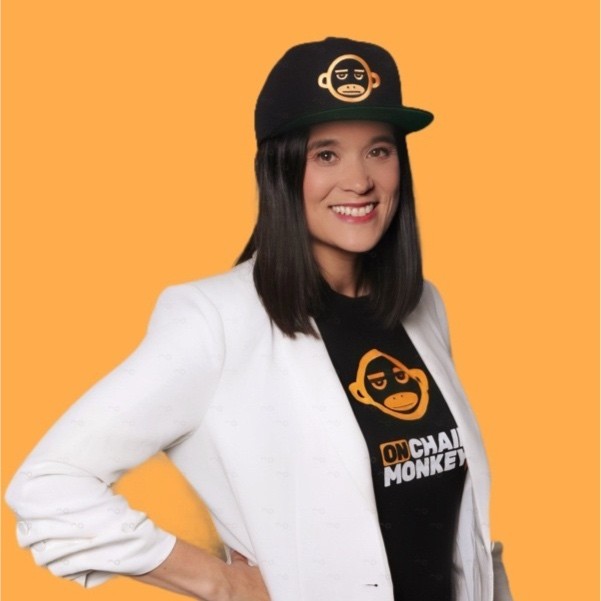
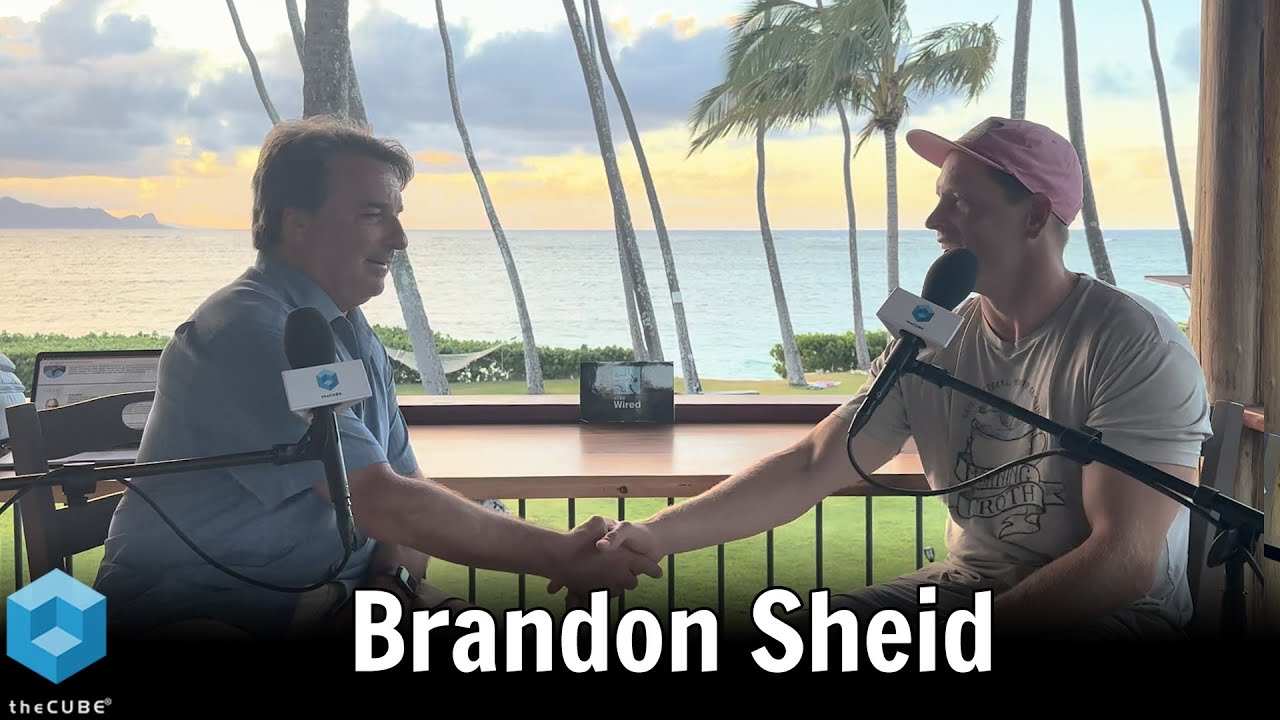
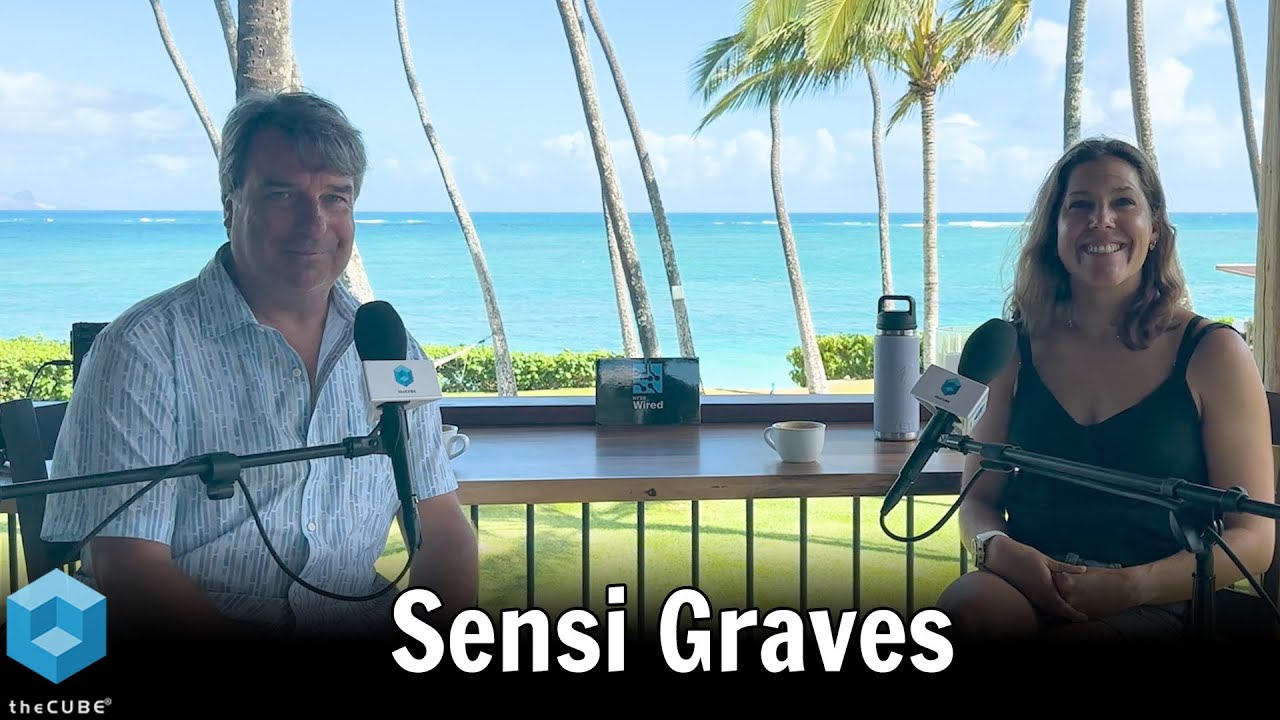
Amanda Terry of ACTAI Ventures discusses innovations in Bitcoin at the ACTAI Global Maui 2025 event. This gathering attracts industry leaders to discuss topics such as ocean conservation and economic empowerment through entrepreneurship. Hosted by John Furrier of theCUBE, it fosters collaboration among athletes, technologists and innovators.
Terry brings extensive experience to the forefront, discussing the pioneering work at ACTAI Ventures and highlighting the significance of Bitcoin's infrastructure. The conversation delves into the role of the Ordinals Protocol and its impact on digital art and non-fungible tokens, commonly abbreviated as NFTs. Furrier, alongside analysts from theCUBE Research, engages with Terry on how technologically advanced solutions drive innovation.
Key takeaways from the discussion include the impact of digitization on art and financial industries, as outlined by Terry and theCUBE's analysts. Terry emphasizes that the Bitcoin ecosystem, particularly the Ordinals Protocol, transforms how digital assets are viewed and owned. The conversation uncovers emerging opportunities in blockchain technology, highlighting the promising future for digital art and real-world asset tokenization.
Forgot Password
Almost there!
We just sent you a verification email. Please verify your account to gain access to
theCUBE + NYSE Wired: Actai Maui. If you don’t think you received an email check your
spam folder.
In order to sign in, enter the email address you used to registered for the event. Once completed, you will receive an email with a verification link. Open this link to automatically sign into the site.
Register For theCUBE + NYSE Wired: Actai Maui
Please fill out the information below. You will recieve an email with a verification link confirming your registration. Click the link to automatically sign into the site.
You’re almost there!
We just sent you a verification email. Please click the verification button in the email. Once your email address is verified, you will have full access to all event content for theCUBE + NYSE Wired: Actai Maui.
I want my badge and interests to be visible to all attendees.
Checking this box will display your presense on the attendees list, view your profile and allow other attendees to contact you via 1-1 chat. Read the Privacy Policy. At any time, you can choose to disable this preference.
Select your Interests!
add
Upload your photo
Uploading..
OR
Connect via Twitter
Connect via Linkedin
EDIT PASSWORD
Share
Forgot Password
Almost there!
We just sent you a verification email. Please verify your account to gain access to
theCUBE + NYSE Wired: Actai Maui. If you don’t think you received an email check your
spam folder.
In order to sign in, enter the email address you used to registered for the event. Once completed, you will receive an email with a verification link. Open this link to automatically sign into the site.
Sign in to gain access to theCUBE + NYSE Wired: Actai Maui
Please sign in with LinkedIn to continue to theCUBE + NYSE Wired: Actai Maui. Signing in with LinkedIn ensures a professional environment.
Are you sure you want to remove access rights for this user?
Details
Manage Access
email address
Community Invitation
Amanda Terry, ACTAI Ventures
Amanda Terry of ACTAI Ventures discusses innovations in Bitcoin at the ACTAI Global Maui 2025 event. This gathering attracts industry leaders to discuss topics such as ocean conservation and economic empowerment through entrepreneurship. Hosted by John Furrier of theCUBE, it fosters collaboration among athletes, technologists and innovators.
Terry brings extensive experience to the forefront, discussing the pioneering work at ACTAI Ventures and highlighting the significance of Bitcoin's infrastructure. The conversation delves into the role of the Ordinals Protocol and its impact on digital art and non-fungible tokens, commonly abbreviated as NFTs. Furrier, alongside analysts from theCUBE Research, engages with Terry on how technologically advanced solutions drive innovation.
Key takeaways from the discussion include the impact of digitization on art and financial industries, as outlined by Terry and theCUBE's analysts. Terry emphasizes that the Bitcoin ecosystem, particularly the Ordinals Protocol, transforms how digital assets are viewed and owned. The conversation uncovers emerging opportunities in blockchain technology, highlighting the promising future for digital art and real-world asset tokenization.
>> Hello, everyone. Welcome to theCUBE Pod. I'm John Furrier. We're here in Maui for ACTAI Global. It's a group of people that come together, experts, investors, builders, entrepreneurs, industry leaders, and they chill. They have an intellectual retreat in the morning, kitesurfing in the afternoon. Amanda's here. She's principal in the whole organization. She's the head honcho behind Bill Tai. Bill's the head honcho.
Amanda Terry
>> He's the... Yeah.>> Bill Tai runs a great community.
Amanda Terry
>> I know. Yeah.>> Bill brings a lot of people around him, and what's interesting is it's a targeted group of people that's a trust network. There's a lot of sharing, there's a lot of action, and people are bouncing ideas. Companies get formed here. Canva is a big success story, many more other projects, had a couple of great ideas I was kicking around last night that connected for me. Just the spirit of doing podcasts here. Just sharing is a great culture. Thank you for what you do. We appreciate all the work that goes into this.
Amanda Terry
>> Thank you. Yeah, we're really fortunate. I don't know if you've mentioned this in your other podcast, but yeah, ACTAI Global stands for athletes, conservationists, technologists, artists and innovators. So we're really trying to bring not just technology people, though there's a lot of obviously founders, investors that come, but really people from all different genres. And our mission is around ocean conservation and also around economic empowerment via entrepreneurship, and so that's what the nonprofit's about.>> And what I love about the nonprofit is that it doesn't have an agenda other than bringing people together to create value amongst each other and for the society, but also there's an air of the benefit of doing that is potentially business benefits. And I love the talks in the morning because it's very chill. There's no hard sell, there's no selling. It's just more people sharing what they're working on, and the panels are topical. I ended up hosting.
Amanda Terry
>> Yes, thank you so much.>> Thanks for letting me know.
Amanda Terry
>> You were great, John.>> Was it okay?
Amanda Terry
>> Yeah, you were great. You were great. Thank you so much. You brought professionalism to another level on all those->> It's a lot easier when the panelists are super awesome and brilliant, but we were on a panel, Bitcoin. I think it was originally called Bitcoin, Native Bitcoin Innovation, and it became a hybrid financial Bitcoin. But what you're working on is an area that we've talked about on theCUBE in our Palo Alto studios around the native L1. A lot of action at the infrastructure. I had to balance out the business side because there's money, because Wall Street, look at Wall Street. Brian Bauman and I were seeing all the action in New York City at the NYC. The mainstreaming of crypto in general is hot, but there's still so much action going on at the infrastructure L1. This is what we talked about last time. So give an update of what you guys are working on, because the on-chain asset, real-world asset also applies to other things, and especially the work you're doing.
Amanda Terry
>> As you know, Bitcoin was really just started in 2009, so we're talking about an asset that's 15, 16 years old. So it's crazy when you just zoom out, how much of an impact. It's the fifth-largest asset class in the world now is only 16 years old, and now in the last two years, which is very exciting, there's been a new protocol called the Ordinals Protocol, which was developed by Casey Rodarmor, and it's the first time that it's enabling data, so music, art, anything, to be inscribed directly on the Bitcoin L1. And obviously, I'm the co-founder of Metagood, which created the NFT collection, OnChainMonkey, which was the first 10,000 NFTs, so the first digital collectible art on Bitcoin. The significance of that is because before, that market was really all on Ethereum, so what people owned was a digital certificate pointing to an IPFS, offline file storage system. So you don't pay your AWS bills, a founder is anon and decides to, quote-unquote, "rug the project," and you don't actually own the art. And what's so beautiful about Ordinals is everything is on-chain, so all of these monkeys, like this monkey, we have multiple collections, they're like the Lascaux cave paintings in France where they will outlive all the people that created that.>> This is important because I think what's happening, people that aren't in the industry don't follow the balls and strikes of the game. NFTs, non-fungible tokens, became quite the rage that woke up the world to you can have a digital asset, because Bitcoin was digital currency,
Amanda Terry
>> Right, a store of value.>> A store of value. Ethereum, not ideal for NFTs for the reasons you mentioned. And then you saw people realize, well, I have this baseball card collection or I'm Steph Curry, or I want to preserve physical and maybe digital art or digital assets. And Bitcoin is immutable of all the benefits why Bitcoin works as a store of value. So you start to see NFT 2.0, and I think your company, which has I think the OnChainMonkey, I think is a proxy for what's coming.
Amanda Terry
>> Yes.>> Would you agree that what the OnChainMonkey is doing is just the beginning of other things that could be on there?
Amanda Terry
>> Oh, yeah. We've been very pioneering. Obviously, we literally worked with the Ordinals protocol team to do the first test parent-child transactions, which shows the children are these NFTs that roll up into a parent collection, so first of that kind. We also launched the first 3D generative art on Bitcoin, and we created open-source libraries, which other artists have been using that code base to put their art onto Bitcoin. So it's not just on-chain music collection. We really believe in this art on Bitcoin movement, and Bitcoin and Ordinals Protocol being basically a new canvas for art.>> If you look at art, I was talking with Edward Zhang, who's got this art tech vision, and the people who collect art, they don't know how to buy digital art. If you look at all the art stuff and all the e-commerce that goes on, they're buying paintings. And all the artists are using digital tools to create art, so there's not a lot of painting going on.
Amanda Terry
>> Yeah. No, it's all code, right? It's all generated by code. It's beautiful.>> I see a huge tsunami coming on the e-commerce side of it. What's your take on, what's your reaction to that? Do you agree?
Amanda Terry
>> Yeah. It's still early. The infrastructure is still early, still not easy. You still, from your bank account, you need to open some type of Coinbase or something account to fund a wallet. You still need to download an Experts or Magic. You need an Expert, you need a wallet to custody the Ordinal. So it's not the most frictionless thing today to own Bitcoin->> But it's working it.
Amanda Terry
>> But it's working. Everything is going to be on chain and it's still early days. And what's so beautiful about Ordinals is it's really, there's rare SATs that you're inscribing the art on.>> Explain Ordinals for people that don't know what Ordinal Protocol is.
Amanda Terry
>> Yeah, it's one one hundred millionth of a Bitcoin, so it's literally the smallest unit of Bitcoin possible, and they're rare ones. So our OCM Genesis collection are all on block 9, 450x SATs, which was literally the first Bitcoin mined by Satoshi given to Hal Finney, so very, very historic. And then there's just many different ways you can use SATs outside of other chains that don't have some of the complexity ->> There's a little bit of scarcity involved here.
Amanda Terry
>> Oh, there's definitely scarcity. Yeah, there's scarcity in block space, there's scarcities in the amount it will cost to inscribe data onto Bitcoin. So over time, I don't think there's going to be a bazillion 10,000 collections of high quality art. It just will get too expensive over time, which is what's so beautiful, that we're still in the early innings of people learning about digital art, ownership on chain. And we are trying to always do our part, which is educating people.>> So people might say, "All right, great stuff. How do you make a business out of it?" So talk about the business model, how you guys look at this. You shared some stats in there, probably don't want to go into it now, but there's a lot going on in this early formation and growth phase. What's your thinking around how you make it a business? Obviously you're contributing a lot, but where's the business?
Amanda Terry
>> Well, we have a relatively small team today, and every time we do a mint, we're bringing in millions and millions of dollars. So it does take a lot of work to get there, but launching digital assets is a very profitable high margin business. And we've also created a marketplace called Osura, which we're enabling other artists to also launch collections on. So the royalty model, which was originally part of NFTs, it's like, okay, once you sell and you trade, royalties go back to the artist, which was a very unique Proposition for artists, because in a gallery, you sell your art, you don't ever see anything coming back. That's gone away unfortunately, but it's still a very... For anyone->> So it's transactional and it's digital.
Amanda Terry
>> Yeah, it's digital and there's a small but very growing market of people who appreciate digital art and who want to be part of mints, and hope to get really rare art on blockchain.>> All right, so what's next for you and the team as you guys look at your mission, you executing? What's your focus?
Amanda Terry
>> I think it's still really educating people on the art on Bitcoin and what is happening in that space. We have a number of artists we've worked with, Alexi Andre, who is one of the top artists for art blocks. We helped him do his first 10,000 general art collection on Bitcoin. We've worked with Brian Brinkman, we worked with the Packard Amidon. These are all artists who've been in Christies, Sotheby's, so we're very fortunate. My co-founder, Danny Yang, founded the Stanford Bitcoin Meetup in 2013. He created the largest Bitcoin Crypto exchange called My Coin, which is in Taiwan, likely going public next year, and BlocksHere, which government agencies use for blockchain and he sold that in 2018. So OG Bitcoin builder, and we are still relatively in the early innings of the space, so we're going to be working with more artists, bringing them to Bitcoin, educating people on this. And who knows down the line? Art is relatively deregulated in terms of putting things on chain, but I think that there are many use cases for putting real-world assets on chain and tokenize them.>> Yeah.
Amanda Terry
>> And can't announce anything yet, but we are starting and we're starting to build the infrastructure and we have the know-how, how to do this for art. There are many other assets which could be going on chain.>> What's exciting about it, you have a great team, and as the products and the technology unfolds, you guys will be there to seize the moment. I think there's going to be a tsunami of real-world assets in trading scenarios. We're already seeing it in the financial communities. The NYC Wired and theCUBE's content, we did crypto trailblazers, you were part of. We saw a lot of folks come in from the financial side, not from the tech side. They're moneymakers. They're like, "Whoa, this is a market here." So I think when real-world assets on chain hit, it's a whole nother paradigm. It's not the old-school ways of doing things, so I think being ready with a team-
Amanda Terry
>> And the technology and the know-how, and yeah.>> How do you keep up as a leader? You've got to be on your toes all the time. It's like skateboarding.
Amanda Terry
>> A lot of our community is on Twitter, so I'm always on Twitter reading everything to connect directly with their community. They're really in discourse, so we have our OnChainMonkey discourse. I'm always reading all the channels, seeing what's going on. I'm flying later today to the Bitcoin Vegas Conference which is the world's largest gathering of Bitcoiners. We'll be doing an OnChainMonkey gathering tomorrow morning, I'm going to be speaking at the conference tomorrow afternoon. So it's great to do online, but it's always, as you know, these type of events, there's always magic that happens in real life with other people, with other builders and investors, so I'm sure I'll get a lot of->> Okay. So let's talk about the beautiful place we are right now. Behind us is pretty special. ACTAI, a special community. Bill's had a legendary career. I remember knowing of him before meeting him for the first time 20 years ago, and he's always in the right place. And then now you've got people coming into that gravity, it's like the Milky Way. It's like the star clusters are coming together. It's a lot of gravity.
Amanda Terry
>> Yes.>> What's your take away from this week? It seemed like it'd be a strong week. I have nothing to compare it to, but I thought it was exceptional. What's your takeaway?
Amanda Terry
>> Speaking of Bill, he always says, "I'd rather be lucky than smart, but smart is putting yourself in the path of luck." And so events like this, choosing to be here, being active is really choosing the path to put yourself in the best possible place to be lucky with all the things that come out of this. So I think there's going to be... Always at these events, people might meet a co-founder, they get funding, they come up with a new idea. We just launched a token to support ocean conservation called Reefs, it's R-E-E-F-S, that's going to actually benefit the Maui Nui Research Center here, which is doing a ton of incredible work, making sure and protecting and getting the data to protect the reefs here in Maui. And so that was a completely new concept being done by token on Solana. So there's always cool things that happen at these events.>> My father used to have an expression, "Hang around the barbershop long enough, you'll get a haircut." And I think the Bill Tai philosophy of putting people together. I remember in Web 2.0 when I started podcasting 20 years ago when it was just starting, we called it Lobby Con. You hang out at the lobby of the conferences and then the un-conference movement happened, if you remember. And that was because the propensity of people to collide, and just without an agenda, just naturally bump into each other or metaphorically, intellectually bump into each other creates propensity to create serendipity and invention.
Amanda Terry
>> Yes.>> And that's how all the best startups and best things happen, is random. It seems random, but it's not. I think Bill gets that a hundred percent. I would love that about him, because you put people together, it's magic or it's a collision.
Amanda Terry
>> Yeah.>> Curated properly-
Amanda Terry
>> I think first also, this was... But the human potential is really only unlocked with other people.>> And the protocol, as an untold protocol, it's like in sports, unwritten rules. When you're in that environment, you nurture it, and you guys do an amazing job so congratulations and thank you for what you do, and thanks for coming on and sharing.
Amanda Terry
>> Thank you.>> OnChainMonkey and your business and ventures, because it's just getting started.
Amanda Terry
>> Just getting started, very excited, and obviously Bitcoin, all time high last week. I think people are very excited obviously, going to the conference. Ordinals protocol and Runes has literally contributed 700 million in fees to miners since it launched two years ago, so it's also helping to secure the Bitcoin network, and so I think it's going to be a phenomenal conference.>> You had me at high margins.
Amanda Terry
>> Yeah, high margins, small team. So very, very, very profitable business.>> So you're also investing as well. You're also-
Amanda Terry
>> Yes, I do run a pre-seed, seed stage fund called ACTI Ventures, which is named after this nonprofit, because a lot of our community are investors in the fund and we do get a lot of great deal flow through these events. And I co-founded that with Bill in 2021, and we're doing a lot of investing in AI and in blockchain. Our overall thesis is that digitization helps make industries more efficient, processes more scalable. As you can imagine, both->> And you guys targeting first check in kind of thing?
Amanda Terry
>> Yeah. Ideally, we like to pre-seed, seed. Ideally, we like to let the terms be set, but we want to be in the very first round.>> Yeah, in the front end, like Canva.
Amanda Terry
>> Yes, yes, yes. Canva is a good example.>> And Canva, for the folks who don't know, started here. Which ACTAI was it?
Amanda Terry
>> I think Melanie, Bill might have met her in Australia, then she came to Necker. There's a great article about her learning how to kite surf so she could get in front of these group of people and pitch. There's actually a wonderful Medium post that Bill wrote called The $30 Billion Stress Test on Necker Island, and it talked about a young Melanie pitching Canva. It talked about the first time Zoom was literally being stress tested on an island. Othman Laraki at the time was head of growth at Twitter. He's now the founder of Color Genomics, which has done extremely well as well. So I think Hiro, which Bill ended up founding Treasuredata with, was also there, so it's just like at one point, I think the market caps of the founders of those companies have been over 200 billion, but at the time when he wrote the article, it was like 30 billion, so it's pretty insane. We'll see what happens with this trip. I can't promise we're going to get into that range of valuations from companies coming.>> You never know.
Amanda Terry
>> But you never know. You never know when you're going to find the next->> What's that proof is really fun, engaging, just great people. Thank you again. Again, I'm just trying to do my part, sharing, podcasting. Brian and I-
Amanda Terry
>> Well, thank you for being here and thank you for Brian. A really special partnership with Brian and the New York Stock Exchange. I always say he is just a leader in the long vision lead gen for helping to nurture founders and meet them at an early stage, because it takes a while to get public, but meeting companies and people like Brian, the New York Stock Exchange can really help them. And then thank you for sharing your skills and enabling people to tell their stories.>> Yeah, that's great. NYC Wired is blowing up in its trust network. Brian's the ambassador and leader, but this is more behind it, more coming, so a lot going on? We are here in Maui for ACTAI Global. I'm John Furrier. Thanks for watching theCUBE Podcast. See you next time.
>> Hello, everyone. Welcome to theCUBE Pod. I'm John Furrier. We're here in Maui for ACTAI Global. It's a group of people that come together, experts, investors, builders, entrepreneurs, industry leaders, and they chill. They have an intellectual retreat in the morning, kitesurfing in the afternoon. Amanda's here. She's principal in the whole organization. She's the head honcho behind Bill Tai. Bill's the head honcho.
Amanda Terry
>> He's the... Yeah.>> Bill Tai runs a great community.
Amanda Terry
>> I know. Yeah.>> Bill brings a lot of people around him, and what's interesting is it's a targeted group of people that's a trust network. There's a lot of sharing, there's a lot of action, and people are bouncing ideas. Companies get formed here. Canva is a big success story, many more other projects, had a couple of great ideas I was kicking around last night that connected for me. Just the spirit of doing podcasts here. Just sharing is a great culture. Thank you for what you do. We appreciate all the work that goes into this.
Amanda Terry
>> Thank you. Yeah, we're really fortunate. I don't know if you've mentioned this in your other podcast, but yeah, ACTAI Global stands for athletes, conservationists, technologists, artists and innovators. So we're really trying to bring not just technology people, though there's a lot of obviously founders, investors that come, but really people from all different genres. And our mission is around ocean conservation and also around economic empowerment via entrepreneurship, and so that's what the nonprofit's about.>> And what I love about the nonprofit is that it doesn't have an agenda other than bringing people together to create value amongst each other and for the society, but also there's an air of the benefit of doing that is potentially business benefits. And I love the talks in the morning because it's very chill. There's no hard sell, there's no selling. It's just more people sharing what they're working on, and the panels are topical. I ended up hosting.
Amanda Terry
>> Yes, thank you so much.>> Thanks for letting me know.
Amanda Terry
>> You were great, John.>> Was it okay?
Amanda Terry
>> Yeah, you were great. You were great. Thank you so much. You brought professionalism to another level on all those->> It's a lot easier when the panelists are super awesome and brilliant, but we were on a panel, Bitcoin. I think it was originally called Bitcoin, Native Bitcoin Innovation, and it became a hybrid financial Bitcoin. But what you're working on is an area that we've talked about on theCUBE in our Palo Alto studios around the native L1. A lot of action at the infrastructure. I had to balance out the business side because there's money, because Wall Street, look at Wall Street. Brian Bauman and I were seeing all the action in New York City at the NYC. The mainstreaming of crypto in general is hot, but there's still so much action going on at the infrastructure L1. This is what we talked about last time. So give an update of what you guys are working on, because the on-chain asset, real-world asset also applies to other things, and especially the work you're doing.
Amanda Terry
>> As you know, Bitcoin was really just started in 2009, so we're talking about an asset that's 15, 16 years old. So it's crazy when you just zoom out, how much of an impact. It's the fifth-largest asset class in the world now is only 16 years old, and now in the last two years, which is very exciting, there's been a new protocol called the Ordinals Protocol, which was developed by Casey Rodarmor, and it's the first time that it's enabling data, so music, art, anything, to be inscribed directly on the Bitcoin L1. And obviously, I'm the co-founder of Metagood, which created the NFT collection, OnChainMonkey, which was the first 10,000 NFTs, so the first digital collectible art on Bitcoin. The significance of that is because before, that market was really all on Ethereum, so what people owned was a digital certificate pointing to an IPFS, offline file storage system. So you don't pay your AWS bills, a founder is anon and decides to, quote-unquote, "rug the project," and you don't actually own the art. And what's so beautiful about Ordinals is everything is on-chain, so all of these monkeys, like this monkey, we have multiple collections, they're like the Lascaux cave paintings in France where they will outlive all the people that created that.>> This is important because I think what's happening, people that aren't in the industry don't follow the balls and strikes of the game. NFTs, non-fungible tokens, became quite the rage that woke up the world to you can have a digital asset, because Bitcoin was digital currency,
Amanda Terry
>> Right, a store of value.>> A store of value. Ethereum, not ideal for NFTs for the reasons you mentioned. And then you saw people realize, well, I have this baseball card collection or I'm Steph Curry, or I want to preserve physical and maybe digital art or digital assets. And Bitcoin is immutable of all the benefits why Bitcoin works as a store of value. So you start to see NFT 2.0, and I think your company, which has I think the OnChainMonkey, I think is a proxy for what's coming.
Amanda Terry
>> Yes.>> Would you agree that what the OnChainMonkey is doing is just the beginning of other things that could be on there?
Amanda Terry
>> Oh, yeah. We've been very pioneering. Obviously, we literally worked with the Ordinals protocol team to do the first test parent-child transactions, which shows the children are these NFTs that roll up into a parent collection, so first of that kind. We also launched the first 3D generative art on Bitcoin, and we created open-source libraries, which other artists have been using that code base to put their art onto Bitcoin. So it's not just on-chain music collection. We really believe in this art on Bitcoin movement, and Bitcoin and Ordinals Protocol being basically a new canvas for art.>> If you look at art, I was talking with Edward Zhang, who's got this art tech vision, and the people who collect art, they don't know how to buy digital art. If you look at all the art stuff and all the e-commerce that goes on, they're buying paintings. And all the artists are using digital tools to create art, so there's not a lot of painting going on.
Amanda Terry
>> Yeah. No, it's all code, right? It's all generated by code. It's beautiful.>> I see a huge tsunami coming on the e-commerce side of it. What's your take on, what's your reaction to that? Do you agree?
Amanda Terry
>> Yeah. It's still early. The infrastructure is still early, still not easy. You still, from your bank account, you need to open some type of Coinbase or something account to fund a wallet. You still need to download an Experts or Magic. You need an Expert, you need a wallet to custody the Ordinal. So it's not the most frictionless thing today to own Bitcoin->> But it's working it.
Amanda Terry
>> But it's working. Everything is going to be on chain and it's still early days. And what's so beautiful about Ordinals is it's really, there's rare SATs that you're inscribing the art on.>> Explain Ordinals for people that don't know what Ordinal Protocol is.
Amanda Terry
>> Yeah, it's one one hundred millionth of a Bitcoin, so it's literally the smallest unit of Bitcoin possible, and they're rare ones. So our OCM Genesis collection are all on block 9, 450x SATs, which was literally the first Bitcoin mined by Satoshi given to Hal Finney, so very, very historic. And then there's just many different ways you can use SATs outside of other chains that don't have some of the complexity ->> There's a little bit of scarcity involved here.
Amanda Terry
>> Oh, there's definitely scarcity. Yeah, there's scarcity in block space, there's scarcities in the amount it will cost to inscribe data onto Bitcoin. So over time, I don't think there's going to be a bazillion 10,000 collections of high quality art. It just will get too expensive over time, which is what's so beautiful, that we're still in the early innings of people learning about digital art, ownership on chain. And we are trying to always do our part, which is educating people.>> So people might say, "All right, great stuff. How do you make a business out of it?" So talk about the business model, how you guys look at this. You shared some stats in there, probably don't want to go into it now, but there's a lot going on in this early formation and growth phase. What's your thinking around how you make it a business? Obviously you're contributing a lot, but where's the business?
Amanda Terry
>> Well, we have a relatively small team today, and every time we do a mint, we're bringing in millions and millions of dollars. So it does take a lot of work to get there, but launching digital assets is a very profitable high margin business. And we've also created a marketplace called Osura, which we're enabling other artists to also launch collections on. So the royalty model, which was originally part of NFTs, it's like, okay, once you sell and you trade, royalties go back to the artist, which was a very unique Proposition for artists, because in a gallery, you sell your art, you don't ever see anything coming back. That's gone away unfortunately, but it's still a very... For anyone->> So it's transactional and it's digital.
Amanda Terry
>> Yeah, it's digital and there's a small but very growing market of people who appreciate digital art and who want to be part of mints, and hope to get really rare art on blockchain.>> All right, so what's next for you and the team as you guys look at your mission, you executing? What's your focus?
Amanda Terry
>> I think it's still really educating people on the art on Bitcoin and what is happening in that space. We have a number of artists we've worked with, Alexi Andre, who is one of the top artists for art blocks. We helped him do his first 10,000 general art collection on Bitcoin. We've worked with Brian Brinkman, we worked with the Packard Amidon. These are all artists who've been in Christies, Sotheby's, so we're very fortunate. My co-founder, Danny Yang, founded the Stanford Bitcoin Meetup in 2013. He created the largest Bitcoin Crypto exchange called My Coin, which is in Taiwan, likely going public next year, and BlocksHere, which government agencies use for blockchain and he sold that in 2018. So OG Bitcoin builder, and we are still relatively in the early innings of the space, so we're going to be working with more artists, bringing them to Bitcoin, educating people on this. And who knows down the line? Art is relatively deregulated in terms of putting things on chain, but I think that there are many use cases for putting real-world assets on chain and tokenize them.>> Yeah.
Amanda Terry
>> And can't announce anything yet, but we are starting and we're starting to build the infrastructure and we have the know-how, how to do this for art. There are many other assets which could be going on chain.>> What's exciting about it, you have a great team, and as the products and the technology unfolds, you guys will be there to seize the moment. I think there's going to be a tsunami of real-world assets in trading scenarios. We're already seeing it in the financial communities. The NYC Wired and theCUBE's content, we did crypto trailblazers, you were part of. We saw a lot of folks come in from the financial side, not from the tech side. They're moneymakers. They're like, "Whoa, this is a market here." So I think when real-world assets on chain hit, it's a whole nother paradigm. It's not the old-school ways of doing things, so I think being ready with a team-
Amanda Terry
>> And the technology and the know-how, and yeah.>> How do you keep up as a leader? You've got to be on your toes all the time. It's like skateboarding.
Amanda Terry
>> A lot of our community is on Twitter, so I'm always on Twitter reading everything to connect directly with their community. They're really in discourse, so we have our OnChainMonkey discourse. I'm always reading all the channels, seeing what's going on. I'm flying later today to the Bitcoin Vegas Conference which is the world's largest gathering of Bitcoiners. We'll be doing an OnChainMonkey gathering tomorrow morning, I'm going to be speaking at the conference tomorrow afternoon. So it's great to do online, but it's always, as you know, these type of events, there's always magic that happens in real life with other people, with other builders and investors, so I'm sure I'll get a lot of->> Okay. So let's talk about the beautiful place we are right now. Behind us is pretty special. ACTAI, a special community. Bill's had a legendary career. I remember knowing of him before meeting him for the first time 20 years ago, and he's always in the right place. And then now you've got people coming into that gravity, it's like the Milky Way. It's like the star clusters are coming together. It's a lot of gravity.
Amanda Terry
>> Yes.>> What's your take away from this week? It seemed like it'd be a strong week. I have nothing to compare it to, but I thought it was exceptional. What's your takeaway?
Amanda Terry
>> Speaking of Bill, he always says, "I'd rather be lucky than smart, but smart is putting yourself in the path of luck." And so events like this, choosing to be here, being active is really choosing the path to put yourself in the best possible place to be lucky with all the things that come out of this. So I think there's going to be... Always at these events, people might meet a co-founder, they get funding, they come up with a new idea. We just launched a token to support ocean conservation called Reefs, it's R-E-E-F-S, that's going to actually benefit the Maui Nui Research Center here, which is doing a ton of incredible work, making sure and protecting and getting the data to protect the reefs here in Maui. And so that was a completely new concept being done by token on Solana. So there's always cool things that happen at these events.>> My father used to have an expression, "Hang around the barbershop long enough, you'll get a haircut." And I think the Bill Tai philosophy of putting people together. I remember in Web 2.0 when I started podcasting 20 years ago when it was just starting, we called it Lobby Con. You hang out at the lobby of the conferences and then the un-conference movement happened, if you remember. And that was because the propensity of people to collide, and just without an agenda, just naturally bump into each other or metaphorically, intellectually bump into each other creates propensity to create serendipity and invention.
Amanda Terry
>> Yes.>> And that's how all the best startups and best things happen, is random. It seems random, but it's not. I think Bill gets that a hundred percent. I would love that about him, because you put people together, it's magic or it's a collision.
Amanda Terry
>> Yeah.>> Curated properly-
Amanda Terry
>> I think first also, this was... But the human potential is really only unlocked with other people.>> And the protocol, as an untold protocol, it's like in sports, unwritten rules. When you're in that environment, you nurture it, and you guys do an amazing job so congratulations and thank you for what you do, and thanks for coming on and sharing.
Amanda Terry
>> Thank you.>> OnChainMonkey and your business and ventures, because it's just getting started.
Amanda Terry
>> Just getting started, very excited, and obviously Bitcoin, all time high last week. I think people are very excited obviously, going to the conference. Ordinals protocol and Runes has literally contributed 700 million in fees to miners since it launched two years ago, so it's also helping to secure the Bitcoin network, and so I think it's going to be a phenomenal conference.>> You had me at high margins.
Amanda Terry
>> Yeah, high margins, small team. So very, very, very profitable business.>> So you're also investing as well. You're also-
Amanda Terry
>> Yes, I do run a pre-seed, seed stage fund called ACTI Ventures, which is named after this nonprofit, because a lot of our community are investors in the fund and we do get a lot of great deal flow through these events. And I co-founded that with Bill in 2021, and we're doing a lot of investing in AI and in blockchain. Our overall thesis is that digitization helps make industries more efficient, processes more scalable. As you can imagine, both->> And you guys targeting first check in kind of thing?
Amanda Terry
>> Yeah. Ideally, we like to pre-seed, seed. Ideally, we like to let the terms be set, but we want to be in the very first round.>> Yeah, in the front end, like Canva.
Amanda Terry
>> Yes, yes, yes. Canva is a good example.>> And Canva, for the folks who don't know, started here. Which ACTAI was it?
Amanda Terry
>> I think Melanie, Bill might have met her in Australia, then she came to Necker. There's a great article about her learning how to kite surf so she could get in front of these group of people and pitch. There's actually a wonderful Medium post that Bill wrote called The $30 Billion Stress Test on Necker Island, and it talked about a young Melanie pitching Canva. It talked about the first time Zoom was literally being stress tested on an island. Othman Laraki at the time was head of growth at Twitter. He's now the founder of Color Genomics, which has done extremely well as well. So I think Hiro, which Bill ended up founding Treasuredata with, was also there, so it's just like at one point, I think the market caps of the founders of those companies have been over 200 billion, but at the time when he wrote the article, it was like 30 billion, so it's pretty insane. We'll see what happens with this trip. I can't promise we're going to get into that range of valuations from companies coming.>> You never know.
Amanda Terry
>> But you never know. You never know when you're going to find the next->> What's that proof is really fun, engaging, just great people. Thank you again. Again, I'm just trying to do my part, sharing, podcasting. Brian and I-
Amanda Terry
>> Well, thank you for being here and thank you for Brian. A really special partnership with Brian and the New York Stock Exchange. I always say he is just a leader in the long vision lead gen for helping to nurture founders and meet them at an early stage, because it takes a while to get public, but meeting companies and people like Brian, the New York Stock Exchange can really help them. And then thank you for sharing your skills and enabling people to tell their stories.>> Yeah, that's great. NYC Wired is blowing up in its trust network. Brian's the ambassador and leader, but this is more behind it, more coming, so a lot going on? We are here in Maui for ACTAI Global. I'm John Furrier. Thanks for watching theCUBE Podcast. See you next time.