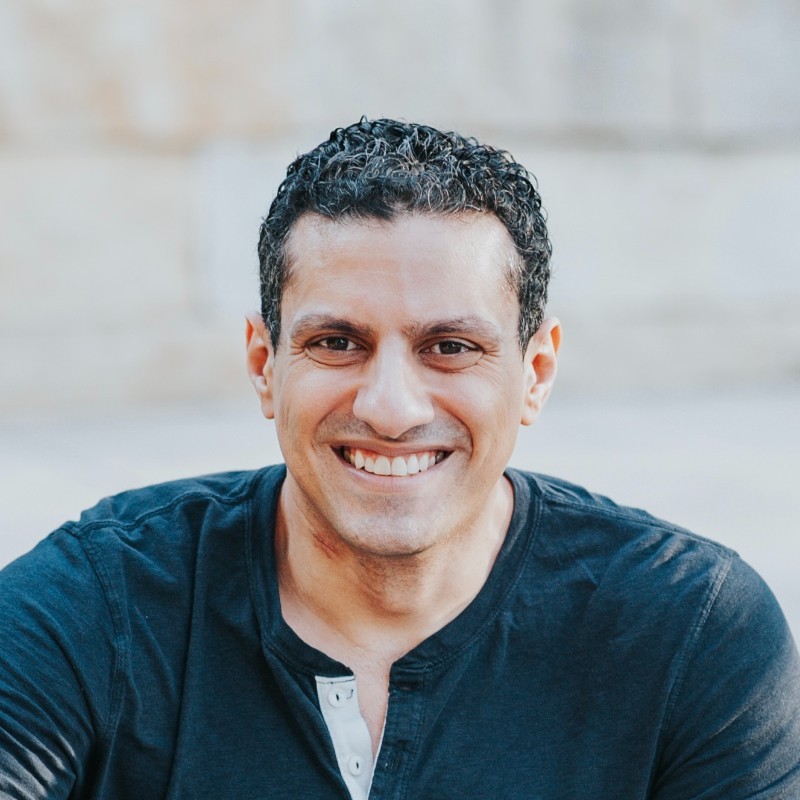
Ahmed Rashad of Perle engages with John Furrier of SiliconANGLE Media to discuss Perle's recent achievements and future direction following its victory at the ACTAI Global Asia Pacific 2025 AI Startup Competition. This conversation, hosted by theCUBE, examines the innovations and challenges faced by artificial intelligence startups in transforming data management and training paradigms.
Rashad, recognized for leadership at Perle, provides an expert perspective on the evolving landscape of AI technology. Engaging with theCUBE Research hosts, they highlight Perle's innovative platform, which optimizes data management to enhance AI training processes. Rashad shares insights into the multidisciplinary nature of the ACTAI community, which promotes deep conversations among technology leaders and researchers.
Key takeaways from the discussion include Rashad's vision for a modular adaptable platform that meets the rapid evolution of customer needs. The conversation explores the importance of human expertise in AI data curation, emphasizing the balance between synthetic and real-world data. According to Rashad, the focus is on transforming acceptable data into superior data, a challenge addressed by leveraging both technological tools and human input to ensure effective AI training and decision-making.
Forgot Password
Almost there!
We just sent you a verification email. Please verify your account to gain access to
theCUBE + NYSE Wired: Actai Global. If you don’t think you received an email check your
spam folder.
In order to sign in, enter the email address you used to registered for the event. Once completed, you will receive an email with a verification link. Open this link to automatically sign into the site.
Register For theCUBE + NYSE Wired: Actai Global
Please fill out the information below. You will recieve an email with a verification link confirming your registration. Click the link to automatically sign into the site.
You’re almost there!
We just sent you a verification email. Please click the verification button in the email. Once your email address is verified, you will have full access to all event content for theCUBE + NYSE Wired: Actai Global.
I want my badge and interests to be visible to all attendees.
Checking this box will display your presense on the attendees list, view your profile and allow other attendees to contact you via 1-1 chat. Read the Privacy Policy. At any time, you can choose to disable this preference.
Select your Interests!
add
Upload your photo
Uploading..
OR
Connect via Twitter
Connect via Linkedin
EDIT PASSWORD
Share
Forgot Password
Almost there!
We just sent you a verification email. Please verify your account to gain access to
theCUBE + NYSE Wired: Actai Global. If you don’t think you received an email check your
spam folder.
In order to sign in, enter the email address you used to registered for the event. Once completed, you will receive an email with a verification link. Open this link to automatically sign into the site.
Sign in to gain access to theCUBE + NYSE Wired: Actai Global
Please sign in with LinkedIn to continue to theCUBE + NYSE Wired: Actai Global. Signing in with LinkedIn ensures a professional environment.
Are you sure you want to remove access rights for this user?
Details
Manage Access
email address
Community Invitation
Ahmed Rashad, Perle
In this exclusive coverage from theCUBE's Palo Alto Studios, John Furrier converses with Sheila Lirio Marcelo, founder and CEO of Ohai.ai. As a finalist at the prestigious ACTAI Global Asia Pacific 2025 event, Marcelo discusses their new venture, which is set to revolutionize household functions by minimizing unpaid labor and maximizing productivity.
Renowned for their previous success with Care.com, Marcelo returns with Ohai.ai, a virtual assistant crafted to alleviate the cognitive burdens of daily household management. During their conversation with Furrier from theCUBE and insights from other analysts, Marcelo explores the inspiration behind Ohai.ai and how artificial intelligence is used to streamline everyday family tasks, potentially unlocking significant economic value by freeing up household time.
The discussion reveals key insights, such as how Ohai.ai is constructed to combat the mental load associated with familial duties, addressing issues noted by figures such as former Surgeon General Vivek Murthy. Marcelo emphasizes the societal benefits of reducing parental stress through efficient time management. Further, they elaborate on the themes of social entrepreneurship and how AI can humanize and enhance life by performing routine tasks, thus allowing individuals to focus on higher-order human needs and emotional connections.
Ahmed Rashad of Perle engages with John Furrier of SiliconANGLE Media to discuss Perle's recent achievements and future direction following its victory at the ACTAI Global Asia Pacific 2025 AI Startup Competition. This conversation, hosted by theCUBE, examines the innovations and challenges faced by artificial intelligence startups in transforming data management and training paradigms.
Rashad, recognized for leadership at Perle, provides an expert perspective on the evolving landscape of AI technology. Engaging with theCUBE Research hosts, they highli...Read more
exploreKeep Exploring
What is an update on what's going on with Perle and the company, including any changes or developments?add
What does the speaker mean by "you focus on"?add
What is a significant factor in determining the performance of a model and how can it be improved?add
What are the three main things that a company is constantly looking for in terms of building, selling, and delivering?add
>> Welcome back everyone to theCUBE. I'm John Furrier here at our Palo Alto studios for the ACTAI Global Asia Pacific Community, summary of the startup event, the community activities, but we're featuring the finalists and the winners of the first ACTAI AI Startup competition. Ahmed Rashad is here, the Founder and CEO of Perle, the winner of the first ever AI Startup competition, I think. Hope I got that right. If not, I'll get corrected on the internet for sure. But Ahmed, great to see you. Thanks for coming on theCUBE.
Ahmed Rashad
>> Thank you, John. Great to be here.>> First of all, everyone's a winner when they go to the ACTAI event because it's already a curated community of experts, leaders across diverse disciplines, it's very interdisciplinary. Congratulations, it's a huge honor. I know you're not there to win the trophy, but I mean it is a nice testament to what you're working on. Give us an update on what's going on with Perle and the company. What's new, how's it changed, if any? What are you working on? Give an update.
Ahmed Rashad
>> Yeah, absolutely. At Perle, we're building a platform where training data would live. You'd be able to manipulate it, make it better, collect more data, add insights from human experts, and all in one place that is ultimately self-serve. You maintain the control, you maintain the speed while having access to all the professional tools. As for us, it's always building better product, testing it ourselves, and then turning it something that customers can use themselves.>> Talk about what you mean by you focus on where the data lives, and where it's trained, I should say. Is that storage, is that in a database? Now I'm thinking, my mind's starting to go a little bit sideways here. Okay. I'm thinking about databases, I'm thinking about storage and next to the chips. Is it going to be processed? Because training's doing a lot of interactions with the new GPUs or whatever configuration of the XPUs that are out there, it's going to be all living there. Is that what we're talking about? Is it more higher up in the stack or both or?
Ahmed Rashad
>> It's a little bit of both. Basically, when we started, when computers generally started, we started with the hardware, we started with the silicon, and then we started building up from there. And now, just given the amount of data that we're handling and how we need to handle it, it's moving back to storage. Where the data lives matters a lot right now. As we move forward, a lot of parts need to be abstracted away. For example, agents and how they're trained and where they live and how they perform, all of those things need to be abstracted away to a large degree to enable the next generation of AI applications.>> That's where the action is, and obviously the hype cycle is high. It's beyond all recognition, but a lot of the energy is in the layers of enabling agents to scale, be smarter, have access to the data. What is the core problem that you guys are solving and solve that moves the needle or breakthrough that makes the training, now inference, now post training, which is pre-reinforced learning. I mean, all kinds of new things are going on. Mixture of experts are hot right now. The theme of things, is the problem the tooling out there? Who are you targeting? Take me through that. I'm just trying to square that out.
Ahmed Rashad
>> Yeah, it's a problem that has multiple angles. The tooling, of course it's not easy, but it's not a big problem as much, it's how do you design a pipeline where you turn okay data into great data? One of the biggest determinants of how well a model performs is how good the data is. So turning that data into great data requires a mixture of tools, AI agents, other software pieces and the most difficult part, human input, but really, really specialized, really controlled human input. What's your opinion on something and why? Because if you're going to train an agent to run things autonomously and make decisions and plans and so on, you need to apply that wisdom. You need to teach the agent that wisdom somehow. And humans are variable by nature, so it's quite complicated managing large numbers of people to do consistent work, and that's what we solve.>> The human piece interacted with the data, or serves in the data to be curated or interacted on, or both?
Ahmed Rashad
>> Both. We help customers design the pipeline and execute on certain parts of it, and the part that we're starting with most immediately is the human expert part with some automated systems that help evaluate the data, clean it, check for adversarial robustness and so on and so forth.>> What are some of the things going on? Give a quick overview of what's changed. Where are you at status-wise? Obviously, this is a tailwind for you because people see this messy middle where data origination, training, storage, whatever you call it, to outcome, whether it's insights or action or task completion is the benchmarks. That's where the money is. The middle is the hard part and some are saying agents will fill that void. Some are saying it's going to be a mixture of agents plus curation, you in the loop. Do you agree with that? And also, is that new, or is that a new breakthrough or is that a new revelation, or is it you guys always have that in mind?
Ahmed Rashad
>> I think it's a topic that's a new hype. The answer was never a single solution. There was never, oh, agents are going to fill this entire gap, or human in the loop is going to fill the entire gap, or synthetic data is going to fill that. It's never that. It's always, every situation has its own set of tools that do things great. For example, with synthetic data, it has its time and purpose and use cases and human data has and real-world data have their applications and uses. They're not mutually exclusive, they actually complement each other. The same way we're thinking about it, we have to think about the objective rather than the tools and trying to fit the tools to every objective.>> They work backwards from the customer, make the technology.
Ahmed Rashad
>> Exactly, versus the technology and then trying to apply it to->> It's the famous Steve Jobs meme that goes around the internet that everyone sees on Instagram. When he gives that Apple talk at the Apple event when he was alive, hey, we worked backwards from the customer to the technology, not the other way around.
Ahmed Rashad
>> Exactly.>> And that's the human experience which they cracked the code on.
Ahmed Rashad
>> Yeah.>> Apple did. All right, so take us through agents, because agents is an experienced outcome. Are you enabling agents or are you pre-agentic infrastructure? Where do you sit in the layer of the stack, so to speak?
Ahmed Rashad
>> Anytime where you need data to be managed, enhanced and enriched some way either through humans or an automated way, that's where we come in. It's both. We are enabling a lot of agents in highly specialized areas like law and medicine where the stakes are pretty high.>> And there are experts, humans that could weigh in on this.
Ahmed Rashad
>> And there are experts, humans that can weigh in on this, but it also requires a lot of judgment. Even the definition of what good is highly variable. You could go to two, three doctors and they give you two, three different answers. The problem is never in the average use case, it's always on the edges, but the edges in these use cases in law or medicine and so on and so forth, the cost of making a mistake is pretty high, so you need to be very, very, very careful with how you bring in input. You need to factor in things like morality for example, and ethics and democratic->> There's context in all this. I mean, in a way you're surfacing everyone, and this is cliche with ChatGPT, oh yeah, it's great for ideation, but why wouldn't I want to see five perspectives? What's behind each one is interesting to know, right? I mean, that's just data. Oh, that's a good perspective, but that's not relevant. I could make that judgment from my perspective, now then who am I, right? Again, this seems to be the ambiguous area that the reasoning kicks in.
Ahmed Rashad
>> Exactly, because it's very easy to, we approximate, our brain operates in a probabilistic way. You see a car you've never seen before like, oh, this is most probably a car because you've seen a million cars before. So a physician, for example, seeing a use case. They are approximating, that they're estimating, predicting that this is that based on my experience and they're projecting, but it's very difficult for them to actually document and code the reasoning process. That's what we call experience and intuition. What we're trying to do is actually how do we bring in that intuition and experience and try to teach it to models and agents.>> I need to know, what was the reason why you won in your opinion? Obviously you had Q&A, you made a presentation. Take me inside the room. Okay, let's go back in time. You're at the ACTAI Asia Pacific. It's good venue, people can see the background. Good vibes for sure. What was it like? What was some of the questions? Because again, this is a curated group of people.
Ahmed Rashad
>> Yes.>> They probably were probably probing, asking good questions. What were some of the things that were brought up?
Ahmed Rashad
>> First of all, it was a fantastic venue. Amazing group of people. Every conversation was something that triggered thought and challenged what we're doing one way, shape, or form. Even people who are not necessarily technologists, how does this work and why is it important? They keep asking probing questions. It's very intelligent. You could tell that those are a very, very smart group of people. I'm not sure why we won.>> They want you to come back.
Ahmed Rashad
>> I think every one of the finalists could have easily won. I think probably a couple of reasons why we won. One is that we are an enabler for pretty much everyone else. Every one of the finalists is someone who could leverage our tools and services to make their products better, so we're an enabler for everyone else. We're building the picks and shovels, and we're doing it in a significantly better way than the current available solutions that are suboptimal, so I think that's one of the reasons.>> The breakthrough is the progress, one, and two, the application.
Ahmed Rashad
>> Yes.>> You're enabling. All right, so what was the hardest question you got that you could remember?
Ahmed Rashad
>> The hardest question. None of the questions were really easy actually.>> You'll share some of the questions, I'm curious. Make myself smarter by default.
Ahmed Rashad
>> Yeah, so of course there's always the question of the market is evolving so fast, how are you going to keep up with the rapidly evolving customer requirements? That is something that I have to think about quite a bit. It's actually caused us to change how we're building products. Instead of building a solution and going the traditional Silicon Valley route, it's like hack it, get out. Just ship, ship, ship.>> Get it right.
Ahmed Rashad
>> Get out of that pit, right. It's like, okay, no, we got to take a step back. We got to take a step back and we shouldn't build a solution, we should build a platform that is highly modular and very adaptable, because we can chip out solution and make a few million dollars in ARR and that's not a problem. But building it in a way that's highly adaptable to a future that we don't know exactly what it's going to look like or have a hypothesis, but we're not sure, that is->> And you get data. You get primary data too, coming back in, feeding into potentially crafting the solutions, or having them do the solutions themselves, the customers.
Ahmed Rashad
>> Absolutely. Which is actually what we evolved into now is the customers. We realize that customers want a couple of things. They want control of running all of these things internally, but they don't have the tools of the professional players. The question then becomes, okay, how do we merge the two? How do we build the professional tools capabilities for a do-it-yourself completely self-serve. That's how that question evolved to the point where we're completely changed the architecture.>> I love the fact that you mentioned how Silicon Valley builds product because we're seeing cultural change. This is the first time we've seen engineering challenges research because Google at their last event we were just at last week was interesting. Their deep mind research team is that contributing directly to their engineering and product, and then you have the third factor that's the confluence is the people, culture, how change is happening. You got change, societal impacts. Whatever that application is, whether it's for good or for profit, you have engineering research because research is important to keep up with the change. All three are happening at the same time, and that's not in any playbook.
Ahmed Rashad
>> No, it's not.>> What's your reaction to that just in general? You agree or?
Ahmed Rashad
>> I completely agree and I think, so for example, when I'm hiring someone, I care about two things. I care that they are very, very, very good technically at what they do. If they're an engineer, a product manager, whatever, they need to be really good at what they do, and they need to really care. That's the cultural piece, and the two need to go hand in hand. Once you find the good cultural fit, then what's the definition of culture? It is whatever helps you achieve your objectives in a way that aligns with your principles, et cetera. What we're trying to achieve, for example, our culture is that speed and quality are not mutually exclusive. There's always this trope that you get to one or the other. It was like, no, they actually.>> Speed's a reality.
Ahmed Rashad
>> Speed's reality.>> Get on board that.
Ahmed Rashad
>> And quality is nonnegotiable.>> Craft.
Ahmed Rashad
>> Yeah, exactly. And you want to go faster. Well, you got to learn to build with quality. You want to build quality? You got to learn to go faster. So that is the->> By way, craft and speed sometimes don't go together. Remember the old ways, remember the old shrink wrap software days, it was very crafted software, QA cycles, very waterfall. Crafted and you shipped it and then we sit on shelves and then iteration came. Agile startup.
Ahmed Rashad
>> Yes.>> Okay. I think that error is going back to agile plus craft.
Ahmed Rashad
>> Yes.>> Because you need to have craftsmanship into product.
Ahmed Rashad
>> Absolutely, 100%.>> With the speed factor's hard.
Ahmed Rashad
>> And so when processes first start, they're great. People adopt them and it's fantastic. And then after a while, they start drifting and we lose purpose. For quite some time, we've seen that agile resulted in low quality code being shipped on the first time, and it was never the purpose. It was never the purpose. It was ship good quality but fast and iterate, iterate, iterate. We're seeing a shift back, at least I'm seeing a shift back to let's shift good quality from the first go, but let's do it fast and iterate really, really fast.>> Yeah, and also I would say in one factor I'm hearing certainly on the enterprise side is that they have certain standards relative to whether they're in regulated industry or just enterprise in general, they have resilience bar is high. With AI, safety's a concern. How do you explain it? Quality comes from not having a bad outcome so you can't train your agents on non-human related judgment. How do you feed that? Synthetic data can give you some data, but ultimately the human data makes that better.
Ahmed Rashad
>> Yeah, synthetic data's great. It just has limitations and at least in the industries that we're most exposed to, it's always the edge cases, and it's difficult to find those anomalies because most of them don't have any presence before. You need someone to genuinely, a human who's an expert on the topic to genuinely explain the logic and the thinking behind it to teach the agent to move forward.>> All right, well, I'm psyched to have you on. Congratulations on being a winner. Thanks for taking the time to come in the studio. Tell me about the company, where you guys are at, stage, what you're looking for, are you hiring, funding, some stats, your focus, share? Plug in.
Ahmed Rashad
>> Absolutely. We just launched our MVP, and we brought on a couple of customers. We converted a couple of our design partners within a few days of launching the MVP, so that's going great. We just closed a round of funding, so that's fantastic.>> Congratulations.
Ahmed Rashad
>> I'm not 100% sure what stage we're at now. Seed, Series A, I don't know.>> Was it a priced round?
Ahmed Rashad
>> It was a price round.>> Okay. So that's the old Series A, but preferred style. You have investors.
Ahmed Rashad
>> We have investors.>> You have a board, you have meetings.
Ahmed Rashad
>> Yes.>> I call it pre-board, and then advisory board with the real kind of startup. And then once you get a board, it's off, okay, we're building. You're building.
Ahmed Rashad
>> We're building.>> Yeah. Early stage.
Ahmed Rashad
>> We have a board. I think we're a real company now. We have stickers and everything. We're constantly, there are three things we care about, build, sell, deliver. We're constantly looking for talented engineers who want to do something that's going to literally enable the next generation of applications. We're constantly looking for customers who want to be part of this journey, and who are willing to experiment with us and test some solutions that basically allow them not to compromise at all. And operators, just operators who are going to manage the->> And the focus is data, where the data is, transforming that into value.
Ahmed Rashad
>> Yes.>> That's the thesis.
Ahmed Rashad
>> Take okay data, turn it into great data that results in way better models.>> That's awesome. Well, I love the mission. Thanks for coming on. Congratulations, and maybe we'll see you at an ACTAI event. I'm calling theCUBETAI.
Ahmed Rashad
>> I'm looking forward to that.>> Maybe in Hawaii, but great to have you on. Congratulations. Good to see you. Thanks.
Ahmed Rashad
>> Absolutely, thank you very much.>> I'm John Furrier here at theCUBE, covering the ACTAI Global Startup competition in Asia Pacific. Again, ACTAI Global has events all around the world. Again, it's a unique community of experts and interdisciplinary talent that comes together to share their ideas and foster innovation. Of course, theCUBE fits right into that, we love sharing the data with you. Thanks for watching.