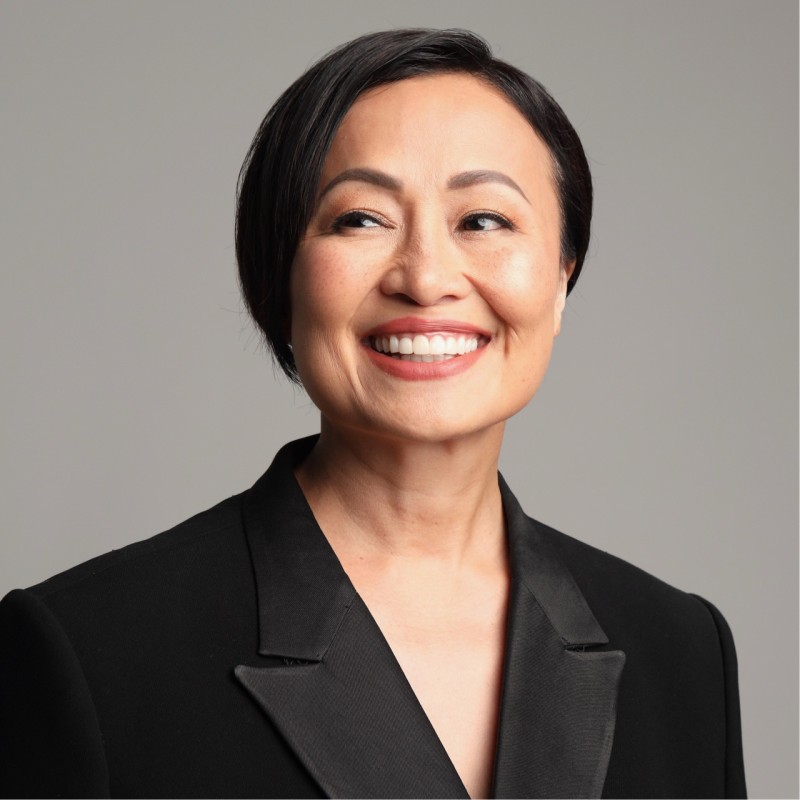
In this exclusive coverage from theCUBE's Palo Alto Studios, John Furrier converses with Sheila Lirio Marcelo, founder and CEO of Ohai.ai. As a finalist at the prestigious ACTAI Global Asia Pacific 2025 event, Marcelo discusses their new venture, which is set to revolutionize household functions by minimizing unpaid labor and maximizing productivity.
Renowned for their previous success with Care.com, Marcelo returns with Ohai.ai, a virtual assistant crafted to alleviate the cognitive burdens of daily household management. During their conversation with Furrier from theCUBE and insights from other analysts, Marcelo explores the inspiration behind Ohai.ai and how artificial intelligence is used to streamline everyday family tasks, potentially unlocking significant economic value by freeing up household time.
The discussion reveals key insights, such as how Ohai.ai is constructed to combat the mental load associated with familial duties, addressing issues noted by figures such as former Surgeon General Vivek Murthy. Marcelo emphasizes the societal benefits of reducing parental stress through efficient time management. Further, they elaborate on the themes of social entrepreneurship and how AI can humanize and enhance life by performing routine tasks, thus allowing individuals to focus on higher-order human needs and emotional connections.
Forgot Password
Almost there!
We just sent you a verification email. Please verify your account to gain access to
theCUBE + NYSE Wired: Actai Global. If you don’t think you received an email check your
spam folder.
In order to sign in, enter the email address you used to registered for the event. Once completed, you will receive an email with a verification link. Open this link to automatically sign into the site.
Register For theCUBE + NYSE Wired: Actai Global
Please fill out the information below. You will recieve an email with a verification link confirming your registration. Click the link to automatically sign into the site.
You’re almost there!
We just sent you a verification email. Please click the verification button in the email. Once your email address is verified, you will have full access to all event content for theCUBE + NYSE Wired: Actai Global.
I want my badge and interests to be visible to all attendees.
Checking this box will display your presense on the attendees list, view your profile and allow other attendees to contact you via 1-1 chat. Read the Privacy Policy. At any time, you can choose to disable this preference.
Select your Interests!
add
Upload your photo
Uploading..
OR
Connect via Twitter
Connect via Linkedin
EDIT PASSWORD
Share
Forgot Password
Almost there!
We just sent you a verification email. Please verify your account to gain access to
theCUBE + NYSE Wired: Actai Global. If you don’t think you received an email check your
spam folder.
In order to sign in, enter the email address you used to registered for the event. Once completed, you will receive an email with a verification link. Open this link to automatically sign into the site.
Sign in to gain access to theCUBE + NYSE Wired: Actai Global
Please sign in with LinkedIn to continue to theCUBE + NYSE Wired: Actai Global. Signing in with LinkedIn ensures a professional environment.
Are you sure you want to remove access rights for this user?
Details
Manage Access
email address
Community Invitation
Sheila Lirio Marcelo, Ohai.AI
In this exclusive coverage from theCUBE's Palo Alto Studios, John Furrier converses with Sheila Lirio Marcelo, founder and CEO of Ohai.ai. As a finalist at the prestigious ACTAI Global Asia Pacific 2025 event, Marcelo discusses their new venture, which is set to revolutionize household functions by minimizing unpaid labor and maximizing productivity.
Renowned for their previous success with Care.com, Marcelo returns with Ohai.ai, a virtual assistant crafted to alleviate the cognitive burdens of daily household management. During their conversation with Furrier from theCUBE and insights from other analysts, Marcelo explores the inspiration behind Ohai.ai and how artificial intelligence is used to streamline everyday family tasks, potentially unlocking significant economic value by freeing up household time.
The discussion reveals key insights, such as how Ohai.ai is constructed to combat the mental load associated with familial duties, addressing issues noted by figures such as former Surgeon General Vivek Murthy. Marcelo emphasizes the societal benefits of reducing parental stress through efficient time management. Further, they elaborate on the themes of social entrepreneurship and how AI can humanize and enhance life by performing routine tasks, thus allowing individuals to focus on higher-order human needs and emotional connections.
In this exclusive coverage from theCUBE's Palo Alto Studios, John Furrier converses with Sheila Lirio Marcelo, founder and CEO of Ohai.ai. As a finalist at the prestigious ACTAI Global Asia Pacific 2025 event, Marcelo discusses their new venture, which is set to revolutionize household functions by minimizing unpaid labor and maximizing productivity.
Renowned for their previous success with Care.com, Marcelo returns with Ohai.ai, a virtual assistant crafted to alleviate the cognitive burdens of daily household management. During their conversation with...Read more
exploreKeep Exploring
What impact can Ai have on streamlining productivity in the home and equalizing unpaid labor typically done by women?add
What prompted the transition from cloud SaaS to agents, and how do you see that playing out in terms of strategy and vision?add
What are some examples of tasks in the messy middle of a project that are being streamlined and reduced in complexity by advanced technology like AI?add
What experience is being brought from Care into Ohai and how is it impacting decision-making in regards to team scaling and AI implementation?add
What is the significance of ACT AI Asia-Pacific and its community, particularly in terms of its diversity and strong connections, as well as the balance between digital connectivity and human connectivity?add
>> Hello. Welcome to theCUBE. I'm John Furrier, your host here in our Palo Alto Studios. We're here for the ACT AI Asia-Pacific Conversations and in studio, Sheila Lirio Marcelo, Ojai.ai, thanks for watching. Sheila, great to have you on. Great to see you. You're in California.
Sheila Lirio Marcelo
>> Thank you for having me.>> Welcome to our studio.
Sheila Lirio Marcelo
>> Thank you, thank you.>> You were a finalist at the ACT AI Asia-Pacific event.
Sheila Lirio Marcelo
>> Mm-hmm.>> We're going to have the three other finalists on as well. Congratulations. And you're a luminary in the industry. Founder and CE of Care.com. You took that public, I mean numerous industry accolades.
Sheila Lirio Marcelo
>> At the New York Stock Exchange.>> At the NYSE. This is part of the NYSE Wired community, and a lot of other accolades.
Sheila Lirio Marcelo
>> Mm-hmm.>> She's been a really strong leader in the industry. Thanks for coming and really appreciate it. And you got a new venture-
Sheila Lirio Marcelo
>> I do.>> We want to talk about and all the stuff going on. First of all, talk about what the venture is 'cause you're back in the saddle again, you're riding the next wave.
Sheila Lirio Marcelo
>> Yeah.>> It's got AI in the title.
Sheila Lirio Marcelo
>> Yeah.>> Talk about what you're working on.
Sheila Lirio Marcelo
>> Yeah. Ohai.Ai is a virtual assistant or what I call an operating system for families. And so it really streamlines productivity in the home. I've always been passionate about the care economy, which I'm deemed one of the OGs in care. And it's about really helping overall equalize employment. Here it's about equalizing what I call unpaid labor. It takes about on average, New York Times published an Oxfam report that said about an average four point hours of unpaid labor that women work at home. That's on top of the inequality of pay. If we can free up that one hour of productivity in the home, John, that's about a trillion dollars of GDP. And so it's creating real value for people. Yeah.>> It's like NVIDIA GTC, talk about, lose those cycle times on the computers to make the world a better place.
Sheila Lirio Marcelo
>> Yeah.>> You're tapping into the human capital.
Sheila Lirio Marcelo
>> That's right.>> To bring that together and-
Sheila Lirio Marcelo
>> That's right.>> Time slice and just bring efficiency.
Sheila Lirio Marcelo
>> Yeah, it's efficiency. And in Maslow's hierarchy of needs, it's allowing us to get to that self-actualization by taking care of the mundane task every day. I often describe it that if we can free up the mental load and cognitive load as well, then we can address what Vivek Murthy, our former Surgeon General said is the number one epidemic, which is parental stress. If we can free up that parental stress, we would have a better society because then children would have more of our attention. We would have regular meals with them, focus on their nutrition, read books to them every night. This has just been near and dear to my heart.>> Yeah. I want to get into the whole humanity piece because I think when you have a home that takes stress away, it pays forward into the unit of a family.
Sheila Lirio Marcelo
>> That's right.>> And I was watching some of your videos, some great videos on YouTube about your journey and your life and your success. But there was one phrase I love that you've said multiple times, which is from a mentor that said, are you in the pain or pleasure business.
Sheila Lirio Marcelo
>> Yeah.>> And your career, you can see the pleasure side of it, care.com and the bright things you're working on. What does that mean? And explain that because I think this is very instructive in the sense of how people should think about what they want to do, but also it brings up the value proposition, are you an aspirin or are you a... I mean, all kinds of cliches.
Sheila Lirio Marcelo
>> Yeah.>> Talk about that phrase. What does that mean?
Sheila Lirio Marcelo
>> The quick story behind that was I was working at Matrix Partners at the time as an entrepreneur in residence and debating whether I was going to pursue care.com as a female founded business, and it tended to be female centric. And back then very few women got funded and I had graduated with my Jade MBA at Harvard, worked at another company that helped families save money for college. And so I was worried that if I stayed in this family business, in a female centric business, I would get judged. And so I got an offer from a local company to run a mobile entertainment company at the time. I called that a pleasure business or what my mentor labeled as a pleasure business. One of my mentors at Matrix took me out to lunch trying to convince me to do care.com. And he said, "Who are you really? What is your passion point? Are you in the pain business or the pleasure business?"
Meaning he said, look, you've been solving consumer pain. College savings is not that fun. Do you like to save money for college? No, I worked in another company that helped people find jobs. Trying to look for jobs is not that fun. Trying to look for care is not that fun. Trying to solve cognitive load to take care of mundane tasks, also not fun, but I like solving things for people to alleviate any pain point so that it really helps them to be more human and really pursue the joy and happiness of being human.>> Yeah. And I think you're seeing a lot of trends now. One of the things we're seeing in this wave is that with AI, you're seeing a lot of human in the loop discussions, AI safety, there's all these topics and the role of the human, humanizing it. And so in my career, I mean I've never seen this set up like this. We have tech, money and culture converging.
Sheila Lirio Marcelo
>> Mm-hmm.>> And so you're seeing a lot of impact, mission driven initiatives that from the old days it was get rich and then be a philanthropist.
Sheila Lirio Marcelo
>> Yes.>> Where now you can have mission good in ventures.
Sheila Lirio Marcelo
>> That's right.>> Talk about that dynamic, 'cause I think the young entrepreneurs don't know that it wasn't like that.
Sheila Lirio Marcelo
>> It wasn't always.>> It's now kind of creative capital structures, creative ways to integrate capitalism, money making, and with AI and data, a lot of good things. Talk about those three pillars and how you see that.
Sheila Lirio Marcelo
>> Absolutely. John, I'm glad you touched on it because part of the reason I named and made up the name Ohai.AI, actually H-A in the middle, humanity within AI or human assistance in the loop, right? And then everyone has an assistant named O. I've always been a big believer in social entrepreneurship. My husband and I actually help endow a professorship to help teach social entrepreneurship at Yale University. And part of the reason this was always important to us is because I often got pushback from kids when they said, "Look, I want to pursue a business or pursue something I'm super passionate about to create impact in the world. And when I say, oh, you could do it in for-profit, sometimes your young people come out saying, well, I don't want to work for the man. I don't believe I should work for corporate America. And what I really believe is that you can create companies that really have a mission for impact and then has a strong sustainable model. The challenge we have this day and age is that nonprofits struggle. They're always out raising money. Some of the leading nonprofits that I know and their leaders, they spend 80% of their time raising money. Now as you know->> Talk about pleasure and pain. That's not pleasurable.
Sheila Lirio Marcelo
>> It's not. And it's harder to get to the work operationally of impact.>> Yeah.
Sheila Lirio Marcelo
>> Whereas if you have a great business model and you think at operational scale and it's got a plan towards revenue and profitability, then you can really impact people's lives. And so at care.com for us, by the time we exited, we were in 20 countries, 35 million members, really serving millions of families and caregivers. For me, I knew that I wanted to really build a business, to your point around impact. And the way to do that is that you can do that as a social entrepreneur. And I'm doing it again with Ohai.>> I mean it's such an awesome... I wanted to bring that up because I think this is a trend. It's not a one-off because Matt Rogers, who I interviewed at the NYSC Wired studio in New York, he's a founder of Nest. He's already rich.
Sheila Lirio Marcelo
>> Yeah.>> But he's also doing a cool venture for profit.
Sheila Lirio Marcelo
>> That's right.>> And he set it up as an SPC. He's already had that built in for the venture architecture.
Sheila Lirio Marcelo
>> That's great.>> From the beginning. The experience multiple founders are like, okay, I can set this up for profit.
Sheila Lirio Marcelo
>> That's right.>> And do what I love to do.
Sheila Lirio Marcelo
>> And there's an organization that you and I are very fond of called Forward Global, and it actually services nonprofits and social entrepreneurs to create a network, especially of founders who have exited and are now becoming philanthropists to say, you can still be a social entrepreneur your second time round. You don't necessarily have to be a philanthropist because philanthropy to me is now being defined in a broader set of terms and it's all about impact. And there's many creative ways to do that.>> At the Forward Global Summit, I heard a stat, I think Susan McCormick said it is that philanthropy tripled in size and the impact's down and it's still a small portion of the overall capital.
Sheila Lirio Marcelo
>> Mm-hmm.>> The fundraising point is a great one because the old way was have some bunch of distribution middlemen, people doing distribution of the assets. And then that's breaking down because of the economics.
Sheila Lirio Marcelo
>> That's right.>> Because if they're fundraising all the time, they don't have time to put into growing their business.
Sheila Lirio Marcelo
>> And the consumer mindset today, we're just much more conscious about the environment. We're conscious about impacting people in a level of equality. I think consumers truly care. And so when companies come out, that's driven on values and mission, I think the consumers are using their wallet to say, these are my values as well.>> Yeah. Well I love the new venture. Ohai is a great name. I love the fact that you're looking at the efficiency of human life and adding that value into the humanity because AI is going to accelerate a lot of human intelligence.
Sheila Lirio Marcelo
>> Yes.>> And talk about how the human's at the center of this, what's your vision around, okay, I got a lot of data. We don't want to be the product. Everyone doesn't want to be like Facebook where they're exploited for being the product and serving ads. You're taking a different approach. Talk about the vision of the loop.
Sheila Lirio Marcelo
>> Yeah, it's definitely a subscription service. We leverage the data because we have the family graph and the household information. We know allergies and preferences. If the family likes to eat Chinese Tuesday night because there's a quick soccer game and they don't have enough time to cook, we've integrated Instacart if they want to actually do groceries with ease, click a couple buttons and the grocery gets delivered.>> Help you have a nutrition to-do list.
Sheila Lirio Marcelo
>> Yeah, nutrition and health and really just free up time. Again, as I repeat myself, you now find yourself time to eat regular meals and focus on nutrition and spend time with your family. And I think that's critical, honestly. And it's also a sense that the kids get to enjoy the AI as well and having an engagement because the kids also use Ohai. In fact, Instacart loves it because the whole family puts, it's a really good business model, puts a lot of their products in the grocery cart. Mom is not going to the grocery store by herself anymore. It's all the household contributing. And so it's more coordinated, but it services really mom to save her time.>> It's interesting, I have a side little thing I always think about, which is collective intelligence.
Sheila Lirio Marcelo
>> Yeah.>> You think about it for 20 years.
Sheila Lirio Marcelo
>> Yeah.>> In a way, you're putting a collective brain inside the household.
Sheila Lirio Marcelo
>> That's right.>> And letting people tap in contribution, their role, they get their data.
Sheila Lirio Marcelo
>> The moderated thing that the AI also does, and it does it for multiple households, for divorced parents and within household. We get the funny jokes sometimes that the AI is the one tagging dad to say, hey, it's your turn to do pick up.>> Side hustle mediation. You never know. Talk about the concern. People look at AI right now, there's two camps, there's the pro and the cons. People that are in it like us, we love it because let chaos reign, reign in the chaos, an old Andy Grove expression. And so that's where innovation happens. But also this, what does it know about me or is it going to go off the rails?
Sheila Lirio Marcelo
>> Yeah.>> That thing. How do you guys think about that? Because privacy must be a concern.
Sheila Lirio Marcelo
>> It's a massive concern.>> You've been involved in care, you know this.
Sheila Lirio Marcelo
>> Right? I mean, think about it.>> Tell us the story.
Sheila Lirio Marcelo
>> Look, any technology, anything new, when the car came in displacing the buggy, you got the phone, you got the internet, I was in web one. All of this creates fear. The reality is AI is here and now. And so if we look at AI is actually enhancing the human experience instead of replacing it. What we're building is really a hub. A hub that allows us to have the tentacles with technologies like the Instacarts, like different companies that we can integrate and make it super easy for families because now we're just app overloaded. Too much information overload. If the hub and the AI can actually help facilitate, make that easier, and by the way build it with choice and transparency. If you're the chief household officer, which I like to call either mom or dad, you get to decide what information you want to store, what you want to share, what you want to delete. And I think that's really important. And at the same time feel comfortable that we're not selling your data.>> And you guys are hardcore on the privacy side.
Sheila Lirio Marcelo
>> Absolutely. Yep. Trust is super important in building a product.>> Talk about where you guys are in the business right now. What's the status? How far along. You made the finalists of the ACT AI, very select group. I think getting there is already winning, but you guys right there, what was it about? What's the business? Where are you in the status, funding? Give us some numbers.
Sheila Lirio Marcelo
>> I mean it's such a privilege. It was an honor to get invited by Bill Tai and his entire group who founded ACT AI. Presented, we're still seed round, we're still super early, but we're getting ready for our A round. The company's doing well, it's growing faster than the early days of care.com. I think there's a huge demand overall for our service. Getting really good feedback. We are methodical in the growth plan for this. We launched with SMS, then we moved to web and now the iOS app just launched. We're super excited for getting this in the hands of pretty much everybody. What's surprising to us, John, is that close to half of our members don't even have children. Meaning all households really need help to just get everyday life coordination done.>> I have four children, they're all out of college now. They're all on their own. And my phrase is, life's happening. It gets harder. Life gets harder.
Sheila Lirio Marcelo
>> It does.>> And so I could see how this would be a great service because now, okay, you want to live a good life and human element to it, I love that piece. What are some of the use cases that you're seeing? You mentioned some of them, the grind gets harder, I get married and have kids. But what are some of the use cases? Can you share what are some of the early returns are looking like in terms of successes and how people are using the product?
Sheila Lirio Marcelo
>> Definitely as I mentioned, divorced parents trying to figure it out. They don't want to communicate with each other. And yet the schedule of children back and forth between two households is super important, but we get everyone from investment bankers to young nurses to especially moms who are just managing the athletic schedule of over-scheduled kids to know that this assistant is really helping them out. We get a lot of college students too because ADHD is on the rise, as well as executive function disorder. And so this AI really helps them. At now probably the hottest feature we have is what we call a document upload where you can take a picture of a document and then it just adds it to your schedule with ease. That fast, take a picture, do a PDF, and originally we designed it for moms and that we could take maybe 30 items, we had to upgrade that. Now it can handle up to 300 or more items because the college syllabi was also getting updated by college students.>> The schedule, I mean talk about parents, I think a little flashback of who's picking up, dropping off snack. You take soccer, I take theater, I mean all kinds of juggling.
Sheila Lirio Marcelo
>> It's crazy. And then on top of that, you have over six communication apps that you're juggling and you don't know where the message was sent. And by the way, schools aren't user-friendly, right? They are still sending eleven-page newsletter with eight-size font and you're missing picture day, you're missing key events because you couldn't get to the email and you missed it.>> You're putting people in control of their data.
Sheila Lirio Marcelo
>> That's right.>> Where the value is extracted from the family or the user.
Sheila Lirio Marcelo
>> That's right, that's right.>> For their benefit.
Sheila Lirio Marcelo
>> For their benefit. We assign, we say John@Ohai.Ai, you get an email, you can forward it to all the different activities that you want. We scan those emails, we upload it on your calendar. And by the way, we call it bring your own calendar. You choose your calendar, whatever you want to use, and we update it for you.>> Is there a range on scope of activities? I want to get my lawn care done, these kinds of external services?
Sheila Lirio Marcelo
>> Yeah, we're going to be adding all those services. A lot of excitement around that.>> Handyman, I mean all kinds of things pop up in my head.
Sheila Lirio Marcelo
>> Doctors appointments, summer camps, travel schedules, family vacations, a lot of things.>> Is your vision to bring in the ecosystem of external partners?
Sheila Lirio Marcelo
>> Absolutely, yeah. Our desire is not to build each of these services that families want, but they get overwhelmed. Too many choices, too many decisions to make, never enough time. Again, so many different services. Our idea is to really, we collect a lot of information, just make it with ease. I mean simple things like I want to play pickleball with a group of parents. I can't even schedule that. I don't even have time to do that.>> When am I in town or what's my openings?
Sheila Lirio Marcelo
>> That's right.>> I want to ask you, you mentioned Web1.0 earlier of care.com in your entrepreneurial venture. Obviously you had a little VC action going on too.
Sheila Lirio Marcelo
>> Yeah.>> You transitioned to SaaS, okay?
Sheila Lirio Marcelo
>> Yeah.>> At that time you took the company public, which again, congratulations. Great success.
Sheila Lirio Marcelo
>> Thank you, thank you.>> You rode the web wave.
Sheila Lirio Marcelo
>> That's right.>> Now we're going to transition from cloud SaaS to agents.
Sheila Lirio Marcelo
>> Yes.>> And some are saying agents will be a bigger market than SaaS.
Sheila Lirio Marcelo
>> Yeah.>> You got a SaaS play with the app.
Sheila Lirio Marcelo
>> That's right.>> There's data involved, there's AI as well.
Sheila Lirio Marcelo
>> Mm-hmm.>> I'm sure you're thinking about the agentics side of it. How do you see that playing out? What's the strategy? What's your vision?
Sheila Lirio Marcelo
>> I mean, what's great is the co-founders and I and the early team were developing EdTech platform, and this was February 2023, and this is before ChatGPT. We were ahead looking at generative AI. And so we know that what started was prompt engineering and then inference, but in February 2023, we were starting to already teach using generative AI for agentic tasks. And that's when I came up with the idea to say, wait, if we're teaching developers this, why can't we do this for families as well? It's going to get smaller and smaller and really building instead of one massive LLM, what we call the open ocean internally with the team, it's really creating specific agents to complete task. And the smaller it is, the less hallucinations, the better in the delivery overall for families.>> Yeah. We've been covering the data platform since the Hadoop days, going back 15 years when we started SiliconANGLE and theCube and the pattern's the same and we're seeing it play out now. I want to get your reaction to this is that you have origination of data, you store data and then you get insights.
Sheila Lirio Marcelo
>> That's right.>> And then there's a variety of things in the middle, the messy middle.
Sheila Lirio Marcelo
>> The messy middle.>> Pipelining, doing some schemas, doing all kinds of database stuff, writing code.
Sheila Lirio Marcelo
>> Yep.>> Now we're seeing that that is where the action is.
Sheila Lirio Marcelo
>> Yes.>> You got Ohai.AI, you originate your data.
Sheila Lirio Marcelo
>> Yes, yes.>> And then insights is convenient or-
Sheila Lirio Marcelo
>> It's convenient, but remember it's also streamlining so that a lot of things are actually coalescing into single base platforms that do everything together so that even your head count is getting reduced, right? You're not necessarily going to have all the stacks of front end, app, database. Soon all the tools will merge, right? You don't need an ops admin anymore because that can be achieved by the actual developer because the AI is able to complete a lot of these things. We're going to see a lot of that also coalescing.>> That's good. That's a good call out. One of the things we talk about on our research side with Dave Vellante and our team, we discussed that the old days, best of breed, best of breed products. You see this in cybersecurity a lot. I want to get your thoughts on how you see it playing out where you can create a platform easily now, have a use case, say, Ohai.
Sheila Lirio Marcelo
>> Yep.>> And what used to be heavy lifting, best of breed ventures, point products could be platformized.
Sheila Lirio Marcelo
>> They're .>> What is your thought on that?
Sheila Lirio Marcelo
>> And by the way, and that includes everything from marketing to the data side, to pretty much the tech. What's interesting to me is now I'm seeing some startups even on the marketing side collapse everything from a performance marketer, an organic marketer, a designer, a product marketing person because the AI tools are just becoming faster and faster and easier. And so jobs just start to really be... You could hire one or two marketers rather than having 20 people on a team and it's the same. Back to your question, that's in tech, that's on the data side. Pretty much all teams.>> Julie Choi, who's also in our little group is awesome to talk to.
Sheila Lirio Marcelo
>> I love Julie.>> I talked to her and of course she's got the big chip at Cerebris, and I made a comment on her LinkedIn. I said, "Speed is the key to success. Need for speed."
Sheila Lirio Marcelo
>> Yes.>> You're talking about speed.
Sheila Lirio Marcelo
>> It's speed.>> Are you talking about velocity?
Sheila Lirio Marcelo
>> And volume. It's speed and volume. Speed and volume. I mean as an example, back in the day, everything's very manual. You'll create an ad manually on the front end on Google or Meta, and now you can use the AI to create thousands of permutations of the ad. But not only that, scrape your website, understand the value proposition, understand what you're trying to do, then create video-based ads that quickly and then actually distribute it for you and then get you to the data. And so you're sitting there as a marketer and you're like, wow. And then even looping in the website all the way through the conversion funnel.>> Yeah.
Sheila Lirio Marcelo
>> And even that will be AI. The innovation though is just going to increase, John. I'm super excited around that, around testing new ways and doing things. I'll give you an example. What I'm excited about is newer divergence thinkers and learners. Because of AI, we're going to have the possibility of doing things better for so many people.>> Yeah. I mean structured things, dogma, points of view, old conventional wisdoms are going to be decimated.
Sheila Lirio Marcelo
>> That's right.>> I mean, again, this is why I love this impact angle because impact isn't just philanthropy, it's also life. Life's very diverse.
Sheila Lirio Marcelo
>> That's right.>> And talent would be judged, you mentioned that word earlier. There's no judgment in product, the output in what you do.
Sheila Lirio Marcelo
>> I mean, this is why I love being an entrepreneur. It's not just the curiosity and learning, but that to adopt the fact that everything changes and you've got to be on the ball and be comfortable with that, right? And I love that things do change and you're blowing things up, learning new things, taking risk. That's the fun of it.>> Sheila, one of the things, I'm old so I can say this.
Sheila Lirio Marcelo
>> Me too.>> Ageism has been kicked around as a topic, and I remember the narrative during the bro generation of startups are for the young, not for the old. But if you look at AI, the common theme that we're hearing is domain expertise, scale, end-to-end workflows. These are common things that pattern match to where people are winning.
Sheila Lirio Marcelo
>> That's right.>> And if you look at people who have experience, okay, that domain knowledge is accelerated, to your point about the neuro piece of it is that if you have talent, AI will supplement that-
Sheila Lirio Marcelo
>> That's right.>> Augment that talent.
Sheila Lirio Marcelo
>> That's right.>> And so you're seeing a lot of founders come out of the woodwork that I wouldn't call traditional entrepreneurs because they wouldn't fit the mold.
Sheila Lirio Marcelo
>> That's right. It's not just experience too, it's also proximity to the problem. And as we know as boomers, that population is just getting bigger. And so if you think about longevity and the opportunity there in healthcare and what's really a cost to society. And given the, we're proximate to the issues and we're experienced and we've managed and led, I think especially people over 50 are definitely very qualified to go into this AI world, to highly encourage them to be innovative, creative and don't fear it.>> Yeah.
Sheila Lirio Marcelo
>> Just be curious and open learn and really create solutions because you're living the problem that is a massive market. The TAM's massive.>> You mentioned boomers. I'm technically an X generation, but I'm on the cusp. I have older brothers who are boomers, but I follow them. The X Generation was the generation that didn't have Google, they didn't have cell phones.
Sheila Lirio Marcelo
>> That's right.>> We just came on the scene. They're the most versatile and the memes are all over the internet. You've seen them, right? They're fun to watch.
Sheila Lirio Marcelo
>> Yes.>> But if you look at the characteristics of the X Generation, for instance, they're very versatile.
Sheila Lirio Marcelo
>> They are.>> And then you got the new generation, which are digital native.
Sheila Lirio Marcelo
>> Mm-hmm.>> You got this confluence of the human society coming together, this fabric.
Sheila Lirio Marcelo
>> Mm-hmm. And to learn from each other, intergenerationally. And we have a lot of young people at Ohai and we empower them to come up with solutions and to be out there 'cause they know the different channels. They know effectiveness around conversion and what makes sense, especially because we also have a consumer set there, our college students and young moms and young dads. And so it's super important. I've always believed in intergenerational development of products.>> Yeah. And I love the collaboration angle on that too. And that's the diverse teams in action.
Sheila Lirio Marcelo
>> Yeah.>> I want to get into the mission thing again because there's some ESG and innovation that you're doing around sustainability.
Sheila Lirio Marcelo
>> Yeah.>> We're getting pulled into that conversation on theCUBE because we covered data centers and the cloud, heat, power, big part of it. How are you guys looking at ESG and sustainability in your mission?
Sheila Lirio Marcelo
>> Yeah, for me, a real focus has always been about equality, on that E part of that word. And certainly sustainability matters to me in my husband and I's personal life and choices that we make and certainly making things more efficient to reduce energy use is always super important. On the quality side, again, how do we, in terms of a level of playing field when it comes to the care economy, a good friend of mine, Ai-Jen Poo and I, always say care is the work that makes all work possible. We invest millions, billions on infrastructure to solve potholes on the road, fixed bridges. But I always say, unless you've got great care at home and things are productive at home, it's hard to imagine just getting in a car and going to work if you don't have the infrastructure in your home environment in a very effective way.>> I love the care angle. I think this comes back full circle to the earlier conversation around, if you can take away the pain points of stress, anxiety, labels.
Sheila Lirio Marcelo
>> To free up your mind,>> Free up your mind, online education's booming.
Sheila Lirio Marcelo
>> And be more creative.>> More things are coming. How do you see that? Because at care.com you live through, I would call gen one of basically-
Sheila Lirio Marcelo
>> Web1, Web2.>> Building all the scaffolding and then scaling. What are you carrying into Ohai from Care that's going to be carried forward and what's new that you're seeing?
Sheila Lirio Marcelo
>> I mean, definitely my leadership background and that's always evolving in how we scale teams and how we think about things. We're 30 people now at the company. When we exited Care was a much, much larger team and is also a public company. I just think now you're going to build things with much smaller teams faster because of AI. But it's also given my experience, I really look at it and say what matters and where do you really sweat the bullets on things?>> Yeah.
Sheila Lirio Marcelo
>> And where do you just say, listen, let's be innovative. Let's be fast. And also build systems that test quickly, John. That's the other thing 'cause you've got an audience here. I'm constantly fail fast is a philosophy that I've just had for many, many years, right? It's how do you test in light ways and quickly test the thesis that you have and don't be stuck with an ego around it, right? And so I'm taking the same principles that I learned at Care.com, but boy, are we moving even faster now.>> You get more done.
Sheila Lirio Marcelo
>> Yes, absolutely.>> What's been the most exciting thing that you're working on right now? Can you share some personal things that's getting you all jazzed up?
Sheila Lirio Marcelo
>> Yeah. We launched an avatar, so there's now a voice to Ohai, which is super fun as we see the development of Character.ai and I think where senior care is going, where people want to talk to a voice. We're doing a lot of innovative things coming up with that. We're super, super excited.>> Well, congratulations on being the finalist. Talk about ACT AI Asia-Pacific, and this community in general, very diverse, unique. Bill Tai's community's very strong, very tight, but also they're not for the faint of heart either.
Sheila Lirio Marcelo
>> Yeah.>> Talk about ACT AI.
Sheila Lirio Marcelo
>> I mean, I let Bill tell the story, but it really started with his love for kite surfing and really fell in love with nature and the ocean. And of course he was doing that in Silicon Valley and got to know the Google founders and all the different founders in the companies in the web one, web two phase. And then he just started to seed these companies and started to create this amazing community. Really, honestly privileged the first time that I went and what I'm seeing, and I actually complimented him. I've never been to a conference where the WhatsApp really afterwards just blows up.>> Yeah.
Sheila Lirio Marcelo
>> Meaning there is a real connective tissue with the environment. People really enjoyed being together, helping each other, and back to where we started about the humanity in all of this, it's all about staying connected and really freeing us up around just finding the human in each of us and what's important.>> You can get caught in the grind these days in having that intimate... I mean, one of the things that comes up, we're seeing now and again, this is a conversation we had at Forward Global, we have at NYC Wired, a trust network on top of the existing social media infrastructure. Everyone's got a LinkedIn handle or a shingle out there saying now all the live streams they do. But the next layer, that's an IP address, everyone's got a connection. But now you're starting to see this abstraction around domains.
Sheila Lirio Marcelo
>> And what you're noting back to the ACT AI Summit is that allowing us to move quickly using digital to enhance our humanity allows us to free up more time to connect live, to be with each other, look in each other's eyes, really help each other, eat together, play together, have fun together, connect, dance together, enjoy music, and just really celebrate being human.>> I think post-COVID, that's such a great point how face-to-face, which is still the scarce currency.
Sheila Lirio Marcelo
>> That's right.>> It's a human time, it's presence. Being present in a conversation.
Sheila Lirio Marcelo
>> And then to go and enjoy nature in this world together. I really appreciate it.>> And then connecting that to digital is always like, Hey, the digital department does the website, they do social media, but making that first party.
Sheila Lirio Marcelo
>> That's right.>> Congratulations on the app. Thanks for coming in into theCUBE.
Sheila Lirio Marcelo
>> Thank you, John.>> Appreciate you coming in the studios and we'll see you in New York.
Sheila Lirio Marcelo
>> Thank you.>> All right, I'm John Furrier here in theCUBE for a special presentation, ACT AI Asia-Pacific. They had a great event, got the finalists all here. We're showcasing their greatness on theCUBE. I'm John Furrier, host of theCUBE. Thanks for watching.