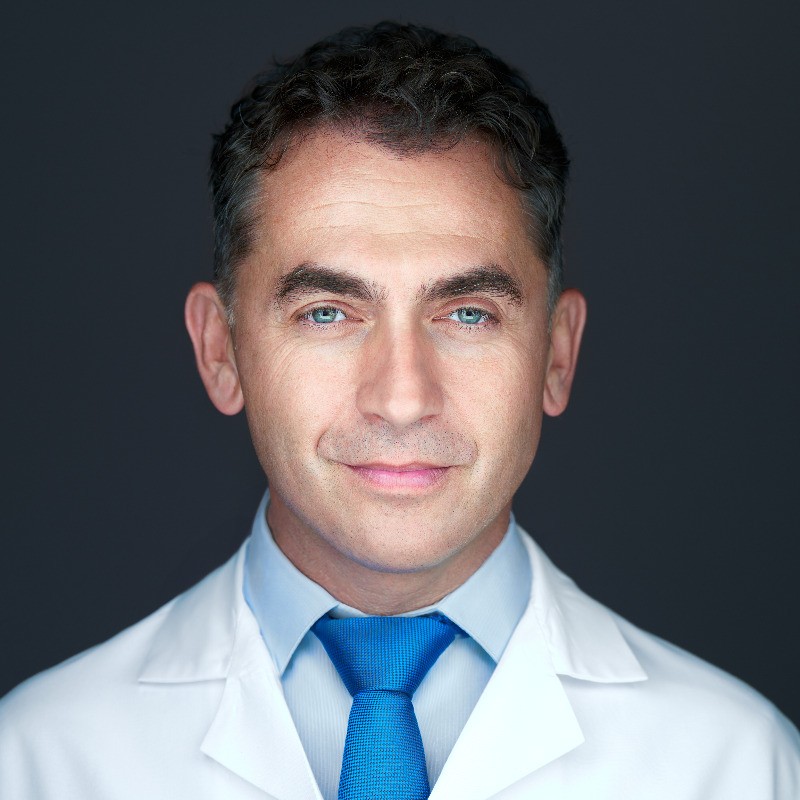
Radoslav Raychev, co-founder and Chief Executive Officer of Neuronics Medical, joins us at theCUBE Studios for a thought-provoking discussion on the promising advancements in Medical AI. This conversation occurs during the ACTAI Global Asia Pacific 2025 event, where Raychev shares insights as a finalist in the inaugural artificial intelligence startup competition, a pivotal milestone for both the global AI community and Neuronics Medical.
In this engaging video, join hosts John Furrier and theCUBE Research as they delve into the expertise of Raychev, a passionate advocate for transformative AI technologies in healthcare. Raychev's extensive background in stroke treatment offers a unique perspective on the challenges and opportunities in improving stroke diagnosis through AI. They share the mission of Neuronics Medical to revolutionize stroke detection and minimize the associated socio-economic impacts.
During the discussion, critical takeaways emerge, such as the "FAST" acronym for stroke detection - Facial asymmetry, Arm weakness, Speech changes, and Time to call emergency services. Raychev emphasizes the crucial role of timely detection in stroke treatment and highlights the financial and societal benefits of reducing stroke-related disabilities. According to them, Neuronics Medical aims to merge advanced AI algorithms into consumer devices and Emergency Medical Services systems to achieve these goals.
Forgot Password
Almost there!
We just sent you a verification email. Please verify your account to gain access to
theCUBE + NYSE Wired: Actai Global. If you don’t think you received an email check your
spam folder.
In order to sign in, enter the email address you used to registered for the event. Once completed, you will receive an email with a verification link. Open this link to automatically sign into the site.
Register For theCUBE + NYSE Wired: Actai Global
Please fill out the information below. You will recieve an email with a verification link confirming your registration. Click the link to automatically sign into the site.
You’re almost there!
We just sent you a verification email. Please click the verification button in the email. Once your email address is verified, you will have full access to all event content for theCUBE + NYSE Wired: Actai Global.
I want my badge and interests to be visible to all attendees.
Checking this box will display your presense on the attendees list, view your profile and allow other attendees to contact you via 1-1 chat. Read the Privacy Policy. At any time, you can choose to disable this preference.
Select your Interests!
add
Upload your photo
Uploading..
OR
Connect via Twitter
Connect via Linkedin
EDIT PASSWORD
Share
Forgot Password
Almost there!
We just sent you a verification email. Please verify your account to gain access to
theCUBE + NYSE Wired: Actai Global. If you don’t think you received an email check your
spam folder.
In order to sign in, enter the email address you used to registered for the event. Once completed, you will receive an email with a verification link. Open this link to automatically sign into the site.
Sign in to gain access to theCUBE + NYSE Wired: Actai Global
Please sign in with LinkedIn to continue to theCUBE + NYSE Wired: Actai Global. Signing in with LinkedIn ensures a professional environment.
Are you sure you want to remove access rights for this user?
Details
Manage Access
email address
Community Invitation
Radoslav Raychev, Neuronics Medical AI
Radoslav Raychev, co-founder and Chief Executive Officer of Neuronics Medical, joins us at theCUBE Studios for a thought-provoking discussion on the promising advancements in Medical AI. This conversation occurs during the ACTAI Global Asia Pacific 2025 event, where Raychev shares insights as a finalist in the inaugural artificial intelligence startup competition, a pivotal milestone for both the global AI community and Neuronics Medical.
In this engaging video, join hosts John Furrier and theCUBE Research as they delve into the expertise of Raychev, a passionate advocate for transformative AI technologies in healthcare. Raychev's extensive background in stroke treatment offers a unique perspective on the challenges and opportunities in improving stroke diagnosis through AI. They share the mission of Neuronics Medical to revolutionize stroke detection and minimize the associated socio-economic impacts.
During the discussion, critical takeaways emerge, such as the "FAST" acronym for stroke detection - Facial asymmetry, Arm weakness, Speech changes, and Time to call emergency services. Raychev emphasizes the crucial role of timely detection in stroke treatment and highlights the financial and societal benefits of reducing stroke-related disabilities. According to them, Neuronics Medical aims to merge advanced AI algorithms into consumer devices and Emergency Medical Services systems to achieve these goals.
Radoslav Raychev, co-founder and Chief Executive Officer of Neuronics Medical, joins us at theCUBE Studios for a thought-provoking discussion on the promising advancements in Medical AI. This conversation occurs during the ACTAI Global Asia Pacific 2025 event, where Raychev shares insights as a finalist in the inaugural artificial intelligence startup competition, a pivotal milestone for both the global AI community and Neuronics Medical.
In this engaging video, join hosts John Furrier and theCUBE Research as they delve into the expertise of Raychev, a...Read more
exploreKeep Exploring
What is a major challenge in addressing stroke as a societal problem worldwide?add
What are the statistics and impacts of strokes worldwide and in the US?add
What elements make up the FAST acronym for identifying stroke symptoms, and how has technology been utilized to detect these symptoms quickly and accurately?add
What are the challenges to full implementation of stroke detection technology and how is it currently being implemented in an EMS system?add
What are the main signs of a stroke and what is the recommended action to take if experiencing them?add
>> Welcome back everyone to theCUBE Studios in Palo Alto, California. I'm John Furrier, host of theCUBE here for a special digital event presentation of the ACTAI Global Asia Pacific Community Get Together, and we have all the finalists and leaders who were at the first AI startup competition for ACTAI. Radoslav Raychev is here, founder and C of neuronicsmedical.ai. Radoslav, thank you for coming on and congratulations for being a finalist in the distinguished ACTAI AI startup competition, first AI startup competition that I heard of for those group, they do startup competition, but first one with AI focus. Congratulations and you got a great mission I want to dig into, but thanks for coming on.
Radoslav Raychev
>> Well, thank you for having me. It's an honor to be here.>> So you guys have a unique AI approach to detect in the treatment for strokes, and this is a huge market and need and you've got some observations around it's really not the treatment, that's been solved, the acute treatment of strokes if they're caught in time, but the diagnosis is the challenge. We all seen either a movie where it's like, oh yeah, someone's having a stroke and they don't know it. This is a huge problem. Can you set the table for what you guys do and the problem you're solving specifically?
Radoslav Raychev
>> Yeah, thank you for this outline of what we do. I'm just going to go to a little bit more in detail. Essentially, as you mentioned, stroke is a big problem and it's basically societal problem worldwide because stroke not necessarily kills you but makes you disabled. So patients, once they have a stroke, they have permanent deficits, most of the patients will remain paralyzed if not treated early. And the good news, like you mentioned, the stroke is very treatable. If we catch it within three hours, we can reverse it. We have amazing technology right now. I'm a physician, I treat stroke myself and I go into the brain and remove clots and the patients come out of the procedure completely normal. I just did two procedures today and patients did well. So the problem is detection. Detection is a challenge. And many times patients don't know where they're having a stroke or their significant other or a family member doesn't recognize it well, and if they recognize it, they don't know what to do. And it's all about automation and early recognition. So if everybody knew what to do or diagnose a stroke early, we would have huge impact and stroke will be much less prevalent and we'll have much less disability in the world.>> Scope the statistics in terms of the order of magnitude of stroke impact for us so people can get a sense of what we're talking about here because I mean it is a societal problem and the deficit you mentioned this is being disabled or having a problem is also a care challenge too, and so many impacts. But scope the stats and just what the frame is for the order of magnitude of impact here and percentage of people who make it.
Radoslav Raychev
>> Yeah. Well, stroke is the number one cause of disability in the world. Second most common cause of death. And it affects roughly about 800,000 people per year in US, every six to eight person in US is at risk of having a stroke. In the world, every fourth person will have a stroke in their lifetime. 90% of the patients do not arrive in time to seek brain saving treatment, and those patients remain disabled, most of them if they don't arrive on time. So five to 10% of patients are actually being recognized early and being treated early, and that's a major problem. So if we can increase that number, double that number, we'll have tremendous impact on stroke, on outcomes, and also on financial impact. Stroke causes tremendous amount of money on US and world economy. It's projected to cost $2.5 trillion in the next 25 years, indirect and direct costs.>> Yeah. And there's also the stress involved with the families and relatives and folks around the person is huge. Another collateral damage on that. First of all, I wish I could hang out with you just in case something happens to me and I'm glad you do what you do and congratulations on those two procedures you did today. You're in the front lines doing it every day you're an expert. Talk about some of the things you're working on, what's the breakthrough and what was the key to success? And for the folks watching, what is a detection signal?
Radoslav Raychev
>> It is simple. We have this acronym for stroke detection called FAST, and it tells you what to do when you have a stroke. Act fast.>> Move fast, get to the hospital.
Radoslav Raychev
>> FAST stands for facial asymmetry, arm weakness, and speech changes. Those are the three most common signs of stroke. And T stands for time, time to call 911. So we took the first three elements of FAST, facial asymmetry, arm weakness and speech changes, and we created a software that picks those deficits or detects those deficits based on video, audio input and mobile device sensor data. If right now, as you're sitting here on the screen watching me, there's a video, continuous video input and the video can quickly detect facial asymmetry if it happens. Indeed, there are real-world examples of patients being caught having stroke while on camera. And we designed an algorithm that very quickly, actually immediately at a very high sensitivity, detects subtle changes in the face. The other thing, what we did is design a similar approach to speech abnormality detection. We have a normal speech that is more or less synchronous, monotonous and fluent. If that speech production is impaired, the audio input could actually be analyzed, detected, and classified as normal or abnormal. That's what we designed. We designed an AI platform or machine learning algorithms to detect the slurred speech component of FAST. And we also designed a arm weakness detection by using sensor data from your smartphone, you can lift your smartphone up and down and you have accelerometer, gyroscope and magnetometer that can easily detect the trajectory of the arm movement in 3D space. And we can classify again, normal versus abnormal and created that machine learning algorithm that detects arm weakness. And we merge all these three modalities into one and we produce the probability of stroke.>> Radoslav, take me through the fast aspect on the time. And then also the personas. Is there demographics involved? Does it matter? What is the time window if I have to use my device or phone? Am I constantly, can I tie it to my FaceTime? Face password? I can see all these things being great proactive, but sometimes it just happens, right? I mean is there a window? What's the window time? Are we talking about minutes, hour?
Radoslav Raychev
>> Well, most patients would be salvageable in the first three up to the six hours. If you have a really real cutoff as the six hours. In the first six hours, 70% of the patients will be salvageable. But really the golden time window is the first hour. If you come within an hour, you almost a hundred percent guaranteed you'll be salvageable. And after that six marks, six hours time window, then the chance of successful stroke treatment drops significantly.>> Got it.
Radoslav Raychev
>> But some patients can sustain tissue viability up to 24 hours. So there's variability.>> So take me through these. This is awesome. Great data. The golden time window is the one hour. Okay. So take me through the use case of the app and the technology. Okay. So I have the app. Am I, sense it? And am I even aware? Is there a check-in procedure? Am I proactively checking? How do I integrate this into my workflow of life?
Radoslav Raychev
>> That's a great question. We are the very first of a very early-stage company. So we have designed the technology and then we're now looking for how to actually implement it in real world. And you're asking the right questions because my long-term vision is this could be omnipresent. We can actually plug it right now as we're talking and then we keep continuous monitoring the back end. If you are thinking about how this can be beneficial to a consumer, it could be a active continuous monitoring in the back end. You are looking at your phone for about five to six hours a day. That's the statistics right now. The average American looks at their phone like five or six hours, even more. So if you think about the passive monitoring, ambient monitoring, we can potentially plug it in every video conferencing. We can have it actively surveilling you while you're looking at your phone. We can put it in the autonomous driving vehicles while you're, God forbid, having a stroke and your autonomous driving vehicle can detect it. And that vehicle actually go directly to the hospital, not even calling EMS. That's my long-term vision.>> That's a great vision. And also that's integrated into the workflow, tapping into the mechanisms that are in there. So it's not one use case, it's depending on who's, if I'm on Zoom all day, hey, use Zoom or whatever. If I got my phone or my car, I can program it to know where the best treatment is maybe. Maybe it's smarter to say drive six hours or two hours for the best window. All right, so give us a taste of where you're at. You said you're early stage. There's a variety of deals you could do. Apple would be great. I mean iPhone, I can change my login prompt if I proactively want to know voice activation plus facial gives me, quote, "authentication and stroke detection". That's good. I would do that in a minute.
Radoslav Raychev
>> Yeah. There's a lot of barriers to implementation and first of all is validation and large-scale data. We are sitting on about 600 patients' data right now. We have to expand our data to be absolutely accurate. We cannot have false negatives. In other words, you're having a stroke but we're not detecting it. These are the challenges to full implementation. But our first implementation is actually as a clinician aid technology in an EMS system. So paramedics have expressed great interest in using this technology in the ambulance when they are trained to detect stroke, but still some of them are too young, they don't know, they don't know. They like that AI assisted process when they can just put the phone in front of the patient and they can tell them, "Oh, there's a right or left facial symmetry. Patient is really slurring the speech." And they can detect the arm weakness by putting a little bracelet and we can actually see it right there and then automatically spill out a specific scale, which gives you a stroke severity scale. And then based on that stroke severity scale, the paramedics will have to go to a specific hospital. So that's our first market entry and we have already identified our customers. There are multiple EMS agency which expressed interest. And the second is once we get that EMS validation and adoption and improve our platform and algorithms, we are ready to go to the consumer.>> Yeah, I just want to jump to the answer. Sorry. No, that's important to get the word out because I think what you're doing is taking a pragmatic intentional approach to getting the quality of the accuracy right and then making sure it works and then understanding the dynamics.
Radoslav Raychev
>> Yeah. Yeah. We have done our validation in stroke patients and patients with stroke mimics in hospitals and ambulances already, but that's like specific environment if you think this is a laboratory data if you will. So that's very well validated. And we presented on multiple scientific conference where we were recognized. We are publishing our data right now and I cannot tell the journal just yet, but it's going to come out soon. So all of that has been greatly appreciated by the stroke society and by a scientific society. But the practical approach still remains to be really shown and widely validated and adopted. So we're the very, we're scratching the surface here.>> Well, what can we do to get the word out? Let us know. Also, what can people who are watching this do to get involved? Is there anything you'd like to put a plug out for in terms of initiatives or onboarding or any tests and data? What do you need? How can we help?
Radoslav Raychev
>> Oh, well we like publicity is great. The more people know about us, the better. We were featured in Washington Post a year and a half ago, by the way. So that was very well received. And we like to talk to investors.>> Okay, all right.
Radoslav Raychev
>> Of course we need money for more scaling up and expanding our team and if people are watching this, people should remember FAST. With or without our technology, remember FAST, what it is and what you need to do when you're having a stroke, god forbid.>> Well, Brad Gerstner at Altimeter Capital has been publicly putting PSAs out there on heart attack detection. He's been really leaning into paying it forward. So there's a lot of people who see that mission that you're on, and it's a little bit different area, heart and stroke, but it's all related to saving lives, preserving quality of life.
Radoslav Raychev
>> Absolutely. And heart and brain are closely related. Indeed, heart conditions lead to stroke. The most common cause of stroke, one of the most common cause stroke is atrial fibrillation. And atrial fibrillation is a heart rate of abnormality that can be detected via our eye balls right now and bracelets. And when your heart goes in and out of rhythm, it forms clots and clots go up in the brain. So there's a very close connection to the cardiovascular physiology and cerebrovascular physiology and we're really hoping to integrate what the so-called remote patient monitoring space where physiologic data is continuously monitored and our software can be ideally plugged into these so-called RPM platforms.>> Yeah, that's great. Well that's great. While I got you here, why don't we do a little masterclass on folks watching. Clots, that's a tell sign. If folks are watching and have a loved one or could self-assess, what are some of the easy signs, if you had to give a little mentoring right now on giving people the heads up, the window's open now, start the clock, what would that be? Do people even have the self-awareness or is it mostly a relative or friend? What's the observation best practice?
Radoslav Raychev
>> Again, you observe somebody's all of a sudden having a facial drooping. Your face is changing. You're slurring your speech, you go weak on one side, you have vision loss, you have balance problems that happen all of a sudden. You lost sensitivity on one side of the body. So those are the main signs of stroke. Don't hesitate, call 911. If you're by yourself, God forbid you're having that, try to press the 911 button and EMS knows what to do. Try not to actually call your friend or call your doctor. Just activate the EMS system. They'll come and pick you up.>> And they can qualify you on the spot. That saves hours.
Radoslav Raychev
>> That saves hours. Yeah. It's important where you are. And most places in the country, there's a very well established systems of care when EMS is recognizing potentially the severity of stroke and they can triage to the appropriate facility. But sometimes things are missed and it is good to know what facilities you have nearby, which one is the comprehensive stroke center, which one is not. And you can, if you're at risk of having a stroke, which is everybody over age 55 or even age 50, it's good to know, okay, if I had God forbid having a stroke, I'm going to go to this hospital. And you can potentially remember that or your, god forbid, your relative knows that.>> Like being on an airplane, know where the exit is. Right?
Radoslav Raychev
>> Exactly.>> You should know where the care is. This is a best practice. That's not obvious actually, right? I mean, it's something that people don't think about.
Radoslav Raychev
>> That is not obvious. Yeah, we are hoping all that to be automated and completely, but because right now still old school, phone calls, radio, and eventually everything's going to be integrated and AI driven, and in a few years it'll be much more streamlined, but we still have to rely on the patient relative to be proactive about it.>> Well, thank you for what you do both as a practitioner today. And then as your vision unfolds, we'll be covering again. This is the trend where AI actually serves benefit. And again, you're a domain expert, highlights the area of greatness of AI. So we really appreciate you coming on and also being a finalist and sharing and doing what you're doing. So folks watching, if you're interested in this, everyone's impacted by stroke, the numbers are massive. Check in. Check it out. Be aware. I guess my final question is at the ACTAI Global first AI startup competition in Asia Pacific, you can see the picture behind me, good vibes, nice environment, but this is an active, smart community of diverse individuals. How did the presentation land? What were some of the questions? I'm sure they went highly active on this topic because they're also athletes, right? Kitesurfing. Yeah.
Radoslav Raychev
>> Oh, yeah. I'm myself an athlete. I am involved in this community, actually been involved in this community for 10 years. I know the folks there. I'm very inspired by them. I've seen amazing people there. And we all kitesurf. We love what we do and we love being together and being out in places like where we were in this island and beautiful nature. But when we start talking about serious things, everybody gets serious, of course. And then everyone was listening very carefully to the presentation. I got a lot of smart questions and very spot-on questions, but the audience received it very well. And that's why I believe we won our award and we won the early stage competition because the Q&A was very telling. I had several very good questions about not just implementation or go-to-market strategies about actually the specific medical terms and how to diagnose it and whatnot, and how the EMS system is working. So people are very, very aware of the reality. People are aware of stroke and some actually folks had their relatives actually suffer from stroke. They came right after that to me and they were really wanting to be involved in this venture. They said, "We want to be part of it, let us in." So I was very inspired, very humbled, and it was just amazing to be there and to be on the podium and present and be so well received.>> Well, I'm not sure if you're going to be in the Maui one coming up in May. theCUBE is going to make its first inaugural appearance with the NYSE Wired community with Brian Baumann, who's a member, not member, I guess, invitee. But I've known Bill and the team there. I've been impressed with the group. I'll try my hand at kitesurfing, we'll see how it goes.
Radoslav Raychev
>> Oh, yeah. You should. You should. It's great. If you're going, I hope I'm going too, maybe we'll hang out and->> Yeah. Well, let's get you some investors.
Radoslav Raychev
>> water.>> Okay. We'll get some investors for you. Again, there's a lot of mission-driven folks that see the value of AI specifically as not just another money-making vehicle. Certainly there's money to be made, value to be extracted, but you starting to see engineering, research, and culture impact come together right now. I've never seen this in my career in the business over 30 years where all three are in confluence in one direction as one thing. You have mission, for-profit, research, and engineering all going on at the same time. And again, this is a great example of that. And again, just shows you these communities are focusing on this and I think the investor community is too. So I think you'll have a good chance.
Radoslav Raychev
>> Hopefully, and thank you for this exposure. This is great and so nice to meet you and talk to you. And hope I meet you in person in Maui.>> Yeah, appreciate you, Radoslav. So thanks for coming on. Radoslav Raychev, founder and CEO of neuronicsmedical.ai. This is a great example of the beginning of this next wave of innovation where the value creation is not just to make money, but it's to really change the world. And that cliche is now in the front burner of reality in all aspects. So thanks for watching theCUBE. I'm John Furrier, your host. Thanks for watching.