We just sent you a verification email. Please verify your account to gain access to
NVIDIA GTC 2025. If you don’t think you received an email check your
spam folder.
In order to sign in, enter the email address you used to registered for the event. Once completed, you will receive an email with a verification link. Open this link to automatically sign into the site.
Register For NVIDIA GTC 2025
Please fill out the information below. You will recieve an email with a verification link confirming your registration. Click the link to automatically sign into the site.
You’re almost there!
We just sent you a verification email. Please click the verification button in the email. Once your email address is verified, you will have full access to all event content for NVIDIA GTC 2025.
I want my badge and interests to be visible to all attendees.
Checking this box will display your presense on the attendees list, view your profile and allow other attendees to contact you via 1-1 chat. Read the Privacy Policy. At any time, you can choose to disable this preference.
Select your Interests!
add
Upload your photo
Uploading..
OR
Connect via Twitter
Connect via Linkedin
EDIT PASSWORD
Share
Forgot Password
Almost there!
We just sent you a verification email. Please verify your account to gain access to
NVIDIA GTC 2025. If you don’t think you received an email check your
spam folder.
In order to sign in, enter the email address you used to registered for the event. Once completed, you will receive an email with a verification link. Open this link to automatically sign into the site.
Sign in to gain access to NVIDIA GTC 2025
Please sign in with LinkedIn to continue to NVIDIA GTC 2025. Signing in with LinkedIn ensures a professional environment.
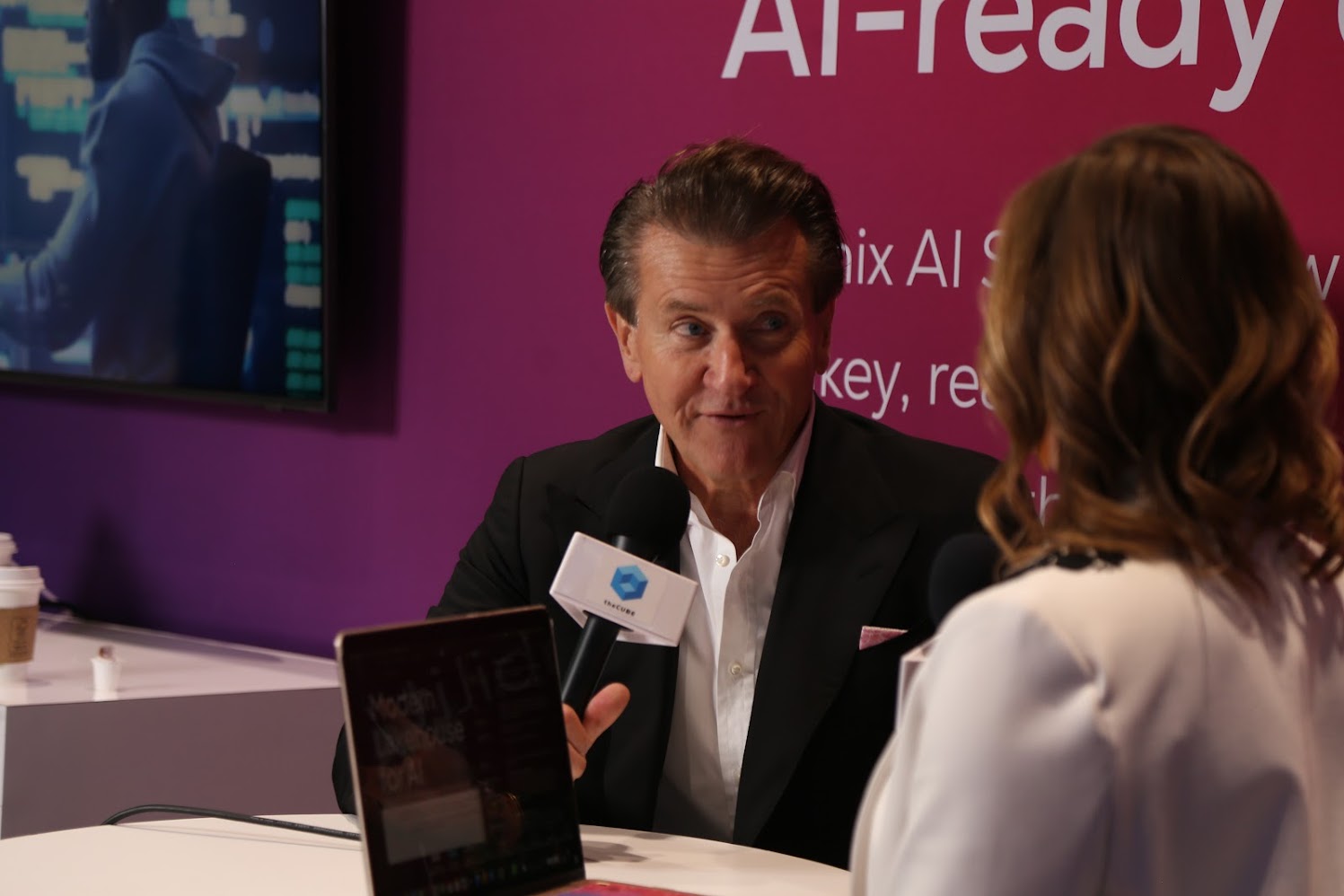
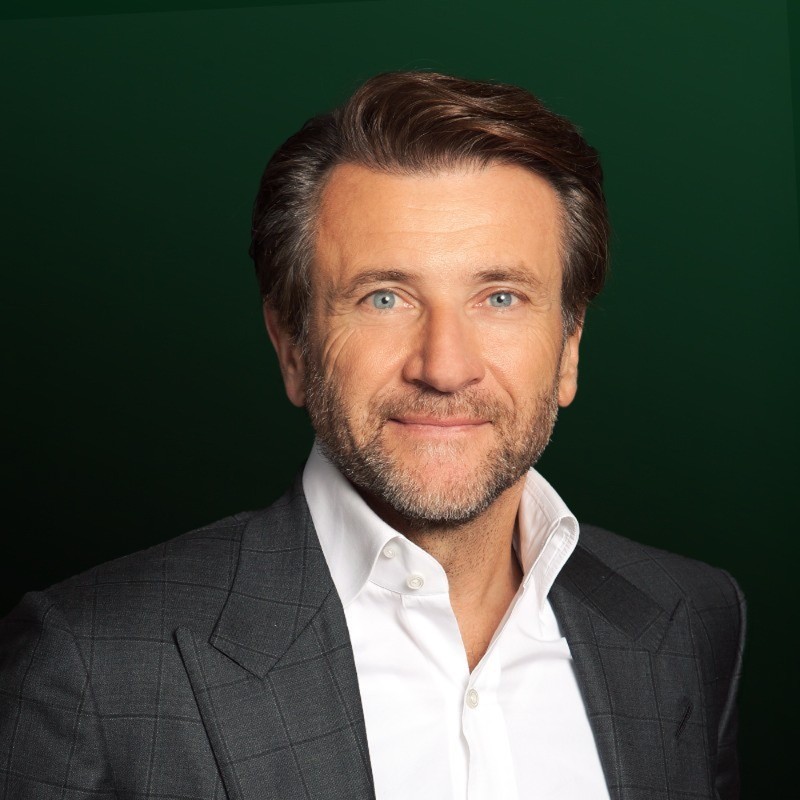
Exploring the Future of AI with Robert Herjavec at Nvidia GTC '25
Join us in this insightful discussion as Robert Herjavec, a renowned entrepreneur and television personality, delves deep into the world of data and AI in their new role at Zetaris, a pioneering AI data company. Recorded at Nvidia GTC '25, this session captures Herjavec's perspectives on the evolving AI landscape, with host Savannah Peterson guiding the conversation, courtesy of theCUBE's exclusive coverage.
In this engaging video, Herjavec shares their journey from a casual schoo...Read more
exploreKeep Exploring
What is the story behind how the person started working with Zetaris?add
What is the importance of effectively moving legacy data and getting it ready for AI in the current market space?add
What are some examples of past innovations that have disrupted industries, and how should businesses prepare for the future of AI in software engineering?add
>> Good afternoon and welcome back to Nvidia GTC here in San Jose, California. My name's Savannah Peterson. You're watching our exclusive coverage from the Equinix booth here on theCUBE. Super excited to be joined by our guest who really needs no introduction, but is in fact a CUBE alumni. Welcome back to the show, Robert.
Robert Herjavec
>> Thank you. Thanks for having me again.
Savannah Peterson
>> It is so nice to have you. I think it's been eight years since the last time.
Robert Herjavec
>> I think last time we were together was at Splunk.
Savannah Peterson
>> It was.
Robert Herjavec
>> Yeah. Dot com.
Savannah Peterson
>> Great. Great memory. Today we're here because you just took on a new role at Zetaris. Tell us a little bit about that. You're not exactly the kind of person who everyone associates with needing a job these days.
Robert Herjavec
>> Well, you could always get another job. No, I've been working with this company ... Just funny story, how I found them. We moved to Australia. We lived there full-time. I have 6-year-old twins. I'm standing in the school lineup and a friend of mine picking up his daughter runs Goldman Sachs there. And he says, "Hey, you should look at this AI data company."
Savannah Peterson
>> No joke.
Robert Herjavec
>> Long story made short. I meet Vinay, who's the founder, looked into it, and I'm super excited. I'm all in. I've been ... In fairness-
Savannah Peterson
>> So this started in the pickup line at school?
Robert Herjavec
>> It started in a pickup line. One day when we exit, this will make a great story, but it started in the pickup line at school. In fairness though, Savannah, I've been looking into AI for a while. But not the front end consumer application part of that.
Savannah Peterson
>> You're a picks and shovels guy. You're less about the flow.
Robert Herjavec
>> I'm an infrastructure guy.
Savannah Peterson
>> Yes, you are.
Robert Herjavec
>> I'm not the sexy front end guy. I am the picks and shovels guy.
Savannah Peterson
>> Mm-hmm. It seems like you think Zetaris' data lake and their new approach is something that could really hold strong, despite the fact that there are some other big data players already in the market.
Robert Herjavec
>> Well, I like big competitors because it validates the space. But I think if we've learned anything from Jensen's talk this morning is how big this market is. All of this is based on data and moving your legacy data and getting it ready for AI. So I think there's a massive opportunity here.
Savannah Peterson
>> Well, and with Zetaris, you can meet your data, whether that's in the cloud, on-prem. It's a big differentiator.
Robert Herjavec
>> It's a big differentiator. I think the one thing that I've learned selling to enterprises for 30, 40 years now-
Savannah Peterson
>> Who's counting?
Robert Herjavec
>> Who's counting, is it's very difficult to move things when you're used to doing them the same way. You look at some of the banks, they still use mainframe computing as servers and storage. And how many years has it been? So I think that the opportunity to move your data and get it ready for AI is going to be there for a while. And the problem is you can't do it all at once. People think of it in a very binary way. Like, "I'm in this database, I'm going to move it here." And I think the approach with Zetaris is so different, to be able to go to where your data is.
Savannah Peterson
>> Well, we've got data on the edge, we've got data all over the place. 50% of data is at the edge. There's going to be a lot that has to happen to make sure this data is clean and friendly for AI. Otherwise, what's going to come out of that is going to be garbage.
Robert Herjavec
>> Well, I love the demo this morning that Jensen did about reasoning AI and I forget what the term used, the normal AI. If you looked at the normal AI we're all used to, is very quick and gives you the answer right away, but it can also be wrong. Whereas the reasoning AI takes longer, but has more permeations of that answer. And so I think that's really powerful. And the same with data. We're not going to get it all there at one swoop.
Savannah Peterson
>> Right. No, absolutely. What's the environment like in Australia? I know it's your job with this new role to help them expand in the United States. Talk to me about the ecosystems around entrepreneurship data and AI in the two nations.
Robert Herjavec
>> Yeah, it's interesting. I'm married to an Australian, which is why we moved there. So Australia is like Canada, but with fitter, better looking people.
Savannah Peterson
>> Because that's why you married in there. That's why you're investing there. I'm seeing a pattern here, Robert. I'm seeing a pattern.
Robert Herjavec
>> If you look at our family, my wife is definitely the fitter, better looking one. I'm the Canadian one. It's very, very similar. It's a small country, about 25 million people, and they have a large ecosystem. But inevitably, for most companies ... You have some big tech companies there, Atlassian and so on.
Savannah Peterson
>> Right. Canva.
Robert Herjavec
>> Canva. But inevitably, you want to go to the US market. So I think it's a great place to start. One of the big advantages is cost and efficiency. Zetaris basically raised $40 million and over five years, built a world-class technology take on Databricks and Snowflake. You couldn't have done that in Silicon Valley.
Savannah Peterson
>> No.
Robert Herjavec
>> There's no way to do that.
Savannah Peterson
>> And they wouldn't have met you in the parent pickup line if that was the case as well.
Robert Herjavec
>> I think it's also efficiency. Not just with technology, but capital use.
Savannah Peterson
>> No, definitely.
Robert Herjavec
>> I think we're extremely capital efficient.
Savannah Peterson
>> Capital savvy. Yes.
Robert Herjavec
>> Capital savvy.
Savannah Peterson
>> I could definitely see that. So you mentioned ... I listened to your show. You were talking about 10 things you learned from billionaires to become a billionaire. You were referencing Mark Cuban and some of your other billionaire friends, and you talked about the obsession.
Robert Herjavec
>> What a name-dropper I am. Well, look at my fellow friends.
Savannah Peterson
>> Yeah, my casual friends. Well, that's cool. I'll be referencing you from now on as one of my casual friends. So we've got that going for us. But you mentioned the obsession. You mentioned that being a generalist doesn't always really pay off. And so I'm curious now. Since you've not only invested in them, but you've also taken on this role, is your new obsession data?
Robert Herjavec
>> Well, in many ways, data has been my obsession for a long time. If you look at cybersecurity, it's fundamentally a data problem. I sold one of the first commercial sims for logging. And if you think about it, an average enterprise creates a hundred billion logs per day. We used to do the cybersecurity for Formula One and an average race, a Formula One race, creates more data than enterprise does in a year.
Savannah Peterson
>> Wow. What? That is mind-blowing.
Robert Herjavec
>> If you think of all the sensors on the engine-
Savannah Peterson
>> Holy moly. It makes sense.
Robert Herjavec
>> On the cars. Everything.
Savannah Peterson
>> But it's not something you think about all the time. Yeah.
Robert Herjavec
>> Right. But that's a big data problem, and security is just a correlation of data into something tangible that you can use. This is just the next iteration of it. It's just that AI is making everything go so much faster.
Savannah Peterson
>> So this is the evolution of your data obsession.
Robert Herjavec
>> It is the evolution, the application of that data. Good friend of mine is a professor at UCLA, and he said this quote to me a long, long time ago. He said, "More data is not necessarily more information." AI is information, but it needs to be built on data. And so we've been looking for an investment in this space for a long time.
Savannah Peterson
>> Oh, I love that. So then you found your perfect match in-
Robert Herjavec
>> In a school lineup.
Savannah Peterson
>> Yeah, one of the most serendipitous ways.
Robert Herjavec
>> Yes. I'm a very savvy investor.
Savannah Peterson
>> Hey, right place, right time. Isn't that a big part of it? Okay, I've got two more questions for you. If you could wave a magic wand and educate everyone right now to help-
Robert Herjavec
>> 20 years younger.
Savannah Peterson
>> Yeah. Oh-
Robert Herjavec
>> Is that-
Savannah Peterson
>> Possible. Maybe AI will help us slow aging. There's some folks we could talk about that.
Robert Herjavec
>> I thought that you'd give me a magic wand to grant any wish.
Savannah Peterson
>> Yeah.
Robert Herjavec
>> Okay.
Savannah Peterson
>> That would be the genie.
Robert Herjavec
>> The genie, sorry.
Savannah Peterson
>> Magic wand to help educate not just our sector, but beyond that. Educate the world to help dispel some of the myths and fears around AI right now. What would you tell them?
Robert Herjavec
>> Every technology has these waves, and I think we're in the third wave of AI. I think the first wave was the consumer facing ChatGPT, OpenAI, where people hear about it. A friend of mine thinks she's an AI expert because she typed something in and gives her an answer right away. She's like, "Look at me."
Savannah Peterson
>> Oh, right. Look at it prompting. Yay, prompts. Yeah.
Robert Herjavec
>> She's like, "I'm using AI every day." The next application will be ... The second wave will be the application of those use cases. Clinical case studies, medical records. Here's an amazing stat too. We just did a healthcare conference, HIMSS. The average hospital creates twice as much patient data every 52 days. It's-
Savannah Peterson
>> Whoa, that is quite-
Robert Herjavec
>> Unbelievable.
Savannah Peterson
>> That's an insane ramp.
Robert Herjavec
>> The third wave will be the infrastructure wave. What do we do with it? How do we use it? So what I would say to the world is this is just another application that'll make everyone's life better. There'll be some sectors where you have to adapt.
Savannah Peterson
>> Right. Yeah.
Robert Herjavec
>> Horse and buggy. If you made buggies, you had a hard time when the car came out. When the internet came out, people that did frame relay were in a lot of trouble. Fax machines were in a lot of trouble. So look at software engineering today. What did I read the other day? 20% of Meta's software is now written by AI. So you just got to be smart about the future and where you're going.
Savannah Peterson
>> I think that's a very good call out, and I do think we're in the evolution of AI where we're going to go beyond the browser and actually into impact and touching human lives.
Robert Herjavec
>> Yes. Well, don't you think, Savannah, it's going to become ubiquitous? It's like nobody says anymore, "I'm getting online."
Savannah Peterson
>> Right. I'm dialing up. Yeah.
Robert Herjavec
>> The internet has become electricity. And the analogy I always used when the internet started was I said to people, "There'll be a day when you'll walk into a room and the lights will just be on." You won't say, "Oh, I need light." You'll just expect it. AI is going to move into that phase. But it'll be two, three years from now.
Savannah Peterson
>> Okay. Well, I look forward to talking to you along that journey. Last question for you. Especially since your kids have played such an important role in this conversation, looking forward, looking out 20, 30 years from now, what do you hope that our AI revolution does for your children, for your family?
Robert Herjavec
>> This is one of the greatest enablers in history. AI will be one of the greatest technology change mechanism for humankind. So things that we have to do on a pedantic slow level will simply be accelerated. I love the quote that Jensen said this morning. A doctor came up to him and said, "Thank you for doing what you do, because you allow me to do my research in my lifetime." And my hope for my kids is the things they'll get to do and experience in their lifetime will be accelerated because of AI.
Savannah Peterson
>> What a beautiful sentiment and what a great way to close this interview. Robert-
Robert Herjavec
>> Thank you, Savannah. Thanks for having me.
Savannah Peterson
>> Thank you so much for being here.
Robert Herjavec
>> Yeah.
Savannah Peterson
>> And thank all of you for tuning in to our exclusive coverage here at Nvidia GTC in San Jose, California. My name's Savannah Peterson. You're watching theCUBE, the leading source for enterprise tech news.