This discussion explores ecosystem-driven artificial intelligence, abbreviated AI, infrastructure and partnerships at Nutanix .NEXT 2026. Hosts Alison Kosik and John Furrier conduct a live interview with Todd Lieb of Dell and Gregory Lehrer of Nutanix. The guests bring deep expertise in AI infrastructure, partnerships and platform engineering and discuss ecosystem strategy, co-engineering, AI factories, Kubernetes, observability and hybrid cloud trends shaping enterprise deployments.
Topics covered include strategies for partner integration and independent software vendor, abbreviated ISV, certifications, control plane architectures, storage and data management, and collaboration with accelerator vendors such as NVIDIA. The conversation highlights practical approaches to scaling enterprise AI deployments and the role of interoperability in delivering customer value.
Key takeaways include the centrality of ecosystem diversity and interoperability as a competitive advantage. Lehrer emphasizes accelerating ISV certifications and partner integration to meet customer demand, and they call for tighter alignment between platform providers and software partners. Lieb positions Dell's AI factory as a platform layer with Nutanix providing the control plane, and they note storage, data management and co-engineering with NVIDIA as strategic priorities for scaling enterprise AI deployments.
Forgot Password
Almost there!
We just sent you a verification email. Please verify your account to gain access to
Nutanix .NEXT 2026. If you don’t think you received an email check your
spam folder.
In order to sign in, enter the email address you used to registered for the event. Once completed, you will receive an email with a verification link. Open the link to automatically sign into the site.
Register for Nutanix Next 2026
Please fill out the information below. You will receive an email with a verification link confirming your registration. Click the link to automatically sign into the site.
You’re almost there!
We just sent you a verification email. Please click the verification button in the email. Once your email address is verified, you will have full access to all event content for Nutanix Next 2026.
I want my badge and interests to be visible to all attendees.
Checking this box will display your presense on the attendees list, view your profile and allow other attendees to contact you via 1-1 chat. Read the Privacy Policy. At any time, you can choose to disable this preference.
Select your Interests!
add
Upload your photo
Uploading..
OR
Connect via Twitter
Connect via Linkedin
EDIT PASSWORD
Share
Forgot Password
Almost there!
We just sent you a verification email. Please verify your account to gain access to
Nutanix .NEXT 2026. If you don’t think you received an email check your
spam folder.
In order to sign in, enter the email address you used to registered for the event. Once completed, you will receive an email with a verification link. Open the link to automatically sign into the site.
Sign in to gain access to Nutanix .NEXT 2026
Please sign in with LinkedIn to continue to Nutanix .NEXT 2026. Signing in with LinkedIn ensures a professional environment.
Are you sure you want to remove access rights for this user?
Details
Manage Access
email address
Community Invitation
Gregory Lehrer, Nutanix & Todd Lieb, Dell
This discussion explores ecosystem-driven artificial intelligence, abbreviated AI, infrastructure and partnerships at Nutanix .NEXT 2026. Hosts Alison Kosik and John Furrier conduct a live interview with Todd Lieb of Dell and Gregory Lehrer of Nutanix. The guests bring deep expertise in AI infrastructure, partnerships and platform engineering and discuss ecosystem strategy, co-engineering, AI factories, Kubernetes, observability and hybrid cloud trends shaping enterprise deployments.
Topics covered include strategies for partner integration and independent software vendor, abbreviated ISV, certifications, control plane architectures, storage and data management, and collaboration with accelerator vendors such as NVIDIA. The conversation highlights practical approaches to scaling enterprise AI deployments and the role of interoperability in delivering customer value.
Key takeaways include the centrality of ecosystem diversity and interoperability as a competitive advantage. Lehrer emphasizes accelerating ISV certifications and partner integration to meet customer demand, and they call for tighter alignment between platform providers and software partners. Lieb positions Dell's AI factory as a platform layer with Nutanix providing the control plane, and they note storage, data management and co-engineering with NVIDIA as strategic priorities for scaling enterprise AI deployments.
Vice President of Business Development and EcosystemsNutanix
Todd Lieb
Vice President, Cloud PartnershipsDell
In this interview from Nutanix .NEXT 2026 in Chicago, Gregory Lehrer, vice president of business development and ecosystem at Nutanix, joins Todd Lieb, vice president of cloud partnerships at Dell Technologies, to talk with theCUBE's John Furrier and co-host Alison Kosik about how ecosystem partnerships are becoming a core competitive advantage in the enterprise AI era. Lehrer details how Nutanix's partner count has more than doubled year over year — with 5,000 attendees and over 100 sponsors on the show floor — reflecting the accelerating pull from enterpris...Read more
exploreKeep Exploring
What's new with the Dell–Nutanix partnership, and how are you engineering that collaboration?add
How important is a strong, diverse partner ecosystem and integration for scaling and meeting diverse customer needs, and how are cloud-native and AI trends changing that landscape?add
How does Nutanix fit into Dell’s “AI factory”/platform strategy, and how is Dell handling Nutanix’s rapid customer growth and the related scalability, profitability, and operational challenges?add
What does this neutrality—an independent control-plane operating system—mean from Nutanix’s standpoint, and how does it enable the broader ecosystem, particularly for agentic/AI use cases?add
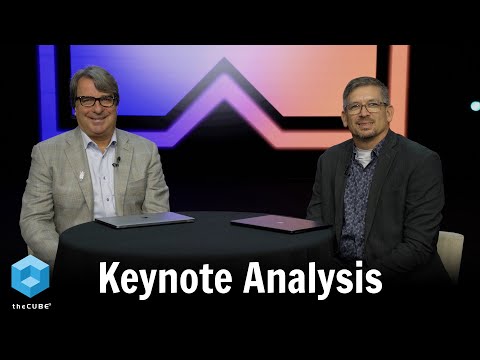
>> Hello, and welcome back to theCUBE. We are in Chicago and we are streaming live right here at Nutanix .NEXT. I'm Alison Kosik, I'm going to be your host throughout the day, alongside the one and only, John Furrier. He is the Co-founder and Co-CEO of SiliconANGLE and theCUBE. As you can tell, I am new at theCUBE, we're just getting the hang of this. So thrilled to be sitting at the desk with you.
John Furrier
>> We've been covering Nutanix for a long, long time, and they were actually on theCUBE in 2010 originally when hyper converged was happening. We've watched the journey, and now it's a whole new ball game. And you're seeing AI operating systems emerging, the control plane. And the role of ecosystem in this segment, we're really going to explore how the role of the ecosystem is a force multiplier for value creation. And this is very much a big part of all the main AI platform. AI infrastructure is based on ecosystem and architecture, and Nutanix has got a good game going on.
Alison Kosik
>> And we're in the middle of a lot of change. Let's bring in two wonderful names to bring into this discussion. We've got Gregory Lehrer, Nutanix's Vice President of Business Development and Ecosystems. Welcome.
Gregory Lehrer
>> Thank you. Good morning, Alison. Good morning, John.
Alison Kosik
>> Good morning. And Todd Lieb, the Vice President of Cloud Partnerships at Dell. Welcome to the conversation.
Todd Lieb
>> Thank you for having us.
Gregory Lehrer
>> Thank you.
Alison Kosik
>> What's your feeling so far about how the conference is going?
Gregory Lehrer
>> I'll started with you. You're a guest, go ahead.
Todd Lieb
>> No, no, it's fantastic. There's a lot of energy. It's interesting to have attended the conference over multiple years and to see it grow. We were talking about partnerships yesterday, and I know there's like 110 or something, it's more than twice what was here last year. So, there's a lot of energy and there's a lot of great announcements actually as well.
Alison Kosik
>> Gregory, your thoughts?
Gregory Lehrer
>> Well, it's indeed. Look at the show floor, it's packed. We're sold out, 5,000 customer, more than 100 sponsors. Just like he said, I think I took to Rajiv, our CEO, was telling me that three years ago they had 25, 30 sponsors on show floor, max. So, there's definitely a momentum, there's definitely a growth that we want to capture with partners such as the cool kids on my right, Todd.
John Furrier
>> I mean, Todd, I wanted to chat about Dell. Obviously the success on the numbers, certainly on the business performance-
Todd Lieb
>> Sure.
John Furrier
>> ... with AI factories. Check, home run on that. That's two years ago, that has changed the game. We're starting to see cloud be the foundational element, cloud native, Kubernetes, containers. We're hearing that thing, that game's still evolving, that's in the announcements with Nutanix. Now you're hearing things like shadow AI, you're starting to see agentic infrastructure emerge. It's an AI operating environment, so we're moving from cloud to an AI era. What's new with the partnership? How are you guys engineering that with Nutanix? What's going on with that?
Todd Lieb
>> Yeah. So, if you go back in time a little bit, right? You go back to, you said 2010. I wasn't working with Nutanix at that point.
Gregory Lehrer
>> It's not us. It's not us.
Todd Lieb
>> But, so think about you're back with Nutanix, with HCI, with relatively simple infrastructure. Fast-forward to today, we are doing integration with Nutanix on our AI factory, we're deploying AI workloads on Dell infrastructure with Nutanix. We are deploying new app dev pipelines with their Kubernetes capabilities sitting on infrastructure. We are taking the traditional virtual machine drama that's playing out in the market and helping with that as well. So, you go from simple HCI and a virtual machine to all of these things happening. And Gregory and I were talking earlier, it's like they have a platform sitting on the Dell platform and we can support those, whatever direction it goes.
John Furrier
>> Gregory, I wrote a post for KubeCon EU, which happened a couple weeks ago. And the headline, first sentence was, "Cloud native, meet AI native," which is really more of a statement of saying, "Listen, those worlds are coming together." Recently, the Linux Foundation announced a new foundation called the Agentic AI Foundation.
Gregory Lehrer
>> Foundation.
John Furrier
>> Which already has 170 members, and that's going to build on top of the cloud native. So, the ecosystem growth with AI is massive. You guys have increased your portfolio of partners. I don't know what the number increase was last year, but it's a hell of a lot more logos this year.
Gregory Lehrer
>> Double.
John Furrier
>> What's going on with the ecosystem? Tell us your strategy and some of the momentum you have.
Gregory Lehrer
>> So there's two buzzwords in the Silicon Valley right now as we all know, there's platform, and ecosystem. I mean, the reality is that I agree with the statement that if you don't have a strong ecosystem, if you don't have integration, you cannot scale, because the customer needs are very diverse. We were talking about the shadow IT and now shadow AI. I mean, one tough job on right now is being CIO. I mean, I wouldn't want to be a CIO nowadays in the industry, because it's very difficult. So, but on our side, for Todd and I, we need to make sure that we maintain consistency and we can help our customer have a choice they want, because every company is different. Everyone will want a different API or different integration, a different vendor. I mean, I grew up in a world where you have one stack Microsoft or one stack Dell or one stack, whatever. This world is done, it doesn't exist anymore. So, all of us need to be very interchangeable. Sorry. I'm French, English is not my first language. So, it's so early in the morning. I'm sorry.
John Furrier
>> problem.
Gregory Lehrer
>> . I'm stumbling upon words. No, no, but my point is that it's very difficult. So I mean, the first one who is achieving really ecosystem diversity is really important. I mean, it's not so much of a number of sponsors on the show floor, which is important. It's like having the right sponsor everywhere. The sponsor who are here, they're here because they want to meet customers and there are a hell lot of customers, 5,000, and they want to maintain innovation and differentiation. And that's why for some of these, whether they're small partner or big partner, such as Todd here, you want to have this constant fight and this edge. That goes back to your question about cloud native and AI. I mean, two years ago in my job, I had one person doing cloud native and AI almost together. Today, it's very different. So this landscape is evolving very fast, the partners are evolving very quickly. And if you see today on the keynote of my boss, Tarkan Maner, you will see a lot of announcement around Kubernetes and observability of Kubernetes, because this is really something that is really crucial and critical for our customers.
John Furrier
>> If you look at NVIDIA, for instance, not the GTC, they're talking ecosystem, they're moving up the stack. They're a chip company, they're a systems company, they're a software company. So, the role of systems is key. And if you look at the Linux Foundation, which I mentioned, it's exploding, the ecosystem's exploding. Now, that being said, I think we all agree that's happening, but as a business driver, it's becoming a competitive advantage. So, talk about that role because co-design is a big discussion. You guys have joined engineering, not just go to market. The role of the partner isn't yesterday's definition. What's changed in the partnership? Is it more integration? Is it more engineering? We're seeing things like people are co-designing a lot more because they're tightly coupled.
Gregory Lehrer
>> So, Dell is actually a perfect example of that because you have, I would say, two type of integration. You have a point solution, which is you have one solution, and you have a strategic platform partnership, which is what we're having with Dell here today. Our partnership with Dell is not just one product on top of another. It span across multiple layer, multiple use case, because customer, back to your point, they want to have a fully integrated not only experience, but a fully integrated solution. They just don't want to resolve Nutanix plus Dell for just this. Ideally, they want to have this consistent approach across the board. So that's why Todd and I are working not just on the XC+, which is the initial solution where we started with Dell in 2010 before we were born, of course, but it span across storage, it span across AI, it span across multiple scenario.
John Furrier
>> Good, agree.
Todd Lieb
>> It's a team sport. So this idea, if you're NVIDIA, it's interesting to sell a chip, but if a business doesn't get value out of it, then you don't buy another one. But if you buy a chip and then the ecosystem helps you derive the use case, the value, make money, reduce cost, whatever it is, you buy 10 more. And I think that's the play that we're all in right now.
Alison Kosik
>> So, whoever streamlines wins this game?
Todd Lieb
>> Agreed. You have to have a broad set of partners. You need to be able to put them in a way that's useful.
Alison Kosik
>> Yeah.
John Furrier
>> All right. One of the things about our new partnership at the NYSE, I've observed the language of tech and money are kind of different. Technology, you talk about architecture, roadmaps, velocity, Wall Street's like risk, durability and returns. But you're starting to see the convergence of that, and the AI factory and all the growth going into the infrastructure right now is forcing an accelerated developer market. So, what is the strategy with the AI factories and how does Nutanix fit into that? Because that's what everyone's looking at, because the enterprise market is about to explode and grow. We're seeing the numbers from OpenAI Anthropic just on the model side, and that infrastructure is going to be built quickly. Enterprise is going to move super fast.
Gregory Lehrer
>> So I don't know if I belong to New York to Wall Street, but him and I are talking profitability, durability, and tech, to be candid with you, because we have a lot of demand. I mean, we cannot obviously share the numbers, but I can tell you that we have, like you said, we have a huge growth, and I'll let you answer the question from your Dell perspective, how you see the Nutanix pool, but it's massive. Indeed, it's massive. And we have a lot of work about scaling. I mean, a lot of our discussion for Todd and I and how we scale the team and we set them up to grow as fast as we can. Nutanix alone, all up generated, its public knowledge, 1,000 new customers last quarter alone, 1,000 new customer. You realize the amount of new customers that means we onboard on just one quarter. So I mean, this is growth that you experience in all these different stages. So, but when it comes to Nutanix and Dell and AI factory, yes, we exactly are in that train right now and we're trying to figure this out as fast as we can. You want to add to this?
Todd Lieb
>> The only thing that I would add is that some of the announcements yesterday, so you asked Nutanix and how it fits in. In my mind, the Dell AI factory is a platform. And then there's this at the top, there's models and use cases like you described. Nutanix is the platform that sits in the middle, and that's very powerful. So for enterprises to bring AI to life, you got to have the AI factory platform, say from Dell, the Nutanix platform in the middle with all the controls and tools, etc, and then you run on top. And that I think is the sweet spot that we're co-engineering, taking to market, etc.
John Furrier
>> Alison and I were talking about the business side of things and we do speak Wall Street and technology here in theCUBE, so we are bilingual or multilingual.
Gregory Lehrer
>> Trilingual.
John Furrier
>> We speak many languages.
Gregory Lehrer
>> And you speak French, John. I know you speak French.
John Furrier
>> Yeah.
Alison Kosik
>> .
John Furrier
>> The underlying technology, okay, is a business issue because people are seeing profit with AI, they're starting to see value. The enterprises are not yet adopted. What's going on with the products on the Dell side? Because as the enterprise look at this, is it PowerFlex? What is the makeup of the underlying products and what's the roadmap look like?
Todd Lieb
>> Yeah, so great question. So, I'll focus on the... I guess there's two answers to the question. One is what's happening in cloud and the data center, we were talking about this earlier. The other is on the AI side. So I think if you were to take both of those, we're innovating like crazy around the compute layers. Right? There's an evolution from HCI into more of a disaggregated infrastructure strategy. On the AI side, we're constantly trying to keep up with NVIDIA and their release of new chips and GPUs. But the big story, I think, and John, we were talking about this earlier, is the data. Right? Good data means good AI, or bringing AI to the data is really the strategy. And so, there's a lot of innovation that's happening in the storage. Right? Storage is interesting, again, and customers are really paying attention as to where their data is, how do they clean it and connect it, and make sure that it's available to AI. And then the sovereign story, sovereign requirements, whether that's in country in Europe or just for customers that have regulatory and compliance requirements, is really affecting the data. So, from a roadmap point of view, think on the compute layer and around those data center and the AI factories, lots of evolution, keeping up with NVIDIA, building networks to handle the capacity, latency, and the throughput. And then on the storage, it's evolving to make sure we can feed those data sets.
John Furrier
>> Yeah. Dell has been a leader for many, many decades in the computer industry, and it's been a heterogeneous environment. Interoperability has always been an issue. We look at computer, data centers, cloud. Now more than ever, this neutrality, this control plane that you guys are looking at, have established, ecosystems voting with their partnership, we see that. You see AMD, NVIDIA, you got a lot of partners. Nutanix, I wrote this in my post yesterday, you got that neutrality vibe going on. You guys sit below.
Gregory Lehrer
>> Of course.
John Furrier
>> Explain what that means from a Nutanix standpoint and what that enables in the ecosystem, that importance of that independent control plane operating system for agentic.
Gregory Lehrer
>> Look, I mean, you saw us, we announced a massive partnership with AMD, but still two weeks ago, you and I were at GTC in San Jose. I mean, I have to follow what my customer wants, and my customer wants neutrality and interoperability. It's essential for me to be part of his Dell AI factory, back to the previous question. But at the same time, like I mentioned, I was raised in a world where you can have one hardware vendor, one software vendor. This thing is gone. Today, customers want interoperability. And as a result of that, we need to make sure that whatever the customer wants, we can serve them. I cannot be just branded just Dell AI factory. I have to work with all sorts of vendor. This is a condition of success for the company, not for the ecosystem, the ecosystem want that.
John Furrier
>> So, what are they telling you, Gregory? When you talk to them, what are some of the conversations that you have with them?
Gregory Lehrer
>> Oh, they want us to go faster in integrating. I mean, we used to have a backlog of vendors to certify on Nutanix platform. This is being resolved, but we still have more coming in because of other external factors. Some are related to the competition, some are reality just as the massive pull and demand from the market, from customer themselves. My number one priority is to resolve a backlog of internal ISV wants to be certified on the Nutanix platform. This is critical for me. This is a condition of success, because it's not about the number of logo, it's about the quality, what the customer want. My sales person, they tell me, "I need you to certify this solution on Dell hardware in that timeframe. Otherwise, the CIO of this customer cannot buy these new hotels or things like this." This is daily, this is daily.
John Furrier
>> Before we wrap up, my final question is the power of the ecosystem, I mentioned earlier, is a business opportunity, it's competitive advantage. Dell has an ecosystem, you have an ecosystem. What is the role of the ecosystem? What's your guys' vision each? What's your vision of the ecosystem? And how are they going to interplay? What's that look like as people try to figure out what side of the street they're going to land on? If they're not on the AI side, they'll probably be out of business, that's clear. People are retooling and refactoring their business models. What is the role of the ecosystem?
Gregory Lehrer
>> You want to start or me?
John Furrier
>> Go ahead, .
Todd Lieb
>> Sure. I think of it as like a Venn diagram. You have a set of partners, we do as well, there's a lot of overlap. And I think the role of the ecosystem is to make sure that the platforms that we're building, whether it's the Dell AI factory or the Nutanix platform, provides as much choice as possible. Right? We have as much choice as is possible in terms of customers deciding how they want to build out their AI deployments. So there's 4,000 Dell AI factories out there. When I talk with the product management teams at Dell around AI, there's an email a day, if not 10, from an AI company, startup to the biggest ones saying, "Hey, we'd like to be certified. We'd like to run on your AI factory." And I know Gregory's getting the same. So, the idea is to continue to build and create that choice, allow customers to be able to build out what they need to support their business.
John Furrier
>> And they're building an AI stack basically with containers.
Gregory Lehrer
>> .
John Furrier
>> That's the new AI infrastructure.
Todd Lieb
>> Yep.
John Furrier
>> What's your vision of the ecosystem?
Gregory Lehrer
>> Wow.
John Furrier
>> If they blend together and integrate and it's connected.
Gregory Lehrer
>> Yes, sometimes we blend together. Sometimes there's going to be competition, which is fine, necessary, natural, there's no issue with this. I think the role of the ecosystem is definitely for scaling. I mean, I used to have a manager who you know, boss and mentor, who used to say, "You need to stand on the shoulder of giants, Gregory." With this type word, if you do a search on your channel, you're going to find who it is.
John Furrier
>> Very open source. We love that word.
Gregory Lehrer
>> I know. I know.
John Furrier
>> I mean, that is teamwork.
Gregory Lehrer
>> That's my point.
John Furrier
>> And partnership.
Gregory Lehrer
>> That's my point. And so that's why I'm not very tall, so he can carry me on his shoulder, so it's pretty cool on this. But my point is that-
John Furrier
>> Can you carry him on your shoulders?
Gregory Lehrer
>> I don't think so. But my point about ecosystem, if we want to scale as a company, Nutanix, we're still a small company relatively to a giant like Dell. We really need to make sure we have the right ecosystem in place that are going to streamline, automatize all these selling motions, because like I said, 1,000 customer in just one quarter. Could you imagine the impact on an organization which is 10,000 employees? This is a big one, so.
John Furrier
>> All right.
Alison Kosik
>> Thanks so much for joining us, for coming on theCUBE, Gregory Lehrer with Nutanix, and Todd Lieb with Dell. Great conversation. I'm Alison Kosik with John Furrier. We are going to be right back, don't go away.





 Alison Kosik
 John Furrier