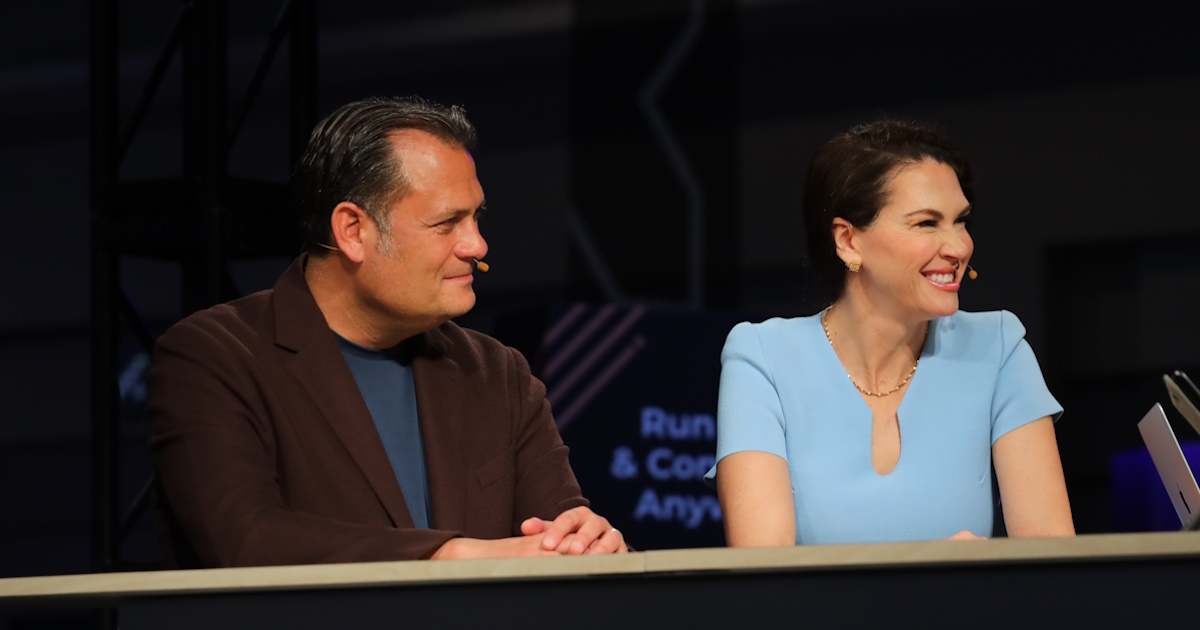
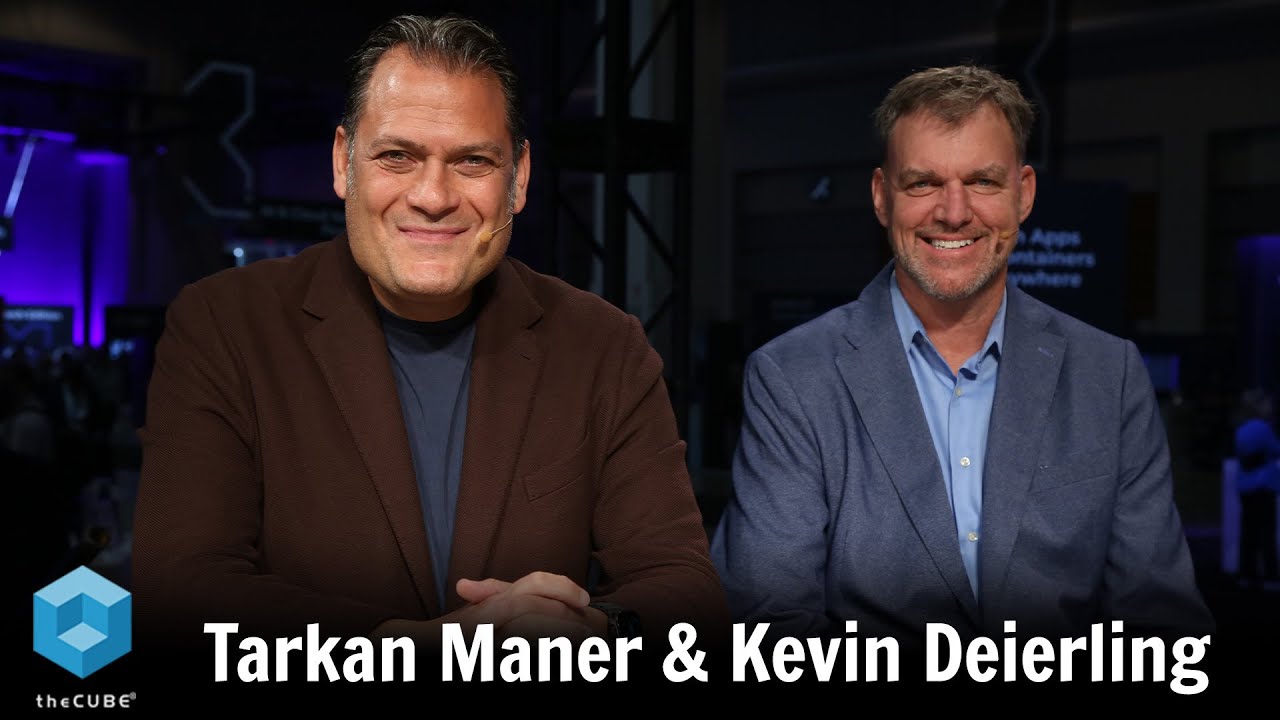
Tarkan Maner, chief commercial officer at Nutanix, and Rachel Skaff, managing director for Americas channel and partner sales at Amazon Web Services, join theCUBE’s John Furrier and Bob Laliberte at Nutanix .NEXT to discuss the growing collaboration between the two cloud leaders. The conversation explores how the partnership accelerates modernization through simplified migrations, hybrid cloud strategies and joint innovation.
Maner shares how Nutanix is making cloud adoption more accessible and cost-efficient through seamless integrations with AWS infrastructure. Skaff emphasizes AWS’s focus on security, scalability and generative AI, outlining how the alliance supports enterprise agility.
The discussion highlights real-world benefits, including faster VM migrations and optimized cloud-native deployments. Together, the companies offer a blueprint for navigating today’s hybrid multicloud demands.
Forgot Password
Almost there!
We just sent you a verification email. Please verify your account to gain access to
Nutanix .NEXT 2025. If you don’t think you received an email check your
spam folder.
In order to sign in, enter the email address you used to registered for the event. Once completed, you will receive an email with a verification link. Open this link to automatically sign into the site.
Register For Nutanix .NEXT 2025
Please fill out the information below. You will recieve an email with a verification link confirming your registration. Click the link to automatically sign into the site.
You’re almost there!
We just sent you a verification email. Please click the verification button in the email. Once your email address is verified, you will have full access to all event content for Nutanix .NEXT 2025.
I want my badge and interests to be visible to all attendees.
Checking this box will display your presense on the attendees list, view your profile and allow other attendees to contact you via 1-1 chat. Read the Privacy Policy. At any time, you can choose to disable this preference.
Select your Interests!
add
Upload your photo
Uploading..
OR
Connect via Twitter
Connect via Linkedin
EDIT PASSWORD
Share
Forgot Password
Almost there!
We just sent you a verification email. Please verify your account to gain access to
Nutanix .NEXT 2025. If you don’t think you received an email check your
spam folder.
In order to sign in, enter the email address you used to registered for the event. Once completed, you will receive an email with a verification link. Open this link to automatically sign into the site.
Sign in to gain access to Nutanix .NEXT 2025
Please sign in with LinkedIn to continue to Nutanix .NEXT 2025. Signing in with LinkedIn ensures a professional environment.
Are you sure you want to remove access rights for this user?
Details
Manage Access
email address
Community Invitation
Tarkan Maner, Nutanix & Rachel Skaff, AWS
Tarkan Maner, chief commercial officer at Nutanix, and Rachel Skaff, managing director for Americas channel and partner sales at Amazon Web Services, join theCUBE’s John Furrier and Bob Laliberte at Nutanix .NEXT to discuss the growing collaboration between the two cloud leaders. The conversation explores how the partnership accelerates modernization through simplified migrations, hybrid cloud strategies and joint innovation.
Maner shares how Nutanix is making cloud adoption more accessible and cost-efficient through seamless integrations with AWS infrastructure. Skaff emphasizes AWS’s focus on security, scalability and generative AI, outlining how the alliance supports enterprise agility.
The discussion highlights real-world benefits, including faster VM migrations and optimized cloud-native deployments. Together, the companies offer a blueprint for navigating today’s hybrid multicloud demands.
Managing Director - Americas Channel & Partner SalesAWS
Tarkan Maner, chief commercial officer at Nutanix, and Rachel Skaff, managing director for Americas channel and partner sales at Amazon Web Services, join theCUBE’s John Furrier and Bob Laliberte at Nutanix .NEXT to discuss the growing collaboration between the two cloud leaders. The conversation explores how the partnership accelerates modernization through simplified migrations, hybrid cloud strategies and joint innovation.
Maner shares how Nutanix is making cloud adoption more accessible and cost-efficient through seamless integrations with AWS infr...Read more
exploreKeep Exploring
What has the experience been like working with AWS as a partner in the last 12 months, particularly under Rachel's leadership?add
What are the benefits and features of Nutanix's new cloud-native platform, AOS?add
What are some benefits and reasons for migrating to the cloud?add
What is Nutanix's view on the opportunities for sovereign clouds and their partnership with AWS and other OEM partners?add
What are the main focus areas for the leadership team at the company discussed in the text?add
>> Welcome back, everyone, to
theCUBE's live coverage here in Washington DC with Nutanix . NEXT 2025. I'm John Furrier,
Bob Laliberte, CUBE analyst. We are breaking down all the action. On day one, the keynote, the CEO came in. Also, all the partners. The ecosystem, record numbers
for Nutanix. Great success. Momentum around the
platform, cloud scale, on- prem edge in the cloud. We've got two great guests
here. Rachel Skaff, CUBE alumni, director of North America Partners and chancellor of AWS.
Great to see you, Rachel.
Rachel Skaff
>> Great to see you again as well. >> And back for returning
CUBE, second time today, target man in chief,
solutions officer at Nutanix. CSO? CCO. Chief Customer Officer.
Tarkan Maner
>> All good.
- I can't keep track. You got a Chief AI officer, you
got a CSO. Great to see you.
Tarkan Maner
>> Great to see you guys.
- Oh, yeah. >> Always fun.
- All right. So I love the partnership with AWS, because we just had Rajeev on, the CEO. He says, "Our mission,", this
is Nutanix's mission, "... is to make a cloud experience
simplified, abstract away, deliver that core value
anywhere all the time. " This really speaks to what you guys have been doing at AWS.
Rachel Skaff
>> Yes. - We've been covering
since 2013 on theCUBE talking. We talked about this before. Hybrid cloud is distributed computing.
Rachel Skaff
>> Absolutely.
- Okay?
Tarkan Maner
>> Absolutely.
- AWS is not hiding from this either.
Tarkan Maner
>> Right.
- So that's clearly what customers want. What's the partnership? Take
us through the relationship. I know it's been longstanding.
Tarkan Maner
>> Absolutely. Look, as you
remember, I joined a Nutanix team as the Chief Commercial
Officer back in 2019. One of the first calls I
made was to Matt Garman and Andy Jassy at that time, because we had done partnerships
with them in the past with Dewise and with like
CENTA around software- defined infrastructure. And they are the best
partners. They moved on fast. And obviously, we met Rachel, the leadership team with Rachel. And the partnership has
been going fantastic. Look, we are all about
running anything anywhere, that anywhere a big where
of that anywhere is AWS. Customers love AWS. They're
easy partners to work with. They're phenomenally fast, high energy. They're easy to deliver profits. They're great with channel ecosystem. And we are all about platforms. So that hybrid cloud story
became real with AWS. So it's been a phenomenal five years, but the last 12 months
with Rachel's leadership. Now we're taking this next level. >> Rachel, we heard Rajeev talk about they're customer obsessed. That's what you guys do as well. What's your view of the relationship? Obviously joint customers, you guys work backwards from the customer. Take us through how you see this, how it's working. What should people know?
Rachel Skaff
>> So I think what people
should know from an AWS perspective is, we
really are customer obsessed. And we start with our customer and what business problems
they're trying to solve. And that inevitably leads to migrations and modernization, which
is part of the partnership with Nutanix.
And Tarkan talked a bit about the speed at which we move,
and some of the scalability and the migrations that
we're doing with Nutanix. I'll give you one specific example. We recently moved over 1000 VMs over to the AWS EC2 platform on AWS. We did that in less than a month. And as part of that, it
was a 30% reduction in cost savings, and it allowed
us to accelerate that migration of that workload 60% faster
than it would have been if we did that natively. And when you start to think about what our customers are looking
for, they're looking for that business value. And how do I solve my
problems faster at scale, securely? And frankly, that's the beauty of the AWS and Nutanix partnership, because we're aligned on that
converged infrastructure. We're aligned on the customer platform and making sure our
customers get what they want. >> I mean, we're seeing
the customer behavior move to the cloud in a lot more instances because of the consolidation on-prem too, which is getting geared up for AI as well. So as you've got things like Bedrock and the apps developing
fast, Nutanix wants to run all apps for people.
Rachel Skaff
>> Everywhere.
- But apps are also models.
Rachel Skaff
>> Yes they are.
- You have infrastructure apps and models kind of now into the fold. This is where you guys are
skating where the puck is going.
Tarkan Maner
>> Exactly.
- Talk about that kind of dynamic, because as your customers
get modernized on their infrastructure, they've
got to run their AI.
Tarkan Maner
>> Absolutely. Look, we announced
today multiple products. I know you saw all the announcements with all these interviews. One big one I love is this
new cloud-native Nutanix. AOS is the product name. I hate acronyms. These are basically the NCP platform. Our platform is cloud-native, which means you don't
need a hypervisor anymore, it's all containerized cloud-native. What that means is, AWS and Nutanix are even tighter partners now. You don't have to have all the
hypervisor stuff of the past, just bare metal with containers. You're delivering phenomenal microservice- centric application
deployment capabilities across multiple workloads. What are those workloads?
End-user computing with Microsoft, obviously Windows 10,
Windows 11 migration. Guess what? A lot of
those customers love AWS. And then you tie into DR. Bursting. Like a lot of our company customers, enterprise customers care
about security, manageability, availability, reliability,
low TCO, fast time to market. And they want flexibility,
as you talked about. Move fast, efficiently, reliably. So that is the reason this
business is moving very fast. Now obviously tying into this, we
have to go to market angle, making it easier for our
channel partners to do this.
Bob Laliberte
>> You guys talked a lot
about what you were doing with customers and that joint win and the value that you're bringing. What advice would you give
for customers who are looking to do this migration? If I'm sitting here watching this thinking, "Okay, well this is great. " I'm an AWS customer,
I'm a Nutanix customer. How do I get value? Where do
I get started in doing this migration and modernization?
Rachel Skaff
>> Well, so I think that the
first thing is, migrating to the cloud is no longer a nice-to-have. It is a business imperative. It doesn't matter if
you're talking about your disaster recovery workloads. You're talking about
exiting a data center. You want to move one small
workload. You have to start. And getting all of those workloads over, whether it's you know,
(NC2 on AWS, that's going to help you see around corners, because who knows where the
technology's going to go, even tomorrow? So by leveraging our platform and that partnership, it allows
you to quickly migrate that, and then you can start to
modernize those workloads. Add additional security features, start to apply generative AI, and then leverage an agentic architecture, because that's where the world is going. And you can't do that if you
don't migrate to the cloud.
Tarkan Maner
>> Got it. Makes less.
- I just did an interview with Raul at AWS. He just put out, there's a big
study coming out on adoption. That cloud adoption in
production is faster in the cloud than on-prem. That makes a lot of sense.
As we've been documenting on theCUBE, lot of POCs, a lot of refactoring
of the infrastructure. So to your point, migrating
to the cloud isn't just lift and shift, it's a strategic
architectural decision.
Rachel Skaff
>> It is. Yes.
- Because it's faster path to AI.
Rachel Skaff
>> That's right.
- You guys talk about modernization pathways.
Rachel Skaff
>> That's right.
- We've been talking about Nutanix, about blueprints.
Rachel Skaff
>> Same thing.
- So modernization and pathways, migration fits in that. Can you just break that down, because they're all kind
of one thing going on.
Rachel Skaff
>> They are. - But migration
has always been kind of, hey, we're migrating, big long plan. But modernization and migrations
are kind of happening kind of in an intentional way.
Rachel Skaff
>> They are. - Can you share
what you're learning from the field, and how that relates
to some of your business?
Rachel Skaff
>> Yeah.
- No, go ahead. >> So I talk about this as
becoming a business imperative. It's not just at the boardroom where people are having these discussions. It goes all the way down
to the boiler room of, how do I migrate this workload so that I can get more value out of the data and all of the artifacts
that are in there? So when you talk about our
pathways, they work very closely with Nutanix blueprints, right? A pathway is a tried and true approach that AWS
has in migrating workloads of all types of sizes
across all industries. We've got a migration readiness
assessment that we do. You talk about, "Hey, I
just want to start." Great. Call your AWS rep. Talk to your Nutanix team,
talk to your channel partners. We'll help you build a
migration readiness assessment to really help roadmap
out what comes next. And as part of that, we also
have our Migration Acceleration Program, which allows customers to tap in and leverage different
parts of that program to accelerate those workloads
to the cloud more quickly. >> Okay. So it's-
- What about you, Tarkan? >> Hold on. Hold on.
- Yeah. >> Hold on. Before you got like this- >> Yeah, go ahead, go ahead. >> I want to interrupt
for a second. Explain, what does that mean to me? What's in it for me? Speed? You can scope some of the benefits.
Rachel Skaff
>> Sure.
- What does that mean for me? Okay. I love the pathways. Time,
you mentioned a month.
Rachel Skaff
>> That's right.
- What's the scope of like, if I jump into this,
what does it look like?
Rachel Skaff
>> So the great thing
about how AWS works is, we work at the speed of the customer. So if you are a customer and you're ready to go
tomorrow, we will sit down with you tomorrow and say, "Hey, here's how we can migrate this
workload to the cloud. We can pick it up and just
move it over on NC2 on AWS. " That's one way. Another way is, we can build
out the entire... Okay. Here's the sequential move of workloads that we want to move to the cloud. You don't have to modernize
before you move to the cloud. And I think a lot of
companies end up in this- >> Paralysis. >> Spot on. - Analysis paralysis
of, oh my gosh, I have so much to do, what do I do?
Bob Laliberte
>> Yeah. - So the advice that
I would give is, just start with one workload. >> And you guys have muscle doing this. Tarkan, this is your point.
Tarkan Maner
>> 100%. Look, one thing I'm
going to add to this too, it's clearly important. The customers we deal with
in the enterprise space, they come to us and say, "Hey look, there are three categories of
applications and workloads. This is the category we
were going to eliminate."
Rachel Skaff
>> That's right. >> "This is the category we're
going to basically tolerate. And this is the category we're going to modernize and migrate. " So again, you don't have to modernize, you can still migrate and modernize later. So there are multiple ways of doing this. >> Migrate and tolerate, then modernize.
Tarkan Maner
>> Exactly.
- She's like, no, that's not Amazon.
Rachel Skaff
>> Migrate, modernize,
but I get to tolerate.
Tarkan Maner
>> Yeah.
- Tolerate the pain. You got no pain.
Tarkan Maner
>> Yeah. Yeah. Yeah.
- The bottom line, look, the partnership is a product,
collaboration, engineering, IP collaboration, and
go-to-market collaboration. That's the big thing. We have
more than 5,000 people here, 1500 channel partners. They're loving this stuff,
because they're living through this on a daily basis. One thing we love about this partnership, as Rachel talked about, is the contextual intelligence
about the workloads.
Rachel Skaff
>> That's right.
- Because customers are not, "Oh, let's migrate everything. Let's collaborate." It
has to be contextual to their needs. So the knowledge-
Rachel Skaff
>> And based on business priorities.
Tarkan Maner
>> 100%. And the outcomes.
That's the reason we're super excited about this. Again, going back to the basics,
customer partner intimacy, our solution differentiation, because there are other options. And as you know, competition
makes us better, not bitter. We never badmouth competition. At the end of the day, however, we have a phenomenal
solution differentiation. Hardware, software service capability, pre-sales, post-sales. And operational excellence. I get a text an hour from Rachel how to give better outcomes to our customers. They know cloud in and out,
we know on-prem in and out. We have the perfect combination.
Rachel Skaff
>> So a text an hour
might be a bit extreme, but I'm at least starting
to use agentic architecture to automate some of those texts. >> So it's not you and that's your agent.
Bob Laliberte
>> So you're going to
start ramping that up.
Rachel Skaff
>> I am going to start ramping it up, and it's all going to live
on a Nutanix platform.
Tarkan Maner
>> Hey, she tolerates me.
- I need that.
Rachel Skaff
>> But I do need to modernize him.
Bob Laliberte
>> There you go. Perfect.
- I mean, this is like the
modernization after migration. I get that. But now you
guys are better together. Talk about what you guys
do with the relationship. What are you guys investing in? Can you share some of the things
you're working on together? Both tech, go to market?
Tarkan Maner
>> Let me give you a few
highlights. Obviously there are multiple inflection points we
talked about earlier, right? The VMware migration, what's going on
with Broadcom and so on. And we love VMware as you know,
they're a phenomenal vendor. At the same time, they're
having different focus areas now and there's a big gap. Our customers are looking forward to migrate their workloads. In some ways there we
are the dual approach, and that's a very important thing. And obviously, Windows
10, Windows 11 migration, October 14th, 2025, your end of support. You have to move now, right? And then tie that to AI,
agenting models, all open source. Am I secure? Am I manageable? So all those inflection points. Not one perfect storm, not two, three, perfect storms are hitting
customers at the same time and they need to move fast. And again, outcome driven. So we're investing heavily
in the agenting AI space. Big MVDA announcement ties back to AWS, cloud-native AOS. Cloud-native and
Kubernetes-driven hybrid cloud infrastructure deployment on AWS. Again, tying back to this. And obviously lastly, some of
these new announcements we're making with Pure, with Dell, all ties back to our hybrid cloud
implementation and deployment, and AWS has been a phenomenal
partner in all these investment areas for
us as we move forward.
Rachel Skaff
>> And then you couple that
with some of the investments that we're continuing to make.
Bob Laliberte
>> Right.
- All of the partners that Tarkan just talked about
are really great channel partners for us as well, and they help us accelerate
our go-to-market. Then you think about the
investments that AWS is continuing to make in generative AI, whether
it's through Bedrock, it's through Nova, it's
through Q for developer, or any of those other aspects. That is our foundation. >> By the way, Swami
posts like an influencer these days on LinkedIn. He's got an update on a new
announcement on Q developer almost weekly.
Rachel Skaff
>> He does.
- Big innovation.
Bob Laliberte
>> Yeah. And I'm assuming all of these, the relationship is all
global, right, for customers.
Rachel Skaff
>> It is.
- Absolutely.
Rachel Skaff
>> Absolutely.
- Absolutely. >> Customers are global.
- All right. >> Correct.
- I'll play the skeptic customer.
Rachel Skaff
>> Okay, please. >> Okay. Rachel, Tarkan,
I've heard all that. I've heard from my peer group. "It takes so long and it's
going to cost me an arm and a leg, and the juice won't be worth the squeeze. Will the parachute open?"
That's kind of like the FUD. Share some of the realities.
It's not that hard. Or can you just share,
because what's the value? TCO you mentioned on our
last interview earlier in the morning, big value for Nutanix in general. You mentioned cost reduction.
Rachel Skaff
>> Sure.
- You bend the cost curve. No disruption to operations. So there's a lot of potential fear on migration people
have from the old days.
Rachel Skaff
>> They do. They do.
- Give us the update on that. Take away that fear.
Rachel Skaff
>> So customers need stability, period. Especially with some of
their critical workloads, and disaster recovery,
and exiting data centers. Stability is paramount, only followed by, it has to be secure. And then the next edict is
going to be, okay, great. How do you modernize?
I'll share again, right? The example that I think
is really a pinnacle of our partnership is
a Fortune 500 company. We moved 1000 VMs in less than a month.
Tarkan Maner
>> Yeah.
- that's pretty fast.
Bob Laliberte
>> Yeah, that's fast.
- Number one. Number two, 30% cost savings. Right off the bat. If I'm the CFO for the pessimistic customer that you were, if you take 30% cost savings
to a CFO, I don't know any CFO who would say no. >> Does it raise the bar on performance?
Rachel Skaff
>> It does.
- What does that look like?
Rachel Skaff
>> It raises the bar on performance. And when you talk about, oh geez, how long would it take
if I just did this on my own and I went native? That's always an option.
Customers have choices. >> That's a big dangerous road too. >> Yeah.
- It's a dangerous road. >> I've heard, seen horror
stories on that one.
Rachel Skaff
>> And if you go that
route, that's a choice. But we can always come in and
help you with that decision. Because when we delivered
that particular customer, we got there 60% faster
than they would have from a native perspective. And 60% faster relates to
the cost of the customer. It relates to the customers
that they're servicing. It relates to how quickly
are they going to be able to innovate and adopt some
of these newer technologies to keep pace with the
business environment? >> So talking skill real quick. I want to go quick to one point, skills. Okay, all that's great.
But what about the skills? My team is getting smaller, not bigger. This is where the cloud AI comes in. Talk about that, please.
Tarkan Maner
>> Spot on. Look, one of the biggest concerns
right now at the macro level, micro level and all the
technology, open source security, is skills, right? There's a big talent
shortage, and guess what? If you are a small company
in Cookie Town, Oklahoma, versus here in Phuket, Thailand, you don't have all those skills. It's not only small companies,
but also large enterprises. Look, Fortune 100,
banking, finance customer Fortune 500, oil and gas customer. Telco, one of the largest
Telcos in the world, one of our biggest Asia, Japan- based AI customers all doing this because they also deal with
the same talent shortage.
Rachel Skaff
>> That's right.
- It's not only infrastructure itself, what we deal with on a
daily basis is the geeks of infrastructure, but also
the app layer, middle layer. And now with AI and open
source, it is super difficult. This makes stuff easy for them. >> Well, Cookie Town, I'm looking forward To visiting that town. >> Actually, there's a town.
- I would not like to go to
Tarkan Maner
>> Cookie Town. >> You bring up the Cookie Town, but sovereign cloud has come up a lot. So now geography, this is another reason to think about cloud and
you guys are doing that. And I heard it from Nvidia as well. A lot of sovereign value with
AI, with the sovereignty.
Rachel Skaff
>> That's right.
- Absolutely. Let me tell you a few of these things. Obviously you saw some
of the announcements with Donald Trump and then Masa Son and SoftBank talked about
on the sovereign clouds. As Nutanix, we are seeing
tons of opportunity in Asia, in Japan, in Singapore, in
Malaysia, in the Middle East, in Saudi, in select European countries. Sovereign cloud is a
reality, huge opportunity. And who is a better partner
than AWS? They have a presence in every geo in every region. They are all the integrated
solutions, and the sovereign clouds still need a lot of hardware. And guess what? We have the
Dell, HP, Cisco, Lenovo, Fujitsu, all the super micro, all our OEM partners
also partnered with us to deliver the sovereign cloud
in a hybrid cloud fashion. So if you have a lot of work going on with this in the upcoming weeks and months, you're going to hear more about sovereign cloud from us.
Bob Laliberte
>> That's great.
- Yeah. >> Great to have you guys. Okay, go ahead.
Bob Laliberte
>> Sorry, I just want real quick. >> Yes. - I just want to ask,
we talked a lot about the time savings and so forth when you
were migrating to the cloud. I wonder if you could share
with some of the people who are watching about
the modernization process? Because I've talked to a lot
of people who are maybe looking to shift their hypervisor platform, and I've asked them, "Well,
why don't you just modernize.? " And it's, "I'm not
ready for it, I just need to migrate off. " So I'm sure that's what you're seeing. A lot of these, "Hey, let's get 1000. Let's migrate them all."
What's the next step? What advice would you give to
people watching, saying, okay, if the first thing is to migrate it, what's the next step,
and how long does that take? What's the first step of the modernization process that they should embark on?
Rachel Skaff
>> Sure. So again, for
us, it really comes back to the customer and where
they're at in their journey. Some of those workloads,
they might not want to modernize right now. They might want to modernize
in 30 days and 60 days. But for us, it's sitting down
and really working with them and helping them understand,
hey, once you've got that workload migrated,
here's the power of AWS. You can start to modernize that workload by extending the AWS
capabilities that you have. Whether it's leveraging
some of our Nova models, our bedrock platforms, and surround all of that with security. But it all ties back to,
what's the customer outcome that you're trying to get to? That's what we lead with and that's what we'll always lead with. Customer obsessed.
Tarkan Maner
>> And thinking about the last
point I want to make on this. This is not just a move in an app.
Rachel Skaff
>> That's right.
- Or a workload. The data, the licenses, the entitlements, and all the outcomes are part
of that overall migration. So it's not just modernizing
the infrastructure or the app itself, but all the surrounding business elements. That's the reason we
love this partnership, because AWS figured this out. They know the code, they
know how to do this. They've been doing this for a long time. So that's why we're
super excited working with this. >> Super.
- And that's our pathway to success. >> Yeah, you guys got good
vision, shared missions. Thanks for coming on theCUBE.
I guess my final question is, I'm going to be up doing a
halftime report with Matt Garman, Myland, Atul and all like 13
other people, Seattle Seahawks. And then we're going to be in New York for the New York Summit.
Rachel Skaff
>> Excellent.
- Always a big event for practitioners.
Rachel Skaff
>> It is.
- All that's going on. You got a halftime to
reinvent, lot has happened. What do you guys have on
your horizons together? What's your plans? What's
your focus? What's next? What are we going to see
come out of the partnership? More deals, more migrations?
Tell us what's on your agenda.
Tarkan Maner
>> From my end, I mean, we're having a lot of these conversations. Some of them we're not going to share. We have some really good plans. >> Secret.
- But I'll give you geographically, definitely geographic expansion. Thanks to Rachel, and Matt, and Ruba, and Gary, the entire leadership
team focused on this. This is a number one project for us. Now we're taking that success
from Americas to EMEA. We just met with our teams in UK. There's huge opportunities
in certain parts of Europe and Africa. And obviously, we're
taking that to Asia-Pac. You talked about sovereign
cloud. Guess what? Tons of sovereign cloud
opportunities in Asia- Pac happening right now as we speak. So geographic expansion is a big one. And obviously, additional services. Additional services tying
in from Nutanix to AWS, making sure we are supporting
databases, applications. Now with the Kubernetes, more
applications, more workloads. And lastly, more verticals. Because AWS has a PhD in vertical industry specific outcomes.
Rachel Skaff
>> We do.
- Yeah. A lot of data there. >> And we're learning from them. >> We get a lot of data too.
- And we get better at that. >> Yes, we do. Yes, we do.
- Okay. And you're going to tee it all up.
Rachel Skaff
>> We certainly are. And we're going to hit that ball as far down the fairway as we can. >> All right. Rachel,
good to see you again.
Rachel Skaff
>> You too. - Can you tell
that we're psyched up? Can you tell that?
Bob Laliberte
>> Yeah, a little bit.
- That energy's getting into me. All right. We're coming
down to the end of day one. I'm John Furrier, Bob Laliberte, bringing down all the action here live. We'll be right back
after this short break.








 Bob Laliberte