This discussion, recorded live at NetApp Insight 2026, presents NetApp product strategy and artificial intelligence-scale data infrastructure. Syam Nair of NetApp, chief product officer, and Gunna Marripudi of NetApp, vice president of product management for Novus, join theCUBE Research hosts Rebecca Knight and analyst Christophe Bertrand to describe NetApp's product direction.
Nair outlines expertise in storage, data platforms and product management and explains NetApp's unified storage strategy. They describe how reducing data fragmentation enables autonomous data management and addresses the AI paradox while supporting AI-ready infrastructure across hybrid and multi-cloud environments.
Marripudi details the Novus architecture and PEAK:AIO integration and explains pNFS scaling for multi-zettabyte deployments and metadata concurrency. They discuss metadata challenges, operator simplicity and security while underscoring a no rip-and-replace approach for customers.
Key takeaways include NetApp's advancement of a unified AI-ready data infrastructure that spans hybrid and multi-cloud environments, support for agentic multi-cloud AI deployments and a focus on scalable data storage, metadata management and simplified operations.
Forgot Password
Almost there!
We just sent you a verification email. Please verify your account to gain access to
NetApp INSIGHT 2026. If you don’t think you received an email check your
spam folder.
In order to sign in, enter the email address you used to registered for the event. Once completed, you will receive an email with a verification link. Open the link to automatically sign into the site.
Register for NetApp Insight 2026
Please fill out the information below. You will receive an email with a verification link confirming your registration. Click the link to automatically sign into the site.
You’re almost there!
We just sent you a verification email. Please click the verification button in the email. Once your email address is verified, you will have full access to all event content for NetApp Insight 2026.
I want my badge and interests to be visible to all attendees.
Checking this box will display your presense on the attendees list, view your profile and allow other attendees to contact you via 1-1 chat. Read the Privacy Policy. At any time, you can choose to disable this preference.
Select your Interests!
add
Upload your photo
Uploading..
OR
Connect via Twitter
Connect via Linkedin
EDIT PASSWORD
Share
Forgot Password
Almost there!
We just sent you a verification email. Please verify your account to gain access to
NetApp INSIGHT 2026. If you don’t think you received an email check your
spam folder.
In order to sign in, enter the email address you used to registered for the event. Once completed, you will receive an email with a verification link. Open the link to automatically sign into the site.
Sign in to gain access to NetApp INSIGHT 2026
Please sign in with LinkedIn to continue to NetApp INSIGHT 2026. Signing in with LinkedIn ensures a professional environment.
Are you sure you want to remove access rights for this user?
Details
Manage Access
email address
Community Invitation
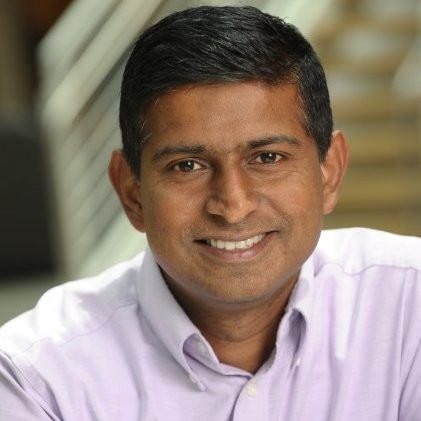
Syam Nair, NetApp
This discussion, recorded live at NetApp Insight 2026, presents NetApp product strategy and artificial intelligence-scale data infrastructure. Syam Nair of NetApp, chief product officer, and Gunna Marripudi of NetApp, vice president of product management for Novus, join theCUBE Research hosts Rebecca Knight and analyst Christophe Bertrand to describe NetApp's product direction.
Nair outlines expertise in storage, data platforms and product management and explains NetApp's unified storage strategy. They describe how reducing data fragmentation enables autonomous data management and addresses the AI paradox while supporting AI-ready infrastructure across hybrid and multi-cloud environments.
Marripudi details the Novus architecture and PEAK:AIO integration and explains pNFS scaling for multi-zettabyte deployments and metadata concurrency. They discuss metadata challenges, operator simplicity and security while underscoring a no rip-and-replace approach for customers.
Key takeaways include NetApp's advancement of a unified AI-ready data infrastructure that spans hybrid and multi-cloud environments, support for agentic multi-cloud AI deployments and a focus on scalable data storage, metadata management and simplified operations.
play_circle_outlineConvergence of training, tuning, and inference requiring shared, durable data storage and semantics
replyShare Clip
play_circle_outlineNovus Data Director and ONTAP: Metadata Separation, Global Namespace, High Throughput, Flexible Multi‑Cloud Deployment Without Rip‑and‑Replace
In this interview from NetApp INSIGHT 2026, Syam Nair, chief product officer of NetApp, joins Gunna Marripudi, vice president of product management for Novus at NetApp, to talk with theCUBE's Christophe Bertrand and Rebecca Knight about how NetApp is building an AI-ready data foundation that unifies storage, trust and autonomous control across hybrid and multicloud environments. Nair frames the enterprise AI ROI gap around what he calls the "FEAR" problem: fragmented data, administrative complexity and outdated risk and governance models built for human-scale...Read more
exploreKeep Exploring
What ties together the recent product announcements—hybrid, multi‑cloud, the Agentic Enterprise, and AI factories—from a product‑strategy perspective?add
Why is NetApp integrating PEAK:AIO’s pNFS-based technology (or partnering/acquiring PEAK:AIO) to enable scaling its data foundation to multi‑zettabyte storage?add
How should organizations architect infrastructure for modern AI workloads—training, tuning, and inference—so they can scale together while ensuring data durability, consistency, and a global namespace, and what solution options exist (e.g., scale-up A90, hyperscalers, or adding Novus) without ripping and replacing existing systems?add
What is the relationship between PEAK:AIO, NetApp Novus, and ONTAP — are they separate offerings or part of a cohesive architecture, and how do they fit together?add
>> Good afternoon, everyone, and welcome back to theCUBE's live coverage of NetApp INSIGHT 2026 here at the MGM in Las Vegas. I'm your host, Rebecca Knight, sitting alongside, of course, Christophe Bertrand, who is theCUBE's analyst in residence. And we've got a great lineup of guests. I would like to first welcome Syam Nair, Chief Product Officer at NetApp. Welcome, Syam.
Syam Nair
>> Thank you. Happy to be here.
Rebecca Knight
>> And Gunna Marripudi, VP Product Management, NetApp Novus, and also the most fashion-forward executive in data storage. That's a little inside joke from the main stage this morning.
Gunna Marripudi
>> So—Thanks, Rebecca. Thank you.
Rebecca Knight
>> Thank you so much. Thank you for coming on the show, both of you. Let's start with the slew of product announcements and new announcements that we've heard this morning. They span hybrid, multi-cloud, the Agentic Enterprise, and of course AI factories, which is the buzzword of this show. From a product strategy perspective, what is it that ties these pieces together? I'm going to start with you, Syam.
Syam Nair
>> Well, thank you. Wonderful question. I would actually say let's look at the AI paradox today in the market. There's a lot of investment happening, lots of data applications are ready, models are ready, but most enterprises don't get the returns. The ROI paradox is that, and I would like to say that is caused by a FEAR, an acronym that I'm creating. F-E-A-R. F in the context of fragmented data. Data is in cloud, data is on the edge, data is on premises. everything needs to be ETL'd. Pipelines created, complexity, cost, silos of data, administration challenges. This is an infrastructure that is without borders. How do we actually administer that? And risk and governance. These were built for the days when humans could apply policy. What we embarked on is let's address that. Let's provide that intelligent data infrastructure where there's a unified storage that spans the entire ecosystem of wherever the infrastructure is. Let's build an AI-ready layer so that every piece of data, be it NetApp or non-NetApp, is AI-ready. Let's actually make sure that there's complete control through autonomous agents in terms of managing this and built-in data protection across the board. So that's delivered as a platform and customers can consume the platform wherever they need it, be it AI factories, be it Neo Clouds, hyperscalers, on-premises. That's the key innovation that we are bringing together here at Insight
Rebecca Knight
>> 2026.Data where you want
Gunna Marripudi
>> it.Gunna? Yeah, to add to what Syam just said, we want to be the data foundation, right? Irrespective of where you consume, could be all three different segments. But more importantly, what Syam is articulating is he actually said something, if it's reachable, it's breachable. That was his comment during his keynote. So the security becomes such a key aspect of everything that we do.
Christophe Bertrand
>> Right, Gunna, I'd like to follow up with an announcement that was made actually on Friday of an acquisition of PEAK:AIO, which of course now that we've heard about Novus, which you're wearing great t-shirts by the way, little promo here. We'll talk about Novus in a second. Obviously that was a precursor to this big architectural announcement. I looked at it and like, huh, what's coming? That's interesting. Let's talk about PEAK:AIO and why it makes sense. What is it? Why should we care about this?
Gunna Marripudi
>> Yeah, so I'll pick it up, Syam. So the way we think about the data foundation, it has to scale to the next level. For example, ONTAP already scales right now, but we are talking about like tens of petabytes, hundreds of petabytes. But what happens is, you really want to think of multiple zettabytes. So that scale mandates a different architecture, a different way to solve this problem right now. We want, but at the same time, we don't want to lose the foundation. So when we looked hard across the industry, including our own capabilities, we're looking for complementary capabilities. What actually PEAK:AIO did is something pretty innovative. They built on the standard protocol, pNFS, but they built in the scale that the pNFS implementations lack today. It's not like the standard didn't do it. The standard allows it, but the implementations were not there. So we like their innovation, what they're bringing to the table, completely complementary to what we offer in NetApp as the foundation and more importantly, allows us to scale to multi-zettabyte. we talked on day one.
Syam Nair
>> Yeah, I would add one thing to this. Look, we embarked on actually building this scale up and scale out from an AI factory standpoint independently of Peak:AIO. We said, okay, let's look at the architecture. Few of us, Gunna leading it, we were involved in finding what is the best architecture to get there. Some of them were proprietary architecture, some of them were, hey look, there is a way to use pNFS. There are other providers out there. A couple of fundamental things that we aligned on is our strength comes from our pole position in ONTAP. ONTAP is the best storage on the planet, the most secure storage on the planet. You see at Insight here, customers love us. We run all kinds of workloads. So how do we take ONTAP, make sure that it is the best performing storage from a node standpoint? That's number one. Number two, We don't want customers to change their infrastructure. How do we go with open standards? That's where pNFS came in too. So as we were building, we also looked for partners who could actually help accelerate and bring it to the market. Peak:AIO enables us to do that. This is open source. Lattice is open source. They have contributors. So these are multiple ingredients coming together, right, at Insight 2026.
Christophe Bertrand
>> So I'd like for us to double-click on something here because you're mentioning pNFS, obviously, where It feels like we're back a few years ago with big data, parallel file systems, Lustre, just better, right? I certainly grew up a little bit in that world again a few years ago. And it feels to me that there is something that has to be explained a little better maybe. Why does it matter? Is it because of the billions or trillions of files you have to manage? Is it because of the fact you want to have everything in one namespace? Is there some— you mentioned performance. Is that why PEAK:AIO is so important to you?
Syam Nair
>> I would say first, why the architecture is better is because it's open standards. It allows to expand the infrastructure that customers already have. Number 2, it enables that separation so that the GPUs, which don't need to starve, they will never be idle. They can actually, there's no I/O bottleneck. That's architecturally. And why PEAK:AIO is better is because in the context, they have actually been contributing to Lustre. They have been proven, right? You heard it on the keynote stage. They have been working with even the founders of Lustre who have been using Lustre at scale, finding challenges and they actually address the same challenge. The job to be done was to actually address the challenge some of these proprietary architectures had. So I think it's coming together of the best of ONTAP, the best architecture of where we wanted to go and a partner who can actually contribute towards it.
Gunna Marripudi
>> So the jobs to be done in terms of, right, there's always, we talk about speeds and feeds, to your earlier intent of the question maybe is why pNFS, if you can double-click, the most important thing is what are the jobs to be done, simplify the operator, we almost forget the operator who are actually managing this massive infra, right? So standards actually matter a lot, but standards matter a lot in terms of not additional complexity because you can get performance complexity, should not be a trade-off, right? So we ensure that there's no trade-off between performance, resiliency, and complexity. Squarely, pNFS as a protocol nicely fits in. Importantly, I always tell my customers, if you're running anything after 2018 Linux kernel, it has a pNFS client.
Rebecca Knight
>> Right. So building on that, what about metadata and why has it become such an important constraint as we are now in a conversation talking about multiples of zettabytes of data?
Syam Nair
>> Yeah, you should take it.
Gunna Marripudi
>> I love it. Yeah, there's a couple of words, you keep repeating this, right? Concurrency. When you think about the GPUs, GPUs are not like 64 cores, right? Like 2,000 SIMD threads hitting the data path. And these people, the processes are not, the clusters are not anymore like 8 or 16 node clusters, like thousands of GPUs.
Syam Nair
>> Right.
Gunna Marripudi
>> They want the shared infra. Again, in the context of both of us are product guys, so we think along the lines of jobs to be done. The jobs to be done is, if you're running an AI job, the job has to run wherever it can find the compute. So it really requires that shared storage. But now when these jobs are running at thousands, like 2,000s per every GPU, 50,000 GPUs running in a cluster, for example, you're running a million threads hitting it, the same dataset. It's always the first thing, even before data becomes the bottleneck, it has to look at where the data is stored. The metadata is the key. The concurrency of the metadata access is the pillar for an architecture. So now if we kind of peel back the onion from there, things actually start falling into place.
Syam Nair
>> And one of the other things the industry is seeing this, right? We were very simplistic in separating and saying there's training and there is inference and different architectures. Yes, it made sense because most people were focusing on Frontier model training, etc. But we are getting to a place where training, tuning, and inference, they kind of have to scale together. And when I say, because it's not like you train and tune and then inferencing, you are not actually going to set up a new architecture completely for it. So you really need to think about it in the context of not just that global namespace and the separation in terms of throughput and performance, but also the durability of the data. People are not talking about that. data is the most precious asset. When you're training, maybe you just need to load checkpoint a few, but when you're actually inferencing, this is the IP. It's just not people. The IP of the enterprise is the data. So durability of the data, how do you make sure there's consistency of the data? A lot of the data semantics come into play. Our architecture actually enables both. And the way, simple way I, when I talk to customers, I say is, look, if you need just a scale up an A90 works for you, AFF A90 works for you, we have it. If the same on the hyperscalers work for you, we have it. But if you think about, you need a global namespace that spans beyond what a cluster can do, If you want that throughput aggregate, then Novus, just add Novus to it. You don't need to rip and replace.
Christophe Bertrand
>> Right, so let's talk about that. Let's talk about the relationship between PEAK:AIO, Novus, which you just announced yesterday, and ONTAP, which of course has been around for a long time. Are these different stories? Is it one story? Is it what you just described? It's very much a new world and therefore it requires a new architecture and these are the key components. Help us through that.
Syam Nair
>> It is a cohesive architecture, I'll give an overview, and then I'll let, Gunna go into a lot more details. Number one, we are investing and innovating in ONTAP to be the fastest storage per node. We are not going to stop there. We will continue to innovate. Then as a cluster, the ONTAP cluster will provide the best performance aggregate throughput from a cluster standpoint. Now this becomes the NetApp Novus Data Director that is sitting on top of it, running independently of ONTAP, but sitting right in front of ONTAP as an additive cohesive part that now creates that fundamental aggregation much larger because of the metadata separation.
Gunna Marripudi
>> Right.
Syam Nair
>> Right, that's the architecture. And where does PEAK:AIO play a role? PEAK:AIO actually enables us to bring that NetApp Novus Data Director faster to the market, that's one. Second, also continuously innovate on it, because we are not looking at just bundling this and delivering it as, hey, this stops here. The way I would like to tell, I tell this to my team, I'm an Indy 500— I'm a fan of Indy 500. We are in the pole position, but you don't win the 500 race, right? Just being in the pole position once. It is the combined throughput. So we want to win this AI race, making sure that every customer gets that AI transformation through the architecture. So Novus is an architectural element, but the cohesion comes from how the products sit together.
Gunna Marripudi
>> Yeah, one thing we know, we did talk in our keynotes also, the key topic is we are not looking at AI as a standalone workload. In fact, now we are seeing from our own customer discussions, AI is going to be in every workload. So in that sense, these three different pieces you talked about, the cohesiveness has to come because the customers are looking at the common infrastructure, the storage foundation. The data foundation. When you look at our NetApp platform now, all these things we're going to do at the same time working across different workloads, agent workloads, enterprise workloads, AI, even say AI, like 3 or 4 different flavors thereof. So all these things are like, you know, Novus addresses massive scale in terms of it. What Syam is asking us to do in terms of getting ONTAP to deliver the highest performance, on commodity hardware. This is like the most important innovation you're going to see in the next several years of commodity hardware innovation. So we're going to lead the industry across three dimensions: strong foundation across the workloads in terms of scale and per rack unit performance.
Rebecca Knight
>> Well, in this day and age, there is no doubt that AI is in every workload. Can you talk a little bit about the different requirements that AI clouds and multi-tenant AI factories— what are those? Different requirements and how do they affect
Gunna Marripudi
>> that?I'll start. So Rebecca, you would have seen all the hyperscalers, right? Now say neoclouds. So some of the large neoclouds right now have some of the Frontier Labs as their big customers. But we're not building this architecture to solve today's requirements. We are looking a little more like 2, 3 years into the future. So the natural evolution when AI becomes horizontal, every enterprise will have those workloads. It's not easy to just pull up a 1,000-GPU cluster in our data center, right? They really— cloud will become a significant portion of deployment. It could be sovereign clouds too, need not be private or neoclouds. So when you look at the scale, what AI in terms of architecture brings along is the diversity of I/O patterns in terms of durability, metadata, throughput, latency. We didn't even talk about agentic AI, also involves CPUs touching the data. It's not just GPUs anymore, right? And then we are hearing constant stories like token factories. People are talking inferencing at scale in terms of token factories, right? And then, there is like a lot of interest right now. How many dollars per million tokens? What happens? They diverge very, very fast. And more and more, today we talk about GPUs. There are multiple AI accelerators coming along. So when you look at all these things, just to complete, look at all this massive diversity of I/O requirements and data requirements.
Christophe Bertrand
>> So I have a question to both of you because I didn't mention AI Data Engine. How does it fit in this conversation?
Syam Nair
>> Yeah, I think, performance and throughput of accessing the data, that's a necessity for AI, but that won't be sufficient for agents to actually act on the data. Because the faster you access the data, if the data is not ready and it's not protected, you get fast results, you get compromised results, but they may not be the ones you want. Okay. So the AI Data Engine is about making sure that the data— we recognize that data is fragmented. And any enterprise you talk to today, anybody you talk to who is getting any value out of data, they're all preparing the data. It's 6 to 9 months of work. I have done this even for SaaS companies, building our own engine. It's 6 to 9 months of engineering work just making the data ready. You need to move the data into some kind of an object storage.
Gunna Marripudi
>> Right.
Syam Nair
>> You— everybody talks about data lakes, you use a Medallion architecture where you are now harmonizing the data, deduplicating the data, now creating some model for the data and then making sure this data is available in some kind of an object format so you can actually use it. That's a lot of time, complexity, and risk to the governance. What does AI Data Engine try to solve? First, discover all of the data because, you may have billions of files. Not all those billions of files are going to be meaningful in terms of the AI. First is the ability to discover the data, classify the data, vectorize it, or work with other partners who can actually help vectorize it, run native models, work with NVIDIA's Agentic security framework. I don't know the exact name. They talked about it a few days ago. We are going to be working with them to make sure that agents running on this data can access the data where the data is in a secure fashion. So I think AI data and the promise of what we are talking about is that AI data platform is going to be fundamental for agents to actually operate on the data. Because look, trust— humans have trust. Yeah, but agents are going to just trust the data as it is. They're not going to make, they're not going to reason over the data, they're not going to reason over if this is the right data or not.
Christophe Bertrand
>> Right?
Syam Nair
>> Somebody has to do that. That's going to be built into the platform.
Rebecca Knight
>> So we had Gabie Boko on earlier and of course George Kurian, and both were talking about how this is a real moment for NetApp to introduce, to reintroduce itself to customers and also introduce itself to customers who hadn't really thought much about storage in the past because of AI and the conversations we're having now. When you think about the product roadmap, what do you both want customers to take away from this year's Insight about where NetApp is going in the product direction and strategy?
Syam Nair
>> Look, customers need this and we are going to deliver this, which is an infrastructure that is ready for AI factory scale.
Gunna Marripudi
>> Okay.
Syam Nair
>> That is ready for agentic and autonomous operations so that you can manage it easily. That is always ready data, which is AI-ready data. And we need to deliver that as part of the infrastructure. It's not a storage conversation, it's not a data platform conversation, it's a data infrastructure conversation. And the promise that we have is customers, you don't need to rip and replace what you already have. You have trusted us, trust us, we are going to give you the power so that you can supercharge what you already have to be ready for it. That's what our product promises.
Gunna Marripudi
>> No scale limits, no performance limits, data for every workload.
Rebecca Knight
>> It's ready for a poster. I love it. Excellent. Well, both, thank you both so much for coming on the show. A really great conversation.
Syam Nair
>> Thank you. Thanks for having us.
Christophe Bertrand
>> Thank you.
Rebecca Knight
>> I'm Rebecca Knight with Christophe Bertrand. Stay tuned for more of theCUBE's live coverage of NetApp Insight 2026. You're watching theCUBE, the leader in enterprise tech news and analysis. Yes, I have been talking about unified data storage for years, years, and years, but other people start saying it and suddenly it's







 Rebecca Knight
 Gunna Marripudi
 Christophe Bertrand