At NetApp Insight 2026, George Kurian of NetApp, chief executive officer, joins theCUBE Research live with host Rebecca Knight of theCUBE Research and principal analyst Christophe Bertrand of theCUBE Research to discuss NetApp's approach to artificial intelligence, the AI factory strategy and the Novus architecture. Kurian outlines AI factories as GPU‑intensive accelerated computing clouds that prioritize operational efficiency and data management. They explain how Novus, together with recent acquisitions such as PEAK:AIO, addresses metadata scale, data governance and enterprise performance to move pilots into production.
Key takeaways include Kurian's characterization of AI factories as GPU‑heavy, operationally efficient clouds where data functions as an organization's strategic moat and Novus's dual emphasis on Data ONTAP resilience and a super‑scalable metadata service for discovery, cataloging and governance. Experts emphasize that enterprises must prioritize clean governed data, defense‑in‑depth security and architectures that scale from pilots into production to realize value from AI.
Forgot Password
Almost there!
We just sent you a verification email. Please verify your account to gain access to
NetApp INSIGHT 2026. If you don’t think you received an email check your
spam folder.
In order to sign in, enter the email address you used to registered for the event. Once completed, you will receive an email with a verification link. Open the link to automatically sign into the site.
Register for NetApp Insight 2026
Please fill out the information below. You will receive an email with a verification link confirming your registration. Click the link to automatically sign into the site.
You’re almost there!
We just sent you a verification email. Please click the verification button in the email. Once your email address is verified, you will have full access to all event content for NetApp Insight 2026.
I want my badge and interests to be visible to all attendees.
Checking this box will display your presense on the attendees list, view your profile and allow other attendees to contact you via 1-1 chat. Read the Privacy Policy. At any time, you can choose to disable this preference.
Select your Interests!
add
Upload your photo
Uploading..
OR
Connect via Twitter
Connect via Linkedin
EDIT PASSWORD
Share
Forgot Password
Almost there!
We just sent you a verification email. Please verify your account to gain access to
NetApp INSIGHT 2026. If you don’t think you received an email check your
spam folder.
In order to sign in, enter the email address you used to registered for the event. Once completed, you will receive an email with a verification link. Open the link to automatically sign into the site.
Sign in to gain access to NetApp INSIGHT 2026
Please sign in with LinkedIn to continue to NetApp INSIGHT 2026. Signing in with LinkedIn ensures a professional environment.
Are you sure you want to remove access rights for this user?
Details
Manage Access
email address
Community Invitation
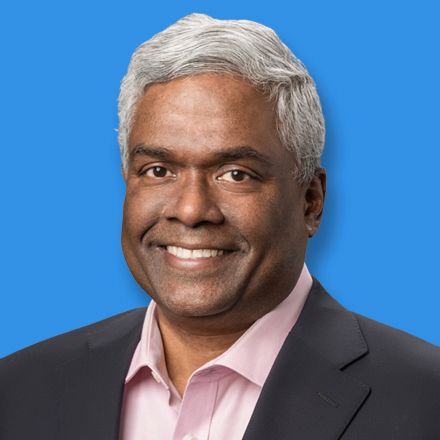
George Kurian, NetApp
At NetApp Insight 2026, George Kurian of NetApp, chief executive officer, joins theCUBE Research live with host Rebecca Knight of theCUBE Research and principal analyst Christophe Bertrand of theCUBE Research to discuss NetApp's approach to artificial intelligence, the AI factory strategy and the Novus architecture. Kurian outlines AI factories as GPU‑intensive accelerated computing clouds that prioritize operational efficiency and data management. They explain how Novus, together with recent acquisitions such as PEAK:AIO, addresses metadata scale, data governance and enterprise performance to move pilots into production.
Key takeaways include Kurian's characterization of AI factories as GPU‑heavy, operationally efficient clouds where data functions as an organization's strategic moat and Novus's dual emphasis on Data ONTAP resilience and a super‑scalable metadata service for discovery, cataloging and governance. Experts emphasize that enterprises must prioritize clean governed data, defense‑in‑depth security and architectures that scale from pilots into production to realize value from AI.
In this interview from NetApp INSIGHT 2026 in Las Vegas, George Kurian, chief executive officer of NetApp, joins theCUBE's Rebecca Knight and theCUBE Research's Christophe Bertrand to discuss how unified storage, trusted enterprise data and an autonomous control plane are becoming the foundation for AI-ready infrastructure across hybrid and multicloud environments. Kurian frames AI factories as accelerated computing clouds whose GPUs demand power efficiency, operational scale and fast access to data, with data infrastructure increasingly the bottleneck to pro...Read more
exploreKeep Exploring
What are "AI factories" (accelerated computing clouds), and what unique requirements and challenges do they present?add
What are the key capabilities and benefits of the Novus architecture?add
>> Good morning everyone and welcome to theCUBE's live coverage of NetApp Insight 2026 here in Las Vegas. I'm your host Rebecca Knight and I'm sitting alongside Christophe Bertrand who is of course an analyst in residence at theCUBE Research. I'm excited to be doing this show with you.
Christophe Bertrand
>> Great to be here, me too.
Rebecca Knight
>> And our first guest needs no introduction. I would like to welcome back to our show George Kurian who is of course the CEO of NetApp. Welcome George.
George Kurian
>> Good morning and thank you for having me with you. Well, it's good to see you.
Rebecca Knight
>> It's always a delight. Let's start talking about AI factories because they are there. We're hearing a lot about them. They're almost the oil refineries of the digital economy. To strip away the buzz for a second, can you talk a little bit about what problems customers are solving with AI factories?
George Kurian
>> AI factories are accelerated computing clouds which have large amounts of GPUs that are being used today to train these large language models, frontier models, but over time will be used by every organization to derive knowledge and insight from their data. They have unique demands. GPUs are extraordinarily expensive, so you don't want them to sit idle. They require solutions that are power efficient because of the constraints on the energy infrastructure, and they need to have operational efficiency because you've got thousands and thousands of GPU servers. And increasingly, data and data infrastructure is the bottleneck because to use the GPUs efficiently, you need to serve them huge amounts of data that can be processed, right?
Christophe Bertrand
>> And we could be talking about trillions of files. so definitely there's a conversation. So on Friday, you made an acquisition announcement, PEAK:AIO, and you just introduced yesterday Novus, which is a brand new architecture designed for AI factories. So tell us more about this. What is sort of behind— what's the inspiration behind? And maybe talk to us about AI factories in the market, the operational efficiencies a little more, because clearly these two in combination
George Kurian
>> What large language models and reinforcement learning created was the idea that you could move intelligence from just a small part of your data to all of your data and to move the tools to access that intelligence from a small part of your employee base to everybody. Right. So if you look at an organization, historically, about 15% of the data is structured. And it's fairly sanitized and doesn't have a lot of context and sentiment associated with it. And it was represented to a small part of the organization, typically about 11 to 15%, through what's called BI tools. 85% of the data in an organization was essentially untapped, unstructured data. And with conversational and natural language capabilities, pretty much anybody in the organization can have access. What we've seen is two things. I think one is a real recognition that data is the foundation for the intellectual property and the strategic moat of an organization. Everyone can have access to all the latest models. And the second, beyond the fact that data is sort of the intellectual foundation is the idea that you need to build kind of solutions that allow you to scale from a curated one-time pilot into production. And so we are stepping up to help solve those challenges.
Christophe Bertrand
>> Well, let's talk about the one-time pilot because we're past that point now. Clearly, there has been a shift in the market where it's not just projects. It's becoming more a question of at-scale implementations for many enterprises. At the same time, we are also hearing about some risks with agentic AI becoming a bit crazy, candidly, agents making decisions without people or sometimes with people, models escaping, etc. So I think there's a lot of hype around this. From your standpoint, as you think about the market and what you're seeing from customers, are we now in phase 2 of what we could call AI adoption in the enterprise? That's right.
George Kurian
>> I think we see clients moving from very constrained pilots to business process and work transformation using AI. And there are important new considerations, right? I think 93% of organizations that are trying to embark on that journey cite data as the number one challenge. it's easy to curate a small subset of data, in batch for a one-time use case. When you want to make AI scale across your enterprise, you need to integrate it into the operational systems and the workflows and how work gets done. And that creates, alongside the risks you mentioned, new requirements on the infrastructure, governance, security, control, and so on. I think to deal with the risks around AI safety and security, every part of the technology provider and the operators and service providers have a role to play. You know, the model builders have to step up to make their models safer and to put harnesses and guardrails around the models. The defense-in-depth security vendors including people like us, have to build more, modern architectures that keep pace with the fact that agentic attacks can happen in an instant. And the enterprises and operators of their service need to make sure they are adopting the best practices so that the users of their service can trust that. Right.
Christophe Bertrand
>> Which is why I think the Novus architecture the upcoming acquisition and other innovations around intelligent data, it makes a lot of sense because for AI to succeed, whether it's for one process or for all processes, you need clean data at scale. So everything's fun and games until you add at scale at the end of the sentence, as I like to often say. And it feels to me that the architecture is now sort of meeting that promise of, originally what people wanted to engage on with projects. Just they couldn't scale. So scale across data in terms of just storage, billions, trillions of files, but scale also in terms of consistency and compliance of data. So definitely a very interesting time for NetApp because you've been doing a lot of the other components you mentioned, like security, replication, et cetera, snapshotting, for a long time. So it feels like it's a perfect convergence for you at this point. That's right.
George Kurian
>> I think maybe I can just comment first about what's exciting about the Novus architecture and then talk about the evolution of NetApp itself. I think Novus provides two important capabilities. The first is on the data layer. we bring all of the resilience, trust, and capabilities of Data ONTAP that we have built over 30 years, and that every large organization in the world trusts. And then we've built a super scalable metadata layer. The combination of those allows you to meet the performance requirements of the most demanding enterprise. And because they're built on industry standards like NFS protocol, you can start really small and go to the largest AI factories with one consistent data platform. The second is the metadata service becomes a place for data discovery, data cataloging, and data governance and control. And so having a super scalable metadata service allows you to now implement guardrails like we just talked about earlier.
Rebecca Knight
>> So this is a moment for AI, but it's a real moment for leadership, as you've said. And you've talked a lot about NetApp's values, humility, reverence, excellence. These are the values that shape how you work together and how work gets done at NetApp. Can you talk a little bit about how, as the AI era really takes hold, how those values shape how you work day to day with each other and with customers?
George Kurian
>> Yeah, I think, history will judge leadership and institutions around how we behave at this important moment, right? When you are, kind of the creators of these really powerful technologies, you need to not only think about the business impact of those, but the impact on the organization and the stakeholders and the communities and the world at large. And that's where values come in. You know, I've always believed that values endure in an institution much further than a strategic horizon than any particular business plan and business strategy. We see humility as super important because it allows us to learn from the wisdom of everyone in the organization as well as from the ecosystem around us. Right. And I think that it allows us to admit mistakes, learn quickly. We think that accountability is important because you deliver on commitments to clients and you build their trust from accountability and transparency. And then I think with regard to reverence and excellence, it's really about the sense of purpose and the responsibility that, we're blessed to be able to do the work we do. And so we must do it with excellence. And so those are some of the practices we put into the organization at large. And it certainly starts with leadership.
Christophe Bertrand
>> Right, and you have to do all of this in a very intensely competitive market. So let's talk about strategy for a second. Clearly, the recent announcements are changing the game. I imagine some of your competitors are now thinking about you a bit differently and maybe sweating a little bit more profusely as well. I certainly would based on your announcements. What do you see from a competitive standpoint? Where do you see NetApp today? Where do you see NetApp let's say, in a year.
George Kurian
>> We've continued to evolve NetApp to meet the needs of our clients. we started with the idea of unified data storage, and we did that for customers in their data centers. And as the cloud developed, we were uniquely able to extend those capabilities into all of the leading public clouds. And here at Insight, we announced expanded partnerships with Oracle and SAP so that clients have choice about where to take their data, which is really their asset. And we are just a steward on their behalf. I think the second is, as clients have sort of started to have new requirements, we have moved up the stack and we're really working on moving the company from a data storage provider to a data platform provider. And that's what we call intelligent data infrastructure. It includes, for example, cyber resilience capabilities built into where the data is created, because that is the only way to respond to real-time threats. We've got governance, classification, discovery, to make data available for AI applications to work efficiently. And you can take advantage of all of this on one platform and one architecture from the smallest remote office to the largest hyperscale cloud and AI factory. And that's something truly unique in the industry. Right.
Christophe Bertrand
>> And we'll talk about it later today. But you've also done some nice things with the Console and That's right. Leveraging AI actually yourself for your own architecture. So that's kind of a double-click question for me. How do you use AI at NetApp?
George Kurian
>> We use— I use AI to help me get my work done better. I think I read a lot. I study a lot to stay abreast of what's going on in the industry. And AI tools help me enormously in terms of being able to access the right information, understand it, and to be able to disseminate it to the organization. We use AI across our organization to help teams be more effective, right? I think in product development, not only do we use AI to make our products more secure and efficient and all of that, but we also— it also allows us to build more capabilities in a shorter period of time. We use AI tools to help our clients be able to access all of the technical information that NetApp has using natural language capabilities. And we're using it to make pretty much every team, the finance team forecast the business better, the sales team be able to respond to customer inquiries faster.
Rebecca Knight
>> So you're a few days into Insight now, 5,000 people, customers, vendors, partners here at Insight. What has the energy been like in terms of, especially as Christophe pointed out, you're positioned a little differently right now, in a bit of a sweet spot. What are the kinds of conversations you're having and what are you hearing?
George Kurian
>> We're hearing, first of all, like yourselves, we are super grateful to everyone who made the trip here. We know time is, a scarce commodity for everyone. And so super grateful. I think we have a lot of first-timers to Insight, you know, customers, prospects, and partners. I think the 2 or 3 things we hear are sort of new opportunities, whether it is existing customers wanting to do more with us or new to NetApp customers looking to work with us. And new partners that are co-investing with us, like technology partners like the hyperscalers, NVIDIA, Oracle, SAP, but also new distribution partners. And so that's really the idea that, you know, you work all year to build these technologies and showcase it. And now to see the interest in using it is sort of really gratifying.
Rebecca Knight
>> So as we wrap up, What is the one thing you want customers to take away with them from Insight 2026?
George Kurian
>> I think that the AI era requires organizations to be really good stewards of their data because data is the foundation for knowledge and knowledge is the intellectual property. It's the strategic competitive moat. And to have knowledge You need really good intelligent data infrastructure that not only allows you to extract meaning and context from your data, but also to keep it secure, well-governed, and, be a resource that you can trust. And NetApp is working with the industry to be an agent to help you achieve that with our intelligent data infrastructure solutions. Excellent. George, thank you.
Rebecca Knight
>> Always a pleasure having you on the show. I always learn a lot. Thank you so much.
George Kurian
>> Thank you to both of you for being here and spending time with us.
Rebecca Knight
>> I'm Rebecca Knight for Christophe Bertrand. Stay tuned for more of theCUBE's live coverage of Insight 2026. You're watching theCUBE, the leader in enterprise tech news and analysis.









 Rebecca Knight
 Christophe Bertrand