We just sent you a verification email. Please verify your account to gain access to
NetApp INSIGHT 2024. If you don’t think you received an email check your
spam folder.
In order to sign in, enter the email address you used to registered for the event. Once completed, you will receive an email with a verification link. Open this link to automatically sign into the site.
Register For NetApp INSIGHT 2024
Please fill out the information below. You will recieve an email with a verification link confirming your registration. Click the link to automatically sign into the site.
You’re almost there!
We just sent you a verification email. Please click the verification button in the email. Once your email address is verified, you will have full access to all event content for NetApp INSIGHT 2024.
I want my badge and interests to be visible to all attendees.
Checking this box will display your presense on the attendees list, view your profile and allow other attendees to contact you via 1-1 chat. Read the Privacy Policy. At any time, you can choose to disable this preference.
Select your Interests!
add
Upload your photo
Uploading..
OR
Connect via Twitter
Connect via Linkedin
EDIT PASSWORD
Share
Forgot Password
Almost there!
We just sent you a verification email. Please verify your account to gain access to
NetApp INSIGHT 2024. If you don’t think you received an email check your
spam folder.
In order to sign in, enter the email address you used to registered for the event. Once completed, you will receive an email with a verification link. Open this link to automatically sign into the site.
Sign in to gain access to NetApp INSIGHT 2024
Please sign in with LinkedIn to continue to NetApp INSIGHT 2024. Signing in with LinkedIn ensures a professional environment.
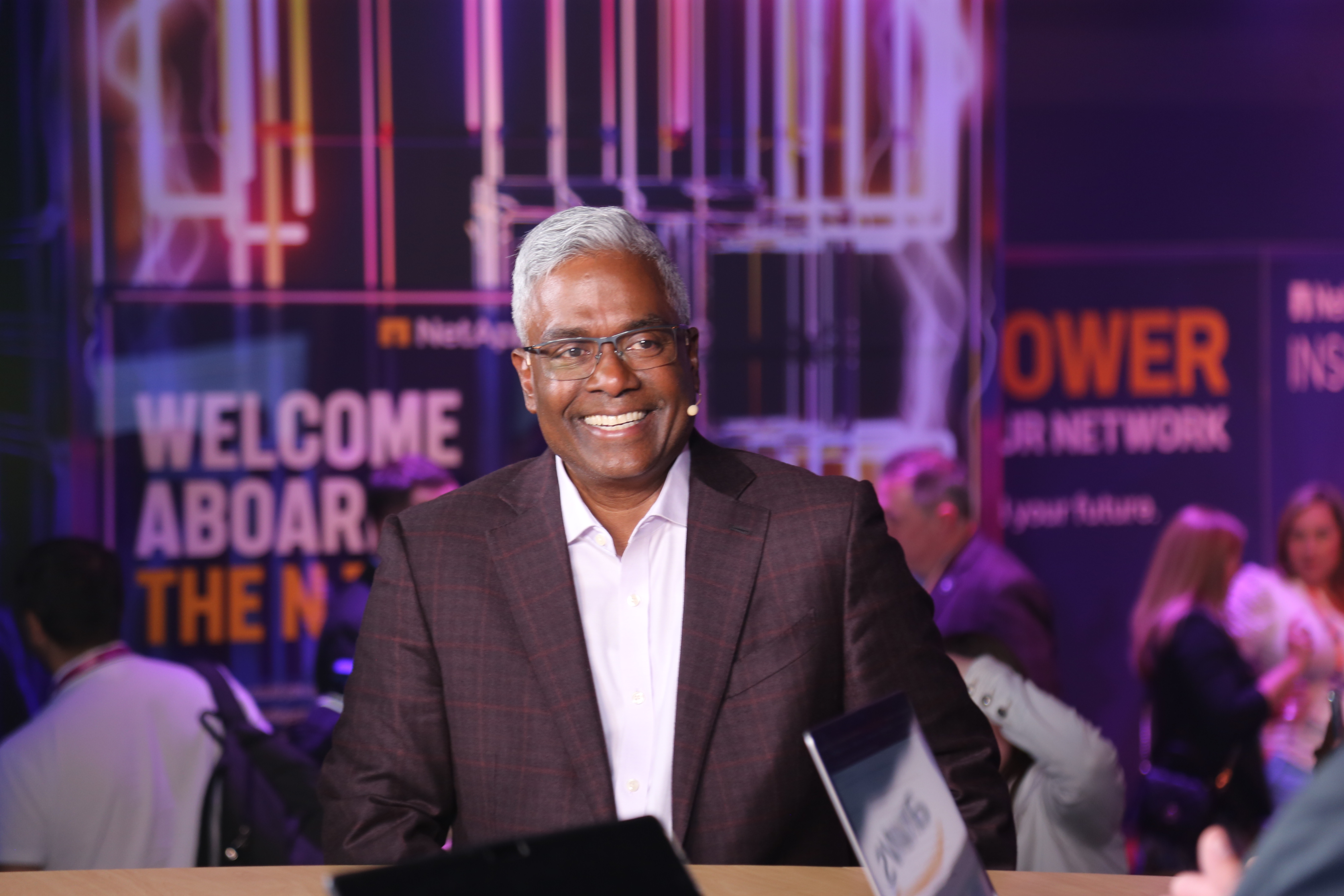
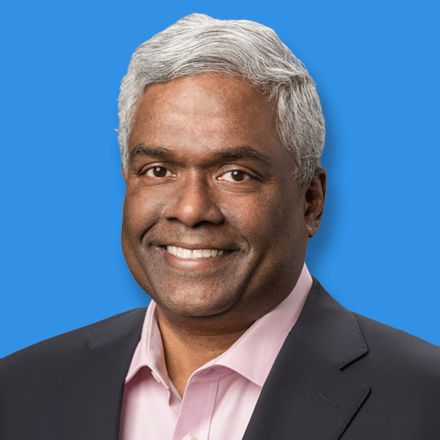
TheCUBE covers NetApp Insight 2024 in Las Vegas with host Rebecca Knight and cohost Rob Strechay. NetApp CEO George Kurian discusses the importance of data and AI in today's business landscape. Challenges include data quality and integration of AI into business systems. Regulated industries are seeing faster AI adoption. NetApp focuses on helping organizations manage their data and prepare for AI. The goal is to make AI accessible to all organizations, not just large ones. Collaboration with partners is key to success in innovation. Maintaining a culture of i...Read more
exploreKeep Exploring
What has been the culmination of hundreds of years of work in mankind's desire for data and tools that can understand the data to help us better understand behavior, draw insights, and predict the future?add
What are some challenges facing the industry in improving algorithms and implementing AI technology effectively?add
What is the importance of selecting, cataloging, and linking data in AI projects?add
What is the main idea behind NetApp Insight conference and what do they hope their clients take away from it?add
>> Hello everyone and welcome. We are kicking off theCUBE's live coverage of NetApp Insight 2024 here in Las Vegas. I'm your host, Rebecca Knight, sitting alongside my cohost and analyst, Rob Strechay. Rob, I always love hosting with you, but I especially love hosting NetApp shows because great conversations and it's a good time.
Rob Strechay
>> Yeah, great. Great people, great guests that we have lined up and a lot of customers too, and I think, again, some of them were brought to the main stage just short time ago for the opening keynote with our guests that we have on now.
Rebecca Knight
>> Well, it's a great segue because we have a very special guest. We are welcoming George Kurian, the CEO of NetApp. Thank you so much for coming back on theCUBE Fresh from the main stage.
George Kurian
>> Thank you. Thanks so much for being here. Super excited to have you at Insight. We've got partners, customers, lots of technology proof points.
Rebecca Knight
>> And some stilt walkers too that we might see in the background here. So George, you were just in the keynote and you really stressed how success in business today is going to hinge on how well organizations harness the power of data and AI. You've called this the era of data and intelligence. How do you define this particular moment in time that we are living through?
George Kurian
>> It's been the culmination of hundreds of years of work where mankind has wanted to have data and tools that understand the data to help us better understand our behavior, be able to draw insight, and also the always yearning for prediction of the future. And what we've seen over the last few years is profound improvements in the capabilities of the tools that are being used to analyze data and the ability to analyze all of the data in an enterprise. Usually the large enterprise, about 85 to 90% of their data is unstructured data, meaning documents and images and voice recordings and so on. Those were never integrated into the business system for analysis. And now with generative AI, you are able to do that and so we call it the intersection of data and intelligence and we're super excited to be part of that journey.
Rob Strechay
>> I think what brought it home for me, and again going back to the customers and the challenges they faced, we talked about where you're going and turned it over to Cesar to talk about it a little in depth and Krish to talk about it. And I think one of the things that was really interesting is, hey, we've talked to over hundreds of customers about this. What are some of those challenges you see they're facing and where do you see AI being either a solution or how they get to AI through those challenges of data and that to get to that intelligence?
George Kurian
>> Maybe we can start with the challenges and then talk about what are the industries and use cases that we see progress around. With regard to the challenges, the whole industry is spending a lot of time improving the algorithms, and so there's an enormous amount of work going on to bring the algorithms to where they are as capable as they've ever been. I think what we see is that the algorithms are only as good as the data that you feed them, and so it's super important that you have a really good data strategy and a data management approach that helps the algorithms understand your business better so that you can use it to drive business advantage. The second is very similar to cloud, AI has been implemented as a silo from an infrastructure, from a data and from a process perspective, which is why so many of the AI projects never make it to production. And so what we're doing is much like we did in cloud solving the data management challenge as well as bringing the infrastructures for AI and data together so that they can work harmoniously.
Rob Strechay
>> And I think that was one of the things that Monica from J&J who we have on tomorrow really eloquently talked about how they need to be able to have... And you even talked about it, how do you bring the AI to the data and where the data and the partnerships that you have with Google, you had Matt Wood from AWS, you had Satya in via video for Microsoft and Azure, and even on stage you were talking about... And it has to be interesting though because you see it across different industries and those challenges. Do you see that the challenges are similar across those industries or they differ slightly or how do you see it when you look across the customer base?
George Kurian
>> In general, what has been really interesting for us to observe is that we see that those institutions that have organized their data and managed it well are well positioned for success. We had several practitioners here from life sciences and pharma where the regulatory environment requires them to have consistent procedure codes and consistent privacy mechanisms and clinical data organized in a particular way with metadata and quality in a particular way. And so regulated industries are actually growing faster with AI than unregulated, and a lot of it is because they've had the practice of doing AI and we had AWS confirm the same. I think with regard to what we see today in broad-based landscapes, our sort of knowledge work of productivity use cases are progressing quite well. Whether that is the back office for sales, whether it's software engineering, whether it's the legal department, we're seeing good progress across both customers and in our own environments. And then where we see transformational impacts is where the data's well organized and manufacturing around process improvements. We've got people improving auto manufacturing with digital twins. You talk about a broad range of life sciences and drug discovery. We're seeing, for example, in the food and beverage industry, people improving the output of quality of the beverage production life cycle and so on. So in industries where the data is well established, you're starting to see the transformative impact.
Rebecca Knight
>> So George, there are some leaders who say, I've seen this all before, a world-changing technology with the potential to fundamentally change the way businesses operate, the way we do our jobs that either doesn't quite deliver on its promises or maybe takes a lot longer than people are expecting. There was a piece in the New York Times today about Jim Covello, the head of Goldman Sachs stock research, who is really bearish about AI. I'm curious to hear where you fall and how long you think these changes will in fact transform business.
George Kurian
>> I think that when we think about technology transformations, we think that in the short term you may be over bullish, but in the long term you're probably less than what you should expect. So for example, in the era of the internet, human connectivity and being used as a platform for doing business actually became really, really impactful and transformative. Amazon is the most shining example of that, but it took longer than what people expected. So I think our view is quite similar, which is maybe people think that the transformation will happen in two years, but actually if you look out over the long term or the medium term over a decade, it's probably more impactful in the out years than people expect today.
Rob Strechay
>> And we're seeing very similar things in our research where about 50% of organizations are actually building on-premise, very similar to how J&J talked about it, how they have some of the regulated data. They don't want to put that, that's their intellectual property. And to your point, that fine-tuning or how they actually ground those models, they're not building the next Llama or something like that. They're actually fine-tuning Llama to do what they need, these small language models. What other things do you see that NetApp can do to help organizations really prepare for AI and get ready for that?
George Kurian
>> We are really focused on helping people get a good handle on their data. The first step in any AI project is to select the data to explore your data assets, to be able to catalog them the right way, to be able to ensure that you have a good sense of whether that data is fresh or stale. That's the first, and then link it to the model universe so that as models change, you can keep track of which data sets, which models use. And conversely, as data changes, you can keep track of what model outputs came from what data sets. We also believe that they will be increasing scrutiny of explainability of models and data used so that you can protect against bias or other harmful outcomes. And we're building tools for that. Of course, the advancements around securing and protecting your data so that there's no malicious use of it or poisoning of the data with false data getting injected, those are all things that we are focused on.
Rebecca Knight
>> One of the things you said in the keynote was that... Or one of the things I think that the audience came away with from you was this real urgency around making sure AI remains accessible and that is going to be ever more important, especially as so many people need to upskill and re-skill. So how is NetApp ensuring that the AI is accessible to different groups of people?
George Kurian
>> Yeah, I think in two ways. I think one is we believe that for AI to have the transformative impact that people talk about today, that it can't just be the largest organizations, but it has to be every organization. Whether it's educational institutions, whether it's governments, whether it's underdeveloped countries, all of them have to be able to access AI. And the ways that we are working on that problem is by trying to make it much simpler to use your data and to integrate AI with your operating framework as a business. And that helps by saying you don't need specialized knowledge, you don't need specialized infrastructure, you don't need really complex ways to manage your data. By making it simpler, you can create more accessibility, and that's what we're really focused on.
Rebecca Knight
>> Simplicity.
Rob Strechay
>> Yeah, I, and I think part of your message as well, the partnership aspect of it seems to play a big role. Now we have also Insight and CDW coming on tomorrow as well, and it seems like... I mean, it seems pedantic to say it this way, but it takes a village to really get AI. How do you see what you're doing to really prepare organizations to really continue down that path? You talked about the 7 trillion of productivity, which is massive. I mean, that number actually stood out in my head when I was sitting here. How do you see just your vision for helping push that down, from a NetApp perspective?
George Kurian
>> I think you said it well, Rob, which is that you cannot innovate alone. The multiplicative power of innovation is when you do it with others, and we've always had both the quiet self-confidence as an organization that our capabilities are distinctive, but also importantly, the humility to know that to really land the impact of what we're doing, that we want to do it with others. And so we've got a lot of innovation going on with players like NVIDIA and the big hyperscalers, of course, but also the smaller players in the landscape, machine learning, toolchains, data quality toolchains, data security vendors so that we can build complete solutions. And when multiple companies work together to solve a problem, it usually is a better outcome for the end customer because they can take advantage of the skills and the investments they've made with others and also benefit with the work that we're doing.
Rebecca Knight
>> I love the words you just used, the quiet confidence, but also the deep understanding of what it takes to do innovation, to be creative, and the importance of making sure you're doing it with others. How do you make sure you are maintaining that culture to drive growth and the innovation that NetApp needs in order to help other companies stay competitive?
George Kurian
>> I think innovation is a cultural norm, not a set of practices and principles. It's how you bring the habits of listening with open ears and humble hearts to be able to have the trust in the organization that you can try things out. And if they don't work, it's okay. Nobody's going to penalize you. That it's okay to go explore ideas and concepts with another company because they might find ways to work with you. So it's a set of behaviors and practice habits that you build into the organization. And I think that what's been amazing is we've had that over our history, and you can see it even stronger today than it's ever been before.
Rebecca Knight
>> Excellent, George.
Rob Strechay
>> Yeah, I mean, I think that one of the things this is that is really standing out is again, that sense of community here. I mean, again, the energy is fantastic on the floor here. It was fantastic. A packed audience in there for the keynote as well, which was great. So what are the things that you think people should be listening for the rest of the week? What kind of final note on this, what should they be... Not specifics. I don't want to give away tomorrow morning and all excitement out of that. We'll unpack that tomorrow.
George Kurian
>> I think the whole idea behind NetApp Insight is that we are a community of practitioners and everybody learns from everyone else. It is not NetApp telling the world about NetApp. It's our customers, our partners, and everybody we work with teaching each other. And so that's the most important thing that we are trying to foster at this conference. And so what I would tell you that we would hope our clients take away from it is there's a world of possibility out there, and we as a human race need those possibilities to happen. Because the challenges ahead of us economically, demographically, environmentally need the capabilities that we are talking about, and then that they don't feel that these are so esoteric that they can't step into it. Personally, professionally, organizationally, they have the courage that NetApp is giving them tools and other people have told them how they can use those tools to build a bridge to the future.
Rebecca Knight
>> A powerful note to end on. George, thank you so much for coming on theCUBE. It's always a delight talking to you.
George Kurian
>> Thank you so much. Thanks for being here. We're super excited and glad that you're here.
Rebecca Knight
>> I'm Rebecca Knight, for Rob Strechay. Come back tomorrow for more of our live coverage of NetApp Insight. You're watching theCUBE, the leader in enterprise technology news and analysis.