Brandon Farley of Phasis appears on Neo4j AI Luminaries hosted by John Furrier of theCUBE Research to discuss knowledge graphs, World API orientation and agent grounding for reliable enterprise artificial intelligence, AI. The conversation examines graph-based approaches to mapping digital culture, knowledge layers and enterprise agent orchestration.
Farley explains how graphs power representations of people, values and subcultures and how Phasis' World API helps agents orient against a changing reality for trustworthy decision-making. They emphasize the need for a reality-based verification layer to reduce hallucinations and improve agent reliability.
Farley highlights the World API's /orient endpoint for grounding agents and maintaining private deltas against a shared world. Furrier notes that leveraging graph relationships across cultural and enterprise data creates a durable competitive advantage and enables specialized intelligence tailored to domain-specific decisions. The discussion addresses verification layers, agent orchestration, knowledge graph design and data infrastructure for scalable trustworthy AI deployments, and considers large language models, LLMs and their role in domain-specific agent workflows.
Forgot Password
Almost there!
We just sent you a verification email. Please verify your account to gain access to
theCUBE + NYSE Wired: Data + AI: Turning Data Into Knowledge for Autonomous Systems. If you don’t think you received an email check your
spam folder.
Sign in to theCUBE + NYSE Wired: Data + AI: Turning Data Into Knowledge for Autonomous Systems.
In order to sign in, enter the email address you used to registered for the event. Once completed, you will receive an email with a verification link. Open the link to automatically sign into the site.
Register for theCUBE + NYSE Wired: Data + AI: Turning Data Into Knowledge for Autonomous Systems
Please fill out the information below. You will receive an email with a verification link confirming your registration. Click the link to automatically sign into the site.
You’re almost there!
We just sent you a verification email. Please click the verification button in the email. Once your email address is verified, you will have full access to all event content for theCUBE + NYSE Wired: Data + AI: Turning Data Into Knowledge for Autonomous Systems.
Thanks for confirming your account. Now you can access theCUBE + NYSE Wired: Data + AI: Turning Data Into Knowledge for Autonomous Systems with this email address.
I want my badge and interests to be visible to all attendees.
Checking this box will display your presense on the attendees list, view your profile and allow other attendees to contact you via 1-1 chat. Read the Privacy Policy. At any time, you can choose to disable this preference.
Select your Interests!
add
Upload your photo
Uploading..
OR
Connect via Twitter
Connect via Linkedin
EDIT PASSWORD
Share
Forgot Password
Almost there!
We just sent you a verification email. Please verify your account to gain access to
theCUBE + NYSE Wired: Data + AI: Turning Data Into Knowledge for Autonomous Systems. If you don’t think you received an email check your
spam folder.
Sign in to theCUBE + NYSE Wired: Data + AI: Turning Data Into Knowledge for Autonomous Systems.
In order to sign in, enter the email address you used to registered for the event. Once completed, you will receive an email with a verification link. Open the link to automatically sign into the site.
Sign in to gain access to theCUBE + NYSE Wired: Data + AI: Turning Data Into Knowledge for Autonomous Systems
Please sign in with LinkedIn to continue to theCUBE + NYSE Wired: Data + AI: Turning Data Into Knowledge for Autonomous Systems. Signing in with LinkedIn ensures a professional environment.
Are you sure you want to remove access rights for this user?
Details
Manage Access
email address
Community Invitation
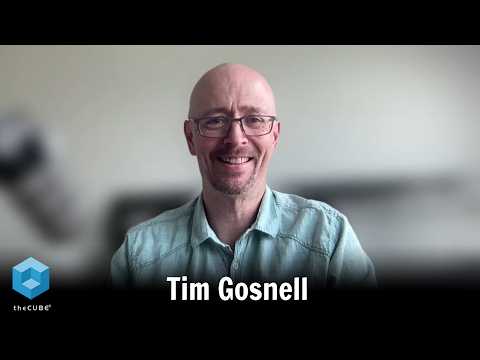
Brandon Farley, Phasis | AI Luminaries with Neo4j
Brandon Farley of Phasis appears on Neo4j AI Luminaries hosted by John Furrier of theCUBE Research to discuss knowledge graphs, World API orientation and agent grounding for reliable enterprise artificial intelligence, AI. The conversation examines graph-based approaches to mapping digital culture, knowledge layers and enterprise agent orchestration.
Farley explains how graphs power representations of people, values and subcultures and how Phasis' World API helps agents orient against a changing reality for trustworthy decision-making. They emphasize the need for a reality-based verification layer to reduce hallucinations and improve agent reliability.
Farley highlights the World API's /orient endpoint for grounding agents and maintaining private deltas against a shared world. Furrier notes that leveraging graph relationships across cultural and enterprise data creates a durable competitive advantage and enables specialized intelligence tailored to domain-specific decisions. The discussion addresses verification layers, agent orchestration, knowledge graph design and data infrastructure for scalable trustworthy AI deployments, and considers large language models, LLMs and their role in domain-specific agent workflows.
>> Hello, I'm John Furrier, host of theCUBE here at our Palo Alto studios. Of course, we have our NYSE CUBE and NYSE Wired connecting Silicon Valley to Wall Street. This is the Neo4j AI Luminary Series. We feature leaders who are on the cutting edge of graph databases and also the AI infrastructure that's making it all happen as data becomes the most important, powerful moat and competitive advantage for businesses and our world. It's becoming more and more prevalent. We have a great guest here, Brandon Farley, who is with Phasis. Also, his venture also started in the culture side of it. Suasiv, so thanks for coming on, Brandon. Appreciate it. You're a great example. We're going to get into it.
Brandon Farley
>> Thank you so much, John. Yeah, it's great to get into it and excited to dig into all things graph and the knowledge layer.
John Furrier
>> What I really love about what you're working on and your expansion on your momentum is, it was addressing culture and now you have Phasis, which is an extension of that platform, but you really cracked the code on using graphs in an area that graphs do really well on. When you have digital culture, you have network effects, people work in tribes, people have certain things. Your original position was nailing that culture side, which is just to oversimplify it as understanding the way people think, how they behave, to kind of get at the hidden dark art of brand marketing, which is always like a black box, no one ever knew. But when you get the data, you can actually nail that and graphs play a big role. And so take us through the journey of your progression because you really nailed this kind of segmentation, networks, using data, understanding culture, and now you're expanding into all other use cases that have that same pattern and repeating that into other verticals and adjacent markets with Phasis. So take us through what you did and where you're at.
Brandon Farley
>> Excellent. Like you said, culture really is underneath the surface of everything we do, whether it's in consumer culture or business culture. And things are moving faster and changing. And it's been hard to crack for a long time on the listening side and on any type of automation we want to do, including using agents and AI. So, we dug in. We spent over a year building the measurement of culture and what that looks like. And graphs were at the heart of all of it, right? So the relations not just between people, but between a person and their values and their beliefs. right, and subcultures. And this is something that we were really excited to get out and map to make the systems that rely on those, including AI agents, understand what is out there in culture and be able to make decisions based on that and its fast -changing nature. So, culture was the first and not the easiest, but we started there.
John Furrier
>> It's hard. just to set the context here is that what you did with the culture now with Phasis is you had to collect a lot of data, it's a data problem and opportunity. There's so many data points that could be gathered, gesture data, explicit data. unstructured data at its, I won't say worst form, but best form if you can harness it. You guys use graphs to get that in. That could be a tweet, an Instagram post, a blog post, a LinkedIn comment. We all do this every day, we leave a digital exhaust. You were rolling that up into a system, okay?
Brandon Farley
>> Yes.
John Furrier
>> And that's the key. Now that's really the state of the art today. So when you harness that data, you can be well-informed and talk about that piece of it, because this sets the table for the whole conversation around knowledge graphs, because you can create relationships between data, between people and things in graphs. Take us through the importance of that knowledge graph when you start to have all this data out there that it looks like a bunch of noise, but there's actually signal in there.
Brandon Farley
>> Yeah. Once you have this data represented, obviously, the next most important thing is maintaining it. And so we put a lot of work into creating the system of keeping this cultural map. Cultural arenas are what we call subcultures and fandoms and all of the different types of pockets of culture out there. And we would never pretend to have a perfect map, right? But being able to have the data in the shape that's needed for retrieval, for making decisions based on, really felt like, still feels like a first for us and for all of our users and clients that use it are excited to be able to tap into and not just map and see culture, but to be able to automate systems based on it.
John Furrier
>> Yeah, and I really think that whole tribe, the tribe is your vibe kind of thing. That is really what you did there. Now take us through where this goes to when you get into more of a systems view of say agents, because now you have, that's a technical thing that you applied to a market that was hard to crack, you cracked it. Now, as you look at Phasis, what is the focus there? As you look at multi-agent, you got agent to agent, you got humans involved, take us through the problem statement there and how you're solving it.
Brandon Farley
>> Yeah. The realization after the success we had with culture was that the same process that we had to apply in terms of cleaning, in terms of verification, in terms of creating ontologies would map really well to other domains, particularly ones that are hard to verify. And so really, it was exciting for us to expand out to many other domains. And that's what Phasis is, is that same representation of reality and the real world and what we call the world API that represents many different domains for agents to orient against is the key thinking there, right? So these agents are, and the LLMs have, reasoning has scaled incredibly. And every week it is advancing further and further. But expertise and understanding of the world is not as fast. And so that's where we see ourselves.
John Furrier
>> Yeah. One of the big conversations we're having with agents, obviously, is besides the governance and compliance side of it. Once you nail that, they're out working. They've got to make decisions. You're starting to see decision -making become a very key focus, having the system in place, a knowledge layer, and then making sure that you get all the right data at the right time, the speed, and then not a lot of hallucinations. You don't, no one in the enterprise wants a hallucination because there's deterministic processes. And we're seeing that front and center in the robotics world where safety's concerned, so you really can't screw up on the output. This is where you can get really efficient with knowledge graphs, knowledge layers. Take us through your thoughts on that because this is becoming kind of a key point. No one wants to get the revenue forecast wrong if I'm running an agent in a financial scenario or advice or any kind of workload.
Brandon Farley
>> Yeah, we want these agents to be able to do serious work, right? we've had our fun. It's time for really dialing it in and being able to create systems that we can trust and observe and understand. And it really gets to what we think about in terms of what a person brings to a job and when you hire them, right? They're bringing with them an understanding of maybe multiple domains, but not just reasoning, right? Not just their external knowledge, but their ability, what we would call or think of as expertise, right, is that judgment element. And we can't look to the LLMs, at least as of now, to do that, right? We're relying on systems of people being in the loop, of the responsibility being on the builders or the end users to verify the output of these agents and systems. And so having that reality layer is what we're excited about providing to agents and these builders to be able to understand the world and bring that type of judgment to agents and systems.
John Furrier
>> Explain if you don't mind that reality layer because the humans in the loop, but first of all, the systems are getting so fast, it's going great on the performance side, but the UI is going away. The best UIs are the ones that are more headless as we're seeing, but the systems have to work the way people think and work. And that's not the way it used to be with like SaaS apps. Now you're seeing intelligence platforms actually aligning with the human. Talk about that reality piece, verification. What are the things that come out of that that help the user and how do you view that?
Brandon Farley
>> Yeah, it's an amazing time in terms of how quickly things are changing from the limits of software and hard coding. the best map of reality we could and having to make decisions based on it maybe once a year with a version. So it's great. It's amazing for that. But yeah, it introduces the need, particularly as things move faster and faster, for having that step. And it has to be a thing that lives outside of the model because, as you mentioned before, hallucinations are a big problem. And the hope was that as these models get bigger, as the training routines expand, that maybe that would be solved. We're seeing that oftentimes some of these big newer models are hallucinating more or are overconfident and more fluent and convincing, right?
Brandon Farley
>> Right.
Brandon Farley
>> So it really does appear that for the time being, it's going to have to live outside the model. And so our solution to that is in a shared World. And we could talk about how, you know, that plays into these systems.
John Furrier
>> Yeah. Let's get into the shared World because I liked that philosophy. And also I would just say that artificial general intelligence or AGI or general intelligence is really where the foundation models play because they crawled the internet. They know everything that's out there, but inside some of these domain specific environments like the enterprise, you have data that's locked down as proprietary that's not yet there. So you're seeing a trend towards specialized intelligence. Companies like Fireworks in San Francisco, crack the code on that where it's like, hey, I can have a model that's perfect for the domain that I'm in, that's contextually relevant to the workload or environment that I'm in. I don't need the whole frontier model. I can do a little bit of it. Maybe I take a little, distill a little bit of it, but I need context. This is where we're starting to see a lot of action in the enterprise where it's starting to break through into production. Just your thoughts on this specialized intelligence and why the context piece is so important.
Brandon Farley
>> Yeah, yeah. I think as we get closer to what we might consider to be AGI, I do think that general, the word general, I think is going to play a bigger part and maybe break up, right. In terms of what we think of as an expert, right. An expert knows a lot, but also knows what doesn't matter, right. It's that kind of discernment. It's that specialization that is required to make decisions. And the training that goes into these models again, yeah. Like you say, soaking up the web. But really, as we think about it with organizations, right, that some of the most important decisions you're making are the ones based on private data, are the ones based on specific to your domain. Not a lot of that is in the training data out there. So as we think about what gets represented in that training data, some of the most important decisions are based on what's not in it. So that representation outside the model is just critical, whether it's in a shared World or private World, as we would describe for our clients.
John Furrier
>> As you expand your business, talk about the focus of the market you're going after. Obviously you have the context, you understand the graph and the knowledge layers in the past, but as you go into the market where there's complexity, there's data everywhere, and also whether it's an enterprise or a business, they might have existing data platforms. We see Databricks crushing it, Snowflake, Microsoft's got stuff out there. So a lot of people have stuff, but it's not necessarily intelligently enabled. What is your view on this and how do you think about this and how should people organize their approach and what are you guys doing and share some momentum?
Brandon Farley
>> Yeah, coming as a former data engineer and data scientist, it was really important to us to approach this in a way, understanding all of those unique challenges of the different stacks that every enterprise has with incredibly rich data within those to tap into. So we designed our system, our World API to plug into any of those systems, to be that layer that decides maybe what should go into those or what from those is most relevant for an agent's task, right? So that's where the orientation comes into play. So lots of ways to store a lot of this data and to tap into it and to extract from it to create what we call private deltas. So we have this shared world and rather than hard coding maybe a memory file that a lot of people are doing now or, a single fact or claim or preference or policy, we're storing that against the shared world, against the changing world, right? So when the world changes and it changes, your private delta is against reality.
John Furrier
>> Explain the world API, because is that something that you guys provide? Do you build for companies? Is it something that is going to be open source. We see NVIDIA do this all the time on their side. They donate all their stuff into the open source and they say, hey, use all these things we've done with Omniverse and all the simulations. Are you starting to see this World API as the view of some grounding of data. Explain the world API, how that works. If I wanted to engage with you guys as an engineer, as a data platform person or line of business, I want to get intelligence in my system. So Neo4j is out there, sure, but I got to put this into action. Take us through how that interaction works with the World API.
Brandon Farley
>> Yeah, the World API, again, really designed to be built into the systems as they are now and the primitives that are required to build this kind of reality layer and expertise. And so our primary endpoint is called /orient. And it really is about adding that orientation step before an agent goes out and searches or plans or strategizes a quick check against reality across the shared world or also across your private world as well. So that one endpoint is made to give that orientation to any agent before they start to know where to look, to know what they don't know. Here are the misconceptions that we know you might have. So it's, yeah, that's our -
John Furrier
>> It's like the Google Maps, right?It's like, hey, I just need to know what directions I got to go. So it's like we say the expression, his worldview is, that's, you're grounding the data to enable the task agent or workflow to execute.Is that right?
Brandon Farley
>> Exactly. That's right. Yeah, when we literally think of grounding, right? It's against the ground. And that's just what we feel like these models have been missing, right? And there's different ways to approach solving that. Obviously, the way that these models will go out and search and cite is certainly one way, but we found that, and our primary purpose here is to do that and maintain that understanding of the world across all of these domains so that agents aren't out there recreating reality every single time. using tokens, costs for searches,
John Furrier
>> and also just not knowing what to look for in the first place and having to brute force it, right? Well, Brandon, you've really definitely been on the frontier building the infrastructure on the digital side, getting that data initially and now as you expand, what's your focus now as you guys go forward? The market's super hot, there's still some things that've got to get checked off. We're seeing security, obviously you mentioned some of the hallucinations. What are some of the things you're focused on now and what should people who are watching think about because everyone's jumping into the graph game because they see the value. It's like the brain. Everyone wants their own brain of their business or whatever their worldview is for what they're trying to apply automation to or add autonomy. What's your view of the future and what are you focused on?
Brandon Farley
>> Yeah, we really feel like the companies now that are doing a lot of those things are already ahead of the game. But where we serve to really help is in the compounding effect that comes from agents now that are using and building these systems and inputting data into them. The compounding that happens now with agents that are oriented against reality is going to set apart the companies that are catching up in the future and whose agents are kind of piecing it together every single time. So yeah, the durable asset is the world model and we feel like the companies that are able to use it are going to be pretty quickly far ahead, yeah.
John Furrier
>> What are you most excited about right now as you look at the future too? Because there's so much action. you've got the technology there, you've got the business model opportunities out there for companies trying to figure out how to leverage data. What are you most excited about right now?
Brandon Farley
>> The exciting thing really is, we're seeing smaller models that are incredibly capable. What I really feel like we're going to witness over the next year is that scaling up of these kind of agent swarms and auto research and all of the ways that we'll be able to apply this intelligence will be remarkable. So being a part of that in terms of supplying these agents and these systems with reality is what we're most excited about. And we're going to see some really great things come to the surface that have never been possible before.
John Furrier
>> Yeah, it's physical and digital come together in one first party kind of relationship the role of the data, having it with all those relationships, unstructured, structured data. Brandon, thank you so much for participating in this Luminaries series and looking forward to following up with you and checking in. Thanks for coming on. Appreciate it.
Brandon Farley
>> John, thank you for having me.
John Furrier
>> Yeah, it's great to chat. All right, I'm John Furrier here at the Neo4j AI Luminaries Series. This is about the people who are successful on the frontier and you're seeing perhaps, the applications that are using it, using all kinds of data, not just one database, but many more are actually really compatible with the AI infrastructure that's evolving super fast. And as the software stacks expand, a lot more capabilities to come. Thanks for watching. Thank you.
>> Hello, I'm John Furrier, host of theCUBE here at our Palo Alto studios. Of course, we have our NYSE CUBE and NYSE Wired connecting Silicon Valley to Wall Street. This is the Neo4j AI Luminary Series. We feature leaders who are on the cutting edge of graph databases and also the AI infrastructure that's making it all happen as data becomes the most important, powerful moat and competitive advantage for businesses and our world. It's becoming more and more prevalent. We have a great guest here, Brandon Farley, who is with Phasis. Also, his venture also started in the culture side of it. Suasiv, so thanks for coming on, Brandon. Appreciate it. You're a great example. We're going to get into it.
Brandon Farley
>> Thank you so much, John. Yeah, it's great to get into it and excited to dig into all things graph and the knowledge layer.
John Furrier
>> What I really love about what you're working on and your expansion on your momentum is, it was addressing culture and now you have Phasis, which is an extension of that platform, but you really cracked the code on using graphs in an area that graphs do really well on. When you have digital culture, you have network effects, people work in tribes, people have certain things. Your original position was nailing that culture side, which is just to oversimplify it as understanding the way people think, how they behave, to kind of get at the hidden dark art of brand marketing, which is always like a black box, no one ever knew. But when you get the data, you can actually nail that and graphs play a big role. And so take us through the journey of your progression because you really nailed this kind of segmentation, networks, using data, understanding culture, and now you're expanding into all other use cases that have that same pattern and repeating that into other verticals and adjacent markets with Phasis. So take us through what you did and where you're at.
Brandon Farley
>> Excellent. Like you said, culture really is underneath the surface of everything we do, whether it's in consumer culture or business culture. And things are moving faster and changing. And it's been hard to crack for a long time on the listening side and on any type of automation we want to do, including using agents and AI. So, we dug in. We spent over a year building the measurement of culture and what that looks like. And graphs were at the heart of all of it, right? So the relations not just between people, but between a person and their values and their beliefs. right, and subcultures. And this is something that we were really excited to get out and map to make the systems that rely on those, including AI agents, understand what is out there in culture and be able to make decisions based on that and its fast -changing nature. So, culture was the first and not the easiest, but we started there.
John Furrier
>> It's hard. just to set the context here is that what you did with the culture now with Phasis is you had to collect a lot of data, it's a data problem and opportunity. There's so many data points that could be gathered, gesture data, explicit data. unstructured data at its, I won't say worst form, but best form if you can harness it. You guys use graphs to get that in. That could be a tweet, an Instagram post, a blog post, a LinkedIn comment. We all do this every day, we leave a digital exhaust. You were rolling that up into a system, okay?
Brandon Farley
>> Yes.
John Furrier
>> And that's the key. Now that's really the state of the art today. So when you harness that data, you can be well-informed and talk about that piece of it, because this sets the table for the whole conversation around knowledge graphs, because you can create relationships between data, between people and things in graphs. Take us through the importance of that knowledge graph when you start to have all this data out there that it looks like a bunch of noise, but there's actually signal in there.
Brandon Farley
>> Yeah. Once you have this data represented, obviously, the next most important thing is maintaining it. And so we put a lot of work into creating the system of keeping this cultural map. Cultural arenas are what we call subcultures and fandoms and all of the different types of pockets of culture out there. And we would never pretend to have a perfect map, right? But being able to have the data in the shape that's needed for retrieval, for making decisions based on, really felt like, still feels like a first for us and for all of our users and clients that use it are excited to be able to tap into and not just map and see culture, but to be able to automate systems based on it.
John Furrier
>> Yeah, and I really think that whole tribe, the tribe is your vibe kind of thing. That is really what you did there. Now take us through where this goes to when you get into more of a systems view of say agents, because now you have, that's a technical thing that you applied to a market that was hard to crack, you cracked it. Now, as you look at Phasis, what is the focus there? As you look at multi-agent, you got agent to agent, you got humans involved, take us through the problem statement there and how you're solving it.
Brandon Farley
>> Yeah. The realization after the success we had with culture was that the same process that we had to apply in terms of cleaning, in terms of verification, in terms of creating ontologies would map really well to other domains, particularly ones that are hard to verify. And so really, it was exciting for us to expand out to many other domains. And that's what Phasis is, is that same representation of reality and the real world and what we call the world API that represents many different domains for agents to orient against is the key thinking there, right? So these agents are, and the LLMs have, reasoning has scaled incredibly. And every week it is advancing further and further. But expertise and understanding of the world is not as fast. And so that's where we see ourselves.
John Furrier
>> Yeah. One of the big conversations we're having with agents, obviously, is besides the governance and compliance side of it. Once you nail that, they're out working. They've got to make decisions. You're starting to see decision -making become a very key focus, having the system in place, a knowledge layer, and then making sure that you get all the right data at the right time, the speed, and then not a lot of hallucinations. You don't, no one in the enterprise wants a hallucination because there's deterministic processes. And we're seeing that front and center in the robotics world where safety's concerned, so you really can't screw up on the output. This is where you can get really efficient with knowledge graphs, knowledge layers. Take us through your thoughts on that because this is becoming kind of a key point. No one wants to get the revenue forecast wrong if I'm running an agent in a financial scenario or advice or any kind of workload.
Brandon Farley
>> Yeah, we want these agents to be able to do serious work, right? we've had our fun. It's time for really dialing it in and being able to create systems that we can trust and observe and understand. And it really gets to what we think about in terms of what a person brings to a job and when you hire them, right? They're bringing with them an understanding of maybe multiple domains, but not just reasoning, right? Not just their external knowledge, but their ability, what we would call or think of as expertise, right, is that judgment element. And we can't look to the LLMs, at least as of now, to do that, right? We're relying on systems of people being in the loop, of the responsibility being on the builders or the end users to verify the output of these agents and systems. And so having that reality layer is what we're excited about providing to agents and these builders to be able to understand the world and bring that type of judgment to agents and systems.
John Furrier
>> Explain if you don't mind that reality layer because the humans in the loop, but first of all, the systems are getting so fast, it's going great on the performance side, but the UI is going away. The best UIs are the ones that are more headless as we're seeing, but the systems have to work the way people think and work. And that's not the way it used to be with like SaaS apps. Now you're seeing intelligence platforms actually aligning with the human. Talk about that reality piece, verification. What are the things that come out of that that help the user and how do you view that?
Brandon Farley
>> Yeah, it's an amazing time in terms of how quickly things are changing from the limits of software and hard coding. the best map of reality we could and having to make decisions based on it maybe once a year with a version. So it's great. It's amazing for that. But yeah, it introduces the need, particularly as things move faster and faster, for having that step. And it has to be a thing that lives outside of the model because, as you mentioned before, hallucinations are a big problem. And the hope was that as these models get bigger, as the training routines expand, that maybe that would be solved. We're seeing that oftentimes some of these big newer models are hallucinating more or are overconfident and more fluent and convincing, right?
Brandon Farley
>> Right.
Brandon Farley
>> So it really does appear that for the time being, it's going to have to live outside the model. And so our solution to that is in a shared World. And we could talk about how, you know, that plays into these systems.
John Furrier
>> Yeah. Let's get into the shared World because I liked that philosophy. And also I would just say that artificial general intelligence or AGI or general intelligence is really where the foundation models play because they crawled the internet. They know everything that's out there, but inside some of these domain specific environments like the enterprise, you have data that's locked down as proprietary that's not yet there. So you're seeing a trend towards specialized intelligence. Companies like Fireworks in San Francisco, crack the code on that where it's like, hey, I can have a model that's perfect for the domain that I'm in, that's contextually relevant to the workload or environment that I'm in. I don't need the whole frontier model. I can do a little bit of it. Maybe I take a little, distill a little bit of it, but I need context. This is where we're starting to see a lot of action in the enterprise where it's starting to break through into production. Just your thoughts on this specialized intelligence and why the context piece is so important.
Brandon Farley
>> Yeah, yeah. I think as we get closer to what we might consider to be AGI, I do think that general, the word general, I think is going to play a bigger part and maybe break up, right. In terms of what we think of as an expert, right. An expert knows a lot, but also knows what doesn't matter, right. It's that kind of discernment. It's that specialization that is required to make decisions. And the training that goes into these models again, yeah. Like you say, soaking up the web. But really, as we think about it with organizations, right, that some of the most important decisions you're making are the ones based on private data, are the ones based on specific to your domain. Not a lot of that is in the training data out there. So as we think about what gets represented in that training data, some of the most important decisions are based on what's not in it. So that representation outside the model is just critical, whether it's in a shared World or private World, as we would describe for our clients.
John Furrier
>> As you expand your business, talk about the focus of the market you're going after. Obviously you have the context, you understand the graph and the knowledge layers in the past, but as you go into the market where there's complexity, there's data everywhere, and also whether it's an enterprise or a business, they might have existing data platforms. We see Databricks crushing it, Snowflake, Microsoft's got stuff out there. So a lot of people have stuff, but it's not necessarily intelligently enabled. What is your view on this and how do you think about this and how should people organize their approach and what are you guys doing and share some momentum?
Brandon Farley
>> Yeah, coming as a former data engineer and data scientist, it was really important to us to approach this in a way, understanding all of those unique challenges of the different stacks that every enterprise has with incredibly rich data within those to tap into. So we designed our system, our World API to plug into any of those systems, to be that layer that decides maybe what should go into those or what from those is most relevant for an agent's task, right? So that's where the orientation comes into play. So lots of ways to store a lot of this data and to tap into it and to extract from it to create what we call private deltas. So we have this shared world and rather than hard coding maybe a memory file that a lot of people are doing now or, a single fact or claim or preference or policy, we're storing that against the shared world, against the changing world, right? So when the world changes and it changes, your private delta is against reality.
John Furrier
>> Explain the world API, because is that something that you guys provide? Do you build for companies? Is it something that is going to be open source. We see NVIDIA do this all the time on their side. They donate all their stuff into the open source and they say, hey, use all these things we've done with Omniverse and all the simulations. Are you starting to see this World API as the view of some grounding of data. Explain the world API, how that works. If I wanted to engage with you guys as an engineer, as a data platform person or line of business, I want to get intelligence in my system. So Neo4j is out there, sure, but I got to put this into action. Take us through how that interaction works with the World API.
Brandon Farley
>> Yeah, the World API, again, really designed to be built into the systems as they are now and the primitives that are required to build this kind of reality layer and expertise. And so our primary endpoint is called /orient. And it really is about adding that orientation step before an agent goes out and searches or plans or strategizes a quick check against reality across the shared world or also across your private world as well. So that one endpoint is made to give that orientation to any agent before they start to know where to look, to know what they don't know. Here are the misconceptions that we know you might have. So it's, yeah, that's our -
John Furrier
>> It's like the Google Maps, right?It's like, hey, I just need to know what directions I got to go. So it's like we say the expression, his worldview is, that's, you're grounding the data to enable the task agent or workflow to execute.Is that right?
Brandon Farley
>> Exactly. That's right. Yeah, when we literally think of grounding, right? It's against the ground. And that's just what we feel like these models have been missing, right? And there's different ways to approach solving that. Obviously, the way that these models will go out and search and cite is certainly one way, but we found that, and our primary purpose here is to do that and maintain that understanding of the world across all of these domains so that agents aren't out there recreating reality every single time. using tokens, costs for searches,
John Furrier
>> and also just not knowing what to look for in the first place and having to brute force it, right? Well, Brandon, you've really definitely been on the frontier building the infrastructure on the digital side, getting that data initially and now as you expand, what's your focus now as you guys go forward? The market's super hot, there's still some things that've got to get checked off. We're seeing security, obviously you mentioned some of the hallucinations. What are some of the things you're focused on now and what should people who are watching think about because everyone's jumping into the graph game because they see the value. It's like the brain. Everyone wants their own brain of their business or whatever their worldview is for what they're trying to apply automation to or add autonomy. What's your view of the future and what are you focused on?
Brandon Farley
>> Yeah, we really feel like the companies now that are doing a lot of those things are already ahead of the game. But where we serve to really help is in the compounding effect that comes from agents now that are using and building these systems and inputting data into them. The compounding that happens now with agents that are oriented against reality is going to set apart the companies that are catching up in the future and whose agents are kind of piecing it together every single time. So yeah, the durable asset is the world model and we feel like the companies that are able to use it are going to be pretty quickly far ahead, yeah.
John Furrier
>> What are you most excited about right now as you look at the future too? Because there's so much action. you've got the technology there, you've got the business model opportunities out there for companies trying to figure out how to leverage data. What are you most excited about right now?
Brandon Farley
>> The exciting thing really is, we're seeing smaller models that are incredibly capable. What I really feel like we're going to witness over the next year is that scaling up of these kind of agent swarms and auto research and all of the ways that we'll be able to apply this intelligence will be remarkable. So being a part of that in terms of supplying these agents and these systems with reality is what we're most excited about. And we're going to see some really great things come to the surface that have never been possible before.
John Furrier
>> Yeah, it's physical and digital come together in one first party kind of relationship the role of the data, having it with all those relationships, unstructured, structured data. Brandon, thank you so much for participating in this Luminaries series and looking forward to following up with you and checking in. Thanks for coming on. Appreciate it.
Brandon Farley
>> John, thank you for having me.
John Furrier
>> Yeah, it's great to chat. All right, I'm John Furrier here at the Neo4j AI Luminaries Series. This is about the people who are successful on the frontier and you're seeing perhaps, the applications that are using it, using all kinds of data, not just one database, but many more are actually really compatible with the AI infrastructure that's evolving super fast. And as the software stacks expand, a lot more capabilities to come. Thanks for watching. Thank you.






 John Furrier