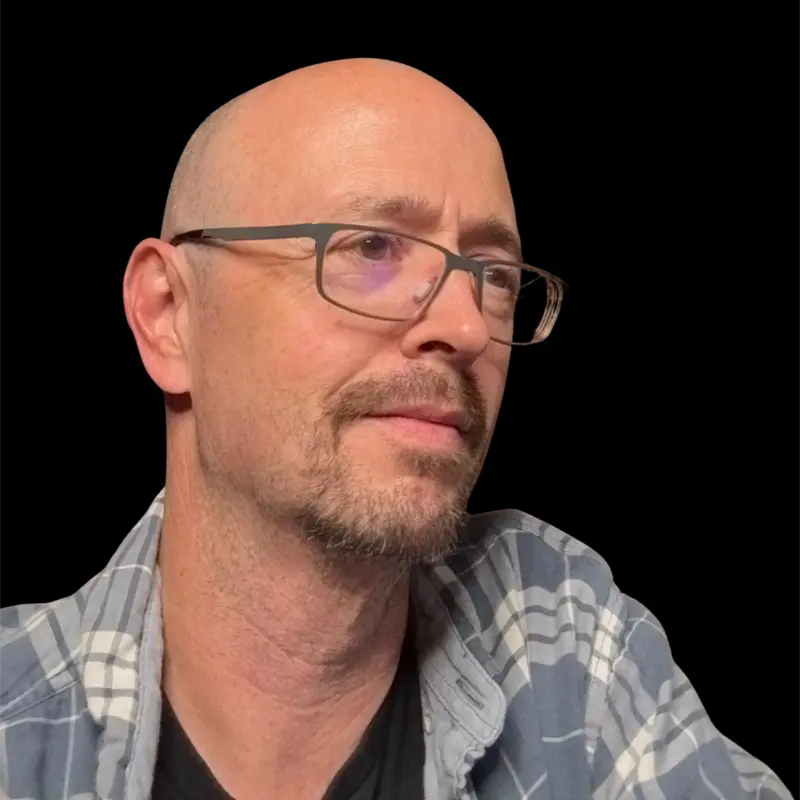
This episode explores knowledge graphs and artificial intelligence for revenue operations and corporate intelligence. Tim Gosnell of CommonThread AI joins the AI Luminaries Series with Neo4j and theCUBE to discuss graph databases, GraphRAG, deterministic versus non-deterministic reasoning and building a corporate brain that connects data pipelines, vector stores and large language model-driven workflows.
Gosnell emphasizes the critical need for robust continuously running data pipelines and agreed business definitions to ensure reliable AI in production. They recommend using graphs as the spine to reference relational, vector and document stores. They advise precomputing deterministic insights to lower LLM token costs and prioritizing traceability, lineage and trust for high-stakes domains such as revenue operations and corporate intelligence. Topics covered include knowledge graph design, graph database integration, GraphRAG approaches, vector store management and strategies for AI infrastructure and data engineering. Listeners gain practical guidance for deploying AI in production with traceability and cost-effective LLM workflows.
Forgot Password
Almost there!
We just sent you a verification email. Please verify your account to gain access to
theCUBE + NYSE Wired: Data + AI: Turning Data Into Knowledge for Autonomous Systems. If you don’t think you received an email check your
spam folder.
Sign in to theCUBE + NYSE Wired: Data + AI: Turning Data Into Knowledge for Autonomous Systems.
In order to sign in, enter the email address you used to registered for the event. Once completed, you will receive an email with a verification link. Open the link to automatically sign into the site.
Register for theCUBE + NYSE Wired: Data + AI: Turning Data Into Knowledge for Autonomous Systems
Please fill out the information below. You will receive an email with a verification link confirming your registration. Click the link to automatically sign into the site.
You’re almost there!
We just sent you a verification email. Please click the verification button in the email. Once your email address is verified, you will have full access to all event content for theCUBE + NYSE Wired: Data + AI: Turning Data Into Knowledge for Autonomous Systems.
Thanks for confirming your account. Now you can access theCUBE + NYSE Wired: Data + AI: Turning Data Into Knowledge for Autonomous Systems with this email address.
I want my badge and interests to be visible to all attendees.
Checking this box will display your presense on the attendees list, view your profile and allow other attendees to contact you via 1-1 chat. Read the Privacy Policy. At any time, you can choose to disable this preference.
Select your Interests!
add
Upload your photo
Uploading..
OR
Connect via Twitter
Connect via Linkedin
EDIT PASSWORD
Share
Forgot Password
Almost there!
We just sent you a verification email. Please verify your account to gain access to
theCUBE + NYSE Wired: Data + AI: Turning Data Into Knowledge for Autonomous Systems. If you don’t think you received an email check your
spam folder.
Sign in to theCUBE + NYSE Wired: Data + AI: Turning Data Into Knowledge for Autonomous Systems.
In order to sign in, enter the email address you used to registered for the event. Once completed, you will receive an email with a verification link. Open the link to automatically sign into the site.
Sign in to gain access to theCUBE + NYSE Wired: Data + AI: Turning Data Into Knowledge for Autonomous Systems
Please sign in with LinkedIn to continue to theCUBE + NYSE Wired: Data + AI: Turning Data Into Knowledge for Autonomous Systems. Signing in with LinkedIn ensures a professional environment.
Are you sure you want to remove access rights for this user?
Details
Manage Access
email address
Community Invitation
Tim Gosnell, CommonThread AI | AI Luminaries with Neo4j
This episode explores knowledge graphs and artificial intelligence for revenue operations and corporate intelligence. Tim Gosnell of CommonThread AI joins the AI Luminaries Series with Neo4j and theCUBE to discuss graph databases, GraphRAG, deterministic versus non-deterministic reasoning and building a corporate brain that connects data pipelines, vector stores and large language model-driven workflows.
Gosnell emphasizes the critical need for robust continuously running data pipelines and agreed business definitions to ensure reliable AI in production. They recommend using graphs as the spine to reference relational, vector and document stores. They advise precomputing deterministic insights to lower LLM token costs and prioritizing traceability, lineage and trust for high-stakes domains such as revenue operations and corporate intelligence. Topics covered include knowledge graph design, graph database integration, GraphRAG approaches, vector store management and strategies for AI infrastructure and data engineering. Listeners gain practical guidance for deploying AI in production with traceability and cost-effective LLM workflows.
Tim Gosnell, CommonThread AI | AI Luminaries with Neo4j
Tim Gosnell
CEOCommonThread AI
search
(INTRO)
John Furrier
>> Hello, I'm John Furrier with theCUBE. We are here at theCUBE's NYSE studio. Of course, we have our Palo Alto studio connecting Silicon Valley and Wall Street. This is the AI Luminaries series. We talk to leaders who are on the frontier with graph databases, AI infrastructure, enabled software to usher in the next generation of intelligence as companies look to inject intelligence into their organization. architectures, best practices. How do you move from pilot into production? How do you get that value? Our next guest is an AI luminary, Tim Gosnell, CEO of CommonThread AI. Perfect use case for talking about this. Tim, thanks for coming on the AI Luminaries series.
Tim Gosnell
>> Thanks for having me.
John Furrier
>> So we were talking before we came on camera about revenue operations, things you guys do, and you made a comment, I want to get right into it. Graphs are perfect for that. So explain your operation, what you guys do relative to data and revenue operation, how that translates into the value proposition with graphs and the output.
Tim Gosnell
>> Sure. So what we find is in almost every single instance when we go and engage any company they've got data everywhere, completely fragmented and no real clue how to do it. And a lot of people spend their time pulling data out of one system and trying to understand it in another system. There's no relationship there. And graphs literally are built for this idea of connecting data and their relationships and representing that. And so for us, this is the most natural fit.
John Furrier
>> Revenue operations, I know, having some experience running my business and talking to other businesses, there's a lot of tentacles involved.
Tim Gosnell
>> Yeah.
John Furrier
>> You have people who sell things, collect things there's data. There's all kinds of context around revenue. Correct? And how they collect it. Who's late? It's something my mind blows up when I think about it. Explain the problem statement and how this comes together.
Tim Gosnell
>> Well, I think that it works out as we have many different people who have different aspects of the go -to -market process and they all have tools, right? I think the last I heard, there's something like 25 ,000 different marketing SaaS tools out there and none of them talk to one another. And then you've got spaces or companies like Zapier and Clari and all these other pieces that are putting pieces together, but no one has a real strong idea of what it looks like when you build a cohesive system. And then you get into enterprises who are actually working on this and investing heavily in this exact space. And when you talk to data engineers, most of the time you see a lot of relational databases. These days you see a lot of vector databases, but you don't see a lot of this component that we use, which is the graph database. And that literally brings that relationship structure to the forefront and allows those teams to talk to one another using a common definition.
John Furrier
>> Tim, look at the concept of graphs, knowledge graphs, and all the things that go with it. In AI, what I've noticed, I would love to get your reaction to this, because I think this plays into something that no one's really talking much about.
Tim Gosnell
>> Sure.
John Furrier
>> When you inject intelligence, it changes the data silo relationship. So all companies have data everywhere, scattered in an organization. But when you inject intelligence, you don't have to redo a lot of things. But it changes the nature of that situation. In telecom, when you inject RF, it changes what radio frequency does. When you inject intelligence into a process, you can bring these things together, and to use your term, CommonThread. when you connect disparate systems with intelligence, that can change. And I think this is where graphs come in. How do you react to that? How would you unpack that concept? Because that's what you were saying before.
Tim Gosnell
>> Well, that's absolutely part of what we need to do in order to actually get businesses to a new place. And one of the pieces that I talk about a lot is the era of AI is actually going to open up things that we haven't even thought about yet. And just like the era of e -com did in that sort of business, where we didn't even think about what it could do. did anybody imagine you'd get groceries delivered by Amazon 20 years ago? We're in that phase right now where AI is about to change things in ways we cannot comprehend. And part of that is getting rid of or helping us solve that data silo piece and getting people to actually talk to one another. And if that includes not having to actually do the work to figure out how to talk to one another, I think that is a plus.
John Furrier
>> Yeah. And the vertically integrated apps, you can make sense of why someone would have a siloed app or a database because it does a function.
Tim Gosnell
>> Yeah.
John Furrier
>> But your brain has functions, right? So every company is moving to a growth mindset from an intellect standpoint. And so what we're seeing in the enterprise is basically the business brain is the moat. We hear that with Alex Karp from Palantir, thought leaders also, hey, if your company has a brain, why would you outsource that? And that's the current narrative. But if it's valuable, you have to literally build the architecture. Can you share your view on this? Because you have a lot of great use cases that's essentially doing that. You've got a knowledge graph. You've got to trace it. It's got to be trusted. you can't get it wrong. If it's revenue, there's a lot of eyes on it. So take us through the architecture of how do you create that intelligence foundation or brain?
Tim Gosnell
>> Well, I think that you want to get all the components of it that you've always had, just you want to get them together. So if you want to get your segmentation together, you want to get your ideal customer profiles together, you want to get your messaging together, you want to get where your markets are, where you communicate these things, all of those pieces, and then you want to look at it, at least from our point of view, as a whole, not as an individual slice. Because an individual slice, we've been doing for a long time, and a lot of people refer to that as short -term thinking, right? How do I increase revenue this quarter? But if what we were really looking for is massive gains and huge growth across many quarters, we need to actually understand what the economic impact is that's going on politically and worldwide, and how that changes our messaging, and what people are responding to. And the only way we can do that is by having a larger context window. And so let's build that larger context window. And the more we build that larger context window, the more we understand what's going on across our business, and then we keep updating that. So as things change, we keep getting new and adaptive context. And that's really key.
John Furrier
>> I was talking to Philip from Neo4j. He's the CTO at the RAISE Summit in Paris, and he mentioned context a lot. I want to just unpack something with you there because when you hear context window, some people think, oh, NVIDIA, I got more tokens, more addressability in, say, the memory and the GPUs. But you also can have context on the other side, which is the graph, right? So thread that needle, okay, and connect that thread. Create a CommonThread there because in a way they're both complementary because the context window on the brain side, certainly powered by tokens and context windows, but there's a whole nother level because the reasoning, the memory, we even talk about memory with graphs.
Tim Gosnell
>> Exactly.
John Furrier
>> Talk about the differences between the two and what's the CommonThread?
Tim Gosnell
>> So for me, it works like this. I think that you have the context window that most people talk about is this in-memory context window that we're feeding an LLM so we can rationalize about that. And that's great and it's awesome. And we're going to continue to work in that space. And Anthropic and OpenAI and all the companies that are in that space, they're going to continue to work on that. And it's going to get better. And it's still expensive. Right? And then we can also talk about building a knowledge graph on the fly. This is called GraphRAG. And that works great. But I think there's another layer where we can get deterministic about it, where we can actually start solving some of the data computation before we even get to the actual runtime inference cycle. And we can get to a place where we can query that with the LLM in its context window. So we get a subset of a deterministic database. And we don't have so much processing to do and spend so many tokens. So for me, it's a two -sided process. I think this is the third space that's actually emerging in AI right now. And I don't know how many people are thinking about this. But I think that that's what you're going to see. And I'm just going to say this real quick, I think what will happen is that will enable companies to build their own bespoke SLM, so to speak, so they can have something that's like J.A.R.V.I.S., who doesn't like Iron Man.
John Furrier
>> Yeah, exactly. And the thing is, by the way, this is a great point because the narrative was, oh, AI is for non -deterministic. But in reality, when you actually have the data, it's deterministic with processes, workflows, the CRMs out there, you can actually get the determinism, but you can also have a specialized intelligence, not just general intelligence. What you're getting at is everyone talks AGI, that's general intelligence. Hey, general web information. But when you talk about specialism, that's where the value is. So you can lock that in and then use all your resources for non -deterministic reasoning.
Tim Gosnell
>> Exactly.
John Furrier
>> Why not lock in determinism when you know it?
Tim Gosnell
>> Well, and if we look at the arc of human work, right?
John Furrier
>> Right.
Tim Gosnell
>> We had the people like when Notre-Dame burned down, they had to go and remake or retrain people to build the pieces that fell and broke. And that's a specialist role. You can't get a generalist mason or a generalist plaster person or something like that to go and make that. They actually have to know what they're doing. And we need that in all aspects. So general is great. And I think we all love general intelligence. We'd all love the whole world to be more generally intelligent, and we'll still need people who know those specific pieces really, really well. And I think if we actually model AI after this idea, we'll get farther.
John Furrier
>> Yeah. And I always use The Matrix as a movie, as a metaphor, because the scenes in The Matrix, where it says, upload how to do judo, right? So you can have AI specialism. It's not mutually exclusive. We want to be generally aware of what's going on in the AI world there's data. But when you have to, in real time, context switch to reasoning. This is where I like the graph conversation because you now can factor in and connect context in an organization. You can say, there's the Slack channel for the salespeople. Here's all the preamble and post sales information. That would drive a lot of context to say a revenue question.
Tim Gosnell
>> Agreed.
John Furrier
>> That might not be a snapshot in a database.
Tim Gosnell
>> Right, and that's part of how you go about this. You want to be able to query your emails and have that be deterministic. No, I need you to go read the whole company's emails during this conversation with AI. We need that to actually be crunched ahead of time because it just takes too long otherwise. And that's the point. And so if we can do that, why wouldn't we? So it's like a pre-processing step for me, at least that's the way I look at it. And then embed that knowledge, like you said, in this Neo4j.
John Furrier
>> Yeah, exactly. How to fly a helicopter, all these examples. This is the way I think specialized intelligence in general comes together. We're seeing it in robotics, you're seeing it in a lot of use cases on physical AI, but certainly it will be key for agents. Now I have to ask you about the reliability question. I mentioned this earlier about revenue ops is an area that's actually a perfect use case because everyone wants to get the revenue and there's a lot of eyes on it, so to speak.
Tim Gosnell
>> Exactly.
John Furrier
>> No one wants hallucinations, right? So the data quality, reliability, in production is a big concern. Talk about that path. graph, architecturally, what has to be the prerequisite? And then when you move from pilot to production, what are some of the benefits? What are some of the things you look at when you put graphs in and connect to all that data?
Tim Gosnell
>> Well, honestly, let's get even simpler. We're going to build a graph, yes. But in order to build a graph, we have to have a data pipeline that is solid, one that normalizes data, one that cleans data, one that is consistent and flows continuously. Let's start there. Always start there. And everybody wanted to skip that step, by the way. So I'm always talking about that these days. So let's start there. But then let's model relationships that actually represent the way the business works. And in order to do that, you have to have that knowledge that's in the sales team and in the marketing team and in your customer support, customer success team, customer experience team, and finance. It's literally the entire organization. So what we're talking about is a form of business intelligence. And we have to get people to agree on what, as an example, the definition of revenue is. And when we do that, then finally we can start moving the AI systems into a place where they can rationalize in a way that we agree with them. But the agreements have to be made.
John Furrier
>> What are some of the outputs that you guys have seen or consequences of doing that work? You've got to build the plumbing. It's like building a house and saying, oh, we have bathrooms and showers and sinks. And wait a minute, put the plumbing in. You've got to have the pipe. Right. So talk about what comes out of it. What are some evidence that you've seen? Can you share any anecdotes or observations that you've seen that's been a surprise? Whoa, that was cool. Or, oh, my God, that blew me away.
Tim Gosnell
>> Well, the easy one for me is that we give people like sales reps more face time with customers.
John Furrier
>> what?
Tim Gosnell
>> Just by solving the data pipeline. That's it. You don't even have to go any farther. We didn't have to do calculations on conversion rates. We didn't have to do any sort of metrics on LTV or cost of acquiring customers or average contract value. Simply make the data go in a way that makes senseand is always there. And people all of a sudden have time to do more meaningful work.
John Furrier
>> that's a superpower. If you're in an organization, you can say, hey, I've enabled our frontline field teams to spend more time with customers that produce results. that is the ultimate holy grail metric. Right.
Tim Gosnell
>> I agree with you. And literally everyone I talk to, and I go to lots of meetings with revenue operators and CROs and VPs of sales, CMOs, and this is what they talk about. If we can get that one thing, it changes the whole dynamic of the company. And I'll say it like this. I know that the head of GTM operations at Zapier, this is what she uses to measure whether they ship something.
John Furrier
>> Yeah, it's great. That brings up a good point about trust. Trust is about who did what, a little bit of lineage. You can almost say traceability. We've seen this before in cloud, right? Observability, monitoring, real-time service management. There's a service piece here around tracing.
Tim Gosnell
>> Yep. 100%.
John Furrier
>> Talk about that piece on the trust, because you got to have the artifacts. And everyone's freaking out about AI. We're seeing all that stuff in the news around, hey, I want to make sure it's safe. And do I track it? Did it get it right? Evaluations. we're seeing that in agents heavily. Talk about this piece.
Tim Gosnell
>> Okay. So I think you just have to approach this from the same place as the data pipeline, which is to say, if I can recreate a knowledge graph over and over and over again from the same data, let's see what we said here, same data, which is to say, we keep a record of everything that comes in. We keep a record of every transform that happens. That way, if we need to make changes to it, we can just re-transform it all into what we created. And if we do that, then we know where it is. And if we are understanding what that layer is, and we apply standard cybersecurity practices to it. Then we're in a good place. And notice then when you do, hey, Claude, what happens with my data here? And it's coming from your controlled data system. You already know what's going on. So you just have to make sure that you're applying every single best practice that we all know applies in the enterprise at every layer.
John Furrier
>> You know what I love about this conversation is that it's a blend of computer science and practical thinking because, there's recursion involved in graphs. It's a really great mechanism. You can get right to something quickly, not just search and get an answer. You can get to tap on a branch or graph piece. It's like tapping a part of your brain, right, for something to solve a problem.
Tim Gosnell
>> Agreed.
John Furrier
>> Talk about that search dynamic because most people think, oh, search, get an answer. First answer out is like us speaking off the top of our heads and what comes out of our mouth may not be what we want to say.
Tim Gosnell
>> There is always that.
John Furrier
>> Think before you speak, right? one of those things. You've got to reason. It isn't like a search problem.
Tim Gosnell
>> No. So.
John Furrier
>> I brought that up because people think search is the killer app.
Tim Gosnell
>> In this particular aspect, one of the things that I love to throw out is my kid is in biochem and he does a lot of gene sequencing. And you would think that gene sequencing, how does this apply? Literally, this is a graph problem. This is, we have a node, we have an edge, we have a node, and that relationship there allows them to look at this sort of problem and say, hmm, what's going on when we splice in this gene? But this is the same thing in a customer journey, as an example, right? Let's look at how these things are going together. And if we have a sequence of messages that are applied to a customer, as an example, what is the result that comes out of that? What are the outcome? And that's a perfect graph right there. And you don't need much more.
John Furrier
>> Yeah, I love that relationship piece, but let me throw out something that's not my opinion, but I'm just going to throw it out as a potential newbie would say, whoa, whoa, whoa, we have relational databases and we have schemas. So relational databases have been around for a while. We all know what that looks like. It's a pain in the you -know -what to deal with. So there's going to be a lot of schema changes, context changes. Talk about the relationship piece, why the graph is so much better in this context. Now, there's a role for relational databases.
Tim Gosnell
>> Oh, I agree.
John Furrier
>> I have no issue with that. But this comes back down to the database isn't the one thing anymore.
Tim Gosnell
>> Well, I think in this space, we're talking about joins, right? And I hate to get real technical on it. I don't want to go there. But when we talk about joins and creating a join table, the join table is an edge in a graph. We don't need a foreign key in one table and a foreign key in another table or primary keys there and two foreign keys in another. It's just one relationship. And so we aren't doing a query across three tables. We're doing a query for a relationship, which is a first -class citizen in a graph. And so we can literally say, show me all customers who belong to this segment without having to do a join.
John Furrier
>> Yeah. And it makes unstructured data, too, come into that context. It's like us when we do events. We have an event. We have people who come on. We have their LinkedIn handle. We have all kinds of coordinates. That's a graph.
Tim Gosnell
>> Correct. Literally, this is part of the way that we build our graph. We look at LinkedIn data. We looked at email data. We can create all sorts of relationships around this and events. I host roundtables. I build graphs out of who comes. And then I can look at who is interacting with our web presence because of that.
John Furrier
>> So do you record all your conversations? Put that in the graph, too?
Tim Gosnell
>> Of course I do.
John Furrier
>> OK, all right.
Tim Gosnell
>> Of course I do.
John Furrier
>> Let's get into, I'd love to see your chat bot. All your answers come in on that. Let's talk about the data ecosystems. We did touch on a lot. You mentioned pipelines and the relationships. A lot of companies have preexisting conditions around data. Got old school Oracle database. I got Postgres over here. I got Databricks. Got a little bit of Snowflake. And you got a sprawl of all these kinds of silos, disparate data marts. How should people think about connecting and leaning into AI in a way that doesn't have them rebuilding all the time? How does the graph fit into that?
Tim Gosnell
>> This is a great question. And honestly, I think you have to decide what your spine is, right? You need a graph. You're going to need that relationship. And so are you traversing from relational table to relational table and you use the graph because you want to understand the relationship in a different way? That's a way of doing it. And I'm sure there are many people who are doing it very well. For us, the spine is the graph. And we literally hang the vector database and the relational database and the document database and anything else that we use off of that, including a data warehouse like Snowflake. And so then we just have references in the graph. We need to go look over here when this is relevant.
John Furrier
>> a lot of people talk about graphs of graphs. Explain that there's no one super graph. there is actually a super graph, but talk about how to think holistically, architecturally around injecting graph and intelligence because this is going to be what I think will be the ontology adoption in enterprise and that's been obviously it's not new but the performance of the infrastructure is enabling a large scale amount of data processing so really perfect for ontologies and relationships match
Tim Gosnell
>> agreed
John Furrier
>> for ontology so take us through what that looks like how do I implement that
Tim Gosnell
>> so i think for us the way we would approach this with anyone is say what do we want to understand for an ontology. Let's start with an ontology definition and call that a schema. If you want to call it a schema, I do, right? But a lot of people would say, ah, it's not relational, so it's not a schema. But let's just call it a defined ontology that we are going to put in the graph. And so we understand what every node is specifically. And then here's the thing. One subgraph, and we'll call them subgraphs, let's call it, we have all of our customers in a subgraph and everything that's going on with them. And then we have the way we are engaging with them and our logistics also in the graph. That way we can understand everything at once. And that piece, so you have the sub graphs, you have the graph of graphs. And so the graph of graphs, in my opinion, starts to look a lot like the brain of your business.
John Furrier
>> I think that's going to be the killer feature. I think what comes out of these conversations as a luminary on the frontier, this is the beginning of corporate intelligence.
Tim Gosnell
>> Agreed.
John Furrier
>> And that's the moat. So I think a lot of the pioneers in graphs will be doing this. But it's not a single person. It's an organizational transformation. Just your thoughts on practitioners who are playing around, mostly data nerds who are just like, whoa, I just discovered gold. What happens? How do they transform and pull people along? What are the best practice? What are some ways to continue to produce best outcomes?
Tim Gosnell
>> Yeah, outcomes, right? So I would say it like this. Let's not go up to our higher ups and start advocating right this second that we found gold. Because that's the fastest way to turn everybody off. Hello, I used to do that sort of thing as a software engineer. I'd be like, oh my God, I found a miracle. And nobody ever listened. So let's actually instead think about how we communicate real business value. Let's talk about the things that business leaders really care about. It's about cost and revenue and risk and brand, right? Let's go with those things. And how do we drive those specific things? And if we tie what we're looking for into how much money we're making, how much risk we're solving, or how much cost we're saving, then all of a sudden, they're going to start listening. So start there and then give them a concrete example. And I think the concrete example really is important. And if you look at it from the point of view of, well, I want to understand how this marketing funnel drove retention in the CS organization. How do you connect that? That's a graph.
John Furrier
>> Yeah, I think that's great advice. And that's a good point. Because if people aren't prepared to hear the language of what the goal is, then they're not going to even understand it. So you're better off just hold your visionary or predict the future. Wait.
Tim Gosnell
>> Meet them where they are.
John Furrier
>> I will share something with you, though. I ask this question a lot to AI luminaries, which is, what's the difference between IT transformation and business model transformation? And it's spread around a little bit, but the IT people say, we're going to do a pilot. They go out and pick some corner case in the organization, and it's the classic playbook. Okay, risk-manage it, de-risk, and we scale it. Now the AI leaders are saying, we picked the hardest problem we could never get to.
Tim Gosnell
>> Yep.
John Furrier
>> And they focus on that. That's what you're basically saying. Find out what the hard problems are that have great quantifiable output.
Tim Gosnell
>> Yes. Yes. And if you can, if you really want to blow people's minds, pick something that's over the horizon, something they couldn't solve today without a graph and without AI. Because if you can show them that, even a slight movement there, that's when they'll be like, oh, wow, this is a complete.
John Furrier
>> More funding, more team. Yeah. Let's unpack that. Give me some examples of what that might look like. What would be some of the signals that the graph would use? Is it the relationship piece? So if I'm someone like, hey, I really love this. I really want to pick something and look out there. What would be the signs, the signposts? What jumps out at you? Is it the graph? is it the context? Is it the relationships? How would you advise that piece?
Tim Gosnell
>> So it always comes down to what the business is going to think of as over the horizon, and not what the technical people are thinking. It always comes to that. And I know as a technical person, I struggled with that for a long time. So that's some tough love from one technical person to another, right? If there are technical people out there listening to that, that's probably what you need to hear if that's what's bothering you.
John Furrier
>> It's called scar tissue.
Tim Gosnell
>> Exactly.
John Furrier
>> We've all been there.
Tim Gosnell
>> Yeah, exactly. So in that space, what is it? So when we talk about, well, let's go with this. If you build, if you're in marketing and you build marketing funnels or marketing landing pages and you're doing A -B testing, that's outdated in a huge huge way already and what I mean by that is we literally can get AI wired into this so it is producing the content at page load and it's testing new things every single time and it's tracking every variation always not well I'm going to put two variations up and I'm going to say which one is performing better off of a non -significant population viewing it. Actually, let's just have it work on it in real time. That's one as an example.
John Furrier
>> The key to success in the future, what does success look like from a team standpoint? Any observation there around how a company can either zoom out or zoom in? What advice would you say for a team that really wants to be progressive and be on the frontier and do it in a way that's workable? What advice do you have for teams?
Tim Gosnell
>> Two things. One is build a solid data pipeline. Number one, stop forgetting that and stop acting like it doesn't matter because garbage in is garbage out. And I don't think that has ever been more true in computers and it's always been true than it is right now. So that's number one. And number two, don't outsource your decision -making to AI. Be present. Be there. Actually use it as a tool, but don't say, oh, it knows everything, because it doesn't. It was trained.
John Furrier
>> You mean don't outsource to the tool to do the work.
Tim Gosnell
>> Meaning your decisions. Don't say, well, you decide what we're going to do. It can do the work, but you still have to evaluate it. You still have to be there.
John Furrier
>> Yeah, you got to architect it and be leaning into driving the AI.
Tim Gosnell
>> Correct. You have to do that. Everyone I have talked to who says, well, I'm just going to have it, do it, always runs into some problem.
John Furrier
>> Yeah, they end up doing the cleanup. It's like writing bad code because the debugging process costs more than actually writing good code for the first time.
Tim Gosnell
>> Yeah, or we can go with that classic, what is it? If you give the monkeys a million years to write a Shakespeare play, they will.
John Furrier
>> Yeah, exactly. Exactly. But Tim, it's been great to have you on this AI Luminaries series. Certainly we'll do more with you. This is, again, I think the beginning of an industry where I think the ontology popularity going mainstream in the circles of business and teams is a sign that graphs are here and never going to go away.
Tim Gosnell
>> It's time. And I think the transformation we're going to see, like I said earlier, we cannot even predict right now. That's where I think this is. That's how big it is.
John Furrier
>> Yeah. It's also going to transform the human role too. You're going to have more teams operating AI. Really appreciate your time. Thanks for the commentary and insight and experience. And yeah, thanks for sharing the scar tissue, get those pipelines. I heard that three times. I can't forget. Thank you.
Tim Gosnell
>> You're very welcome. Thank you for having me.
John Furrier
>> All right, I'm John Furrier with theCUBE. We are here at our NYSE studios. This is the AI Luminaries series. We're talking to leaders who are on the frontier, pioneering not only innovation, but the kinds of outcomes that will allow intelligence to be injected into businesses where their company brain will be enabled. Thanks for watching.
Tim Gosnell, CommonThread AI | AI Luminaries with Neo4j
search
(INTRO)
John Furrier
>> Hello, I'm John Furrier with theCUBE. We are here at theCUBE's NYSE studio. Of course, we have our Palo Alto studio connecting Silicon Valley and Wall Street. This is the AI Luminaries series. We talk to leaders who are on the frontier with graph databases, AI infrastructure, enabled software to usher in the next generation of intelligence as companies look to inject intelligence into their organization. architectures, best practices. How do you move from pilot into production? How do you get that value? Our next guest is an AI luminary, Tim Gosnell, CEO of CommonThread AI. Perfect use case for talking about this. Tim, thanks for coming on the AI Luminaries series.
Tim Gosnell
>> Thanks for having me.
John Furrier
>> So we were talking before we came on camera about revenue operations, things you guys do, and you made a comment, I want to get right into it. Graphs are perfect for that. So explain your operation, what you guys do relative to data and revenue operation, how that translates into the value proposition with graphs and the output.
Tim Gosnell
>> Sure. So what we find is in almost every single instance when we go and engage any company they've got data everywhere, completely fragmented and no real clue how to do it. And a lot of people spend their time pulling data out of one system and trying to understand it in another system. There's no relationship there. And graphs literally are built for this idea of connecting data and their relationships and representing that. And so for us, this is the most natural fit.
John Furrier
>> Revenue operations, I know, having some experience running my business and talking to other businesses, there's a lot of tentacles involved.
Tim Gosnell
>> Yeah.
John Furrier
>> You have people who sell things, collect things there's data. There's all kinds of context around revenue. Correct? And how they collect it. Who's late? It's something my mind blows up when I think about it. Explain the problem statement and how this comes together.
Tim Gosnell
>> Well, I think that it works out as we have many different people who have different aspects of the go -to -market process and they all have tools, right? I think the last I heard, there's something like 25 ,000 different marketing SaaS tools out there and none of them talk to one another. And then you've got spaces or companies like Zapier and Clari and all these other pieces that are putting pieces together, but no one has a real strong idea of what it looks like when you build a cohesive system. And then you get into enterprises who are actually working on this and investing heavily in this exact space. And when you talk to data engineers, most of the time you see a lot of relational databases. These days you see a lot of vector databases, but you don't see a lot of this component that we use, which is the graph database. And that literally brings that relationship structure to the forefront and allows those teams to talk to one another using a common definition.
John Furrier
>> Tim, look at the concept of graphs, knowledge graphs, and all the things that go with it. In AI, what I've noticed, I would love to get your reaction to this, because I think this plays into something that no one's really talking much about.
Tim Gosnell
>> Sure.
John Furrier
>> When you inject intelligence, it changes the data silo relationship. So all companies have data everywhere, scattered in an organization. But when you inject intelligence, you don't have to redo a lot of things. But it changes the nature of that situation. In telecom, when you inject RF, it changes what radio frequency does. When you inject intelligence into a process, you can bring these things together, and to use your term, CommonThread. when you connect disparate systems with intelligence, that can change. And I think this is where graphs come in. How do you react to that? How would you unpack that concept? Because that's what you were saying before.
Tim Gosnell
>> Well, that's absolutely part of what we need to do in order to actually get businesses to a new place. And one of the pieces that I talk about a lot is the era of AI is actually going to open up things that we haven't even thought about yet. And just like the era of e -com did in that sort of business, where we didn't even think about what it could do. did anybody imagine you'd get groceries delivered by Amazon 20 years ago? We're in that phase right now where AI is about to change things in ways we cannot comprehend. And part of that is getting rid of or helping us solve that data silo piece and getting people to actually talk to one another. And if that includes not having to actually do the work to figure out how to talk to one another, I think that is a plus.
John Furrier
>> Yeah. And the vertically integrated apps, you can make sense of why someone would have a siloed app or a database because it does a function.
Tim Gosnell
>> Yeah.
John Furrier
>> But your brain has functions, right? So every company is moving to a growth mindset from an intellect standpoint. And so what we're seeing in the enterprise is basically the business brain is the moat. We hear that with Alex Karp from Palantir, thought leaders also, hey, if your company has a brain, why would you outsource that? And that's the current narrative. But if it's valuable, you have to literally build the architecture. Can you share your view on this? Because you have a lot of great use cases that's essentially doing that. You've got a knowledge graph. You've got to trace it. It's got to be trusted. you can't get it wrong. If it's revenue, there's a lot of eyes on it. So take us through the architecture of how do you create that intelligence foundation or brain?
Tim Gosnell
>> Well, I think that you want to get all the components of it that you've always had, just you want to get them together. So if you want to get your segmentation together, you want to get your ideal customer profiles together, you want to get your messaging together, you want to get where your markets are, where you communicate these things, all of those pieces, and then you want to look at it, at least from our point of view, as a whole, not as an individual slice. Because an individual slice, we've been doing for a long time, and a lot of people refer to that as short -term thinking, right? How do I increase revenue this quarter? But if what we were really looking for is massive gains and huge growth across many quarters, we need to actually understand what the economic impact is that's going on politically and worldwide, and how that changes our messaging, and what people are responding to. And the only way we can do that is by having a larger context window. And so let's build that larger context window. And the more we build that larger context window, the more we understand what's going on across our business, and then we keep updating that. So as things change, we keep getting new and adaptive context. And that's really key.
John Furrier
>> I was talking to Philip from Neo4j. He's the CTO at the RAISE Summit in Paris, and he mentioned context a lot. I want to just unpack something with you there because when you hear context window, some people think, oh, NVIDIA, I got more tokens, more addressability in, say, the memory and the GPUs. But you also can have context on the other side, which is the graph, right? So thread that needle, okay, and connect that thread. Create a CommonThread there because in a way they're both complementary because the context window on the brain side, certainly powered by tokens and context windows, but there's a whole nother level because the reasoning, the memory, we even talk about memory with graphs.
Tim Gosnell
>> Exactly.
John Furrier
>> Talk about the differences between the two and what's the CommonThread?
Tim Gosnell
>> So for me, it works like this. I think that you have the context window that most people talk about is this in-memory context window that we're feeding an LLM so we can rationalize about that. And that's great and it's awesome. And we're going to continue to work in that space. And Anthropic and OpenAI and all the companies that are in that space, they're going to continue to work on that. And it's going to get better. And it's still expensive. Right? And then we can also talk about building a knowledge graph on the fly. This is called GraphRAG. And that works great. But I think there's another layer where we can get deterministic about it, where we can actually start solving some of the data computation before we even get to the actual runtime inference cycle. And we can get to a place where we can query that with the LLM in its context window. So we get a subset of a deterministic database. And we don't have so much processing to do and spend so many tokens. So for me, it's a two -sided process. I think this is the third space that's actually emerging in AI right now. And I don't know how many people are thinking about this. But I think that that's what you're going to see. And I'm just going to say this real quick, I think what will happen is that will enable companies to build their own bespoke SLM, so to speak, so they can have something that's like J.A.R.V.I.S., who doesn't like Iron Man.
John Furrier
>> Yeah, exactly. And the thing is, by the way, this is a great point because the narrative was, oh, AI is for non -deterministic. But in reality, when you actually have the data, it's deterministic with processes, workflows, the CRMs out there, you can actually get the determinism, but you can also have a specialized intelligence, not just general intelligence. What you're getting at is everyone talks AGI, that's general intelligence. Hey, general web information. But when you talk about specialism, that's where the value is. So you can lock that in and then use all your resources for non -deterministic reasoning.
Tim Gosnell
>> Exactly.
John Furrier
>> Why not lock in determinism when you know it?
Tim Gosnell
>> Well, and if we look at the arc of human work, right?
John Furrier
>> Right.
Tim Gosnell
>> We had the people like when Notre-Dame burned down, they had to go and remake or retrain people to build the pieces that fell and broke. And that's a specialist role. You can't get a generalist mason or a generalist plaster person or something like that to go and make that. They actually have to know what they're doing. And we need that in all aspects. So general is great. And I think we all love general intelligence. We'd all love the whole world to be more generally intelligent, and we'll still need people who know those specific pieces really, really well. And I think if we actually model AI after this idea, we'll get farther.
John Furrier
>> Yeah. And I always use The Matrix as a movie, as a metaphor, because the scenes in The Matrix, where it says, upload how to do judo, right? So you can have AI specialism. It's not mutually exclusive. We want to be generally aware of what's going on in the AI world there's data. But when you have to, in real time, context switch to reasoning. This is where I like the graph conversation because you now can factor in and connect context in an organization. You can say, there's the Slack channel for the salespeople. Here's all the preamble and post sales information. That would drive a lot of context to say a revenue question.
Tim Gosnell
>> Agreed.
John Furrier
>> That might not be a snapshot in a database.
Tim Gosnell
>> Right, and that's part of how you go about this. You want to be able to query your emails and have that be deterministic. No, I need you to go read the whole company's emails during this conversation with AI. We need that to actually be crunched ahead of time because it just takes too long otherwise. And that's the point. And so if we can do that, why wouldn't we? So it's like a pre-processing step for me, at least that's the way I look at it. And then embed that knowledge, like you said, in this Neo4j.
John Furrier
>> Yeah, exactly. How to fly a helicopter, all these examples. This is the way I think specialized intelligence in general comes together. We're seeing it in robotics, you're seeing it in a lot of use cases on physical AI, but certainly it will be key for agents. Now I have to ask you about the reliability question. I mentioned this earlier about revenue ops is an area that's actually a perfect use case because everyone wants to get the revenue and there's a lot of eyes on it, so to speak.
Tim Gosnell
>> Exactly.
John Furrier
>> No one wants hallucinations, right? So the data quality, reliability, in production is a big concern. Talk about that path. graph, architecturally, what has to be the prerequisite? And then when you move from pilot to production, what are some of the benefits? What are some of the things you look at when you put graphs in and connect to all that data?
Tim Gosnell
>> Well, honestly, let's get even simpler. We're going to build a graph, yes. But in order to build a graph, we have to have a data pipeline that is solid, one that normalizes data, one that cleans data, one that is consistent and flows continuously. Let's start there. Always start there. And everybody wanted to skip that step, by the way. So I'm always talking about that these days. So let's start there. But then let's model relationships that actually represent the way the business works. And in order to do that, you have to have that knowledge that's in the sales team and in the marketing team and in your customer support, customer success team, customer experience team, and finance. It's literally the entire organization. So what we're talking about is a form of business intelligence. And we have to get people to agree on what, as an example, the definition of revenue is. And when we do that, then finally we can start moving the AI systems into a place where they can rationalize in a way that we agree with them. But the agreements have to be made.
John Furrier
>> What are some of the outputs that you guys have seen or consequences of doing that work? You've got to build the plumbing. It's like building a house and saying, oh, we have bathrooms and showers and sinks. And wait a minute, put the plumbing in. You've got to have the pipe. Right. So talk about what comes out of it. What are some evidence that you've seen? Can you share any anecdotes or observations that you've seen that's been a surprise? Whoa, that was cool. Or, oh, my God, that blew me away.
Tim Gosnell
>> Well, the easy one for me is that we give people like sales reps more face time with customers.
John Furrier
>> what?
Tim Gosnell
>> Just by solving the data pipeline. That's it. You don't even have to go any farther. We didn't have to do calculations on conversion rates. We didn't have to do any sort of metrics on LTV or cost of acquiring customers or average contract value. Simply make the data go in a way that makes senseand is always there. And people all of a sudden have time to do more meaningful work.
John Furrier
>> that's a superpower. If you're in an organization, you can say, hey, I've enabled our frontline field teams to spend more time with customers that produce results. that is the ultimate holy grail metric. Right.
Tim Gosnell
>> I agree with you. And literally everyone I talk to, and I go to lots of meetings with revenue operators and CROs and VPs of sales, CMOs, and this is what they talk about. If we can get that one thing, it changes the whole dynamic of the company. And I'll say it like this. I know that the head of GTM operations at Zapier, this is what she uses to measure whether they ship something.
John Furrier
>> Yeah, it's great. That brings up a good point about trust. Trust is about who did what, a little bit of lineage. You can almost say traceability. We've seen this before in cloud, right? Observability, monitoring, real-time service management. There's a service piece here around tracing.
Tim Gosnell
>> Yep. 100%.
John Furrier
>> Talk about that piece on the trust, because you got to have the artifacts. And everyone's freaking out about AI. We're seeing all that stuff in the news around, hey, I want to make sure it's safe. And do I track it? Did it get it right? Evaluations. we're seeing that in agents heavily. Talk about this piece.
Tim Gosnell
>> Okay. So I think you just have to approach this from the same place as the data pipeline, which is to say, if I can recreate a knowledge graph over and over and over again from the same data, let's see what we said here, same data, which is to say, we keep a record of everything that comes in. We keep a record of every transform that happens. That way, if we need to make changes to it, we can just re-transform it all into what we created. And if we do that, then we know where it is. And if we are understanding what that layer is, and we apply standard cybersecurity practices to it. Then we're in a good place. And notice then when you do, hey, Claude, what happens with my data here? And it's coming from your controlled data system. You already know what's going on. So you just have to make sure that you're applying every single best practice that we all know applies in the enterprise at every layer.
John Furrier
>> You know what I love about this conversation is that it's a blend of computer science and practical thinking because, there's recursion involved in graphs. It's a really great mechanism. You can get right to something quickly, not just search and get an answer. You can get to tap on a branch or graph piece. It's like tapping a part of your brain, right, for something to solve a problem.
Tim Gosnell
>> Agreed.
John Furrier
>> Talk about that search dynamic because most people think, oh, search, get an answer. First answer out is like us speaking off the top of our heads and what comes out of our mouth may not be what we want to say.
Tim Gosnell
>> There is always that.
John Furrier
>> Think before you speak, right? one of those things. You've got to reason. It isn't like a search problem.
Tim Gosnell
>> No. So.
John Furrier
>> I brought that up because people think search is the killer app.
Tim Gosnell
>> In this particular aspect, one of the things that I love to throw out is my kid is in biochem and he does a lot of gene sequencing. And you would think that gene sequencing, how does this apply? Literally, this is a graph problem. This is, we have a node, we have an edge, we have a node, and that relationship there allows them to look at this sort of problem and say, hmm, what's going on when we splice in this gene? But this is the same thing in a customer journey, as an example, right? Let's look at how these things are going together. And if we have a sequence of messages that are applied to a customer, as an example, what is the result that comes out of that? What are the outcome? And that's a perfect graph right there. And you don't need much more.
John Furrier
>> Yeah, I love that relationship piece, but let me throw out something that's not my opinion, but I'm just going to throw it out as a potential newbie would say, whoa, whoa, whoa, we have relational databases and we have schemas. So relational databases have been around for a while. We all know what that looks like. It's a pain in the you -know -what to deal with. So there's going to be a lot of schema changes, context changes. Talk about the relationship piece, why the graph is so much better in this context. Now, there's a role for relational databases.
Tim Gosnell
>> Oh, I agree.
John Furrier
>> I have no issue with that. But this comes back down to the database isn't the one thing anymore.
Tim Gosnell
>> Well, I think in this space, we're talking about joins, right? And I hate to get real technical on it. I don't want to go there. But when we talk about joins and creating a join table, the join table is an edge in a graph. We don't need a foreign key in one table and a foreign key in another table or primary keys there and two foreign keys in another. It's just one relationship. And so we aren't doing a query across three tables. We're doing a query for a relationship, which is a first -class citizen in a graph. And so we can literally say, show me all customers who belong to this segment without having to do a join.
John Furrier
>> Yeah. And it makes unstructured data, too, come into that context. It's like us when we do events. We have an event. We have people who come on. We have their LinkedIn handle. We have all kinds of coordinates. That's a graph.
Tim Gosnell
>> Correct. Literally, this is part of the way that we build our graph. We look at LinkedIn data. We looked at email data. We can create all sorts of relationships around this and events. I host roundtables. I build graphs out of who comes. And then I can look at who is interacting with our web presence because of that.
John Furrier
>> So do you record all your conversations? Put that in the graph, too?
Tim Gosnell
>> Of course I do.
John Furrier
>> OK, all right.
Tim Gosnell
>> Of course I do.
John Furrier
>> Let's get into, I'd love to see your chat bot. All your answers come in on that. Let's talk about the data ecosystems. We did touch on a lot. You mentioned pipelines and the relationships. A lot of companies have preexisting conditions around data. Got old school Oracle database. I got Postgres over here. I got Databricks. Got a little bit of Snowflake. And you got a sprawl of all these kinds of silos, disparate data marts. How should people think about connecting and leaning into AI in a way that doesn't have them rebuilding all the time? How does the graph fit into that?
Tim Gosnell
>> This is a great question. And honestly, I think you have to decide what your spine is, right? You need a graph. You're going to need that relationship. And so are you traversing from relational table to relational table and you use the graph because you want to understand the relationship in a different way? That's a way of doing it. And I'm sure there are many people who are doing it very well. For us, the spine is the graph. And we literally hang the vector database and the relational database and the document database and anything else that we use off of that, including a data warehouse like Snowflake. And so then we just have references in the graph. We need to go look over here when this is relevant.
John Furrier
>> a lot of people talk about graphs of graphs. Explain that there's no one super graph. there is actually a super graph, but talk about how to think holistically, architecturally around injecting graph and intelligence because this is going to be what I think will be the ontology adoption in enterprise and that's been obviously it's not new but the performance of the infrastructure is enabling a large scale amount of data processing so really perfect for ontologies and relationships match
Tim Gosnell
>> agreed
John Furrier
>> for ontology so take us through what that looks like how do I implement that
Tim Gosnell
>> so i think for us the way we would approach this with anyone is say what do we want to understand for an ontology. Let's start with an ontology definition and call that a schema. If you want to call it a schema, I do, right? But a lot of people would say, ah, it's not relational, so it's not a schema. But let's just call it a defined ontology that we are going to put in the graph. And so we understand what every node is specifically. And then here's the thing. One subgraph, and we'll call them subgraphs, let's call it, we have all of our customers in a subgraph and everything that's going on with them. And then we have the way we are engaging with them and our logistics also in the graph. That way we can understand everything at once. And that piece, so you have the sub graphs, you have the graph of graphs. And so the graph of graphs, in my opinion, starts to look a lot like the brain of your business.
John Furrier
>> I think that's going to be the killer feature. I think what comes out of these conversations as a luminary on the frontier, this is the beginning of corporate intelligence.
Tim Gosnell
>> Agreed.
John Furrier
>> And that's the moat. So I think a lot of the pioneers in graphs will be doing this. But it's not a single person. It's an organizational transformation. Just your thoughts on practitioners who are playing around, mostly data nerds who are just like, whoa, I just discovered gold. What happens? How do they transform and pull people along? What are the best practice? What are some ways to continue to produce best outcomes?
Tim Gosnell
>> Yeah, outcomes, right? So I would say it like this. Let's not go up to our higher ups and start advocating right this second that we found gold. Because that's the fastest way to turn everybody off. Hello, I used to do that sort of thing as a software engineer. I'd be like, oh my God, I found a miracle. And nobody ever listened. So let's actually instead think about how we communicate real business value. Let's talk about the things that business leaders really care about. It's about cost and revenue and risk and brand, right? Let's go with those things. And how do we drive those specific things? And if we tie what we're looking for into how much money we're making, how much risk we're solving, or how much cost we're saving, then all of a sudden, they're going to start listening. So start there and then give them a concrete example. And I think the concrete example really is important. And if you look at it from the point of view of, well, I want to understand how this marketing funnel drove retention in the CS organization. How do you connect that? That's a graph.
John Furrier
>> Yeah, I think that's great advice. And that's a good point. Because if people aren't prepared to hear the language of what the goal is, then they're not going to even understand it. So you're better off just hold your visionary or predict the future. Wait.
Tim Gosnell
>> Meet them where they are.
John Furrier
>> I will share something with you, though. I ask this question a lot to AI luminaries, which is, what's the difference between IT transformation and business model transformation? And it's spread around a little bit, but the IT people say, we're going to do a pilot. They go out and pick some corner case in the organization, and it's the classic playbook. Okay, risk-manage it, de-risk, and we scale it. Now the AI leaders are saying, we picked the hardest problem we could never get to.
Tim Gosnell
>> Yep.
John Furrier
>> And they focus on that. That's what you're basically saying. Find out what the hard problems are that have great quantifiable output.
Tim Gosnell
>> Yes. Yes. And if you can, if you really want to blow people's minds, pick something that's over the horizon, something they couldn't solve today without a graph and without AI. Because if you can show them that, even a slight movement there, that's when they'll be like, oh, wow, this is a complete.
John Furrier
>> More funding, more team. Yeah. Let's unpack that. Give me some examples of what that might look like. What would be some of the signals that the graph would use? Is it the relationship piece? So if I'm someone like, hey, I really love this. I really want to pick something and look out there. What would be the signs, the signposts? What jumps out at you? Is it the graph? is it the context? Is it the relationships? How would you advise that piece?
Tim Gosnell
>> So it always comes down to what the business is going to think of as over the horizon, and not what the technical people are thinking. It always comes to that. And I know as a technical person, I struggled with that for a long time. So that's some tough love from one technical person to another, right? If there are technical people out there listening to that, that's probably what you need to hear if that's what's bothering you.
John Furrier
>> It's called scar tissue.
Tim Gosnell
>> Exactly.
John Furrier
>> We've all been there.
Tim Gosnell
>> Yeah, exactly. So in that space, what is it? So when we talk about, well, let's go with this. If you build, if you're in marketing and you build marketing funnels or marketing landing pages and you're doing A -B testing, that's outdated in a huge huge way already and what I mean by that is we literally can get AI wired into this so it is producing the content at page load and it's testing new things every single time and it's tracking every variation always not well I'm going to put two variations up and I'm going to say which one is performing better off of a non -significant population viewing it. Actually, let's just have it work on it in real time. That's one as an example.
John Furrier
>> The key to success in the future, what does success look like from a team standpoint? Any observation there around how a company can either zoom out or zoom in? What advice would you say for a team that really wants to be progressive and be on the frontier and do it in a way that's workable? What advice do you have for teams?
Tim Gosnell
>> Two things. One is build a solid data pipeline. Number one, stop forgetting that and stop acting like it doesn't matter because garbage in is garbage out. And I don't think that has ever been more true in computers and it's always been true than it is right now. So that's number one. And number two, don't outsource your decision -making to AI. Be present. Be there. Actually use it as a tool, but don't say, oh, it knows everything, because it doesn't. It was trained.
John Furrier
>> You mean don't outsource to the tool to do the work.
Tim Gosnell
>> Meaning your decisions. Don't say, well, you decide what we're going to do. It can do the work, but you still have to evaluate it. You still have to be there.
John Furrier
>> Yeah, you got to architect it and be leaning into driving the AI.
Tim Gosnell
>> Correct. You have to do that. Everyone I have talked to who says, well, I'm just going to have it, do it, always runs into some problem.
John Furrier
>> Yeah, they end up doing the cleanup. It's like writing bad code because the debugging process costs more than actually writing good code for the first time.
Tim Gosnell
>> Yeah, or we can go with that classic, what is it? If you give the monkeys a million years to write a Shakespeare play, they will.
John Furrier
>> Yeah, exactly. Exactly. But Tim, it's been great to have you on this AI Luminaries series. Certainly we'll do more with you. This is, again, I think the beginning of an industry where I think the ontology popularity going mainstream in the circles of business and teams is a sign that graphs are here and never going to go away.
Tim Gosnell
>> It's time. And I think the transformation we're going to see, like I said earlier, we cannot even predict right now. That's where I think this is. That's how big it is.
John Furrier
>> Yeah. It's also going to transform the human role too. You're going to have more teams operating AI. Really appreciate your time. Thanks for the commentary and insight and experience. And yeah, thanks for sharing the scar tissue, get those pipelines. I heard that three times. I can't forget. Thank you.
Tim Gosnell
>> You're very welcome. Thank you for having me.
John Furrier
>> All right, I'm John Furrier with theCUBE. We are here at our NYSE studios. This is the AI Luminaries series. We're talking to leaders who are on the frontier, pioneering not only innovation, but the kinds of outcomes that will allow intelligence to be injected into businesses where their company brain will be enabled. Thanks for watching.