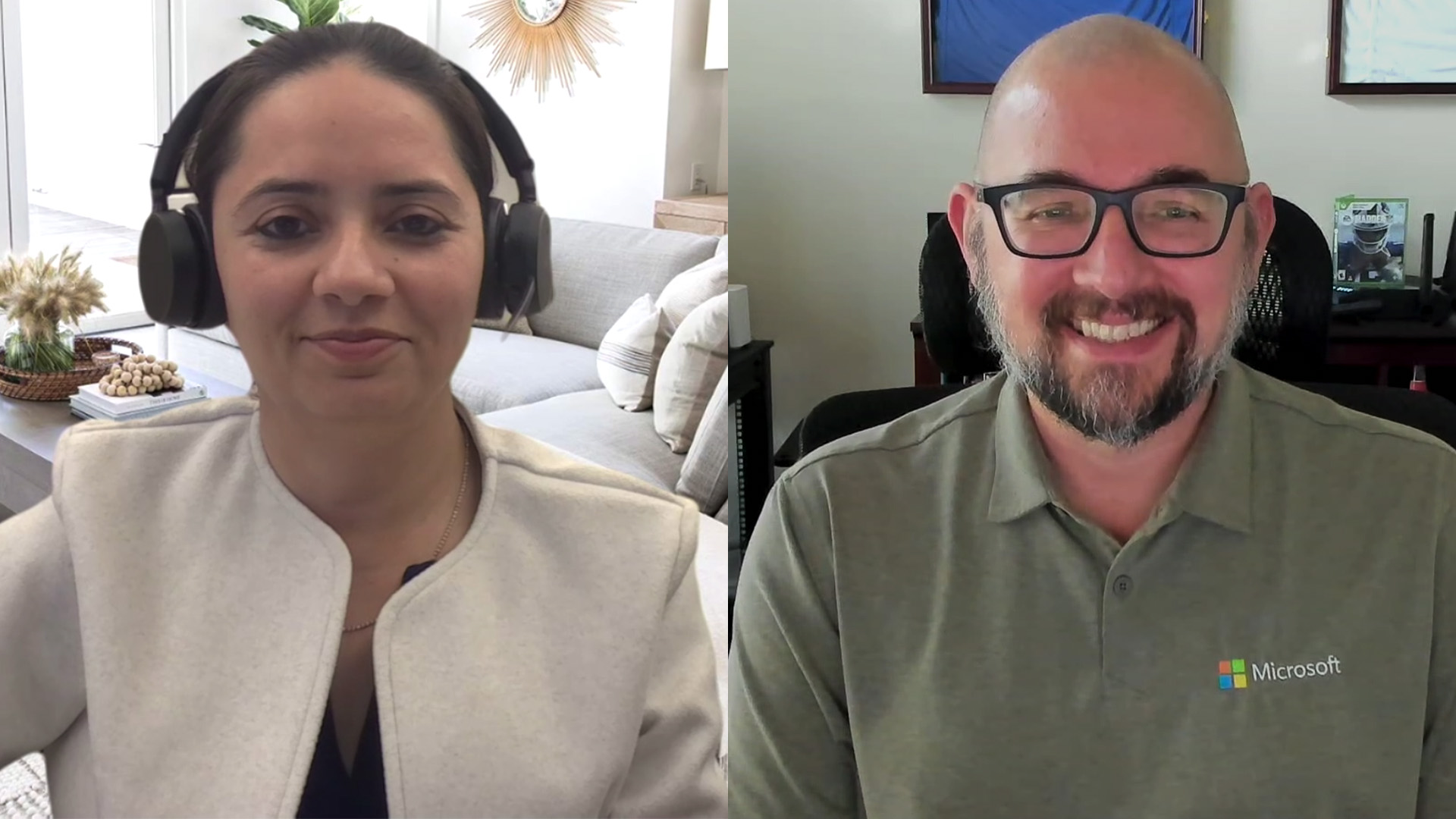
In this interview from Microsoft Ignite, Rachna Lalwani, senior consultant product manager at Dell Technologies, and Karl Rautenstrauch, principal partner enablement program manager for Azure Storage at Microsoft, join theCUBE’s Rob Strechay to discuss the evolution of seamless file storage in the cloud. Lalwani and Rautenstrauch detail the strategic depth of the Dell-Microsoft partnership, highlighting how PowerScale for Azure goes beyond a traditional "lift and shift" to offer a fully native cloud experience. The discussion covers the operational benefits of deep integration, including unified billing, monitoring and a single point of support provided by Dell. They also break down the flexibility offered to customers through two distinct deployment models: a customer-managed solution for granular control and a newly previewed Dell-managed service designed to streamline maintenance and allow IT teams to focus on innovation.
The conversation then shifts to practical applications, exploring how organizations in data-intensive industries like media, EDA and life sciences are leveraging the solution for high-throughput, low-latency workloads. Lalwani and Rautenstrauch emphasize the critical role of storage in the AI era, explaining how hybrid mobility allows businesses to bring data directly to Azure’s GPUs for model training without re-architecting applications. Furthermore, the group discusses how this "best of both worlds" approach future-proofs infrastructure by combining the elasticity of the cloud with the familiarity of the OneFS operating system, ensuring operational consistency across on-premises and cloud environments.
Forgot Password
Almost there!
We just sent you a verification email. Please verify your account to gain access to
Microsoft Ignite 2025. If you don’t think you received an email check your
spam folder.
In order to sign in, enter the email address you used to registered for the event. Once completed, you will receive an email with a verification link. Open the link to automatically sign into the site.
Register for Microsoft Ignite 2025
Please fill out the information below. You will receive an email with a verification link confirming your registration. Click the link to automatically sign into the site.
You’re almost there!
We just sent you a verification email. Please click the verification button in the email. Once your email address is verified, you will have full access to all event content for Microsoft Ignite 2025.
I want my badge and interests to be visible to all attendees.
Checking this box will display your presense on the attendees list, view your profile and allow other attendees to contact you via 1-1 chat. Read the Privacy Policy. At any time, you can choose to disable this preference.
Select your Interests!
add
Upload your photo
Uploading..
OR
Connect via Twitter
Connect via Linkedin
EDIT PASSWORD
Share
Forgot Password
Almost there!
We just sent you a verification email. Please verify your account to gain access to
Microsoft Ignite 2025. If you don’t think you received an email check your
spam folder.
In order to sign in, enter the email address you used to registered for the event. Once completed, you will receive an email with a verification link. Open the link to automatically sign into the site.
Sign in to gain access to Microsoft Ignite 2025
Please sign in with LinkedIn to continue to Microsoft Ignite 2025. Signing in with LinkedIn ensures a professional environment.
Are you sure you want to remove access rights for this user?
Details
Manage Access
email address
Community Invitation
Rachna Lalwani, Dell Technologies & Karl Rautenstrauch, Azure Storage
In this interview from Microsoft Ignite, Rachna Lalwani, senior consultant product manager at Dell Technologies, and Karl Rautenstrauch, principal partner enablement program manager for Azure Storage at Microsoft, join theCUBE’s Rob Strechay to discuss the evolution of seamless file storage in the cloud. Lalwani and Rautenstrauch detail the strategic depth of the Dell-Microsoft partnership, highlighting how PowerScale for Azure goes beyond a traditional "lift and shift" to offer a fully native cloud experience. The discussion covers the operational benefits of deep integration, including unified billing, monitoring and a single point of support provided by Dell. They also break down the flexibility offered to customers through two distinct deployment models: a customer-managed solution for granular control and a newly previewed Dell-managed service designed to streamline maintenance and allow IT teams to focus on innovation.
The conversation then shifts to practical applications, exploring how organizations in data-intensive industries like media, EDA and life sciences are leveraging the solution for high-throughput, low-latency workloads. Lalwani and Rautenstrauch emphasize the critical role of storage in the AI era, explaining how hybrid mobility allows businesses to bring data directly to Azure’s GPUs for model training without re-architecting applications. Furthermore, the group discusses how this "best of both worlds" approach future-proofs infrastructure by combining the elasticity of the cloud with the familiarity of the OneFS operating system, ensuring operational consistency across on-premises and cloud environments.
In this interview from Microsoft Ignite, Rachna Lalwani, senior consultant product manager at Dell Technologies, and Karl Rautenstrauch, principal partner enablement program manager for Azure Storage at Microsoft, join theCUBE’s Rob Strechay to discuss the evolution of seamless file storage in the cloud. Lalwani and Rautenstrauch detail the strategic depth of the Dell-Microsoft partnership, highlighting how PowerScale for Azure goes beyond a traditional "lift and shift" to offer a fully native cloud experience. The discussion covers the operational benefits o...Read more
exploreKeep Exploring
What features and advantages does Dell's PowerScale provide as a scale-out mass solution?add
What are the benefits and features of PowerScale for organizations using it for data management?add
What are the features and benefits of PowerScale for Azure in terms of data management and scalability?add
Rachna Lalwani, Dell Technologies & Karl Rautenstrauch, Azure Storage
search
Rob Strechay
>> Hello and welcome to another episode of our coverage of Microsoft's Ignite Conference. I'm Rob Strechay and we're going to be talking about seamless file storage. And what is Dell PowerScale's Azure Advantage? Today I'm excited to be joined by Rachna Lalwani, who's the senior consultant product manager for Dell Technologies and Karl Rautenstrauch, who's the principal partner enablement program manager, Azure Storage at Microsoft. Welcome on board.
Karl Rautenstrauch
>> Thanks Rob. Great to be here.
Rachna Lalwani
>> Yeah. Thanks for having us.
Rob Strechay
>> This is always an exciting time of year. Ignite is such a pivotal conference. There's going to be so many announcements this week, but let's kind of take a step back. Dell and Microsoft have just really had this long-standing partnership. What makes PowerScale for Azure stand out and what's new or unique here that really moves the needle for organizations?
Karl Rautenstrauch
>> Yeah, thanks Rob. I think I'll start and then hand off to Rachna for her thoughts.
Rachna Lalwani
>> Yeah. Sure.
Karl Rautenstrauch
>> But really this is something we are absolutely thrilled to bring to our customers. Microsoft and Dell have a decades-long partnership where we've worked together to develop deeply integrated and unique solutions in the market. And this is just the latest example that we had an opportunity to just perform a traditional lift and shift and bring the OneFS operating system and software platform to Azure, but we wanted to do more than that. So we've worked together over the last handful of years and we've developed a deeply integrated solution that offers an Azure-native provisioning, management, billing, monitoring, and just overall native experience to our customers. And I think one of the great benefits of this offering that we built together is that Dell is the single point of support for this. So there is no need to open cases with Microsoft and Dell. The customer has a really simple experience, seamless experience in managing a file system as a service. And there's choice, and I'll let Rachna talk more about that and would love her thoughts.
Rachna Lalwani
>> Yeah. Sure. So at a very high level, Dell's PowerScale is the number one scale-out mass solution in the industry, and we offer enterprise-class features like multi-protocol access that's good for global collaboration. We offer SyncIQ for seamless data replication, SmartQuotas for capacity management. And all of this is backed by enterprise-grade security, robust identity and access management, data encryption at both rest and implied and built-in ransomware recovery. And Microsoft Azure is really the preferred cloud provider for many enterprises, especially in regulated industries and among organizations that are already using Microsoft tools. So PowerScale for Azure, this offering represents the convergence of two industry leaders, delivering a powerful and enterprise-grade file storage solution in the cloud. As Karl mentioned, we have two offer choices. One is the customer managed solution. This was released in April of 2024, and this offering is ideal for organizations that seek maximum customization and granular control over their infrastructure and deployment. The Dell managed solution, which is in public preview now, this offers a streamlined, a very hands-off experience with Dell handing all the deployment, monitoring, maintenance and upgrades, really allowing the IT teams to focus on strategic initiatives. And as Karl again mentioned, this is an Azure native service enabling customers to provision the file storage directly from the Azure portal. This isn't really about running the software just in the cloud, it's about creating a truly integrated experience that empowers businesses to do more with their data. What's also new and unique with this offering is their custom compute instances that are purpose-built for Dell, which enable the solution to deliver best-in-class performance density and scale.
Rob Strechay
>> Yeah. I love that. I think, again, when you look at all of this, I think to Karl's point and to where you were going, Rachna, having it really built for Azure is key, and again, having also the maximum flexibility if they want to roll it themselves as well. I think that choice is really key. But let's jump in and get a little more specific. What are you seeing as the top use cases driving adoption of PowerScale for Azure and how are customers using it to create a real impact?
Rachna Lalwani
>> So you're seeing the customers are unlocking new possibilities by bringing their file data to Azure without compromise, combining the performance of Dell PowerScale with the scalability of the cloud. We have industries like media and entertainment, EDA, life sciences that depend on high throughput and low-latency file access. PowerScale delivers that and all of that managed through a familiar interface whether the data resides on-premises or in Azure. Organizations are using PowerScale to build next-gen data-driven applications for AI, ML workloads and advanced analytics. It enables seamless scaling of resources, helping businesses turn data into competitive advantage. On top, business continuity is simpler than ever. With policy-based data replication across Azure regions, customers can implement robust data disaster recovery strategies with minimal manual effort, ensuring resilience and uptime. And one of the biggest wins for customers is the ability to eliminate costly time and consuming architectural changes. What they really gain is the operational consistency across their entire storage landscape, allowing the IT teams to focus on innovation and business value rather than infrastructure management. So that comes back to the very hands-off kind of an experience that the customers have in this scenario.
Rob Strechay
>> Yeah. I think again, that's key too is having all of those different services native in there and being able to do that because again, the attack landscape has really changed and being able to operationally lies it in a way that you're really comfortable with and understand and is cloud-native is key. So with hybrid and multi-cloud adoption accelerating, we see it in our data, in the research that we're doing. How does PowerScale for Azure help organizations future-proof their storage strategy and drive business agility, which is just so key, given how fast everything like AI is moving these days?
Rachna Lalwani
>> Yeah. Absolutely. And PowerScale for Azure delivers a single unified user experience and management layer for both on-premises and Azure data, thereby reducing the complexity and the risk of operational silos. It also enables seamless data mobility and interoperability for a variety of use cases like supporting everything from be it digital transformation or remote collaboration to really compliance, data protection and cost optimization, so the entire gamut there. Organizations can also implement infrastructure that supports both existing and future workloads, thereby ensuring long-term scalability and adaptability as the business needs evolving. With the business needs evolving over time, we are seeing the industry moving towards, say from initial AI to Gen AI to now Agentic AI. The evolving is moving very fast these days, and the solutions hybrid cloud capabilities allow businesses to move data where it makes the most sense, whether for performance, cost or compliance without re-architecting any applications. That's the major benefit there. Karl, do you want to add something?
Karl Rautenstrauch
>> Yeah. If I could. I mean, Rob, one of the things that I really love about this is it is truly a best of both worlds and all worlds solution. So for that customer who needs templatized deployments and really takes advantage of infrastructure as code, that deep integration with Azure and those Azure semantics make it possible. But for administrators, for IT pros who have years of experience with OneFS, they don't lose the capabilities. They don't have to learn a massive set of new skills in order to bring all of the power of PowerScale to Azure and early, you gain the benefits of the elasticity of cloud, the ability to roll out to multiple regions worldwide. Again, best of both worlds. Best of cloud, best of PowerScale. So it's the type of solution that is really going to help our joint customers across all industries and future proofs them going forward through the continued integration between the two parties and the continued development between the two parties. So really we're thrilled to bring something that empowers their ability to take advantage of what's next and progress their infrastructure and progress their AI ambitions, but is inclusive of all of the folks, the thousands of IT pros who have a massive skillset around PowerScale today. Best of both worlds. I can't say it enough.
Rob Strechay
>> Yeah. I mean I think that talks to that flexibility Rachna was talking about, and again, that inclusiveness of where and when and how, and I think also Rachna hit on the whole, hey, bringing your data to where it means and can be used and utilized the most is really key to organizations, especially with AI and everything like that. I mean, data feeds AI. I mean there's just no AI without data to put it mildly. Yeah. Really good stuff. So when I look at it, organizations are definitely deep into evaluating their hybrid and cloud file storage strategies. What's the next step they should take if they want to explore or adopt these solutions?
Karl Rautenstrauch
>> Yeah. Absolutely. Great question, Rob. And you're right. I mean, hybrid is going to continue to be the reality going forward, and especially with AI, you need to bring your data to where GPUs are available to build and train those models. It doesn't happen, can't have an agent if you can't bring your data to GPUs. So I think there were some pretty simple calls to action here to help customers who are very excited and interested about this as excited as we are. One is head to the Azure Marketplace and try it out. Both the customer managed and the Dell managed file system as a service offerings are available today. Go ahead, click that. Get it now. And you're up and running pretty quickly. Beyond that, it really work with your cloud solution architect from Microsoft, your Dell systems engineer, and put together a viable hybrid cloud strategy. You want to have a network connectivity model, you want to have a plan, you want to take advantage of the elasticity of cloud where you should, and you want to evaluate what should stay on-prem. So bring the two parties into the room, whiteboard it, have a plan. You've got the ability to try it now. Can't say it enough. It's all out there. Go for it. Go do it.
Rob Strechay
>> Rachna.
Rachna Lalwani
>> Yeah. And yeah, do visit Dell's PowerScale for public cloud website and start exploring the offer. As Karl mentioned, those are the right next steps and we are very excited to bring this offer to the market that really helps with three things, flexibility, skill, and performance by bringing in the best of both worlds as Karl was alluding to.
Rob Strechay
>> I'm a big fan of it. I mean, I think, again, this is great. I think again, anytime you can bridge hybrid wise and bring skillsets to bear so people don't have to feel like they have to learn yet another thing is really key. I think this is great. So Rachna and Karl, thanks for coming on board. This has been very enlightening. Really appreciate it.
Rachna Lalwani
>> Thank you for having us.
Karl Rautenstrauch
>> Yeah. Thank you, Rob.
Rob Strechay
>> And thank you for watching this episode of theCUBE. We'll be right back with more from Microsoft Ignite. Stay tuned to theCUBE, the leader in tech analysis and news.











 Rob Strechay