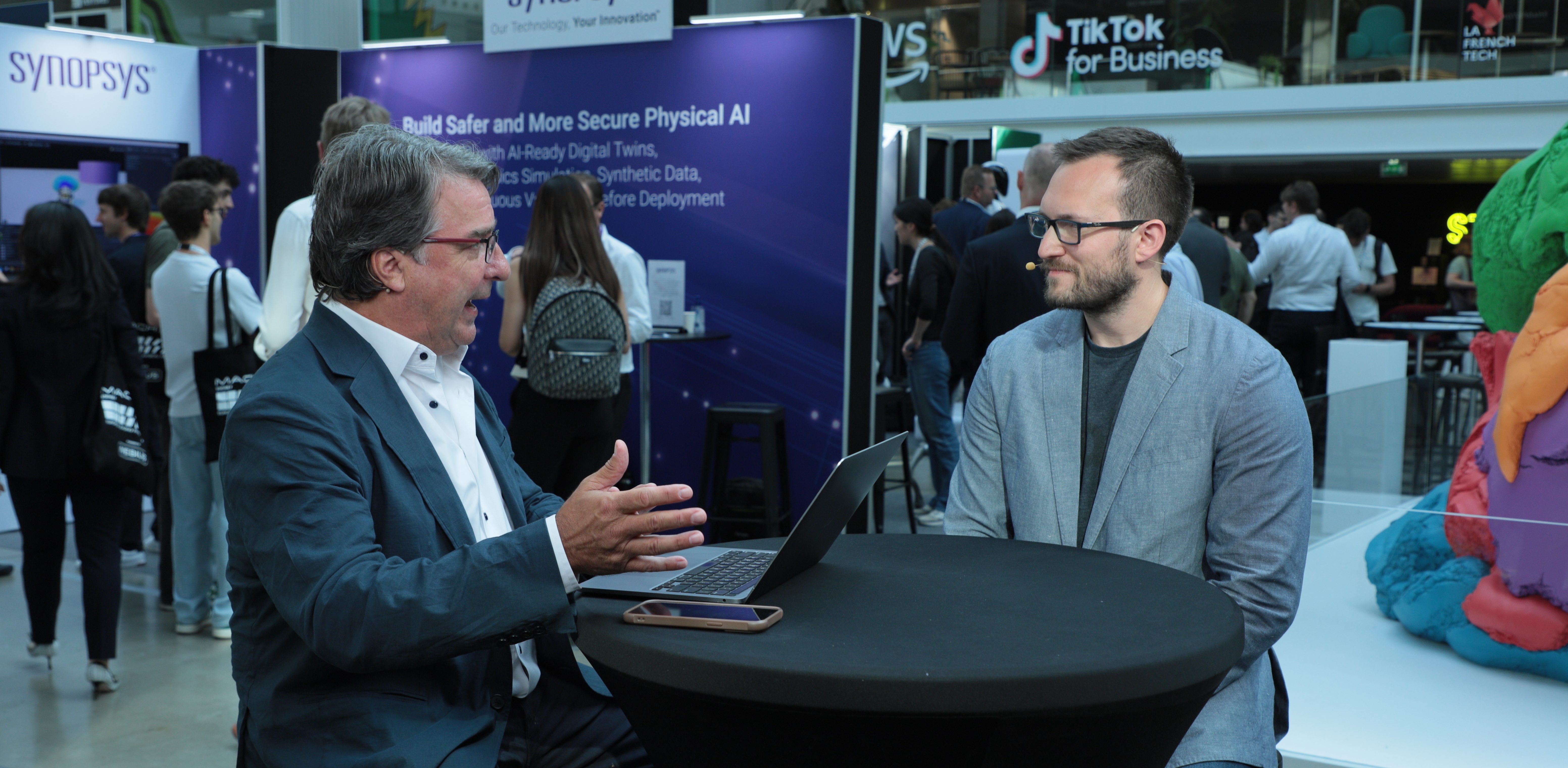
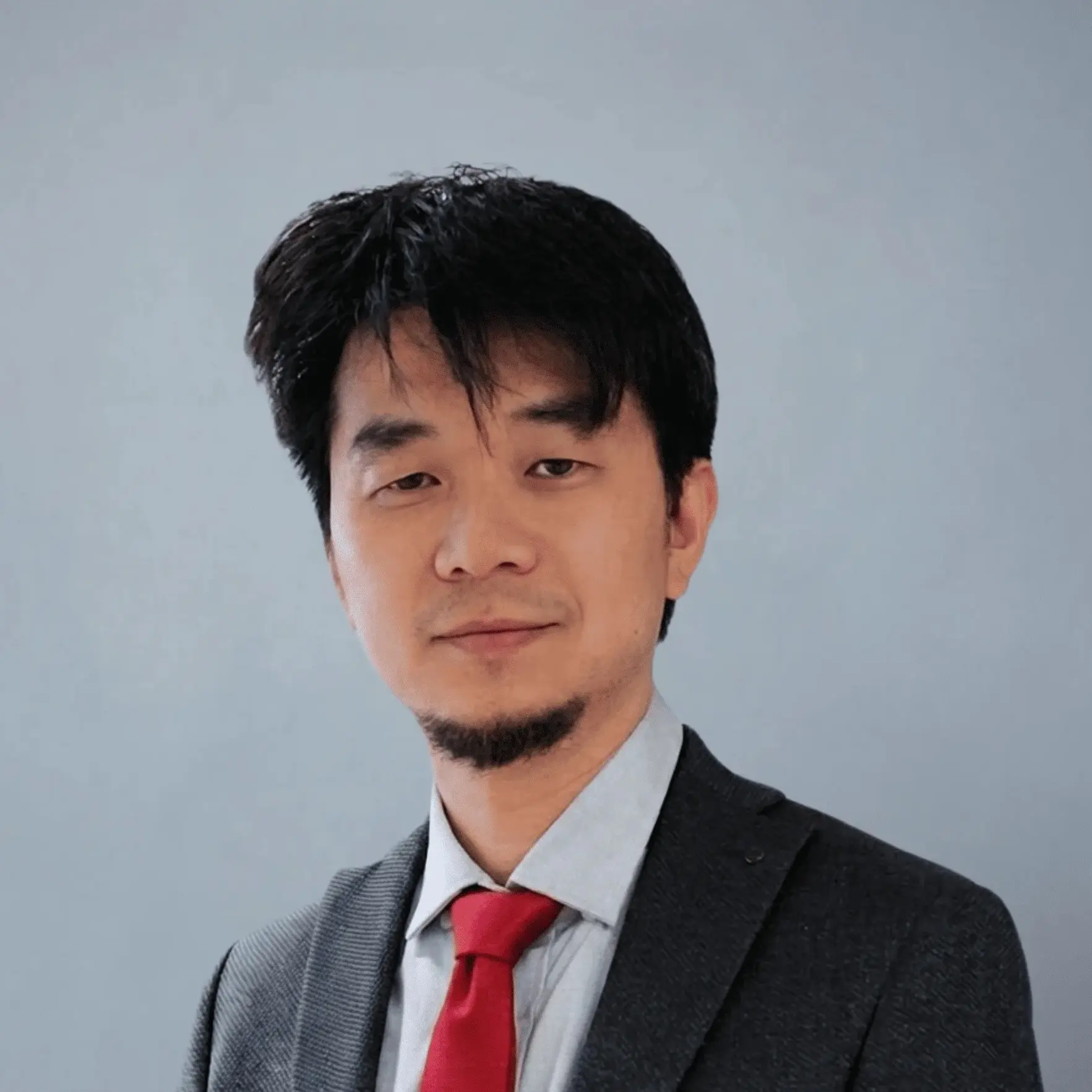
Jason Yueh of VicOne joins a conversation recorded at MACHINA, the day zero event of the RAISE Summit in Paris 2026, to discuss robotics security, physical artificial intelligence, and supply chain integrity. Yueh brings deep expertise across automotive and robotic platforms and they outline VicOne's approach to full lifecycle protection, including software bill of materials, SBOM and component provenance, in-device hardening and continuous monitoring via vehicle security operations centers, SOCs. They highlight emerging AI risks such as prompt injection and adversarial image attacks and discuss model risk and required defensive controls.
Key takeaways emphasize prioritizing supply chain visibility and software bill of materials, SBOM, to manage vulnerabilities and treating cybersecurity as the foundation of safety. Yueh stresses full lifecycle coverage from component sourcing and regulatory compliance with the Cyber Resilience Act, CRA and ISO 21434 to device hardening and continuous monitoring by security operations centers, SOCs. These measures support resilient robotic and vehicle systems as AI agents and model risks demand new defensive strategies.
Forgot Password
Almost there!
We just sent you a verification email. Please verify your account to gain access to
Machina Summit 2026. If you don’t think you received an email check your
spam folder.
In order to sign in, enter the email address you used to registered for the event. Once completed, you will receive an email with a verification link. Open the link to automatically sign into the site.
Register for Machina Summit 2026
Please fill out the information below. You will receive an email with a verification link confirming your registration. Click the link to automatically sign into the site.
You’re almost there!
We just sent you a verification email. Please click the verification button in the email. Once your email address is verified, you will have full access to all event content for Machina Summit 2026.
I want my badge and interests to be visible to all attendees.
Checking this box will display your presense on the attendees list, view your profile and allow other attendees to contact you via 1-1 chat. Read the Privacy Policy. At any time, you can choose to disable this preference.
Select your Interests!
add
Upload your photo
Uploading..
OR
Connect via Twitter
Connect via Linkedin
EDIT PASSWORD
Share
Forgot Password
Almost there!
We just sent you a verification email. Please verify your account to gain access to
Machina Summit 2026. If you don’t think you received an email check your
spam folder.
In order to sign in, enter the email address you used to registered for the event. Once completed, you will receive an email with a verification link. Open the link to automatically sign into the site.
Sign in to gain access to Machina Summit 2026
Please sign in with LinkedIn to continue to Machina Summit 2026. Signing in with LinkedIn ensures a professional environment.
Are you sure you want to remove access rights for this user?
Details
Manage Access
email address
Community Invitation
Jason Yueh, VicOne | Machina Summit 2026
Jason Yueh of VicOne joins a conversation recorded at MACHINA, the day zero event of the RAISE Summit in Paris 2026, to discuss robotics security, physical artificial intelligence, and supply chain integrity. Yueh brings deep expertise across automotive and robotic platforms and they outline VicOne's approach to full lifecycle protection, including software bill of materials, SBOM and component provenance, in-device hardening and continuous monitoring via vehicle security operations centers, SOCs. They highlight emerging AI risks such as prompt injection and adversarial image attacks and discuss model risk and required defensive controls.
Key takeaways emphasize prioritizing supply chain visibility and software bill of materials, SBOM, to manage vulnerabilities and treating cybersecurity as the foundation of safety. Yueh stresses full lifecycle coverage from component sourcing and regulatory compliance with the Cyber Resilience Act, CRA and ISO 21434 to device hardening and continuous monitoring by security operations centers, SOCs. These measures support resilient robotic and vehicle systems as AI agents and model risks demand new defensive strategies.
play_circle_outlineVicOne's Framework for Securing Physical AI and Robotics: SBOMs, SOCs, Supply-Chain Provenance, Compliance, and Adversarial Defenses
replyShare Clip
play_circle_outlineOnboard AI Agents and Compute Power Propel Generalized Robots into Automotive, Medical, and Airport Production Deployments
replyShare Clip
play_circle_outlineCybersecurity is the foundation of safety; many robot makers currently underprioritize it
In this interview from MACHINA 2026 in Paris, Jason Yueh, chief technology officer of VicOne, joins theCUBE's John Furrier to discuss why cybersecurity is the missing foundation beneath physical AI's rapid move into production. Yueh explains that VicOne, a Trend Micro subsidiary, provides full lifecycle protection for robots and autonomous systems — spanning software bill of materials (SBOM) management, hardware component origin detection to comply with U.S. BIS supply chain rules and Europe's Cyber Resilience Act (CRA), in-device protection and continuous mo...Read more
exploreKeep Exploring
What is the core principle for securing robotic systems across their lifecycle — should security be full‑stack (including supply chain and hardware components, software, and AI models), and how are risks like component backdoors, software vulnerabilities, prompt injection, and adversarial inputs addressed?add
What is the most exciting development in robotics cybersecurity right now?add
Are robot manufacturers adequately addressing cybersecurity as part of overall safety, or are they primarily focused on functional safety and demonstrating business value?add
>> Palo Alto Studio Connection, Silicon Valley and Wall Street.>> I'm John Furrier, the host of theCUBE, here with Dave Vellante, my co-host.>> Welcome back to theCUBE's live coverage here in Paris, France. I'm John Furrier, host of theCUBE. This is our Day Zero event MACHINA, a part of the RAISE Summit. We'll have 2 days in Paris at the Louvre for RAISE Summit. This is about physical AI and robotics. We got Jason Yueh here, CTO of VicOne. Jason, thank you for coming up to theCUBE, having your sales director come on. You guys are doing some cybersecurity, supply chain, safety, security. Tell us what you guys do.>> Okay. Hello, I am Jason Yueh, CTO at VicOne. And VicOne is a subsidiary of Trend Micro. And we are specialized at physical AI security, such as automotive or robotic securities. So what we're doing is we're helping customers through the whole lifecycle of the robot development. From the development time, we help them to manage their software, bill of materials, help them to do vulnerability management, to get all kinds of certifications like CRA or ISO 21434. And we also do the in-device protection. Such as in-vehicle or in-robotic protection. And we also do the continuous monitoring like vehicle SOC or robotic SOC.>> Obviously cybersecurity we've been covering, it's well known, it's hard. The attackers are out there. Robotics are basically data centers that move around.>> Oh yeah.>> And they have software. It's basically a supercomputer data center, whichever form factor you have. Supply chain security, the devices and the chips, where are they sourced? So you have sourcing security in the actual components.>> Correct.>> You got software security.>> Correct.>> What's the core principle of what you guys do to focus on having a secure environment? Because security is a safety issue for sure. Safety is one of the hottest things. How do you guys think about security with robotics? Is it like full stack? Just supply chain because you got componentry. Okay. Is there a backdoor in those chips? Yeah. And then you got software running all the time, models.>> Oh yeah. You mentioned the keyword component and supply chain, right?>> Yeah.>> I think everything starts from managing, knowing your software, knowing your supply chain, your hardware. So one thing we're doing is, for example, we not only help customers to build their SBOM, the software bill of materials. We also help customers to detect the origin of their components. For example, there is a regulation, U.S. BIS. You could not have the components from those 6 countries. Yeah, those forbidden 6 countries. Yeah. So that's part of it. Yeah. And we also help customers to know their vulnerability once they know their software, right? Yeah.>> Yeah.>> It's not just software vulnerability, but also the AI risks. You talk about super data center on the robot, right? So we know now today we can run powerful AI models on robots and there are AI-related risks such as prompt injections. You don't need to compromise a robot, you just interact with the robot and it could be fooled by your prompt injection. Yeah. Or adversarial image patches. Yeah, you can fool a robot to ignore a stop sign just by applying some noise onto the images or the sign.>> Yeah.>> So you are right that the—>> there are a lot of vulnerabilities that you have to watch for.>> Yeah, they're not just software vulnerabilities, but new risks introduced by AI.>> You're right.>> What are the top things people are caring about right now? What's the top priorities for customers?>> Okay.>> That will depend on the maturity of the customers.>> Yeah.>> Most of the, let's say, robot makers, they don't have massive production deployment, today, right? Yeah. So I think their top topic is how do I make sure my robot is secure? Yeah. From the hardware design and software design perspective.>> Yeah.>> So, and how do I get the regulation? For example, if I want to sell my robot, my component to Europe, how do I get the CRA compliance? That's what they're thinking about.>> Yeah.>> What's the coolest thing in cybersecurity right now in robotics? What's the coolest thing happening?>> I would say it's about AI. Yeah. Because now with AI, you can do so many things we could not do previously, right? So today, robot is like a short trajectory, see the image, do something. You give the robot a very simple command, it does something, right? But now we'll soon be seeing that people will run so-called AI agents on the robot to handle more complex tasks. And it can be very exciting because now it can think and learn like a human, but it also introduces certain risks. Yeah.>> What is the— how would you describe the biggest change in the past year in robotics? What's been the big change in the past year?>> I think it's getting ready to create value, to really solve problems. Yeah. So robotics, we know there are various kinds of robotics. There are fixed-arm robotics, quite mature in factory. There are also AMRs used widely in a warehouse. Those are quite mature as well. But we are seeing more generalized robotics like humanoid, for example, or quadruped robot dogs.>> Yeah.>> And I think a year before, it's more like a demonstration. It's really cool. It can dance, but can you really solve problems and create value? We're not sure. We're not sure. But now I see the momentum, it's getting deployed into production. It's not just for the fixed environment like a factory or warehouse. It gets to open area like security patrol, for example. Yeah, I think that's the big difference. It's getting real, it's solving problems. It's going to production.>> Yeah, and people want to attack it. So who are you, what are the top use cases and who are your customers?>> Oh, we have, because we do both automotive and robotics security. So our customers are, for example, we have 7 out of 20 top passenger vehicle companies using our solution. Yeah. We also have some early customers from robotics doing medical robots.>> Yeah.>> Or we also get the airport deal. Yeah. there are autonomous driving, autonomous buses around the Taipei airports. Yeah. So those are our customers.>> And how would you describe the physical AI market right now? The physical AI is a big category.>> Correct.>> Robotics is only one of them.>> You're right.>> And robotics is pretty broad. How would you classify the market?>> Okay.>> Yeah.>> Anything that can move or create physical response We think it's under the physical AI umbrella, right? So as you mentioned, it's very big and across a very different spectrum in terms of maturity.>> Yeah.>> But in short, we are seeing that it's taking off and it's not only in the fixed area like a factory or warehouse, it's getting to people's life, open area, right? And doing more complex tasks. So I would say the entire physical AI market is huge. It's not just humanoid.>> Yeah.>> And the compute's coming in fast too. More compute, more intelligence. That helps a lot too.>> Exactly.>> Yeah.>> And you have agents on the machines watching everything because security you've got to embed in from day one.>> Oh, You got it. I think the critical point is today, most of the robot makers, they are still dealing with functional safety problems, right? Maybe they are yet to think about cybersecurity, but cybersecurity is the foundation of the safety. Without cybersecurity, no safety.>> Yeah.>> So that's currently the biggest gap in the industry.>> And you're seeing real problems being solved right now. People are solving problems.>> You mean cybersecurity problem or business problems?>> Both.>> People today, they are more focused on making sure that they have the real business value of their robots, right? That's always the first step.>> Yeah.>> But do they really put enough focus to solve the cybersecurity problem, which is the foundation of the safety?>> Yeah.>> I think there is a gap today.>> Okay, so VicOne is a subsidiary of Trend Micro or wholly owned?>> Correct.>> So the same company?>> Yeah, it's a subsidiary.>> Okay, great. What's on your agenda for this year? What's your focus?>> Our focus is to bring the full lifecycle protection to the physical AI.>> Yeah.>> So from the software development, from knowing your software, from hardening your device to continuous monitoring. Yeah, we want to make sure we provide a full portfolio across the full development lifecycle of the robots.>> From origination of the hardware chips and components to the software running. This is the new model. Jason, thank you for coming on theCUBE. Really appreciate it.>> Thank you.>> All right, I'm John Furrier, host of theCUBE. We're live in Paris, France for the RAISE Summit. This is the MACHINA, the day zero event really focused on physical AI, a big broad category where robotics is the conversation. And it's the same formula: data center on wheels, data center walking around, data center in factories with AI intelligence injected. This is happening very, very fast. We'll be right back after this short break.