We just sent you a verification email. Please verify your account to gain access to
KubeCon + CloudNativeCon NA 2025. If you don’t think you received an email check your
spam folder.
In order to sign in, enter the email address you used to registered for the event. Once completed, you will receive an email with a verification link. Open the link to automatically sign into the site.
Register for KubeCon + CloudNativeCon NA 2025
Please fill out the information below. You will receive an email with a verification link confirming your registration. Click the link to automatically sign into the site.
You’re almost there!
We just sent you a verification email. Please click the verification button in the email. Once your email address is verified, you will have full access to all event content for KubeCon + CloudNativeCon NA 2025.
I want my badge and interests to be visible to all attendees.
Checking this box will display your presense on the attendees list, view your profile and allow other attendees to contact you via 1-1 chat. Read the Privacy Policy. At any time, you can choose to disable this preference.
Select your Interests!
add
Upload your photo
Uploading..
OR
Connect via Twitter
Connect via Linkedin
EDIT PASSWORD
Share
Forgot Password
Almost there!
We just sent you a verification email. Please verify your account to gain access to
KubeCon + CloudNativeCon NA 2025. If you don’t think you received an email check your
spam folder.
In order to sign in, enter the email address you used to registered for the event. Once completed, you will receive an email with a verification link. Open the link to automatically sign into the site.
Sign in to gain access to KubeCon + CloudNativeCon NA 2025
Please sign in with LinkedIn to continue to KubeCon + CloudNativeCon NA 2025. Signing in with LinkedIn ensures a professional environment.
Jay Jackson, CallRevu & Diana Tedea, VictoriaMetrics
Jay Jackson
Senior Software EngineerCallRevu
Diana Todea
Developer Experience EngineerVictoriaMetrics
In this conversation from KubeCon + CloudNativeCon North America in Atlanta, Diana Tedea of VictoriaMetrics and Jay Jackson of CallRevu join theCUBE’s Savannah Peterson to spotlight Merge Forward, a new coalition uniting seven community groups supporting underrepresented contributors. They unpack how the Neurodiversity Group and the Deaf and Hard of Hearing working group create a safe environment, mentorship opportunities and a sense of belonging so more people feel ready to submit talks, join working groups and show up fully as themselves in the cloud-native...Read more
exploreKeep Exploring
What initiative was mentioned, and how did the speaker get involved with it?add
What do people need to understand about neurodiversity and inclusivity?add
What support is available for newcomers feeling apprehensive about participating in the community?add
What strategies can be implemented to support and raise awareness for neurodiverse individuals within a new group?add
Jay Jackson, CallRevu & Diana Tedea, VictoriaMetrics
search
Savannah Peterson
>> Morning nerd fam, and welcome back to beautiful Atlanta, Georgia. We're here on day three of KubeCon. My name's Savannah Peterson, bringing you one of my favorite and perhaps the most important segments that we do. Every show here, celebrating neurodiversity and the range of different working groups that support the deaf and hard of hearing, the blind, and so many other often underrepresented conversations, particularly in the technology world. Very excited to introduce two new guests for us today, Diana and Jay. Thank you for being here.>> Thank you so much, Savannah.>> Yes, thank you.
Savannah Peterson
>> It is great. Catherine always does an incredible job of bringing the best and the brightest together, both on our stage and in our working groups. And as someone who is very neurodiverse, it really is an honor and so fun to get to talk to you today. So, Diana, I'm going to start with you. Tell me a little bit about the Neurodiversity Group. It's a new group, correct?
Savannah Peterson
>> Yeah, yeah.
Savannah Peterson
>> Yeah.
Savannah Peterson
>> Totally. Yeah. So, we just started a few months ago, a couple of months ago. I heard about it from Catherine. I saw this new exciting initiative, Merge Forward. And I was like, wow, this is great. And they have a neurodiversity group and they need people. So, I got super excited. I rushed in and I said, "Guys, do you need any help? Do you want me to do something about it?"
"Yeah, we are actually looking for co-leads at the moment." So I was like, "Awesome." I was signed up and ready to roll. And just besides Neurodiversity, there are other groups, and I was like, this is really, really interesting. This is really an interesting initiative.
Savannah Peterson
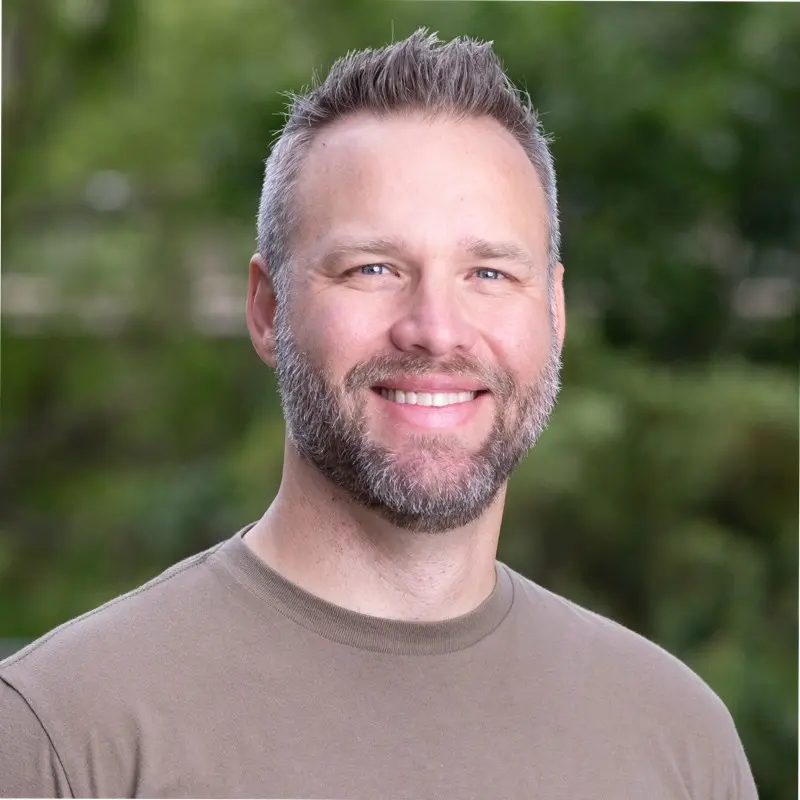
>> Yeah. So, there were seven groups in the Merge Forward coalition, and that just came together two and a half months ago, officially?
Savannah Peterson
>> Yeah, two and a half months ago, exactly. And there were already some former groups that got rebranded. But the cool thing is that, we got together under this initiative, so basically giving us more objectives, being more concrete, and also making us stronger together.
Savannah Peterson
>> Yeah. How many people are in all of those groups?
Savannah Peterson
>> I think over 100 at the moment. Almost 130. Yep.
Savannah Peterson
>> That's impressive. So cool. And Jay, you've been a part of the glossary project for a while, correct? Tell us about that.
Savannah Peterson
>> Yes. I'm one of the leaders for the glossary project. We're trying to have a standardization for the glossary, trying to figure out what's the sign for this, to try to have some standardization, to make it easier for people to learn sign language. We have interpreters that know certain signs for certain things, but we want to make sure we have that standardization. Currently, the glossary has seven signs in it, and we're excited to be able to add more signs. So, please come check it out and see what you've got there. We want everybody to participate in our glossary.
Savannah Peterson
>> How do you decide what a new sign will look like? Because these are for very technical words in our community, correct?
Savannah Peterson
>> So, we have a group of us. It's a glossary Slack channel, you're welcome to join it, of course. And we meet every so often to get together via video to say, how do we sign this? What do we think this is going to look like? It's an open source discussion. What is the best representation, pictorial representation? Make sure that the group agrees that this is the appropriate sign, and then we go ahead and push forward with that as the glossary sign for these particular concepts and ideas.
Savannah Peterson
>> I bet those conversations are kind of fun and cheeky.
Savannah Peterson
>> Oh yes, always. It's fun. Like, oh, what do you want to do? What do you do? No, I like that. No, I don't like that. Oh, it's fun coming up with signs and creating them.
Savannah Peterson
>> How do you determine when it's time to make up a sign for one of these words? Is it project based? Is it technology based?
Savannah Peterson
>> When oftentimes you see people fingerspelling the same word over and over again, it becomes abbreviated or you have to abbreviate the word. So, let's say you're talking about Kubernetes, for example, and the word Kubernetes is being spelt a lot. And so, it's K-eight is the sign, K-eight-S, so it looks like this K-eight, and we've come up with that. So, a popular word or something that's being used often with new project and you have new interpreters and they're like, well, what do we keep signing for this? How do we sign this? We're tired of fingerspelling a word over and over again. So, that's a justification for coming up for a sign for something.
Savannah Peterson
>> Makes sense. And Kubernetes is a long word to have to fingerspell. Yeah, jeez.
Savannah Peterson
>> Yes.
Savannah Peterson
>> So, Diana, how do these groups work together under the umbrella?>> Sure. So, we get together on a monthly basis. So, we have one big Merge Forward video call. We get together, we give the updates. We say, what's going to do next? What are we planning to do next in the near future? And we come up with plans like how to divide the task. We welcome new members, new allies, so we are making sure that we give them the allotted time. And to be honest, it's really, really fun and people are extra excited about this and we are getting a lot of word out there. So, the messaging is really important. We got so many people coming forward like, "I'm really happy that you guys are getting together." So, the initial, let's say meetings were extraordinary, yeah.
Savannah Peterson
>> I bet. So, what are some of the projects that you're working on together? What are some of your goals as a group?>> Exactly. So, Merge Forward basically enables a safe environment for all the underrepresented groups to come together to discuss, brainstorm ideas, and also be able to mentor each other, right? So, if you have , want to give a talk, speak at a conference, prepare something, you can pair up with somebody and do it. Right? So, it's just about enabling each other and having fun in the same time.
Savannah Peterson
>> Yeah. And learning together, it sounds like as well.
Savannah Peterson
>> Absolutely. Absolutely.
Savannah Peterson
>> Which is really cool. So, Jay, how did you find out about the Deaf and Hard of Hearing working group?
Savannah Peterson
>> So, Katherine was one of the people who founded the group and also Destiny, who used to be the chair of this working group.
Savannah Peterson
>> Yes, I know Destiny. Love Destiny a lot.
Savannah Peterson
>> Yes, very awesome person. And they're still involved in the group. So, she was the one that recruited a lot of deaf people into this group. I was actually part of another deaf professional Slack group, and many people from that Slack group recruited me into this group and I thought, well, I'll check it out, see what it's about. And that was probably three years ago and I was like, Hmm, what is this? What is it about? So, I was invited to KubeCon the first time, which was in Chicago at that point, and I learned a lot, delved into it and haven't been able to leave. And it's been wonderful.
Savannah Peterson
>> It really is special. I met Destiny in Chicago. We had her on the show here then, which was super fun.
Savannah Peterson
>> I do remember seeing that. I was there.
Savannah Peterson
>> So, what would you like to tell the world or wish more people knew, more companies knew, about being inclusive when it comes to working with the Deaf and Hard of Hearing?
Savannah Peterson
>> Our message is, it's important for us to understand that deafness is a spectrum. There are some people that sign, there are some people that don't sign, but they speak. There are some people that sign and speak. There's no limits as far as what people can and cannot do. Just be willing to support people's needs. And the way to do that is to ask them, what do you need to do your job? Do you need an interpreter? Do you need captioning? Do you need note-taking? What are the various tools that are necessary for you to complete your work? And yes, there is a cost associated with accessibility, but we're worth it. And what this group says is, nothing about us without us. And so, therefore we all are here and we all speaking for ourselves, and we want to be asked and to be involved in the decisions made about us.
Savannah Peterson
>> Absolutely. And of course, you're worth it. The cost is nothing compared to how priceless your contributions are to this community and to everything else. So, Diana, is it the same for you in terms of the neurodiverse world? I'm actually curious since it's such a personal thing for me too. What do you wish everybody knew about the Neurodiverse crowd and how to be more inclusive?
Savannah Peterson
>> Yeah, I think the people right now just learn about neurodiversity as a term. So, it was something actually new for me as well. People have a very, how can I say, broad definition of what neurodiversity means. I actually had somebody coming up and say, Hey, what's neurodiversity? Well, it can be anything. Anything from the mental spectrum. And I was like, okay. But then actually in the Merge Forward initiative, there's kind of like a definition, like ADHD or Tourette's syndrome or depressive persons. So, the spectrum here of mental health is quite large, but it doesn't even have to be sort of mental health issue. Just the idea that you identify as a neurodivergent person and being able to express that in a safe environment and have a conversation about it. So, for me, I think we are just laying down the groundwork at the moment, and I'm really happy to hear Jay speaking about all this new information, how they got together, how they're doing the sign language, what are the resources. So, I think it'll be really, really great to get all that input and apply it to new Neurodiversity and potentially other new groups.
Savannah Peterson
>> Yes, definitely. I think the work you're doing, frankly, you both should know this, we travel to 75 different technology shows a year. I work with all of the biggest companies on the planet and this community, this cloud-native foundation, this group, is the benchmark for best practice. And honestly, best vibes. It feels like it's such a... I feel welcome, everyone feels welcome, and it's so genuine. One of the things that I know a lot of us are passionate about is, inspiring the next generation. So, Diana, I'll start with you. What would you tell a, they don't even have to be young, but someone new to our world, about joining, say, joining Merge Forward, or even just coming into the general community?
Savannah Peterson
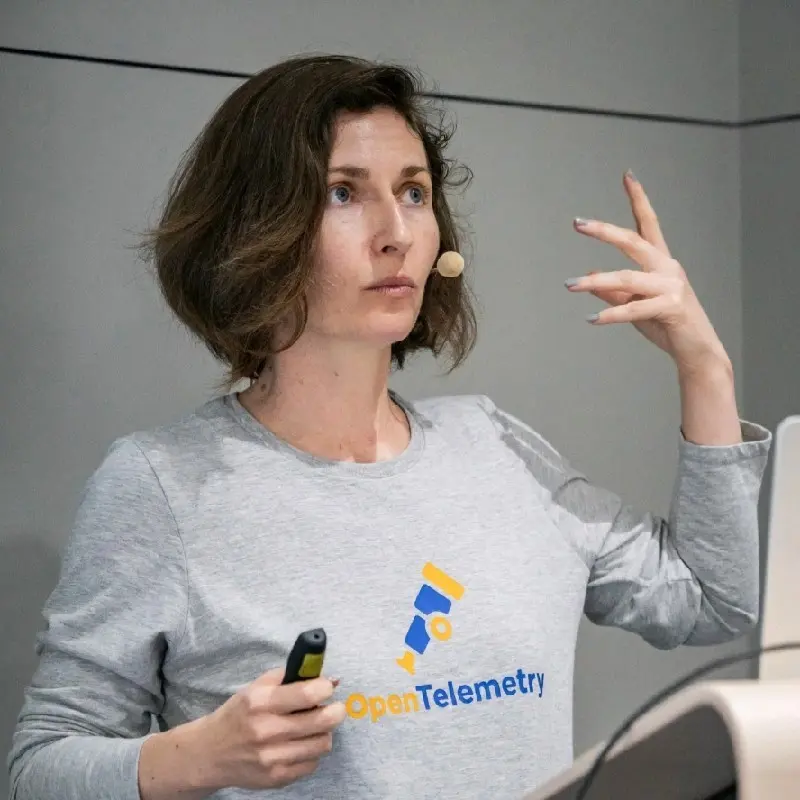
>> Well, I would definitely say to them, please don't wait. I waited up to now and I'm like 40 years old, 40 years young. And for me it was like a breakthrough. I'm going to give a couple of talks on neurodiversity for the very first time in my life. It's something like really, how can I say, a sensitive topic to me, to speak in public. And I know just by speaking with other neurodiverse people, just hearing me saying something out loud, they came forward. So, the idea is that, don't wait, come forward. That's the idea, that's in the title. Come forward, speak with us and feel safe about it, right? I think that's a great opportunity. And just the fact that we exist, will be such an advantage for the new generations.
Savannah Peterson
>> Absolutely. They don't have to feel so alone.
Savannah Peterson
>> Exactly. Exactly.
Savannah Peterson
>> Jay, what about you? What would be your advice to a young person or someone maybe just feeling a little shy, about getting involved with either the Kubernetes community, the tech community, or all the way into your working group?
Savannah Peterson
>> If you feel as though you're apprehensive about it, don't be. We are very supportive of you, no matter what. This is a wonderful community. KubeCon, many people come here, it's their first time and they're like, I don't know what to do, I'm not really sure whether or not I'm part of this, I don't think I'm qualified to be here, but you are. Join us. You can contribute code, you can contribute documentation, you are supporting. We have mentorship. You can be a mentor or be a mentee. You have something to contribute and you're always welcome and we would love to have you be a part of it. We want allies or somebody that says, I'm not deaf, or maybe I'm deaf, but I don't sign. We want, more the merrier and we're here to welcome everyone.
Savannah Peterson
>> I love that. You really are so welcoming. It's the absolute best. When it comes to goals for the next year, let's say at KubeCon 2026, in Salt Lake City, what do you hope to be able to say then, that you can't yet say today? Jay, I'll start with you and then I'll come to you, Diana.
Savannah Peterson
>> Oh, that's a good question. Ideally, I would like for more people to know sign, more people to come up to us and communicate with us directly. Ideally, we'd like to have more workshops and presentations that have captions on the screen, instead of us having to hold our phones. I mean, I know that we have the AI captions on the phone, but many people are looking on our phones, so we're not able to look at the screen and so we feel disconnected. And so, if each of the sessions have AI captioning or live captioning on the screens of their sessions, that would be wonderful.
Savannah Peterson
>> And it's better for everybody too. Sometimes you're distracted. Captions really benefit a lot of people. It doesn't matter exactly where you're off at. Diana, what about you? What would you like to be able to say next year?
Savannah Peterson
>> Yeah, well, I'm so happy that Jay spoke first. He was like, great question. So, right now I'm taking all these talking points and thinking out loud. Yeah, definitely, because we are a very new group. I think the important thing is just to come forward, build more, build the resources, take the messaging, saying that, Hey, we are here for you. You can join us. And just saying this out loud, will make such a big impact. Also, being able to speak more at conferences, speak about neurodiversity in any context, right?
Savannah Peterson
>> Yeah.
Savannah Peterson
>> That will help a lot, raise awareness. And even the part of mentors and mentee is very, very good. I think, for neurodiverse people, we have a hard time coming forward. We always stay in our nutshell, like introverts. We have an issue coming forward and speak our minds. And I think, the idea of a social group, the idea of a community, will be such a motivation. Even like, we are shy, I'm pretty sure that people will write on Slack at some point. Hey, I really love your community, I want to join. How can I help? And I think this is what makes neurodiverse communities special, that kind of, more timid kind of approach, and being able to give us a safe environment to do that. So, I wish I could be the speaker for every neurodiverse people, when I'm actually speaking at a public event and they can have the courage to join us.
Savannah Peterson
>> Yeah. And I feel it in my heart when you say that, because it's a community that isn't driven by ego. It's a community that's driven by wellness, case inclusion. But honestly, just like many groups that are classically disadvantaged, they felt left out and felt like you weren't a part of the conversation, which is kind of yucky. Jay, last question for you. You said there are seven terms in the glossary now. Would you mind teaching us what those seven terms and showing them, so people watching can see?
Savannah Peterson
>> Okay, let's see if I can remember them all. This is container, autoscale. You're putting me on the spot here. I need more coffee for this. Hang on.
Savannah Peterson
>> It's okay. No pressure. Autoscale was different, I wasn't expecting that.
Savannah Peterson
>> Yes, autoscale. Autoscale. Pods.>> Nice.
Savannah Peterson
>> I have to go back and... I need to do a little more refreshing.
Savannah Peterson
>> I didn't mean to put you on the spot, Jay, and thank you for teaching us. Thank you both for being here. The segments always make me a little emotional, because I remember growing up feeling left out of things, and it's groups like this that really change the world and that teach people, no matter where they are on the spectrum or their hearing capacity or their vision capacity or whatever that might be, seeing you up here doing this, seeing you on those stages, seeing you in the crash course for sign language, it matters. It really makes a difference. So, truly thank you for taking the time, but also for being such an absolute inspiration. And thank you to Catherine who always does such an incredible job bringing the best and most lovely people to this stage, like both of you, as well as continuing the hard work of the community. Just deeply grateful. Thank you guys.>> Thank you, Savannah. Thank you, Jay.
Savannah Peterson
>> Yeah.
Savannah Peterson
>> Yes, thank you. Thank you for having me here. This has been wonderful.
Savannah Peterson
>> This is so great. And thank all of you for tuning in to this inspiring start to day three of our coverage here in Atlanta, Georgia at KubeCon. My name's Savannah Peterson. You're watching theCUBE, the leading source for enterprise tech news.