We just sent you a verification email. Please verify your account to gain access to
KubeCon + CloudNativeCon NA 2024. If you don’t think you received an email check your
spam folder.
In order to sign in, enter the email address you used to registered for the event. Once completed, you will receive an email with a verification link. Open this link to automatically sign into the site.
Register For KubeCon + CloudNativeCon NA 2024
Please fill out the information below. You will recieve an email with a verification link confirming your registration. Click the link to automatically sign into the site.
You’re almost there!
We just sent you a verification email. Please click the verification button in the email. Once your email address is verified, you will have full access to all event content for KubeCon + CloudNativeCon NA 2024.
I want my badge and interests to be visible to all attendees.
Checking this box will display your presense on the attendees list, view your profile and allow other attendees to contact you via 1-1 chat. Read the Privacy Policy. At any time, you can choose to disable this preference.
Select your Interests!
add
Upload your photo
Uploading..
OR
Connect via Twitter
Connect via Linkedin
EDIT PASSWORD
Share
Forgot Password
Almost there!
We just sent you a verification email. Please verify your account to gain access to
KubeCon + CloudNativeCon NA 2024. If you don’t think you received an email check your
spam folder.
In order to sign in, enter the email address you used to registered for the event. Once completed, you will receive an email with a verification link. Open this link to automatically sign into the site.
Sign in to gain access to KubeCon + CloudNativeCon NA 2024
Please sign in with LinkedIn to continue to KubeCon + CloudNativeCon NA 2024. Signing in with LinkedIn ensures a professional environment.
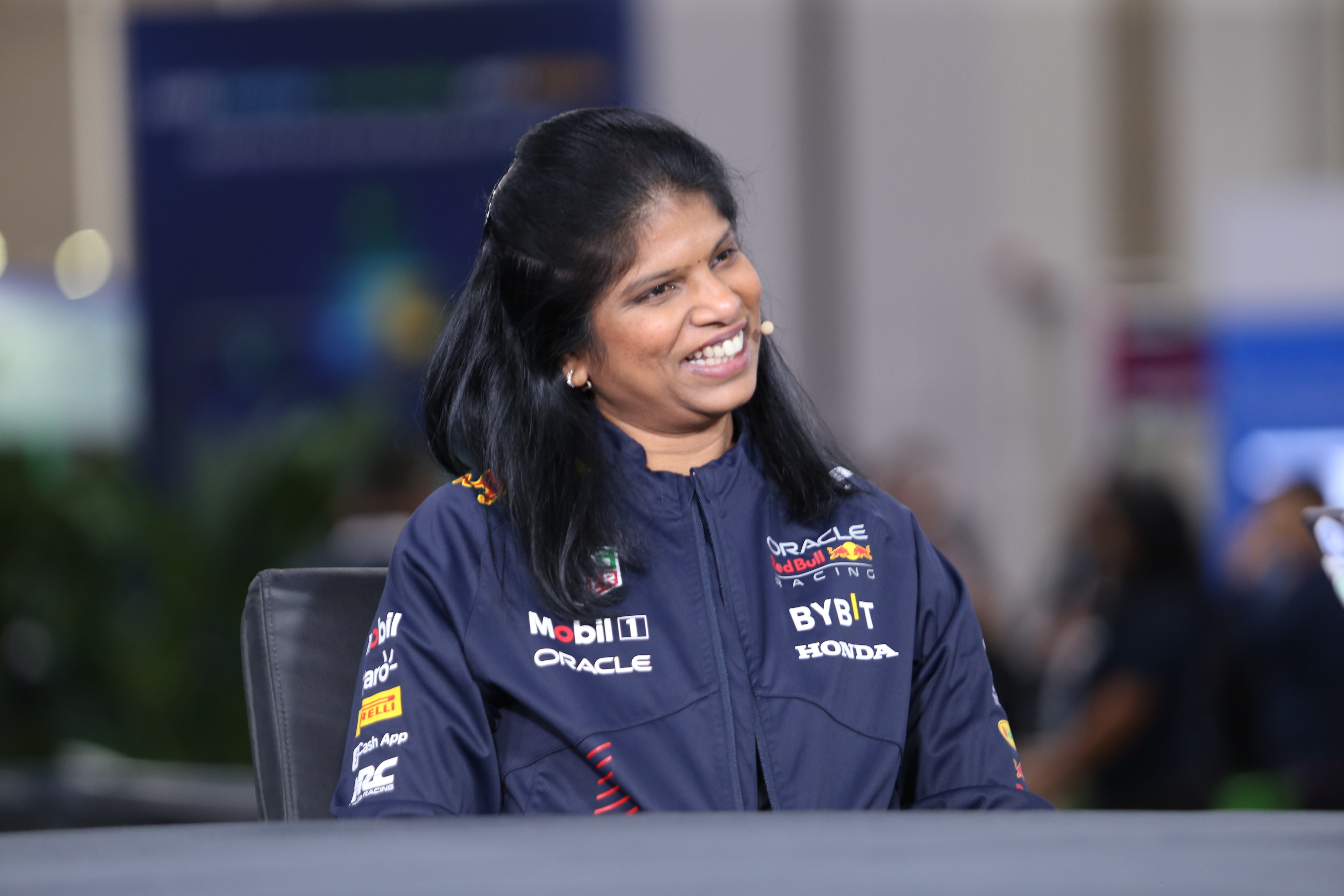
SVP Oracle Cloud Infrastructure (OCI) Developer Platform and CNCF BoardOracle
CubeCon North America in Salt Lake City, Utah highlights Oracle's $3 million annual donation to the open-source community for three years. This funding supports projects like Kubernetes, the Linux Foundation, and new AI initiatives within CNCF. Oracle's cloud infrastructure heavily relies on open-source tech, with GenAI services built using these technologies. They have introduced innovations like an AI studio for development processes and are focusing on sustainability by exploring solutions like liquid cooling for GPUs. As a board member of CNCF, Sudha from...Read more
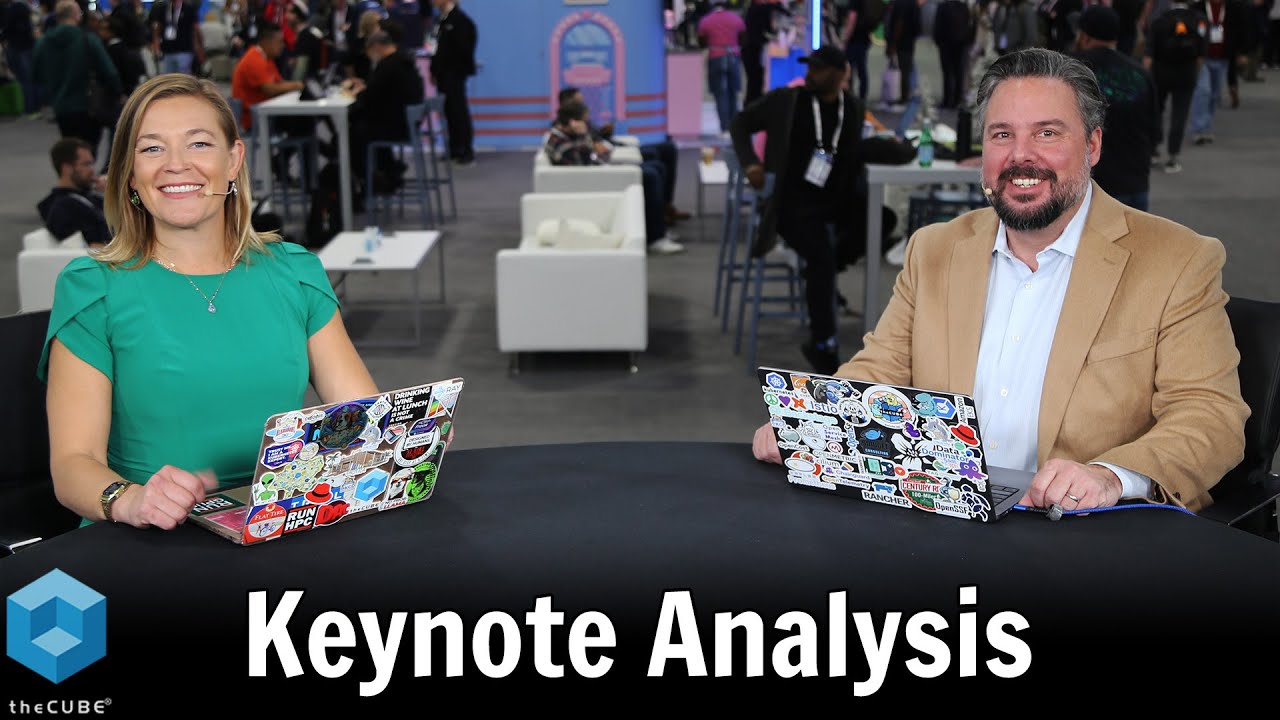
>> This is a good spot.>> Good afternoon, open source community, and welcome back to beautiful Salt Lake City, Utah. We are midway through our three days of coverage here at CubeCon North America. My name is Savannah Peterson, as usual, joined by Rob Strechay. Rob, we were just talking about F1. I know you're a fan of open source and F1.>> And there's so much open source with F1 and so many supporting companies that are here that are F1, but cars in general now, a lot of open source and a lot of Kubernetes technology and cloud native technology as we've talked about->> We have many times actually.... >> over the past couple of weeks.>> Yeah. Yeah. In Amsterdam even, way back when at your first show->> Oh, yeah.... >> for theCUBE, if you remember that.>> Oh, yeah, a year and a half.>> Throwback.>> Yeah.>> Speaking of F1 and world-class, I'm so excited to welcome Sudha back to the show. Thanks for coming to hang out.>> Hi.>> It's so nice to have you.>> Great to be back.>> Yeah, good to see you.>> I know. We had you in Paris, and that was fantastic. We get you back again. I knew we were going to have you back, so I called that one. You were so good and lovely on the show last time. I'm really excited to talk to you. Oracle just made a huge commitment to the open source community and announced a donation. Can you tell us a bit about that?>> Yeah, so last year when we were at Chicago, we announced the $3 million per year for three consecutive years. And this year, we're so proud to actually announce people have used it. Everybody from.. The graduated CNCF projects like Kubernetes, which is, of course, celebrating its 10-year anniversary, to the Linux Foundation itself using that software, using those credits for building their training modules, which means as more people come on to CNCF to learn some of these things, they learn about how to use all cloud providers. It used to be an AWS shop not too long ago, and now they have expanded to OCI, given our free credits. So it's been wonderful to see partnership from bottom up, like training new people, graduated folks, and a lot of the incoming incubation projects also using the credits to grow their ecosystem, of course, for free.>> First of all, that's awesome. What a great program and commitment to the open source community by Oracle. I'm curious, have you noticed any patterns or trends in the projects that are coming through and using those credits or is it everybody?>> It's everybody, but obviously we are here, the most happening things around AI, and so naturally a lot of the new incubation projects, I'm part of CNCF board as well, and so we do see a lot more incubation projects in the AI sector. And all of those, almost from the get go, use Kubernetes. They don't know of anything else.>> Wow.>> This is this generation of the community coming in. And them, Kubernetes is how you do things.>> It is the platform. Isn't that interesting?>> It is. It is the platform. People don't talk about VMs and computers anymore. They talk about containers and pods, and that's been very interesting. So everybody that lands on that Kubernetes platform, because of the kind of integration we have at CNCF and the easiness of how to use those credits, it's not a lot of paperwork. And so people get to use it, freely explore. And what's so interesting is because we donated ARM credits, it's actually benefiting the community. We are seeing a lot more projects being ARM certified, something that was not there a year ago when we gave this grant. So it is making the ecosystem a lot more open and fair to all of the players in the CPU and GPU space.>> Yeah, I think, again, people don't maybe realize how much Oracle cloud infrastructure is actually under the hood cloud native or open source and Kubernetes. Kind of give us a feel, because you've got your pulse on. You're on the board here,->> Yes.... >> but you're also... You have your day job.>> Absolutely.>> And so you get to see how both of those kind of come together in that intersection.>> Yeah. So in my day job, on top of managing the Oracle Cloud's developer platform, I manage our container and Kubernetes and serverless platform, which is very, very core to some of the things that we're talking here, right? And how has it evolved? Oracle cloud itself is about six, seven years old. And when we... So given that Kubernetes is 10 years old, when we started taking on this journey, even within Oracle, there weren't a lot of Kubernetes experts, or even users, didn't know where it would be applicable and where it would not be. Today, in the last 12 to 18 months, every single GenAI service that Oracle has released is built only on open source technology, only on Kubernetes, Slurm where it's needed, but everything from the Kubernetes ecosystem. So new stuff, Kubeflow, Volcano, Kueue, you name it, and our developers are getting used to starting from there. Just very different for how software and Oracle used to be developed even five, six years ago. So it's been an exciting journey to see Oracle come through with the use cases for how to use open search to solve our problems fast, no redoing stuff that has already been done by the open source community, and provide that value to our customers really quickly. What's also been fascinating to see is GPU, as everybody's talking, is super expensive, of course expensive for us too, right? So nobody wants to "reserve GPUs," and then keep them reserved without running any workload. So how do you get this kickstarted, quick start? So we have built AI studio for our internal developers to quickly kickstart on the GenAI services. Do the most where you are differentiated. Don't worry about infrastructure. Don't worry about pass. You tell us. Like model hosting, everybody doesn't have to build their own model hosting platform and architecture. We do it for them. You can pick... In fact, we allow them to pick from Hugging Face. We allow them to pick any open source models, and we will host it for those developers. It's a really nice ecosystem that we've seen inside Oracle.>> Yeah, I think, again, leveraging off of... I got to be at Oracle Cloud World, and what a show that was. And then was really interesting was the 51 different instantiations of AI and the different Fusion apps->> Yes.... >> and things of that all being built on top of this infrastructure. I won't go into Larry talking about getting rid of passwords. I thought that was->> Passwordless.>> I loved his rant on that. That was freaking awesome, but->> We just launched, all Oracle employees today are on passwordless platform, so it's not too far away.>> Yeah.>> I'm so here for that.>> Yeah.>> Talk about something that will surprise and delight people that might not have known they were interfacing with an Oracle system or... Nobody likes it.>> It's awesome. I thought that was awesome. So like you were saying, for the internal developers and how Oracle is using open source, what projects do you see being used internally to kind of build out this infrastructure to help out?>> So we see two kinds of projects. You were talking about how SaaS applications have added GenAI for free in what they provide to the customer. It's not an add-on. It is not something you opt into. It's there for you. When you upgrade, it's there. So we see development happening in that layer where we can provide direct customer value without actually telling the customer or requiring to tell the customer what's under the hood. How did we give you the data that we gave you? Right? You open an email, you click a few things, and orders get placed. Things start getting shipped. That is what people want. They don't want to know what technology powers all of this and how complicated it is.>> Nobody cares.>> Exactly right. So that's one layer of development that's happening. And then there is the sort of the past layer, which is where things like AI studio, what can I do for MLOps? How can I make it easy for developers who are actually working on the GenAI services? Not so much of the value add, but the central piece that other SaaS people can then use the verticals, document understanding, vision services, that layer. And then the bottom-most layer, this is where I think Oracle is on the cutting edge, on the innovation side. I am sure you heard our announcement that we are building the world's largest supercluster, 131,000 nodes and over. At that->> That is some scale.>> Exactly. And at that scale, simple technologies, like cooling, air conditioning, cooling doesn't work.>> Yeah, it's got to be go to->> Nope.... >> water cooling.>> Yeah.>> Liquid cooling, right?>> Yeah. Yeah. Yeah, liquid cooling. Yeah.>> Liquid cooling only maybe on that. Yeah.>> Exactly. And who would've thought that... We are software developers. We're all cloud providers, right? Now, we're talking to power companies, saying, okay, how do we do this liquid cooling at this scale? Not only that, we're also very environmentally aware. I think part of our ARM deal was exactly that, right? So these GPUs consume a lot of power, but guess what? They only consume power and they're running workloads, right? And yes, everybody wants to optimize the time they run the workloads, but it's not 24 by seven. So instead of the power company providing us with the peak power for 24 hours a day when you don't want to use that, how about we tell the power company... This is how we're scheduling. So the ecosystem that's growing to make GPUs sustainable as an infrastructure, because we are predicting that by the year 2027, this would be more than a $100 trillion market. And so what are we... If we don't start looking at the environmental effects today, when it's not that large, it's not going to take the impact that we want it to take when it becomes that large. So we're really trying to focus. And this is pure innovation. This is like we don't know what's out there, what more can be done. So it's a very nice, in my opinion, integration of hardware with this kind of software and power and things that we would never think you would need to do as a cloud provider. So those three areas are where you're seeing innovation.>> I'm really glad you brought up sustainability because it matters. And we don't have any of this in this room, quite frankly, if we don't have sustainable power, and we can't continue to scale any of this if we don't... You're talking about liquid cooling. We're headed to supercomputing next week. I suspect your team will be down there as well. And one of the companies, I think, or there's a company in Denmark that's using all of the water, all the liquid cooling. And after it goes through their servers, it then it heats the homes of people in Denmark. So they're leveraging that to create the full ecosystem. And as you're talking, and I promise I'm going to tie this back to CNCF, but as you're talking, I'm just thinking about these more holistic ecosystems.>> Yes.>> It's not just components, or a solution, or a platform, or a developer. We have to be thinking about the entire experience from where that power comes from to the end user, which is really exciting. And I know that this must matter to y'all internally, and I love having you on the show because you bring such a great perspective. So your role as a board member at CNCF, as well as doing everything that you're doing at Oracle, how much of those Venn diagrams overlap in terms of your ability to tap into the community and get feedback and learn from the open source community?>> It overlaps in dimensions, like you said, that I normally can't think of. It's almost per use case basis, if you were to say. Sometimes it is about, oh, I didn't even know Oracle did these things.>> Right.>> So it's about that showing people what we have and what we can do. And then in other cases where we're like, "Oh, you want to use our product, but it's an ARM and this thing doesn't support," so then integrating with that open source community with those sustainers and telling them, "How can we do? What can we do to help?" These people want to come onto the platform, but they can't because this is not supported. That's on one side. On the other side, things like any board, right? Budgetary constraints. I'm part of the budget committee as part of the board as well. And so where do you spend the budget? When we talk about places like this, we do get to determine how much of reusable stuff... Hopefully you had lunch here and you saw all the sustainable materials that we are using. Every little thing matters, right? And it's about what the board believes in. What are the values? And that's where the intersection is, a lot of what the CNCF board believes in, which is openness, giving the innovation back to a wider community versus keeping it as IP safe and secure. And Oracle believes in that openness. As you hopefully have heard, we were the multi-cloud pioneers. And now finally, we've got AWS. It's taken a while, but we're there.>> Right.>> And this is what is going to drive a lot more of let's share our thoughts and ideas to do better for the bigger community, things that not one company, one person, a few people can interact. I did not know about the dead market. I will definitely go and research that, but we ourselves are trying to reuse the water that we are using to liquid cool for other purposes within that data center, but this is next level of >> I can send you the interview so you can get in touch with them.>> Yeah.>> It is super exciting. And it's the stuff that I... I love these stories and narratives, and even your enthusiasm in the way that you're talking about this. When we bump into the AI doomers, if you will, it's so nice to be able to say, hold on, wait a minute, what if this actually creates an entirely different future of sustainability that we haven't been able to think about because all of these services and things were siloed?>> Exactly.>> Yeah.>> And as we grow into this hyperscale... Once upon a time, I am talking once upon a time, like it was decades ago, even a few years ago, only cloud providers were thinking about high scale. Now, today with GPUs, everybody is talking 10,000, 20,000 superclusters. And so imagine if this became norm.>> Right.>> With the way power consumption and everything works around GPUs, if you don't optimize, this is not going to be good for the environment, and nobody wants that.>> And it won't work. We don't have infinite power.>> We don't have... Exactly.>> So we'll just >> Exactly.>> Virginia's already out of power. There's no more->> Which is crazy.... >> data centers being built in Virginia->> Yes.... >> because they're out of power, which is crazy.>> Yeah, tell us about that.>> I didn't realize that.>> Yeah, it's->> That's nuts.>> It's craziness. So I think one of the things we love to talk about is, especially with your viewpoint from being at Oracle and with the CNCF board, is what are you looking forward to be able to say in London and in Atlanta next year? As you look across the horizon, what do you hope to be able to say when you get there?>> So I hope to be able to say that we have found a way to efficiently use and harness the power GPUs have given us, efficiency in two ways, one, of course, being able to use the hardware to do the training and inferencing that you want, but two, efficiency in getting the business value out of GenAI. Today, GenAI is a cool technology. Almost everybody out there wants to be associated with GenAI, but then what does GenAI bring to your space?>> Yeah.>> What can it help your customer do better, faster than without GenAI? That's how people should be thinking. Right now, they're thinking about what GenAI can I leverage? It should be the other way down. I am trying to solve this problem. Now tell me what GenAI fits this problem space. I hope by the time we are in London, we are able to show certain companies and certain customers having gone through that journey quickly, faster than 12 months and be like, "We started using this in three months. We saw this big change" in whatever the business problem that they're trying to solve with GenAI is.>> I love this. I hope that we can have those community members, those customers of yours on the show with you next time and say, "Hey, we hadn't even started doing this when we were in Salt Lake City.">> Yes.>> "Here we are in London." That is so exciting. I could talk to you all afternoon, but unfortunately we are at time. Thank you so much for hanging out with us again. You are truly a highlight of these shows, and the passion with which you speak about the community, I think is remarkable. And it's also a gateway. I hope if there's other folks, particularly women... I know you're a part of the Oracle Women's Group as well,->> Yes, I am.... >> and the Seattle leader, I believe, if I recall correctly, which is awesome. Shout out to you and all the teams there. I hope the folks watching today get excited and start diving in because we're so early in this revolution->> Absolutely.... >> that here's time and space for everyone, particularly here in the cloud, native and CubeCon open source community. So welcoming. Anyway, thank you a lot. And thank you Rob as well. This is a fun one. You always got some secret aces up your sleeve with those little data->> I try to keep you on your toes.>> I know. I like that. I like that you surprise me with data sometimes. And I hope you're all surprised and learning lots of things at home or wherever you might be watching our three days of coverage here in Salt Lake City, Utah at CubeCon North America. My name's Savannah Peterson. You're watching theCUBE, the leading source for enterprise tech news.