We just sent you a verification email. Please verify your account to gain access to
KubeCon + CloudNativeCon NA 2024. If you don’t think you received an email check your
spam folder.
In order to sign in, enter the email address you used to registered for the event. Once completed, you will receive an email with a verification link. Open this link to automatically sign into the site.
Register For KubeCon + CloudNativeCon NA 2024
Please fill out the information below. You will recieve an email with a verification link confirming your registration. Click the link to automatically sign into the site.
You’re almost there!
We just sent you a verification email. Please click the verification button in the email. Once your email address is verified, you will have full access to all event content for KubeCon + CloudNativeCon NA 2024.
I want my badge and interests to be visible to all attendees.
Checking this box will display your presense on the attendees list, view your profile and allow other attendees to contact you via 1-1 chat. Read the Privacy Policy. At any time, you can choose to disable this preference.
Select your Interests!
add
Upload your photo
Uploading..
OR
Connect via Twitter
Connect via Linkedin
EDIT PASSWORD
Share
Forgot Password
Almost there!
We just sent you a verification email. Please verify your account to gain access to
KubeCon + CloudNativeCon NA 2024. If you don’t think you received an email check your
spam folder.
In order to sign in, enter the email address you used to registered for the event. Once completed, you will receive an email with a verification link. Open this link to automatically sign into the site.
Sign in to gain access to KubeCon + CloudNativeCon NA 2024
Please sign in with LinkedIn to continue to KubeCon + CloudNativeCon NA 2024. Signing in with LinkedIn ensures a professional environment.
The second day of KubeCon North America has been filled with experts showcasing their knowledge in different segments. The event has matured over the years, providing a great experience for attendees. The keynote discussions touched on important topics, such as open-source, patent trolls, and IP protection within the CNCF. The emphasis on AI workloads, observability, security, and platform engineering was evident throughout the day.
Dynatrace, a prominent company at the event, highlighted their AI observability solutions and the importance of making da...Read more
exploreKeep Exploring
What are your thoughts on the show floor and overall experience at KubeCon, particularly in comparison to previous events you have attended?add
What was the message from day one's keynote at KubeCon?add
What are you seeing from the AI is everywhere part of the conference here?add
What are important considerations for platform engineers in creating a successful product mindset?add
What are the current focus areas and goals for the team's work with customers in relation to platform engineering?add
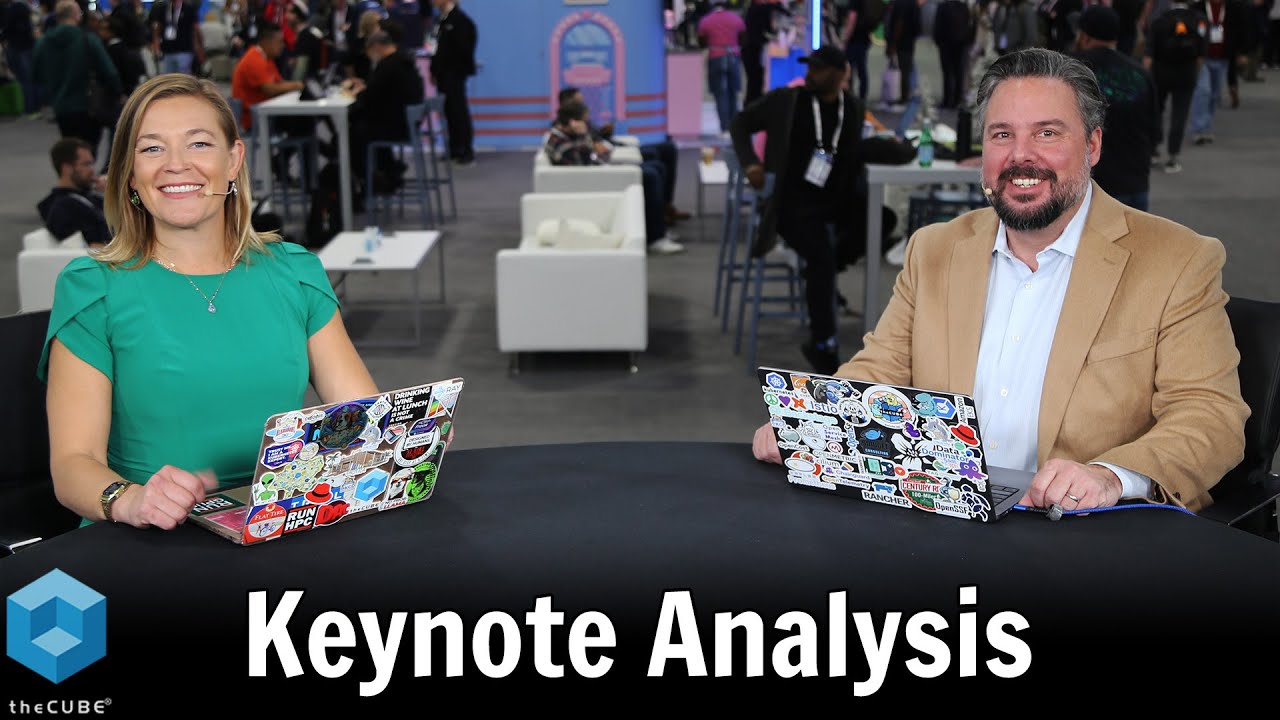
>> A good evening KubeCon community, and welcome back to Salt Lake City. We are here coming to the conclusion of our second day of coverage, three days here at KubeCon North America. My name's Savannah Peterson, riding this roller coaster of fun with Rob Strechay all week. Rob, what a cool show.
Rob Strechay
>> This day has been awesome. I mean, everybody who's been on this day has been just bringing it and experts in what they do, and this segment's going to be no different.
Savannah Peterson
>> Yeah, no, absolutely. We couldn't have a better close to a perfect day. Michael, thanks for coming to hang out with us.
Michael Winkler
>> Thank you very much. Thank you.
Savannah Peterson
>> Yeah. How has the show floor been for you? Dynatrace is a legend around here.
Michael Winkler
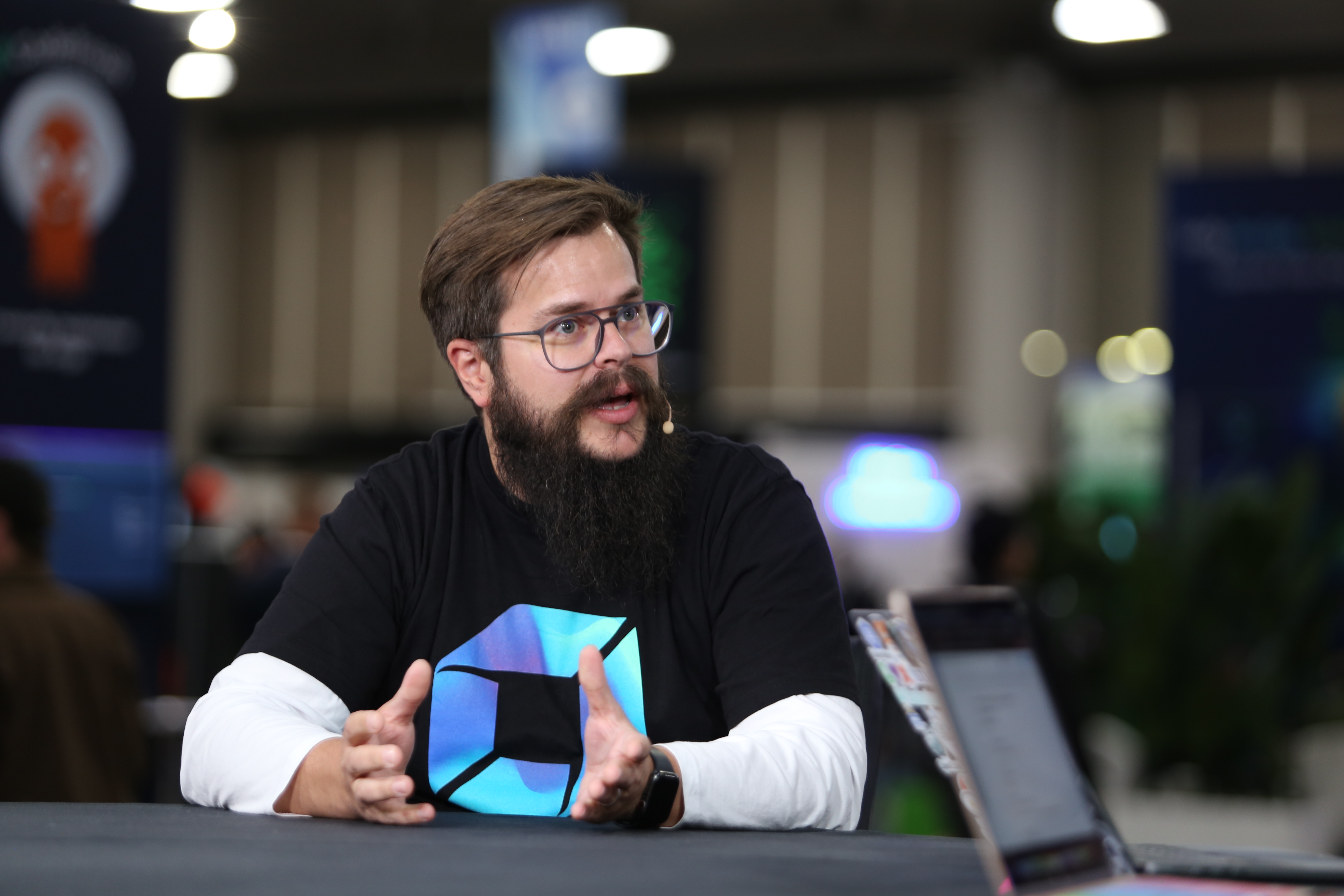
>> So far very good. So I have to say it's my fifth KubeCon, and the quality of the whole event so far. So it was a great day too, but it was the whole event so far was awesome. And especially here in the US, the best so far that I've been to. Compared to the others, it's like it has matured so much from the people that you meet, from the conversations that we have, from the organization, it's awesome. We love it.
Savannah Peterson
>> We feel the same way.
Rob Strechay
>> We feel the same way in the conversation. The hallway track has been awesome this week and I think again, over 50% of the people, this is their first KubeCon, so I think there's a lot of renewed energy, again every time I get it from the people who are coming in learning. But that learning also had a message on day one's keynote, which I agree with them. Starting off with lawyers on stage was not exactly what I expected out of KubeCon but-
Savannah Peterson
>> Kept us on our toes,...
Rob Strechay
>> kept us on our toes but they talked about in particular, OTEL being a target for people patent trolls and things like that. And getting into the bounty hunting stuff and how that works because I think this is really interesting. I love this approach to how people are really helping bring the IP back to the CNCF from Linux Foundation.
Michael Winkler
>> No, definitely. It's I think an interesting time for open source and how it's recognized in the industry. When we work with our customers or when we talk with the community, it's like, I wouldn't say you love it or you hate it, but it's like you have people that are like, really? Yes, we need open source. We ourselves as well, we are very heavily involved in the CNCF. We have several CNCF ambassadors. We have a lot of employees working full-time on CNCF projects, open telemetry, open features, et cetera. So it's very important to us, but also to a lot of our customers. And then you have these situations where people probably then think, "Well, should I really adopt open source if I get weird writings and I have to pay stuff?" So it was a very interesting start.
Rob Strechay
>> Yeah, definitely was.
Savannah Peterson
>> It was. But it's interesting, when I interviewed Priyanka in our preview for KubeCon, there's obviously patent trolls are never fun and it's not something you want to have happen, but on the other side, it's market validation to a degree. It's showing the velocity, the momentum, the adoption. So it is interesting and I love the spirit of we will take them down together and it's very collaborative.
Michael Winkler
>> Bringing the community together and we are here for you and we together, it was very interesting. Unfortunately, I didn't see too many keynotes.
Savannah Peterson
>> There was a lot going on.
Michael Winkler
>> Yes.
Savannah Peterson
>> So we don't-
Rob Strechay
>> So what have you been seeing? Again, you've been very busy, I mean you get a different perspective than we do because tethered to the desk here.
Michael Winkler
>> I was trying to get to the Oxygen bar.
Savannah Peterson
>> I went.
Michael Winkler
>> I heard... You went? You're tethered to the desk here?
Savannah Peterson
>> Yeah. I went on our 30-minute gap yesterday and it was actually fun. I felt much better after.
Michael Winkler
>> I tried to go there, but I haven't been there yet. So eventually, hopefully tomorrow is the day that I make it all the way to the back just to do the Oxygen bar as well. But it's from the top of mind, the three things that I've seen on the floor and in discussions with the people here is obviously AI workloads. So AI workloads resonating with us as Dynatrace quite heavily as well with the whole AI observability that we do. We work with a lot of strategic partners there and we have some really cool stuff that we can show there. The second part is a lot about observability of course, but security is back. That was something that I'm very happy to see in... I was not at the KubeCon in Paris, but I was in Chicago and Amsterdam, and if you looked at the taglines of the different vendors and at the different booths, there was all AI and automation observability, but there was not so much security anymore. And now it's back, which makes me very happy. And that brings me actually to the third point platform engineering, of course. And I hope or believe that maybe security is back because platform engineering makes it more easier to adopt. It's not an afterthought. It's not a different department. It's not something that's like I go there. The problem that we had very often in discussions with DevOps or DevSecOps was that as soon as you talk DevSecOps, it's like the DevOps engineers say, "Yeah, but that's a different team." It shouldn't be. From engineering, it's like baked in. So that's cool.
Rob Strechay
>> And I think that's a good discussion. I think especially one of the points and why don't we start here with AI is everywhere. I mean the workloads are everywhere. Observability's a big piece of this because there's a massive cost when you're doing these models, especially if you're training them and fine-tuning them and then deploying for inference, there's a lot that needs to be seen. What are you seeing from the AI is everywhere part of the conference here?
Michael Winkler
>> Well, yeah, AI is everywhere. I had a lot of interesting discussions about how we see really adoption. Everyone does AI. We have our own, Dynatrace, AI as well. We had the Causal AI, our root cause analyzes for the past 10 years already. We have Predictive AI, we have GenAI, and we got very interesting questions also from customers and also in the conversations. It's good that everyone talks about AI now, but what's the adoption? Where do we see the highest adoption? Where do we see the highest value? And it's not this magic tool that you have and it does all the work for you. The biggest advancements that we've heard is, and that we see ourselves as well, how we adopt GenAI is it's a productivity boost. And there was a discussion a few weeks back also from Google that said 25% of their code is already generated by AI, but a lot of it is around auto-completing methods, auto-completing certain things. So it's really a productivity boost and this is what we see ourselves as well in the way how we apply Davis Copilot, how customers use it. It's a productivity boost. So it's not this magic thing that solves everything for you, but it makes you smarter and you more productive.
Rob Strechay
>> Yeah. And I think observability is one of those spaces where there's just so much data that AI makes so much. And like you said, you've been doing AI, I mean GenAI is new, but AI itself is not new. Like you were saying, do you see the customers coming to you and saying, "Hey, how do you apply it and how are you using it so that not just from a Davis perspective, but with the Copilot," because they're looking for ideas on how to bring it in because maybe they're using your OTel, because you have an OTel collector that basically you've open sourced and people can go and download it, and it doesn't have to be used with your stuff, but it's OTel. How do you see people saying, "I'm collecting all this data and where do I get started?" Or is it more the conversation of I just want the easy button and because it's just so much data?
Michael Winkler
>> I mean, it's a good question. The easy button is pretty much something that we try to have, especially on the in-chest side. So we try to make in-chest of data into Dynatrace as simple as possible. OTel is one of these things, like we have several employees working on tel full time, and we have our own Otel collector, which is a curated collector officially supported by us as well. A lot of different under methods how we can bring in data, but no one brings in data for the sake of bringing in data. So where we see the biggest advantage of the easy button of Dynatrace is that we provide answers and opinionated feedback automatically. Depending on who you are, depending on personas, we have different entry points that have tailor-made experiences that if you open Dynatrace a certain application, we already made sense of your data for you. And this is something that helps the most because not everyone is using an observability platform every single day. Not everyone is a subject matter expert in observability, but they still need to understand what they see. This is very comes in. And then of course below that we have for the specialists, we have to drill down our own query language. We have notebooks, et cetera. So you can then drill down. But it's very important to make sure that someone who's an occasional user still gets the best experience possible by getting these answers. They don't necessarily care about the telemetry that we ingest. They just want to know, "Okay. What's the impact on my business? What's the impact on my customer? What's the impact that I have? Do I need to do anything? The traffic light.
Savannah Peterson
>> Well, it's about strategy. To your exact point, a lot of people wanting to know what's going on, particularly with the AI ops within their organization, and you said that so simply, which makes sense and is very on brand, but making sense of your data for you and having it right there, that's actually not a simple task. That's an incredibly complex thing, especially with the different data sources and silos you're pulling that out of. That's got to be an incredible challenge to build that. How are you doing that? How are you making that possible for everybody?
Michael Winkler
>> Making sense of the data, like I said, this is what we did for 10 years already. So that's the core of what Dave's AI was 10 years ago already. Making sense of data.
Savannah Peterson
>> So you were just ready for this moment and waiting for everybody to catch up?
Michael Winkler
>> Yeah, of course, no.
Rob Strechay
>> We were just waiting for the world to be ready.
Michael Winkler
>> No.
Savannah Peterson
>> Come on guys.
Michael Winkler
>> Of course it grew. But we've been doing that and the good part, we've been doing it for so long that our customers trust our Davis AI because they know that we have a good root cause analysis. They know that we can pinpoint what the problems really are. And what we do now is we just make Davis more accessible. We make our AI more flexible to be used. So Predictive AI, GenAI is being added so they can use it themselves and see what we're actually doing. They can steer it and understand better. It's not a black box, but something comes in it, and then just trust the process. And on top of that, we have these tailor-made experiences. So we bleed all of that information across our applications, and then especially our Davis Copilot helps us. Then this is where this productivity comes in. We bring that in context into the apps as well. So if you're, for example, our Kubernetes monitoring solution, the application that we have. There are so many different Kubernetes warning events and things that get ingested into Dynatrace, and I don't know half of them. And directly there, you can use Davis Copilot and say, "Yeah. Can you please explain that? What is it about? What is normally the root cause that it happens and how can I fix it?" And it's all automatic. So you click on it, say, "Explain this to me." And then it comes with all the sources what they need to do. And this then with the remediation steps, brings us directly to the automation that we have because we provide answers and we provide automation as well, flow automation on top of that. And that's one of the things that our customers have been asking us for a long time. It's like, you tell me exactly with Davis what the problem is, at what point and what I do have to do and you still wake up my SREs. Why don't you just fix it? So bringing in automation on top of that was the obvious next step. We did that we created 1 1/2 years ago, and obviously now, with GenAI it's becoming even more critical to make sure we apply it.
Rob Strechay
>> So I think one of the things, and you mentioned it, security being back, Dynatrace also on the security side, because collecting a lot of data and there's a lot of signals in there. Talk to how you've been looking at it from a Kubernetes platform perspective as well.
Michael Winkler
>> So from a security perspective, of course we have all the vulnerability monitoring, et cetera. And there's a lot of stuff coming in the future, in December actually. I would say, our biggest differentiator is that all the data that we have, and it's not just with security, but all the data that we have is on a unified platform. So it's not different product lines, it's a unified platform. So you can link the data and information of vulnerabilities to our digital experience monitoring. So was there anything happening there? You can look at session replays. You can link it with your log information, from our log management solution and log analytics. So this unified approach really unlocks the option to have much more possibilities to go really deep into the weeds and see how things fit together. All of these unknown unknowns at the tips of your finger. So it's really-
Rob Strechay
>> Yeah. Again, you were talking about this upfront, but the third thing that you observed was platform engineering. And I think we've been talking around a lot of the things that platform engineers care about.
Savannah Peterson
>> Platform engineering, having a moment right now.
Michael Winkler
>> Yes.
Rob Strechay
>> Absolutely. So what are you seeing out there from the platform engineering perspective?
Michael Winkler
>> So I love platform engineering. It's very dear to my heart. I'm very passionate about that. I think with platform engineering, we have some advantages and some disadvantages. What we tried for 20 years with DevOps, we talked a lot about DevOps. Also, we as Dynatrace, the whole community, everyone talked a lot about DevOps and we still had customers or we still have customers that reach out to us and say, "How do I get started with DevOps?" And it's been 20 years now. So I don't want to say DevOps is dead because it's not. But this whole culture mindset that DevOps was supposed to be or is supposed to be or is was difficult for people to grasp. And with platform engineering, the advantage and disadvantage is it's very prescriptive. It's like, "By the way, you want to get started, start here. Those are the five steps." And this is good because it allows people to start and really work with platform engineering. The disadvantage is that you might be building an internal developer platform that no one wants to use, which is not good. So we need to be careful as a community that we don't make it too prescriptive and make sure... The most important part for me is as a platform engineer, your customer is the developer And you need to have a product mindset. So data-driven, talk to your customer, talk to your developers, what do they need? And then obviously we also got the question, why is Dynatrace so interested in platform engineering? If you treat your IDP like a platform, you need to make it observable because what's your benchmark? What's your bottleneck? Where do you need to improve or where do you have the biggest lever to become better? And that's yes, you get the feedback from developers because they know where they have the biggest cognitive load or biggest manual toil, but make it data-driven as well. That's a big topic in product management. So make sure you treat your IDP as a product. And then with those simple steps, I think it's easy to really quickly get a good ROI, but also real value with platform engineering. So that's why I really like it.
Rob Strechay
>> No, I think we're big fans of it and I think, again, it's one of these things that I think taking that mindset and product mindset is a huge thing because having been on the product side myself at many companies, you start to look at it and say, "Here's how we have to execute to give that product to organizations." Do you see customers getting from a platform engineering perspective, do they understand that, a product mindset?
Michael Winkler
>> Yes, I think so. We don't get tired of repeating it. What I like is with DevOps, since it was more about mindset and culture or is more about mindset and culture, you had these pillars, but you could interpret it anyways. There was no wrong way of doing DevOps. Maybe that's a bold statement, but anyways, I'll leave it at that.
Savannah Peterson
>> We like bold. We're here for your passion and your bold statements. Michael, don't worry.
Michael Winkler
>> For platform engineering, it's pretty clear what we want to achieve. Why do I do platform engineering? And the community agrees why we want to do it. So it leaves less room for interpretation for the why. Ask five times why. If you build a product, why? If you know why, ask again why? So it's like we know why. We discussed it a long time and we have agreement in a community of a lot of people, from a lot of different organizations, different backgrounds, different interests, and we pretty much agree. Again, bold statement, but I think on platform engineering, there's not too much. Yeah, I see that 180 degree different than you. We all have a common goal and if you go to anyone else here and ask about platform engineering, I do hope they will say as well, it's critical to treat it like a product. Your customer is the developer. And that is pretty much the biggest turning point maybe in how we apply it. So you have your SRE practices and you have your platform engineers, and then it goes together perfectly, right? It's like bread and butter.
Savannah Peterson
>> It is like bread and butter, just like this interview's been, bread and butter. I have one final question for you, Michael, because this has been fantastic. When we're hanging out in London at your sixth KubeCon, what do you hope to be able to say then in London that you can't yet say today?
Michael Winkler
>> Well, I can't say today yet, so.
Savannah Peterson
>> Well, it depends on if it's secret. It could be an ambition, could be hope. You can spill the beans. We're open.
Michael Winkler
>> Currently, what we do with customers, we do a lot of talk a lot about platform engineering. I would like to be there... Currently, we help customers to get started and we have our proof points. We adopted platform engineering a while back. We have our own proof points, we have our own metrics, whatever's the big value. I want to see how non-vendors see it. People that we work with, and how they really apply. What's the big value there? And of course there's a lot of fancy stuff coming on the Dynatrace side as well, which I cannot tell you yet, but meet me in London.
Savannah Peterson
>> Yeah. I really look forward to when we can. That's the spirit, Michael. I love it. Thank you so much for taking the time.
Rob Strechay
>> Thank you very much. It was a pleasure.
Savannah Peterson
>> Yes, such a joy. And Rob, what a great day we've had. Thanks for spending it with me.
Rob Strechay
>> This has been fantastic.
Savannah Peterson
>> It really has been.
Rob Strechay
>> A great way to end the day too.
Savannah Peterson
>> One of my favorite days at KubeCon, I think.
Rob Strechay
>> It was, I got to say. It's been great.
Savannah Peterson
>> 10 out of 10, no notes.
Rob Strechay
>> And you brought it and I love it. And this has been fantastic.
Savannah Peterson
>> Quick cherry on top. Thank you so much, Michael.
Michael Winkler
>> Thank you very much.
Savannah Peterson
>> I think it's awesome. And thank all of you for tuning in to our 24 segments over the last two days here at KubeCon North America in Salt Lake City, Utah. My name's Savannah Peterson. You're watching theCUBE, the leading source for enterprise tech news.