We just sent you a verification email. Please verify your account to gain access to
KubeCon + CloudNativeCon NA 2024. If you don’t think you received an email check your
spam folder.
In order to sign in, enter the email address you used to registered for the event. Once completed, you will receive an email with a verification link. Open this link to automatically sign into the site.
Register For KubeCon + CloudNativeCon NA 2024
Please fill out the information below. You will recieve an email with a verification link confirming your registration. Click the link to automatically sign into the site.
You’re almost there!
We just sent you a verification email. Please click the verification button in the email. Once your email address is verified, you will have full access to all event content for KubeCon + CloudNativeCon NA 2024.
I want my badge and interests to be visible to all attendees.
Checking this box will display your presense on the attendees list, view your profile and allow other attendees to contact you via 1-1 chat. Read the Privacy Policy. At any time, you can choose to disable this preference.
Select your Interests!
add
Upload your photo
Uploading..
OR
Connect via Twitter
Connect via Linkedin
EDIT PASSWORD
Share
Forgot Password
Almost there!
We just sent you a verification email. Please verify your account to gain access to
KubeCon + CloudNativeCon NA 2024. If you don’t think you received an email check your
spam folder.
In order to sign in, enter the email address you used to registered for the event. Once completed, you will receive an email with a verification link. Open this link to automatically sign into the site.
Sign in to gain access to KubeCon + CloudNativeCon NA 2024
Please sign in with LinkedIn to continue to KubeCon + CloudNativeCon NA 2024. Signing in with LinkedIn ensures a professional environment.
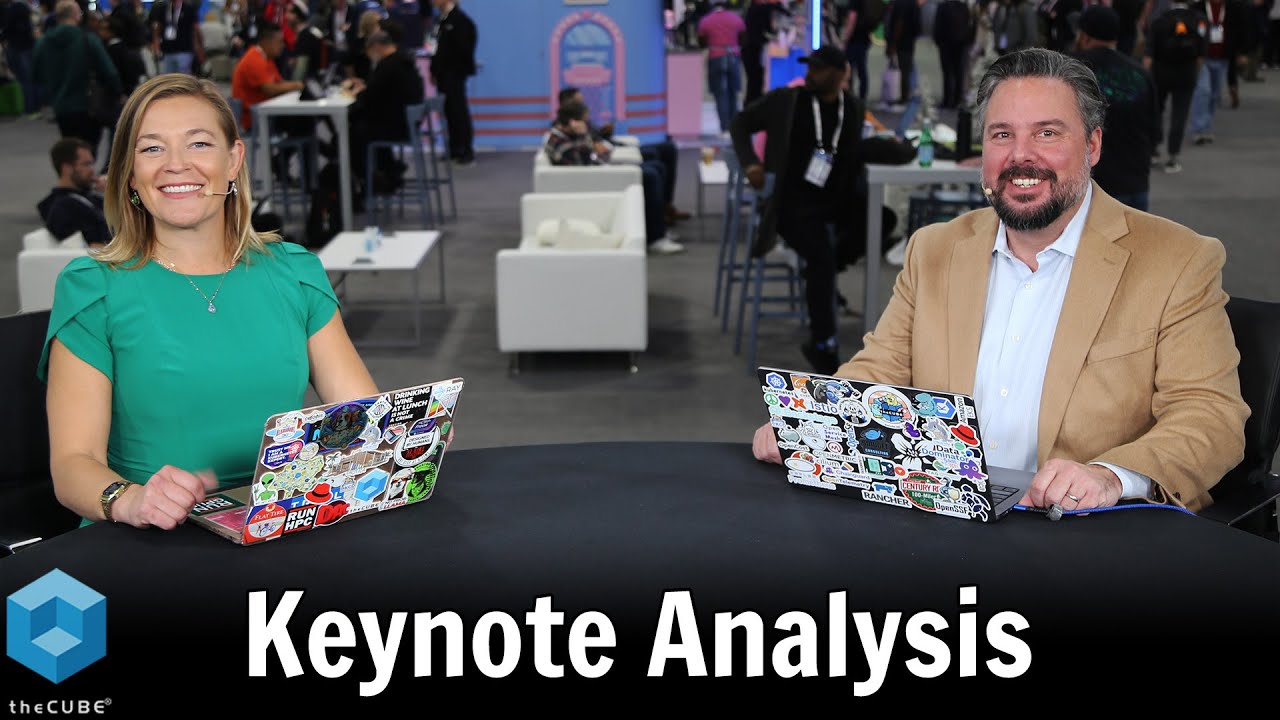
At the conclusion of three days of coverage on theCUBE, Rob Strechay and Taylor discuss the exciting developments in the Kubernetes community. The focus is on the 10-year milestone of Kubernetes and the importance of community involvement. The conversation delves into the challenges of AI, collaboration, and the emergence of new projects like Karmada, Argo CD, and OpenTelemetry. The discussion touches on the evolving landscape of infrastructure and the need for continuous improvement and collaboration within the community. Overall, the future looks promising ...Read more
exploreKeep Exploring
What are some of the standouts and highlights for Taylor as someone in charge of the ecosystem after 10 years of Kubernetes?add
What has been the main theme and focus of discussions at KubeCon recently, and how have the challenges in scaling, multi-cluster, multi-cloud, and multi-location environments evolved over the years despite initial claims that Kubernetes was "done"?add
What are some thoughts on the future of Kubernetes and its relevance in the tech industry?add
What technologies or projects have caught your interest recently, especially in terms of multi-cluster and batch workloads, and how do you feel about the current state of the technology landscape?add
>> Good morning, Kubernetes fans, and welcome back to Salt Lake City, Utah. We are here coming to the conclusion of our three days of coverage on theCUBE, but not before some scintillating final segments. My name's Savannah Peterson, joined with, you guessed it, Rob Strechay. Rob, we got some cool stuff coming up.
Rob Strechay
>> I'm as excited for today as I have been for the last two days. I think there's a lot of getting into a lot of the community and what's going on and unpacking that and how people can actually get involved. I think that's a big piece of it.
Savannah Peterson
>> It really is a big piece of it and today is a celebration. 10 years of Kubernetes is a theme today. Very exciting. Speaking of community, who better to talk about it than Taylor? Welcome back to the show.
Taylor Dolezal
>> Hey, how's it going? I'm ready. Yeah, it's Friday. Just like you said, just I am amazed how we're able to keep this week going each and every single day. A little bit of donuts, a little bit of coffee, we figure out how to work.
Savannah Peterson
>> And the oxygen bar. I don't know if you've had a chance to hit that up, but that was a little bit of a boost.
Taylor Dolezal
>> No. Need to check that out.
Savannah Peterson
>> Just keeps you going. You need all the help you can get. It's been an awesome week for you all. So many announcements, so much data. What are some of the standouts and highlights for you as someone in charge of the ecosystem?
Taylor Dolezal
>> I think for me, I've really liked seeing the end user community bring forward the CNCF Tech Radar. I'm so happy that's back, like humblebrag with the end user community. I'm really happy to see that. They, in all of that survey data too, they've been sharing with us the gaps that they've been experiencing too. Also really helping to level set with all of our community members, governing board members, TOC, et cetera. I think even Lachlan Evenson on the stage today was talking about security and complexity and those were the top two things that end users were sharing, so really fun to see all these things, all the things that you say in those meetings propagating up and having the right people talk about that as they decide on products, strategies, et cetera.
Rob Strechay
>> In fact, I think that was what we were noticing is that security was back here and it seems like you're bringing OSSF back, the open source security.
Taylor Dolezal
>> .
Rob Strechay
>> Everything's coming back together again for London and beyond. It seems like you're bringing it back together to colocate, almost like you do with the day zeroes, which makes a lot of sense, I think. Was that an ask from the community in what you saw or...
Taylor Dolezal
>> Definitely. I think Kelsey Hightower was at one of the events yesterday and someone had asked him what does the future hold, kind of hinting at AI and some things on that front, and he just put it perfectly. He's like, "The future is what you're working on. What are you working on?" And then he kind of launched through all these other things going on. AI is definitely within the sphere of everything going on, but we still have platform engineering, security, not just features, but end users are looking at ways to configure that, so that's the confusion, hence complexity, interoperability, all these other things. Developer experience also really shining through and then as we're seeing all these new people come into the community, conversations I've been having with them is like, "Where did you come from?" It's rather than the state and their locale, they're like, "I'm seeing a lot of developers come into the fray" and so that's the interesting thing is this used to just be a whole bunch of infrastructure people. Now we're seeing all these different fields converge because Kubernetes and all of these other projects are proliferating so much.
Savannah Peterson
>> I love that you just said that because I was going to ask you about it anyway. It feels like we're having a bit of a community moment where the attention is both on open source, on Kubernetes, on AI, but also collaboration in a way that we haven't seen in this technological revolution until I feel like right now. Would you agree with that?
Taylor Dolezal
>> 100%. 100%. I am always... I love my job because I get to hear all these people's stories. Pay me in stories. There used to be that gum like, "Pay me in gum." No, pay me in stories. I love hearing all of them. You hear these people that used to be one person I talked to is like a cook in a restaurant. They learned about Kubernetes, completely changed their life. Project manager, now an engineer. Physicist, now in Kubernetes ecosphere. It's so cool to see and so yeah, it's really having a moment. Those are the stories I really like to hear, obviously, but yeah, really cool.
Rob Strechay
>> And I think, again, what we've been hearing and talking to people all week and we're 26 talks in right at the moment. We start to hear some really common themes. Like you said, AI came up and there's a lot of focus and people are looking at all of the different projects that are coming and it seems like there's not only stuff happening here, but there's stuff happening in multiple different, I guess you could say, standards bodies from that perspective in different communities, but they all seem to be kind of coming back together and intersecting here. Some of the stuff with AI is happening at the Linux foundation level versus at the CNCF. How do you see and what are some of the trends you're seeing in the community with the different projects? I mean, there's more than AI, ML, and things like that, but what are you seeing from the trends in that way?
Taylor Dolezal
>> I think what's different about this KubeCon now, again, I'll start with end users and kind of tie that all together, but before, I'd give keynotes, I'd talk with people, and these were just ideas that we were trying to share. There was data out there, but it just wasn't available. Now, we finally are heading to KubeCon with that data in hand. We have reports and we have a better understanding of the shape of the ecosystem. I think with AI, it's interesting to see the hype cycle. Personally now, looking at how this works and stuff like that, I remember it back in 2016 and everything, but being older, getting to see it in the way it's happening now is really interesting. What seems to happen is that all of these foundations are kind of, let's be honest, everybody wants to be the first one. You're like, "Oh, we got it" and so that's what happens when something like AI comes along, so all the foundations are looking at the projects, trying to figure things out, the different ecosystems like, "Do we have it? Do we have it? Do we have it?" And now, we're starting to say like, "Okay, this is really tiring. Let's slow down. Let's establish some standards or agree on what makes sense for all of us and go a little bit slower."
That's when you see the cross-communication really start to happen. Stability takes over and I'm guessing that's what we're going to see over the coming months is just this little bit more nuanced, a little bit more stoic approach to AI and then really focusing in on what are you actually doing, right? AI, that's been lauded as the feature, but it's not. It's a part, it's an ingredient in the mix of the cool things that you make and so now we're looking at what are the cool things that you're making? Let's talk about how that works.
Savannah Peterson
>> Yeah, as Bobby Allen who also works with or used to work with Kelsey, I should say, rather, he says, "It's the sauce, not the main dish."
Taylor Dolezal
>> Yeah,
Savannah Peterson
>> And I think that's absolutely right. I 100% agree with you on the cadence. It felt like everyone rushed to try and get some compute, figure something out, spend enough money.
Taylor Dolezal
>> in the world.
Savannah Peterson
>> Try and realize some level of ROI and in an insane time to value without necessarily asking the right questions to solve the right problems and reverse engineer their solution. I love the conversations that we've had this week because I feel that so many people to our earlier point about collaboration are coming together. We don't all need to go reinvent the wheel in different wheels all over the place. Everyone should have the same chassis, put on some wheels, and then build all their little magical art cars on top of that.
Taylor Dolezal
>> Then show and tell and that's fun.
Savannah Peterson
>> Yeah, yeah, and it's really nice to hear that. There's also a lot more... well, it's actually the same consistent new participation in this community as we were just talking about. For those who don't know, 50% of KubeCon attendees pretty much forever have always been new or first timers. It tells me a lot about how inviting this community is, so what would you say specifically, Taylor, as someone so intimately involved with it to someone who maybe has been watching the show or hearing some of the keynotes or seeing things on Twitter this week and are thinking, "Man, I'd really like to get involved with this community, particularly right now." What would you say?
Taylor Dolezal
>> Yeah, I'd say that sometimes, do it. That's step one. It's a 100%. When it comes to getting involved, there are some things... that's, I think, the most difficult thing for people is that the intention's there. I want to do the open source. I want to be in cloud native, but making sense of the landscape and all this, it's like a sprawling neighborhood. It's wild. Taking a look at the landscape is good. There's two different things I recommend. One is have an idea of the place that you want to go. I know that's easier said than done, but do you like databases? Do you like login? Do you like apps and developing those things or configuring them? What's the shape of what you like to do? Is it a thing or is it a specific project that really speaks to you and that you're familiar with? That's something that's a good, helpful place to start. Then you can start diving into that community, the Slack channels, the meetings. You could go lurk on YouTube and watch some previous meetings. I do have some good news for people that are just starting out with those meetings too. They're not going to assign you work. You can come, camera off, just listen, listen to all the acronyms and things.
Savannah Peterson
>> You welcome lurkers.
Taylor Dolezal
>> Pretty good way to start is just like... and then again, the community's really nice with shadow programs and other things and many projects, so that's how I got started way back in the day. I think who you had on earlier, Natasha, I started working with her. She was my intro to Kubernetes, George Castro and Caitlin Bernard who works at Kong now, so I get to see all these people again, and then that happens too. You keep seeing the same people. Things start to make sense. You can understand the acronyms and then that confidence comes on that front.
Savannah Peterson
>> One thing I just want people to note just on that because it matters is it's not just these groups. There's very specific working groups, Hard of Hearing working group. I know there's a blind working group that's coming together. There's also Kubernetes Kids Day. There's a ton. I mean, it's truly one of the most age-inclusive, diverse communities to come in and dig in. All right, Rob, I know you got a question.
Rob Strechay
>> No, no. I think, again, I think you hit on a lot of things. It's become the infrastructure place to go, like the infrastructure show because I think open source, we say it a lot, has won in many, many respects and I think, again, when you start to look at it, it's won enough that you have trolls and patent trolls and everything coming that was in the day one discussions.
Savannah Peterson
>> Yeah. What an interesting market indicator, right?
Taylor Dolezal
>> Yeah. It's like, "Oops, I'm wearing green. Is that a problem?"
Rob Strechay
>> But when you look at it, I think the discussions have been even different. This KubeCon, it's been about scale. There's been a lot about scale, about multi-cluster, about multi-cloud, multi-location. How do you see some of the challenges that are still out there that are being addressed now? How have they changed over the last few years? Because it looks like everybody said, "Kubernetes is done." I think I even said it at the last one and I said... but then we get here and it's like, "Okay, well it's not done here. It's not done there. It's still a little difficult, rough edges over here." What are you seeing from that?
Taylor Dolezal
>> Well, that's even been the theme of Kubernetes for a long time, right, is this is the stability release. Probably even going from 114 to 119, way back in the day when I got started. It feels like 30 years ago. Wasn't, probably just, yeah, two, three-
Savannah Peterson
>> Tech years are not the same as normal years....
Taylor Dolezal
>> no. Yeah, yeah. they are much larger rings on the tree.
Savannah Peterson
>> Yes, they are.
Taylor Dolezal
>> Thinking back, that's something that's been stable for so long, but we still get surprised with features and things like that. I've thought the same thing too, "Are you done or are you done with Kubernetes and oh no, it's still relevant again" and making sense of all these things. I think that as time's going to go forward on that one, that's also going to be pretty interesting too. We keep bringing apps back to the same place. We've always wanted to write once, run anywhere. We're seeing Wasm come up in all these different workloads, but we're seeing the same problems emerge, right? We want to run applications. I think Kubernetes is still going to be viable for a long time. I am hoping it's going to fade into the background a little bit more on that front, but we see that cycle too of mainframe personal computer, mainframe personal computer, HPE. That bounce back, I think, is going to happen again, especially with GPUs and things like that now too, if you want to stay current with everything that's working on that front. Really hard to get one right now, so using a service is going to make sense until we can commoditize that and push that back to people at the edge.
Savannah Peterson
>> Yeah, absolutely. I think it was Suda on Wednesday who said she's looking forward to it becoming boring, fades in the background, and then we'll work on another thing, and it's interesting. I mean, 10 years is a big milestone, clearly adoption accelerating with AI, hunger, and just kind of a really interesting moment. I am curious because obviously, there's so many different projects in your ecosystem. It's shocking. But what are some of the newer projects that you find real interesting that people might not know about yet?
Taylor Dolezal
>> Some of them, I do need to update my flashcards, my mental flashcards, and I've got a colleague, Bob Killen, who actually has been working on those. I think he knows just about every project. Some of the ones that I've been interested in lately are the Karmada, like some of the more batch and AI and ML things. I've been really blown away by Argo CD and just how that's also been something that's been selected for multi-cluster and all these batch workloads too. That's kind of where I have my personal focus on. OpenTelemetry, also just older project, but converging other projects.
Savannah Peterson
>> Also having a moment though, I would say.
Taylor Dolezal
>> Yeah, yeah. Yeah.
Rob Strechay
>> I mean, even the things with Fluent Bit and the releases that they have coming. It seems like there's becoming centers of gravity, which was one of the things that I was hoping to see because the landscape, when you show the landscape, that chart is like crazy.
Taylor Dolezal
>> It's a magic eye. You have to let your eyes relax when using it.
Rob Strechay
>> Correct. You definitely got to, but are you seeing that there are these more centers of gravity where things are coming together more as solutions versus projects in that way?
Taylor Dolezal
>> Yeah. Yeah. I think that's the best advice that we can give people is don't bind to the project. As much as I love them, don't bind to the project, bind to the workflow or the specification. Then you're going to have a much easier time switching things out, right? If that's the microwave that you use to make all your food, that's not going to work, if it breaks or something like that or something happens. Things like Wasm and other stuff are also coming up and so that's interesting to see these little places where, okay, this used to be infrastructure for a long time, Kubernetes was pretty much it, and then when that slowed down, it became stable, and we're still doing that day over day. But we saw contributions start to go down. But if you looked at the CNCF as a whole, it's still up into the right because, oh, new problem space, Argo, GitOps, application and deployment and configuration. All of these new things come about, which I think is kind of cool, so we just slow down with some of the old problem spaces and then we get to focus on these new ones and at the end of the road are only more roads, right, so it's never going to stop.
Savannah Peterson
>> It's continuous improvement, continuous building, and continuous collaboration, which is really good.
Taylor Dolezal
>> But take a break. Yeah, get some water before you go on your next run, for sure.
Savannah Peterson
>> . Taylor, you could be sitting on this side. You've been on theCUBE so many times, you're regular here. I'm curious what you hope to be able to say in London next year that you can't say yet today.
Taylor Dolezal
>> The fish and chips are wonderful.
Savannah Peterson
>> I'm here for that. Amen. Yeah.
Taylor Dolezal
>> That's definitely what I want to say. I think I really do want to see... I'm still blown away by the fact that it's in April, so as soon as we get done with this, it's we're hitting the books. We're getting things ready for London. I am always excited to go over to Europe as well because I feel like working with folks over there, it's kind of like being in a two-year time machine that's like what the community was here, at least in the US two years ago, so there's all this excitement. They're figuring things out, but it's with all these different perspectives and tools too, so that's really interesting. It's like an alternate history situation and then tons of people. There's like KubeRail or there's a train party going on, a bunch of people coming in, so I'm just excited to see people over there .
Savannah Peterson
>> on that train.
Rob Strechay
>> Yeah, let's have some fun.
Taylor Dolezal
>> It's really cool.
Savannah Peterson
>> Oh, wow. Bringing the puns this morning, didn't you, Taylor? I really appreciate that, but we look forward to checking that out and we'll be there. I just want to say thank you on behalf of the whole Kube team for having us here and-
Taylor Dolezal
>> Yeah, thanks for having me. I'm also excited. It's on April Fool's Day. I might do some lobbying to try to get a keynote joke in there on April Fool's Day, but we'll see what happens.
Savannah Peterson
>> I mean, you know how nerds love a good pun or a good joke, so I think that would be very welcome in this community. Taylor, thank you so much for taking the time to hang out with us today as always and thank you Rob.
Rob Strechay
>> Yeah.
Savannah Peterson
>> And thank all of you for tuning in to our three brimful days here in Salt Lake City, Utah at KubeCon North America. My name's Savannah Peterson. You're watching theCUBE, the leading source for enterprise tech news.