We just sent you a verification email. Please verify your account to gain access to
KubeCon + CloudNativeCon NA 2024. If you don’t think you received an email check your
spam folder.
In order to sign in, enter the email address you used to registered for the event. Once completed, you will receive an email with a verification link. Open this link to automatically sign into the site.
Register For KubeCon + CloudNativeCon NA 2024
Please fill out the information below. You will recieve an email with a verification link confirming your registration. Click the link to automatically sign into the site.
You’re almost there!
We just sent you a verification email. Please click the verification button in the email. Once your email address is verified, you will have full access to all event content for KubeCon + CloudNativeCon NA 2024.
I want my badge and interests to be visible to all attendees.
Checking this box will display your presense on the attendees list, view your profile and allow other attendees to contact you via 1-1 chat. Read the Privacy Policy. At any time, you can choose to disable this preference.
Select your Interests!
add
Upload your photo
Uploading..
OR
Connect via Twitter
Connect via Linkedin
EDIT PASSWORD
Share
Forgot Password
Almost there!
We just sent you a verification email. Please verify your account to gain access to
KubeCon + CloudNativeCon NA 2024. If you don’t think you received an email check your
spam folder.
In order to sign in, enter the email address you used to registered for the event. Once completed, you will receive an email with a verification link. Open this link to automatically sign into the site.
Sign in to gain access to KubeCon + CloudNativeCon NA 2024
Please sign in with LinkedIn to continue to KubeCon + CloudNativeCon NA 2024. Signing in with LinkedIn ensures a professional environment.
AI fans are in Salt Lake City for three days of coverage on theCUBE. Luke from Nutanix discusses the Enterprise AI product line. Nutanix has a history of simplifying IT infrastructure and is now focusing on Kubernetes and cloud-native solutions. The acquisition of D2iQ has helped Nutanix expand its offerings. The goal is to make infrastructure simple for all customers. Nutanix's new Enterprise AI solution allows flexibility to run on any Kubernetes platform, providing customers with options. The partnership with Hugging Face and NVIDIA enhances the AI cap...Read more
exploreKeep Exploring
What was the big news that Nutanix announced at CubeCon?add
What are the expectations for the D2iQ acquisition now that Nutanix and D2iQ have been fully integrated for over a year?add
What are some of the partnerships and products that are helping drive growth in your company, particularly in terms of AI and GPUs?add
What are the differences between VMs and Kubernetes in terms of their relevance and adoption in the current technology landscape, and how is Nutanix positioned in relation to both technologies?add
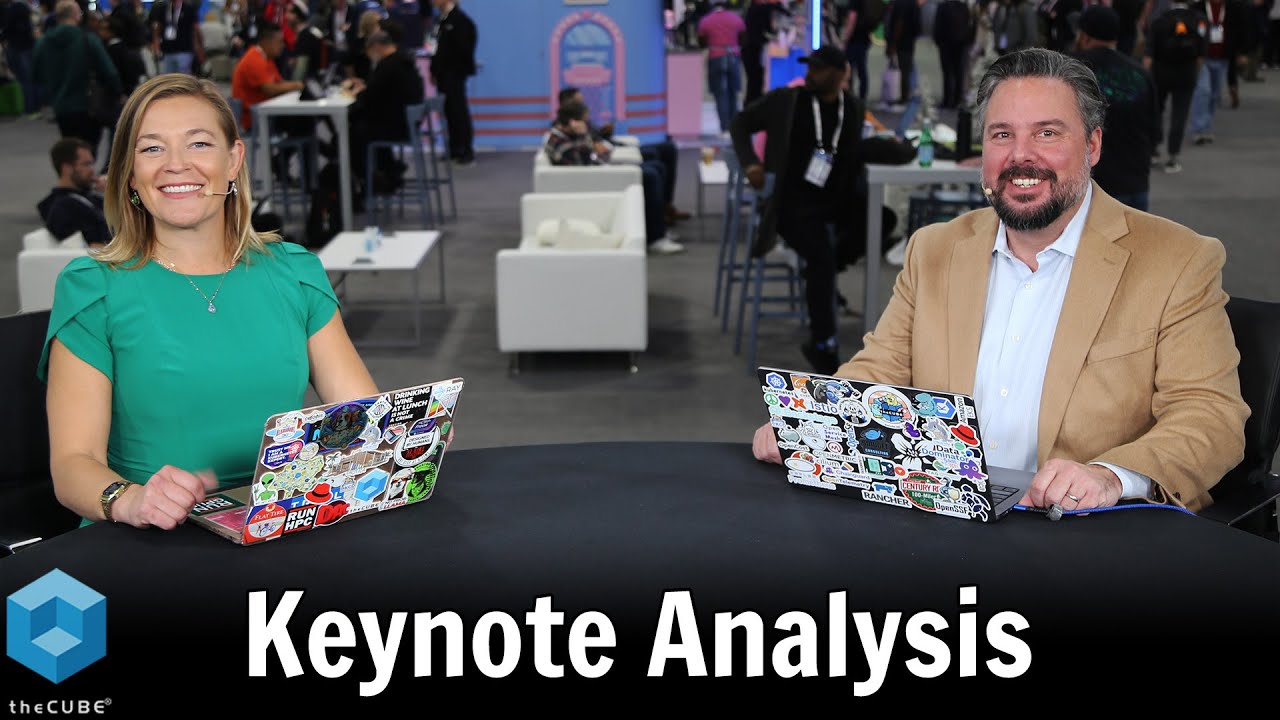
>> Good afternoon, AI fans, and welcome back to fabulous Salt Lake City, Utah. We are coming towards the end of day one of our three days of power-packed coverage here on theCUBE. My name is Savannah Peterson with my right-hand man, Rob Strechay. Rob, man, I feel smarter than when I woke up today.
Rob Strechay
>> Definitely. It's always great to get all of this knowledge and I think especially when you're hearing how people and their customers are really implementing where the rubber meets the road with this technology, so-
Savannah Peterson
>> This is a really people-first conference, actually, now that you're saying that....
Rob Strechay
>> absolutely. Very much so.
Savannah Peterson
>> Yeah, I love that, so community-focused. Speaking of being community-focused and exciting, I've been looking forward to this since we had Toby in the studio last week. Luke, thank you so much for taking the time to come hang out with us.
Luke Congdon
>> It is my pleasure. I love coming to CubeCon. I just checked that out this morning. The first one I went to was 2016 in Seattle. It was a bit smaller then.
Rob Strechay
>> Wow.
Savannah Peterson
>> Yeah, you've seen quite the evolution. You're a proper CubeCon OG.
Luke Congdon
>> Yes. I even went to the Covid one where not many people went to, but it was fun.
Savannah Peterson
>> I was there. Were you there too?
Rob Strechay
>> No, I was not there. I was-
Savannah Peterson
>> Oh yeah, I was there. That's actually how I found the Cube was at that Franken.
Luke Congdon
>> Oh, fantastic.
Savannah Peterson
>> It was probably because there wasn't as many interviews because of that crazy time. Really glad that's all behind us. A very exciting week for Nutanix here at CubeCon. You dropped some big news yesterday.
Luke Congdon
>> We did.
Savannah Peterson
>> Can you give us a little highlight from that?
Luke Congdon
>> I would love to. I've been spending the last 14 months of my life working very hard trying to build on top of our Compute story and we just released what we're calling Nutanix Enterprise AI and it's our new product line to say we are an AI company. We are offering generative AI on premises now with inference endpoints, with security, with cost control, with simplicity, which is what we've always been trying to do. And we really feel from our customer set, people we've been speaking to, that doing this on premises where your data is, where data is safe really matters to them.
Rob Strechay
>> Yeah, I think, again, that kind of ties right back in. Nutanix has a long history of really simplifying IT infrastructure. From a hyper-converged infrastructure perspective and then really moving into cloud-native and cloud-native operating platform, help me understand Nutanix and CubeCon and how that kind of comes together.
Luke Congdon
>> I would be happy to. It's actually a long story. We've been offering Kubernetes in some form for at least seven years and it's gone through a few evolutions and at one point in time, I ran part of that product line
Savannah Peterson
>> That's pretty early in the life cycle, just as an observation. Yeah.
Luke Congdon
>> Yes. Kubernetes is only 10 years old now.
Savannah Peterson
>> Exactly. Yeah.
Luke Congdon
>> So we tried... all right, to be fair, we tried something early that didn't work out, but we realized that Kubernetes was the way and that was about six-plus years ago and a year ago, we just acquired D2iQ, which was a really fantastic way of saying, "We're really serious about this. Here is a class company, first class team, and a product line that really fits in with us." So that, combined with coming to CubeCon for several years in a row, really says, "We're here to do this." And the goal for us is what is that simplified infrastructure to make everything not just VMs. We know everything's going Kubernetes and cloud native. How do we make that simple as well? And that was our investment.
Savannah Peterson
>> Well, and that is literally the conversation you always hear here every day since day one, both with Kubernetes and frankly, now that we're talking so much about AI, everyone wants this process simplified. Let's talk a little bit more about the D2iQ acquisition, which I think is really compelling and exciting. What can we expect to see now that you're fully in harmony and it's been over a year now? Well, about a year since that all came together.
Luke Congdon
>> In short, expect to see more of the same, simplified infrastructure, simplified go to market, easy for customers to use. And what I've really liked about that product line and company was they use Vanilla, open source Kubernetes, nothing bespoke that a customer's going to have a tough time with later. You can move in. You can move out. We'd like you to stay here, but we also make sure that you're going to get production level Kubernetes with security, with load balancing, with ingress, with everything else that you need because Kubernetes is really great, but it's one key important orchestrator piece. You need so much more. And then what's really unique by coming to Nutanix is we've been in the data storage and the full-stack infrastructure space for 15 years. They got what has traditionally really been hard for Kubernetes is stateful storage across objects, files, volumes, anything that you need.
Rob Strechay
>> And that's where they came in, right, is helping with the CSI drivers and things of that nature and they were really early on in that. And I think one of the things, though, and I think you just kind of hit on it a little bit, but it ties into the AI announcements that you made is that when people are building applications that are AI enabled, it's not just about one container, one microservice. It's containers. It's VMs. It's databases. By the way, AI runs on data. Again, being Nutanix was early on with the storage. How do you see this all coming together and Nutanix kind of that intersection between AI and Kubernetes and what Nutanix has traditionally done?
Luke Congdon
>> I mean, the way I like to think about it is we're standing on the shoulders of giants. That's why I was thinking about the Seattle 2016 event. A lot has come since that time. A lot of those companies got bought out, someone out of business, a lot of change, but a lot of amazing technology. So what we realized a year and a quarter ago, we came out with what we call a GPT in a box and it was an initial reference architecture of how can we provide AI based on a lot of Nutanix valuable IT assets? And we did try a VM form factor and a Kubernetes form factor and what we very quickly realized was VM is not the right form factor. Now, if you want a database in a VM, awesome, we've got that for you. But for scale, for just deploying this, Kubernetes is the way to go. And what we've done with this latest announcement is say, "We run anywhere you run Kubernetes. So we'd love you to do that on Nutanix, but if you'd rather be on EKS or AKS or GKE, we're going to give you that same software. You run it where you want to run it and we've liberated your decision so that you can decide where you want to be."
Savannah Peterson
>> I can imagine that's incredibly well received within this community in particular.
Luke Congdon
>> So far, so far the responses have been very good because we're not trying to say, "Come to us. We're going to keep you forever." We're saying, "What's best for you" and that really resonates on the simplicity point. What's best for you, where do you want to be, and how can we help you?
Rob Strechay
>> Yeah, I think, again, having an opinionated stack as you guys have just launched and been tuning over the past year really makes a lot of sense. And I think when you look at it, most of the people here are looking for a cloud operating model and that's really been the strength of Nutanix. Help us understand where you're at and where you look to go over this next year as well.
Luke Congdon
>> So the cloud operating model, just to touch on that for a moment, even before we doubled down on Kubernetes, we were already offering the same model whether you are on premises with Nutanix HCI or you are on NC2, which is our offering for Bare Metal in cloud with Azure and AWS, same operating model. So when I take that for NAI, which is what we're calling Nutanix enterprise AI, same thing, same operating model, where you want to do it. You can be in both places and I think that's going to be great. Now, what I think looking to the future is we built a really great on-premise inferencing solution. We've made it really easy. We've given it all the enterprise value props: auditing, security, RBAC, API, access tokens. It's not just a, "Here it is, go try it." It's enterprise class. Now from there, I want to make sure we can really embrace data. For 15 years, we're a data-centric company and people care intimately about the privacy of their data. These are their crown jewels for their company, which is why they're so nervous to open up a port and expose it to a cloud-based inferencing service. It makes them really terrified. So we're going to give them that on-prem.
Savannah Peterson
>> So it's that trust and comfort throughout this whole process too.
Luke Congdon
>> That's the name of the game.
Savannah Peterson
>> Yeah, it really is.
Luke Congdon
>> Enterprise pays for support because they need that trust.
Savannah Peterson
>> No, they absolutely-
Luke Congdon
>> And they want to work with the vendor they trust.
Rob Strechay
>> And I think you guys are also partnering really well and I think, again, we've seen things out of Nutanix in the past two months actually, if you look at it, where you're embracing other storage providers to be able to open up so that people can bring more data in and leverage this AI technology. How has that been received by your customers and prospects from that perspective?
Luke Congdon
>> Well, what might not be a surprise with the Broadcom VMware news is we've found a huge influx of interest saying, "How can you help us?" And we've been trying to embrace that and going with the Dell PowerFlex announcement really says, "We're willing to try something new," knowing that our core valuable assets still remain and we can extend in different places. Partnerships, I think, are the way to do it. Even on the NAI announcement, we partnered with Hugging Face for access to their hub because they've got all the models in the world. There are a few that aren't in Hugging Face, but they're basically all there. And what I love about it is that these are kind of turbocharged engines and for the most part, they're free. They're Apache II or Meta-licensed. There is a license, but you can do almost anything you want with them. So it's like a gift. It's a gift of gold. Now, we've also partnered with NVIDIA and we've been doing that for years, both on the GPU side for virtual desktop, but really embracing AI as well, which says, "Let's use them, best-in-class GPUs. Let's partner with them as well for their AI for Enterprise suite and their NIMs products," which are incorporated in our new product offering. So they're excited. We're excited. Customers get the best of all worlds.
Savannah Peterson
>> Yeah, and you're in a position to be able to grow with these companies as they scale up. I mean, we're such an early stage, especially with AI and even with Kubernetes adoption, we're still probably only 75% of the way there. What a fun position to be in. Are there any customer use cases that have you particularly excited right now or even customers that are here at CubeCon that you're getting to chat with?
Luke Congdon
>> I think when it comes to GenAI, we're seeing what a lot of people are seeing. I have to give a lot of credit to OpenAI and ChatGPT for sort of exploding the idea that this is actually possible. That was only two years ago.
Savannah Peterson
>> I know.
Luke Congdon
>> And-
Savannah Peterson
>> I almost exactly two years ago....
Luke Congdon
>> yes. Now what's amazing about it is if you log into chat.com, you get a single search box, which is so simple, it's Google 25 years ago, which is still Google's interface. It's amazing. But now, I get my answers instantly and that's really inspired these customers to say, "I want a search bot. I want to deploy this for my technical support and my SREs and my customers and I want to do document summarization and I want to do code generation." These are popular use cases, but they're popular for a reason. People want to do that and they want to do it on-prem. And with these sort of Ferrari engines LLMs out there, they really can.
Rob Strechay
>> Talk to-
Savannah Peterson
>> It's a great analogy to this....
Rob Strechay
>> I've-
Savannah Peterson
>> You've got the need for speed on the car that's going off....
Rob Strechay
>> being car person, yeah. But I think one of the things, and you hit on it a little bit up front, around the announcement and what we see in the data that we have with our partner ETR is that 30, 35% of organizations are still inhibited by security concerns and privacy concerns. Both of those hit around 35% as why they haven't gotten to production. That must have been a design point for when you were talking to this and how have you really addressed that?
Luke Congdon
>> The first big way to address that is not tech and it's to start with the customer. Say, "What do you want to achieve?" Because if you just try and sell infrastructure, you're always going to be selling uphill. People want to know what's in it for me? Can you help me get to a running chatbot in a reasonable amount of time with a good ROI? And when you show them you can... and this is back where we partner again. We have some great partners in DataRobot, Verdea, Pryon, Codeium, great ways to go because we're not building the top of Stack App. We're enabling generative AI.
Rob Strechay
>> Yeah, that makes total sense. I think, again, it's one of these that they all want the easy button. I think, in fact, it was said from this stage earlier today, things are still pretty complex with Kubernetes and I think where the history of Nutanix has been simplifying first in the virtual, the VM stack, and now in the Kubernetes stack, I think you have a pretty good track record. Have you been seeing... again, like you said, you've been at it for seven years. Have you seen a lot of people embrace that part of the business?
Luke Congdon
>> What's interesting to me is I came out of the VM world. I worked at the other big VM company for a long time. I joined this company seven years ago to work on our AHV product line. It's still under my charter, so I've seen that work for a long time and I sort of describe VMs as a floating glacier. It may be floating, it may be melting, but it's going to take 100 years before it melts away. Now, there's definitely this fast-growing area called Kubernetes, but it's still tiny compared to VMs. What I like about Nutanix is we're embracing the fact that both exist. They're both going to exist for a long time. And what I'm seeing is new applications are cloud-native and Kubernetes-based. But apps that are in VMs, a lot of these companies, if they're still in business, they're not motivated to recode them and put them into cloud-native when it already runs because they don't get something new.
Savannah Peterson
>> Right.
Luke Congdon
>> They get a new form factor of the same application, which is going to be hard to resell to your customers. But customers building their own apps? It's all cloud-native. New enterprise apps? Cloud-native. So that's definitely the place to be, but we need to be in both places.
Savannah Peterson
>> It's nice that you're meeting customers where they are, helping them meet their data where it's at.
Luke Congdon
>> Thank you.
Savannah Peterson
>> And then deploy all the cool things they want do. I've got one last question for you. When we're hanging out in London or in Atlanta, your hometown, next year for CubeCon, that's got to be fun. It's going to be in your backyard. That's great. What do you hope to be able to say then that you can't yet say today?
Luke Congdon
>> One of the things I like about Nutanix is we've been increasingly contributing to open source. With our cloud-native engineering team, we are a board observer of MLCommons. We are a co-chair of Kubeflow. We also contribute to KServe. We use all these technologies, so-
Savannah Peterson
>> Who are in the community....
Luke Congdon
>> yeah, so this is really great. Now, many years ago, we were less so in the community, but we are leveraging all this open source. Our hypervisor uses open source KVM and we do add more onto it there and we contribute a bit back to open source as well. So I want to do more of that. Just today, I was learning a little bit about a new GPU orchestration platform going into Kubernetes itself, which could make the use and the slicing up of GPUs easier versus some of the solutions that we have today. Really looking forward to that and I want to get the team involved in that at a code level.
Savannah Peterson
>> Awesome. Well, we can't wait to have that conversation. Thank you so much, Luke. This has been an awesome session.
Luke Congdon
>> Thank you, both. I really enjoyed it.
Savannah Peterson
>> Yeah, and congratulations to you on the team. I know big milestone for you, 14 months of your life. When you ship those babies out into the world, it's a big deal.
Luke Congdon
>> This is what we live for. I love it, and I'm happy to share it.
Savannah Peterson
>> Oh, that's fantastic. Well, we're glad you shared it with us. Rob, thank you, as always, and thank all of you for tuning into our fabulous three days of coverage here in Salt Lake City, Utah at CUBECon North America. You're watching theCUBE, the leading source for enterprise tech news.