We just sent you a verification email. Please verify your account to gain access to
KubeCon + CloudNativeCon NA 2024. If you don’t think you received an email check your
spam folder.
In order to sign in, enter the email address you used to registered for the event. Once completed, you will receive an email with a verification link. Open this link to automatically sign into the site.
Register For KubeCon + CloudNativeCon NA 2024
Please fill out the information below. You will recieve an email with a verification link confirming your registration. Click the link to automatically sign into the site.
You’re almost there!
We just sent you a verification email. Please click the verification button in the email. Once your email address is verified, you will have full access to all event content for KubeCon + CloudNativeCon NA 2024.
I want my badge and interests to be visible to all attendees.
Checking this box will display your presense on the attendees list, view your profile and allow other attendees to contact you via 1-1 chat. Read the Privacy Policy. At any time, you can choose to disable this preference.
Select your Interests!
add
Upload your photo
Uploading..
OR
Connect via Twitter
Connect via Linkedin
EDIT PASSWORD
Share
Forgot Password
Almost there!
We just sent you a verification email. Please verify your account to gain access to
KubeCon + CloudNativeCon NA 2024. If you don’t think you received an email check your
spam folder.
In order to sign in, enter the email address you used to registered for the event. Once completed, you will receive an email with a verification link. Open this link to automatically sign into the site.
Sign in to gain access to KubeCon + CloudNativeCon NA 2024
Please sign in with LinkedIn to continue to KubeCon + CloudNativeCon NA 2024. Signing in with LinkedIn ensures a professional environment.
Salt Lake City, Utah is hosting day three of KubeCon North America. Savannah Peterson and Rob Strechay welcomed Gail to discuss Heroku's open sourcing of 12 factor principles. The goal is to modernize app design for the cloud. The collaboration with AWS and Google Cloud emphasizes the importance of industry partnerships. The need for updates in logs and security principles in the 12 factors was highlighted. The discussion expanded to include collaborations with projects like OTel and OpenSSF for best practices. Maintainers for the 12 factor project are being ...Read more
exploreKeep Exploring
What is Heroku announcing at KubeCon regarding the open sourcing of 12 factor principles for optimal app design in the cloud?add
What prompted the decision to engage in replatforming on Kubernetes and invite the community to participate in the process now?add
What are some factors to consider when updating monitoring and security practices for modern app development?add
What exciting news are you sharing about your company's re-platforming on Kubernetes?add
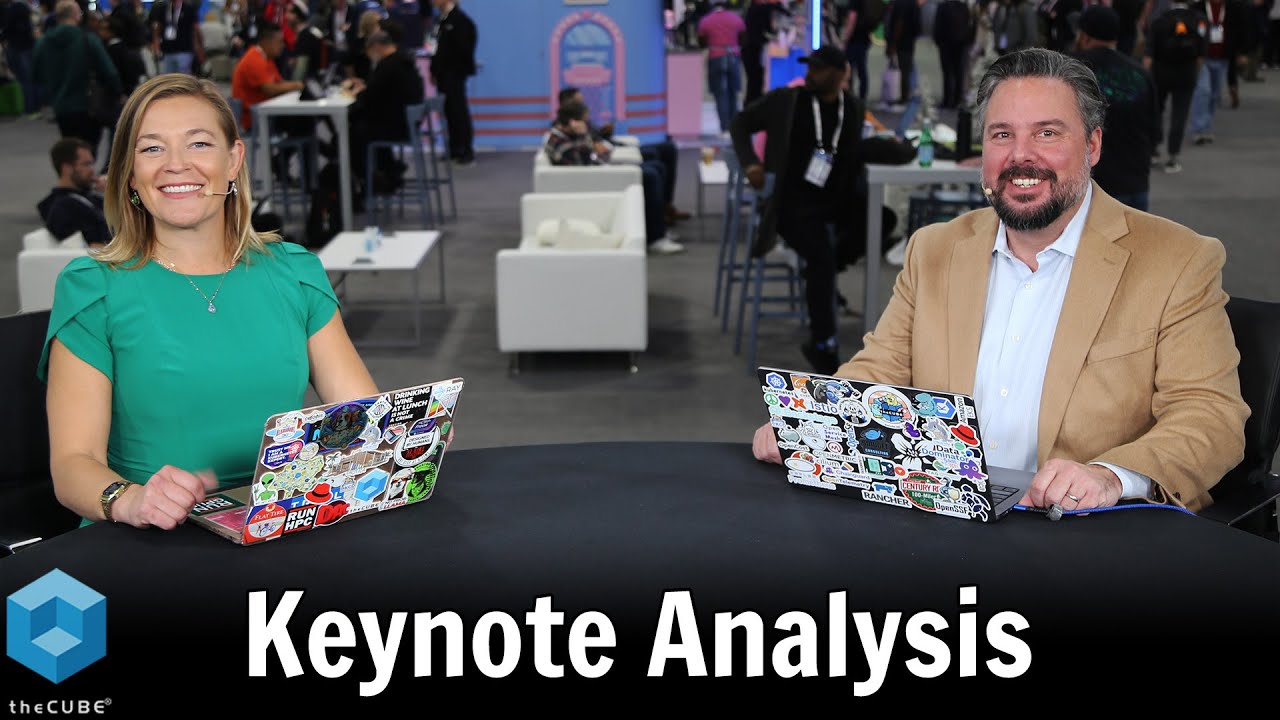
>> Good morning, nerd fam, and welcome back to Salt Lake City, Utah. We are midway through day three of our three days of power packed coverage here on theCUBE. My name is Savannah Peterson, joined by, you guessed it, Rob Strechay. Rob, I'm super pumped for this next guest.
Rob Strechay
>> Again, the community keeps getting bigger, coming back together again. I think there's a lot of contributions happening. It's just so great and vibrant to see the community expanding and just stuff really moving.
Savannah Peterson
>> Yeah, lots of donations, lots of contributions.
Rob Strechay
>> Yes.
Savannah Peterson
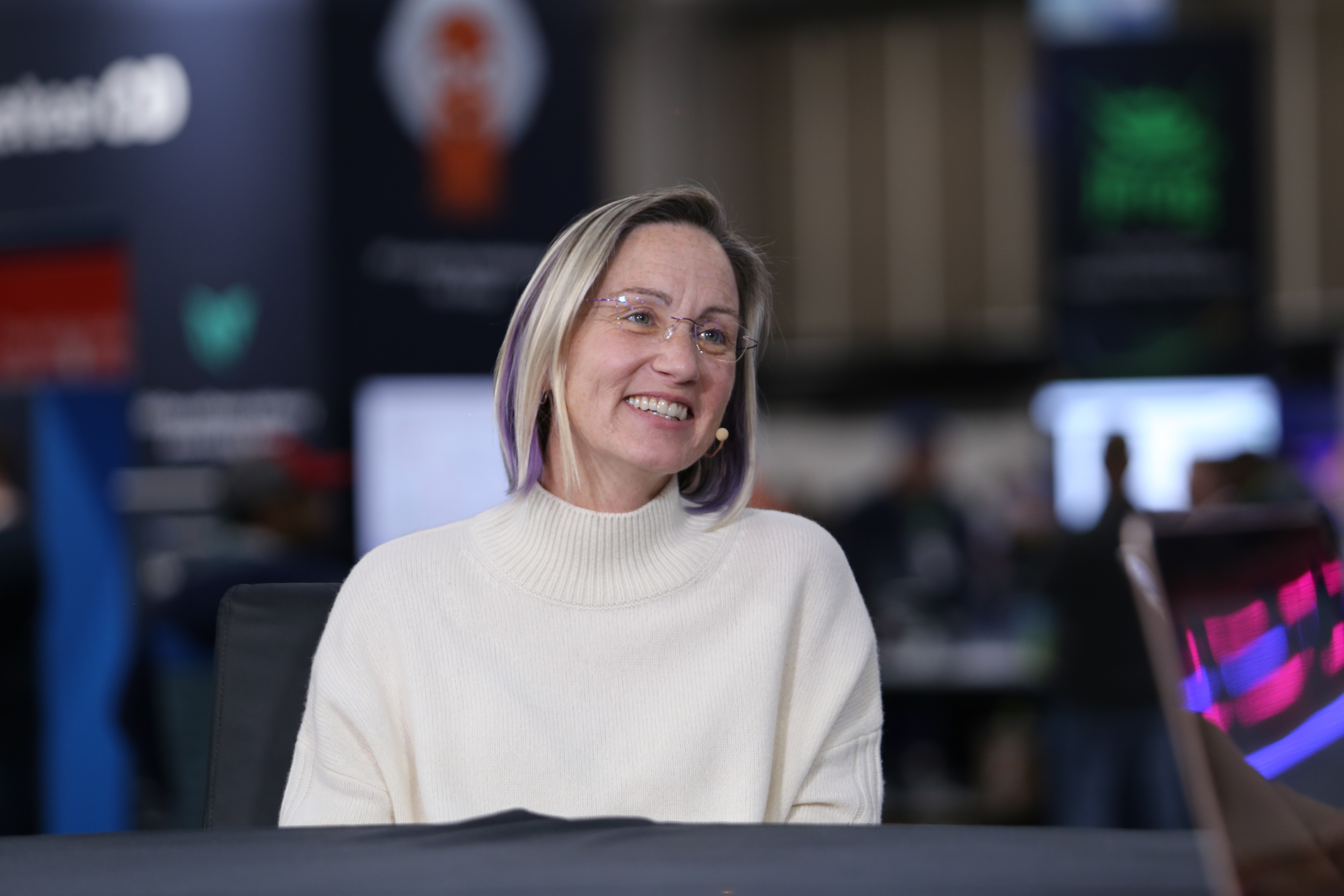
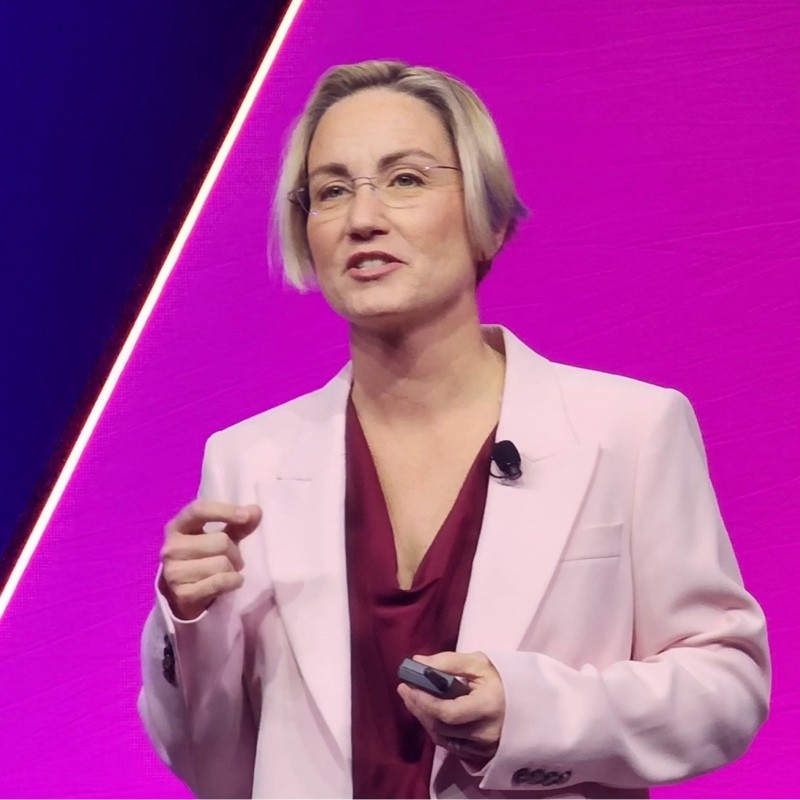
>> There's a lot of stories there. Without further ado, I want to welcome our coolest hair guest to the show. Gail, thank you for taking the time to hang out with us today.
Rob Strechay
>> Thanks so much for having me on theCUBE.
Rob Strechay
>> Yeah, very color appropriate as well.>> I am on brand.
Rob Strechay
>> Yes.
Savannah Peterson
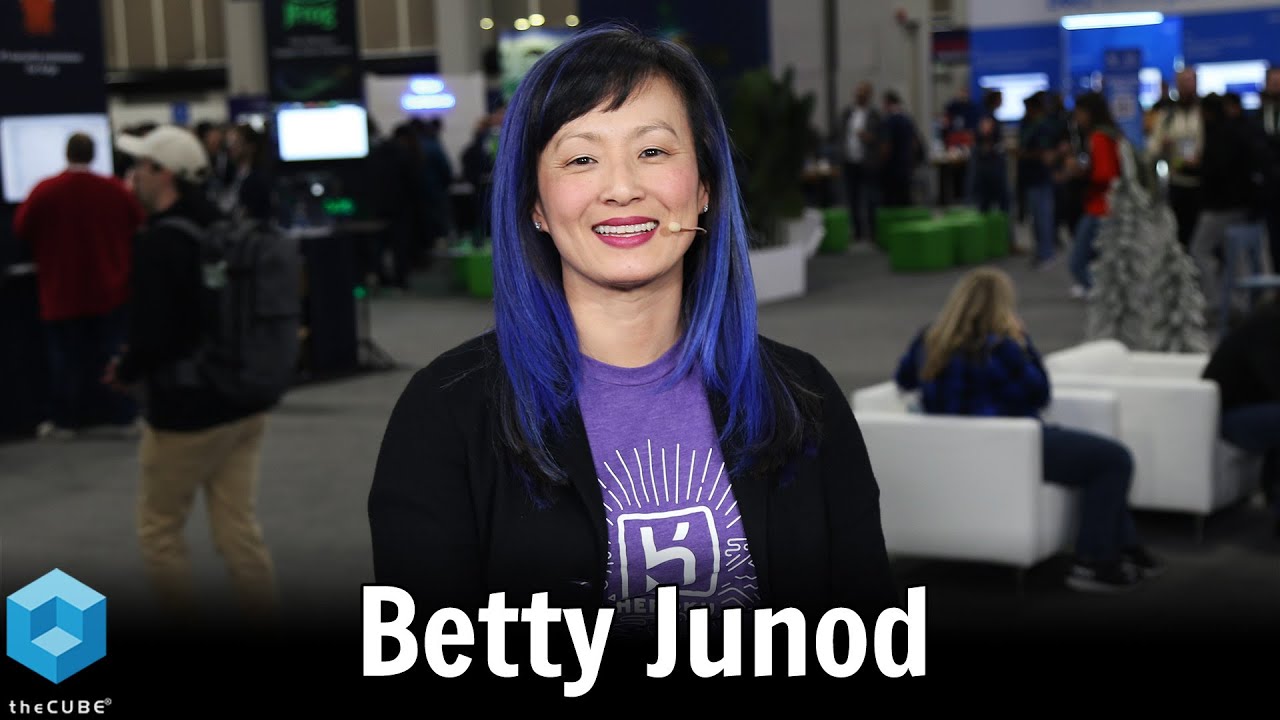
>> You and Betty are setting the bar. I'm feeling like Rob and I need to start... We do talk about our clothes. We're going to have to start talking about our hair color.
Rob Strechay
>> Yes.>> I have to tell you, the purple hair with Heroku works all day long.
Rob Strechay
>> There you go.
Savannah Peterson
>> Yeah.
Rob Strechay
>> Oh, I bet it's just a slam dunk. Do you get to expense it then?>> I wish.
Rob Strechay
>> I know. Wouldn't that be nice? Gail, we know that the world was watching your keynote, but in case you were taking a nap or walking the dog during those few minutes earlier today, can you give us a high level of what you shared?
Rob Strechay
>> Sure. At KubeCon, Heroku is announcing that we are open sourcing 12 factor. 12 factor is a set of principles for optimal app design in the cloud. Heroku has been curating and nurturing this community for 13 years. We believe, looking back in our experience hosting millions of apps in the cloud, that most of the principles are durable, but some of them need to be modernized. So we have open sourced it. As of this week, we have an initial set of maintainers, and we are inviting contributions from folks at KubeCon.
Rob Strechay
>> That, to me, seemed to be one of the big things, was bringing more in and getting more and taking it further. Because obviously for those who don't know, Heroku is part of Salesforce, which obviously builds large cloud applications.>> That's right.
Rob Strechay
>> And so why is it important to actually... Why is the 12 factor important to customers and to those people, the developers that are out there that are building these next ?
Rob Strechay
>> To me, 12 factor is about providing a predictable, repeatable way to run and deploy apps, and also providing app architecture that's reasonably portable. One of my favorite things about open source is it's a great venue to work with the industry, even companies that might be considered competitive outside of open source. So I'm really pleased that we have AWS and Google Cloud as part of the opening set of maintainers.
Savannah Peterson
>> I love that you just brought that up. I think the culture of collaboration here, we talk about it a lot, but it's hard to overemphasize how unique and rare that is when it comes to certain tools and projects, to your point. It might be a different brand logo, but we're all on the same collective team when it comes to solving some of the bigger problems out here. I'm curious why y'all decided to do this now.
Rob Strechay
>> Well, you might know, I think Bob Wise talked earlier about how Heroku is replatforming on Kubernetes, and in that, that's a massive undertaking for us. As you know, the Heroku platform predates all cloud standards. So as we are creating this next generation platform, for us, it was a real natural time to look back at our heritage, and our heritage is 12 factor apps, and really take a look at those principles as we are redesigning parts of our platform. And so we noticed that there was modernization to do so. So it felt like a natural time to invite the community in here, and we had a great venue here at KubeCon North America.
Savannah Peterson
>> Yeah, it is. It is an exciting time, and it makes sense. I love that though. The term dog-fooding always is kind of a little weird, but you're thinking, oh, if we're doing this, everyone else might need to do this too. Yes.
Rob Strechay
>> That's right. That's right. We try to drink our own champagne, if I may offer it to you.
Rob Strechay
>> Very nice.
Savannah Peterson
>> Thank you for that. You know what, I've needed a new one for that metaphor and our analogy. And yeah, drinking our own champagne is perfect.
Rob Strechay
>> I think two things. First, you might not know that most of the Heroku platform is actually built and deployed using Heroku. And so as we are modernizing, we are really feeling that 12 factor needs some updates in some key areas. And then the second point is that getting out in the industry, you might know that we're a CNCF Platinum member now. So as we are coming back out into the cloud-native community, boy, it feels great to hear from all of these stakeholders.
Savannah Peterson
>> Oh yeah.
Rob Strechay
>> So when you look at 12 Factor and all of the different principles that are in that, where do you see some of... If somebody wants to get involved and is looking at it, where do you think some of the modernization should really be focused? Or where are the rough edges that you're looking at?>> I think for me... So I'm going to give you my point of view. As we have 12 maintainers now, and as we've been collaborating, I think there's lots of opinions, and I'm so excited to get started with those conversations. My opinion is there's a factor about logs and about logs as event streams, and that made sense in 2011. But now, and you can see from the show floor here, telemetry, total observability of your app, being able to emit metrics, all kinds of metrics about the behavior of your app, behavior of the host OS. And so that one needs an update, and so we're going to start there. And then the second one is clearly security. App developers do not deploy one single app artifact anymore. They deploy many. Those apps are interacting with each other. 12 factor prescribes secrets as config and environment variables, and that just doesn't make sense anymore. And so I'm really excited to make room for a ton of new ideas and identity of apps as they interoperate.
Rob Strechay
>> Do you see that that is actually where some of these other projects come in? Like you were talking about telemetry, and we just had Taylor on and we were talking about OTel and things like that.>> Yeah, Otel. Sure. We're huge fans of Otel. Yeah.
Rob Strechay
>> And that seems to have a center of gravity to it, and developers have been really embracing it as a way for them to have observability in their applications without having to rewrite it per se. And a lot of the organizations here that are in the observability space have embraced that. Do you see that there's other places where there's centers of gravity that will fit nicely into 12 factor?
Savannah Peterson
>> I think so. The approach we're taking with examples like telemetry is in the 12 factor project, we want to prescribe a best practice, and then we're hopeful that code contributions will be offered that are examples of that best practice. So in this case of telemetry, that is the best practice. And then we'd love to see examples of apps integrating with OTel provided to the community. Yeah, sure. There are other examples. I mean I think of OpenSSF and security criteria for apps definitely is another way where we're going to prescribe best practices around app security, and then we'd love to see examples of that embodied in code.
Rob Strechay
>> What type of maintainers are you looking for? Are you looking for architects who can come in and help kind of put the pieces together in these different parts of the 12 factors, or you're looking for actual devs that are coming in to bring in new code to some of these or-
Savannah Peterson
>> I think we're looking really across the board. Something I love about this event in KubeCon is you have developers actively writing features, you have platform developers actively working in projects in the CNCF, you have DevOps and DevSecOps folks who are deploying and running code, you have analysts who are trying to understand the behavior of your app and your system, and I think I want all of those voices in 12 factor. To me, 12 factor covers running, deploying day one and day two, the creation of your app, the running of your app, the deploying, and the managing and the scaling of your app. So I'm really hoping, actually, to get a diversity of voices across those specialty roles.
Rob Strechay
>> That makes a lot of sense. I think, again, when you look at the different pieces of 12 factor, like dependencies, and... There was, on stage, I think just before you, was talk of S-bombs. Or maybe was right after. I can't remember the order now. But when you start to look at that OpenSSF and a lot of the, I guess you could say policy procedures that they're pushing for and they're out there working with the regulations, is that where you see some of that, because you mentioned them, some of those dependencies and security, not just the pure security part of it, but when you look at the dependencies and dependency mapping?>> Yeah, so when we are thinking about... First of all, we're at the very beginning, so I'm giving you my point of view and some of the maintainer's points of view, but I'm really excited to invite more people in and hear more points of view. I think when we're talking about dependency management, we are thinking about how do you attest to the identity of a backing service for an application. In Heroku, we see our customers deploying what instead of a service that is one star, they're deploying constellations of services that are working together for some greater good, and it's the making sure that all of those stars in this constellation can attest to who they are as they're talking with other services is really important for us. So that's what I'm thinking about with dependency management, is really that runtime, making sure that services can talk to each other in a mesh and can do that securely.
Savannah Peterson
>> I love that constellation analogy.>> So do I. I love that.
Rob Strechay
>> That was good.
Savannah Peterson
>> I'm going to call you next time I need a term described in a magical way.
Rob Strechay
>> I think it's really-
Savannah Peterson
>> Between you and Bobby Allen, I feel like there's a match made in heaven in analogy world. I want to totally shift the conversation,-
Rob Strechay
>> Great....
Savannah Peterson
>> which is classic Savannah. We've had Betty and you both on the show this week. Clearly to really brilliant, strong, and exciting females. What would you say to someone learning... 50% of this room is new, at KubeCon for the first time, lots of folks watching at home. Like we said, the world was watching you on the keynote stage. What would you say to someone who isn't a Brooks Brothers jacket wearing white male who's watching this and is curious about joining this community and getting involved or learning more about the project?>> I would say there's plenty of room for all kinds of people in the CNCF and at KubeCon. I am a hardcore dev. I have two computer science degrees. For the first six years of my professional career, there were no other women working in engineering with me, and I think those days are over. I am so proud, in Heroku, at the diversity of humans we have. And I'm proud of that because it's good for... It's makes me feel great. I love being surrounded by people from all over the world. But also, it makes for really strong teams and a much better product. That's stronger products able to be deployed in more markets. And so I love that it's the Betty and Gail show at KubeCon this year, actually. I'm really proud of that. Thank you for noticing.
Savannah Peterson
>> It feels good to see women like you sitting across from me up here.>> I'm trying to raise a female nerd army, to be perfectly honest with you. That, I feel like is my reason for being in the tech industry.
Savannah Peterson
>> Quite frankly, we need it now more than ever.>> Yeah.
Savannah Peterson
>> And I think it is important to celebrate and to elevate. Even after this, like I was saying, we have the deaf and hard of hearing working group on this afternoon. This community, and Heroku, it sounds like, I love hearing that. You don't hear that enough. Tech diversity's gotten a little bit better, but I still feel like there's a big barrier there despite the opportunities that do exist within this community. I'm kind of wondering if someone could learn more about your team, if they end up coming in to be a maintainer of this project and contribute to the culture. I'm thinking of how we're recruiting your maintainers, maybe recruiting for Heroku. You've got a whole thing going on. What's next for you and the team now that you've been able to release this into the wild?>> The next for 12 factor is community development, so finding more maintainers, welcoming folks into the community. We got a big bump in our Discord membership during my keynote today, which was exciting.
Savannah Peterson
>> Oh, that's fun. That's great affirmation.
Savannah Peterson
>> And so the next,-
Savannah Peterson
>> Love that.>> It's really to dig in, find our active community, and then dig into those factors
Rob Strechay
>> If they want to find out more, where should they go?
Savannah Peterson
>> Github.com/12-factor.
Rob Strechay
>> Okay.>> And-
Savannah Peterson
>> Thank you for naming it something simple with words that are spelled accurately.
Savannah Peterson
>> I got you on simple, accurate naming. It's also important because most people in tech, some, English is their first language, some, it's their second language. And so the more clear and simple you can name a thing, the more ubiquitous it will become. Thank you for listening to my Ted Talk.
Savannah Peterson
>> Why do you think I called it out? Because it pains me sometimes when I think about the challenge of learning a new technology, and then it's named some crazy amalgamation of letters and numbers sometimes. And you're thinking, oh, okay, that's communicating a lot to someone who's just learning.
Rob Strechay
>> I'll just throw it out there, the one that... MultiKueue and the way they spell Kueues, K-U-E-U-E. We're both dyslexic, and you start to go... With all of these Us and Es and Ks, I'm like, okay, it's blowing my mind. But to your point, it's like there's... For people who... English is not always the nicest language to try to learn if it is your second language, trying to understand, and how to do all the spelling and find things becomes very tough.>> I think that also goes to your inclusion points, Savannah and communicating in a way that's easy for folks coming with... English, for better or worse, is the de facto language of tech. And so we can get very precise, simple, technical English that makes it much easier for folks around the world to participate. That's actually really important to me. My team will definitely tell you that, that I'm like, "We can say that more simply. You can use fewer words."
Savannah Peterson
>> There's a great book called Writing Without Bull, the s-word, and it's one of the best books for writing because you just pull out all the stuff that doesn't make sense. Don't overcomplicate it. And I think that's actually a lot of what this room has in common. We're all trying to simplify or make more accessible technologies and tools and all of that. So the language is a really big part of that. Let's talk about the Heroku team for a second.>> Sure.
Savannah Peterson
>> What's next for y'all?>> Well, we are hard at work. Shocking, yes. I don't know if you've noticed, but we have been shipping like gangbusters.
Savannah Peterson
>> Yeah.>> And we are on fire, and I'm so proud.
Savannah Peterson
>> You should be.>> We will be, in a couple of weeks, starting to talk about our re-platforming on Kubernetes. It's a really exciting time for us. I've seen it. It runs well. It's so exciting for our customers because they get the benefit of a kubernetes platform, so performance and scale-easy or scalability. We are able to provide more... Our app modeler called Dynos, we're able to provide a lot more of them because we have rebased now on kubernetes, so more variety for our customers, faster cold start. I'm super excited. So we're going to have a lot to say starting in December, and then I hope it's rolling thunder from there on out.
Savannah Peterson
>> Oh, I love this scale. That leads me right into my next question. What do you hope... Hopefully we get to hang out with you and Betty->> I hope so....
Savannah Peterson
>> at KubeCon in London or->> Oh yes, definitely.
Savannah Peterson
>> Or I'm just going to come. Are you Bay Area based? We can all hang on in the Bay. What do you hope to be able to say when we are in London at the next KubeCon or in the spring that you can't yet say today? And I have an idea where you->> Are you asking me to say what I can't say, Savannah? That's an A plus.
Savannah Peterson
>> We do love a good scoop.>> Yes.
Savannah Peterson
>> But I kind of have a suspicion you might talk about some of the feedback you've gotten from the community and some stories you'll have for us to share there.>> Definitely, we are going to have updates about 12 factor.
Savannah Peterson
>> Yes.>> That's right. I think that's a great milestone for us to be taking the time. But that is what, April?
Savannah Peterson
>> Yeah,>> The time between now and April to find this community, grow this community, and then be able to report back out about what we've learned and next steps for the project.
Savannah Peterson
>> Well, we can't wait to talk all about it. It's going to be an exciting year.>> It'll be great.
Savannah Peterson
>> Gail, thank you so much for the insights, for the inspiration. Congrats to you and the team. We can't wait to hear the stories.>> Thank you. Thanks for having me here. I really appreciate it.
Savannah Peterson
>> Thank you. Yeah, and shout out to your wonderfully diverse and awesome team. What's up, Heroku team? We're thinking of you here in Salt Lake City. Rob, thank you for another great segment.
Rob Strechay
>> It was fantastic. It's easy when you have great guests.
Savannah Peterson
>> I know.
Rob Strechay
>> Super easy.
Savannah Peterson
>> Yeah, it feels like a cheat code.
Rob Strechay
>> Yes, it is. It is a cheat-
Savannah Peterson
>> Smart, brilliant people feels like a cheat code.
Rob Strechay
>> Yes.
Savannah Peterson
>> And thank all of you for tuning in and hopefully not cheating on whatever it is you're doing in your life right now. We're here in Salt Lake City, Utah, coming to the end of day three of KubeCon North America. My name's Savannah Peterson. You're watching theCUBE, the leading source for enterprise tech news.