We just sent you a verification email. Please verify your account to gain access to
KubeCon + CloudNativeCon NA 2024. If you don’t think you received an email check your
spam folder.
In order to sign in, enter the email address you used to registered for the event. Once completed, you will receive an email with a verification link. Open this link to automatically sign into the site.
Register For KubeCon + CloudNativeCon NA 2024
Please fill out the information below. You will recieve an email with a verification link confirming your registration. Click the link to automatically sign into the site.
You’re almost there!
We just sent you a verification email. Please click the verification button in the email. Once your email address is verified, you will have full access to all event content for KubeCon + CloudNativeCon NA 2024.
I want my badge and interests to be visible to all attendees.
Checking this box will display your presense on the attendees list, view your profile and allow other attendees to contact you via 1-1 chat. Read the Privacy Policy. At any time, you can choose to disable this preference.
Select your Interests!
add
Upload your photo
Uploading..
OR
Connect via Twitter
Connect via Linkedin
EDIT PASSWORD
Share
Forgot Password
Almost there!
We just sent you a verification email. Please verify your account to gain access to
KubeCon + CloudNativeCon NA 2024. If you don’t think you received an email check your
spam folder.
In order to sign in, enter the email address you used to registered for the event. Once completed, you will receive an email with a verification link. Open this link to automatically sign into the site.
Sign in to gain access to KubeCon + CloudNativeCon NA 2024
Please sign in with LinkedIn to continue to KubeCon + CloudNativeCon NA 2024. Signing in with LinkedIn ensures a professional environment.
Principal Product Manager - Developer ToolsRed Hat
Mark Russell
Principal Product ManagerRed Hat
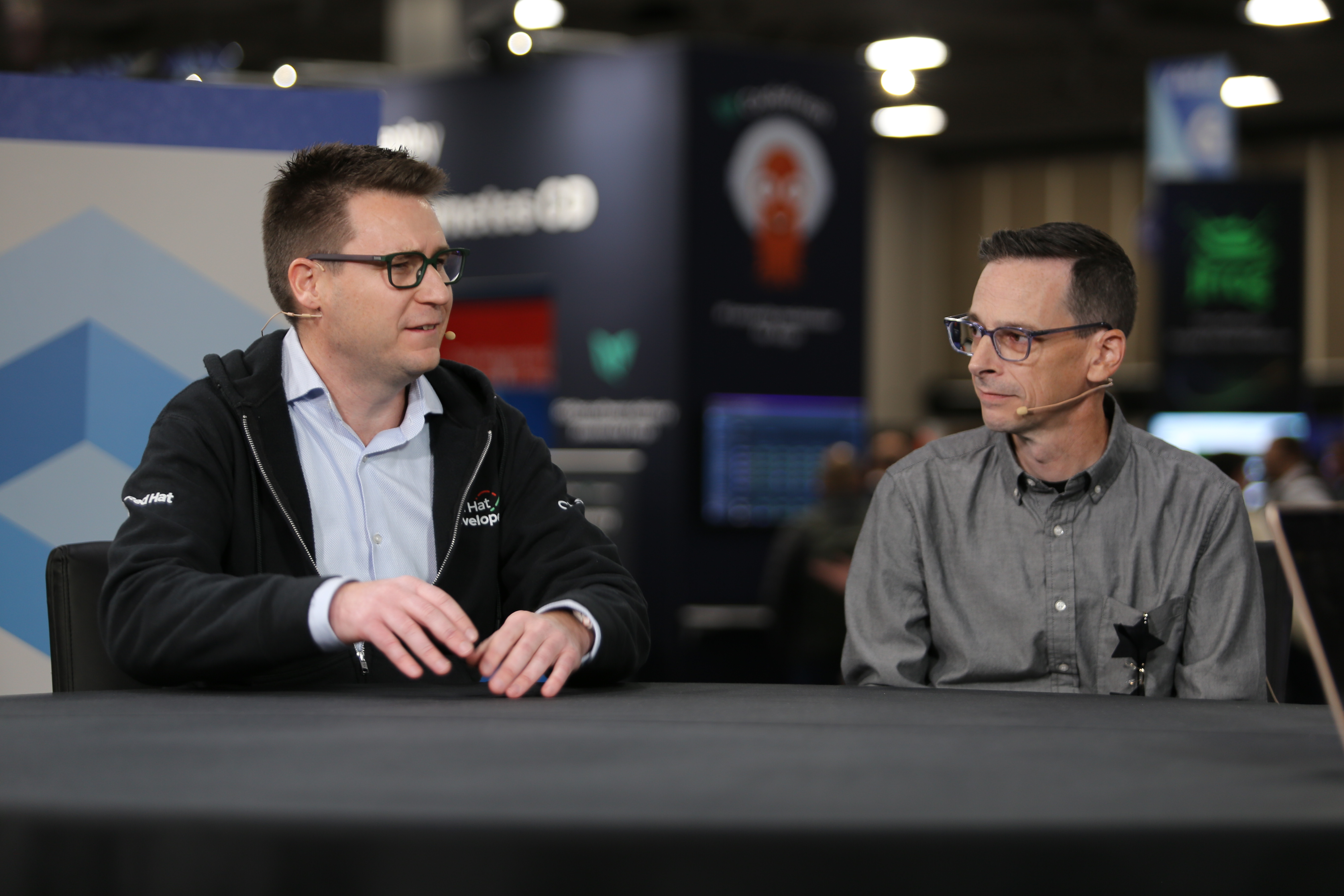
Midway through day two of the coverage on theCUBE, Savannah Peterson and Rob Strechay welcome Stefan and Mark as guests. They discuss the exciting contribution of projects like Podman, Podman Desktop, and Bootc to the CNCF. Stefan emphasizes the importance of open-source innovation, while Mark highlights the features and benefits of each project. The discussion touches on the future roadmap for enhancing these projects, making them more user-friendly and extensible. The importance of collaboration and innovation in the cloud-native ecosystem, especially with ...Read more
exploreKeep Exploring
What is the importance of contributing projects to the open-source community?add
What are the features and benefits of Podman and Podman Desktop?add
What updates are planned for Podman in the near future?add
What is the importance of open standards and the open container initiative in the current state of innovation and collaboration in the technology industry?add
What are your hopes for being able to say at next year's CubeCons while sitting at the desk in London or Atlanta that you can't say today?add
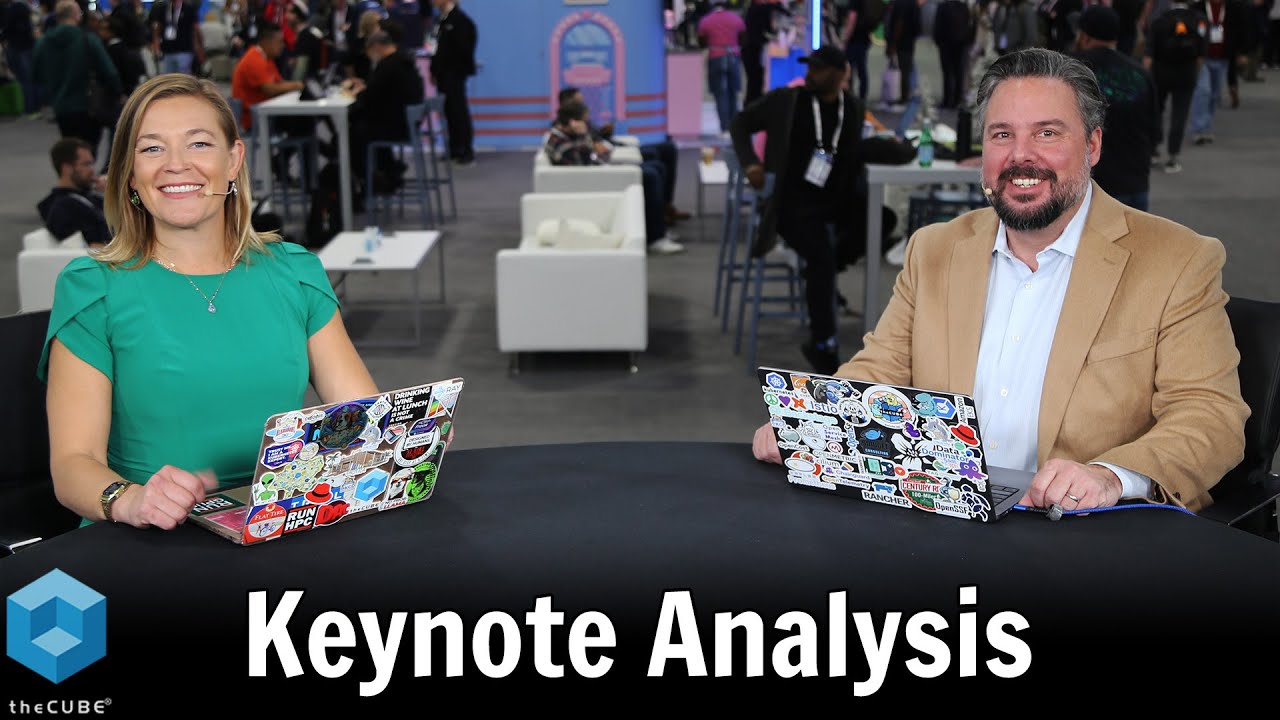
>> Good Morning cloud community, and welcome back to Salt Lake City, Utah. We are here midway through day two of our three days of coverage on theCUBE. My name is Savannah Peterson here with my favorite cloud co-conspirator, Rob Strechay.
Rob Strechay
>> Co-conspirator, I like that.
Savannah Peterson
>> I know, right? That was a new one for me today.
Rob Strechay
>> That was good. That was good. That was good.
Savannah Peterson
>> We get 30 segments to show and I really try and spice it up.
Rob Strechay
>> And I think, again, co-conspirating on loving the community and what's going on and what's happening within the community and the contributions that are being made back to the community, and I think that's a big discussion of what we're talking about today. So lot's of fun.
Savannah Peterson
>> I know, and who better to have than our next two guests. Stefan and Mark, thank you so much for taking the time today.>> Thank you guys for having us.>> Yes.
Savannah Peterson
>> Such a busy day. Saw you on the big, cool main stage in there doing some keynote action. How was it? It seems like the reception's been great.
Savannah Peterson
>> Well, our team was up there and we announced our intention to contribute several projects to the CNCF. We couldn't be more excited about it. It includes Podman, Podman Desktop, and Bootc.
Savannah Peterson
>> That's a lot, and that's super exciting. Stefan, why do you think it's so important to contribute these projects to the open-source community?
Savannah Peterson
>> I really believe that it is a great opportunity for us to innovate all together and to bring all the community aspects from these cloud-native contributions, and all the different projects that we are building here. I think with the donation of Podman, Podman Desktop and Bootc, we bring a new opportunity for all this cloud-native space to continue to innovate all together.
Rob Strechay
>> For people who aren't familiar with the three projects, I know what they are, but for the people who aren't-
Savannah Peterson
>> Rob with the casual flex.
Rob Strechay
>> Well, Podman I love, and the fact-
Savannah Peterson
>> We all love Podman though....
Rob Strechay
>> it runs on a Mac, so Podman Desktop. So help them understand why this is significant each of those.
Rob Strechay
>> Let me just tell you a little bit about the projects. Podman is an interactive container engine. Well, it's for interactive and server use. It innovated from the start with the ability to run containers without any root or any elevated privileges at all. I continue to innovate with its support for the Kubernetes API. My favorite thing right now actually is a feature called Quadlets, which allows you to take pods and containers and turn them into system services with a dead-simple text file that you could just copy from machine to machine. It's incredibly portable. It also includes a couple of other tools. Buildah is a tool that focuses on building container images. It's very suitable to containerized pipelines. And Skopeo, which is a bit of a Swiss army tool that works with container images and remote registries.
Savannah Peterson
>> And on the other side, with Podman Desktop, we built on top of Podman to provide a nice user interface to work both with containers and Kubernetes. So it's really a desktop application that runs on Mac, Windows and Linux. It's for application developers, and it abstract a way all the configuration and the setup of all the different tools that are needed to work with these technologies. So it has everything you need in order to work with containers. You can of course build images, you can run containers, you can connect to OCI registries to pull and push images as well. And it goes also beyond when you are building your own application, you can more easily debug and inspect your containers. And as Mark mentioned, it goes also a little bit further because it has capabilities for Kubernetes. And I think what's very important with these tools is that from there at the inception we took Kubernetes at the basis of where we also want the developers to go. So within Podman Desktop, you will find ways to use the capabilities of Podman with Kubernetes, but you can also spin up a Kubernetes environment with Minikube or Kind locally, and then you will get a nice UI to work with these Kubernetes objects. So this is making it very handy for the developers to apprehend the technologies because they don't need to remember all the CLI commands, for example. And it's making the adoption of the entire Kubernetes stack a little bit easier and smoother as well. And it's open, and the family is even wider with Bootc, right, Mike?
Rob Strechay
>> Yeah, so Bootc is, formally, it's the youngest project of the three that we're talking about here, but it's based on 10 years of experience and battle-tested code from the RPM-ostree project. But what Bootc does is it takes all that experience but brings it to that Dockerfile container image building block. Those building blocks built the entire ecosystem around us today. I'd be willing to bet that almost every technical person in this room at this conference knows how to build a container. Congratulations, now you know how to configure, build and update an operating system too.
Rob Strechay
>> Right. No, that's great.
Savannah Peterson
>> I really->> Using all the same tools, techniques. If you want to use CI/CD systems that are oriented towards containers, you can adapt this to your operating system images.
Savannah Peterson
>> What I'm hearing from both of you here is it's about making it easy and also about being agile in terms of which environment or where you're doing things so that everyone can build and create wherever they are quickly and efficiently and easy. It's a pretty bold claim, in a great way. What was the discussion like internally when you were coming to the conclusion that it would be a great idea to donate these projects to power this innovation?
Rob Strechay
>> I mean, Podman has been around for years now. It started in 2017 as a commit and in 2018 as actually Podman. It's always been open source. In fact, the team takes great pride in being an upstream-first team that is always engaged with the community and not just Red Hat customers. But when we were sitting down talking about Bootc and how appropriate and how much sense it made for the CNCF, we're taking the same language that everybody's using for their applications and allowing people to use it for their operating system deployments as well. That discussion snowballed. And if you take the whole group together from Podman Desktop down to Bootc, we're trying to offer a vision of using one language and set of tools for your entire environment. This is really a complete contribution that we see as hand-in-hand. They are parts of a puzzle.
Savannah Peterson
>> So you brought up Bootc, and I'm staring at your glasses. You're bringing the star power. Tell us what's going on there. There's three pairs of great glasses over there on you two gentlemen.>> So, and there are a handful more at the booth. I will say that so if you Google, B-O-O-T-S-Y, Bootsy, you'll probably find that the first result is Bootsy Collins, the great funk bass player in Parliament and Funkadelic and the James Brown Band, but so it's a little tip of our cap to a funk great.
Savannah Peterson
>> I love that. Bring in the funk and the innovation. What a combo.>> Exactly.
Savannah Peterson
>> Yeah, and I think in general the importance of developers and in order to enable the developer to adopt the technologies we are building in the cloud-native ecosystem is very important. And I think at Red Hat we've been investing quite a lot onto making developers more productive, more efficient. That's been always a mission for us. And Podman and Podman Desktop, they really are on this line, and they're already quite popular solutions. So if you see Podman Desktop, it's been downloaded more than 1.5 million time by developers, so it's already quite popular. So for us, it's really when we were having this discussion internally, it was really about how can we move this forward and how can we continue on this exciting journey? And yet for us, we are very excited and very happy to be able to work on tools that helps other developers on the way they're shaping their application, it's also a fantastic opportunity for the entire community to innovate all together on these aspects.
Rob Strechay
>> I mean, the reason I know Podman Desktop was I was at the Red Hat Summit earlier this year and when InstructLab came out, you could use InstructLab on top of both open source, both on your laptop to start getting started and start tinkering around with AI. AI is a big piece of this. I know there's a connection there as well. How do you see that playing out?
Savannah Peterson
>> Yeah, absolutely. In fact, when you are working with AI, you are probably starting by adding AI to existing applications, and a lot of those existing applications are already containerized, already running on Kubernetes. So how can we tie the tools that the developer needs to work with containers and Kubernetes as well as the tools that they need in order to work with the AI technologies? So that's really what we are trying to do with the extensions and the work that has been introduced during Red Hat Summit. It's all about bringing solutions for the developers so that they can start their journey to add AI inside of their application and still with the convenience of the tools that they're already used to be using.
Savannah Peterson
>> How has the reception been? I mean, the smiles on your faces give me a little bit of an indicator, but I can imagine the community is really excited.>> I sure hope so. It something we've given it about an hour to find out. As soon as I-
Savannah Peterson
>> Preliminary results, preliminary results.>> As I get out of here, I'm going to check my LinkedIn posts and see how they're doing and check the interwebs and such. But no, we're super excited, and we've been talking about this for a while. And I also just want to say in general, some of these projects have been around longer, like Podman, and it's really a signal that we want to innovate together in a vendor-neutral space. It's just a re-invitation for people to help shape these projects' future, and we couldn't be more excited about hopefully who shows up to help.
Rob Strechay
>> And so I think that's a perfect thing. You set me up for my next question, which was, okay, we're here today, what does the future hold for these three projects? And again, you guys have been supporting it in an open-source manner already, how do we go forward from here as well?>> Well, what we have on the roadmap for Podman, we want to enhance the ability to work with OCI artifacts. Container registries are, it's been a while already. They're not just for container images, as we know. People are putting all sorts of things into container registries and we want Podman to have an easier ability to work with it and inspect those and work with those objects. We would like to increase the speed. This hopefully will raise some ears, the speed of updating containers and the last bandwidth over the wire by only pulling new and changed files when you're updating a container image. And lastly, we want to enhance Podman Machine, which is a key component of Podman Desktop, to bring in some enterprise features and more customizability for that virtual machine that's used on Mac and Windows.
Savannah Peterson
>> Go for it.>> And on Podman Desktop, similarly, we have the public roadmap, which is available on our repository, but it's multiple folds. The first one is about setting up and configuration of all the tools and the environment for the developers. And then it's all about how we can make it easy to work with containers and Kubernetes, so how can I quickly access to the logs, get terminals and things like that. And the last fold will be about the extensibility of the tool itself. In fact, the tool is completely open so it supports other container engines and it's completely extensible with extension points. So you can customize the entire UI with specific workflows and experiences. So what we are expecting to see is the community joining forces on enriching, making the tool richer in term of capabilities as well. We've been building these solutions with a lot of feedback from the end users as well, and we expect that it's going to continue. So definitely looking forward to it and definitely excited about that.
Rob Strechay
>> And on the Bootc side, our next big milestone is quarter 2 of next year fully supported GA and Red Hat Enterprise Linux. That's one of the most important things, so we're getting all ready for that. We can't be more excited. And at the risk of repeating myself, what's interesting about putting the OS in a container, again is all these practices and get ops approaches to managing infrastructure now suddenly apply to your entire environment. So we want to build support, do blog posts and best practices around adapting your operating system patterns to cloud-native environments.
Rob Strechay
>> I mean I think we've been talking about it all this week. I think especially with the stuff that you've been doing upstream with KubeVirt and OpenShift, virtualization and things of that nature, now bringing that to even down at the lower level and being able to bring that more, like you said.
Savannah Peterson
>> Operations and the core Linux stuff have lived, and cloud-native have lived in separate worlds and it was a bit clunky in how you manage your fleet versus how you manage your cluster and applications on top. So Bootc allows you to pull that all in and have a consistent view.
Rob Strechay
>> Exactly.
Savannah Peterson
>> Wow, what an exciting project. I have two more questions for you because time is flying by. You brought up something that touches me in my core, and I think it's in the DNA of everyone in this room right now, over 10,000 people I think actually, or 9,000 people. You talked about how important it's for us to innovate together. Why is that so important? And I personally think it's more important now than ever, but I have my opinions. I want hear yours.>> I will go first.
Savannah Peterson
>> Yeah, go for it.>> Look, we've gotten where we are based on open standards. The open container initiative is really important. So all of these, I mean, that's the basis of where we are today. We innovate and we collaborate because sometimes innovation, we don't need five different ways to do something when we can come to a common approach. And a lot of times those building blocks and those lower level components really can be shared across other operating systems, across other patterns. And just for the record, Bootc is for Linux, not just for RHEL, right? We can't wait for other... I'd love to see wider adoption. We've actually seen that in terms of, and other Linux vendors have already experimented with it and we've seen some communication there, so we're really excited there. Sorry, it's great.
Savannah Peterson
>> Love it. I love your excitement. Never apologize for passion. I feel like the world tries to put us in these little boxes sometimes.>> .
Savannah Peterson
>> Passion is what makes change, and it's infectious in the best way. It's the best kind of infection. It's a horrible thing to say. Anyway, Stefan, why do you think it's so important?
Rob Strechay
>> So I think there's a lot of things that are evolving in the space today, especially with the rise of AI. So we have exactly, as Mark mentioned, I think we have opportunities to bring smart people all together, but also bring more context and a wider variety of challenges all together and look at them from a pragmatic and an open approach as well. So I do believe that. I agree with you, now is probably a very exciting time to innovate all together.
Savannah Peterson
>> I love it.>> The standards we have today are not going to be ready for the workloads of tomorrow, so we need to work together to build those standards.
Rob Strechay
>> So true.
Savannah Peterson
>> Especially with the velocity of everything's going on right now, I think it's a great point, Mark. All right, final question for you both because you're both fabulous guests, and you teased this out a little bit, but we'll get a little more specific with it. When we're sitting at this desk in London or in Atlanta at next year's CubeCons, what do you hope to be able to say then that you can't say today?>> That we are in the CNCF sandbox, everybody. We are ready. I mean, we're ready for people to come and talk to us now, but we'd really like to reaffirm that and talk more about Bootc, talk more about what's coming next in Podman, and hopefully we'll be able to bring back some new features and innovations that have come from this engagement.
Savannah Peterson
>> Love it, Mark. What about you, Stefan?>> I think Mark's answer is better, actually. So it's absolutely going into this phase of having the project into the sandbox and looking forward of shaping the future of more developer-focused solutions as well for, at least for Podman Desktop. That that's what we are looking for, bringing this excitement we've been getting with all our users and the community, which is already active on the project, but building this to the next stage is definitely what we're looking for.
Savannah Peterson
>> Well, if your excitement is any indication of how the community is going to feel, I'm very confident we'll be talking about the sandbox, we'll be able to tell those stories, we'll have fun use cases of how people have used these projects in ways we can't even imagine right now. Stefan and Mark, thank you so much for being on today. This is a great start to the morning.>> Thank you guys so much. I appreciate your time.
Savannah Peterson
>> Thank you.
Savannah Peterson
>> Yeah, such a pleasure. And Rob, always a joy to learn with you.
Rob Strechay
>> I love it. I love digging deep into the projects and especially the contributions. This is fantastic.
Savannah Peterson
>> I know, and the excitement.
Rob Strechay
>> Very much, very much so.
Savannah Peterson
>> I hope y'all can feel how exciting and fun it is to learn here at CubeCon North America. In Salt Lake City, Utah, my name's Savannah Peterson. You're watching theCUBE, the leading source for enterprise tech news.